Liver and Blue Shih Tzu Coloring
Many Shih Tzu owners, or those hoping to become one, are familiar with the common gold and white or black and white variations, but sometimes a puppy comes along with a truly striking, less conventional coat color that leaves people wondering: "Is that really a Shih Tzu color?" This guide dives deep into two of the most intriguing and often misunderstood coat colors: liver and blue, exploring what makes them so special and the unique traits that accompany them. It's a journey into the fascinating genetics that create these beautiful, less common hues.
The Genetics Behind Shih Tzu Coat Colors
Understanding the visual tapestry of Shih Tzu colors begins with a peek into their genetic blueprint. It's not just about what you see on the surface; it's about the hidden codes that dictate every shade and pattern. This foundational knowledge helps us appreciate the diversity within the breed and demystify how specific colors like liver and blue come to be.
Basic Pigment and Dilution
Imagine two primary colors on a painter's palette: eumelanin and phaeomelanin. These are the fundamental pigments responsible for all dog coat colors. Eumelanin gives us the black and brown shades, while phaeomelanin creates the reds, yellows, and creams. The genetic instructions for these pigments, and how they interact, determine not just the base color, but also how that color is distributed across your Shih Tzu's fur – whether it's solid, parti-color, or brindle. For our long-coated companions, their luxurious double coats can sometimes make it a fun challenge to truly pin down the underlying color without a closer, more detailed look at their "points" – the nose, paw pads, and eye rims.
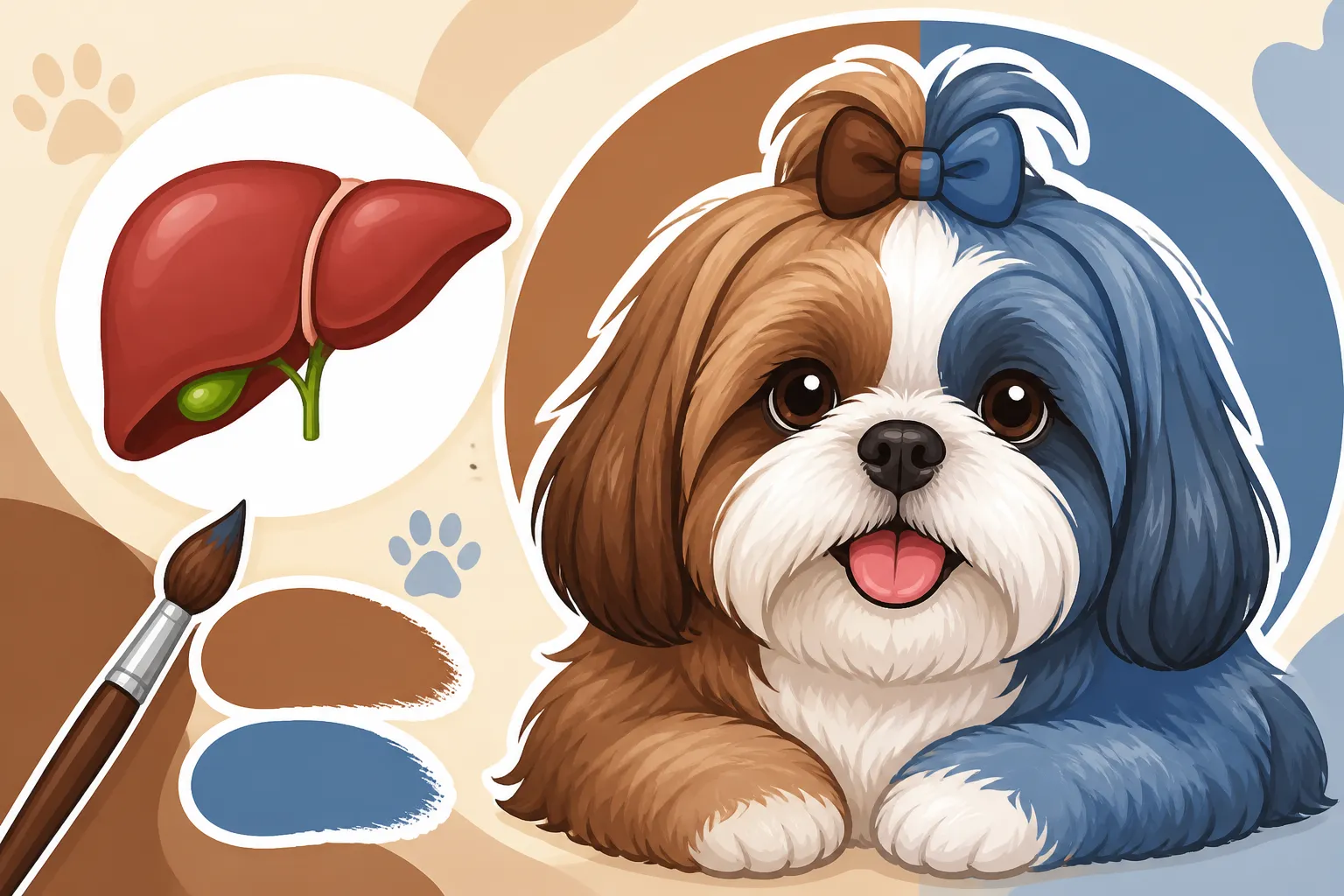
Now, think of dilution genes as adding a splash of white to those primary colors, or perhaps turning down the intensity dial. They don't introduce a completely new color, but rather lighten or "dilute" the existing pigment. For instance, if a Shih Tzu inherits the genetic makeup to be black, but also carries the dilute gene, that black pigment gets 'thinned out,' appearing as a beautiful slate gray or "blue." The same principle applies to brown: a liver-colored Shih Tzu is essentially a brown dog where the brown pigment itself has been affected by a specific dilute gene. It’s a subtle but significant genetic difference that completely transforms the dog's appearance.
This intricate genetic dance means that a Shih Tzu's perceived color is often a combination of its base pigment and any modifying or diluting genes it carries. A puppy might look one shade at birth, only for its true color to emerge as its adult coat grows in, sometimes surprising even experienced owners. This is why knowing a puppy's parents' colors and their genetic backgrounds, often revealed through The DNA Panel Worth Running on a Shih Tzu, can be so helpful. It’s not just about what you see, but what’s encoded in their DNA, shaping their unique appearance from nose to tail.
The most reliable way to confirm a Shih Tzu's true genetic color, especially for dilutes like liver and blue, often comes down to observing the color of their "points"—the nose, eye rims, and paw pads. While coat color can vary widely and even fade or change over time, these areas of pigment tend to hold true to the dog's fundamental genetic color. So, if you're ever in doubt about whether that adorable brown Shih Tzu is a true liver, a quick peek at its nose will give you the definitive answer.
Beyond the Common Black and Gold
When most people picture a Shih Tzu, they often envision the classic gold and white, or perhaps a striking black and white combination. These are undeniably beautiful and certainly among the most frequently seen variations. They’re the colors that often grace calendars and greeting cards, becoming synonymous with the breed. However, the Shih Tzu breed standard, which dictates the ideal traits that make a Shih Tzu truly representative of its heritage, actually allows for a surprisingly wide array of colors, making it one of the most rainbow-diverse breeds out there when it comes to coat shades.
This incredibly wide range includes not only solid colors but also partis (dogs with white markings, which are very common in the breed), and even intricate brindle patterns where stripes of color create a tiger-like effect. You can find everything from solid black, solid red, and solid white, to intricate combinations like black and tan, red and white, or silver and white. Each one is a unique expression of those underlying genetic pigments, creating a stunning variety that constantly delights and surprises. It truly helps new owners appreciate the full spectrum of beauty within the breed, far beyond just the most frequently encountered shades. You can explore The Shih Tzu Coat Colors You Will See to grasp the full extent of this diversity.
It's important for prospective owners to recognize that a dog's color doesn't dictate its personality or health. While some dilute colors in other breeds have, on occasion, been controversially linked to certain rare conditions, for Shih Tzus, the focus should always remain firmly on the overall health and temperament of the individual dog and its lineage, regardless of how rare or striking its coat appears. This is why good health testing and a reputable breeder are always paramount, far more important than just seeking a rare color.
In fact, focusing too heavily on a rare color can sometimes lead people down the path of less scrupulous breeders who prioritize aesthetic appeal over the fundamental well-being of their dogs. A healthy, well-adjusted Shih Tzu, regardless of its coat color, will bring so much more joy and companionship than one chosen solely for its unique hue. Always prioritize the core values of responsible breeding when making such an important decision.
The Distinctive Liver Shih Tzu
The liver Shih Tzu stands out with its unique brown pigmentation, a genetic trait that affects more than just its coat color. This specific coloration carries a certain charm, giving these dogs a softer, often warmer appearance than their black-pigmented counterparts. Let’s dive into what truly defines a liver Shih Tzu and what makes them so special.
What Defines a Liver Shih Tzu
A liver Shih Tzu is often casually referred to as brown or chocolate, but "liver" is the accurate genetic term and encompasses a range of shades from a light tan-brown to a deep, rich chocolate. However, the true key characteristic that definitively marks a Shih Tzu as liver isn't just the color of its coat itself, but the specific pigmentation of its nose, paw pads, and eye rims. These crucial areas will consistently be brown, ranging from a dark reddish-brown to a lighter beige, but they will never be black. This complete absence of black pigment in these areas is the non-negotiable, definitive marker of a true liver Shih Tzu.
To put it into perspective, imagine looking at a standard black-pigmented dog: its nose is jet black, its paw pads are dark, and its eye rims are sharply outlined in black. Now, shift your focus to a liver-pigmented dog: all those same points – nose, paw pads, and eye rims – are distinctly brown. This fundamental difference is what geneticists, breeders, and seasoned breed enthusiasts specifically look for. A dog could, for example, have a very dark brown coat, but if its nose is still black, it is genetically considered a black dog with a brown or sable pattern, not a true liver. It’s all about that underlying pigment at those key points, not just the fur itself.
The coat of a liver Shih Tzu can present itself in many beautiful ways, offering a wide spectrum of visual appeal. You might encounter a solid liver Shih Tzu, appearing as one uniform shade of rich brown from the tips of its ears to the plume of its tail. Or, more commonly, you might find a liver and white parti-color, where striking patches of warm brown are beautifully interspersed with crisp white markings, creating a truly eye-catching effect. There are also liver sables, where the tips of the individual fur strands are darker brown, creating a shaded or smoky effect across the coat, adding depth and dimension. Sometimes, these rich browns can be so dark they almost appear black in certain low lights, making those non-coat pigment points even more critical and reliable for proper identification.
The elegance of a liver Shih Tzu lies in the harmony of its coloring. Every part of its visible pigment is consistent with the liver gene. This means that a liver Shih Tzu will not only have brown fur but also brown whiskers and even brown eyelashes, creating a cohesive and beautifully blended appearance that is soft and often quite striking. This uniformity in brown pigmentation truly makes them stand out and contributes to their gentle, often soulful expression.
Eye Color and Other Traits
One of the most enchanting features that often accompanies a liver Shih Tzu is its distinctive eye color. Unlike the dark brown, almost black eyes commonly seen in black-pigmented dogs, liver Shih Tzus frequently have lighter-colored eyes. These can range from a warm amber or golden hue to a lighter, softer brown, and sometimes even a captivating soft hazel. This lighter, often sparkling eye color beautifully complements their brown facial features and gives them a particularly gentle, expressive, and truly unique look that many owners find utterly charming.
While the lighter eye color is undoubtedly a beautiful and characteristic trait, it's also important to remember that, much like humans with lighter eyes, these dogs can sometimes be a little more sensitive to very bright sunlight. This isn't usually a severe medical issue, but your liver Shih Tzu might squint more in direct sun or prefer to stay in the shade on particularly bright, sunny days. Observing your dog's comfort and providing extra shaded spots or planning walks during cooler, less intense sunlight hours can be a kind and thoughtful adjustment, if you notice this sensitivity.
Beyond eye color, it's reassuring to know that a liver Shih Tzu is, in every other respect, still the wonderfully playful, affectionate, and sometimes delightfully stubborn Shih Tzu we all know and adore! Their specific genetics for coat and pigment do not alter their quintessential temperament, their spirited nature, or their deep desire to be a beloved companion. They are still the same lap-loving, shadow-following, charming pups that bring so much joy to our lives. When considering a puppy, remember that Health Testing a Shih Tzu Breeder Should Do is always more crucial and impactful for the dog's long-term well-being than a specific color.
The liver gene simply impacts the production of eumelanin, transforming black pigment into brown. It doesn't affect other genetic traits such as coat texture or body structure. Therefore, a liver Shih Tzu will still possess the flowing double coat What the Standard Says About Shih Tzu Coat Texture that requires diligent grooming, and they will have the same brachycephalic (flat-faced) structure that gives them their endearing look but also necessitates careful monitoring in hot weather. Their physical needs and charming personality remain consistent with the breed as a whole.
The Intriguing Blue Shih Tzu
Just as fascinating as the liver, the blue Shih Tzu presents a sophisticated and often ethereal appearance. This color is another result of a dilution gene, which transforms what would typically be black pigment into a beautiful, smoky gray. Identifying a true blue Shih Tzu requires a keen eye for detail, especially when distinguishing it from other gray or silver variations.
Identifying a True Blue
The term "blue" in the dog world is a genetic descriptor, and it doesn't refer to a vibrant sky blue, but rather a spectrum of slate gray colors, which is a diluted form of black pigment. Much like the liver color, the unmistakable identifier of a true blue Shih Tzu lies fundamentally in the color of its nose, paw pads, and eye rims. These critical pigment points will consistently appear slate gray, charcoal, or a definite bluish-gray, and unequivocally never black. If a Shih Tzu has a gray-looking coat but still possesses a jet-black nose, it is most likely a silver, or a black and white parti-color that has simply faded or grayed with age, rather than a genetically true blue.
This specific dilution gene, often referred to as the 'd' locus, acts directly upon the black pigment, essentially "watering it down" or spreading it out, which causes it to appear as the beautiful blue shade. Sometimes, particularly in very young puppies, the blue can appear quite dark, almost black, leading to initial confusion for new owners. However, a very close and careful inspection of the nose leather, ideally in good natural lighting, will usually reveal that characteristic slate or bluish hue, even if subtle. As these puppies mature and their adult coat grows in, the blue often becomes much more apparent and strikingly beautiful against their developing fur.
Blue Shih Tzus can present themselves in various captivating patterns, adding to their unique appeal. You might encounter a solid blue Shih Tzu, which is a truly magnificent sight, with its uniform smoky gray coat covering its entire body. More commonly, you'll find blue and white parti-colors, where striking patches of this elegant gray are set against a crisp, clean white background, creating a stunning contrast. There are even blue and tan variations, though these are rarer, where the tan points on the face and legs are diluted to a lighter cream or silver. These unique shades are incredibly beautiful and often garner a lot of admiring attention, highlighting their rarity. Regardless of the specific pattern, the core daily coat care remains universal; consistent Brushing a Shih Tzu Double Coat Every Day is vital for all colors to prevent matting.
The visual subtlety of blue can sometimes be enhanced by the texture of the Shih Tzu's coat. A soft, flowing blue coat can catch the light in a way that truly emphasizes its unique, cool-toned gray hue. It's a color that speaks of quiet elegance and often changes slightly depending on the lighting conditions, making each blue Shih Tzu a living piece of art.
Blue Eyes and Other Considerations
Blue Shih Tzus, much like their liver-colored counterparts, frequently present with lighter eye colors, which adds another layer of distinctiveness to their appearance. Their eyes can range from a stunning light amber or golden hue to a greenish-hazel, and sometimes even a captivating blue or light gray, particularly evident in puppies. These lighter eyes create a soft, often ethereal, and very soulful look that is quite distinct from the typical dark brown eyes of black-pigmented Shih Tzus, completing their unique aesthetic.
As with liver dogs, this lighter eye pigmentation can potentially mean a slight increase in sensitivity to bright light, though this is generally considered mild and not a significant health concern for the vast majority of blue Shih Tzus. It's more about observation and common sense: if your pup seems bothered by intense sun, providing ample shade or adjusting walk times is a simple solution. More notably, in some other breeds, certain extreme dilute colors have been rarely associated with a condition called Color Dilution Alopecia (CDA), which can cause thinning hair or patchy hair loss. While this is exceptionally rare in Shih Tzus, and often more commonly linked to even more extreme dilutions, it's a theoretical consideration that responsible breeders should be aware of and monitor.
Beyond these minor cosmetic and very rare health considerations, a blue Shih Tzu will possess the same wonderful, outgoing, and affectionate personality that is so characteristic of the breed. They love to be pampered, thrive on cuddles, and have that typical independent yet charming streak that makes Shih Tzus such beloved companions. Choosing a blue Shih Tzu should ultimately come down to finding a healthy, well-socialized puppy from a reputable breeder, not simply its rare color. If you're considering Adopting a Shih Tzu Whose Past Nobody Knows, you might not have the full genetic history of their coloring, but you can still focus on their current health, temperament, and ensuring they receive the best care.
It’s crucial to understand that the blue dilution gene typically has no impact on a Shih Tzu's overall health or longevity, provided it comes from a line of otherwise healthy parents. Therefore, a blue Shih Tzu will require the same commitment to grooming, nutrition, and veterinary care as any other Shih Tzu. They are not inherently more fragile or prone to specific ailments due to their color, reinforcing the importance of focusing on breeding practices rather than solely on aesthetics.
Responsible Ownership of Uniquely Colored Shih Tzus
Owning a uniquely colored Shih Tzu, whether liver or blue, is a special experience. Their rare hues certainly make them stand out, but it’s critical that responsible ownership practices remain at the forefront. The allure of a rare color should never overshadow the fundamental needs of the dog: health, temperament, and proper care.
Prioritizing Health Over Color
It's completely natural and understandable to be drawn to the undeniable beauty of a liver or blue Shih Tzu. Their unique coloring is undeniably striking and can certainly make them stand out in a crowd, turning heads and sparking conversations wherever you go. However, it is absolutely paramount for any prospective owner to remember that color should never, under any circumstances, be the primary or sole factor in choosing a puppy. The long-term health, stable temperament, and comprehensive genetic background of your future furry companion should always, without exception, come first. A stunning or rare color means very little if the dog is plagued by avoidable health issues, discomfort, or behavioral problems throughout its life.
Unfortunately, the rising demand for "rare" or "designer" colors can sometimes, tragically, lead unscrupulous or inexperienced breeders down a dangerous path where they prioritize a specific aesthetic color over sound genetic health, or engage in questionable breeding practices. This might involve irresponsible breeding of related dogs (inbreeding) simply to perpetuate a specific color gene, or, even worse, neglecting to conduct proper, breed-specific health screenings on their breeding stock. Such practices can inadvertently increase the risk of hereditary diseases. Always, always seek out breeders who are transparent about their health testing results for the parents, can provide clear pedigrees, and enthusiastically welcome you to meet the puppy's parents and see their living conditions. Requesting Health Papers a Shih Tzu Breeder Should Show is not just a suggestion; it's a non-negotiable step to protect your future pet.
Furthermore, be highly wary of breeders who market their dogs with sensationalist terms like "rare blue," "exclusive liver," or "imperial" (which is not a recognized size or color) and consequently attach exorbitant price tags solely based on the color. While these colors are indeed less common, a truly responsible and ethical breeder will still price their puppies based on the significant investment in their overall quality, the thoroughness of their health testing, the exceptional care invested in the parents and litter, and their overall adherence to breed standards and ethics, not just a trendy or unusual coat shade. Your ultimate goal should unequivocally be a healthy, happy, and well-adjusted Shih Tzu, one that thrives and brings joy for many years, regardless of the precise hue of its beautiful fur. That's why Why a Health-Tested Shih Tzu Litter Costs More is a topic every buyer should understand.
The true value of a Shih Tzu isn't in its coat color but in its health, temperament, and the joy it brings. A reputable breeder understands this and will always prioritize the well-being of their dogs. They will guide you through the process, educate you on the breed's needs, and ensure you are making an informed decision. This dedication to health and integrity is ultimately what will give you the best chance of a long, happy life with your unique companion. To find such a partner, you'll want to review how to go about Finding a Shih Tzu Breeder Worth the Wait.
General Care for All Shih Tzus, Including Dilutes
Regardless of whether your Shih Tzu is a striking liver, a sophisticated blue, a classic gold, or a bold black, the daily care regimen remains largely consistent across the breed. This means a steadfast commitment to regular grooming to meticulously prevent painful mats in their glorious double coats, diligent daily face cleaning to manage tear stains and food debris that can accumulate in their charming beards, and consistent dental care for their often crowded, undershot mouths. It’s a common misconception that a dilute color demands radically different daily maintenance; the core needs of a Shih Tzu are universal and demand dedication from their owners.
For grooming, you'll still need to arm yourself with high-quality brushes and combs, and you might want to check out trusted resources like Chewy for a wide selection of grooming tools, from effective slicker brushes to hydrating detangling sprays designed to keep their long hair manageable. If your Shih Tzu is kept in a long, flowing coat, understanding Why a Shih Tzu Double Coat Mats So Fast will be a constant, yet rewarding, battle that requires dedication and patience. However, even if you opt for a shorter, more practical "puppy cut" to reduce severe matting, it certainly doesn't eliminate the need for regular brushing between professional trims.
As mentioned earlier, if your liver or blue Shih Tzu happens to have lighter-colored eyes, you might observe that they squint a bit more in very direct or intense sunlight. This isn't typically a medical emergency, but rather a gentle cue to provide them with ample shade during outdoor activities or consider planning walks during the cooler, less sun-drenched parts of the day. Overall, the blueprint for a healthy Shih Tzu remains the same: maintain regular veterinary check-ups, feed a high-quality, balanced diet, and provide plenty of love, appropriate mental stimulation, and regular, gentle exercise. By following these principles, your uniquely colored Shih Tzu will thrive and flourish just like any other cherished member of the breed.
Dilute colors like liver and blue do not inherently make a Shih Tzu more susceptible to conditions like Shih Tzu Skin Allergies and Hot Spots or other dermatological issues. These are common concerns for many Shih Tzus due to their dense coats and skin folds, irrespective of their specific color. Therefore, maintaining a consistent grooming routine, using appropriate shampoos and conditioners, and regular inspections of their skin and coat are essential for all Shih Tzus. Even if you consider Whether a Short Shih Tzu Cut Risks Sunburn, especially in very fair-skinned dilutes, general sun protection is wise for any dog.
Liver vs. Blue Shih Tzu: A Quick Comparison
To help clearly distinguish between these two beautiful dilute colors, here's a handy comparison table highlighting their key characteristics.
| Characteristic | Black Pigmented Shih Tzu | Liver Pigmented Shih Tzu | Blue Pigmented Shih Tzu |
|---|---|---|---|
| Nose Color | Jet Black | Brown (various shades) | Slate Gray / Bluish-Gray |
| Paw Pads | Black | Brown (matching nose) | Slate Gray (matching nose) |
| Eye Rims | Black | Brown (matching nose) | Slate Gray (matching nose) |
| Eye Color (Adult) | Dark Brown (most common) | Amber, Gold, Hazel (lighter) | Amber, Gold, Hazel, sometimes Blue/Gray (lighter) |
| Coat Base Color | Can be Black, Gold, Silver etc. | Can be Brown, Red, Gold, Cream etc. | Can be Gray, Silver, Cream etc. |
| Genetic Basis | Full expression of eumelanin | Recessive 'b' gene dilutes black to brown | Recessive 'd' gene dilutes black to blue |
Disclaimer
This article is for general informational purposes only and does not constitute professional advice. Laws, prices and regulations vary by location and change over time. Consult a qualified professional for guidance on your specific situation.