How Cixi Ran Her Palace Breeding Program
It’s easy to look at our fluffy, affectionate Shih Tzus today and see them simply as wonderful family pets. But their journey to our sofas is steeped in centuries of imperial history, particularly through the remarkable, often eccentric, and undeniably influential palace breeding program of China's Dowager Empress Cixi. This guide delves into the fascinating world of how one powerful woman shaped a breed from within the walls of the Forbidden City, influencing every Shih Tzu that has ever lived since.
The Imperial Setting: Life in the Forbidden City Kennels
Imagine a life of unparalleled luxury, where your every whim is catered to, and your comfort is paramount. That's precisely the existence enjoyed by the imperial Shih Tzus within the Forbidden City under Empress Cixi's reign. These weren't just dogs; they were living jewels, symbols of power, and intensely personal companions for the Empress. Their environment and care reflected their exalted status, unlike any other animal, or indeed, most people, outside the palace walls.
The Role of Eunuchs and Dog Masters
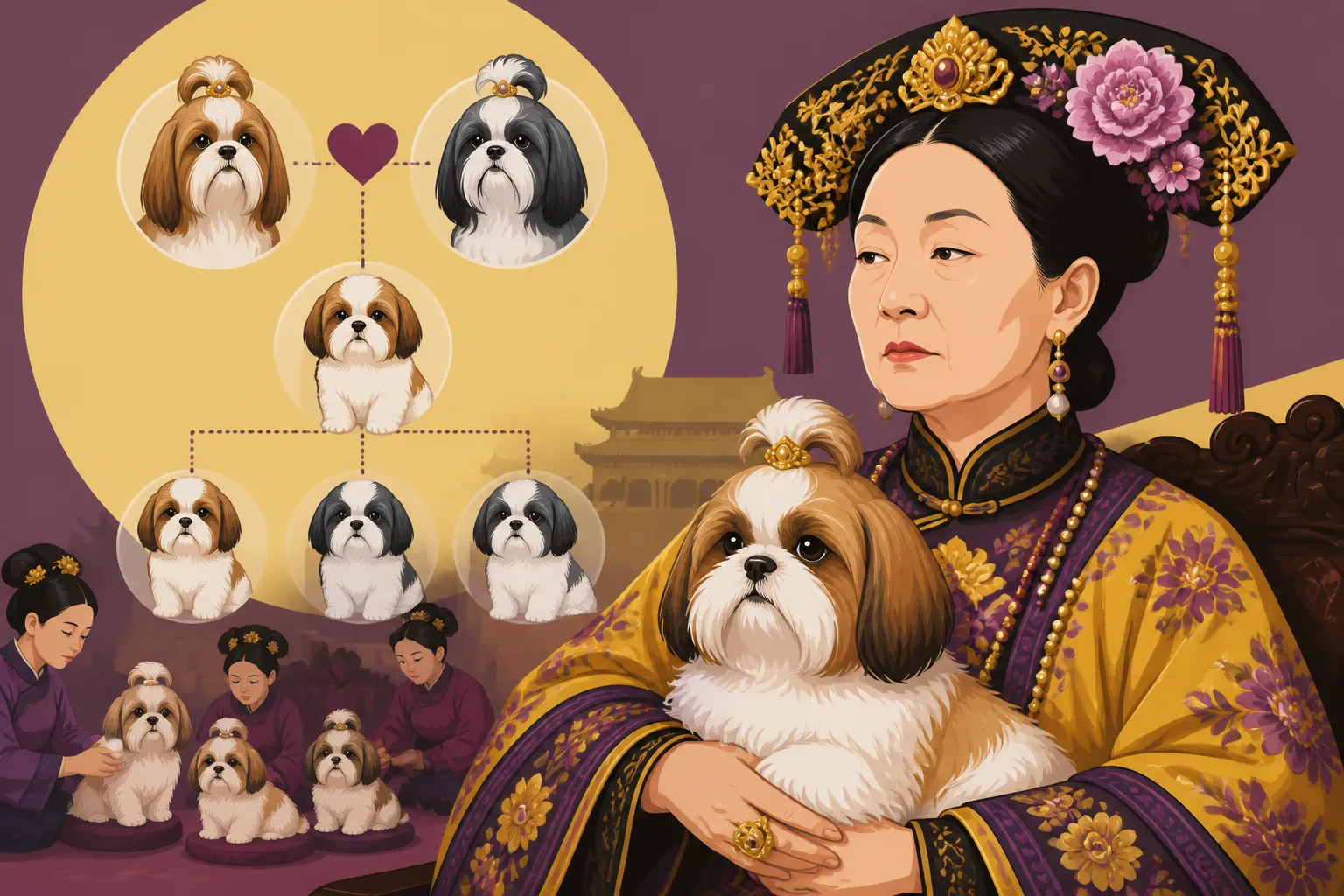
Within the highly structured and intricate world of the Imperial Palace, no detail was too small when it came to the Empress's beloved canine companions. The care of these precious "Lion Dogs" was entrusted not to common servants, but to a specialized retinue of eunuchs, many of whom held the prestigious title of "dog masters." This wasn't merely a menial task; it was a position of immense responsibility and trust, signifying the profound value placed on these dogs. The eunuchs were chosen for their loyalty and their ability to meticulously attend to the needs of these pampered pooches, often living in close proximity to the imperial kennels themselves.
These dog masters were responsible for every aspect of the Shih Tzus' welfare, from their elaborate feeding rituals to their continuous grooming. They ensured the dogs were not only healthy but also impeccably presented at all times, ready for the Empress's viewing or for formal court appearances. Their dedication went far beyond basic upkeep; it was about fostering the perfect imperial companion, reflecting Cixi's deep affection and reverence for her dogs. This level of dedicated, personalized care showcases just how central these animals were to the Empress's daily life and the intricate functioning of her court. You can learn more about these roles in What Eunuchs Did in the Imperial Dog Kennels.
Daily Care and Luxurious Living for Imperial Dogs
The imperial kennels were far from simple utilitarian dog houses; they were elaborate, custom-designed quarters nestled within the grand architecture of the Forbidden City. These spaces would have been adorned with fine furnishings and textiles, climate-controlled to ensure comfort during Beijing's harsh winters and sweltering summers, and constantly attended by a devoted staff. Every aspect of their environment was meticulously maintained to provide a life of ultimate ease and indulgence, reflecting their status as cherished members of the imperial household.
The daily routine for these Shih Tzus was a masterclass in pampering. Their diets consisted of the finest meats and carefully prepared delicacies, a stark contrast to the sparse meals of most commoners. Imagine bowls of finely chopped chicken or special broths, all served with reverence. Beyond sustenance, they received constant attention, gentle handling, and regular playtime, though their primary role was companionship rather than vigorous activity. The emphasis was on their well-being and their ability to provide comfort and delight to the Empress.
These dogs were seen as living works of art, imbued with symbolic meaning derived from their "lion dog" ancestry. They represented good fortune, power, and the Empress’s personal connection to ancient Tibetan traditions. This elevated position meant they were not merely pets but tangible extensions of imperial grandeur, setting them apart from any other animal. Their very existence underscored the opulence and might of the Qing Imperial Court, a fascinating aspect explored further in The Shih Tzu in the Qing Imperial Court.
Even their presentation was a daily ritual. They might have worn exquisitely crafted collars, adorned with precious stones or intricate embroidery, and their long, flowing coats were kept immaculate, often with elaborate topknots. They were, in essence, always prepared for a royal audience, living a life that few animals, past or present, could ever dream of.
Cixi's Vision: Breeding for the Imperial Ideal
Empress Cixi was not merely a passive admirer of dogs; she was a hands-on orchestrator of a sophisticated breeding program. Her goal was clear: to produce Shih Tzus that epitomized the aesthetic and symbolic ideal of the "Lion Dog" – a living jewel perfectly suited for imperial companionship. This vision, driven by her personal preferences and cultural reverence, profoundly shaped the breed's characteristics for generations to come.
Selecting and Pairing Breeding Stock
Cixi's breeding program was a deliberate effort to cultivate specific traits, and this began with the careful selection and pairing of her existing dogs. While modern genetics were centuries away, the Empress and her dog masters understood the principles of selective breeding, observing which pairings consistently produced the most desirable offspring. The palace kennels represented a rather closed gene pool, with prized dogs often kept exclusively within imperial circles. This necessitated thoughtful consideration of each match to maintain the distinct characteristics they sought, while also preventing the dilution of their revered lineage.
The "standard" of beauty and temperament, though unwritten in a formal document, existed clearly in Cixi's mind. She possessed a discerning eye for the ideal "Lion Dog"—its coat, its expression, its overall demeanor. Her preferences dictated which adult dogs were deemed worthy of reproducing, and which puppies were chosen to carry on the imperial line. This historical insistence on particular traits serves as a fascinating precursor to the detailed breed standards we see today, as discussed in The Shih Tzu Standard and What Judges Look For.
The power of the Empress meant that her personal aesthetic was paramount. If she found a particular shade of gold in a coat especially captivating, or a certain tilt of the head endearing, the dog masters would strive tirelessly to replicate it in subsequent litters. This wasn't about scientific methodology but about fulfilling a deeply personal artistic and emotional vision for her beloved dogs. Each pairing was a deliberate step towards reinforcing the qualities that Cixi believed made a Shih Tzu truly imperial.
Specific Traits and the "Lion Dog" Aesthetic
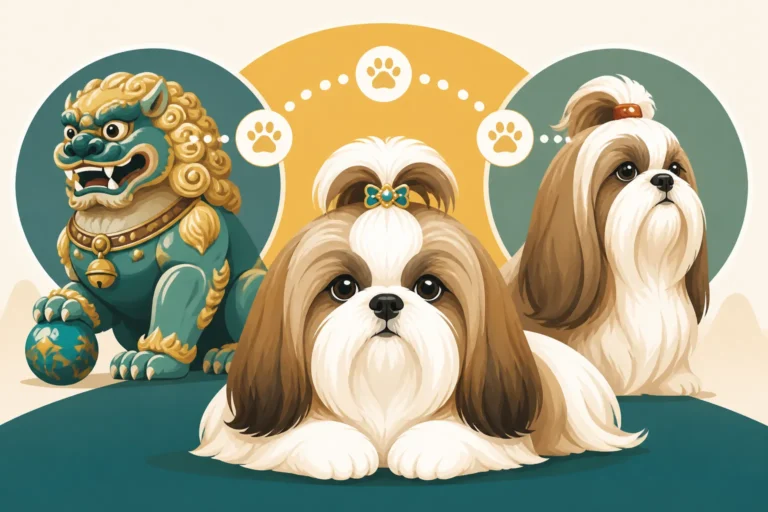
The very name "Shih Tzu" translates to "little lion," a direct reference to their prized "Lion Dog" appearance. This was no mere coincidence; it was a deeply symbolic and highly coveted aesthetic rooted in Tibetan Buddhist traditions, where small lion-like dogs were considered sacred. Empress Cixi ardently sought to enhance this miniature lion image in her breeding program, ensuring each dog embodied the fierce, yet regal and charming, qualities she cherished. This pursuit of the "Lion Dog" was a cornerstone of her entire breeding philosophy.
Numerous physical characteristics were meticulously selected for to achieve this imperial look. The luxuriant, long double coat was perhaps the most prominent, demanding constant grooming to maintain its flowing beauty. Equally important was the distinctive "chrysanthemum" face, where hair grows upwards and outwards from the nose bridge, creating a round, flower-like appearance. The short muzzle and the large, dark, expressive eyes were also critical elements, contributing to that endearing, almost childlike gaze. These traits were not accidental; they were the result of generations of deliberate selection, a concept further explored in Why the Shih Tzu Is Called the Chrysanthemum Dog.
Other valued features included the elegant, plumed tail, which was traditionally carried high and arched over the back, a hallmark of the breed's regal bearing. The characteristic undershot bite, where the lower jaw slightly extends beyond the upper, was also considered a desirable trait, giving the Shih Tzu its unique facial profile. These specific anatomical details, now codified in modern breed standards, were intrinsically linked to the imperial ideal of beauty. You can delve into the details of these features in The Plumed Tail on a Shih Tzu Back and The Shih Tzu Undershot Bite in the Standard.
Beyond physical appearance, temperament played a crucial, albeit perhaps secondary, role. While Cixi appreciated beauty, she equally valued a docile, affectionate, and intelligent companion. Dogs that displayed an overly shy or aggressive nature would likely have been excluded from her breeding lines, as they would not have fulfilled their primary function as beloved lapdogs for the Empress and her court. The combination of stunning looks and a charming disposition was the ultimate goal for Cixi's imperial Shih Tzus.
Records and Practices: How Lineages Were Maintained
In today's world, we rely on meticulously kept pedigree records, DNA tests, and official registries to track a dog's lineage. But Empress Cixi's breeding program operated in a very different era, presenting unique challenges in understanding precisely how these precious bloodlines were maintained and documented within the confines of the Forbidden City.
Challenges of Historical Record-Keeping
When we talk about "records" from Cixi's palace kennels, it's vital to understand that these were not pedigree charts as we know them today, with registered names, birth dates, and generations clearly laid out. Instead, information regarding specific matings, desirable offspring, and ancestral lines was likely passed down through oral tradition among the eunuchs and dog masters. Some rudimentary ledger entries might have existed, perhaps noting births or notable dogs, but these were far from standardized. The very nature of imperial court life meant that much knowledge was held by a select few, and not necessarily formalized for posterity outside their immediate circle.
Adding to this challenge was the tumultuous political landscape of late imperial China. Dynastic changes, rebellions, and periods of social upheaval often led to the destruction or abandonment of palace records, including any casual notes related to the imperial dogs. Imagine the chaos of the Boxer Rebellion or the fall of the Qing Dynasty – preserving canine breeding records would have been the least of anyone's concerns. This makes tracing precise lineages back to Cixi's time an incredibly difficult, if not impossible, task for modern historians and breed enthusiasts.
Despite this lack of formal documentation, the "purity" and reputation of these imperial lines were undoubtedly held in extremely high regard within the court. The dog masters would have possessed an intimate knowledge of each dog's parentage and the perceived quality of its bloodline, even if this knowledge wasn't written in a book. This internal, informal system was sufficient for the palace's purposes, ensuring that the Empress's favorites were reproduced and that the characteristics she desired were perpetuated.
Today, this historical gap is partially bridged by modern scientific advancements. DNA studies on Shih Tzu ancestry, for example, can offer insights into the breed's genetic bottlenecks and relationships, indirectly confirming the existence of a limited founding population. While we may never have a perfect "pedigree chart" for Cixi's dogs, these contemporary methods provide invaluable clues. You can explore this fascinating modern connection in DNA Studies on Shih Tzu Ancestry.
The Legacy of Cixi's Program on Modern Shih Tzus
Empress Cixi's breeding program, despite the lack of formal documentation and the eventual scattering of her kennel, stands as the undeniable foundation for the Shih Tzu breed we cherish today. The few surviving dogs that made their way out of China and into Western hands after the collapse of the Qing Dynasty were the direct descendants of these imperial pampered pooches. These fortunate few carried the genetic blueprint painstakingly cultivated by Cixi and her dog masters.
This survival created what geneticists call a "bottleneck effect." Essentially, all modern Shih Tzus can trace their ancestry back to a very small group of founding dogs. This means that the specific traits, both physical and temperamental, that Cixi valued and bred for are inherently present in every Shih Tzu alive today. Without her dedication and the meticulous care of her palace staff, it's highly probable the breed would have vanished entirely during China's turbulent early 20th century. For more on this, read The Small Founding Group Behind Every Shih Tzu.
The aesthetic preferences of the imperial court have, therefore, left an indelible mark on the breed. The long, flowing double coat, the distinctive flat face with its charming undershot bite, the large, dark eyes, and the characteristic plumed tail carried proudly over the back are all direct results of Cixi's vision. These aren't just random breed features; they are a living testament to a historical breeding philosophy centered on creating the ultimate companion dog. Every time we admire a Shih Tzu's beautiful coat or chrysanthemum face, we are seeing the direct legacy of the Forbidden City.
Ultimately, the Shih Tzu's journey from revered imperial lapdog to beloved family companion worldwide is a testament to the enduring appeal of the "Lion Dog." Empress Cixi's unique and historically significant breeding program didn't just preserve a breed; it shaped it, ensuring that its regal charm and affectionate nature would continue to captivate hearts for centuries to come. Understanding this rich history deepens our appreciation for these wonderful little dogs, highlighting the remarkable path they took to become our cherished companions. Their full journey is fascinating to discover, starting with The Shih Tzu From Tibetan Temples to American Homes.
Key Aspects of Cixi's Imperial Shih Tzu Breeding Program
| Aspect | Imperial Palace Practices Under Cixi |
|---|---|
| Breeding Goal | To produce Shih Tzus that embodied the "Lion Dog" ideal, reflecting symbolic significance and aesthetic preferences of the Empress, serving as cherished companions and symbols of imperial luxury. |
| Personnel | Highly specialized eunuchs and dog masters were solely dedicated to the care, feeding, grooming, and breeding management of the imperial dogs, operating under direct supervision or guidance from the Empress. |
| Living Conditions | Dogs resided in luxurious, climate-controlled quarters within the Forbidden City, receiving diets of fine meats and delicacies, and constant attention from their human attendants. They were pets of the highest order. |
| Selection Criteria | Primarily visual aesthetic (long coat, chrysanthemum face, large eyes, plumed tail, undershot bite), combined with a gentle, affectionate, and intelligent temperament suitable for a companion. Lineage and parental traits were considered to reproduce desired features. |
| Record Keeping | Likely informal, possibly oral traditions or basic ledgers, rather than structured pedigrees. Lineage was known and valued within the court, but formal, centralized records were not maintained in a modern sense, making exact historical tracing challenging. |
| Impact on Breed | The surviving dogs from Cixi's program formed the genetic foundation for the modern Shih Tzu breed, establishing key physical and temperamental characteristics that are still recognized and valued in today's breed standard. |
Disclaimer
This article is for general informational purposes only and does not constitute professional advice. Laws, prices and regulations vary by location and change over time. Consult a qualified professional for guidance on your specific situation.