The Dalai Lama’s Gift to the Empress
Have you ever looked at your sweet Shih Tzu curled up on the sofa, all fluff and affection, and wondered about their incredibly regal past? It's easy to dismiss their history as just "ancient" or "royal," but there's a specific, fascinating moment in time that truly shaped the breed we know today, involving an exchange between two powerful historical figures that cemented the Shih Tzu's place in history. This guide will take you on a journey through the storied past of these magnificent dogs, focusing on a pivotal gift that defined an era.
The Historical Tapestry of the Shih Tzu and Imperial China
The Shih Tzu isn't just an old breed; they are living relics, tracing their lineage back through centuries of intricate history, often intertwined with the most powerful figures of their time. Their journey is far more complex and captivating than just being "lap dogs." These were dogs bred for a purpose, albeit a very specific one, in the heart of two distinct cultures.
The Ancient Origins in Tibet
Before they graced the opulent halls of Chinese palaces, the ancestors of the Shih Tzu were revered companions in the remote monasteries of Tibet. Here, high in the Himalayas, these small, lion-like dogs held deep spiritual significance. They were often referred to as "lion dogs," not just because of their majestic manes and proud bearing, but because the lion was a sacred symbol in Buddhist teachings, representing courage, wisdom, and the guardianship of holy places. These dogs were believed to embody the protective spirit of the lion, making them cherished members of the monastic community.
Life in the monasteries for these early Shih Tzus was one of quiet companionship and spiritual devotion. They were not working dogs in the traditional sense, guarding livestock or hunting game. Instead, their role was to be revered companions, offering comfort and presence to the monks, and perhaps even believed to carry the souls of lamas, bringing good fortune and spiritual harmony. Imagine these small, fluffy beings quietly padding through ancient stone corridors, their presence a calming force in the contemplative lives of the monks. It’s a far cry from the bustling modern homes they occupy now, but the essence of their companionship has remained steadfast. Why Tibetan Monasteries Kept Small Dogs explores this historical context in more detail, giving you a deeper appreciation for their original purpose.
A Treasured Gift to the Chinese Court
The transition from the serene monasteries of Tibet to the extravagant imperial court of China was a significant one for these "lion dogs." They didn't simply walk across the border; they were presented as precious diplomatic gifts, symbols of respect, friendship, and sometimes, political alliance. Tibet, often under the sway of various Chinese dynasties, would offer these rare and beautiful dogs as tribute to the emperors, who in turn, were fascinated by their exotic appearance and placid demeanor. This exchange was more than just trading pets; it was an act of profound cultural and political significance, cementing the bond between two powerful regions.
Once inside the Forbidden City, these dogs entered a world of unparalleled luxury and attention. They were no longer just companions to monks; they became treasured members of the imperial household, pampered with the finest foods, silken beds, and dedicated caretakers. Their arrival in China marked a new chapter in their evolution, where selective breeding programs would further refine their appearance, emphasizing the characteristics that define the modern Shih Tzu: the long, flowing coat, the distinctive "chrysanthemum" face, and their charming, outgoing personality. This journey from sacred companion to imperial treasure highlights the incredible adaptability and enduring appeal of the breed.
Shih Tzus Given as Tribute to Chinese Emperors
The tradition of presenting Shih Tzus as tribute dogs was deeply ingrained in the diplomatic customs between Tibet and China. It was a formal act, often accompanied by elaborate ceremonies, signifying deference and goodwill. These were not just any dogs; they were carefully selected, often from the purest lines, ensuring they were worthy of imperial eyes. The emperors, already surrounded by immense wealth and power, valued these dogs for their rarity, beauty, and the exoticism they brought from the distant "Roof of the World."
This tradition of tribute meant that the Shih Tzu lineage became concentrated within the imperial palaces, particularly during the Ming and Qing dynasties. As a result, the breed developed under extremely controlled conditions, with generations bred within the confines of the court. This exclusivity not only contributed to their mystique but also protected their genetic purity, preventing them from mixing with common street dogs. The emperors understood the unique value of these "lion dogs," ensuring their survival and refinement through meticulous care and breeding. Shih Tzus Given as Tribute to Chinese Emperors provides further insights into this fascinating historical practice.
Dowager Empress Cixi: A Shih Tzu Devotee
While many emperors and empresses cherished these magnificent dogs, one figure stands out as particularly instrumental in the breed's history: Dowager Empress Cixi. Her passion for Shih Tzus was legendary, and under her patronage, the breed reached the pinnacle of its imperial pampering and development.
When Dowager Empress Cixi Took Power
Dowager Empress Cixi ruled China, either directly or indirectly, for nearly five decades, from 1861 until her death in 1908. Her reign was a turbulent period in Chinese history, marked by internal rebellions and increasing foreign intervention. Yet, amidst the political complexities and pressures of her rule, Cixi maintained a profound love for animals, particularly dogs. She found solace and joy in their company, and her imperial kennels became a testament to her devotion.
Cixi was known for her exquisite taste and her penchant for luxury, and her dogs were no exception. She saw them not just as pets, but as extensions of her imperial grandeur. She famously believed that her dogs were reincarnations of Buddhist deities, and thus, treated them with an almost spiritual reverence. Her court became a haven for these special dogs, with the Shih Tzu prominent among them, reflecting her deep appreciation for their beauty and temperament. You can learn more about her influence in The Empress Who Bred Shih Tzus in the Forbidden City.
The Dalai Lama's Gift to the Empress
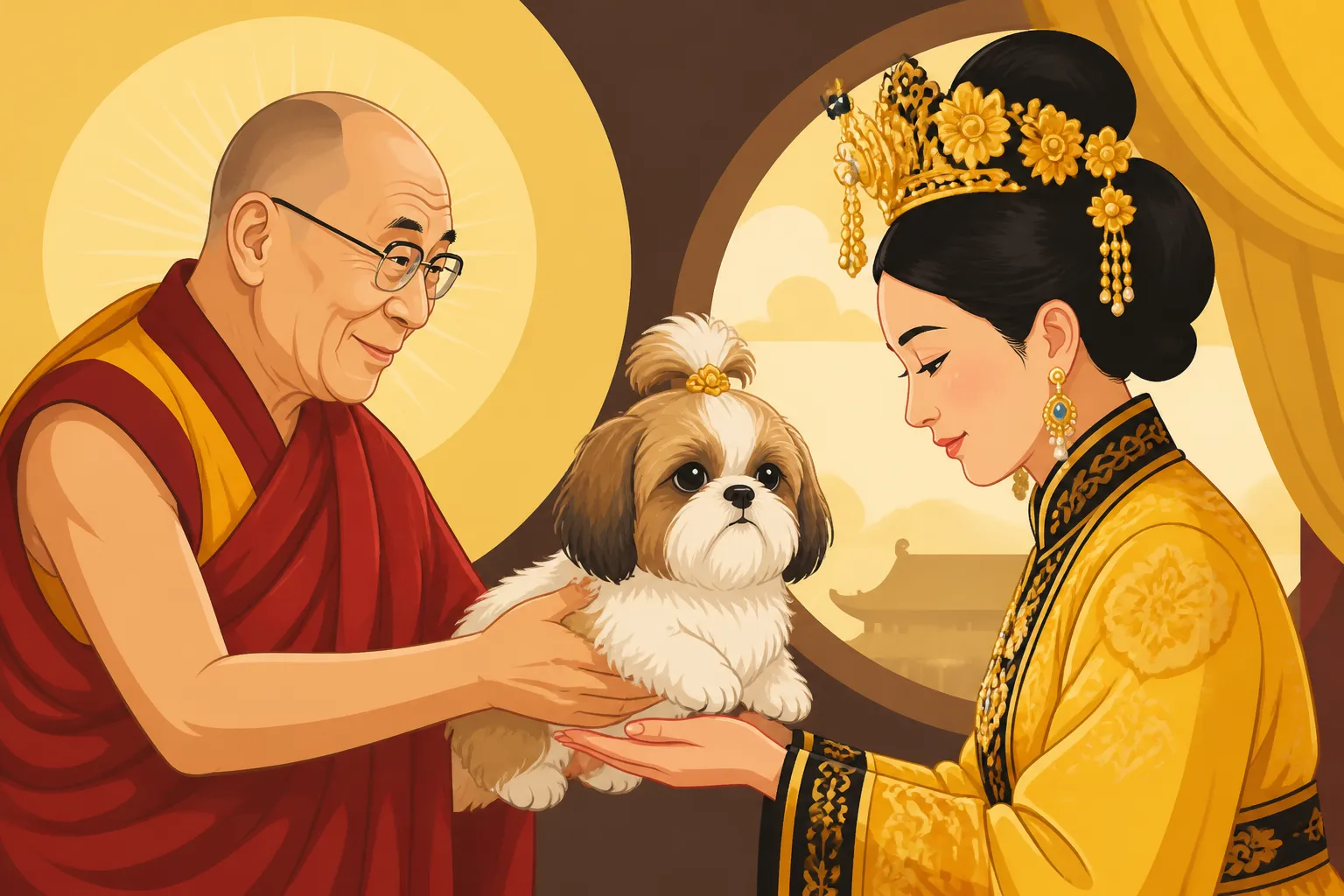
Among the many dogs Cixi owned, a particular influx of new blood came through a significant diplomatic gesture: a gift from the 13th Dalai Lama. During Cixi's reign, relations between Tibet and the Qing court were complex, but respectful exchanges of tribute and gifts were common. It is widely documented that the 13th Dalai Lama, recognizing Cixi's affection for "lion dogs," sent a collection of his finest specimens as a diplomatic present. This wasn't merely a casual exchange; it was a deeply symbolic gesture, representing the spiritual and political ties between Tibet and the vast Chinese empire.
These dogs, brought from the remote monasteries, were believed to be of exceptionally pure lineage, descendants of the ancient Tibetan temple dogs. Their arrival at Cixi's court was met with great excitement. She understood the rarity and spiritual significance of these particular dogs, and she integrated them into her already elaborate breeding program. This gift from the Dalai Lama invigorated the imperial lines, adding fresh genetic diversity and reinforcing the qualities that Cixi admired most in her Shih Tzus. It cemented the breed's status as a symbol of both imperial power and spiritual connection, a lineage directly linking them to the highest echelons of both Tibetan and Chinese society.
How Cixi Ran Her Palace Breeding Program
Dowager Empress Cixi didn't just keep dogs; she maintained an incredibly sophisticated and meticulously run breeding program within the palace walls. Her kennels were not simple dog pens; they were opulent dog palaces, staffed by eunuchs whose sole purpose was the care and breeding of these imperial treasures. She personally oversaw many aspects, showing a level of dedication that few rulers have ever extended to their pets.
Her breeding goals were clear: to produce dogs that perfectly embodied the "lion dog" ideal, with luxurious coats, striking features, and gentle temperaments. She had a profound understanding of lineage and would meticulously track bloodlines, seeking to perfect specific traits. Imagine the detailed records kept, the careful selection of breeding pairs, all under the direct scrutiny of the Empress herself. The dogs were fed the finest foods, bathed in scented waters, and groomed daily to maintain their magnificent coats. These were not just dogs; they were pampered members of the royal court, and Cixi ensured their every need was met, often above and beyond what one might expect for human attendants. This dedication solidified the Shih Tzu's unique appearance and amiable disposition that we cherish today. How Cixi Ran Her Palace Breeding Program further elaborates on her detailed management.
The Enduring Legacy of the Imperial Shih Tzu
The intense care and dedicated breeding under Dowager Empress Cixi created a lasting impact on the Shih Tzu breed, shaping its very essence and ensuring its survival long after the imperial court faded away.
What Eunuchs Did in the Imperial Dog Kennels
The eunuchs who staffed Cixi's imperial dog kennels played an absolutely crucial role in the daily lives of these pampered Shih Tzus. Their duties went far beyond merely feeding and watering the dogs. These eunuchs were highly trained and specialized caregivers, responsible for every single aspect of the dogs' well-being. They were the primary groomers, ensuring the Shih Tzus' long, flowing coats remained pristine and free of mats, a monumental task given the breed's double coat. They would meticulously brush and comb each dog, often performing elaborate styling that included tying up topknots to keep hair out of the dogs' eyes, a practice that continues to this day.
Beyond grooming, the eunuchs were also responsible for the dogs' health, hygiene, and even their emotional needs. They would bathe the dogs, clean their ears, and trim their nails. They supervised their exercise, ensuring they received enough gentle activity without overexertion. Furthermore, they were attuned to each dog's personality and temperament, capable of identifying any subtle changes that might indicate illness or distress. They served as constant companions, providing comfort and attention, effectively acting as dedicated nannies for these royal canines. The level of personalized care provided by these eunuchs contributed significantly to the Shih Tzus' reputation for being gentle, affectionate, and well-socialized dogs, accustomed to constant human interaction. What Eunuchs Did in the Imperial Dog Kennels offers a fascinating glimpse into their dedicated roles.
The Small Founding Group Behind Every Shih Tzu
The strict imperial control over Shih Tzu breeding, particularly under Dowager Empress Cixi, meant that the breed's genetic pool was incredibly limited. This exclusivity ensured purity but also meant that when the breed eventually left China and was introduced to the Western world, it did so with a very small number of founding dogs. After Cixi's death in 1908 and the eventual fall of the Qing Dynasty, many of these prized dogs were dispersed, some tragically perishing, others finding their way into the homes of foreign dignitaries and travelers.
It is believed that all modern Shih Tzus outside of China can trace their ancestry back to just 14 dogs – seven males and seven females – that were imported into Europe between the 1920s and 1930s. This tiny gene pool, carefully managed by early Western enthusiasts, highlights the profound impact of the imperial lines. Every Shih Tzu you see today, with their characteristic "chrysanthemum" face and flowing coat, carries the genetic legacy of those few imperial survivors. This bottleneck in their history means that while the breed is ancient, its modern population stems from a very select and historically significant group, proving the importance of that original imperial care. The Small Founding Group Behind Every Shih Tzu is a great resource if you want to understand more about their genetic heritage.
Shih Tzus Smuggled Out of China
The journey of the Shih Tzu from the imperial palaces of China to the drawing rooms of Europe and America is a story fraught with intrigue and survival. Following the tumultuous end of the Qing Dynasty in 1912, the imperial kennels, once so meticulously managed, fell into disarray. Many of the precious Shih Tzus were lost or mixed with other breeds. However, a select few were either formally gifted to foreign visitors or, more dramatically, found their way out of China through less official channels.
These "smuggled" dogs, often acquired by diplomats, merchants, or soldiers, represented the last vestiges of the pure imperial lines. They were highly prized and extremely rare. It was these adventurous individuals who, recognizing the unique beauty and charm of the Shih Tzu, carefully transported them across continents, often at great personal risk. Their foresight and dedication were crucial in preserving the breed when its existence in its homeland was threatened. Without these efforts, the Shih Tzu might have been lost to history. It's truly incredible to think that your fluffy companion today owes its existence to such a dramatic exit from a bygone era, finding a new life and appreciation in the Western world. How the Shih Tzu Reached the West delves into this fascinating journey, showing how these resilient dogs eventually became the beloved companions they are today.
| Historical Figure / Group | Role in Shih Tzu History | Significance |
|---|---|---|
| Tibetan Monks | Originators & Early Keepers | Developed the "lion dog" type, instilled spiritual significance, kept early lineages pure in monasteries. |
| Chinese Emperors | Recipients of Tribute & Early Patrons | Integrated Shih Tzus into imperial courts, appreciated their exoticism and beauty, initiated early palace breeding programs, cementing their status as royal dogs. |
| Dowager Empress Cixi | Primary Patron & Master Breeder | Elevated the breed to its peak, ran a sophisticated breeding program, personally oversaw care, and refined the breed's appearance and temperament. Her passion was pivotal in preserving the breed. |
| 13th Dalai Lama | Diplomatic Giver | Provided a crucial influx of pure Tibetan lines to Cixi's kennels as a diplomatic gift, strengthening the imperial breed and reinforcing its spiritual connection. |
| Imperial Eunuchs | Dedicated Caretakers & Groomers | Provided continuous, meticulous care for the imperial Shih Tzus, ensuring their health, pristine appearance, and well-being, contributing to their gentle temperament and adaptation to human pampering. |
| Western Admirers | Rescuers & Introducers to the West | Acquired and "smuggled" the last pure imperial Shih Tzus out of China during turbulent times, establishing the breed in Europe and America and forming the basis for all modern Shih Tzu lineages outside of their country of origin. |
Disclaimer
This article is for general informational purposes only and does not constitute professional advice. Laws, prices and regulations vary by location and change over time. Consult a qualified professional for guidance on your specific situation.