The Shih Tzu Standard and What Judges Look For
The Shih Tzu breed standard defines ideal physical traits, a compact body, and expected temperament for ethical breeding practices.
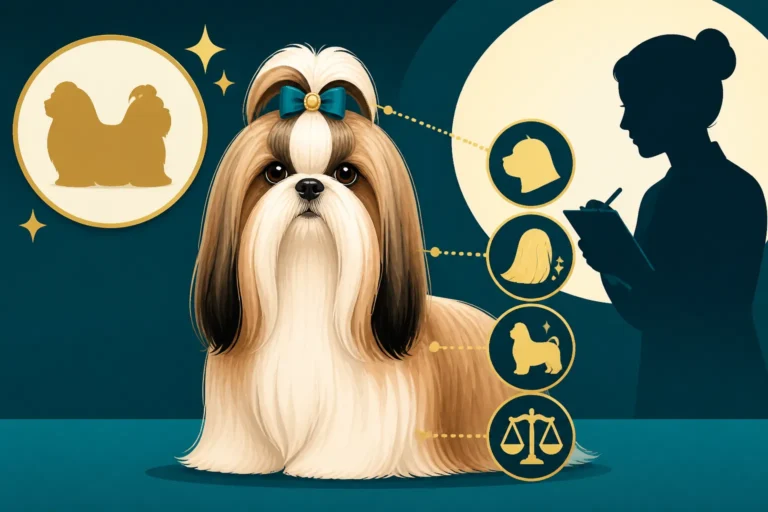
The Shih Tzu breed standard defines ideal physical traits, a compact body, and expected temperament for ethical breeding practices.

The history of the Shih Tzu traces its ancient origins from Tibetan monasteries and imperial Chinese palaces to modern homes.

The Shih Tzu topknot prevents corneal ulcers, bacterial growth, and serious eye infections by keeping long facial hair away from delicate eyes.

Daily brushing of a Shih Tzu double coat prevents painful mats and skin infections by removing shed undercoat fibers quickly.

House training a Shih Tzu takes months because of small bladder capacity, unique temperament, and Tibetan palace ancestry.

Effective training strategies for companion Shih Tzus help owners understand breed temperament, history, and positive reinforcement methods.

Shih Tzu grooming costs five hundred to one thousand eighty dollars yearly, covering professional salon visits and home care.

Shih Tzu puppy prices range from $1,500 to $3,000 based on breeder reputation, lineage, health testing, and geographic location.

Shih Tzu eye proptosis is a medical emergency when the eyeball displaces forward from its shallow socket, trapping eyelids behind.

The thirteen year Shih Tzu lifespan relies on genetics, health data, and daily care, with some dogs reaching eighteen years.
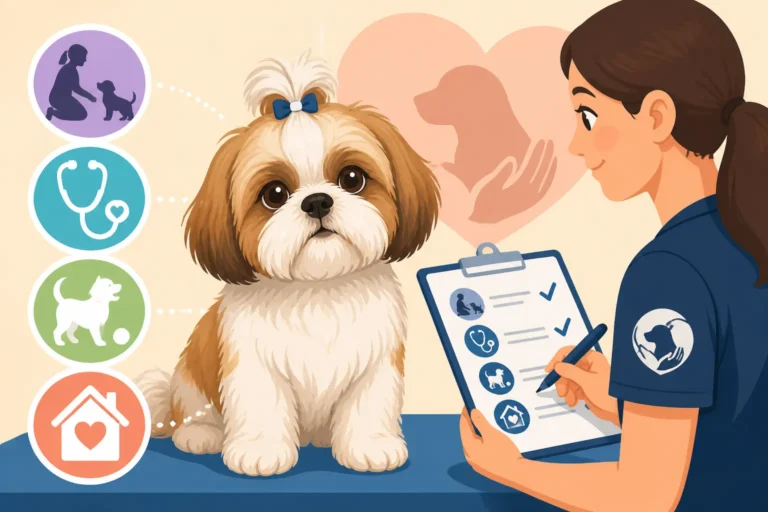
A Shih Tzu rescue assessment evaluates health, temperament, and history to match dogs with suitable permanent homes.

Shih Tzus in rescue shelters often result from unexpected veterinary bills and expensive yearly grooming costs.

The Shih Tzu and Cavalier King Charles Spaniel comparison details distinct personalities, care requirements, and health considerations.

Shih Tzu and Bichon Frise temperament, trainability, and grooming differences help owners choose the right dog breed.

Shih Tzu population numbers and purebred registrations shift due to designer crossbreeds and brachycephalic health awareness.

Shih Tzu popularity compared against other toy breeds reveals unique traits and health needs affecting small dog choices.

Biological limits of toy breeds and smaller uterine capacity explain why Shih Tzu litters are typically small.

A Shih Tzu puppy contract protects buyers and breeders by detailing health guarantees, prices, and identification information.

Shih Tzu breed clubs provide owners with reliable guidance, health insights, and connections to responsible breeders.

AKC sports participation for Shih Tzus is possible, explaining which events suit their physical traits and training needs.