Brushing a Shih Tzu Double Coat Every Day
One of the biggest frustrations for Shih Tzu owners, especially those new to the breed, is the relentless battle against mats and tangles in that beautiful, flowing coat. It seems like you can brush your sweet little lion dog one minute, turn your back for five, and suddenly they’re a walking felt blanket! But trust me, you're not alone in feeling overwhelmed. This guide is going to walk you through exactly why a Shih Tzu's coat demands daily attention and how to make that crucial brushing routine effective, comfortable, and even enjoyable for both of you.
Understanding the Shih Tzu Double Coat: A Matting Magnet
Let's face it, the Shih Tzu's glorious coat is what often draws us to them in the first place. That regal, flowing hair that earned them the nickname "lion dog" is undeniably stunning. But beneath the surface of that magnificent mane lies a complex structure that, if not properly cared for, can quickly become a dense, painful mess. Understanding this unique double coat is the first step to conquering the matting monster.
The Two Layers: Guard Hairs and Undercoat
Imagine wearing a delicate silk shirt over a thick, fluffy wool sweater. Now imagine those two layers constantly rubbing against each other, trapping loose fibers, and forming knots. That's essentially what's happening with your Shih Tzu's coat.
They possess what's known as a double coat, comprised of two distinct types of hair:
- The Outer Coat (Guard Hairs): These are the longer, coarser, often straighter hairs that give the Shih Tzu its characteristic luxurious flow. They're meant to protect the dog from elements and contribute to that elegant silhouette. These hairs are less prone to matting on their own, but they are the visible layer that often hides the trouble brewing underneath.
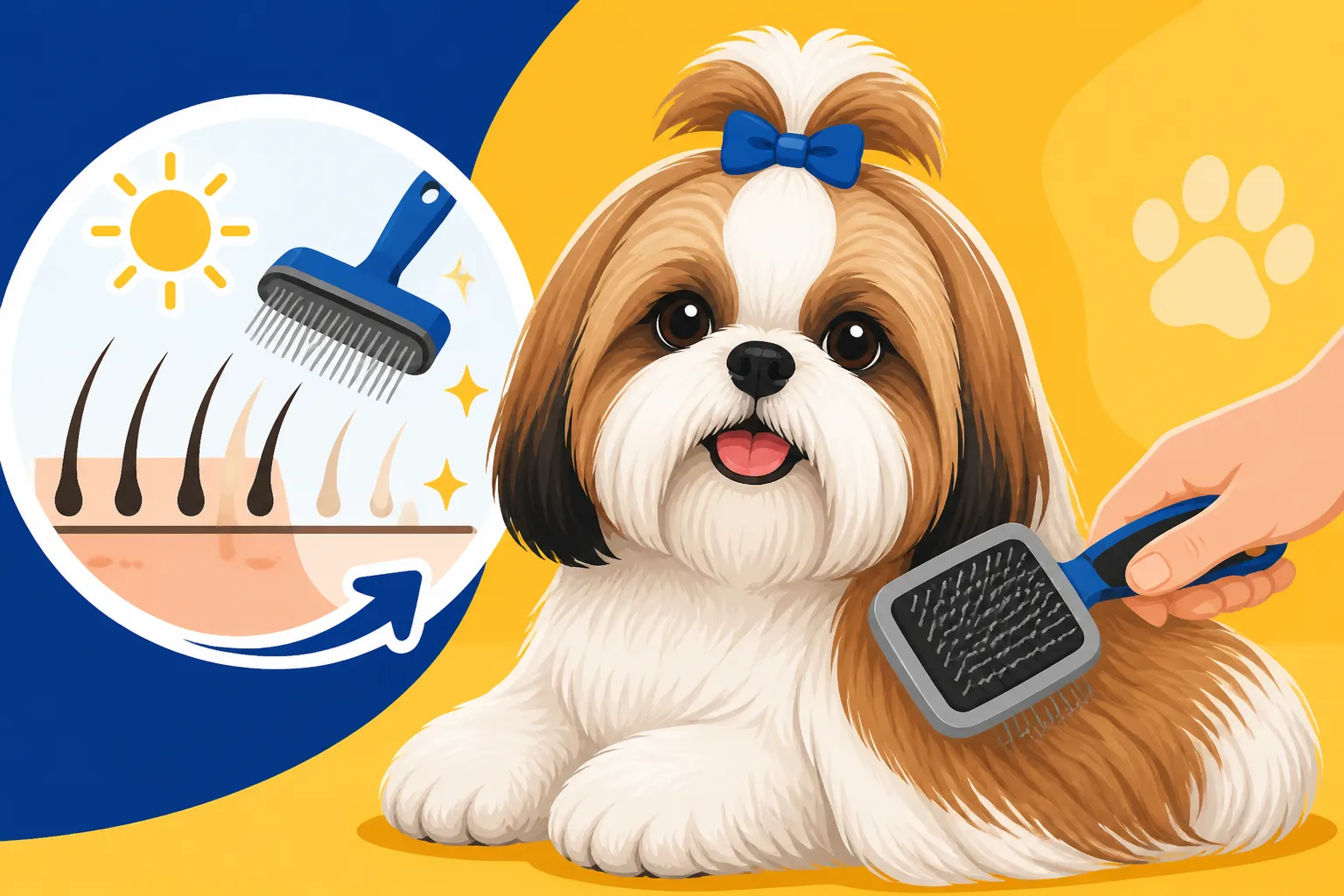
- The Undercoat: This is where the real challenge lies. The undercoat consists of soft, dense, downy hairs that are much finer and tend to be wavy or curly. Its primary purpose is insulation, keeping your Shih Tzu warm in winter and helping to regulate their temperature in warmer weather. However, these fine hairs shed continually, and if they aren't regularly brushed out, they become intertwined with the coarser guard hairs. This intermingling is the perfect storm for mat formation. The shed undercoat gets caught, twists, and compacts, pulling the surrounding guard hairs into a tight, dense knot.
Picture your Shih Tzu romping in the yard, rolling on the carpet, or even just lying down. Each movement causes friction between these two layers, providing countless opportunities for shed undercoat to lock into the guard hairs, especially in areas of high movement like armpits and behind the ears. This is why you simply cannot treat a Shih Tzu coat like a single-layer breed's coat; it demands a different strategy entirely.
Why Daily Brushing Isn't Just "Nice," It's Necessary
You might think, "Daily brushing? Isn't that a bit excessive?" For most breeds, perhaps. But for a Shih Tzu with a full, flowing double coat, daily brushing isn't just a suggestion; it's a fundamental requirement for their health, comfort, and well-being. This is a battle you fight not for vanity, but for compassion.
The truth is, mats form with astonishing speed. What starts as a small tangle from a good nap can, within 24-48 hours, become a tight knot if ignored. These aren't just cosmetic issues; they are serious problems for your dog. Tight mats pull on the skin, causing pain and discomfort every time your Shih Tzu moves. Imagine having your hair constantly tugged at, hour after hour, day after day. It's truly miserable. Beyond the pain, mats restrict air circulation to the skin, creating a moist, warm environment where skin infections, hot spots, and parasites can thrive. They can even restrict movement in severe cases, making it hard for your dog to walk, lie down, or even relieve themselves comfortably. We want to avoid these issues entirely, and the only reliable way is through consistent, daily preventative care.
The Difference Between Brushing and "Surface" Brushing
Many well-meaning Shih Tzu owners believe they are brushing regularly, yet still find themselves battling mats. The culprit is often "surface brushing." This common mistake involves running a brush over the top layer of the coat, making it look smooth and shiny, but completely missing the dense undercoat and the mats forming closer to the skin. It’s like dusting the top of a messy shelf without actually cleaning underneath.
Surface brushing gives a false sense of security. The top coat looks great, but deep down, the undercoat is silently compacting, tightening into stubborn knots that become much harder, and more painful, to remove later. When you attempt to brush a large, established mat, you're not just brushing hair; you're pulling on your dog's skin, causing significant pain and creating a negative association with grooming. This makes future brushing sessions a struggle for both of you. The key is to understand that brushing a Shih Tzu isn't about making the top look neat; it's about systematically separating and detangling every single strand of hair from the skin outwards, ensuring that both layers are free of knots and shed hair. Only then can you truly say you've brushed your Shih Tzu.
Essential Tools for Your Daily Shih Tzu Grooming Ritual
Having the right tools for the job makes all the difference. Trying to brush a Shih Tzu with a flimsy, inadequate brush is like trying to chop down a tree with a butter knife – frustrating, ineffective, and potentially damaging. Investing in quality grooming tools isn't an extravagance; it's a necessity for maintaining your Shih Tzu's coat and ensuring their comfort.
Choosing the Right Brushes and Combs
Your grooming toolkit should include a few specific items, each with a distinct purpose, to effectively manage your Shih Tzu's unique double coat. You can find many of these reliable brands and products on online retailers like Chewy or Amazon, offering a wide selection to suit your preferences.
- Slicker Brush: This is your primary weapon against mats. Slicker brushes have fine, short wire bristles closely set together, often with a slight bend at the tips. They are designed to grab and separate shed undercoat and work through tangles.
- Soft vs. Firm: Slicker brushes come in different firmness levels. For most Shih Tzus, a medium-firm slicker is a good starting point, capable of working through the dense undercoat without being too harsh on their delicate skin. If your dog has a particularly thick coat or heavy matting (though we're aiming to prevent that!), a firmer slicker might be necessary, but always use with caution and a very light hand to avoid skin irritation.
- Technique: The key with a slicker brush is to use light, swift strokes, always brushing away from the skin. You're not scrubbing; you're gently teasing out tangles. You want to get all the way down to the skin without scratching it.
- Pin Brush: A pin brush has widely spaced, smooth pins, usually with rounded tips. While not as effective for deep detangling as a slicker brush, it's excellent for general brushing, fluffing the coat, and distributing natural oils. It's often used for the final pass or for dogs with less dense coats. It can also be very helpful for breaking up larger, looser clumps before moving on to the slicker brush.
- Metal Comb (Greyhound Comb): This is perhaps the most critical tool for confirming a thorough brush-out. A good quality metal comb will have teeth of varying widths – typically one end with wide-set teeth and the other with fine-set teeth.
- The "Comb Test": After you think you've brushed a section with the slicker brush, gently run the metal comb through it, all the way down to the skin. If the comb glides through without snagging, you've done a good job! If it snags, you've found a tangle that needs more attention with the slicker brush. The wide-toothed end is great for starting in denser areas, while the fine-toothed end confirms the absence of even the smallest knots. This is crucial for identifying Mats Where a Harness Sits on a Shih Tzu or The Mats That Form Behind Shih Tzu Ears.
Detangling Sprays and Conditioners: Your Best Friends
Brushing a dry, brittle Shih Tzu coat is an invitation for breakage and discomfort. That's why detangling sprays and leave-in conditioners are invaluable allies in your daily grooming routine. Think of them as giving your dog's hair a little slipperiness, making it easier for the brush to glide through.
Before you even touch a brush to your Shih Tzu's coat, a light mist of a good quality detangling spray is highly recommended. These sprays often contain conditioning agents that coat the hair shaft, making it smoother and more resilient. This lubrication significantly reduces friction as you brush, meaning less pulling, less pain for your dog, and less static. Less static also helps prevent the hairs from flying around and immediately tangling again after you've just brushed them. Some sprays also have anti-static properties, which are a lifesaver, especially in dry climates or during winter. You can find excellent detangling sprays specifically formulated for long-haired dogs from reputable brands, easily available on platforms like Chewy. These sprays allow your brush to work more efficiently, breaking up minor tangles without causing breakage or discomfort. Always check the ingredients for anything that might irritate your Shih Tzu's sensitive skin. Detangler Sprays That Work on a Shih Tzu can save you a lot of grief.
The Importance of a Grooming Table and Secure Area
While it might seem endearing to brush your Shih Tzu while they're sprawled on your lap or the sofa, it's not the most effective or safest method. A dedicated grooming area, ideally a grooming table, can revolutionize your daily brushing sessions.
A grooming table provides an elevated, stable surface, bringing your dog to a comfortable working height. This saves your back and knees, allowing you to maintain better posture and focus on the task. More importantly, it creates a designated space where your Shih Tzu learns that grooming happens. When you consistently use the same table, your dog will begin to associate it with the grooming routine, understanding that it's time to stand (or lie calmly) and be handled. Most grooming tables come with a grooming arm and a no-sit haunch holder, which are incredibly useful. The no-sit haunch holder is a soft loop that gently goes under your dog's belly and attaches to the grooming arm, preventing them from sitting down or jumping off the table. This is not to punish them but to keep them safe and still for their own protection. Imagine trying to brush delicate areas like the armpits or behind the ears if your dog is constantly squirming. A secure table allows for precise, gentle work, reducing the risk of accidental nicks from scissors or brushes, which can happen if your dog suddenly moves unexpectedly. This is especially important when you're working near sensitive areas like the eyes, which are particularly delicate for Shih Tzus.
Step-by-Step: Mastering the Daily Brush-Out Technique
Now that you understand the "why" and have the "what," it's time to delve into the "how." A systematic approach to brushing isn't just about efficiency; it's about ensuring every inch of your Shih Tzu's coat is free of mats, from tip to root. This methodical technique is often referred to as "line brushing" and it's the gold standard for long-haired breeds.
Preparing Your Shih Tzu and the Brushing Area
Before you even pick up a brush, a little preparation goes a long way in making the experience positive for both of you. You want to set the stage for success, turning what could be a chore into a bonding experience.
First, gather all your tools: slicker brush, metal comb, detangling spray, and plenty of high-value treats. Make sure your grooming table (or designated stable surface) is ready, perhaps with a non-slip mat for comfort. Choose a quiet time when you're not rushed and your Shih Tzu isn't overly excited or tired. A calm environment is key. Before starting, take a moment to gently handle your Shih Tzu. Pet them, talk to them in a soothing voice, and offer a treat. This helps them relax and associate the start of grooming with positive attention. If your Shih Tzu is a puppy, these early sessions are vital for desensitization. Keep them short, positive, and full of rewards. Even for an adult dog, a pre-grooming cuddle and a treat from a brand like Ollie can set a positive tone. You want them to feel safe and secure. Remember, the goal is to make this a comfortable routine, not a stressful ordeal. Getting a Shih Tzu Used to a Slicker Brush starts with positive association.
The "Line Brushing" Method: Reaching Every Strand
This is the secret sauce to effective Shih Tzu grooming. The line brushing technique ensures you get through both layers of the double coat, preventing those hidden mats near the skin. It takes patience, but it's incredibly effective.
Start by having your Shih Tzu stand or lie comfortably on the grooming table. Begin with a section that is generally less sensitive, like a lower part of a leg or the flank. Using your non-brushing hand, part the hair horizontally, creating a clean "line" of skin. This might sound tricky with a fluffy dog, but think of it like styling hair. Hold the hair above this line up and out of the way, either with a clip or just by holding it firmly. Now, you have a small section of hair exposed, from the skin out to the ends. Apply a light mist of detangling spray to this exposed section. Then, using your slicker brush, start at the very bottom of this section, brushing downwards and outwards, working only on the hair below your hand, moving towards the ends. Brush in small strokes, always away from the skin, gradually working your way up the exposed section towards the parting line. Once that section feels smooth and tangle-free, drop a little more hair from the clipped-up section to create a new "line" just above the first one, and repeat the process. This method ensures you are systematically brushing small sections of hair, all the way down to the skin, rather than just skimming the surface.
Tackling Common Matting Hotspots
While line brushing systematically addresses the entire coat, some areas are simply more prone to matting than others. These "hotspots" require extra attention and diligence.
- Behind the Ears: This is a notorious matting zone. The fine hairs behind the ears, combined with friction from head movements, rubbing against bedding, or even just wearing a collar, make this area a prime candidate for tight knots. When you reach this section, be extra gentle and use smaller brush strokes. If you find a tangle, isolate it, spray it with detangler, and work from the outer edges of the mat inwards, gently teasing it apart with your fingers or the wide teeth of your comb before using the slicker brush. The Mats That Form Behind Shih Tzu Ears can be particularly stubborn.
- Armpits and Groin: These areas experience constant friction from leg movement, making them highly susceptible to matting. Lifting your Shih Tzu's leg and working gently in these sensitive areas is crucial. Be very careful as the skin here is thin and delicate. Use small strokes and follow up with your metal comb to ensure no tiny mats are hiding. These areas are often where Mats Under a Shih Tzu's Front Legs first develop.
- Legs and Paws: The long hair on a Shih Tzu's legs and between their paw pads can pick up debris and tangle easily. Remember to brush the leg hair in sections, just like the body, and don't forget the hair between the toes. A small, fine-toothed comb can be helpful for the paw pads, ensuring they're free of debris that could cause discomfort or infection.
- Tail and Rear End: The beautiful plumed tail and the hair around the rear can also matt quickly, especially if it gets wet or soiled. Keep this area meticulously brushed to prevent hygiene issues and discomfort. Regular sanitary trims, either done by a groomer or carefully by you, are also important here.
Consistency in addressing these hotspots during your daily routine will save you immense trouble and your Shih Tzu much discomfort.
When Mats Happen: Dealing with Knots Safely
Despite your best efforts with daily brushing, sometimes a mat still manages to form. Maybe your Shih Tzu rolled in something sticky, or you missed a spot, or perhaps a busy day meant the brushing session was shorter than usual. It happens! The key is to address these knots safely and effectively, without causing pain or injury to your beloved companion.
Gentle Detangling Strategies for Small Knots
When you encounter a small, isolated mat, resist the urge to pull or yank. This will only hurt your Shih Tzu and tighten the mat. Instead, adopt a patient and gentle approach.
First, isolate the mat. Use your fingers to gently separate the surrounding hair from the knot so you can focus solely on the tangled section. Next, liberally apply a good quality detangling spray directly onto the mat. Let it sit for a minute or two to allow the product to penetrate and soften the hair. Once saturated, start by gently picking apart the outer edges of the mat with your fingertips. Gradually work your way into the knot, using the wide-toothed end of your metal comb. Start at the very tips of the mat, gently teasing out small sections of hair, working your way towards the base of the mat, closer to the skin. Never try to comb from the top straight through the mat. Instead, use a "picking" or "raking" motion, lifting and separating small clusters of hair. This might take some time, but patience is crucial. If your Shih Tzu shows any signs of discomfort, take a break, offer a treat, and resume when they are calm. Remember, your goal is to preserve as much hair as possible while prioritizing your dog's comfort.
When to Call in a Professional for Severe Matting
There are times when a mat is simply beyond safe at-home detangling. Attempting to cut out tight, dense mats with scissors can be incredibly dangerous. Shih Tzu skin is thin and easily nicked, especially when it's pulled taut by a mat. It's shockingly easy to cut skin along with the mat, leading to painful wounds that often require veterinary attention.
If you find a mat that is tight, large, close to the skin, or if your Shih Tzu is clearly in pain when you try to touch it, it's time to call a professional groomer. A skilled groomer has specialized tools, like powerful clippers with various blade lengths, and the expertise to safely and humanely remove severe matting. Often, the only compassionate solution for a severely matted dog is a complete shave-down. While it might be heartbreaking to see your Shih Tzu lose their beautiful long coat, it's infinitely better than subjecting them to hours of painful, ineffective detangling. A shaved coat will grow back, and you can then commit to a fresh start with your daily brushing routine. A groomer understands the risks of a Shih Tzu that reaches rescue with matted coats and will prioritize their comfort. They will also be able to explain When a Shih Tzu Mat Has to Be Shaved Out to you in detail.
Preventative Measures Beyond Daily Brushing
While daily brushing is paramount, a few other preventative measures can significantly reduce the likelihood of mats forming and make your grooming routine even easier.
- Regular Professional Grooming: Even with diligent home care, regular visits to a professional groomer every 4-8 weeks are highly beneficial. Groomers have the tools and expertise to give your Shih Tzu a thorough bath, blow-dry, and trim that’s hard to achieve at home. They can also spot developing mats and deal with them before they become severe, and recommend appropriate coat lengths, such as a "puppy cut," that might be easier for you to maintain.
- Appropriate Accessories: Be mindful of collars and harnesses. A collar that's too tight or constantly rubs can create friction and lead to matting around the neck and behind the ears. Consider a soft, well-fitting harness that doesn't rub excessively, especially in the armpit area. Harnesses That Do Not Mat a Shih Tzu Coat are a good investment. Also, ensure your Shih Tzu's topknot is tied correctly or their fringe is trimmed to prevent hair from falling into their eyes, which can also lead to tangles and tear staining. A properly tied The Shih Tzu Topknot and Keeping Hair Out of the Eyes is more than just cute; it's functional.
- Bathing and Drying Techniques: When you do bathe your Shih Tzu, make sure to completely brush out all tangles before the bath. Water will tighten any existing mats, making them much harder to remove. After bathing, use a high-velocity dryer (if your dog tolerates it) or a hairdryer on a cool setting, brushing continuously as you dry to prevent new tangles from forming. Ensure the coat is 100% dry down to the skin.
Making Brushing a Positive Experience for Your Shih Tzu
Let's be honest, for some Shih Tzus, grooming can feel like a chore or even a battle. But it doesn't have to be. By focusing on positive reinforcement and understanding your dog's perspective, you can transform daily brushing into a calm, even enjoyable, bonding experience for both of you.
Starting Early and Positive Reinforcement
The foundation for a happy groomer (and groom-ee!) is laid in puppyhood. The earlier you introduce your Shih Tzu to grooming, the better. Even before their adult coat fully comes in, get them used to being handled.
Start with very short sessions – literally just a minute or two – where you gently touch them all over, especially in sensitive areas like their paws, ears, and tail. Use a soft puppy brush for a few gentle strokes. Immediately follow this with lavish praise, gentle petting, and a high-value treat. Repeat this several times a day. The goal isn't necessarily to get every tangle out initially, but to build a positive association: "Grooming means good things happen!" As they get more comfortable, gradually increase the duration and intensity of the sessions. You can practice standing them on a safe, elevated surface, just like a grooming table, to get them accustomed to that setup. If your puppy is enrolled in Puppy Classes That Suit a Shih Tzu, discuss grooming desensitization with the trainer. Remember, consistency is key; short, positive daily interactions are far more effective than infrequent, long, and stressful battles.
The Role of Patience and Consistency
Dogs are incredibly perceptive; they pick up on our emotions. If you approach grooming with frustration, anxiety, or impatience, your Shih Tzu will sense it and likely mirror those feelings. This creates a vicious cycle where grooming becomes a dreaded event for everyone involved.
Patience is your superpower here. Some days will be smoother than others. Your Shih Tzu might be squirmier, or you might hit a stubborn tangle. Take a deep breath. If you feel yourself getting frustrated, it's okay to take a short break. Put your dog down, walk away for a minute, and then try again with a calmer mindset. Your calm energy will translate to your dog. Similarly, consistency builds routine. When grooming becomes a predictable part of their day – perhaps after their morning walk or before dinner – they learn what to expect. This predictability reduces anxiety and makes them more cooperative. Stick to a schedule, even if it's just a quick five-minute brush-out on a busy day. Regularity, even for short periods, prevents mats from becoming severe and reinforces the routine.
Recognizing Your Shih Tzu's Cues and Limits
Every dog is an individual, and learning to read your Shih Tzu's body language is crucial for making grooming a positive experience. They communicate their comfort levels, and respecting those limits builds trust.
Watch for signs of discomfort or stress: lip licking, yawning (when not tired), turning their head away, stiffening their body, trying to pull away, low growls, or even a soft whimper. These are all signals that they are feeling overwhelmed or uncomfortable. If you see these signs, reassess. Are you being too rough? Is the brush pulling too much? Is the session too long? Sometimes, simply shifting your position or using a gentler stroke can make a difference. It's important to provide your Shih Tzu with a way to "say no" or indicate discomfort without resorting to snapping or biting. For instance, if they pull their paw away, pause, praise their patience, and then try again gently, rather than forcing them. Allow for short breaks during longer sessions, letting them shake it off or have a drink of water. By being attentive and responsive to their needs, you're not letting them "win"; you're fostering a relationship built on trust and respect, turning grooming into a cooperative activity instead of a struggle. This is part of Giving a Shih Tzu a Way to Say No in a healthy way.
The Long-Term Benefits of a Well-Maintained Coat
While the daily commitment to brushing a Shih Tzu might seem like a lot of work, the rewards extend far beyond just a pretty dog. A well-maintained coat is a cornerstone of their overall health, comfort, and even strengthens the bond you share. Thinking about these long-term benefits can be a great motivator when those daily brushing sessions feel daunting.
Beyond Aesthetics: Health and Comfort
It's true that a beautifully brushed Shih Tzu is a sight to behold, but the benefits of a mat-free coat go much deeper than just looking good. Proper coat care is directly linked to your dog's physical well-being.
- Skin Health: Mats restrict air circulation to the skin. This creates a damp, warm environment that is a breeding ground for bacteria and yeast, leading to painful skin infections, hot spots, and general irritation. A regularly brushed coat allows the skin to breathe, promoting healthy circulation and reducing the risk of these issues. You'll also be better able to spot any unusual bumps, lumps, or parasites like fleas or ticks during your daily routine, allowing for early intervention.
- Temperature Regulation: The Shih Tzu's double coat, when healthy and mat-free, acts as insulation. In winter, it keeps them warm. In summer, it helps trap a layer of cool air next to their skin. Mats, however, disrupt this natural insulation, making it harder for your Shih Tzu to regulate their body temperature, especially in the heat. A brushed coat allows for proper airflow, helping them stay cooler in warm weather and preventing heatstroke. Why a Shih Tzu Cannot Cool Itself Well is a real concern, and a mat-free coat helps.
- Comfort and Mobility: As we've discussed, mats pull on the skin and can become incredibly painful. Severe matting can even restrict your Shih Tzu's ability to move freely, affecting their gait, making it difficult to lie down comfortably, or even to eliminate properly if the mats are around their rear. A smooth, loose coat allows your dog to move, play, and live without constant irritation and pain.
Reduced Vet and Groomer Bills
While grooming tools and professional services do come with a cost, consistent home grooming can actually save you a significant amount of money in the long run. Think of it as preventative maintenance for your Shih Tzu's coat and skin.
When your Shih Tzu arrives at the groomer with severe mats, the cost of their services dramatically increases. Groomers charge extra for dematting, as it's a time-consuming, difficult, and often requires specialized techniques. In many cases, if mats are too severe, a complete shave-down is the only option, which also comes with its own fee and can sometimes be more expensive than a regular trim due to the difficulty and blade wear. Beyond the groomer, severe matting often leads to skin infections, hot spots, and other dermatological issues that require veterinary attention. These vet visits, medications, and treatments can quickly add up, creating unexpected and often substantial bills. By committing to daily brushing and preventing severe matting, you'll reduce the need for costly dematting services and lower the likelihood of expensive vet treatments for skin conditions. This allows you to budget more predictably for routine care rather than emergency expenses related to coat neglect. Shih Tzu Grooming at $500 to $1,080 a Year can be managed much more effectively with daily home care.
A Stronger Bond with Your Companion
Perhaps one of the most heartwarming benefits of a consistent daily brushing routine is the deepening of the bond between you and your Shih Tzu. Grooming time isn't just about hygiene; it's a unique opportunity for quiet connection.
During these dedicated moments, your full attention is on your dog. The gentle strokes of the brush, the soothing words, the treats, and the patient handling all contribute to building trust and affection. Your Shih Tzu learns that your hands are safe, that you are gentle, and that this special time together is a positive experience. It’s a chance to just "be" with them, to offer undivided attention in a calm setting. This regular, tactile interaction helps to solidify your role as their caretaker and provider of comfort. Over time, many Shih Tzus learn to look forward to their brushing sessions, seeking out that quiet moment of connection. It reinforces their sense of security and belonging, fostering a deeper, more loving relationship that enriches both your lives. These quiet moments are precious, building on the natural role of Why a Shih Tzu Was Bred to Sit on a Lap.
Common Misconceptions and Troubleshooting
Even with the best intentions and the right tools, owners sometimes run into issues or hold onto beliefs that can hinder effective grooming. Let's tackle some common misconceptions and offer solutions to typical troubleshooting challenges.
"My Shih Tzu Has a Puppy Cut, So I Don't Need to Brush Daily"
This is a very common misconception, and one that often leads to frustration. While a "puppy cut" or a shorter trim certainly makes coat maintenance easier and less frequent than a full show coat, it absolutely does not eliminate the need for regular brushing.
Even with a short coat, your Shih Tzu still has that dense double layer, especially the woolly undercoat. These shorter hairs still shed, and they still intertwine with the guard hairs. What happens with a puppy cut is that the mats tend to form much closer to the skin, becoming dense, flat sheets of felt that are incredibly difficult to detect and even harder to remove without shaving. These skin-level mats can be particularly painful because they pull directly on the skin. Imagine a short, dense carpet that gets matted down; it's still matted, just closer to the floor! The frequency might shift from strictly daily to every other day or every third day for a very short puppy cut, but consistency is still key. You still need to use the line brushing technique and your metal comb to ensure you're getting through to the skin. Neglecting a shorter coat just because it's "short" will quickly lead to painful pelting, where the entire coat becomes a solid mat against the skin, making a full shave-down the only humane option.
"It Hurts My Dog, So I Stop"
This is a heartbreaking situation for many Shih Tzu owners, and it often stems from either existing mats or improper technique. No one wants to intentionally hurt their dog, so if your Shih Tzu cries out or reacts negatively, it's natural to stop. However, understanding why it hurts is the key to moving forward.
- Existing Mats: If your Shih Tzu has hidden mats, even small ones, brushing will pull on their skin and cause pain. Your immediate action should be to gently check for mats and follow the safe detangling strategies we discussed earlier. If it's too painful, a professional groomer is the safest bet for removal.
- Wrong Tools or Technique: Are you using a brush that's too harsh for their delicate skin? Are you surface brushing and then hitting a deep mat? Are you pulling too hard? Remember to use light, gentle strokes with your slicker brush, always brushing away from the skin, and making sure to use a detangling spray to lubricate the coat. Your touch should be firm enough to get through the coat but gentle enough not to scratch or pull.
- Negative Associations: If past grooming sessions have been painful or scary, your Shih Tzu might anticipate pain and react defensively even before you start. In this case, you need to go back to basics with positive reinforcement. Shorten sessions dramatically (a minute or two), use tons of treats and praise, and gradually build up their tolerance. If your dog is A Shih Tzu That Bites During Eye Wiping or other grooming tasks, consider muzzle training or seeking help from a positive reinforcement trainer experienced with fear-based behaviors.
Dealing with a Stubborn or Resistant Shih Tzu
Some Shih Tzus are naturally more opinionated or sensitive, and grooming can become a battle of wills. It's frustrating when your loving companion suddenly turns into a squirming, unhappy ball of fluff, but there are ways to manage this.
First, rule out pain. As mentioned, if grooming hurts, they will resist. If pain isn't the issue, consider these strategies:
- Environmental Control: Ensure your grooming area is calm, quiet, and free of distractions. A grooming table with a no-sit haunch holder is invaluable for safety and control.
- Short, Frequent Sessions: Instead of one long, arduous session, break it down into multiple short bursts throughout the day. Brush one leg, then take a break. Later, brush the tail. This prevents them from becoming overwhelmed.
- High-Value Rewards: Have truly irresistible treats on hand (like tiny bits of cheese, cooked chicken, or a small portion of a fresh food brand like Ollie). Reward every moment of calm compliance, no matter how small. Even standing still for a few seconds warrants a treat.
- Desensitization and Counter-Conditioning: For extremely resistant dogs, you might need to go back to square one. Start by simply showing them the brush and giving a treat. Then touch the brush to their back for a second and treat. Slowly build up to actual brushing, always pairing the presence of the brush and touch with positive outcomes. If your Shih Tzu is A Shih Tzu That Panics at the Clipper or other specific tools, focus on desensitizing them to that item specifically.
- Professional Help: If you're struggling to make progress, don't hesitate to consult a professional positive reinforcement dog trainer or a veterinary behaviorist. They can provide tailored strategies and help you understand the root cause of the resistance. Sometimes Muzzle Work Before a Shih Tzu Groom can be introduced safely and positively to make grooming safer for everyone during this training phase. Consistency and positive association are your greatest tools for turning a resistant Shih Tzu into a cooperative one.
| Tool Type | Primary Use | Benefits for Shih Tzu Coat | Key Features |
|---|---|---|---|
| Slicker Brush | Detangling mats and removing loose undercoat | Gets deep into the double coat; prevents severe matting | Fine, bent wire bristles; various firmness levels |
| Pin Brush | General brushing, fluffing, distributing oils | Gentle for sensitive areas; good for maintenance on clean coats | Widely spaced, smooth pins; rounded tips |
| Metal Comb | Checking for mats, line brushing, finishing touches | Confirms thoroughness; works through small tangles; precise | Wide and fine-toothed ends; sturdy metal construction |
| Detangling Spray | Lubricating hair, preventing breakage, reducing static | Makes brushing easier and more comfortable; protects coat | Conditions hair; anti-static properties; often leave-in |
Disclaimer
This article is for general informational purposes only and does not constitute professional advice. Laws, prices and regulations vary by location and change over time. Consult a qualified professional for guidance on your specific situation.