Why a Shih Tzu Was Bred to Sit on a Lap
It's a common sight: a tiny Shih Tzu, curled up in a perfect ball on your lap, perhaps letting out a contented sigh. For many, this is the epitome of Shih Tzu ownership, and it might seem like a natural inclination for any small dog. But this isn't just a happy coincidence; it's a deeply ingrained historical purpose, a genetic legacy passed down through centuries. Your Shih Tzu was, quite literally, bred for that spot on your lap, and understanding this history helps us appreciate their unique needs and charming personality today. This guide will explore the fascinating origins of the Shih Tzu, revealing why they were cultivated to be the ultimate human companions.
The Imperial Origins of a Living Comfort
To understand why your Shih Tzu is so content on your lap, we have to travel back in time, far from modern living rooms, to the majestic palaces of ancient China and the serene monasteries of Tibet. These weren't dogs bred for hunting, guarding, or herding; their entire existence revolved around companionship and luxury.
From Sacred Temples to Palace Luxuries
The lineage of the Shih Tzu begins in the high altitudes of Tibet, where small, lion-like dogs were kept by Buddhist monks as sacred companions. These dogs were believed to represent the miniature lion, a symbol of Buddha. They were cherished, perhaps even thought to carry the souls of monks, and their presence was a sign of honor. They lived lives of quiet devotion alongside their human companions, certainly spending a great deal of time in close proximity.
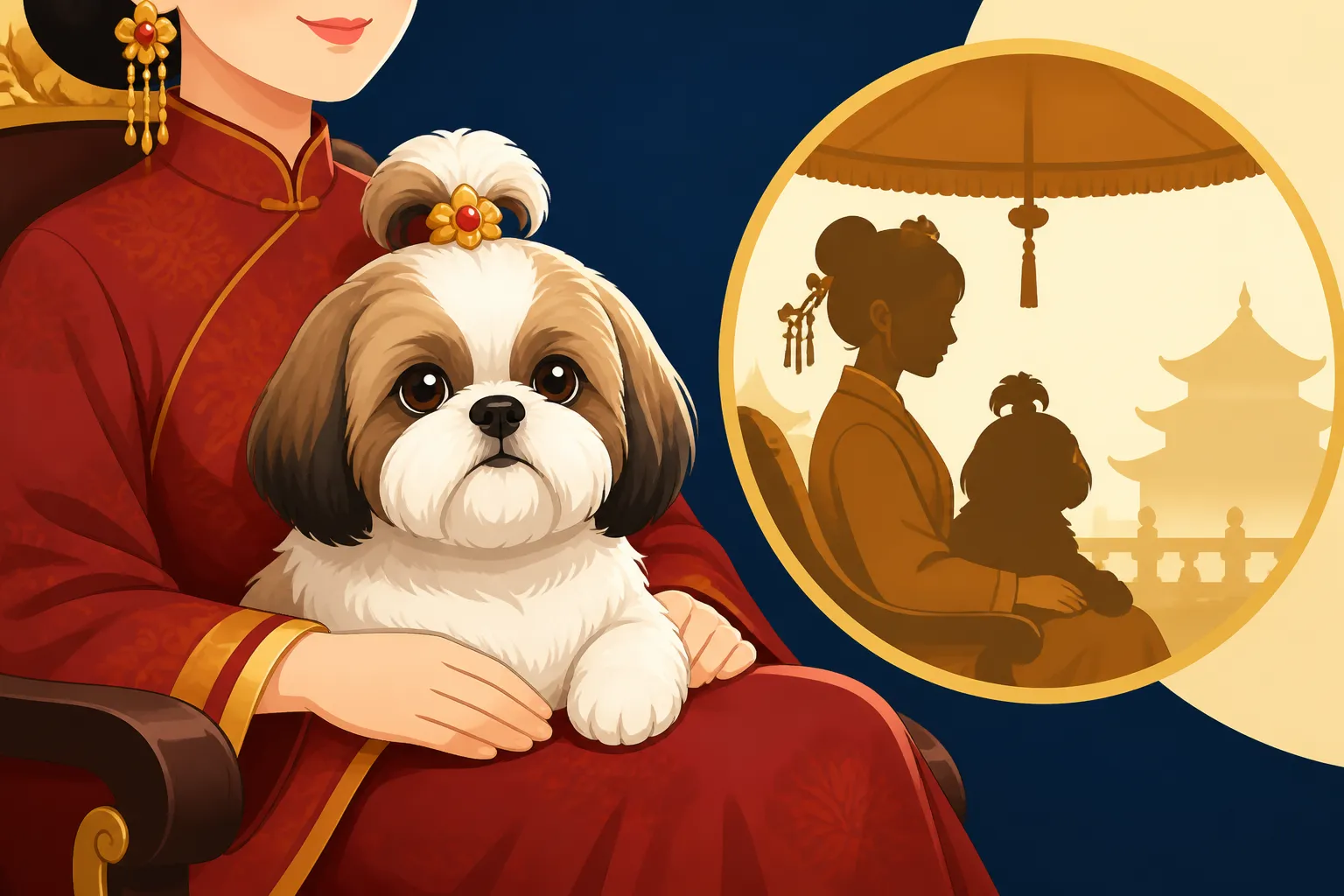
Later, these precious dogs were gifted to Chinese emperors as tribute. Once in the Forbidden City, their role evolved further. Under the imperial court, particularly during the Qing Dynasty, selective breeding refined them into the dogs we recognize today. The Dowager Empress Cixi, in particular, was famed for her love of these dogs, overseeing elaborate breeding programs within the palace walls. She had a passion for her "Lion Dogs" (the literal translation of Shih Tzu) and even had eunuchs whose sole job was to care for them. These dogs were literally part of the furniture of the imperial court, treated as living hot water bottles and charming, decorative companions. Their purpose was purely to delight, to entertain, and to provide comfort. There was no need for them to perform complex tasks; their job was simply to be present and cherished. To learn more about this incredible history, check out The Shih Tzu From Tibetan Temples to American Homes and The Empress Who Bred Shih Tzus in the Forbidden City.
A Dog for Human Comfort, Not Work
Unlike many other breeds that were developed for specific working roles – think of retrievers designed to fetch game, terriers bred to hunt vermin, or herding dogs managing livestock – the Shih Tzu had no such functional job. Their "work" was companionship. This distinction is crucial. It means generations of careful breeding focused on traits that would enhance their ability to be affectionate, gentle, and utterly devoted to their human counterparts.
Imagine a busy palace, full of intrigue and ceremony. The Shih Tzu, small and portable, could be carried from room to room, tucked into sleeves, or settled on a cushion beside a noble. Their primary role was to be a pleasant, calming presence, always near their owner. This history completely shapes their temperament and explains why they crave human closeness so intensely. This wasn't a dog expected to patrol the grounds; it was a dog meant to patrol the immediate vicinity of its human. The Shih Tzu in The Shih Tzu in the Qing Imperial Court truly had a pampered existence.
Physical Blueprint for Closeness
Beyond their historical context, the physical characteristics of the Shih Tzu are perfectly designed for a life of close companionship and lap-sitting. Every aspect, from their diminutive size to their flowing coat, hints at their purpose.
Size and Structure Built for Cuddles
One of the most obvious reasons a Shih Tzu was bred for the lap is their size. Weighing typically between 9 and 16 pounds, and standing around 9 to 10.5 inches tall, they are perfectly proportioned to sit comfortably on a human's lap without being too heavy or cumbersome. Their sturdy, compact body also means they feel substantial enough to be comforting, yet are incredibly portable.
Think about it: a larger dog might be affectionate, but it can be unwieldy on a lap for extended periods. A tiny dog might be delicate, but the Shih Tzu possesses a robust little frame that feels solid. This balance was likely an intentional part of their breeding, ensuring they were ideal lap warmers without being fragile. Their moderate size also makes them excellent apartment dwellers, as they don't require vast spaces to feel content. In fact, many don't even need a large garden to be happy, which you can read more about in How Little Garden a Shih Tzu Gets By On.
The Luxurious Coat and Warmth
The Shih Tzu's long, flowing double coat is another testament to their lap-dog heritage. While beautiful and demanding of regular grooming, this opulent fur served a practical purpose in drafty palaces and during cold seasons. Imagine a Shih Tzu nestled on a lap, providing warmth much like a living, breathing hot water bottle. The thick undercoat provides insulation, and the long outer coat adds an extra layer of soft comfort.
This coat, which often requires daily brushing to prevent matting, wasn't just for show. It was a functional part of their design, making them even more desirable as personal heaters and snuggle buddies. Keeping that coat in pristine condition, or opting for a more manageable The Shih Tzu Puppy Cut and Its Upkeep, is a modern challenge that connects us directly to their pampered past.
Temperament Tailored for Affection
While history and physical traits set the stage, it's the Shih Tzu's charming temperament that truly cements their role as the ultimate lap dog. They don't just fit on your lap; they want to be there.
The Ultimate People Dog
Shih Tzus are renowned for their outgoing, affectionate, and utterly devoted nature. They thrive on human companionship and genuinely want to be where their people are. This isn't a dog that prefers solitude; quite the opposite. They are happiest when interacting with family members, whether that's through gentle play, a short stroll, or, yes, a long snuggle session on the sofa. Their entire being seems wired to give and receive affection.
Many Shih Tzu owners describe their dogs as being shadow dogs, following them from room to room, just wanting to be near. This deep attachment is a direct result of centuries of being bred specifically for human interaction. They were selected for their ability to bond closely with people, to be tolerant of handling, and to offer unwavering loyalty. You might even find your Shih Tzu watching you intently, almost as if waiting for an invitation to join you on the couch. For more insights into their character, read How Shih Tzu Owners Describe Their Dogs.
Charming, Playful, and Content Indoors
Despite their cuddly reputation, Shih Tzus are not mere couch potatoes. They possess a playful spirit and a mischievous streak that makes them incredibly endearing. They love to play with toys, engage in short bursts of zoomies, or trot around the house with a favored squeaky toy. However, their energy levels are generally moderate, and they are quite content with indoor activities and short, gentle walks. This low-energy requirement further reinforces their suitability for an indoor, lap-oriented lifestyle.
Their "job" wasn't to run for miles or perform complex agility courses. Their job was to charm and provide affection in a domestic setting. This means they are often quite content with a cozy spot, a few toys, and the constant presence of their favorite humans. They are truly built for a life within the home, making them excellent companions for individuals or families seeking a devoted, indoor pet. Shih Tzu Exercise for a Low-Energy Toy discusses their activity needs in more detail.
Modern Day Living with a Historical Lap Dog
Understanding the Shih Tzu's history as a dedicated lap companion helps us navigate modern ownership, from training to managing expectations. It clarifies why certain behaviors are inherent and how best to support their well-being.
Adapting Expectations for Exercise and Activity
Given their historical role, it's vital to have realistic expectations about a Shih Tzu's exercise needs. While they do benefit from daily walks for mental stimulation and physical health, these walks are typically shorter and less strenuous than those required by working breeds. Over-exercising a Shih Tzu, especially in warm weather, can be detrimental due to their brachycephalic (flat) face which can make breathing difficult.
Instead of long hikes, focus on quality time, short strolls around the neighborhood, and indoor play sessions. Puzzle toys, gentle tug games, and hide-and-seek can provide plenty of mental and physical engagement without overdoing it. Remember, their bodies were not designed for endurance, but for being a cherished, comfortable presence.
Training a Charmer: Even Lap Dogs Need Boundaries
Just because a Shih Tzu was bred to sit on a lap doesn't mean they don't benefit from training. In fact, their strong bond with humans makes them highly receptive to positive reinforcement. Basic obedience, house training, and socialization are crucial for a well-adjusted Shih Tzu. They may have a charming, stubborn streak at times, but with consistency and patience, they are eager to please their beloved owners.
Think of training not as breaking their spirit, but as guiding their natural desire to connect with you. Learning to "sit," "stay," or "come" helps keep them safe and makes them even better companions. Resources from platforms like BAXTER & Bella can offer tailored approaches to training a small, affectionate breed. You can also look into Why a Companion Breed Still Needs Training for more perspective. Teaching them to settle on a mat or a designated bed can also be very useful, giving them a special place even when they aren't directly on your lap, as discussed in Teaching a Shih Tzu to Settle on a Mat. And of course, a comfy dog bed from Amazon is always a hit!
Embracing Their Cuddly Nature
Ultimately, owning a Shih Tzu means embracing their inherent desire for closeness. They are not content to be left alone for long periods; they truly thrive on interaction. If your lifestyle allows for a dog that will be your constant shadow, that loves to cuddle, and that thrives on being an integral part of your daily life, a Shih Tzu might be your perfect match.
However, this also means considering their potential for separation anxiety if not properly prepared. Building up alone time gradually is essential for a happy, well-adjusted Shih Tzu. Shih Tzu Alone Time and Learning to Tolerant It offers great advice on this. Their reliance on human companionship is a double-edged sword: it offers immense joy and affection, but also demands a commitment to being present and engaged.
| Trait Category | Shih Tzu (Lap Dog) | Typical Working Breed |
|---|---|---|
| Purpose | Companionship, comfort, luxury | Hunting, guarding, herding, retrieving, protection |
| Size | Small, compact, portable (9-16 lbs) | Varies, often medium to large, built for endurance |
| Exercise | Low to moderate, prefers indoor play & short walks | High, requires significant physical and mental tasks |
| Temperament | Affectionate, people-oriented, devoted, charming | Independent, driven, focused on tasks, sometimes aloof |
| Coat | Long, luxurious, double coat (for warmth & beauty) | Varies, often weather-resistant, built for function |
| Training | Responds well to positive, gentle methods | Can be intense, requires consistent, firm guidance |
| Ideal Home | Apartment or house, thrives on human presence | Needs space, activity, and a "job" to do |
Their place in the world, as recognized by breed standards, also reflects this. The Shih Tzu belongs to the "Toy Group" in dog shows, a classification for breeds primarily bred for companionship and small size. You can delve into the details of their official appearance and traits in The Shih Tzu Standard and What Judges Look For and Why the Shih Tzu Sits in the Toy Group. So, the next time your Shih Tzu snuggles into your lap, remember you're not just sharing a moment; you're participating in a centuries-old tradition of devotion and companionship.
Disclaimer
This article is for general informational purposes only and does not constitute professional advice. Laws, prices and regulations vary by location and change over time. Consult a qualified professional for guidance on your specific situation.