Shih Tzu Recall Inside the House
It's incredibly frustrating when you call your sweet little Shih Tzu from across the room, full of hope, and they just glance at you, maybe wag their tail once, and then go right back to sniffing that invisible crumb under the sofa or gnawing on their favorite toy. You know they heard you, so why do they act like you're speaking a foreign language? This guide is here to help you understand why your Shih Tzu might be tuning you out indoors and provide actionable, empathetic strategies to build a reliable "come" cue right inside your home.
Understanding Why Indoor Recall is a Challenge for Shih Tzus
Many Shih Tzu owners feel like their dogs are just being stubborn when they don't come when called inside. But for these delightful little companions, there's often more going on than simple defiance. It's about their world, their motivations, and how we communicate with them.
Distractions and Their Allure
Let's be real: even in the quietest home, a Shih Tzu's world is packed with fascinating things. They are scent-driven little dogs, and their noses are constantly picking up subtle smells we can't even perceive. That dust bunny under the coffee table isn't just a dust bunny; it's a treasure trove of scents from shoes, lint, and who knows what else! A dropped piece of kibble from last night, a crumb from your breakfast toast, or even just the lingering scent of your cat's fur can be far more captivating than your voice.
Think about it from their perspective. They're engrossed in a vital mission – perhaps investigating a particularly interesting shadow, or meticulously disassembling a squeaky toy. Your call for "come!" might just register as background noise in their highly engaged brain. It's not that they don't love you or want to be near you, but their immediate environment often holds a powerful, almost magnetic, pull. They live in the moment, and that moment is often about exploring the immediate, fascinating world right at their tiny paw-tips.
The Myth of "Stubbornness"
It's easy to label a Shih Tzu as "stubborn" when they ignore a command, especially a recall cue. Owners often throw their hands up and say, "Oh, that's just a Shih Tzu for you!" But this perception often misses the mark. These dogs were bred for centuries purely as companions, to sit on laps and look adorable, not to perform complex obedience tasks or herd sheep. Their primary motivation isn't always to please you by following commands; it's to be comfortable, happy, and connected. If coming to you isn't the most rewarding option available, why would they choose it?
A lack of reliable recall indoors isn't usually an act of defiance, but rather a sign that the dog either doesn't fully understand what "come" means, or they don't see enough value in responding. Maybe they've learned that "come" means the fun stops, or that a stern voice will follow. If every time you call them, it's to put on a harness for a walk they don't want to go on, or to trim their nails, they quickly learn to associate the cue with something unpleasant. We need to flip that script and make "come" mean "party time!" every single time. What Motivates a Shih Tzu to Work delves deeper into understanding their unique drive.
Building a Strong "Come" Cue Indoors, Step-by-Step
Building a reliable recall inside the house is all about making the "come" cue the most positive, exciting, and rewarding thing your Shih Tzu hears. Consistency and patience are your best friends here.
Starting in a Low-Distraction Environment
You wouldn't ask your Shih Tzu to perform complex tricks in a busy dog park when they're still learning, right? The same logic applies to recall. Begin in a single, quiet room with minimal distractions. Close doors, turn off the TV, and ensure no other pets or people are in the space initially. This creates a clear learning environment where your Shih Tzu can focus solely on you.
Get down to their level. Say their name in an excited, happy tone, followed immediately by your chosen recall word, like "Come!" or "Here!" As soon as they take even one step towards you, praise them enthusiastically ("Good come!"), and reward them with a high-value treat the moment they reach you. High-value means something they really love – not just their regular kibble. We're talking tiny pieces of cooked chicken, cheese, or specialized training treats. Practice this multiple times in short, Five Minute Sessions With a Shih Tzu throughout the day. The goal is for them to associate your recall word with instant joy and delicious rewards. For younger puppies, you might even consider enrolling in an online puppy program like the one offered by BAXTER & Bella, which provides structured, step-by-step guidance for these foundational behaviors.
Making Yourself the Most Exciting Thing
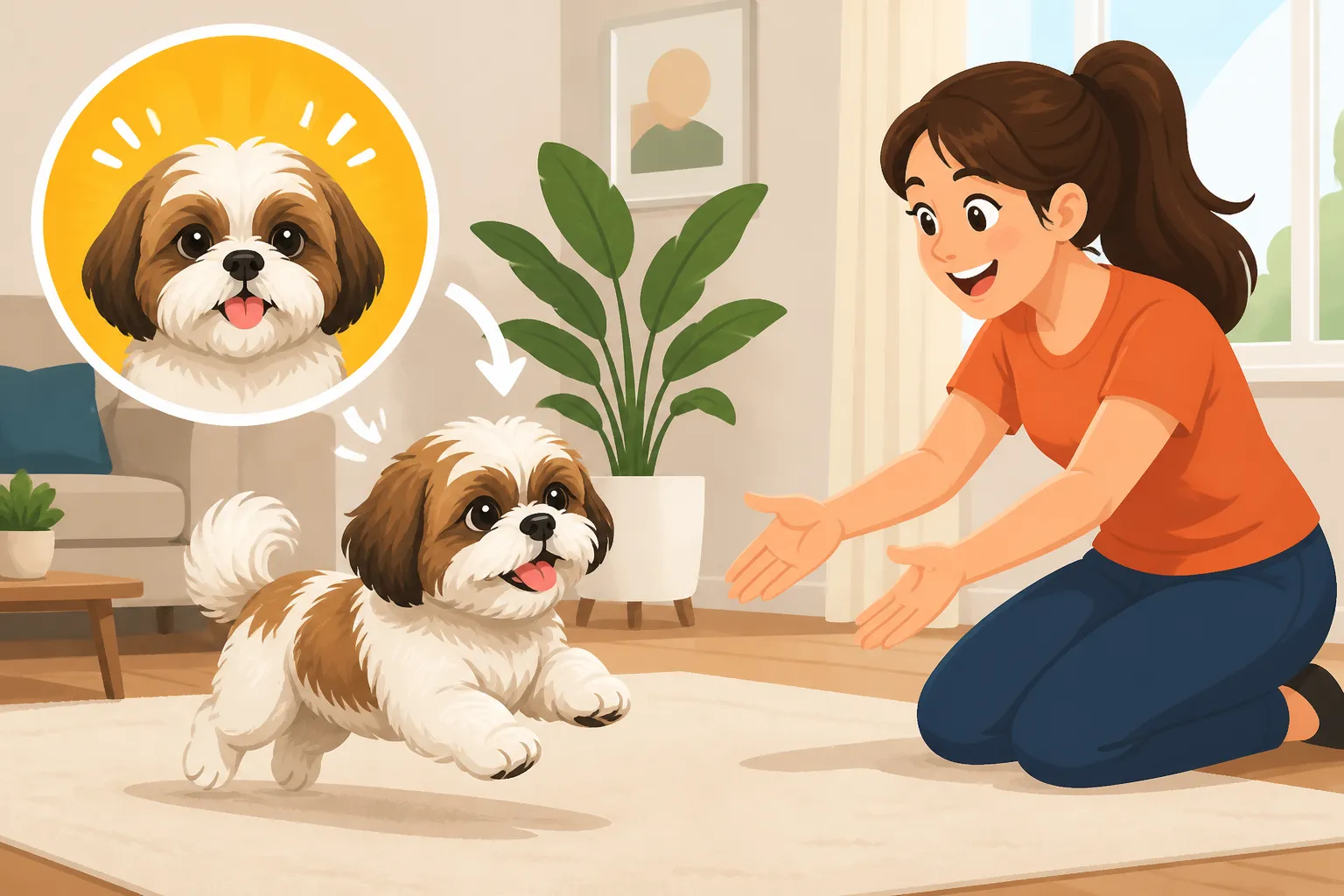
This is where you channel your inner game show host! When you call your Shih Tzu, make yourself irresistible. Don't just stand there blandly. Squat down, open your arms, pat your legs, and use a high-pitched, joyful voice. You want to convey that coming to you is the most wonderful thing that could possibly happen. As they approach, continue the praise, creating a little "party" at your feet.
Once they reach you, make sure that high-value treat is delivered immediately – within a second or two. You can even combine it with a quick, gentle petting session, but always lead with the treat. The goal is for your Shih Tzu to think, "Wow, when my human calls me, amazing things happen!" If they hesitate, try backing away a few steps while still calling them enthusiastically; this often triggers their chase instinct and makes them more likely to follow. Remember, the louder and happier you sound, the more likely they are to engage.
Gradually Introducing Minor Distractions
Once your Shih Tzu consistently responds to "come" in a quiet room, it's time to slowly up the ante. Start by adding very minor, static distractions. Maybe a favorite toy is lying innocently on the floor, or a family member is sitting quietly on the couch, not interacting with the dog. Call your Shih Tzu, ensuring the reward is still exceptional. If they get distracted, don't scold them. Simply go closer, get their attention, and restart the process. Success is built on small, achievable steps.
Over time, you can introduce slightly more dynamic distractions, like a soft toy being rolled across the floor away from you, or the sound of the dishwasher running in the background. The key is to introduce one new, small distraction at a time, always making sure your "come" cue outshines the distraction. If they fail, it means you moved too fast. Go back to a simpler environment, rebuild their confidence, and then try again more slowly. This gradual exposure ensures they generalize the "come" cue to various real-world scenarios within your home.
Practicing in Different Rooms and Scenarios
A recall cue that works in the kitchen but not the living room isn't truly reliable. You need to practice "come" in every room of your house, during different times of the day, and in various situations. Call them when they're just waking up from a nap, when they're playing quietly with a toy, or when they're enjoying a moment of peace by the window. Each successful recall in a new scenario reinforces the behavior.
Vary the distance too. Sometimes call them from just a few feet away, other times from across two rooms. Practice when you're sitting, standing, or even lying down. The more varied your practice, the stronger and more flexible their understanding of the cue will become. Don't forget to practice before feeding times, too; sometimes the promise of dinner is an excellent motivator! By consistently rewarding them, you're building a powerful habit that becomes second nature.
Tools and Techniques to Enhance Indoor Recall
Beyond the step-by-step training, certain tools and techniques can significantly boost your Shih Tzu's indoor recall success. These aren't crutches, but rather aids to make training clearer and more positive for both of you.
The Power of High-Value Rewards
We touched on this, but it bears repeating: high-value treats are everything for recall training, especially in the early stages. Your Shih Tzu needs a compelling reason to drop whatever they're doing and race to you. Their regular kibble might work for a "sit" when they're already focused on you, but for recall, you need the "jackpot" reward. Imagine if someone offered you a dollar to walk across the room, versus offering you a crisp fifty-dollar bill. Which would get you moving faster?
Soft, smelly treats are often the most effective. Small pieces of cooked chicken, cheese, hot dogs, or liverwurst can be incredibly motivating. You can also find commercially prepared soft training treats at pet stores or Amazon that are specifically designed to be high-value and easily digestible. Make sure the pieces are tiny – just enough for a quick, delicious taste, so they don't get full too fast. The goal is to keep them eager for more! Check out Treat Sizes That Suit a Shih Tzu for more ideas on appropriate reward options.
Using a Long Line or Drag Leash for Safety and Guidance
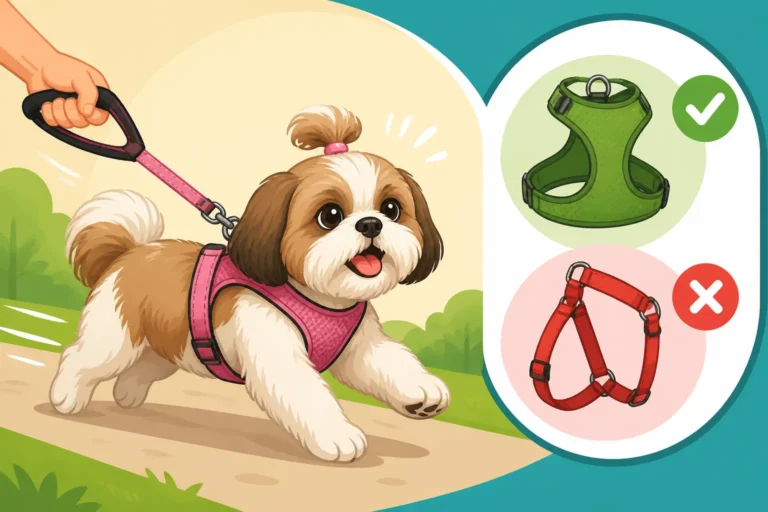
For those moments when your Shih Tzu is particularly distracted or you're just starting to introduce minor distractions, a lightweight, indoor long line (or drag leash) can be a game-changer. This isn't for correcting or pulling your dog, but for gentle guidance and to prevent them from simply ignoring you and running off. Choose a very light leash, perhaps 6-10 feet long, and attach it to a comfortable harness (not a collar, to protect their neck and throat). We definitely recommend a harness for Shih Tzus. Why a Shih Tzu Should Wear a Harness Not a Collar explains why.
Allow them to drag this leash around the house in a supervised area. When you call them and they hesitate, you can gently step on the leash or pick it up to prevent them from moving further away. Then, with soft encouragement, guide them towards you. The moment they start moving in your direction, release the tension, praise, and reward lavishly when they arrive. This teaches them that ignoring the cue means you'll still "win" the game, but in a gentle, non-aversive way. It prevents them from learning that they can just blow you off without consequence, but without resorting to punishment.
Incorporating Play and Positive Association
Recall doesn't always have to be about a static treat delivery. Turn it into a game! Play hide-and-seek: have a family member hold your Shih Tzu in one room while you "hide" in another (just around a corner or behind a door). Call their name and "Come!" When they find you, have a mini celebration with treats and happy praise. This makes finding you an exciting adventure.
You can also use a flirt pole or a favorite toy. When you call them, make the toy appear briefly, entice them with it, and then reward them with both the toy (for a short play session) and a treat when they reach you. The more you associate coming to you with fun activities, not just sterile obedience, the more enthusiastic your Shih Tzu will be to respond. This builds a powerful, positive emotional response to your recall cue.
Common Pitfalls and Troubleshooting Indoor Recall Issues
Even with the best intentions, recall training can hit snags. Understanding common mistakes can help you avoid them and get back on track.
Calling Your Shih Tzu Only for Unpleasant Things
This is perhaps the biggest recall killer. If the only time you call your Shih Tzu is to give them a bath, put them in their crate when you're leaving, or administer medication, they'll quickly associate "come" with something they dislike. Why would they run towards that? They're smart enough to connect the dots.
To fix this, make a conscious effort to call your Shih Tzu for good things far more often than for unpleasant ones. Call them, reward them lavishly, give them a quick cuddle, and then immediately let them go. Call them for a surprise treat, for a quick play session, or just to say hello and give a scratch behind the ears. This rebuilds the positive association with the cue. Every time "come" leads to something positive, you're depositing money into their "recall bank account." Positive Reinforcement With a Shih Tzu is key here.
Getting Frustrated and Repeating the Cue
It's tempting, when your Shih Tzu is ignoring you, to keep repeating "Come! Come! Come here! Max, COME!" in an increasingly frustrated tone. Don't do it! Each time you repeat the cue without your dog responding, you're teaching them that the word "come" is optional. You're inadvertently desensitizing them to it. They learn that they don't have to respond the first, second, or even third time.
If you call your Shih Tzu and they don't immediately respond, take a deep breath. Instead of repeating the cue, calmly go to your dog, take them gently by the harness, and guide them back to the spot where you initially called them from. Then, give the cue again, and immediately reward them the moment they arrive at your side. Don't scold them. You want them to understand that the cue means come here, right now, but that you will help them succeed. This method avoids nagging and ensures the cue retains its meaning.
Inconsistent Training Across Family Members
Picture this: you've been diligently working on "come" with high-value treats and enthusiastic praise. Then your partner calls your Shih Tzu, gets frustrated when they don't come, and just grabs them. Or your child chases them around the house, yelling "Come!" This inconsistency can utterly confuse your Shih Tzu and undermine all your hard work.
For recall to be truly reliable, everyone in the household needs to be on the same page. Agree on one specific recall word ("Come," "Here," "Front," etc.). Ensure everyone uses the same excited tone, the same body language (squatting down), and the same high-value rewards. Have a family meeting to discuss the importance of consistency. Even guests who interact with your dog should be briefed, if possible. The Handful of Cues a Shih Tzu Really Needs and consistency across the board are vital for a well-behaved Shih Tzu.
The Importance of a Structured Training Program
Sometimes, despite your best efforts, you might feel like you're just not making progress, or you're unsure what the next step is. This is where a structured training program can be incredibly beneficial. These programs provide a clear curriculum, breaking down complex behaviors like recall into manageable, easy-to-follow steps. They can help you identify gaps in your training and offer troubleshooting tips.
Many online platforms and local trainers offer excellent programs tailored for puppies and adult dogs. For example, BAXTER & Bella offers an online puppy school that guides you through foundational behaviors, including recall, with videos and live support. This kind of structured approach can give you the confidence and tools you need to succeed, especially if you're a first-time Shih Tzu owner or if you have a particularly Shih Tzu Stubbornness and What It Really Is dog. Even a good local trainer who Finding a Trainer Who Understands Toy Breeds can make a huge difference, offering personalized advice and demonstrations. Remember, consistency is not just about daily practice, but also about following a clear, well-thought-out plan.
Summary of Recall Strategies
Here's a quick look at effective versus ineffective approaches to building reliable indoor recall for your Shih Tzu:
| Effective Strategies | Ineffective Strategies |
|---|---|
| High-Value Treats: Use irresistible rewards. | Low-Value Treats: Only use kibble or boring snacks. |
| Enthusiastic Voice: Make yourself exciting. | Flat/Angry Tone: Sounding dull or frustrated. |
| Positive Association: Call for good things. | Negative Association: Call only for baths/meds. |
| Consistency: Everyone uses the same cue/method. | Inconsistency: Different family members do different things. |
| Gradual Distraction: Slowly increase challenge. | Too Many Distractions: Expecting recall in chaos. |
| Gentle Guidance: Use a drag line if needed. | Chasing/Punishing: Scaring your dog. |
| Short, Frequent Sessions: Keep it fun. | Long, Infrequent Sessions: Leading to boredom. |
Remember that building a solid recall is a journey, not a destination. There will be good days and bad days. Stay patient, stay positive, and always make coming to you the best option for your little Shih Tzu. Before you know it, "Come!" will mean a joyous dash to your side, ready for whatever wonderful thing you have in store.
Disclaimer
This article is for general informational purposes only and does not constitute professional advice. Laws, prices and regulations vary by location and change over time. Consult a qualified professional for guidance on your specific situation.