Why a Shih Tzu Stays on Lead Outdoors
It's a common dream for us Shih Tzu owners: seeing our beloved little fluffballs frolic freely across a wide-open field, tails wagging, without a leash in sight. But the truth is, the world outside our homes often presents too many unseen dangers for these tiny companions. This guide is here to explain, with empathy and realism, precisely why keeping your Shih Tzu on a lead when you're outdoors is not just a recommendation, but a critical part of their safety and well-being.
The World is Too Big and Dangerous for a Small Shih Tzu
Let's face it, our Shih Tzus are little packages of joy, but they're also incredibly vulnerable in an unpredictable outdoor environment. Their small stature, gentle nature, and often oblivious demeanor make them targets or easily lost in a flash. It's a harsh reality, but understanding these risks is the first step in keeping them safe.
Size and Fragility: How Tiny They Really Are
When you're out walking your Shih Tzu, it's easy to forget just how small they truly are. They might feel like mighty lions in your living room, but against the vastness of the outdoors, they're often mistaken for small prey animals by other creatures, or simply overlooked by humans. A Shih Tzu typically weighs between 9 to 16 pounds, which means even a medium-sized dog playing too rough could inadvertently cause serious injury. A misplaced step by a jogging person or a bicyclist who doesn't see them could lead to tragedy.
Their delicate bones and compact structure, while charming, aren't built for high-impact collisions or rough-and-tumble play with larger, more boisterous breeds. We love their bouncy enthusiasm, but that very energy, unrestrained, can lead them into harm's way before we even have a chance to react.
Predators and Larger Dogs: The Real Threats They Face
This is perhaps one of the most terrifying considerations for any small dog owner. In many areas, wildlife predators such as hawks, owls, coyotes, or even larger stray dogs, pose a genuine threat to a Shih Tzu left off-leash. It can happen incredibly fast; a bird of prey can swoop down in seconds, or a coyote, often unseen until it's too late, can snatch a small dog.
Even in seemingly safe urban parks, the risk from other dogs is ever-present. Not all dogs are well-socialized, and not all owners have perfect control. An off-leash Shih Tzu could easily become the victim of an aggressive encounter, or even just overly enthusiastic play that turns dangerous. We often link to Why a Shih Tzu Is at Risk in a Dog Park because these encounters, even if well-intentioned, can have devastating consequences for a breed so small and with such delicate features. An owner might swear their dog is "friendly," but a playful nip for a Labrador could be a serious injury for a Shih Tzu.
Traffic and Accidental Runaways: How Quickly a Small Dog Can Disappear
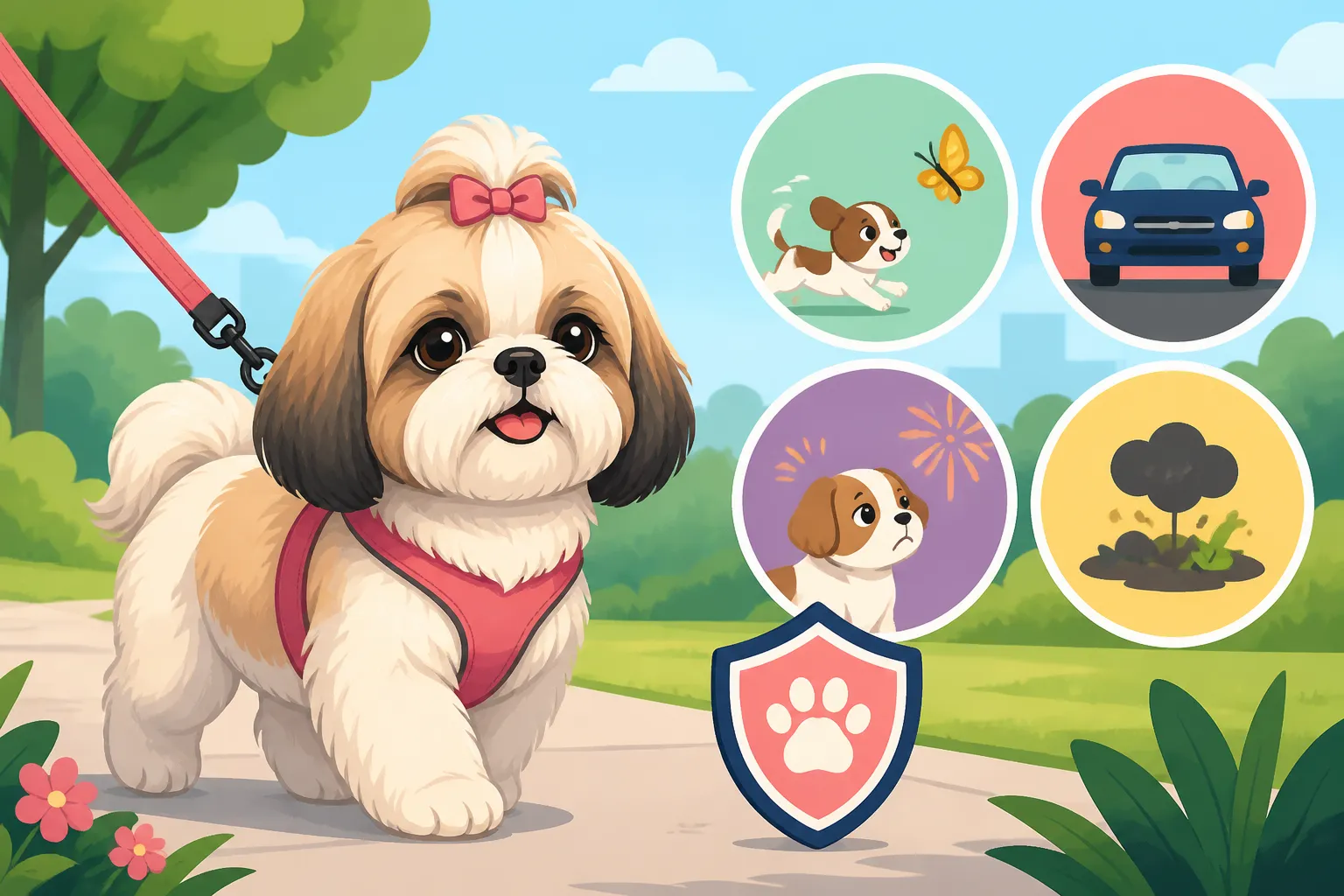
Picture this: you're in a seemingly quiet area, and you let your Shih Tzu off-leash for just a moment. Suddenly, a squirrel darts across the path, a loud truck backfires, or another dog appears out of nowhere. Your Shih Tzu, driven by instinct or fright, bolts. Their small size makes them incredibly quick, and they can disappear into dense underbrush or dart into traffic before you've even finished calling their name.
The danger of roadways is obvious, but even in supposedly safe areas like hiking trails or large parks, a Shih Tzu can easily get disoriented and lost. Their low stature means tall grass or even a slight dip in the terrain can hide them from view. Microchipping and ID tags are crucial, but preventing them from becoming lost in the first place is always the best defense. The panic of realizing your tiny companion is out of sight, and potentially in danger, is something no Shih Tzu parent wants to experience.
Instincts vs. Training: Why They Might Not Come Back
While we adore their charming personalities, it's important to understand that even the most well-trained Shih Tzu isn't immune to primal instincts or simple distractions. Expecting perfect recall every single time, especially in a stimulating outdoor environment, can be a risky gamble.
Low Prey Drive, High Curiosity: They Might Not Chase, But They'll Wander
Shih Tzus weren't bred to hunt or retrieve; they were bred to be companions, often found lounging on laps in imperial palaces. So, while they might not have the high prey drive of a terrier to chase a rabbit into the woods, they possess an undeniable curiosity. Every blade of grass holds a thousand scents, every rustle in the bushes is an invitation to explore.
This isn't about outright rebellion; it's about being a dog. Their nose leads them, their ears perk up at distant sounds, and suddenly, they're ten feet further away than you thought, engrossed in a fascinating patch of dirt. This wandering curiosity, combined with their small size, means they can easily meander out of your immediate control and into a risky situation without intending to "run away." They're just exploring their world, but that world has cars and bigger dogs.
The "Zoomies" and Poor Recall: Even Well-Trained Shih Tzus Can Ignore Commands
Ah, the "zoomies" – those sudden bursts of uncontrollable energy where our Shih Tzus tear around the house like tiny, furry rockets. It's adorable indoors, but imagine that same boundless energy unleashed in an unfenced park. Even if your Shih Tzu generally has good recall, the sheer excitement and novelty of a wide-open space can override all training. Their little brains get overwhelmed with joy and sensory input, and your earnest calls of "Come!" might simply translate to "Wheee! Keep running!"
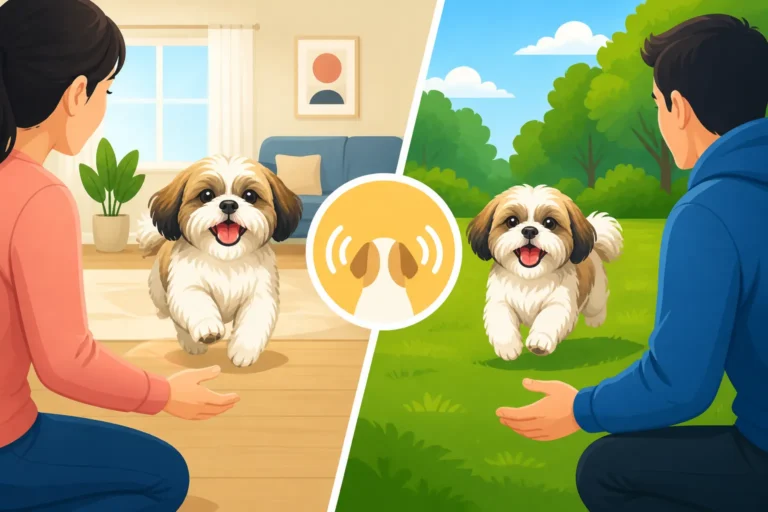
We've dedicated a whole article to Shih Tzu Recall Training Indoors and Out because it's so vital, but it also highlights just how challenging consistent recall can be, even for dedicated owners. There's a big difference between a reliable "come" in the living room and one performed amidst the smells of a barbecue, the sounds of children playing, and the sight of other dogs.
Sensory Overload and Distraction: So Many Smells, So Many Sounds
The world is a kaleidoscope of scents, sounds, and sights for a dog. For a Shih Tzu, with their keen sense of smell, every tree, every fire hydrant, every patch of grass is a treasure trove of information. An off-leash Shih Tzu will be pulling in all this data, and it's incredibly distracting. A distant siren, a child's shout, a bicycle whizzing by – any of these can either pique their curiosity or startle them, sending them off in an unpredictable direction.
Their focus, which might be laser-sharp on you during an indoor training session, is fractured into a million pieces outdoors. Trying to get their attention when they're nose-deep in an interesting scent trail or barking at a passing leaf can feel like an impossible task. This sensory overload isn't their fault; it's just how they're wired, making it difficult for them to prioritize your command over the thrill of discovery or the fear of a sudden noise.
Breed-Specific Challenges When Off-Leash
Beyond the universal risks, Shih Tzus come with their own unique set of physical characteristics that make off-leash adventures particularly hazardous. These aren't just minor inconveniences; they can be life-threatening.
Brachycephalic Breathing and Overheating: Running Free Can Quickly Become Dangerous
Shih Tzus are a brachycephalic breed, meaning they have those adorable flat faces. While cute, this facial structure comes with a set of inherent challenges, particularly when it comes to regulating their body temperature and breathing. Their shortened airways, often coupled with conditions like an elongated soft palate or stenotic nares (narrow nostrils), make them highly susceptible to overheating and respiratory distress. We discuss The Elongated Soft Palate in a Shih Tzu and Why a Shih Tzu Overheats So Easily in more detail.
When a Shih Tzu is running freely, their exertion level can spike rapidly. Without the ability to pant efficiently and cool themselves down, they can quickly go from happy frolicking to a dangerous state of heatstroke. This is especially true on warm days, but even moderate temperatures can be risky if they're over-exercising off-leash. A sudden sprint to chase a butterfly could lead to a collapsed airway or heat exhaustion, requiring immediate veterinary attention. This is why it's so important to manage their exercise, especially during periods of Walking a Shih Tzu in Warm Weather, and keep them on a lead to control their pace.
Eye Protrusion Risk: A Bump or Fall When Off-Leash Can Be Catastrophic
One of the most concerning breed-specific risks for Shih Tzus is eye proptosis. Their large, prominent eyes sit shallowly in their sockets, making them highly vulnerable to popping out if subjected to even minor trauma or pressure. This can happen from a hard bump, a fall, rough play with another dog, or even being grabbed inappropriately.
If a Shih Tzu is off-leash and runs into something, falls awkwardly, or has an unexpected interaction with another animal, the risk of proptosis increases dramatically. This is an emergency situation, as detailed in Shih Tzu Eye Proptosis and How It Happens, and requires immediate veterinary intervention to save the eye. The quick, unpredictable movements of an off-leash dog simply present too many opportunities for such an injury. Knowing What to Do in the First Minutes of a Proptosis is vital, but preventing it is always better.
Dental and Jaw Fragility: Biting Something Unexpected
While not as immediately life-threatening as proptosis or heatstroke, the unique dental structure of a Shih Tzu also presents risks when off-leash. Their crowded mouths and small jaws, often with an undershot bite, can be prone to dental problems. If they're exploring freely and decide to gnaw on an unfamiliar stick, a discarded object, or get into a playful tug-of-war with another dog, they risk fracturing teeth or even injuring their delicate jaws.
Beyond dental damage, there's always the risk of them ingesting something harmful or toxic if left unsupervised. A piece of litter, a poisonous plant, or even food dropped by a stranger could lead to a serious medical emergency. Keeping them on a lead allows you to supervise what goes into their mouth and steer them away from potential hazards.
Responsible Ownership and Safe Alternatives
Understanding the risks isn't about keeping your Shih Tzu locked indoors; it's about finding safe, enriching ways for them to enjoy the outdoors while minimizing danger. Responsible ownership means providing opportunities for exercise and exploration in controlled environments.
Securely Fenced Areas: The Best Alternative to Open Fields
For many Shih Tzu owners, a securely fenced yard is the closest thing to letting their dog run truly free. This provides a contained space where they can sniff, explore, and zoom around without the risks of traffic, predators, or getting lost. However, "securely fenced" means checking for gaps, ensuring the fence is high enough (some determined little dogs can jump!), and monitoring them for anything they might try to dig under.
If you don't have a private yard, look for local dog parks with separate small dog sections, or consider renting time in a private, fenced dog run if available in your area. Always inspect the fence line before letting your Shih Tzu loose, and be mindful of other dogs and their temperaments, even in designated areas. While a dog park can be an option, always remember the risks outlined in Why a Shih Tzu Is at Risk in a Dog Park.
Long Lines and Supervised Play: Giving Them Space Safely
A fantastic compromise for giving your Shih Tzu more freedom while maintaining control is a long line. These are leashes that can be anywhere from 15 to 50 feet long, allowing your dog to wander and explore a wider area while you still hold the end. This is perfect for quiet parks or large grassy areas where you want to practice recall or simply let them sniff to their heart's content without the immediate danger of them bolting.
When using a long line, always attach it to a secure harness, never a collar. This is crucial for their safety, as a sudden tug on a collar could cause serious neck injury or even exacerbate the risk of eye proptosis. We always recommend reading Why a Shih Tzu Should Wear a Harness Not a Collar to understand the importance of this. Ensure the long line is made of a comfortable, durable material that won't tangle easily or cause rope burns if it slides through your hands. Brands like Amazon offer a wide variety of long lines suitable for small breeds. Always be actively engaged, watching your Shih Tzu and your surroundings.
Training for Leash Manners: Making On-Leash Walks Enjoyable
Since your Shih Tzu will be spending most of their outdoor time on a lead, investing in good leash manners training is essential. A dog that pulls, lunges, or constantly tries to go in a different direction makes walks stressful for both of you. The goal is a relaxed, enjoyable walk where your Shih Tzu can explore safely at your side.
This involves positive reinforcement, rewarding your dog for walking nicely beside you, checking in, and not reacting to distractions. Short, frequent training sessions are key. Online resources, such as those offered by BAXTER & Bella, can provide excellent guidance for teaching foundational leash skills and promoting a calm demeanor outdoors. It's not about stifling their spirit, but channeling their energy into a cooperative and safe experience. Using a comfortable, well-fitting harness, like those discussed in Harnesses That Do Not Mat a Shih Tzu Coat, will also make a huge difference in their comfort and your control. Remember, a Shih Tzu is built for The Short Walks a Shih Tzu Is Built For, so even short, pleasant strolls on a lead are incredibly beneficial.
| Outdoor Scenario | Risk Level Off-Leash (Shih Tzu) | Recommended Approach | Why It Works for a Shih Tzu |
|---|---|---|---|
| Busy City Park | Very High | Short lead, secure harness | Prevents accidental dashes into traffic/crowds. |
| Quiet Suburban Park | High | Long line (30ft+), active supervision | Allows exploration, prevents getting lost/interactions. |
| Unfenced Hiking Trail | Very High | Lead at all times | Protects from wildlife, falls, getting lost, heat. |
| Private Fenced Yard | Low to Moderate | Supervised, regular checks for escapes | Safe space for zooming and sniffing. |
| Dog Park (Small Dog) | Moderate to High | Supervised, ready to intervene, know your dog | Potential for rough play or unexpected aggression. |
In conclusion, while the image of an unleashed dog running free is idyllic, the reality for a small, fragile, and brachycephalic breed like the Shih Tzu often involves significant risks. By understanding these vulnerabilities and opting for controlled, safe alternatives like secure fencing, long lines, and consistent leash training, we can ensure our beloved Shih Tzus enjoy their outdoor adventures without jeopardizing their safety.
Disclaimer
This article is for general informational purposes only and does not constitute professional advice. Laws, prices and regulations vary by location and change over time. Consult a qualified professional for guidance on your specific situation.