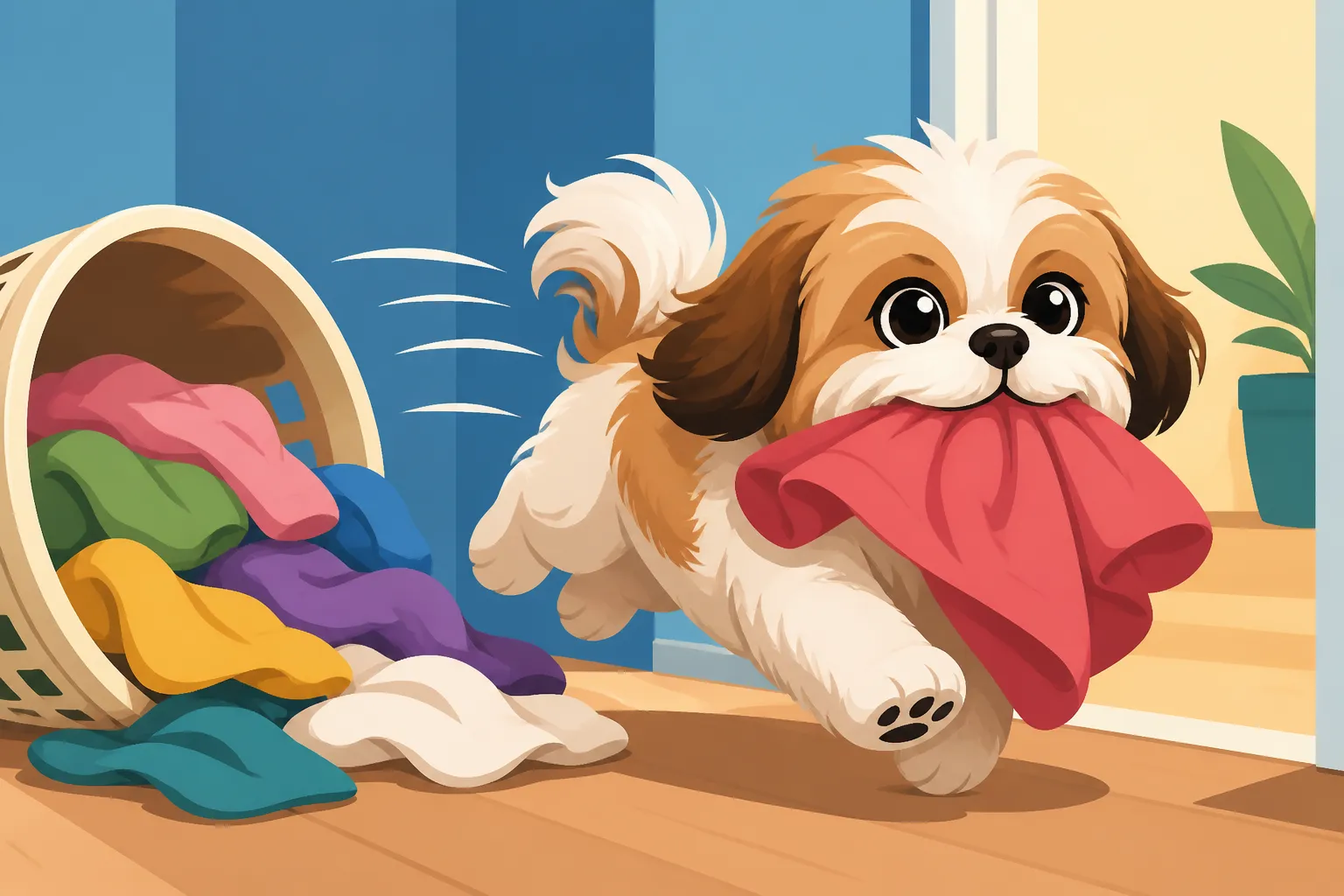
A Shih Tzu Running Off With Laundry
There's nothing quite like waking up to find your favorite sock proudly displayed in the middle of the living room, or discovering your freshly laundered shirt dragged from the hamper and turned into a personal tug-of-war toy. If your adorable Shih Tzu has developed a penchant for pilfering your laundry, you're certainly not alone in this charmingly infuriating predicament. This guide is here to unravel the mystery behind your Shih Tzu's laundry raids and provide you with actionable strategies to stop the textile escapades, transforming your laundry room from a treasure trove into a mundane utility space once more.
Why Your Shih Tzu Has a Laundry Fetish (It's Not Just Mischief!)
It's easy to assume your Shih Tzu is simply being naughty when they make off with a sock, but more often than not, there are deeply rooted canine instincts and needs at play. Understanding these motivations is the first step toward effective management and training. They aren't trying to annoy you; they're simply being dogs, albeit very fluffy, mischievous ones!
The Thrill of the Hunt and Resource Guarding Instincts
Even the most pampered Shih Tzu carries the genetic echoes of their wild ancestors. The act of "hunting" for something, even if it's just a dirty sock, and then securing it, can be incredibly rewarding. For many dogs, finding and carrying an item simulates a mini-hunt. Once they have it, it becomes a "resource." While we see it as a nuisance, to them, they've just found something valuable. This can sometimes morph into a mild form of resource guarding, where they might run away with the item or even give a soft growl if you try to take it away immediately. It's not usually aggressive in the way you might see with food, but it's a clear signal that they perceive the item as theirs. This is particularly true if they've learned that having the laundry item gets a reaction from you, whether it's a chase or an exasperated sigh.
Attention-Seeking and Boredom Busters
Let's be honest: when your Shih Tzu prances by with your underwear in their mouth, what's your first reaction? Probably to chase them, exclaim, or at least give them direct eye contact and vocalizations. From your dog's perspective, this is attention, and any attention, good or bad, is often better than no attention at all. If your Shih Tzu is spending a lot of time alone or isn't getting enough mental stimulation, a laundry heist can be a surefire way to get you engaged. Imagine their little brains thinking, "Hmm, how can I get Mom/Dad to pay attention to me? Oh, I know, that smelly shirt always works!" A Shih Tzu Underfoot in Every Room often thrives on interaction, and if they're bored, they'll find their own entertainment, which often includes your personal belongings. Similarly, puppies who aren't being adequately challenged or entertained will often gravitate towards inappropriate items.
Scent-Driven Behavior and Comfort Seeking
Shih Tzus, like all dogs, live in a world dominated by scent. Your clothes, especially those that have been worn, carry your unique and comforting smell. For a Shih Tzu, curling up with a discarded shirt or sock can be incredibly soothing, like having a piece of you with them. This is particularly common if they're feeling a little anxious, lonely, or just want to feel secure. Think of it as their version of a security blanket. Sometimes, the texture of laundry items is also appealing – a soft towel might feel nice to mouth, or a loose sock is just the right size for a gentle chew. This comfort-seeking behavior can become a habit, reinforcing the idea that your laundry offers a sense of peace and security, especially if they are left alone for periods.
Stopping the Laundry Raids: Practical Prevention Strategies
Once you understand why your Shih Tzu is stealing laundry, you can start implementing practical strategies to curb the behavior. Prevention is often far easier than trying to correct the habit once it's deeply ingrained. It requires a bit of consistency and thinking ahead, but it will save your socks, and your sanity.
Creating an "Impossible to Steal" Environment
The most straightforward way to stop laundry stealing is to remove the opportunity entirely. This means being diligent about keeping all tempting items out of reach. Think of your home through your Shih Tzu's eyes: what's at their level, and what smells irresistible?
- Secure Hampers: Open-top laundry baskets are practically an invitation. Invest in hampers with sturdy, tight-fitting lids that your Shih Tzu cannot easily knock off or open. There are many stylish and practical options available on Amazon that can blend seamlessly into your home decor while being dog-proof.
- Immediate Put-Away: Don't leave clothes, socks, or towels lying on the floor, beds, or chairs. Get into the habit of immediately placing them in the secure hamper or hanging them up. This goes for dirty laundry as well as clean items that might be airing out or waiting to be folded.
- Closed Doors: If you have a dedicated laundry room or a bedroom where clothes are often handled, simply keeping the door closed is a highly effective barrier. Baby gates can also be invaluable for restricting access to certain areas of the house where laundry might be present. Look for pressure-mounted gates on Amazon if you don't want to damage walls.
Managing Access and Supervised Play
While environmental management is key, it's also important to manage your Shih Tzu's access and engage in supervised play. This isn't about punishment, but about setting your dog up for success and teaching them what is appropriate.
- Supervised Time in Laundry Zones: When you're doing laundry, keep your Shih Tzu on a leash or actively engaged with an appropriate toy. This way, you can immediately redirect them if they show interest in a rogue sock. Praise and reward them for ignoring the laundry and playing with their own toys.
- Leash Management During Errands: If you're running between rooms and know you'll be leaving laundry out for a moment, consider having your Shih Tzu on a leash with you. This prevents them from slipping into a room and grabbing something while your back is turned.
- "Nothing in Life is Free" Approach: Some trainers advocate for a "Nothing in Life is Free" approach, where your dog has to "work" (e.g., sit, stay) for everything they want – food, toys, walks, and even cuddles. While this is more advanced, it fosters a mindset where you control resources, which can indirectly help with resource guarding tendencies, even mild ones related to laundry.
Providing Appropriate Alternatives and Enrichment
A bored Shih Tzu is a creative Shih Tzu, and that creativity often leads to finding amusement in places you'd rather they didn't. Providing plenty of appropriate outlets for their natural behaviors can significantly reduce their desire to raid your laundry basket.
- Chew Toys Galore: Ensure your Shih Tzu has a variety of engaging chew toys. Look for different textures, shapes, and sizes that are appropriate for their mouth and chewing style. Rotate these toys regularly to keep things interesting. Durable rubber toys, puzzle toys, and stuffed kongs can be excellent choices. Some toys can even be filled with treats to provide a longer-lasting challenge, which is great for Puzzle Feeders a Shih Tzu Can Work.
- Interactive Play: Dedicate time each day to active, interactive play with your Shih Tzu. Tug-of-war with their toys, fetch, or hide-and-seek can burn off energy and satisfy their "hunting" instincts in a constructive way. This also strengthens your bond and provides positive attention.
- Mental Stimulation: Shih Tzus are smart, and their brains need exercise too! Beyond physical toys, consider things like short training sessions, scent games (hiding treats for them to find), or even simple obedience practice. Even five-minute sessions can be incredibly enriching for them. You might be surprised at how much calmer and less mischievous they become when their minds are engaged.
| Strategy | Description | Benefits | Considerations |
|---|---|---|---|
| Secure Hampers | Use baskets with tight-fitting lids or place them in closed closets. | Eliminates access, prevents "easy wins." | Requires consistent family effort. |
| Immediate Put-Away | Don't leave clothes on floors, beds, or chairs. | Removes temptation, teaches good habits for owners. | Needs discipline from all household members. |
| Closed Doors/Baby Gates | Restrict access to laundry areas or bedrooms where clothes might be found. | Highly effective, clear boundaries for the dog. | May require temporary installation of gates. |
| Supervised Play/Redirection | Engage your dog with appropriate toys when laundry is present and accessible. | Teaches what is acceptable, strengthens owner-dog bond. | Requires active participation and vigilance from the owner. |
| Varied Chew Toys | Provide a wide selection of engaging toys with different textures. | Satisfies natural chewing instincts, prevents boredom. | Toys need to be safe and appropriate size for Shih Tzus. |
| Mental Enrichment | Offer puzzle feeders, scent games, and short training sessions. | Reduces boredom, provides healthy mental stimulation. | Requires some creativity from owners to keep things fresh. |
Training Your Shih Tzu to "Drop It" and "Leave It"
Prevention is fantastic, but sometimes, a rogue sock escapes, or your Shih Tzu finds something unexpectedly. This is where training essential commands like "Drop It" and "Leave It" becomes invaluable. These aren't just for laundry; they're critical for safety and good manners in many situations.
Starting With High-Value Rewards
The key to teaching "Drop It" and "Leave It" is making the reward for compliance far more appealing than the forbidden item. Forget a boring piece of kibble; you need something irresistible.
- Identify Your Dog's Motivators: What does your Shih Tzu absolutely adore? Is it a tiny piece of cooked chicken? A bit of cheese? A squeaky toy? Whatever it is, that's your high-value reward for these lessons.
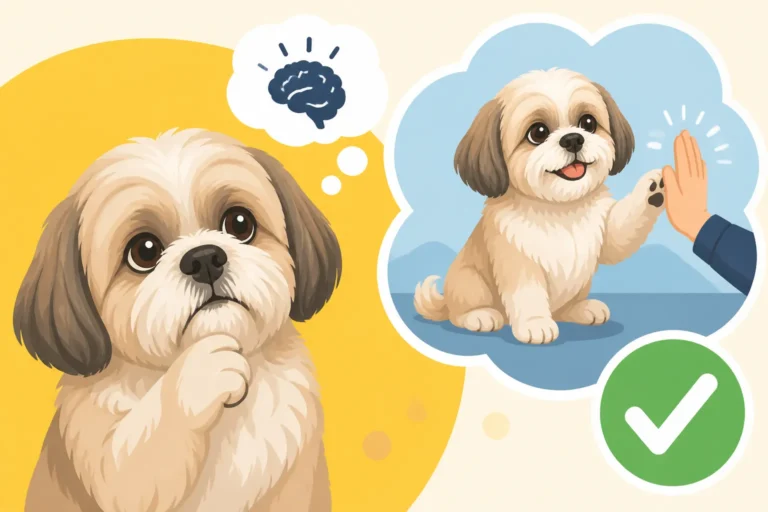
- Teach "Drop It" First (The Trade Game): Start with an item your Shih Tzu is allowed to have, like one of their toys. Let them pick it up. Then, present your high-value treat right to their nose. As they open their mouth to sniff or take the treat, say "Drop It!" in a clear, calm voice, and then immediately give them the treat. As they eat the treat, pick up the toy. Repeat this many times. The goal is for them to associate "Drop It" with giving up what they have for something better. If they are a Shih Tzu That Will Not Give Things Up, this trade game is especially important.
- Practice, Practice, Practice: Practice this trade game consistently in short, positive sessions (1-2 minutes, several times a day). Over time, your Shih Tzu will learn that "Drop It" means a reward is coming, and it's worth letting go of what's in their mouth.
Gradual Introduction to Laundry Items
Once your Shih Tzu consistently drops their own toys on cue, you can slowly introduce laundry items into the training. This needs to be done carefully and incrementally to avoid creating a negative association.
- Low-Value Laundry Items: Start with a less appealing laundry item, like a plain, clean dishtowel, and place it just out of your Shih Tzu's reach.
- Teach "Leave It": Hold a high-value treat in your closed fist. Place your fist near the dishtowel. Your Shih Tzu will likely sniff or try to get the treat. Keep your fist closed. The moment they look away from your hand, even for a split second, say "Leave It!" and immediately open your hand and give them the treat. The idea is to reward them for ignoring the temptation.
- Increase the Challenge Slowly: Once they understand "Leave It" with the dishtowel and a closed fist, try placing the dishtowel on the floor and putting your hand over it. Then, move your hand further away. Eventually, you want them to "Leave It" when you simply point to the item, or when they are walking past it.
- Applying "Drop It" to Laundry: Once they are good at "Drop It" with their own toys, if they manage to grab a low-value laundry item, immediately ask for "Drop It" and offer that super high-value treat. If they drop it, praise and reward enthusiastically. Remember, the goal is not to scare them into dropping it, but to show them that dropping it earns them something amazing.
Consistent Practice and Proofing in Different Settings
Consistency is truly the magic ingredient for training any dog, especially with a breed like the Shih Tzu. What they learn in one room might not transfer to another without dedicated practice.
- Vary Locations and Distractions: Practice "Drop It" and "Leave It" in different rooms of your house, then in the yard, and eventually in more distracting environments (always safely leashed, of course). This "proofing" helps them generalize the command, meaning they understand it applies everywhere, not just in the living room with you.
- Enlist Family Members: Ensure everyone in the household uses the same commands and rewards consistently. If one person chases them, and another trains them, it creates confusion and undermines progress.
- Keep It Positive and Fun: Training should always be a positive experience. Avoid scolding or punishing your Shih Tzu for picking up laundry. Instead, focus on redirecting them and rewarding desired behaviors. If you find yourself getting frustrated, take a break. Remember, these are intelligent little dogs who respond best to positive reinforcement. Online resources like BAXTER & Bella offer structured training programs that can guide you through these commands with clear, positive methods, ensuring consistency across various household scenarios.
When Laundry Stealing Becomes a Bigger Problem (and When to Seek Help)
For most Shih Tzus, laundry stealing is a relatively benign, if annoying, habit that can be managed with prevention and training. However, there are instances where the behavior might escalate or indicate a deeper issue, prompting the need for professional intervention.
Escalation to Aggression or Destructive Chewing
While most Shih Tzus will simply run off with laundry or perhaps guard it mildly, there are times when the behavior can become more concerning.
- Aggression: If your Shih Tzu starts to show truly aggressive behaviors when you try to retrieve laundry—snapping, biting, hard growling, or lunging—this is a serious issue that needs immediate professional attention. This isn't just "being stubborn"; it's a clear signal that the dog feels deeply threatened by your approach to their "resource." This is a significant escalation from typical attention-seeking or comfort behaviors.
- Destructive Chewing: If your Shih Tzu isn't just carrying the laundry but actively destroying it, chewing holes, or ingesting pieces, it poses a health risk. Swallowing fabric can lead to dangerous intestinal blockages that require expensive emergency surgery. This destructive chewing might stem from severe boredom, anxiety, or even pain. Shih Tzu Dental Disease at 13 Percent of the Breed can lead to discomfort, which might sometimes manifest as excessive chewing on soft items, even if it's not directly related to pain relief. Always rule out medical causes.
Consulting with a Professional Trainer or Behaviorist
For persistent or escalating issues, a certified professional dog trainer or a veterinary behaviorist can be an invaluable resource. They can provide personalized guidance tailored to your Shih Tzu's specific temperament and the nuances of your household.
- Understanding the Root Cause: A professional can help you decipher the true motivation behind the behavior. They'll assess your dog's overall behavior, daily routine, and your interactions to pinpoint whether it's boredom, anxiety, mild resource guarding, or something else entirely.
- Developing a Tailored Plan: They can develop a structured training plan that goes beyond the basics, addressing specific triggers and teaching alternative, appropriate behaviors. This might include more advanced obedience, counter-conditioning, or desensitization techniques.
- Addressing Underlying Anxiety: If the laundry stealing is linked to separation anxiety or generalized anxiety, a behaviorist can provide strategies to manage these deeper issues. This might involve environmental changes, behavioral modification exercises, and in some cases, even medication in conjunction with training. Building alone time for a Shih Tzu is crucial to prevent anxiety-driven behaviors like destructive chewing or incessant barking.
Considering Health Issues Behind Unusual Behaviors
Sometimes, changes in behavior, even seemingly minor ones like increased laundry stealing or destructive chewing, can be a symptom of an underlying medical problem. Shih Tzus, despite their robust appearance, can suffer from various health conditions.
- Pain or Discomfort: A dog in pain might act out of character. For instance, if a Shih Tzu has Shih Tzu Back Problems and Disc Disease or Shih Tzu Joint Problems in a Toy Frame, they might chew excessively to self-soothe or become irritable and more prone to resource guarding if approached when uncomfortable. A vet check-up can rule out physical pain.
- Cognitive Decline: In older Shih Tzus, a sudden increase in unusual behaviors like laundry stealing, house soiling, or changes in sleep patterns could indicate cognitive dysfunction, similar to dementia in humans. Cognitive Decline in a Shih Tzu Past Twelve is a real concern and needs veterinary assessment.
- Nutritional Deficiencies or Imbalances: While less common for laundry stealing, any significant change in diet or an underlying nutritional issue could manifest in behavioral changes or increased chewing. A vet can advise on appropriate diets, especially for a Senior Shih Tzu Care Past the Age of Ten or a dog with other health concerns.
If you notice any sudden or significant changes in your Shih Tzu's behavior, particularly if it's accompanied by other symptoms like lethargy, changes in appetite, or aggression, always consult your veterinarian first to rule out any medical causes before assuming it's purely a behavioral issue.
Disclaimer
This article is for general informational purposes only and does not constitute professional advice. Laws, prices and regulations vary by location and change over time. Consult a qualified professional for guidance on your specific situation.