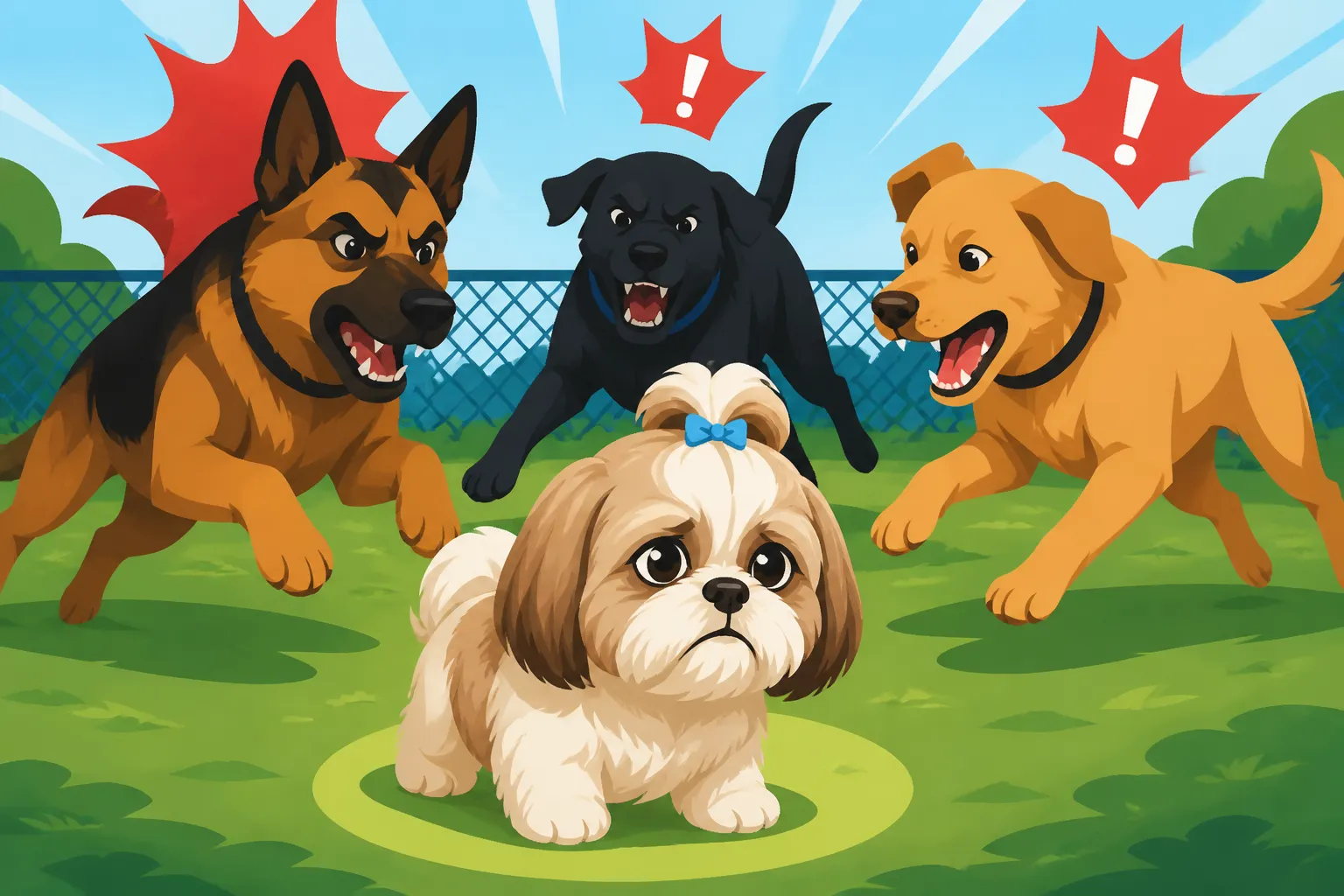
Why a Shih Tzu Is at Risk in a Dog Park
It's completely natural to want your sweet, fluffy Shih Tzu to have a blast, running and playing with other dogs, and a dog park often seems like the ideal place for that kind of joyful chaos. However, for a breed as unique and physically delicate as the Shih Tzu, these seemingly innocent social hubs can actually be fraught with hidden dangers. This guide will delve into the specific reasons why a Shih Tzu is uniquely vulnerable in a dog park environment and offer safer, more enriching alternatives for their well-being.
The Physical Vulnerabilities of a Shih Tzu in a Dog Park
Let's be real: a Shih Tzu is not built like a Labrador. They're bred to be companions, lap warmers, and charming little shadow-dogs, not rough-and-tumble athletes. Their adorable features, while part of their undeniable charm, also present significant liabilities in a chaotic dog park setting.
Small Size and Delicate Frame
One of the most obvious risks for a Shih Tzu in a dog park is simply their size. A typical Shih Tzu weighs between nine and sixteen pounds, making them one of the smallest breeds. Picture your little darling trying to navigate a space filled with enthusiastic Golden Retrievers, boisterous Boxers, or even just clumsy adolescent Labs. An accidental bump, a playful tackle, or a sudden change in direction from a larger, heavier dog can lead to serious injuries. We're talking fractured limbs, internal trauma, or even spinal injuries. Their delicate bone structure simply isn't designed to withstand the impact of a much bigger dog. It's not about aggression, it's about physics. Even the most well-meaning big dog can inadvertently injure a tiny Shih Tzu.
Consider a scenario where a large dog, perhaps a young, excitable Labrador, is running full tilt across the park. Your Shih Tzu might be trotting along, oblivious, or perhaps even trying to engage in play. The Lab, focused on a ball or another dog, could easily collide with your Shih Tzu, knocking them over or stepping on them. The sheer weight difference means the Shih Tzu comes out on the losing end of that interaction, often with severe consequences. You might be watching like a hawk, but sometimes these things happen in a blink.
Brachycephalic Features and Breathing Concerns
Our Shih Tzus are brachycephalic, meaning they have those irresistibly cute flat faces, short snouts, and often a slightly undershot jaw. While adorable, these features come with a built-in vulnerability, especially in high-exertion scenarios like a dog park. Their shortened airways mean they struggle to cool themselves effectively through panting. In a dog park, where excitement levels are high, dogs run and play hard, and the air temperature can rise, a Shih Tzu is at a much greater risk of overheating.
Imagine a warm afternoon at the park. Other dogs are tearing around, getting a good workout. Your Shih Tzu might try to keep up, their little engine working overtime. But their unique respiratory system can't handle the same level of exertion or heat as a longer-snouted breed. You might notice them panting excessively, making snorting sounds, or even showing signs of distress far sooner than a Shepherd or a Retriever. This isn't just discomfort; it can quickly escalate to heatstroke, which is a life-threatening emergency. Knowing Why a Shih Tzu Cannot Cool Itself Well is crucial for any owner considering a dog park.
Eye and Spinal Vulnerabilities
The beautiful, prominent eyes of a Shih Tzu are another major point of concern. Due to their shallow eye sockets, their eyes are more exposed and thus more susceptible to injury. A playful paw to the face, a branch whipped up by a running dog, or even just getting caught in dense undergrowth in the park could lead to corneal abrasions, scratches, or worse, Shih Tzu Eye Proptosis, the Emergency Owners Miss. This is where the eyeball literally pops out of its socket – a terrifying and painful emergency requiring immediate veterinary attention.
Beyond their eyes, Shih Tzus are also prone to Shih Tzu Back Problems and Disc Disease. Their relatively long backs, combined with their small stature, make them susceptible to intervertebral disc disease (IVDD). Rough play involving twisting, jumping, or being jostled by other dogs can put immense strain on their spine, potentially leading to a slipped disc. This can cause severe pain, paralysis, and often requires costly surgery and a long recovery. The excitement of a dog park, with its unpredictable movements and interactions, is an absolute minefield for a Shih Tzu's delicate back.
Temperamental Mismatches in a Dog Park Setting
It's not just about physical safety; a Shih Tzu's personality and natural inclinations also often clash with the typical dog park environment. They were bred for companionship and gentle interaction, not the free-for-all dynamic of a public dog park.
Overwhelm and Fear Response
Think about the sheer sensory overload of a dog park: a cacophony of barking, the blur of running dogs, a multitude of unfamiliar scents, and dozens of unknown canine personalities. For a sensitive breed like the Shih Tzu, this can be incredibly overwhelming. While some individual Shih Tzus might be bold, many are more reserved and prefer calmer, more predictable interactions. Being constantly approached by large, boisterous dogs who might interpret their small size or hesitant posture as an invitation to play-chase can quickly turn enjoyment into terror.
A Shih Tzu, feeling cornered or threatened, might react defensively. This could be a fearful snap, a yelp, or trying to hide behind your legs. Such reactions, while understandable, can sometimes escalate situations, making them targets for further unwanted attention or even aggression from other dogs who misinterpret their signals. It's hard for a small dog to give clear "back off" cues when facing a much larger, more dominant canine. It's essential to understand Shih Tzu Play Style With Bigger Dogs to see why they might struggle in a mixed-size environment.
Unpredictable Canine Personalities
A dog park is a melting pot of personalities, and you never truly know what you're going to encounter. You'll find well-socialized, gentle giants, but you'll also find dogs who are perhaps poorly socialized, overly exuberant, or even genuinely aggressive. While most owners try their best, sometimes dogs have a bad day, or their play style simply isn't compatible with a tiny Shih Tzu. Your Shih Tzu might encounter dogs that:
- Play too rough: Dogs that don't understand their own strength or don't know how to adjust their play for a smaller dog.
- Chase relentlessly: Some dogs have a high prey drive and will relentlessly chase small, fast-moving objects – including your Shih Tzu.
- Guard resources: Aggression over toys, water bowls, or even prime sniffing spots can erupt unexpectedly.
- Bully: While less common, some dogs take advantage of smaller, more timid dogs.
Even if you know your dog is perfectly behaved, you can't control the other dogs, and it only takes one negative encounter to cause severe physical or psychological trauma to your Shih Tzu. The stress of constant vigilance for you, and potential fear for your dog, hardly makes for an enjoyable outing.
Disease and Parasite Exposure
Beyond the physical and psychological risks, dog parks are also notorious breeding grounds for various illnesses and parasites. The high traffic of different dogs, often from diverse backgrounds, creates a perfect environment for transmitting diseases.
Contagious Illnesses
Think about it: dozens of dogs sharing water bowls, sniffing the same spots, and potentially sneezing or coughing in close proximity. This is a recipe for spreading contagious diseases. Common ailments transmitted in dog parks include:
- Kennel Cough: A highly contagious respiratory infection that causes a harsh, hacking cough. While often not life-threatening, it's unpleasant for your dog and can require veterinary treatment.
- Canine Influenza (Dog Flu): Another highly contagious respiratory illness with symptoms similar to kennel cough, but potentially more severe.
- Parvovirus: Especially dangerous for puppies or unvaccinated dogs, parvovirus is a highly contagious and often fatal gastrointestinal disease. While most adult dogs are vaccinated, dog parks present a significant risk if you have a young Shih Tzu or one whose vaccination history is incomplete.
- Parasites: Fleas, ticks, and various intestinal worms (like roundworms, hookworms, and whipworms) thrive in environments where many dogs congregate. Even if your Shih Tzu is on regular preventative medication, exposure is higher in these areas.
Even the cleanest dog park cannot guarantee a disease-free environment. The sheer volume of different dogs and their unknown health statuses make it a gamble every time you visit. This is particularly concerning for a small breed like the Shih Tzu, whose immune system might be more vulnerable, or whose smaller body mass makes them more susceptible to the severe effects of dehydration from vomiting or diarrhea.
Sanitation and Environmental Hazards
Let's be honest, not every dog park user is diligent about cleaning up after their dog. This means you might encounter discarded food, feces, or even hidden trash that could be harmful to your curious Shih Tzu. A tiny Shih Tzu, with their nose close to the ground, is more likely to sniff out and potentially ingest something hazardous. Toxic plants, rodenticides, or even simple human food that is poisonous to dogs could be present.
Furthermore, the ground itself can pose a risk. Uncut grass can hide sharp objects, while muddy areas can be a haven for bacteria and parasites. Pavement, especially on warmer days, can quickly heat up to temperatures that can burn a Shih Tzu's delicate paw pads. Pavement Heat Under a Shih Tzu Foot is often overlooked but can cause significant discomfort and injury.
Better Alternatives for Shih Tzu Socialization and Exercise
So, if dog parks are generally off-limits for our precious Shih Tzus, what are the alternatives? Don't worry, there are plenty of safe, enriching, and enjoyable ways to ensure your Shih Tzu gets the exercise, mental stimulation, and socialization they need without putting them at undue risk.
Structured Playdates and Small Dog Meetups
Instead of the random chaos of a dog park, seek out structured playdates with dogs you know and trust. This could be a friend's dog of a similar size and play style, or a carefully curated group of small dogs. Many communities have local small dog meet-up groups that gather in secure, enclosed areas, allowing for supervised play among peers. This way, you control the environment, the playmates, and the overall energy level.
These environments allow your Shih Tzu to build confidence and develop appropriate social skills without feeling overwhelmed or physically threatened. You can closely monitor interactions and intervene if play becomes too rough or one dog becomes overstimulated. This controlled setting is far superior for their emotional and physical well-being.
Obedience Classes and Puppy Socialization
Enrolling your Shih Tzu in obedience classes or dedicated puppy socialization classes is a fantastic way to introduce them to other dogs and people in a controlled and positive environment. Trainers are on hand to supervise interactions, teach appropriate play, and guide both you and your dog through various social scenarios. These classes focus on positive reinforcement and building a confident, well-adjusted dog.
For puppies, early socialization is critical, and a good puppy class offers a safe space for them to learn appropriate canine manners. BAXTER & Bella, for example, offers online programs that can help lay the groundwork for good behavior and gentle socialization before you even step foot into a physical class. They emphasize positive training methods that are perfect for a sensitive breed like the Shih Tzu. This foundation will help your Shih Tzu feel more comfortable and secure when meeting new dogs, even if it's not in a dog park setting. Check out The Shih Tzu Socialization Deadline for more on the importance of early positive experiences.
Safe Exercise Options
When it comes to exercise, remember that Shih Tzus are not endurance athletes. Short, gentle walks are usually ideal. Focus on quality over quantity. Two to three short walks a day, around 15-20 minutes each, are often plenty. Ensure your Shih Tzu is wearing a comfortable harness, not just a collar, to protect their delicate neck and airway. Why a Shih Tzu Should Wear a Harness Not a Collar is a must-read for every Shih Tzu owner.
Indoor play is also a wonderful alternative, especially when the weather is extreme (too hot, too cold, or too wet). Games like fetch in the living room, hide-and-seek with treats, or puzzle toys can provide excellent mental and physical stimulation. Indoor Play for a Shih Tzu offers many ideas to keep your little one happy and healthy. Many great interactive toys and harnesses can be found on platforms like Amazon, allowing you to create a safe and stimulating environment right at home.
Here's a quick comparison of dog park risks versus safer alternatives:
| Feature/Activity | Dog Park Scenario | Safer Alternative Scenario |
|---|---|---|
| Physical Safety | High risk of injury from larger, boisterous dogs; delicate eyes and spine vulnerable. | Controlled play with known, compatible dogs; supervised interactions. |
| Breathing/Overheating | High exertion in uncontrolled environment, leading to increased risk of heatstroke. | Shorter, gentler walks; indoor play; timing walks for cooler parts of the day. |
| Temperament | Overwhelming sensory input; unpredictable dog personalities may cause fear or defensive reactions. | Small, curated playgroups; structured obedience/socialization classes. |
| Disease/Parasites | High exposure to contagious illnesses (kennel cough, parvo); increased parasite risk. | Knowing the health status of playmates; regular vet checks and preventatives. |
| Mental Well-being | Potential for anxiety, fear, and negative associations with other dogs. | Building positive associations with other dogs in calm, predictable settings. |
By opting for these safer, more controlled methods of socialization and exercise, you can ensure your beloved Shih Tzu remains happy, healthy, and well-adjusted without ever having to face the unnecessary dangers of a dog park.
Disclaimer
This article is for general informational purposes only and does not constitute professional advice. Laws, prices and regulations vary by location and change over time. Consult a qualified professional for guidance on your specific situation.