The Shih Tzu Socialization Deadline
It’s a common misconception that because Shih Tzus are small, cuddly companion dogs, they don't need the same rigorous socialization as larger breeds. Many new owners, enchanted by their fluffy puppies, keep them a bit too close, inadvertently missing a critical window that can shape their dog’s entire future. This guide will walk you through understanding that crucial socialization deadline, why it's so important for your Shih Tzu, and how to make the most of it to raise a confident, happy companion.
What is the Socialization Window?
The socialization window is a specific period in a puppy's early life when they are most receptive to new experiences, sights, sounds, people, and other animals. During this time, their brains are like sponges, soaking up information about the world around them and forming impressions that will stick with them for the rest of their lives. It's not just about meeting new friends; it's about learning that the world isn't a scary place.
The Golden Period for Puppy Development
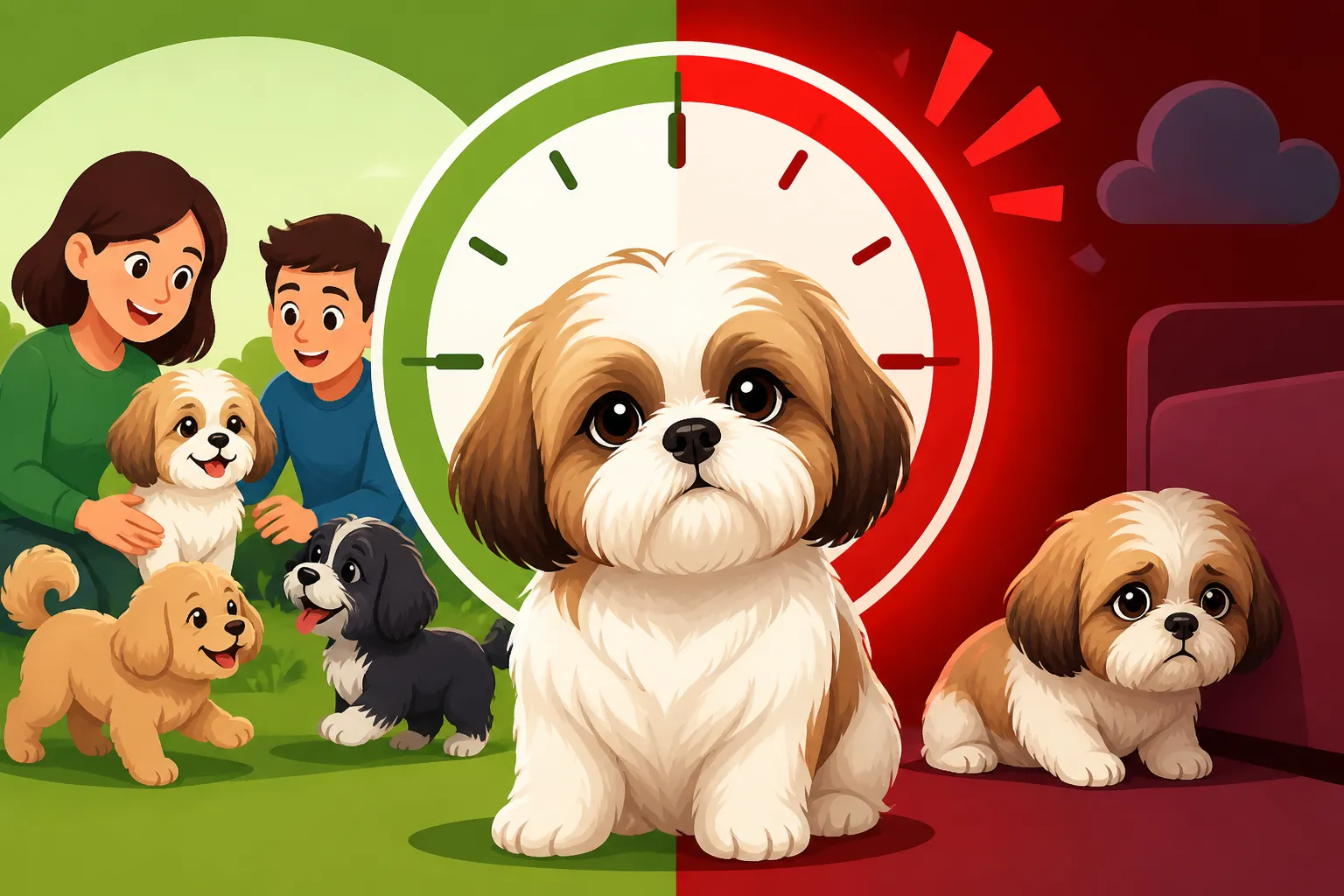
For most puppies, this "golden period" typically starts around 3 weeks of age and extends to about 16 weeks. Think of it as their prime learning time, a period of heightened neuroplasticity where positive (or negative) experiences are deeply ingrained. A Shih Tzu puppy in this phase is naturally curious, less prone to fear, and more open to forming positive associations with novel stimuli. If they are consistently and positively exposed to a wide variety of elements during these weeks, they are far more likely to grow into well-adjusted, confident adult dogs. This isn't just theory; it's backed by canine developmental science, and experienced breeders and trainers will always stress the importance of these early weeks.
The trick is, often a significant portion of this window happens before you even bring your Shih Tzu puppy home. A responsible breeder will have already started some basic socialization, introducing the puppies to household noises, different textures, and gentle human handling. But once that little fluffball crosses your threshold, the baton is passed to you, and the most critical part of the sprint begins. Every new scent, every new surface, every new voice—it's all data points for your puppy's developing brain, building their understanding of what's normal and safe.
How Fear Periods Intersect with Socialization
Complicating this golden period are "fear periods," which are normal developmental stages where puppies can suddenly become very cautious or even fearful of things they previously ignored. The first major fear period often occurs between 8 and 11 weeks of age, right in the middle of your prime socialization window. During this time, a single traumatic or frightening experience can have a lasting negative impact, making it even more crucial that all new introductions are overwhelmingly positive, gentle, and controlled. For a small breed like a Shih Tzu, even a loud sudden noise or an accidental clumsy interaction from a larger dog or person can be very frightening.
Imagine your little Shih Tzu puppy, perhaps 9 weeks old, encountering a boisterous child for the first time. If the child is not properly supervised and roughly grabs at your puppy, that single event could instill a fear of children that lasts a lifetime. This is why careful management is key. You're not just exposing them; you're orchestrating positive, calm encounters. Understanding these fear periods means you know when to be extra vigilant, ensuring that all experiences are gentle and build confidence rather than instill terror. It means sometimes taking a step back, slowing down, and prioritizing safety and positive feelings over pushing for more exposure.
Why the Shih Tzu's Socialization Window is Critical
Missing this crucial socialization window isn't just a minor oversight; it can have profound, lifelong implications for your Shih Tzu's behavior and overall well-being. Unlike larger working breeds that might have inherent confidence, Shih Tzus were bred purely as companions, and their confidence in the wider world often needs careful nurturing.
Impact on Lifelong Temperament
A Shih Tzu that hasn't been properly socialized during its formative weeks is far more likely to develop behavioral issues later in life. They might become overly timid, anxious, or even reactive and aggressive out of fear. You might see a dog that barks excessively at strangers, lunges at other dogs on walks, or cowers from unfamiliar objects. This isn't because they're "bad" dogs; it's a direct result of their early experiences (or lack thereof) shaping their perception of the world as a threatening place. Instead of learning to cope with novelty, they learn to fear it.
Consider a Shih Tzu who spent their first four months in a quiet home with minimal exposure to the outside world. When they finally encounter the bustle of a city park, the sound of a passing bus, or the sight of a person wearing a hat, these everyday occurrences can trigger intense fear and stress. They simply haven't built the neural pathways that say, "This is normal, this is safe." This fear can manifest as shaking, excessive panting, trying to hide, or even snapping if they feel cornered. It's a heartbreaking situation for both dog and owner, and one that is largely preventable with early, consistent effort. Shih Tzu Temperament and the Companion It Was Bred to Be emphasizes their desire for connection, and proper socialization helps them achieve that connection comfortably.
Preventing Fear and Reactivity
Without adequate socialization, many Shih Tzus develop what's known as "fear reactivity." This means their response to perceived threats (which can be anything unfamiliar) is to react with barking, growling, or lunging, not because they are aggressive, but because they are terrified. It's often a "fight or flight" response, and for a small dog, "fight" sometimes looks like a desperate attempt to scare away the scary thing. This can make walks incredibly stressful, visiting friends a nightmare, and even simple trips to the vet a harrowing experience for everyone involved.
Think about a common scenario: you’re walking your Shih Tzu down the street, and another dog approaches. If your Shih Tzu wasn't exposed to many friendly dogs as a puppy, their immediate reaction might be to bark frantically, pull on the leash, and try to make themselves look bigger and scarier. They're telling the other dog, "Stay away!" This isn't the friendly, outgoing nature we want for our companions. It limits their ability to enjoy simple pleasures, like a stroll around the block or meeting a new playmate. Proper socialization teaches them that most other dogs are friendly, and that new experiences can be fun, not frightening. It's about building a foundation of positive associations.
The Unique Needs of a Toy Breed
Shih Tzus, as a toy breed, face particular socialization challenges that differ from larger dogs. Their small size makes them more vulnerable to accidental injury or being overwhelmed by larger animals or boisterous children. Owners often instinctually protect them, sometimes to the point of overprotection, which paradoxically hinders proper socialization. They might be carried too much, preventing them from exploring on their own four paws, or shielded from interactions that, if managed correctly, would be beneficial.
For instance, an owner might scoop up their Shih Tzu every time a large dog approaches, intending to keep them safe. While the intention is good, if this is the only experience the Shih Tzu has with larger dogs, they learn that large dogs are something to be feared and avoided. Instead, controlled, positive introductions from a distance, gradually getting closer, can teach them that most big dogs are gentle giants. Similarly, because they are so cute, children might be tempted to grab them. Teaching children How to Carry a Shih Tzu and how to interact gently is part of socializing your dog to children, not just socializing your dog. Their delicate build also means that rough play or being dropped can have serious consequences, making supervised, gentle encounters paramount.
Identifying the Shih Tzu Socialization Deadline
While it's often referred to as a "deadline," it's more accurately a window of optimal opportunity that begins to close, rather than slamming shut abruptly. Understanding the typical timeframe is key to maximizing your puppy's potential.
The Eight to Sixteen Week Sweet Spot
The most crucial period for intensive socialization generally falls between 8 and 16 weeks of age. This is the sweet spot where puppies are old enough to leave their littermates and mother, but young enough that their brains are still incredibly adaptable and open to forming positive associations with new stimuli. During these weeks, your Shih Tzu puppy should be carefully exposed to as many different, positive experiences as possible.
This means meeting a variety of people – men, women, children of different ages, people with hats, glasses, beards, in uniforms. It means hearing different sounds – doorbells, vacuum cleaners, traffic, sirens, children playing, music. It means experiencing different textures – grass, concrete, carpet, wood floors, gravel. It means seeing different environments – your home, a quiet park (after vaccinations), a friend's house, the vet's office for happy visits. All these exposures should be positive, accompanied by treats and praise, and kept short to avoid overwhelming your puppy. Think of it as a daily adventure log for your puppy, checking off new, wonderful things they've encountered. If you're looking for guidance on what to cover, online puppy programs like BAXTER & Bella offer structured lessons that walk you through these crucial early weeks, making sure you hit all the important milestones.
Recognizing the Onset of Caution
As your Shih Tzu approaches and passes 16 weeks, you might start to notice a subtle shift. Their innate curiosity might be tempered by a growing sense of caution or wariness towards unfamiliar things. This is a natural developmental stage where puppies transition from a largely exploratory phase to one where they're more aware of potential dangers. While they can certainly still learn and adapt after this point, it often requires more effort, patience, and careful management to introduce new things without causing fear.
For example, a 10-week-old Shih Tzu might confidently approach a strange object like an umbrella opening, whereas a 20-week-old puppy, if not previously exposed, might jump back and bark nervously. This doesn't mean socialization stops; it simply means the "easy mode" is over. You'll need to be more mindful of creating controlled, positive scenarios and respecting your dog's comfort levels, working at their pace rather than pushing them too quickly. If your Shih Tzu becomes fearful, forcing the issue will only make things worse. Patience and positive reinforcement become even more critical after this window begins to close.
Strategies for Effective Shih Tzu Socialization
Making the most of the socialization window requires a proactive and thoughtful approach. It’s not about overwhelming your tiny pup but providing controlled, positive, and diverse experiences.
Safe Exposure to New Sights and Sounds
The world is full of sensory input, and your Shih Tzu puppy needs to learn that most of it is harmless and even interesting. Start within your home by exposing them to everyday noises like the vacuum cleaner, washing machine, television, and doorbell. Play gentle sounds from YouTube videos (city noises, other animals, children playing) at a low volume and gradually increase it, always pairing it with treats or play. For outdoor experiences, choose quiet areas first. Carry your fully vaccinated puppy for short periods in a sling or carrier (easily found on Amazon) to places where they can observe the world safely from a distance—a park bench, outside a bustling coffee shop, or near a school after dismissal.
Focus on quality over quantity. A few minutes of calm observation, paired with delicious treats, is far more beneficial than a stressful hour. When introducing new textures, gently walk them on different surfaces like concrete, grass, gravel, and carpet. Let them sniff new objects, like a rustling plastic bag or a crinkly toy, making it a game rather than a scare. Remember, the goal is to build positive associations, so avoid forcing them into situations where they are clearly uncomfortable. Always keep an eye on their body language; yawning, lip licking, or pulling back can be signs of stress.
Controlled Interactions with People and Dogs
Meeting new people and friendly dogs is paramount, but for a Shih Tzu, these interactions must be carefully managed. When introducing your puppy to people, ensure they are calm and gentle. Ask them to sit on the floor, let the puppy approach them, and offer a small, tasty treat. Avoid people looming over your small pup or making sudden movements. Teach children how to interact gently, showing them how to offer a flat hand for sniffing and to pet softly, perhaps on the chest or side, rather than reaching over the head. Shih Tzu Behavior With Small Children highlights the importance of these controlled introductions.
For other dogs, seek out vaccinated, calm, and friendly adult dogs who have a history of being good with puppies. Avoid dog parks during the early socialization window, as they can be overwhelming and dangerous for a small Shih Tzu. Instead, arrange playdates with trusted friends' dogs. Keep interactions short and supervised, always ensuring both dogs are enjoying themselves. If you don't have suitable dog friends, look for reputable puppy classes that offer structured, supervised play sessions. These environments provide a safe space for your Shih Tzu to learn appropriate play behaviors. Introducing a Shih Tzu to Another Dog delves deeper into making these connections successful.
Desensitising to Handling and Grooming
A Shih Tzu will require a lifetime of grooming, from brushing to nail trims to face cleaning. Early, positive exposure to handling is non-negotiable. Start from day one with gentle touching of their paws, ears, tail, and mouth. Pair each touch with a delicious treat and calm praise. Make it a routine, not a battle. This helps your Shih Tzu develop a positive association with being handled, making future vet visits and grooming sessions far less stressful. You can practice this while they are relaxed, perhaps during cuddle time on the sofa.
Introduce grooming tools slowly. Let them sniff a soft slicker brush or comb before gently running it over their body for just a few seconds, followed by a treat. Slowly build up the duration. Familiarize them with the sound of clippers (even if they're not touching them) or a hairdryer from a distance. Again, pair the sound with high-value treats. If you plan to groom at home, invest in good tools from places like Amazon and start practicing now. Getting a Shih Tzu Used to a Slicker Brush and Handling a Shih Tzu Puppy for Daily Brushing offer detailed advice on these crucial steps, which are as much about socialization as they are about hygiene.
Overcoming Challenges in Shih Tzu Socialization
Despite your best efforts, socialization isn't always a smooth path. Challenges can arise, but with the right approach, most can be overcome.
Managing Overwhelm and Fear
Sometimes, despite careful planning, a new experience might still overwhelm your Shih Tzu puppy. Perhaps a car backfired, a child screamed unexpectedly, or a large dog barked too loudly. The key is to recognize the signs of stress – yawning, lip licking, tail tucked, trying to hide, or sudden stillness – and intervene immediately. Do not force your puppy to "face their fears" if they are clearly terrified. Instead, calmly remove them from the situation.
Once in a safe, quiet place, offer comfort without overly coddling, which can inadvertently reinforce their fear. You want to communicate, "You're safe now," not "Oh dear, that was terrifying, wasn't it?" Later, you can reintroduce the stimulus in a much lower intensity, from a greater distance, and pair it with something incredibly positive like their favorite treat or a fun game. Gradually, over many small, positive sessions, you can help them build confidence. Remember, a single negative experience can take many positive ones to overcome. The goal is to build resilience, not to flood them with scary things.
The Role of Puppy Classes
Puppy classes are invaluable for socialization, especially for first-time owners or those with small breeds like Shih Tzus. A good puppy class provides a safe, structured environment for your puppy to interact with other puppies of various breeds and sizes, all under the watchful eye of experienced trainers. This is a controlled setting where play is managed, and appropriate social skills are taught. Crucially, it's also a place where your puppy will be exposed to different people, sights, and sounds in a positive way.
Beyond just play, these classes often incorporate exercises that help with handling, getting used to collars and leashes, and responding to basic cues like "sit" and "stay." They are also an excellent resource for owners, providing a forum to ask questions and learn about common puppy behaviors and challenges. For Shih Tzus, look for classes that emphasize small breed sensitivity and ensure play is monitored to prevent accidental injury from larger, more boisterous puppies. Many virtual platforms, like BAXTER & Bella, also offer comprehensive online puppy training programs that cover socialization, allowing you to learn and apply techniques in your own home environment. Puppy Classes That Suit a Shih Tzu can help you find the right fit.
Addressing Breed-Specific Quirks
Shih Tzus, with their flowing coats, brachycephalic (flat) faces, and delicate structures, have specific needs that impact socialization. Their long hair, especially around their eyes, can obscure vision if not properly tied up or trimmed, potentially startling them more easily. Make sure their vision is clear during all socialization activities. Their flat faces also mean they can overheat easily, especially in warm weather or during strenuous play. Keep socialization sessions short, especially outdoors, and always have water available. Why a Shih Tzu Cannot Cool Itself Well is a crucial read here.
Their small size also means you need to be extra vigilant about where they are walking and what they might step on, or what might step on them. Always supervise interactions, particularly with children or larger dogs, to prevent accidental bumps or falls. Their long backs can also be prone to injury, so avoid activities that involve excessive jumping or roughhousing. Focus on ground-level exploration and gentle play. Understanding these breed-specific quirks isn't about limiting their experiences, but about making them safe and positive.
Socialization Beyond the Puppy Stage
The socialization deadline might refer to a specific window, but truly, socialization is an ongoing process that continues throughout your Shih Tzu’s entire life. Even after the critical puppy phase, consistent, positive exposure remains vital.
Continuing Exposure for Adult Shih Tzus
While the rapid learning of puppyhood slows down, adult Shih Tzus still benefit immensely from new experiences. Continuing to expose them to new places, people, and well-behaved dogs helps maintain their confidence and prevents regression into fear or anxiety. Regular walks in different neighborhoods, visits to pet-friendly stores (if your dog enjoys it and is well-behaved), car rides, and meeting new visitors at home all contribute to a well-adjusted adult dog.
Think of it as maintaining their "social muscle." If an adult Shih Tzu suddenly stops getting new experiences, they might start to become wary of things they once accepted. For example, if you moved from a quiet suburban home to a bustling city apartment, an adult Shih Tzu who was well-socialized as a puppy would likely adapt much more easily than one who had a more limited range of experiences. Keeping those positive exposures going, even if less intensive than puppyhood, ensures your Shih Tzu remains a confident and happy member of your family and the wider community. It's about enriching their lives and preventing boredom or stagnation.
Rehabilitating Undersocialized Adult Shih Tzus
Perhaps you've adopted an adult Shih Tzu, or maybe you simply missed some opportunities during their puppyhood. It's never too late to begin a socialization program, though it will require more patience and a different approach than with a young puppy. The goal isn't to create a perfectly outgoing dog overnight, but to help them feel safer and more comfortable in their world. Starting Training With an Adopted Adult Shih Tzu offers some great starting points.
This process often involves very gradual, controlled desensitization and counter-conditioning. This means exposing your Shih Tzu to the things they fear at a very low intensity, pairing the exposure with high-value treats or praise, and only increasing the intensity when they show no signs of stress. For example, if they are afraid of strangers, start by having a calm friend stand at a distance where your Shih Tzu notices them but isn't reacting, then reward them. Slowly, over many sessions, reduce the distance. If you adopted a Shih Tzu whose past is unknown, and they exhibit significant fear or reactivity, professional help from a certified dog trainer or veterinary behaviorist is highly recommended. They can provide tailored guidance and support to help your Shih Tzu build confidence and overcome past deficits. Sometimes, a rescue Shih Tzu might come with a history of being given up due to matted coats, indicating they also lacked proper handling and grooming socialization. Why Owners Surrender a Matted Shih Tzu reveals some of these challenges.
Here's a quick guide to different socialization approaches:
| Age Period | Primary Focus | Key Activities | Owner's Role | Potential Challenges |
|---|---|---|---|---|
| 0-8 Weeks | Maternal & Litter Socialization | Interacting with mother and siblings; gentle human handling by breeder; exposure to household sounds. | Breeder ensures healthy environment, early handling, varied sounds. Minimal stress. | Poor breeder can lead to undersocialized puppies, health issues. |
| 8-16 Weeks | Critical Socialization Window (Golden Period) | Meet 100+ new people; encounter various sounds, sights, surfaces; positive interactions with calm, vaccinated dogs; vet visits; grooming introduction. | Owner actively seeks out diverse, positive experiences; uses treats & praise; manages fear periods; enrolls in puppy classes; focuses on gentle handling. | Missing this window can lead to lifelong fear/reactivity; accidental negative experiences. |
| 4-8 Months | Adolescent Socialization | Continue exposure to new places/people; reinforce manners; structured play with dogs; explore new environments. | Owner continues training & exposure; navigates "fear periods" and adolescent "testing"; maintains consistency. | "Rebellious" phase; fear of novel stimuli after initial exposure; hormonal changes post-spay/neuter. |
| 8 Months + | Lifelong Socialization & Maintenance | Regular outings to familiar & new places; meeting new people; safe dog interactions; continued positive exposure to handling. | Owner incorporates variety into routines; reinforces positive associations; addresses any emerging fears with professional help; monitors comfort levels. | Regression if experiences cease; developing specific fears; challenges with adopted adult dogs with unknown histories. |
It's a lot to take in, I know, but remember, the effort you put into socializing your Shih Tzu puppy during that critical early window will pay dividends for their entire life. A confident, well-adjusted Shih Tzu is a joy to live with and a testament to your dedication.
Disclaimer
This article is for general informational purposes only and does not constitute professional advice. Laws, prices and regulations vary by location and change over time. Consult a qualified professional for guidance on your specific situation.