Why Shih Tzu House Training Runs Long
If you're a Shih Tzu parent struggling with house training, you're certainly not alone. Many new owners find themselves utterly baffled, wondering why their adorable little fluffball just isn't getting it, even after weeks or months of effort. It can be incredibly frustrating to consistently clean up indoor accidents, feeling like you're endlessly repeating yourself and seeing no real progress. This guide is here to shed some light on the specific reasons why Shih Tzu house training often runs longer than expected, and what you can do to navigate these challenges with more patience and better strategies.
The Unique Challenges of Shih Tzu House Training
Let's be honest, Shih Tzus are not like every other dog breed. Their charming personalities, delightful cuddliness, and absolutely gorgeous coats come with a few quirks, especially when it comes to potty training. Understanding these breed-specific traits is the first step to developing a training plan that actually works for your little lion dog.
Tiny Bladders and Frequent Needs
One of the most fundamental reasons Why Shih Tzu House Training Takes Months or feels prolonged is simply their size. A Shih Tzu is a compact dog, typically weighing between 9 and 16 pounds, and their internal anatomy scales accordingly. This means they have a very small bladder, which can only hold a limited amount of urine. Expecting a tiny puppy, or even an adult Shih Tzu, to "hold it" for extended periods is just unrealistic.
Imagine trying to go all day without a bathroom break after only having a few sips of water – that's essentially what we're asking of them sometimes. Puppies, especially, need to relieve themselves very frequently, often every hour or two when awake. As they get older, they might manage a few hours, but it's rarely as long as a larger breed. This constant need means that owners must be exceptionally vigilant and proactive, taking their Shih Tzu out much more often than they might expect for other dogs. Missing even one cue or being a few minutes late can result in an accident, not because your Shih Tzu is "bad," but because their physical capacity simply reached its limit. This is a physiological reality that no amount of training can fully overcome; it simply means we need to adjust our expectations and routines to meet their needs.
Breed Temperament and "Stubbornness"
Shih Tzus were literally bred to be companions, lap warmers, and charming members of the royal court. For centuries, their primary job was to sit on a lap and look pretty, not to herd sheep or retrieve birds. This historical context shapes their temperament profoundly. They are often described as intelligent but can also be quite independent and, yes, a tad stubborn. If they don't see the point of something, or if it's uncomfortable, they might just decide it's not for them. This isn't defiance in a malicious way, but rather a strong sense of self-preservation and a preference for comfort.
This can manifest in house training when, for instance, it's raining outside, or the grass is wet, or it's simply too cold for their liking. A Shih Tzu might plant their tiny feet and absolutely refuse to go out. They're telling you, in their own way, "I'd much rather relieve myself on this nice, dry rug right here, thank you very much." They aren't trying to upset you; they're just prioritizing their comfort, a trait rooted in their pampered lineage. This 'stubbornness' requires an owner to be even more patient, persuasive, and willing to find creative solutions to make the outdoor potty experience as pleasant as possible, rather than resorting to confrontation which rarely works with this sensitive breed. Why a Shih Tzu Was Bred to Sit on a Lap really speaks to this historical pampered background.
The Allure of Indoor Comforts
Let's face it, our homes are cozy, warm, and have perfectly soft, absorbent surfaces like carpets, rugs, and even bath mats. For a small Shih Tzu, these can feel like a far more inviting and comfortable place to relieve themselves than a cold, wet, or unfamiliar patch of grass outside. They don't inherently understand that one surface is "right" and another is "wrong" for pottying; they just know what feels good.
The small size of a Shih Tzu also means their accidents are often small, easy to overlook, and sometimes occur in hidden spots. A quick pee on a rug might go unnoticed for a while, especially if they're quick about it. This can inadvertently reinforce the wrong behavior, as they're not immediately interrupted or redirected. Furthermore, if they're left alone for too long and can't hold it, they'll have to go somewhere, and an indoor spot is always available. The comfort and convenience of indoor surfaces are a significant hurdle in house training, requiring owners to make the outdoor option undeniably the only and most rewarding choice.
Common Pitfalls That Extend Potty Training
Beyond the inherent challenges of the breed, many owners inadvertently make mistakes that prolong the house training process. It's easy to fall into these traps, especially if you're new to Shih Tzus or small breeds in general, but recognizing them is crucial for getting back on track.
Inconsistent Schedules and Missed Cues
One of the biggest culprits in extended Shih Tzu house training is inconsistency. Dogs, especially small dogs like Shih Tzus, thrive on routine. They learn to anticipate when it's time to eat, play, sleep, and most importantly, go outside. If their schedule for potty breaks is sporadic – sometimes every hour, sometimes every four hours – they'll never truly understand the expectation. This unpredictability creates anxiety and confusion, making it harder for them to learn where they should and shouldn't relieve themselves.
Moreover, many owners miss the subtle cues their Shih Tzu gives before an accident. A Shih Tzu might not pace frantically or whine loudly. They might simply pause, sniff the ground, circle briefly, or even just look a little more intent than usual. Because their accidents are often small and quick, these pre-potty signals can be very fleeting. If you're not constantly observing, you might miss the chance to intervene and usher them outside before an accident happens. Every missed cue is a missed opportunity to reinforce the correct behavior, and conversely, every accident in the house, even if cleaned, can reinforce the idea that inside is an acceptable place to go. A Shih Tzu Potty Schedule by Week highlights just how critical this routine is.
Improper Cleaning of Accidents
It sounds counterintuitive, but how you clean up an accident can significantly impact future house training success. If urine or feces odors remain, even faintly, your Shih Tzu's incredibly sensitive nose will detect them. To a dog, these residual odors mark a spot as a "bathroom" area, making it more likely they will return to that same spot for future eliminations. Standard household cleaners, while making the spot look and smell clean to us, often don't eliminate these enzymatic odors for a dog.
Using the wrong cleaning products is a common mistake. Instead of truly neutralizing the scent, some cleaners can even "fix" the odor, making it harder to remove. This perpetuates a cycle where your Shih Tzu keeps returning to the same indoor spots, even after you've diligently cleaned them. It's a frustrating situation where you feel like you're doing all the right things, but your dog isn't responding, when in reality, the hidden scent signals are undermining your efforts. Using enzymatic cleaners specifically designed for pet odors is absolutely vital to break this cycle and eliminate the invisible attractant. Cleaning Shih Tzu Accidents Properly provides more detail on this essential step.
Punishment and Negative Reinforcement
It's natural to feel frustrated when you find another puddle or pile in the house, especially after you thought your Shih Tzu was making progress. However, punishing your Shih Tzu for accidents – whether by yelling, scolding, or rubbing their nose in it – is one of the most counterproductive approaches you can take. Shih Tzus are sensitive little souls, and harsh corrections will only teach them to fear you, not to understand house training.
When punished for an indoor accident, a Shih Tzu doesn't associate the punishment with where they went potty, but rather with the act of pottying itself, or even with your presence. This can lead to a dog who becomes secretive about relieving themselves, hiding in another room, behind furniture, or even waiting until you're out of sight before having an accident. They may learn that pottying in front of you is dangerous, leading them to avoid going when you take them outside, only to relieve themselves indoors later when they feel safe. This completely undermines the goal of having them openly relieve themselves outside in your presence, so you can reward them. Positive reinforcement and redirection are the only ways to build a trusting relationship and achieve lasting house training success with a Shih Tzu.
Building a Solid Foundation for Success
Now that we understand the challenges and pitfalls, let's talk about building a truly effective house training program for your Shih Tzu. It all comes down to consistent, positive, and proactive strategies.
Establishing a Predictable Routine
Consistency is truly king when it comes to house training a Shih Tzu. A predictable routine helps your dog understand when and where they are expected to relieve themselves, building trust and reducing anxiety. This routine should cover everything from feeding times to sleep schedules, as these all influence when your Shih Tzu needs to potty.
Start by setting fixed meal times. Most adult Shih Tzus do well with two meals a day, but puppies may need three or four. After eating, dogs usually need to eliminate within 15-30 minutes. Therefore, a trip outside shortly after every meal is non-negotiable. Beyond meals, plan frequent potty breaks throughout the day: first thing in the morning, last thing at night, after every nap, after every play session, and roughly every 1-2 hours for puppies, extending to every 3-4 hours for adults. Keep a log if necessary, noting when your Shih Tzu eats, drinks, potties, and has accidents. This will help you spot patterns and adjust your schedule accordingly. When you take them out, always go to the same designated potty spot. Use a consistent phrase like "Go potty!" or "Do your business!" to help them associate the words with the action. When they go, offer immediate, high-value rewards – a tiny, delicious treat and enthusiastic praise. This makes the outdoor potty experience the most rewarding thing they can do.
The Power of Crate Training
Crate training, when done correctly, is one of the most effective tools for house training a Shih Tzu. Dogs are naturally clean animals and generally prefer not to soil their sleeping area. A properly sized crate capitalizes on this instinct by providing a small, secure den where your Shih Tzu feels safe and is unlikely to eliminate. The key is "properly sized" – the crate should be just large enough for your Shih Tzu to stand up, turn around, and lie down comfortably, but no larger. If it's too big, they might use one end as a bed and the other as a bathroom.
Introduce the crate positively, making it a comfortable, inviting space with soft bedding and toys. Never use the crate as punishment. When you can't actively supervise your Shih Tzu, they should be in their crate. This prevents accidents from happening around the house and teaches them to "hold it" until they are let out for a scheduled potty break. The moment you let them out of the crate, take them directly outside to their potty spot. Don't let them wander around the house first. Over time, this consistent routine helps them associate going outside with relief after being in their crate. You can find excellent, breed-appropriate crates and carriers on Amazon that will perfectly fit your little companion and make their crate a cozy den. For more on this, check out Setting Up a Crate a Shih Tzu Will Enter.
Utilizing Indoor Potty Solutions
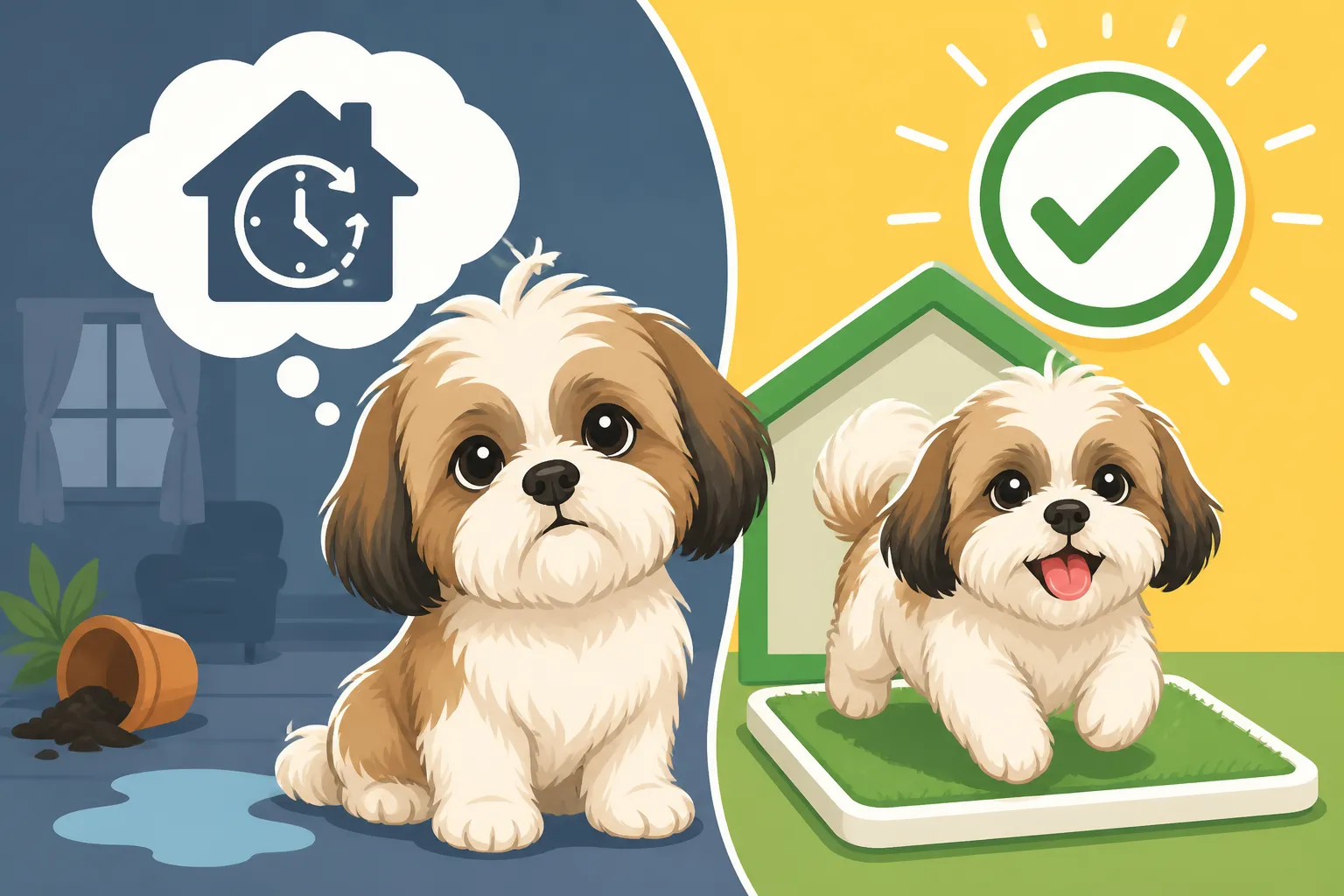
While the ultimate goal is usually outdoor pottying, sometimes indoor solutions can be incredibly helpful, especially for tiny puppies, for owners who live in high-rise apartments, or during inclement weather. For a Shih Tzu that might refuse to go out in the rain or cold – as mentioned in A Shih Tzu That Refuses to Go Outside in Rain – an indoor option can prevent accidents and maintain training consistency.
Potty pads or indoor grass patches are the most common options. If using pads, place them in a consistent, easily accessible location. Reward heavily when your Shih Tzu uses them. The goal is to teach them that this specific spot is the appropriate indoor bathroom, not just any rug. Over time, if you want to transition them outside, you can gradually move the pad closer to the door, then just outside the door, and eventually remove it once they're reliably going outdoors. Indoor grass trays, available on Amazon, can offer a more natural texture and scent, which some Shih Tzus take to more readily than a synthetic pad. However, be aware that relying solely on indoor pads can make the transition to outdoor pottying more challenging later on, as your Shih Tzu may develop a strong preference for the indoor surface. It's a balance to strike based on your lifestyle and your Shih Tzu's individual needs.
Navigating Setbacks and Regression
Even with the best intentions and the most consistent training, nearly every Shih Tzu owner experiences setbacks or periods of regression. It's frustrating, but it's a normal part of the learning process. The key is to understand why they're happening and how to address them effectively without losing your cool.
Identifying the Root Cause of Accidents
When your Shih Tzu starts having accidents again after a period of good behavior, the first step is to avoid immediately assuming they've forgotten everything or are being spiteful. Instead, approach it like a detective: what has changed? There are several common reasons for house training regression:
- Medical Issues: Always rule out health problems first. A sudden increase in accidents could indicate a urinary tract infection, bladder stones, kidney issues, or even diabetes. Conditions like Shih Tzu Bladder Stones and Urinary Problems or even Excessive Thirst as the First Kidney Sign can lead to more frequent urination. A trip to the vet for a check-up is always the best starting point.
- Schedule Changes: Have you changed your work schedule? Are you taking them out less frequently? Even small shifts in your routine can disrupt your Shih Tzu's predictability.
- Environmental Changes: A new baby, a new pet, moving to a new house, or even new furniture can cause stress or confusion, leading to accidents.
- Lack of Supervision: As dogs get older, owners sometimes relax their supervision too early. If your Shih Tzu has too much unsupervised freedom, they're more likely to have accidents.
- Adolescence: Like human teenagers, adolescent dogs (roughly 6-18 months) can test boundaries and seemingly forget training they once knew.
- Undermining Clean-Up: As discussed, if accidents aren't cleaned with enzymatic cleaners, residual odors can attract them back to the same spot.
Once you've identified a potential cause, you can tailor your approach. Often, it means going back to basics, just like you would with a young puppy, for a short period to reinforce good habits.
Re-training Strategies for Adult Dogs
If you've identified the cause of regression and it's not medical, or if you've adopted an adult Shih Tzu with no prior house training, a systematic re-training approach is needed. This largely mirrors puppy training but might require even more patience as you're undoing old habits.
- Restrict Freedom: Limit your Shih Tzu's access to the house. Use a leash to keep them tethered to you, use baby gates to confine them to one room, or return to consistent crate use when you can't supervise. The goal is to prevent any accidents from happening inside the house.
- Supervise Constantly: This is non-negotiable. Watch for any signs of sniffing, circling, or distraction, and immediately take them outside.
- Hyper-Frequent Potty Breaks: Take your Shih Tzu out every hour on the hour, even if you think they don't need to go. Always reward successful outdoor eliminations generously.
- Enzymatic Cleaning: Double down on proper cleaning with enzymatic cleaners. You need to completely erase any scent markers that might be attracting them to old accident spots.
- Consistency, Consistency, Consistency: Return to the strict routine you would use for a puppy. No exceptions, no missed cues. The consistency will rebuild their understanding of expectations.
- Consider a Trainer: For persistent issues, an experienced trainer specializing in positive reinforcement for small breeds can provide personalized guidance. Online resources like BAXTER & Bella offer virtual training programs that can be incredibly helpful for owners needing structured support from home.
It might feel like a step backward, but by diligently re-establishing these foundations, you can guide your Shih Tzu back to reliable house training.
Addressing Marking Behaviors
Marking is a specific type of urination that can present a unique challenge, especially with intact male Shih Tzus (though females can mark too, especially if intact). Unlike a full bladder void, marking involves small amounts of urine deposited in various locations, often on vertical surfaces or new objects. It's less about needing to relieve themselves and more about communication and scent deposition.
If your Shih Tzu is marking indoors:
- Neuter/Spay: If your dog is intact, neutering or spaying is often the first and most effective step to reduce or eliminate marking behavior. This significantly reduces the hormonal drives behind marking.
- Identify Triggers: What prompts the marking? Is it new visitors, new furniture, another dog's scent, or anxiety? Understanding the trigger can help you manage the environment.
- Supervise and Interrupt: Just like with regular house training, constant supervision is key. If you catch your Shih Tzu about to mark, interrupt them with a clap or a sharp "No!" and immediately take them outside. Reward heavily if they go outside.
- Clean Thoroughly: Again, enzymatic cleaners are your best friend. Every marked spot needs a deep clean to remove all scent.
- Belly Bands/Diapers: For persistent markers, especially while you're actively re-training, a belly band for males or a dog diaper for females can be a lifesaver. These don't solve the problem, but they contain accidents and prevent further scent-marking of your home. You can find comfortable and washable Wraps for a Shih Tzu That Marks easily on Amazon. Ensure the fit is snug but not restrictive, and change them frequently to maintain hygiene.
- Reduce Stress: Marking can be a sign of anxiety. Ensure your Shih Tzu feels secure, has a consistent routine, and isn't exposed to excessive stressors.
- Environmental Management: Block access to favorite marking spots. Introduce new items cautiously and supervise closely around them.
Addressing marking often requires a multi-pronged approach and can take time, but it's crucial for a harmonious household.
When Professional Guidance Becomes Essential
Sometimes, despite your best efforts, house training challenges persist. This isn't a reflection of your failure as an owner, nor is it necessarily a sign of a "bad" dog. It simply means it's time to bring in professional support. Knowing when and where to seek help can save you immense frustration and greatly benefit your Shih Tzu.
Recognizing Medical Contributions to Potty Problems
Before you dive deeper into behavioral solutions, it is absolutely paramount to rule out any underlying medical conditions. As we've discussed, tiny bladders are normal, but excessive thirst, frequent urination, straining to urinate, or accidents in sleep are not. A seemingly behavioral problem can often have a physiological root, especially with a breed prone to certain health issues.
Your veterinarian should be your first call if house training regression or persistent accidents occur. They can perform a thorough physical examination, take urine and blood samples, and check for conditions such as:
- Urinary Tract Infections (UTIs): Common in dogs, UTIs cause discomfort and an increased urge to urinate.
- Bladder Stones: These can cause pain, frequent urination, and even blood in the urine. Shih Tzu Bladder Stones and Urinary Problems are not uncommon.
- Kidney Disease: Conditions like Renal Dysplasia and the Shih Tzu Kidney can lead to increased thirst and urination, making house training impossible.
- Diabetes: This condition also causes increased thirst and frequent urination.
- Spinal Issues: Back pain or disc problems can make it painful for a Shih Tzu to assume a potty stance, leading to reluctance to go outside or accidents indoors. Shih Tzu Disc Disease and Sudden Back Pain could manifest this way.
- Cognitive Dysfunction (in older dogs): Senior Shih Tzus can experience cognitive decline, similar to dementia in humans, which can affect their memory of house training rules.
Your vet might also recommend imaging, like X-rays or ultrasound, if they suspect bladder stones or other internal issues. Addressing any underlying medical problem is the foundation upon which successful behavioral training can be built. Without it, you'll be endlessly frustrated by a problem that isn't truly behavioral. Shih Tzu Urinary Accidents That Are Medical provides more insight into this often-overlooked aspect.
Seeking Expert Behavioral Help
If your Shih Tzu gets a clean bill of health from the vet and house training issues still persist, it's time to consider a professional dog trainer or a certified canine behaviorist. Not all trainers are created equal, so it's important to find one who uses positive reinforcement methods and has experience with small, sometimes "stubborn" companion breeds like the Shih Tzu.
A good trainer can observe your Shih Tzu's behavior, your routine, and your interactions to pinpoint subtle issues you might be missing. They can help you:
- Refine Your Routine: Identify gaps or inconsistencies in your potty schedule.
- Improve Communication: Teach you how to better read your Shih Tzu's cues and communicate your expectations clearly.
- Address Anxiety/Fear: If accidents are linked to anxiety, they can help implement desensitization or counter-conditioning protocols.
- Manage Specific Behaviors: Offer tailored strategies for marking, submissive urination, or excitement urination.
- Provide Support: Offer ongoing guidance and support, which can be invaluable when you're feeling overwhelmed.
Online platforms, like the BAXTER & Bella Online Puppy School, can be a fantastic resource if in-person trainers are hard to find or too costly. They offer comprehensive, structured programs and often live Q&A sessions, providing accessible expert advice right from your home. This can be especially useful for Finding a Trainer for a Toy Breed who understands the nuances of Shih Tzus. Remember, seeking help isn't a sign of failure; it's a commitment to your Shih Tzu's well-being and a calmer, cleaner home for everyone.
Community Support and Shared Experiences
While professional help is invaluable, never underestimate the power of community. Connecting with other Shih Tzu owners can provide a wealth of practical tips, emotional support, and shared experiences that make you feel less alone in your struggles. Online forums, social media groups dedicated to Shih Tzus, or local breed clubs are excellent places to find this kind of support.
Hearing how others have successfully tackled similar house training challenges with their Shih Tzus can offer new perspectives and solutions you hadn't considered. They might share specific product recommendations, clever tricks for getting their Shih Tzu out in the rain, or just words of encouragement when you're feeling defeated. While individual advice should always be considered with your vet or trainer's recommendations in mind, the camaraderie and shared journey can be incredibly motivating. Learning from others' journeys and even sharing your own successes, no matter how small, helps build a stronger, more informed community of Shih Tzu lovers.
Summary of Shih Tzu Potty Training Challenges and Solutions
To recap, successful Shih Tzu house training is a marathon, not a sprint, and understanding the specific hurdles is key. Here's a quick overview:
| Challenge Type | Specific Issues | Effective Solutions |
|---|---|---|
| Breed-Specific | Small bladder, "stubbornness," preference for indoor comfort | Frequent, scheduled potty breaks; patience; positive reinforcement; indoor potty options |
| Owner-Created | Inconsistent routine, missed cues, improper cleaning, punishment | Strict schedule; constant supervision; enzymatic cleaners; positive rewards only |
| Setbacks/Regression | Medical issues, stress, adolescence, marking | Vet check-up; re-training (back to basics); neutering/spaying; belly bands/diapers |
Remember, your Shih Tzu isn't trying to be difficult. They are simply responding to their physical needs, their instincts, and the environment you've created. By being patient, consistent, and proactive, you can help your beloved companion master house training and enjoy a clean, happy home together.
Disclaimer
This article is for general informational purposes only and does not constitute professional advice. Laws, prices and regulations vary by location and change over time. Consult a qualified professional for guidance on your specific situation.