Setting Up a Crate a Shih Tzu Will Enter
Many Shih Tzu owners find themselves wrestling with the idea of crate training, often feeling guilty about "caging" their beloved companion or frustrated when their little one just won't seem to settle in. It’s a common misconception that a crate is a punishment; in reality, a properly introduced and set up crate can become a safe, comforting den for your Shih Tzu, providing them with their own personal space and aiding immensely in house training and managing alone time. This comprehensive guide will walk you through how to create a crate environment your Shih Tzu will genuinely want to enter, transforming it from a source of anxiety into a cherished retreat.
Understanding the Shih Tzu's Unique Relationship with Crates
Let’s be real: crate training a Shih Tzu isn't always a walk in the park. These aren't dogs bred for long hours in a kennel; they were historically companions, lap warmers, and palace dwellers. Their very essence is about being with their people. This deep-seated desire for connection can make the idea of being confined, even to a plush, cozy crate, feel alien and upsetting to them. Many owners struggle because they perceive their Shih Tzu's protests as a rejection of the crate itself, when often it's more about the sudden feeling of isolation or the lack of proper, positive introduction.
Why Crates Can Feel Unnatural at First
Imagine being plucked from your comfortable living room sofa, where you always have company, and gently placed into a small, enclosed space, even if it's perfectly clean and comfortable. For a Shih Tzu, a breed renowned for its affectionate and people-oriented nature, this can be quite jarring. They thrive on companionship and are often described as "velcro dogs," preferring to be wherever you are. This inherent trait means that the concept of "alone time" in a crate needs to be introduced with immense patience and positive reinforcement. They aren't trying to be difficult; they're simply expressing their natural inclination to be close to you. Understanding this fundamental aspect of their temperament is the first step in making crate training a success, as it frames your approach with empathy rather than frustration. The Signs a Shih Tzu Cannot Settle Alone delves deeper into these natural instincts.
Common Shih Tzu Crate Training Challenges
Beyond their companionable nature, Shih Tzus face a few specific challenges when it comes to crates. Their small bladders mean they often need to relieve themselves more frequently than larger breeds, making extended crate times difficult during the initial house training phase. This is why Why House Training a Shih Tzu Runs Into Months is such a common experience for owners. Owners often mistakenly believe their Shih Tzu should be able to "hold it" for hours, leading to accidents in the crate and confusion for the dog.
Another factor is their potential for separation anxiety. Because they are so attached to their humans, being left alone, even in a crate, can sometimes trigger distress. This can manifest as whining, barking, or even attempts to escape, which can be heartbreaking for owners to witness. It's crucial to distinguish between a puppy protesting confinement and true separation anxiety, which might require a more gradual, systematic approach to building alone time.
Choosing and Setting Up the Perfect Crate
The key to getting your Shih Tzu to enter their crate willingly is making it an undeniably appealing place to be. It shouldn't feel like a cage but rather a personal, safe haven. The right crate, combined with thoughtful setup, makes all the difference.
Selecting the Right Crate Type and Size
When it comes to crates, you have a few main types to consider, each with its pros and cons for a Shih Tzu:
- Wire Crates: These are perhaps the most common. They offer excellent ventilation and visibility, allowing your Shih Tzu to see what's happening around them. Many come with dividers, which are incredibly useful for puppies, allowing you to expand the space as they grow. You can find a great variety of options on Amazon, from collapsible wire crates to soft-sided travel crates.
- Plastic Crates (Airline Approved): These offer a more den-like, enclosed feel, which some dogs prefer. They're also sturdier for travel. The reduced visibility might help some anxious dogs feel more secure, but others might feel too isolated.
- Soft-Sided Crates: These are lightweight and portable, great for car trips or visits. However, they're not suitable for dogs who are prone to chewing or for unsupervised use, as they offer less security.
Size is paramount. Your Shih Tzu needs enough room to stand up, turn around comfortably, and lie down without feeling cramped. However, it shouldn't be so large that they can designate a "potty corner" away from their sleeping area. For puppies, a wire crate with a divider is ideal. As they grow, you can gradually increase the space. For an adult Shih Tzu, typically a 24-inch crate is more than sufficient, but always measure your dog to be sure.
Here's a quick comparison of crate types:
| Crate Type | Pros | Cons | Best For |
|---|---|---|---|
| Wire Crate | Good ventilation, visibility, easy to clean, dividers for puppies | Can feel less den-like, some dogs prefer more enclosure | General home use, puppy training, dogs who like to see surroundings |
| Plastic Crate | Den-like feel, secure for travel, durable | Less ventilation, limited visibility, can feel confining | Travel, anxious dogs who prefer a dark den, chewing puppies |
| Soft-Sided Crate | Lightweight, portable, comfortable | Not chew-proof, less secure, harder to clean | Travel, temporary use, non-chewing adult dogs who are already crate trained |
Making the Crate a Cozy, Inviting Sanctuary
Once you have the right crate, the next step is to make it as inviting as possible. This isn't just about throwing in a blanket; it's about creating a truly comfortable space your Shih Tzu will associate with safety and relaxation.
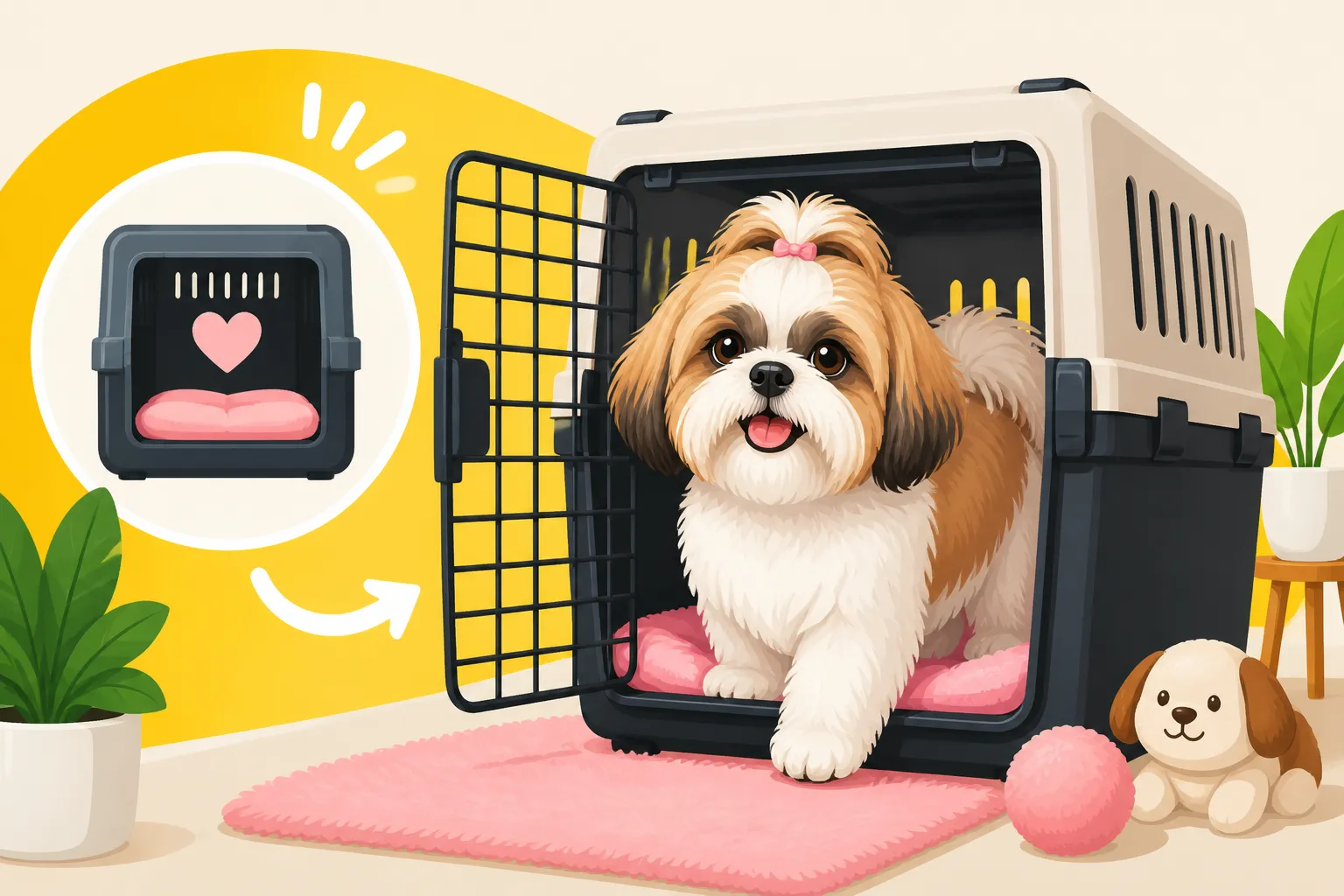
- Comfortable Bedding: Plenty of cozy bedding, like a soft dog bed or a favorite blanket (again, Amazon has endless choices!), makes all the difference. Choose something machine washable. For puppies, consider a waterproof liner under the bedding in case of accidents. Avoid towels or blankets that fray easily if your puppy is a chewer, as loose threads can be ingested.
- Favorite Toys: Include a few safe, durable chew toys or puzzle toys. A Kong stuffed with peanut butter or plain yogurt (and frozen) can be a fantastic way to create positive associations and keep your Shih Tzu occupied. Rotate toys to keep things interesting.
- Water Bowl: Attach a water bowl to the side of the crate, especially if your Shih Tzu will be in there for more than an hour or two. Make sure it's secure and won't tip over.
- Covering the Crate: For many Shih Tzus, covering the wire crate with a light blanket or crate cover can create a more den-like atmosphere, reducing external distractions and promoting a sense of security. Just ensure there's still adequate airflow.
- Location, Location, Location: Place the crate in an area where your Shih Tzu still feels part of the family, but not in the direct path of high traffic. A corner of the living room, next to your bed at night, or in a quiet office space can work well. The goal is proximity without being overwhelmed. For their first nights, having the crate close by can be reassuring. The First Nights With a Shih Tzu Puppy offers more advice on settling your new arrival.
Introducing Your Shih Tzu to Their Crate
This is where patience becomes your superpower. You want your Shih Tzu to choose to enter the crate, not be forced. Positive reinforcement is crucial.
Step-by-Step Positive Association
Start by making the crate a place of good things. Leave the door open and let your Shih Tzu explore it on their own terms. Never force them inside.
- Treats and Toys: Toss high-value treats and favorite toys into the crate, near the back. Let them go in and get them, then come right back out. Repeat this several times a day. You can even feed them their meals near the crate, then eventually place the food bowl just inside, gradually moving it further back.
- "Crate Time" Cue: Once they are comfortable going in to retrieve treats, introduce a verbal cue like "Crate Time!" or "Kennel Up!". Use a happy, inviting tone.
- Short, Sweet Stays: When they willingly enter, praise them enthusiastically. Close the door for a few seconds, then immediately open it and reward them. Slowly increase the time the door is closed, always staying nearby.
- Never Use as Punishment: The crate should never be associated with negative experiences. If you put your Shih Tzu in the crate as a punishment, they will quickly learn to fear it, undermining all your positive efforts.
For a fantastic structured approach to training, consider resources like those offered by BAXTER & Bella, which can guide you through positive reinforcement techniques for crate training. They emphasize building a strong, positive foundation.
Gradual Increases in Crate Time
Once your Shih Tzu is comfortable with short stays, you can start to gradually increase the duration.
- When You're Home: Have your Shih Tzu spend short periods in the crate while you're still in the room, then while you're in an adjacent room. Gradually increase the distance and the time.
- Leaving the House: Start by leaving them in the crate for just a few minutes, then returning. Increase this time slowly. Go through your departure routine (grabbing keys, putting on shoes) without leaving, then put your Shih Tzu in the crate with a special treat (like a frozen Kong). Practice leaving for five minutes, then ten, then twenty, and so on.
- Overnight Stays: For nighttime, place the crate in your bedroom so your Shih Tzu feels close to you. This can significantly reduce crying. If they cry, first rule out a potty need, then gently reassure them, but avoid letting them out if it's purely attention-seeking. Letting them "cry it out" for short, increasing periods can be effective, but never ignore genuine distress or a need to potty. A Shih Tzu Crying in the Crate at Night offers practical advice for dealing with nocturnal protests.
Remember that consistency is key. Every time you use the crate, make it a positive experience. This is part of Crate Training a Shih Tzu Properly, which highlights the importance of routine and rewards.
Troubleshooting Common Crate Challenges
Even with the best intentions, you might run into bumps along the road. Don't get discouraged – it's completely normal!
Dealing with Crying and Barking
It's tough to hear your little Shih Tzu crying or barking in their crate. Your first instinct might be to let them out, but pausing to understand why they're crying is important.
- Potty Break Needed?: For puppies, crying often signals a need to go outside. Take them out immediately, quietly, on a leash. If they potty, lavish praise. If not, bring them back in and put them back in the crate without fuss. Avoid making it a playtime opportunity. Puppies often can't hold it for long. A Shih Tzu Potty Schedule by Week can help you set realistic expectations.
- Attention-Seeking?: If you've just taken them out and know they don't need to potty, they might be crying for attention. In this case, resist the urge to immediately let them out. Wait for a brief moment of quiet before opening the crate door. This teaches them that calm behavior gets them out, not frantic demands.
- Anxiety/Fear?: If the crying is frantic, accompanied by panting, drooling, or destructive behavior, it could be anxiety. Re-evaluate your introduction steps, making them even more gradual. Ensure the crate is truly a comfortable den. For some, adding a piece of your clothing to the crate can offer comfort. Consulting with a positive reinforcement trainer can be invaluable here.
Accidents in the Crate
Finding an accident in the crate can be frustrating, especially if you thought your Shih Tzu was making progress with house training.
- Crate Size: Is the crate too large? If your Shih Tzu has enough space to relieve themselves in one corner and sleep in another, the crate isn't serving its purpose as a den they want to keep clean. Use a divider to reduce the space.
- Time Left Alone: Is your Shih Tzu being left for too long? Even adult Shih Tzus generally shouldn't be crated for more than 4-6 hours at a stretch during the day, and puppies need much more frequent breaks. Their small bladders simply can't hold it for a full workday. Whether a Shih Tzu Should Be Left All Day discusses this challenge in detail.
- Cleaning: Did you clean previous accidents thoroughly? If the crate still smells like urine, your Shih Tzu might be more inclined to use it as a bathroom again. Use an enzymatic cleaner to eliminate odors.
- Medical Issue: If accidents are sudden and frequent, or if your Shih Tzu seems to be drinking excessively, a vet visit is in order to rule out any underlying medical conditions. Shih Tzu Bladder Stones and Urinary Problems highlights common issues that could lead to accidents.
Refusal to Enter the Crate
If your Shih Tzu actively avoids the crate or struggles when you try to put them in, you need to go back to basics.
- Re-start Positive Association: Forget about closing the door for a while. Just focus on making the crate a place where delicious treats magically appear. Sit by the crate, casually tossing treats in. Let them go in and out at will.
- Special Treats Only for the Crate: Reserve your Shih Tzu's absolute favorite, highest-value treats exclusively for crate training. This makes the crate truly special. What Motivates a Shih Tzu to Work is an excellent resource for understanding how to use rewards effectively.
- Enrichment in the Crate: Make sure there are exciting things to do in the crate. A long-lasting chew or a puzzle toy can make entering the crate a positive choice rather than a forced one.
- Consider a Different Crate: Sometimes, a dog simply doesn't like a particular crate type. If you have a wire crate, try draping a blanket over it to create a den. If they seem to dislike the enclosed nature of a plastic crate, consider a wire one.
Remember that crate training is a journey, not a race. There will be good days and challenging days. By approaching it with patience, consistency, and plenty of positive reinforcement, you can help your Shih Tzu view their crate not as a prison, but as their own special, safe haven. It might take time, but the peace of mind knowing your furry friend has a secure spot is absolutely worth the effort.
Disclaimer
This article is for general informational purposes only and does not constitute professional advice. Laws, prices and regulations vary by location and change over time. Consult a qualified professional for guidance on your specific situation.