Treats a Shih Tzu Can Eat Without Gaining
It's a common dilemma for us Shih Tzu parents: we want to shower our little fluffballs with love, and often, that love comes in the form of delicious treats. But then we look at their tiny frames, and the worry creeps in – are these treats contributing to unwanted weight gain? It’s a valid concern, because even a couple of extra pounds on a small dog like a Shih Tzu can have significant health implications. This guide is all about navigating the world of Shih Tzu treats, helping you make smart choices so you can spoil your beloved companion without packing on the pounds.
Why Weight Management is Crucial for Shih Tzus
You might think a little extra fluff is cute, and it certainly can be, but for a Shih Tzu, even slight weight gain can lead to a cascade of health issues. Their unique physiology, from their compact size to their brachycephalic (flat) faces, means they're particularly susceptible to problems exacerbated by excess weight.
The Small Frame and Big Risks
Our Shih Tzus are little dogs, typically weighing between 9 and 16 pounds. That means every single pound, every single ounce, has a disproportionate impact on their body. Imagine if a human gained 10% of their body weight – that's often a noticeable change. For a Shih Tzu, gaining just two pounds could be a 15-20% increase for some, putting immense strain on their delicate systems. What Two Extra Pounds Do to a Shih Tzu
Extra weight can severely impact their joints, which are already prone to issues like patellar luxation (slipping kneecaps) and hip dysplasia. Their tiny spines, which are often long in proportion to their legs, are also at risk. A heavier body places more stress on the intervertebral discs, increasing the likelihood of painful back problems and disc disease. Shih Tzu Disc Disease and Sudden Back Pain Beyond structural problems, obesity can worsen their already compromised breathing due to their flat faces. An overweight Shih Tzu will pant more, struggle more in warm weather, and generally have a harder time exercising or even just moving around comfortably. This is why keeping them at a healthy weight is paramount for their quality of life. Shih Tzu Obesity on a Sixteen Pound Frame
Understanding Caloric Needs
Because they're so small, a Shih Tzu's daily caloric intake is surprisingly low compared to larger breeds. What might be a negligible treat for a Labrador could be a significant portion of a Shih Tzu's daily calories. This is often where owners get into trouble, unknowingly overfeeding with treats because they seem so small.
The exact caloric needs vary based on age, activity level, and individual metabolism, but it’s always a far lower number than most people estimate. A sedentary adult Shih Tzu might only need a couple of hundred calories a day. If their main diet is already meeting these needs, then every treat is essentially "extra" and contributes directly to weight gain. It's crucial to factor in all calories consumed, including those from treats, when calculating their daily intake. Daily Calories for a Twelve Pound Shih Tzu For puppies or highly active adults, there might be a bit more wiggle room, but for many of our beloved couch potatoes, treat calories add up very quickly. Consulting your vet for a precise calorie target is always the best approach.
The Art of Smart Snacking: Choosing the Right Treats
So, if every calorie counts, how do we still give our Shih Tzus those moments of joy that treats provide? The trick is to be strategic: choose low-calorie, nutrient-dense options and avoid the high-fat, high-sugar traps.
Low-Calorie, High-Value Options
The good news is that many healthy, delicious human foods can be fantastic low-calorie treats for your Shih Tzu. These options provide vitamins and fiber without piling on empty calories.
- Fresh Fruits (in moderation):
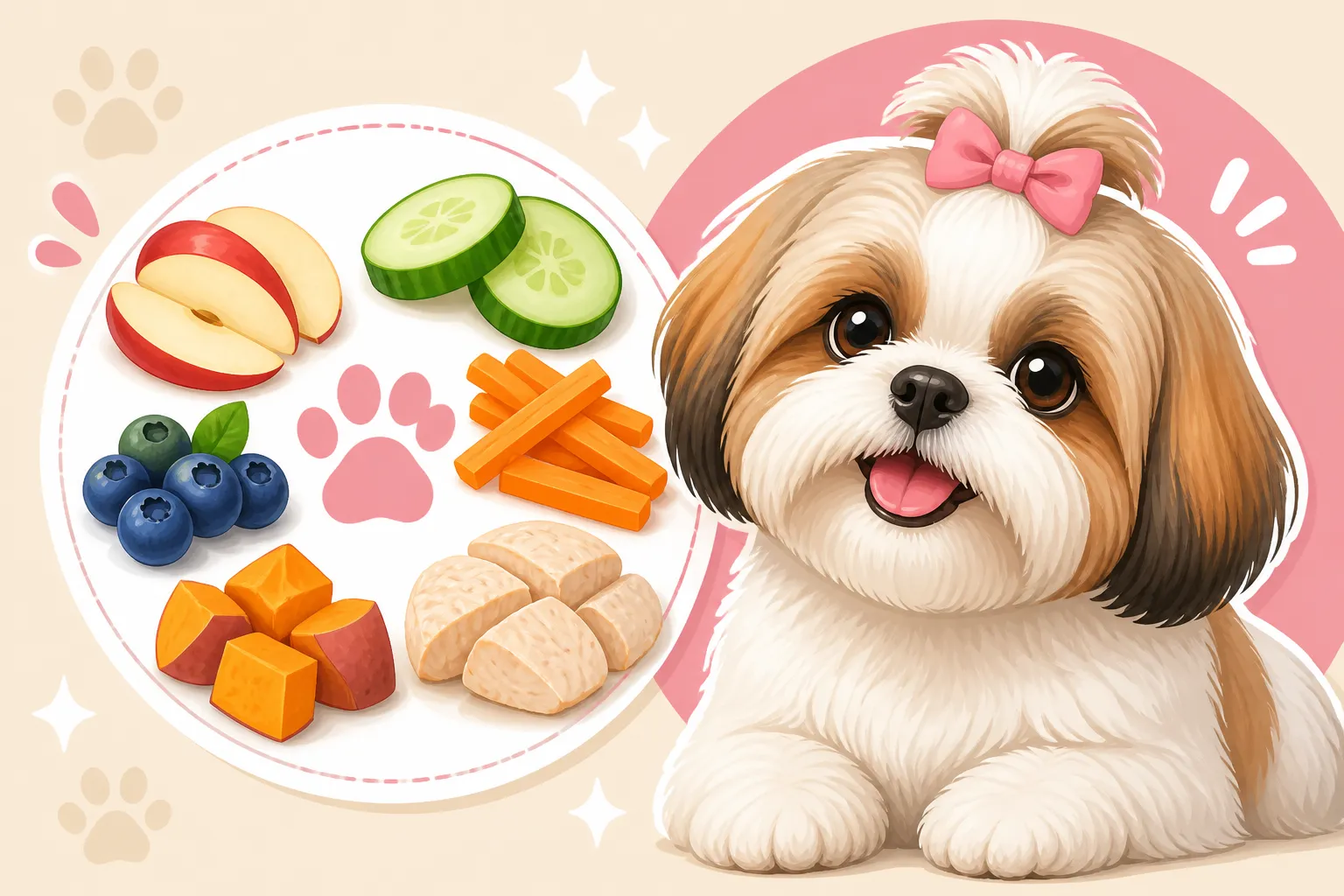
- Apples: A few small slices (without the core or seeds, which contain cyanide and are toxic). Crisp and refreshing, they're often a big hit.
- Blueberries: Small, antioxidant-rich, and easy for them to eat whole. A few blueberries make a great training reward.
- Strawberries: Cut into tiny pieces, they're another sweet and healthy option.
- Bananas: While healthy, they are higher in sugar, so offer only tiny slivers as an occasional special treat.
- Plain Vegetables:
- Carrots: Great for chewing and dental health (the crunch helps scrape teeth!). Offer small coins or sticks.
- Green Beans: Many Shih Tzus love green beans, raw or lightly steamed. They're very low in calories and can be given quite generously.
- Cucumber: Slices of cucumber are hydrating and crunchy, perfect for a summer snack.
- Cooked Sweet Potato: Small, plain pieces of cooked sweet potato are packed with nutrients and generally well-loved. Always ensure it's fully cooked and unseasoned.
- Commercial Low-Calorie Training Treats:
- Look for treats specifically labeled as "training treats" or "low-calorie." Many of these are designed to be tiny and have minimal calories per piece. Ingredients lists should be simple and recognizable.
- When shopping online, platforms like Amazon offer a wide variety of such treats, often with clear calorie counts per treat. Always check the packaging for the exact calorie information, as formulas can change.
- Often, the best training treats are soft enough to be broken into even smaller pieces, which leads us to our next point!
Avoiding Common Pitfalls
Just as there are great options, there are also foods that are either harmful or simply too calorific for a Shih Tzu. Being aware of these can save you a lot of trouble and vet bills.
- High-Fat and Sugary Human Foods:
- Processed Meats: Deli meats, hot dogs, bacon, and sausages are often high in sodium, fat, and preservatives, which are terrible for a dog's health and can lead to pancreatitis.
- Baked Goods: Cookies, cakes, pastries, and bread are loaded with sugar, unhealthy fats, and often contain xylitol (an artificial sweetener deadly to dogs) or chocolate (also toxic).
- Cheese: While a tiny bit of plain cheese might be okay occasionally, it's very high in fat and calories. Many dogs are also lactose intolerant, leading to upset stomachs.
- Table Scraps: This is perhaps the biggest culprit. A bite here and a bite there of human dinner can easily add hundreds of extra calories, not to mention expose your Shih Tzu to seasonings, onions, garlic, and other ingredients that are harmful or toxic. Kitchen Foods That Are Toxic to a Shih Tzu
- Overly Large or Dense Commercial Treats:
- Many commercial dog biscuits, especially those designed for larger breeds, are calorie bombs for a Shih Tzu. Even if they're marketed as "healthy," always check the calorie count per treat.
- Dental chews can be great for oral health, but many are very high in calories. Choose smaller, lower-calorie versions and factor them into your dog's daily intake.
- Rawhides and other indigestible chews pose choking hazards and digestive upset. Opt for safer, digestible alternatives if your Shih Tzu is a big chewer.
Portion Control and Treat Strategies
It’s not just what you feed, but how much and when. With a Shih Tzu, every tiny piece of food is a significant dietary event. Mastering portion control and integrating treats wisely into their day is key to maintaining a healthy weight.
Breaking Treats into Tiny Morsels
This is arguably the most impactful strategy for treat-giving with a small dog. Many commercial treats, even small ones, are still too big for a Shih Tzu if you’re trying to manage calories. Think of breaking a single tiny training treat into two, three, or even four minuscule pieces.
Your Shih Tzu doesn't understand the volume of the treat; they understand the act of receiving a treat. That moment of joy and positive reinforcement happens whether the piece is the size of a pea or a quarter. By breaking treats down, you can extend your treat-giving sessions, get more repetitions in during training, and drastically reduce the caloric impact. For instance, a single Treats Small Enough for a Shih Tzu Session can be used for an entire short training session, making it feel like a lavish reward feast to your dog, without actually giving them a lot of food. This also forces them to eat slower, savoring each tiny bite.
Using Treats for Training, Not Just Spoiling
Treats are incredibly powerful tools for training, especially with a companion breed like the Shih Tzu. They love to please, and they love food! Instead of just handing out treats whenever your dog looks cute (which they always do, I know!), try to use them intentionally.
Every treat should ideally be part of a reward system. Did your Shih Tzu sit nicely when asked? Treat! Did they come when called? Treat! Did they calmly greet a guest instead of barking? Treat! This shifts the dynamic from casual spoiling to positive reinforcement, reinforcing good behaviors. Companies like BAXTER & Bella, which focus on online puppy training, often emphasize using small, high-value treats as rewards to build positive associations and encourage learning. Integrating this into your routine means treats aren't just extra calories; they're investments in a well-behaved, happy dog. Positive Reinforcement With a Shih Tzu Even when you're not in a formal training session, you can use treats to reward calm behavior or appropriate chewing.
The "Sometimes" Treat Mentality
It's easy to fall into the habit of giving a treat every time your dog looks at you or nudges your hand. However, for a Shih Tzu, this can quickly lead to weight gain. Adopt a "sometimes" treat mentality. This means treats are given intentionally, not as a continuous stream throughout the day.
This doesn't mean you can't be generous with affection or praise. Many Shih Tzus are just as happy with a loving cuddle, a quick game of fetch, or a belly rub as they are with a food treat. Save the food treats for specific moments: during training, for a special "jackpot" reward, or as a small, occasional indulgence. If you're struggling to help your Shih Tzu maintain a healthy weight, you might even consider cutting back on treats entirely for a while, focusing on exercise and proper meal portions. Taking a Shih Tzu From Eighteen Pounds to Fourteen Remember, true love means keeping them healthy, even if it means saying "no" to those adorable pleading eyes sometimes.
Creative Ways to Reward Without Calories
Sometimes, a non-food reward can be even more motivating for your Shih Tzu than a treat, especially if they're not highly food-driven or if you're really trying to cut down on calories. Tapping into their natural desires for attention, play, and mental engagement can be incredibly rewarding for both of you.
Non-Food Rewards
Think about what truly makes your Shih Tzu happy, beyond just a tasty bite. These non-food rewards can be incredibly effective for positive reinforcement and strengthening your bond.
- Praise and Affection: A happy, enthusiastic "Good dog!" paired with a gentle ear scratch, a full body rub, or a quick belly tickle can be incredibly powerful. Many Shih Tzus thrive on human attention and connection. They were, after all, bred purely as companions. Why a Shih Tzu Was Bred to Sit on a Lap This direct, physical acknowledgment of their good behavior tells them they've done something right and makes them feel loved.
- Playtime: For some Shih Tzus, a quick game of tug-of-war with a favorite soft toy, a roll of a small ball, or a chase around the living room is the ultimate reward. Keep these play sessions short and engaging, especially if your dog has breathing challenges. This taps into their natural instincts for play and social interaction.
- A Special Walk or Outing: If your Shih Tzu loves walks, making a walk a reward for good behavior can be very motivating. Perhaps a slightly longer route, or a trip to a new, exciting sniffing spot. For those who enjoy car rides, a short, calm ride can also be a special treat.
Mental Stimulation
Keeping your Shih Tzu's brain active can burn energy and provide satisfaction without a single extra calorie. This is especially important for intelligent breeds who can get bored easily.
- Puzzle Feeders: These are fantastic for making mealtime or treat time last longer. Instead of gobbling down a meal in 30 seconds, your Shih Tzu has to work to get each piece of kibble or small treat. This engages their problem-solving skills and can be quite tiring mentally. There's a huge selection of puzzle feeders available on Amazon, from simple snuffle mats to more complex interactive toys, so you can find one that suits your dog's skill level. Puzzle Feeders a Shih Tzu Can Work Just be sure to count the calories of whatever you put inside the feeder!
- "Find It" Games: Hide a few tiny, low-calorie treats or even just a favorite toy around the house and encourage your Shih Tzu to "find it!" This uses their natural scenting abilities and provides mental exercise. Start easy and gradually make the hiding spots more challenging.
- Learning New Tricks: Teaching your Shih Tzu a new trick, even something simple like "spin" or "shake a paw," provides mental engagement. You can use their regular kibble for these training sessions, ensuring no extra calories are added to their day. Tricks Worth Teaching a Shih Tzu Indoors
By combining smart treat choices, careful portion control, and creative non-food rewards, you can ensure your Shih Tzu stays happy, healthy, and at an ideal weight for many years to come. Remember, a long and active life is the best treat of all!
Safe and Unsafe Shih Tzu Treat Comparison
Here's a quick reference guide to help you choose wisely when it comes to treating your beloved Shih Tzu.
| Treat Category | Safe & Recommended (in moderation) | Avoid / Use Extreme Caution | Why |
|---|---|---|---|
| Fruits | Apple slices (no core/seeds), blueberries, strawberries, watermelon (no seeds/rind), banana (tiny) | Grapes, raisins, avocado, cherry pits | Grapes/raisins are toxic; avocado pits are choking hazard; cherry pits contain cyanide. |
| Vegetables | Carrots, green beans, cucumber, cooked sweet potato, pumpkin (canned, plain), broccoli (small) | Onions, garlic, chives, wild mushrooms, corn on the cob | Toxic to dogs; corn on the cob is a choking/obstruction risk. |
| Commercial Treats | Small, low-calorie training treats, dental chews (check calories) | Large, high-calorie biscuits, rawhides, treats with artificial sweeteners (xylitol) | High calories lead to weight gain; rawhides are choking hazards; xylitol is deadly. |
| Dairy & Proteins | Small amount of plain yogurt (probiotic benefits) | Cheese, milk, ice cream, processed meats | High in fat/calories; many dogs are lactose intolerant; processed meats are too salty. |
| Human Food Scraps | None recommended | Gravy, seasoned meats, fried foods, sugary desserts, chocolate | High in fat, salt, sugar; seasonings and chocolate are toxic. |
This table is a general guide, and it's always best to introduce any new food slowly and in very small quantities to monitor for any adverse reactions.
Disclaimer
This article is for general informational purposes only and does not constitute professional advice. Laws, prices and regulations vary by location and change over time. Consult a qualified professional for guidance on your specific situation.