Positive Reinforcement With a Shih Tzu
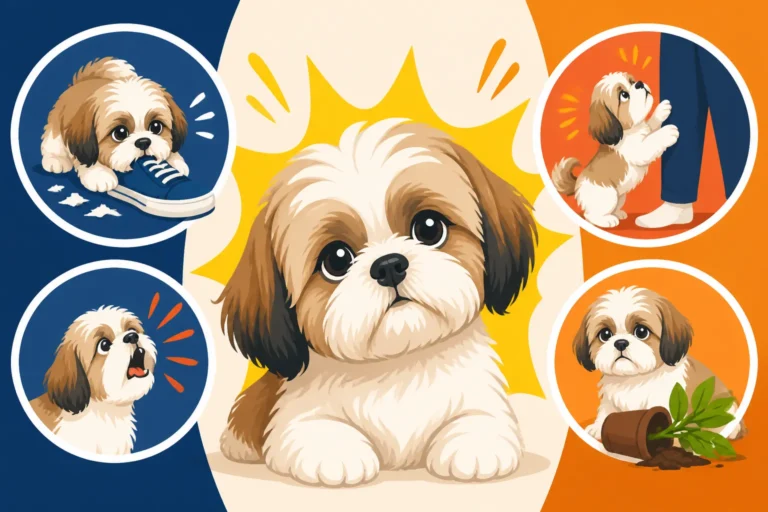
One of the most common frustrations new Shih Tzu parents face is feeling like their adorable little fluffball just isn't "getting" it when it comes to training. It's easy to fall into the trap of thinking our Shih Tzus are being stubborn or deliberately mischievous, especially when they seem to ignore commands or have accidents inside after a perfectly good potty break. This guide is all about changing that narrative, showing you exactly how positive reinforcement works wonders for our beloved Shih Tzus, transforming training from a struggle into a joyful bonding experience for both of you.
Why Positive Reinforcement is the Gold Standard for Shih Tzus
When we talk about training, many people still picture stern commands, leash corrections, or even harsh punishments. But for a breed as sensitive and intelligent as the Shih Tzu, these methods are not only ineffective but can actively damage your relationship and stifle their natural desire to please. Positive reinforcement, on the other hand, taps into their inherent joy and willingness to learn, making training a game they want to play.
Understanding the Shih Tzu Temperament
Our Shih Tzus were originally bred to be pampered companions, lap warmers, and charming members of the imperial court. They weren't bred for hunting, guarding, or performing complex tasks in the field. This means their core motivation isn't necessarily to follow strict orders, but rather to be close to their people, receive affection, and enjoy a comfortable life. They thrive on attention and positive interaction, making them incredibly responsive to methods that reward desired behaviors rather than punishing mistakes. A Shih Tzu wants to be your best friend, and positive reinforcement builds on that foundation, teaching them that cooperating with you leads to good things – treats, praise, playtime, and all the love they crave. Trying to force a Shih Tzu into compliance often backfires, leading to a dog who is either fearful, shuts down, or simply becomes more resistant. They're not "dominant" or "stubborn" in the human sense; they're simply responding to training in a way that aligns with their breed's historical purpose and their gentle nature.
Shih Tzus are also highly perceptive. They pick up on our moods, our tone of voice, and our body language with remarkable accuracy. A harsh word or a frustrated sigh can be deeply unsettling to them, causing them to associate training with negative feelings. Conversely, a cheerful tone, an excited clap, or a happy smile can make them eager to engage. Their delicate physical structure also means that physical corrections are not only inappropriate but dangerous. They have tiny necks, often a delicate spine, and their eyes are vulnerable. Using positive methods protects their physical well-being while fostering their emotional security. They are tiny souls who deserve patience and understanding, not intimidation.
The Science Behind Positive Reinforcement
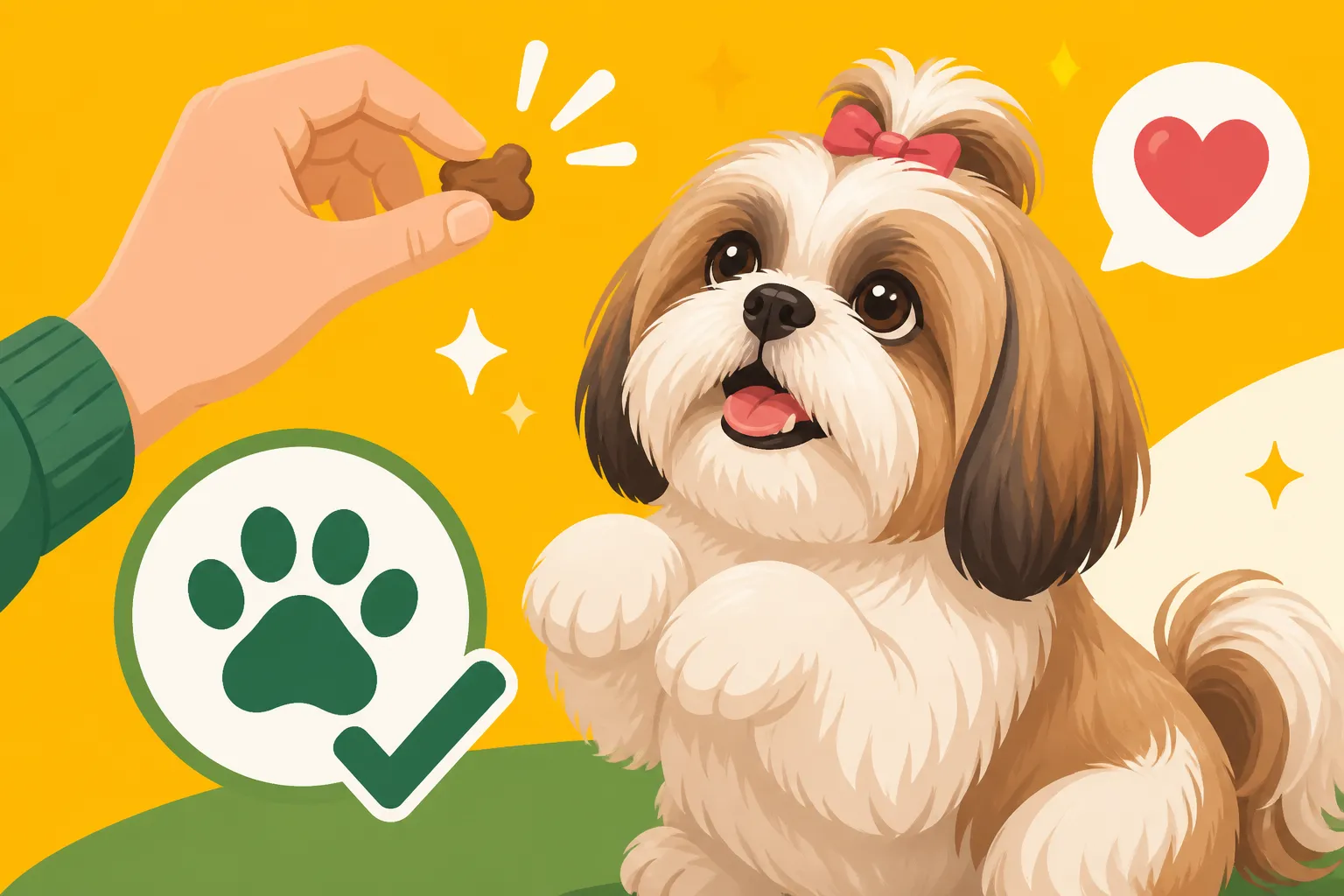
At its heart, positive reinforcement is about adding something good to the environment after a desired behavior occurs, making that behavior more likely to happen again. Think of it as a clear "yes!" signal. Your Shih Tzu sits when asked, and poof, a tasty treat appears. Their brain quickly makes the connection: "Sitting when Mom/Dad says 'sit' makes good things happen!" This simple principle is incredibly powerful because it works with how dogs naturally learn. They are constantly experimenting with behaviors and observing the consequences. When the consequences are positive and rewarding, they repeat the behavior.
This isn't about bribing your dog; it's about paying them for a job well done. Just like you expect a paycheck for your work, your Shih Tzu expects a reward for performing a behavior you've requested. Over time, as the behavior becomes reliable, the need for a constant treat diminishes, and the reward can become more variable – sometimes a treat, sometimes praise, sometimes a toy, sometimes a belly rub. The behavior itself, and your happy reaction, becomes intrinsically rewarding. This creates a dog who wants to work with you, not one who fears what will happen if they don't. It builds confidence, encourages problem-solving, and strengthens the bond between you and your fluffy companion. It's a method that is truly kind and respectful to the animal, teaching them clearly what you want, rather than punishing them for what you don't.
Moving Beyond Outdated Training Methods
For too long, dog training was heavily influenced by dominance theory, suggesting that humans needed to assert themselves as the "alpha" over their dogs. This led to a range of punitive methods, from scolding and yelling to physical corrections like alpha rolls or leash jerks. The good news is that modern canine behavior science has thoroughly debunked these theories. Dogs don't operate on a pack hierarchy with humans; they respond to clear communication and consequences. Using fear or intimidation might suppress a behavior in the short term, but it doesn't teach your Shih Tzu what to do instead. It often creates anxiety, stress, and can even lead to aggression as the dog tries to protect itself from perceived threats.
Imagine trying to learn a new language, but every time you made a mistake, you were yelled at or given a mild electric shock. Would you be eager to learn? Would you trust your teacher? Probably not. You'd likely become withdrawn, anxious, and avoid trying altogether. The same applies to our Shih Tzus. Instead of fostering a relationship built on fear, positive reinforcement fosters one built on mutual respect and understanding. It encourages your Shih Tzu to offer behaviors because they want to, not because they're afraid of the alternative. This is especially vital for a sensitive breed like the Shih Tzu, who can easily be "shut down" by harsh treatment, making them resistant to all future learning. For more on what truly motivates these little lions, check out What Motivates a Shih Tzu to Work.
Essential Tools and Techniques for Positive Reinforcement
Building a strong foundation in positive reinforcement requires a few key elements. It's not just about tossing treats; it's about precision, consistency, and having the right equipment to set your Shih Tzu up for success. Thinking through your tools before you start can make a world of difference.
High-Value Treats and Appropriate Rewards
Not all rewards are created equal, especially for a discerning Shih Tzu! When you're first teaching a new behavior, you need what we call "high-value" treats – something your Shih Tzu absolutely loves and finds irresistible. This might be small pieces of cooked chicken, cheese, hot dogs, or commercially available soft training treats. The key is that they should be tiny, pea-sized or even smaller, so your Shih Tzu can eat them quickly without getting full or distracted. You want to deliver the treat fast, right after the desired behavior, so the connection is clear.
As your Shih Tzu becomes more proficient, you can start varying the rewards. Sometimes it’s a high-value treat, sometimes a piece of kibble, sometimes enthusiastic praise, a quick game with a favorite toy, or even just a happy scratch behind the ears. This keeps them engaged and guessing, much like a slot machine that doesn't pay out every single time, but often enough to keep you playing. Experiment to find what truly motivates your individual Shih Tzu. Some might go wild for a squeaky toy, while others live for a piece of liverwurst. You can find a huge variety of training treats and puzzle toys on platforms like Amazon, which can be a great place to discover new high-value options for your pup. Remember, the reward should be proportionate to the effort, and always something your dog genuinely enjoys. For more ideas on what treats to use, consider Treat Sizes That Suit a Shih Tzu.
The Power of the Clicker
A clicker is a small, inexpensive tool that makes a distinct "click" sound. While optional, it can be incredibly powerful in positive reinforcement training because it provides a precise marker for the exact moment your Shih Tzu performs the desired behavior. Think of it as taking a snapshot of the good behavior. When you're teaching "sit," the instant your Shih Tzu's bottom touches the floor, you click, then immediately follow with a treat. The click bridges the gap between the action and the treat, helping your dog understand exactly what they did to earn that reward.
Without a clicker, you might say "good dog" a second too late, or fumble for a treat, and your Shih Tzu might not be entirely sure what they're being rewarded for. The clicker offers clear, consistent communication. To introduce it, simply pair the click with a treat repeatedly: click, then treat; click, then treat. Do this 10-20 times in a quiet setting. Your Shih Tzu will quickly learn that the click predicts a treat. Once they associate the click with good things, you can use it to mark all sorts of behaviors, from a perfect sit to a calm greeting at the door. It adds a level of precision that can dramatically speed up the learning process and reduce confusion for your little learner. If you're new to this, there are many resources, including BAXTER & Bella, that offer guided programs on how to effectively use a clicker in your daily training. You can pick up a simple clicker on Amazon for just a few dollars.
Harnesses, Leashes, and Safe Spaces
Beyond treats and clickers, having the right physical equipment and environment is crucial. For a Shih Tzu, a front-clip harness is almost always preferable to a collar for walks. Their delicate throats and brachycephalic (flat-faced) nature make them prone to respiratory issues, and pulling on a collar can exacerbate these problems or even lead to injury, including eye proptosis. A harness distributes pressure evenly across their chest, making walks more comfortable and safer. A sturdy, lightweight leash, perhaps 4-6 feet long, provides enough freedom without being cumbersome for their small size. For more on safe walking equipment, refer to Why a Shih Tzu Should Wear a Harness Not a Collar.
Creating a "safe space" or "den" for your Shih Tzu is also vital, especially when house training or teaching them to be comfortable alone. A comfortable crate, a small exercise pen, or a designated cozy bed can serve as their personal retreat. This space should always be associated with positive experiences – comfy bedding, favorite toys, a long-lasting chew. Never use it for punishment. This secure spot gives them a sense of security and can be invaluable for management when you can't supervise them directly, preventing them from practicing undesirable behaviors. For tips on setting up a successful den, see Setting Up a Crate a Shih Tzu Will Enter.
Implementing Positive Reinforcement in Daily Training
Positive reinforcement isn't just for teaching specific tricks; it's a philosophy that can be woven into every aspect of your Shih Tzu's life, from basic manners to potty training, making daily interactions smoother and more enjoyable.
Keeping Training Sessions Short and Sweet
Shih Tzus, like most dogs, have relatively short attention spans, especially when they're puppies. Trying to force them into long, arduous training sessions will quickly lead to frustration for both of you. The key to success is to keep training sessions brief, fun, and frequent. Aim for 5-10 minutes, two to three times a day, particularly when your Shih Tzu is well-rested and receptive. End each session on a high note, even if it means asking for an easy cue they already know and rewarding them generously. This leaves them wanting more, eager for the next session.
These short bursts of activity are also less taxing on their small bodies and minds. They learn better in concentrated, enjoyable segments than in prolonged, boring drills. Think of it as short, engaging lessons rather than a tedious lecture. Incorporating training into everyday moments – asking for a "sit" before putting down their food bowl, a "stay" before opening the door, or a "down" while you're watching TV – also maximizes learning opportunities without feeling like formal training. Remember, consistency across these small, frequent sessions will yield far better results than infrequent, lengthy ones. This approach is elaborated further in Keeping Shih Tzu Training Sessions Short.
Mastering Basic Cues with Rewards
Teaching basic cues like "sit," "stay," "come," and "down" using positive reinforcement is incredibly rewarding. Start in a quiet environment with minimal distractions. Hold a high-value treat near your Shih Tzu's nose and move it in a way that encourages them to perform the desired behavior. For "sit," move the treat from their nose up and over their head, causing their rear to naturally lower. The moment their bottom touches the ground, click and treat! Pair this with the verbal cue "sit" as they perform the action. Repeat, repeat, repeat.
Once they reliably perform the behavior in a quiet setting, gradually introduce distractions and different locations. This process is called "generalization." If they struggle, go back to a less distracting environment and build up again. Never punish for mistakes; simply guide them back to success. If they don't sit, it just means they haven't learned it yet or the environment is too challenging. Re-evaluate your setup, your rewards, or the level of distraction. BAXTER & Bella offers comprehensive online puppy programs that guide you step-by-step through these basic cues, often demonstrating with videos that are easy to follow for toy breeds.
| Cue | Action | Lure Method (Initial) | Reward Example |
|---|---|---|---|
| Sit | Bottom touches floor | Treat from nose to over head | Small piece of chicken |
| Down | Elbows and hips on floor | Treat from nose to floor, then forward | Squeeze cheese |
| Stay | Remains in position | Take one step back, return, click/treat | Hot dog sliver |
| Come | Returns to handler | Kneel down, happy voice, open arms | Favorite squeaky toy |
| Leave It | Disengages from object | Cover treat with hand, reward looking away | High-value soft treat |
Tackling House Training with Patience and Positivity
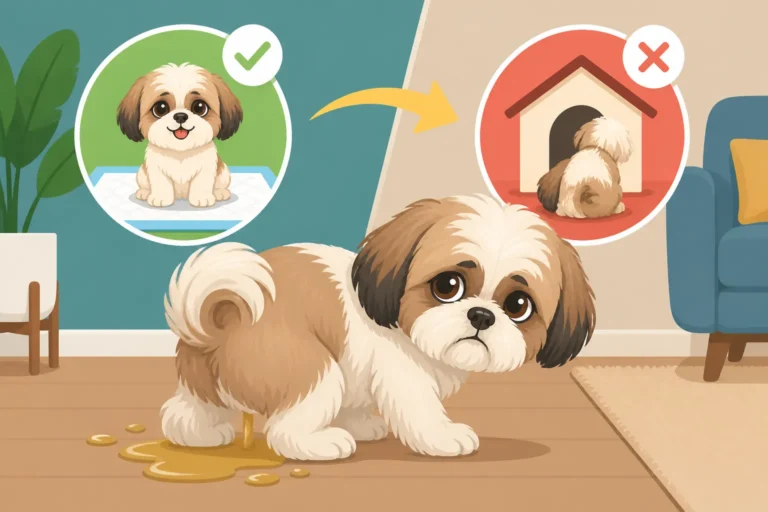
House training a Shih Tzu can sometimes feel like an uphill battle, but positive reinforcement is your strongest ally. The core principle is to reward your Shih Tzu lavishly every single time they eliminate in the correct spot. Take them outside frequently – after waking up, after eating or drinking, after playing, and before bed. When they do their business, immediately offer enthusiastic praise and a super high-value treat. Make it a celebration! This teaches them that pottying outside is the most wonderful thing in the world.
Mistakes will happen indoors, and that's okay. The crucial part is to avoid punishment. If you catch them in the act, a quick, sharp clap or "Ah-ah!" to interrupt, then immediately scoop them up and take them outside. If they finish outside, reward. If they don't, bring them back in and try again in 5-10 minutes. If you find an accident after the fact, simply clean it up thoroughly with an enzymatic cleaner to eliminate odors that might attract them back to the same spot. Do not scold or rub their nose in it; they won't understand why they're being punished, especially if the mistake happened minutes ago. Positive association with outdoor potty breaks is the fastest, kindest, and most effective way to house train. For more detailed schedules and strategies, see A Shih Tzu Potty Schedule by Week.
Navigating Common Shih Tzu Behavior Challenges
Even with the best intentions, our Shih Tzus can develop behaviors that challenge our patience. Positive reinforcement doesn't just teach new commands; it provides a framework for addressing and modifying these more difficult behaviors by teaching alternatives and changing underlying emotional responses.
Addressing Nipping and Mouthing
Puppy nipping is a normal part of development, but for a Shih Tzu with such delicate facial features, it needs to be managed carefully. Positive reinforcement focuses on teaching bite inhibition and redirecting the behavior. When your Shih Tzu puppy nips too hard, let out a high-pitched "ouch!" or "yipe!" and immediately withdraw attention for a few seconds. This mimics how littermates teach each other about bite pressure. If they don't respond to that, get up and walk away, ending playtime. When they approach gently, reward them.
Crucially, always have appropriate chew toys readily available. When your Shih Tzu starts to mouth or nip at your hands, gently redirect their attention to a suitable toy. Praise and reward them when they chew on the toy instead of you. This teaches them that chewing on toys gets good attention, while chewing on people makes the fun stop. Consistency is key here. Every family member needs to follow the same rules, so the message is clear. For more on handling puppy mouthing, read Shih Tzu Puppy Nipping at Fingers.
Managing Barking and Alert Behavior
Shih Tzus can be enthusiastic communicators, and barking is often a part of that. Whether it's alert barking at the doorbell, excitement barking during play, or demand barking for attention, positive reinforcement can help manage it. Instead of punishing barking, which can increase anxiety, we teach an incompatible behavior or reward quietness. For alert barking, teach a "quiet" cue. When your Shih Tzu barks, wait for a brief pause (even a second), then mark it with a click or "yes!" and reward. Gradually increase the duration of quiet time before the reward.
For demand barking, the strategy is to never reward it. If your Shih Tzu barks for attention, turn your back, walk away, or ignore them completely. The instant they are quiet for a second, turn back and offer attention or a reward. This teaches them that quietness gets what they want, while barking does not. For barking at the door, try ringing the doorbell yourself, and before your Shih Tzu can bark, reward them for being quiet. If they do bark, wait for a quiet moment, then reward. This teaches them that the doorbell means quietness and treats, not a reason to raise the alarm. A Shih Tzu Barking at the Doorbell offers additional strategies for this common issue.
Overcoming Stubbornness and Reluctance
Many Shih Tzu owners describe their dogs as "stubborn," but often, what looks like stubbornness is actually confusion, lack of motivation, or a signal that the environment is too overwhelming. Positive reinforcement helps by clarifying expectations and increasing motivation. If your Shih Tzu isn't performing a cue, don't repeat the command endlessly or get frustrated. Instead, ask yourself:
- Are my rewards high-value enough? Maybe they need something extra special today.
- Is the environment too distracting? Go back to a quieter space.
- Is the cue clear? Am I using consistent hand signals and verbal cues?
- Is my Shih Tzu comfortable? Are they tired, too hot, or feeling unwell?
Break down the behavior into smaller, easier steps and reward each tiny success. For example, if your Shih Tzu won't walk in the rain, reward them for simply stepping outside the door, then for one step further, and so on. Never force them into a situation that makes them uncomfortable. Patience, creativity, and understanding their individual preferences will help you overcome perceived "stubbornness" and build a more willing partner. Remember, a Shih Tzu is a companion, and while they can be particular, they aren't trying to spite you. They're just communicating their needs, often in adorable ways. For more insight into what this "stubbornness" really means, check out Shih Tzu Stubbornness and What It Really Is.
Building a Lifetime of Good Habits
Positive reinforcement isn't a temporary fix; it's a way of life that fosters a happy, well-adjusted Shih Tzu and a strong, loving bond between you. It extends far beyond basic obedience, influencing their comfort in new situations and their willingness to cooperate with necessary routines.
Socialization Through Positive Experiences
Proper socialization is crucial for any dog, and particularly for a breed like the Shih Tzu who thrives on positive interaction. It's about exposing your puppy to a wide variety of sights, sounds, people, other dogs, and environments in a way that is always positive and safe. Use treats and praise to create good associations. When your Shih Tzu sees a new person or hears a strange sound, if they react calmly, reward them. If they seem nervous, keep a comfortable distance and offer treats, slowly decreasing the distance as they become more comfortable. Never force an interaction that causes fear.
Puppy classes that emphasize positive reinforcement are an excellent way to socialize your Shih Tzu in a structured, safe environment. These classes often have playtimes tailored for small breeds, ensuring your Shih Tzu isn't overwhelmed by larger, more boisterous dogs. BAXTER & Bella's online training also includes modules on effective socialization, which can be invaluable for owners who might not have access to in-person classes or prefer to work at their own pace. A well-socialized Shih Tzu is more confident, less reactive, and generally a joy to take out into the world. Puppy Classes That Suit a Shih Tzu has more details on finding the right class.
Grooming and Handling with a Positive Spin
Grooming is a huge part of owning a Shih Tzu, from daily brushing to regular face trims and nail clipping. Many Shih Tzus learn to dread grooming because it's often associated with restraint or discomfort. Positive reinforcement can turn this around. Introduce grooming tools slowly and pair them with treats. Let your Shih Tzu sniff the brush, then give a treat. Gently touch them with the brush, then give a treat. Gradually increase the duration and intensity of the grooming session, always rewarding calm acceptance.
For example, when you need to brush their face, smear a little peanut butter on a lick mat or spoon for them to focus on while you quickly comb through. For nail trims, practice holding their paws and touching their nails, rewarding each step. If your Shih Tzu becomes anxious, stop, take a break, and try again later with smaller steps and higher-value rewards. The goal is to make grooming a pleasant, or at least tolerable, experience. This proactive approach will save you and your groomer a lot of stress in the long run. Consistent, positive handling from a young age is paramount. For more on positive grooming, read Getting a Shih Tzu Used to Face Trims.
Continuing Education and Advanced Fun
Learning doesn't stop after puppyhood! Positive reinforcement is a lifelong journey that keeps your Shih Tzu's mind sharp and their bond with you strong. Once they've mastered basic cues, explore more advanced tricks, agility for fun, or even canine freestyle if they enjoy performing. Puzzle toys are fantastic for mental stimulation, challenging your Shih Tzu to "work" for their treats. You can find a huge array of these on Amazon.
Consider enrolling in advanced obedience classes or trying out dog sports like rally obedience or even therapy dog work, where your Shih Tzu's charming personality can shine. Even simple games like "find the treat" or "hide and seek" (with you!) can provide mental enrichment and reinforce positive behaviors. A mentally stimulated Shih Tzu is generally a happier, better-behaved Shih Tzu. Continue to use praise, treats, and play to reinforce good behavior throughout their lives. Even senior Shih Tzus can learn new tricks and benefit from mental engagement, proving that it's never too late to teach an old dog new habits if you use positive methods. Whether an Older Shih Tzu Can Still Learn offers encouragement on this point.
Disclaimer
This article is for general informational purposes only and does not constitute professional advice. Laws, prices and regulations vary by location and change over time. Consult a qualified professional for guidance on your specific situation.