Whether a Shih Tzu Bothers the Household Cat
Bringing a new Shih Tzu into a home that already has a beloved feline resident can feel like navigating a minefield. You adore both species, but the thought of constant squabbles, a stressed-out cat hiding under the bed, or a playful Shih Tzu relentlessly bothering your quiet companion is enough to make any pet parent anxious. This guide is here to help you understand the common dynamics and implement strategies to foster a peaceful, harmonious coexistence between your Shih Tzu and your household cat.
Understanding the Natural Dynamics Between Shih Tzus and Cats
It's natural to wonder how two species so different in their instincts and communication styles will get along. The truth is, it's a mixed bag, and a lot depends on the individual personalities of your specific Shih Tzu and cat. However, understanding their inherent tendencies can give you a significant head start.
The Shih Tzu's Companion Nature and Small Prey Drive
Shih Tzus, with their charming personalities and flowing locks, were originally bred for one purpose: to be cherished companions. They weren't developed to hunt, guard, or perform complex tasks, but rather to sit on laps and bring joy. This inherent desire for connection often translates into a generally friendly and adaptable temperament, which bodes well for living with other pets. They often crave attention and interaction, sometimes indiscriminately, which can be both a blessing and a curse when introducing them to a more solitary cat.
While their primary drive isn't to chase down prey, every dog retains some level of instinctual prey drive. For a Shih Tzu, this might manifest as a sudden urge to chase after a rapidly moving object – and a cat darting across the room can certainly fit that description. It's usually not malicious, but rather an innate response to movement. A young, energetic Shih Tzu puppy, in particular, might see a cat as a really fun, interactive toy, leading to persistent attempts at play that the cat definitely won't appreciate. Their small size, ironically, can also sometimes put a cat on edge, as cats might perceive them as a more manageable "threat" to swat at, or conversely, feel superior and ignore them entirely.
The Cat's Perspective: Territory and Tolerance
Cats are creatures of habit and territory. Unlike dogs, who often welcome new additions to the "pack," a cat views its home as its personal kingdom. A new dog, especially one as curious and potentially boisterous as a Shih Tzu, is often seen as an intruder. This can be a source of significant stress for your feline friend, disrupting their established routines and sense of security. They thrive on predictability, and the sudden appearance of a wagging, sniffing, sometimes barking creature can throw their entire world into disarray.
Individual cat personalities play an enormous role here. Some cats are naturally more laid-back and tolerant, having grown up with other animals or possessing a particularly calm disposition. They might eventually accept a Shih Tzu with minimal fuss, perhaps even forming a cautious friendship. Other cats are highly sensitive, easily stressed, and deeply resent any changes to their environment. For these cats, a new dog can lead to hiding, aggression, or even stress-related health issues. A cat's age and past experiences also factor in; a senior cat who has never lived with a dog might be far less amenable than a young cat who has had positive interactions with canines before. Ensuring your cat has ample "escape routes" and elevated perches where they can observe the new dog from a safe distance is absolutely vital for their sense of security.
Strategic Introduction and Integration Techniques
Successfully integrating a Shih Tzu and a cat is less about luck and more about a carefully planned, patient approach. You can't just expect them to sort it out themselves; you need to be their mediator and architect of peace.
The Critical First Impressions: Scent and Sight
The biggest mistake many owners make is rushing the introduction. Never, ever, just open the door and let them figure it out. The initial interactions are absolutely critical for setting the tone. Begin with scent swapping before they even see each other. Take a blanket or towel that smells like your Shih Tzu and place it in your cat's favorite sleeping spot, and vice versa. This allows them to become familiar with each other's scent without the stress of direct confrontation. Repeat this for several days, observing their reactions. If the cat hisses at the blanket, it's a clear sign you need to go even slower.
Once they're somewhat accustomed to each other's scent, move to supervised visual introductions using barriers. A baby gate can be invaluable here, allowing them to see and hear each other from a safe distance, without physical contact. Place your Shih Tzu on a leash during these initial sessions to ensure you have full control. Keep these sessions short and positive. Reward both pets with high-value treats and praise for calm behavior. If either animal shows signs of stress – the Shih Tzu barking relentlessly, or the cat hissing or flattening its ears – end the session calmly and try again later. It's about building positive associations, not forcing interaction. Introducing a Shih Tzu to Another Dog shares similar principles that apply to cat introductions.
Creating Safe Spaces for Both Pets
Every animal needs a sanctuary, a place where they can retreat and feel completely safe and unbothered. For your cat, this often means vertical space. Cat trees, shelves, or even just leaving doors ajar to rooms where the cat can escape to high furniture are crucial. These elevated spots allow your cat to observe the Shih Tzu from a position of security, and to get away if they feel overwhelmed. They can literally rise above the situation.
Your Shih Tzu also needs its own designated safe space, typically a crate or a cozy bed in a quiet corner. This gives them a place to rest undisturbed and helps prevent them from constantly pestering the cat. You can find excellent crates and beds on platforms like Amazon that suit a Shih Tzu's size and comfort needs. Additionally, separate feeding areas are non-negotiable. Dogs, especially puppies, are notorious for trying to eat cat food, which isn't good for them nutritionally and can cause significant tension with your cat. Feed your cat on a counter or in a room the Shih Tzu cannot access. Finally, ensure your cat's litter box is in a private, clean location that the Shih Tzu cannot reach. There's nothing worse for a cat's stress levels (or your nose!) than a dog investigating their potty spot. For more on setting up a comfortable retreat, read Setting Up a Crate a Shih Tzu Will Enter.
Common Challenges and How to Address Them
Even with the best intentions and careful introductions, integrating a Shih Tzu and a cat isn't always smooth sailing. There will likely be bumps along the road, and knowing how to respond to common challenges is key to maintaining peace.
The Overly Enthusiastic Shih Tzu
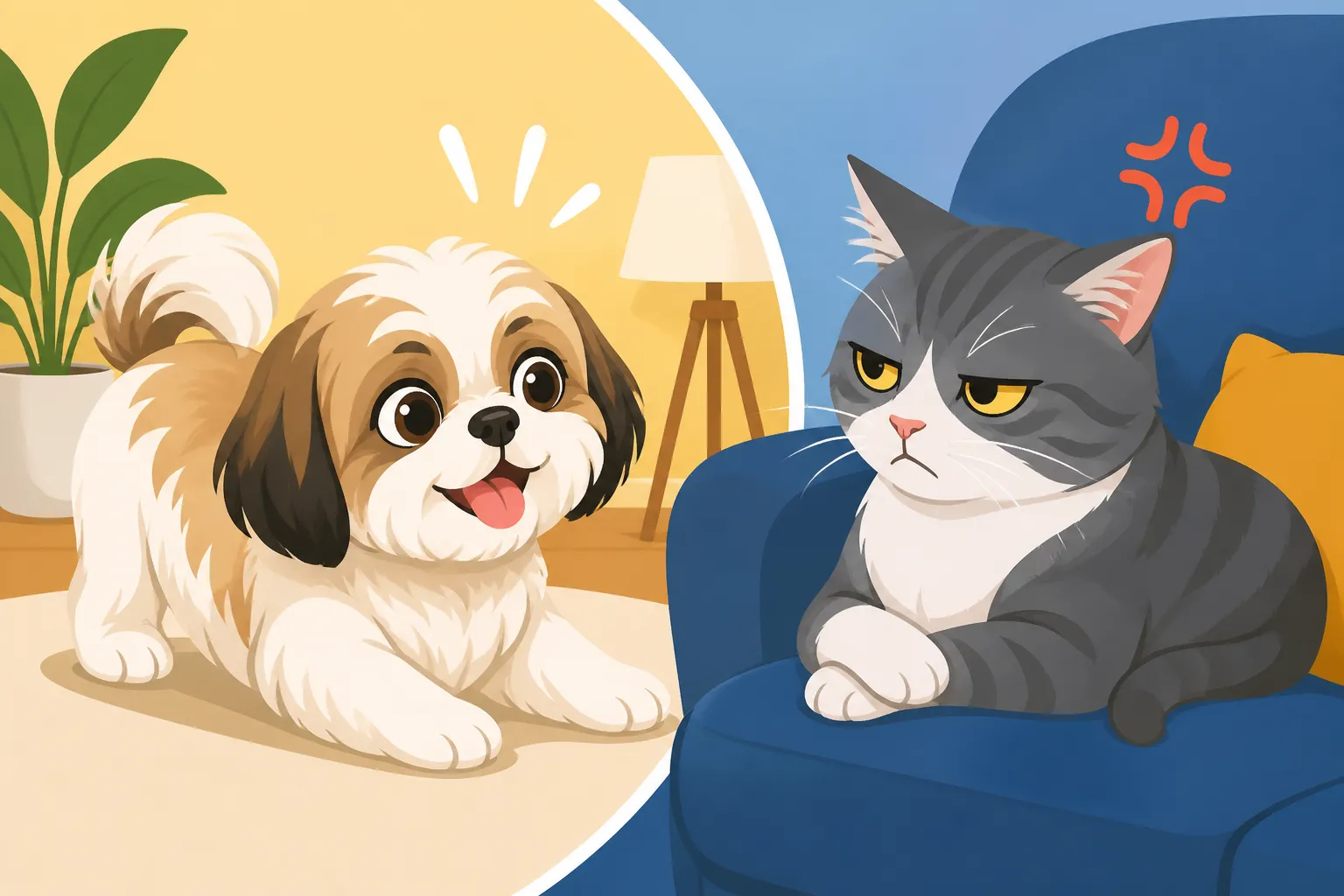
Shih Tzus, particularly as puppies or young adults, can be bundles of boundless energy and curiosity. This can often translate into an overly enthusiastic approach towards your cat, which the cat will almost certainly not appreciate. Common behaviors include jumping at the cat, barking excitedly, or persistently trying to chase them, even if it's meant in play. The Shih Tzu sees a fun new playmate; the cat sees an annoying, potentially threatening pest.
It's vital to teach your Shih Tzu calm behavior around the cat from day one. Use commands like "leave it" to deter chasing and "settle" to encourage relaxation when the cat is present. Reward them heavily with treats when they ignore the cat or lie down calmly in its presence. Always redirect their attention with appropriate toys and games that don't involve the cat. Keep your Shih Tzu on a leash during initial supervised interactions to give you immediate control. If your Shih Tzu starts barking at the cat, gently redirect their attention away from the cat and reward quiet behavior. Consistency is key here; everyone in the household needs to enforce these boundaries. A Shih Tzu Barking at Passing Dogs offers more insights into managing barking behaviors.
The Unwelcoming or Stressed Cat
While a Shih Tzu's enthusiasm can be a problem, a stressed or unwelcoming cat presents its own set of unique challenges. Signs of feline stress or discomfort include hissing, growling, swatting, flattening ears, hiding constantly, refusing to eat, or even inappropriate urination outside the litter box. These are not signs of a "mean" cat, but a cat that feels deeply threatened or anxious.
If your cat is showing these signs, it's crucial to give them more space and slow down the introduction process even further. Never force interactions. Allow your cat to approach the Shih Tzu on its own terms, if and when it feels safe. This might mean going back to scent swapping for a while, or only allowing visual contact through a barrier. Patience is paramount; some cats take weeks, months, or even years to fully adjust. You might consider using feline pheromone diffusers, which release calming synthetic pheromones that can help reduce anxiety in cats. If the aggression or stress is severe and persistent, it’s always wise to consult your veterinarian to rule out any underlying medical conditions and potentially seek advice from a certified feline behaviorist.
Managing Meal Times and Resources
Food and water bowls, beds, and toys can become points of contention if not managed correctly. Shih Tzus are often opportunistic eaters, and a cat's food bowl can look incredibly appealing. Not only is it unhealthy for your Shih Tzu to eat cat food, but it can also cause significant stress and resource guarding issues for your cat.
To prevent this, ensure your cat's food is placed in an area inaccessible to your Shih Tzu. This could be on a high counter, inside a cat-flap-only room, or even in a slow feeder bowl designed to deter fast eating. Always store both dog and cat food separately and securely. Similarly, ensure the cat has multiple, private litter box options in quiet areas away from the Shih Tzu's reach. Your Shih Tzu might be curious about the litter box (which is incredibly unhygienic for everyone involved!), so securing it behind a gate or in a separate room is essential. When it comes to chew toys and treats, always supervise to ensure neither animal is guarding resources from the other. This helps prevent minor squabbles from escalating into more serious conflicts.
Long-Term Harmony and Maintaining Peace
Achieving a truly harmonious household with both a Shih Tzu and a cat isn't a one-and-done deal. It requires ongoing commitment, consistent management, and a keen eye for both animals' needs.
Consistent Training and Supervision
Just like with human relationships, a peaceful coexistence between your Shih Tzu and cat requires continuous effort. Training isn't something you do once; it's an ongoing reinforcement of good habits. Your Shih Tzu needs consistent reminders of polite behavior around the cat, and you need to keep rewarding those calm, respectful interactions. Never leave your Shih Tzu and cat unattended until you are absolutely certain they can be trusted together, which can take a very long time, if ever. It's often safer to separate them when you're not home or actively supervising.
Consider enrolling your Shih Tzu in an online training program like BAXTER & Bella, which offers comprehensive positive reinforcement methods. These programs can teach you effective ways to communicate with your dog and manage their behavior, which indirectly helps with inter-species harmony. The more well-behaved and responsive your Shih Tzu is, the less likely they are to bother your cat. Continue to praise and reward any positive interactions, no matter how small – a cat and dog sharing a nap on opposite ends of the sofa, or the Shih Tzu ignoring the cat as it walks by.
Recognizing When It's Not Working
Despite all your best efforts, sometimes, two personalities simply aren't compatible. If, after several months of consistent, patient effort, one or both animals are still showing chronic signs of stress, fear, or aggression, it's crucial to acknowledge that their welfare is paramount. Chronic stress can lead to serious health issues in both dogs and cats, from weakened immune systems to behavioral problems. If your cat is constantly hiding, refusing to eat, or exhibiting stress-related urination, or if your Shih Tzu is constantly agitated, barking, or lunging at the cat, it might be time to consider difficult alternatives.
This could mean re-evaluating whether your home is truly the best fit for both pets. Some families find success by creating completely separate living arrangements within the home, allowing the cat access to one part of the house and the Shih Tzu another, with careful supervision during shared times. In more extreme cases, rehoming one of the pets might be the kindest, albeit heartbreaking, solution for their long-term well-being. Before making such a drastic decision, it's highly recommended to seek professional help from a veterinary behaviorist who can assess the situation objectively and offer tailored strategies or advice.
Enrichment for Both Species
A bored pet is often a mischievous or stressed pet. Providing plenty of individual attention and species-appropriate enrichment for both your Shih Tzu and your cat can significantly reduce the chances of them bothering each other out of boredom or frustration. For your Shih Tzu, this means interactive toys, regular short walks (keeping their brachycephalic needs in mind – see Shih Tzu Exercise for a Low-Energy Toy), and training sessions. Puzzle feeders, easily found on platforms like Amazon, are fantastic for engaging their minds and tiring them out mentally. Puzzle Feeders a Shih Tzu Can Work can offer great ideas.
For your cat, enrichment includes scratching posts, climbing structures, window perches for bird watching, and interactive toys that simulate prey. Dedicated playtime with you, even just 10-15 minutes a day, can help fulfill their predatory instincts and provide positive attention, reducing their need to "hunt" or swat at your Shih Tzu. A well-exercised, mentally stimulated, and emotionally fulfilled Shih Tzu is far less likely to harass a cat, and a content cat is more likely to tolerate a new canine companion.
| Aspect of Coexistence | Shih Tzu's Tendency | Cat's Tendency | Ideal Outcome |
|---|---|---|---|
| Initial Reaction | Curious, playful, sometimes overly enthusiastic | Territorial, wary, may hiss or hide | Mutual cautious curiosity, no aggression |
| Play Style | Nipping, chasing, barking | Stalking, batting, escaping to high ground | Respectful space, separate play activities |
| Resource Guarding | May try to eat cat food, guard toys | May guard food bowls or favorite resting spots | Separate feeding areas, individual toys |
| Vocalization | Barking (excitement, demand) | Hissing, growling, meowing (distress, warning) | Minimal vocalization, clear communication |
| Physical Interaction | Jumping, sniffing, licking | Swatting, ignoring, rubbing (if comfortable) | Peaceful co-existence, occasional gentle contact |
| Space Needs | Needs own bed/crate, walks | Needs high perches, quiet escape routes | Both have accessible safe zones |
Disclaimer
This article is for general informational purposes only and does not constitute professional advice. Laws, prices and regulations vary by location and change over time. Consult a qualified professional for guidance on your specific situation.