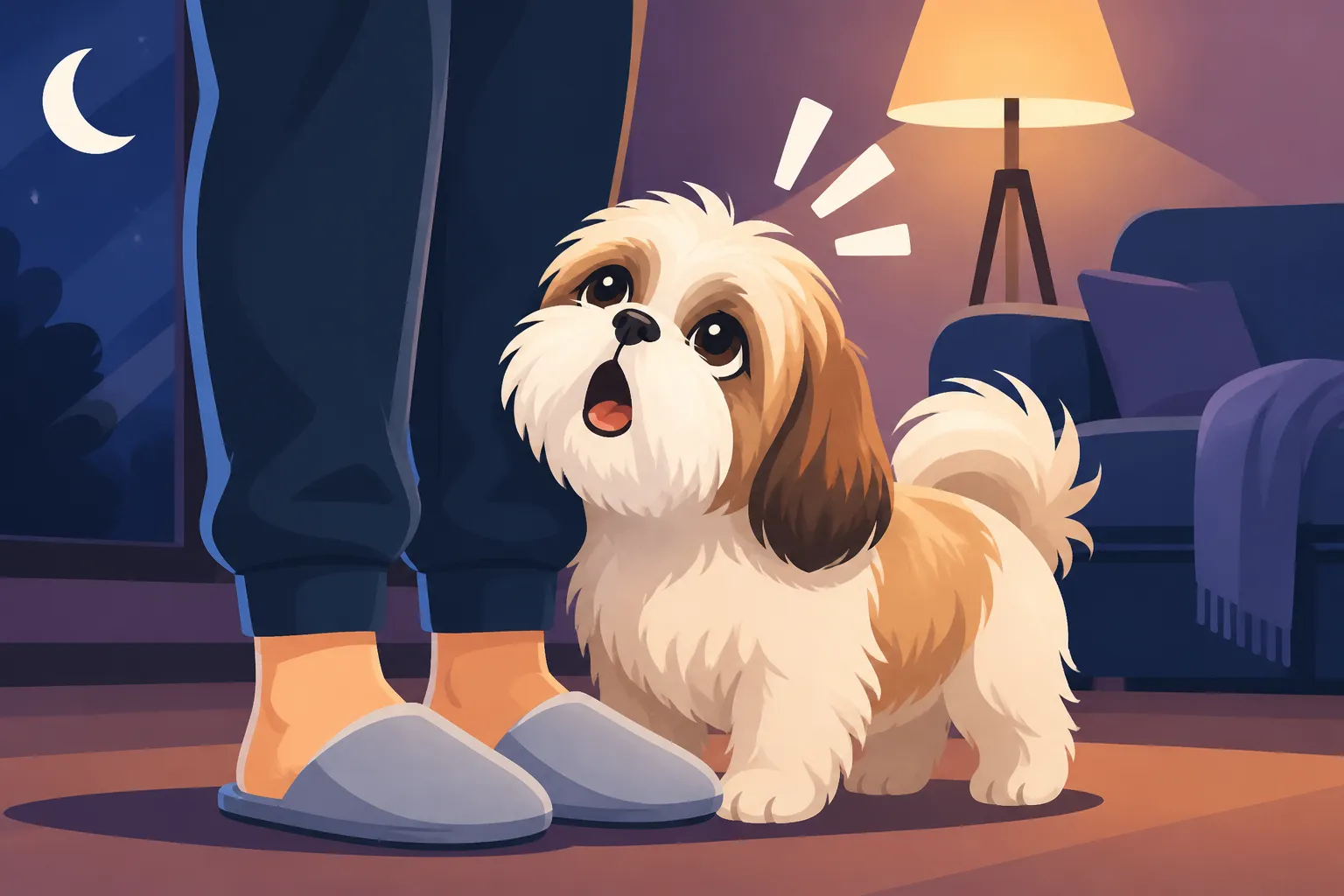
A Shih Tzu Whining at Your Feet All Evening
That persistent, soft whine from your Shih Tzu curled up by your feet might seem endearing at first, but when it stretches through an entire evening, night after night, it can really test your patience. You're trying to relax, watch a show, or just enjoy some quiet time, and there it is – that little, insistent sound. This guide is here to help you unravel the mystery behind your Shih Tzu's evening whines and equip you with practical strategies to bring peace back to your household.
Decoding the Evening Whine: What Your Shih Tzu Might Be Telling You
It's easy to dismiss a dog's whine as just "being needy," but truly, it's one of the primary ways our canine companions communicate. When your Shih Tzu is whining at your feet all evening, it's almost certainly trying to convey something important. Our job as their guardians is to become diligent detectives, looking for clues to understand their needs. This isn't just about stopping the noise; it's about strengthening your bond by truly listening.
Is It a Call for Attention?
Let's be honest, Shih Tzus were bred to be companions, lap warmers, and attention magnets. They thrive on interaction and often learn quickly that certain behaviors, like a soft whine, can solicit a reaction from us. If every whine results in a pet, a spoken word, or even a glance, your clever Shih Tzu might have inadvertently trained you to respond to their vocalizations. They're not being manipulative; they're simply doing what works to get the love and engagement they crave.
This often happens subtly. You might be absorbed in a book or a conversation, and a quiet whine starts. You absentmindedly reach down to stroke their head, thinking you're comforting them, but what you're actually reinforcing is the idea that whining leads to touch. Even a gentle "Quiet, buddy" can be enough of a reward for some dogs, as it confirms they've successfully caught your attention. Breaking this cycle requires consistency and a shift in how you acknowledge their presence, ensuring they get attention for calm, quiet behavior, not for whining.
The challenge here is to differentiate between genuine need and learned attention-seeking. If you've already addressed all their basic needs (which we'll cover next), and the whining persists, it's highly likely you're dealing with a habit you've unintentionally fostered. This isn't a judgment on your care; it's just a common pitfall in our relationships with our beloved, charming little dogs.
Unmet Basic Needs: Potty, Hunger, Thirst, and Comfort
Before jumping to conclusions about attention-seeking, it's absolutely crucial to rule out basic unmet needs. A whining dog could be genuinely uncomfortable or distressed. Think of it as a checklist you run through every time the evening whines begin. It might seem obvious, but sometimes, in our busy lives, these simple things can be overlooked.
First and foremost, when was the last potty break? Even if your Shih Tzu went out recently, a sudden change in diet, a small bladder, or even a slight tummy upset can mean they need to go again sooner than expected. Many Shih Tzus, especially as they get older, might struggle to hold it as long. An insistent whine could be their polite way of saying, "My bladder is full, and I need help!" You might also notice them pacing or sniffing the floor more than usual.
Next, consider hunger and thirst. While most Shih Tzus are fed on a schedule, sometimes a small, extra meal or a particularly active day might leave them feeling a bit peckish. Ensure their water bowl is always fresh and full. Some dogs also prefer specific temperatures of water, so a lukewarm bowl might not be as appealing as fresh, cool water. Also, consider their comfort. Is their bed too warm, too cold, or simply uncomfortable? Is there a draft they don't like? Are they feeling chilly in the evening without their sweater? Think about what your dog typically needs for optimal comfort and check if those conditions are met.
Remember, a Shih Tzu might have a small stomach, making multiple, smaller meals a day a good option. Consider Daily Calories for a Twelve Pound Shih Tzu to ensure they're getting adequate nutrition without overfeeding.
Boredom or Lack of Mental Stimulation
Shih Tzus are often described as "lap dogs" and can be quite low-energy, but that doesn't mean they don't need mental and physical stimulation. A bored Shih Tzu is often a whiny Shih Tzu, especially in the evening when the household might be settling down. They've spent their day napping, perhaps a short walk, and now suddenly, there's nothing left to do. Their internal clock tells them it's "playtime" or "attention time," but you're winding down.
This boredom can manifest as whining because they're essentially saying, "I'm under-stimulated, and I don't know what to do with myself!" They might start nudging you with their nose, bringing toys, or even performing learned tricks, all in an effort to engage you. Without appropriate outlets for their energy and intelligence, that energy can turn into vocalizations. Even short bursts of Indoor Play for a Shih Tzu can make a huge difference in their overall contentment.
Mental stimulation isn't always about high-energy activities. For a Shih Tzu, it can be as simple as a puzzle feeder with a few treats, a new chew toy, or a short training session. Just like us, dogs need purpose. If their entire evening revolves around waiting for your attention, and that attention isn't forthcoming, whining becomes their last resort to break the monotony.
Addressing the Underlying Causes of Evening Whining
Once you've done your detective work, it's time to implement some strategies. Addressing evening whining effectively involves a combination of routine adjustments, enrichment, and teaching your Shih Tzu alternative, more desirable behaviors. Consistency is your absolute best friend here, as changing a learned behavior takes time and patience.
Re-evaluating Your Evening Routine and Expectations
The first step in tackling evening whining is to take a hard look at your current routine. What does your Shih Tzu's day, particularly the evening, typically look like? Many owners inadvertently set up a cycle where their dog learns that whining eventually gets a response. It’s not about being harsh; it’s about being deliberate.
Start by ensuring all basic needs are met before the evening "quiet time" begins. This means a thorough potty break right before you settle down, a full water bowl, and perhaps a small, easily digestible snack if they tend to get hungry. If your Shih Tzu is getting older, their bladder capacity might be less, so an extra potty trip might be necessary. Also, ensure their sleeping area is comfortable and inviting, perhaps a cozy bed like those found on Amazon, where they can retreat and feel secure.
Next, identify when and how you're currently reacting to the whining. Are you petting them, talking to them, or even just making eye contact? Any of these can be seen as a reward. The key is to withdraw all attention when the whining starts. This means no eye contact, no talking, no touching. Turn your body away. The moment they are quiet, even for a second, then you can offer calm, quiet praise or a gentle pet. This teaches them that quiet behavior gets rewards, while whining does not. It can be hard to ignore your sweet Shih Tzu, but it's vital for breaking the habit.
Enhancing Physical and Mental Enrichment
Even a low-energy breed like a Shih Tzu needs a balance of physical activity and mental engagement to prevent boredom, which, as we discussed, can lead to evening whining. You might be surprised how much difference a few thoughtful additions to their day can make. Think quality over quantity for their exercise; short, purposeful walks or play sessions are more effective than long, strenuous ones that might be too much for their brachycephalic (flat) face.
Consider incorporating a structured walk or a vigorous play session in the late afternoon or early evening, well before you plan to settle down for the night. This isn't about running a marathon; it could be a 15-20 minute stroll around the block or a game of fetch in the living room. Shih Tzu Exercise for a Low-Energy Toy provides more ideas on suitable activities. The goal is to burn off any excess energy and stimulate their senses before they might otherwise start looking for something to do.
Mental enrichment is equally, if not more, important for an intelligent breed like the Shih Tzu. Puzzle feeders, often available on Amazon, where they have to work to get their kibble or treats, can keep them occupied for a good 15-30 minutes. Chewing is also a natural stress reliever, so providing appropriate, safe chew toys can be very beneficial. Short, positive reinforcement training sessions, just 5-10 minutes long, where they learn new tricks or practice obedience cues, can also tire out their minds. Remember that Puzzle Feeders a Shih Tzu Can Work can be a fantastic tool to keep them engaged.
Teaching Your Shih Tzu to Settle on a Mat
One of the most powerful tools in your arsenal against evening whining is teaching your Shih Tzu a "place" or "settle on a mat" command. This gives them a specific, designated spot where they are expected to relax quietly, rather than constantly seeking your attention at your feet. It provides them with structure and helps them understand what is expected during quiet times. This isn't about isolation; it's about teaching independence and calm.
To start, choose a comfortable mat or dog bed. Use positive reinforcement to teach them that good things happen on their mat. Lure them onto the mat with a treat, say "place" or "mat," and immediately reward them for being on it. Gradually increase the time they spend on the mat before getting a reward. If they get off, simply lead them back without fuss, and try again. Teaching a Shih Tzu to Settle on a Mat offers a detailed step-by-step guide to this valuable skill.
Once your Shih Tzu understands the concept, start practicing during the evenings. Place their mat near you, but not directly at your feet. When they settle on it quietly, reward them intermittently with praise or a small, low-value treat. If they start to whine while on the mat, ignore it. Only reward the quiet. Over time, they will associate their mat with calm, quiet relaxation. Online training platforms like BAXTER & Bella often have excellent resources and guided programs for teaching "place" commands, which can be invaluable for consistent, effective training.
When Whining Points to Deeper Issues
While much evening whining stems from attention-seeking, boredom, or unmet basic needs, it's vital to remember that persistent vocalization can sometimes be a symptom of more profound underlying issues. Ignoring these signs could lead to prolonged distress for your Shih Tzu, so it’s always best to investigate thoroughly.
Anxiety and Insecurity in the Evening Hours
For some Shih Tzus, the evening can bring on feelings of anxiety or insecurity. This is particularly true for dogs who are very attached to their owners. As the household winds down, the routines change, and there's less activity, some dogs might feel a sense of unease or fear of being separated, even if you're just a few feet away. This is distinct from simple attention-seeking; it's a genuine emotional response.
Symptoms of anxiety can include pacing, panting, licking lips, yawning excessively, or having a "worried" expression, in addition to the whining. They might try to physically get closer to you, or even try to climb onto your lap if permitted. This behavior suggests they are seeking comfort and reassurance because they feel vulnerable. If your Shih Tzu exhibits these signs, it's important to approach the situation with empathy rather than simply ignoring the behavior.
You can help by creating a calming evening environment. Use soft lighting, gentle music, or even a white noise machine to muffle outside sounds that might trigger anxiety. Ensure they have a designated safe space, like their crate or a cozy bed, which is their sanctuary. Providing a long-lasting chew toy or a stuffed Kong when you settle down can also provide a comforting distraction. For more comprehensive guidance, look into Shih Tzu Alone Time and Learning to Tolerate It, as many of the principles for managing separation anxiety during the day can apply to evening insecurity. Sometimes, a dog-appeasing pheromone diffuser can also help create a sense of calm in the home.
Ruling Out Pain or Medical Discomfort
Perhaps the most critical reason to investigate persistent whining is to rule out any underlying medical issue or pain. Dogs are incredibly stoic creatures, and a subtle whine might be the only indicator they give that something isn't quite right. This is especially true for older Shih Tzus, who might be developing arthritis or other age-related discomforts.
Conditions like back pain or joint problems are not uncommon in Shih Tzus. A slipped disc, for example, can cause significant discomfort and might lead to a dog being reluctant to move, jump, or even settle comfortably. An elderly Shih Tzu might whine due to achy joints from Shih Tzu Arthritis After the Age of Nine. Other possibilities include dental pain (common in Shih Tzus due to their crowded mouths), urinary tract infections, or even abdominal discomfort.
If the whining is new, has increased in intensity, or is accompanied by other subtle changes (reluctance to eat, changes in potty habits, limping, lethargy, or even just a general "off" feeling), a vet visit is absolutely essential. Don't try to diagnose it yourself. Your veterinarian can perform a thorough examination, including blood work or imaging if necessary, to identify or rule out any health concerns. Regular Vet Visit Frequency for a Shih Tzu Past Ten is crucial for monitoring their health as they age and catching issues early.
Here's a quick checklist to consider when your Shih Tzu starts whining in the evening:
| Potential Cause | Quick Check | Action |
|---|---|---|
| Potty Need | When was the last time they went out? Are they pacing or sniffing? | Take them out immediately. |
| Hunger/Thirst | Is their food schedule regular? Is water fresh and accessible? | Offer a small snack or fresh water. |
| Discomfort (Physical) | Are they limping, reluctant to move, or touching a specific area? | Gently check for pain; contact vet if suspected. |
| Discomfort (Environmental) | Is their bed comfy? Too hot/cold? Drafty? | Adjust their environment (bedding, temperature). |
| Boredom | Have they had enough physical/mental stimulation today? | Offer a puzzle toy, chew, or short play session. |
| Attention-Seeking | Have I inadvertently rewarded whining in the past? | Ignore whining; reward quiet behavior. |
| Anxiety/Insecurity | Are they panting, pacing, clingy, or showing other stress signals? | Provide comfort items (chew, mat); create a calming environment. |
Seeking Professional Guidance
Sometimes, despite your best efforts, the evening whining persists, or you suspect a deeper behavioral issue like chronic anxiety. This is when it's time to call in the experts. There's absolutely no shame in seeking professional help; it shows you're a dedicated pet parent committed to your Shih Tzu's well-being.
A certified professional dog trainer or a veterinary behaviorist can be invaluable. A trainer can observe your Shih Tzu's behavior, help you identify triggers, and develop a customized training plan that uses positive reinforcement techniques. They can guide you through teaching a solid "settle" command and help you establish clearer boundaries without resorting to punishment, which can often worsen anxiety. They can also help you understand A Shih Tzu That Cannot Relax in the Evening and tailor strategies for that specific challenge.
If anxiety is a significant component, a veterinary behaviorist can offer a more in-depth assessment. They are veterinarians with specialized training in animal behavior, meaning they can address both the medical and behavioral aspects of the problem. They might suggest behavioral modification alongside environmental changes, and in some cases, temporary medication might be considered to help reduce anxiety to a level where training can be more effective. Getting expert eyes on the situation can provide clarity and a path forward when you feel stuck.
Disclaimer
This article is for general informational purposes only and does not constitute professional advice. Laws, prices and regulations vary by location and change over time. Consult a qualified professional for guidance on your specific situation.