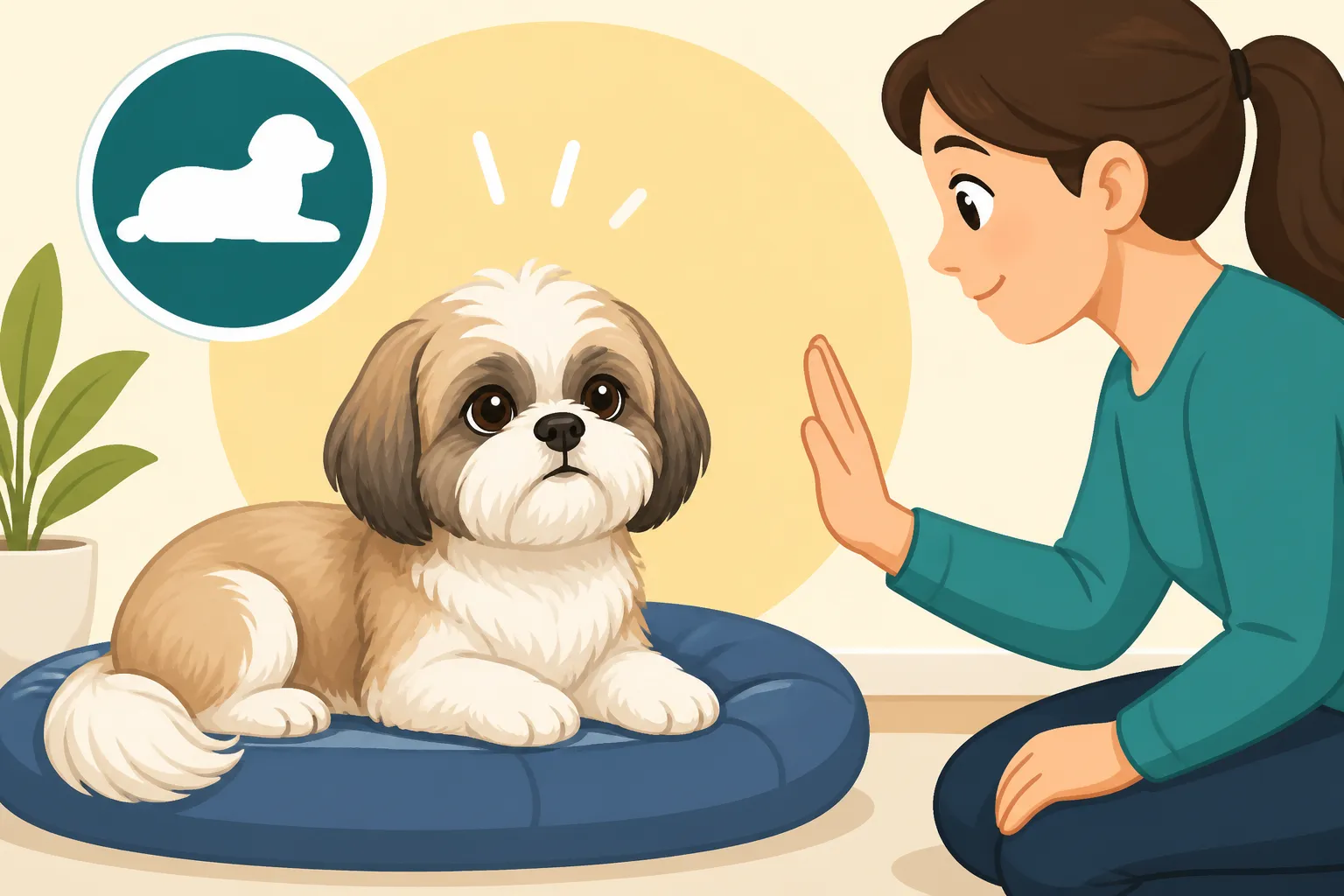
Teaching a Shih Tzu to Settle on Cue
There's nothing quite like the boundless energy of a Shih Tzu, is there? One moment they're curled up, looking like a fluffy angel, and the next they're a blur of motion, barking at the mail carrier, or trying to convince you that playtime is a 24/7 commitment. This constant readiness can be charming, but it can also be exhausting, and sometimes, you just need your little lion dog to understand that it's time to settle down. This guide is all about giving you the tools to teach your Shih Tzu a "settle" cue, helping them find their calm place in a world full of exciting distractions.
Why "Settle" is a Lifeline for Your Shih Tzu
For a breed bred for companionship and to live in luxurious palaces, the modern world can be a bit much. They’re sensitive, keenly aware of everything happening around them, and their enthusiasm can easily tip into overstimulation. Teaching your Shih Tzu to settle on cue isn't just a party trick; it's a vital skill that contributes significantly to their overall well-being and your household's peace of mind. It’s about giving them an off-switch, a way to dial down the excitement and find a moment of quiet serenity, even when the world around them is bustling.
The Overstimulated Shih Tzu
Imagine your Shih Tzu, a tiny dynamo, constantly alert to every sound, every shadow, every person walking past the window. Their little brains are working overtime! This can manifest in endless barking, jumping, nipping, or just a general inability to relax. A constant state of hyper-alertness isn't healthy for them, and it certainly isn't peaceful for you. They might start panting excessively even indoors, pacing, or even showing signs of mild anxiety like licking their paws incessantly. It's not that they're being "bad"; they simply don't know how to manage all that incoming information and energy.
Without a way to calm themselves, many Shih Tzus can become chronically overstimulated. This isn't just about minor annoyance; prolonged stress can impact their physical health, too, leading to issues with digestion, sleep, and even a weakened immune system. Think of it as a human who can never truly unwind after a busy day; eventually, it takes a toll. Teaching "settle" gives them a reliable, predictable command that signals it's okay to let their guard down and just be. It's a gift of peace, both for them and for everyone in the home.
Preventing Unwanted Behaviors
Many of the behaviors we find frustrating in our Shih Tzus — the incessant doorbell barking, the jumping on guests, the frantic pacing before a walk — often stem from an inability to self-regulate their excitement. If your Shih Tzu is revved up to a ten and doesn't know how to go to a two, these behaviors become their only outlet. The "settle" cue acts as a proactive tool, helping to short-circuit these high-energy responses before they even begin. It provides an alternative behavior: calmness.
For example, if your Shih Tzu tends to go absolutely wild when someone knocks, asking them to "settle" on their mat before the door even opens can completely change the dynamic. Instead of a chaotic greeting, you get a polite, calm one. This is especially crucial for a small dog like a Shih Tzu, whose excitable jumping or nipping, while not aggressive, can still be startling or unwelcome to guests, especially children. By giving them a designated "calm down" instruction, you're not just correcting behavior; you're teaching them a valuable life skill that reduces stress for everyone involved.
Understanding the "Settle" Cue
The "settle" cue isn't just another command; it's a concept. It's about teaching your Shih Tzu to relax, to be still, and to find contentment in a designated spot, even when distractions are present. It's often confused with other commands, but its unique purpose makes it incredibly powerful. Once mastered, it can become your secret weapon for a more harmonious household.
What "Settle" Truly Means for a Shih Tzu
For your Shih Tzu, "settle" means more than just lying down. It means to lie down, relax, and remain in that relaxed state until released. It implies a state of mental and physical calm, not just a physical position. It's about letting their little worries melt away, taking a deep breath, and feeling secure in their designated spot. This is especially important for a breed that can easily become anxious or overstimulated in busy environments. A true "settle" involves a relaxed body posture, a calm gaze, and no fidgeting or attempts to get up.
Think about the difference between a child being told to "sit still" versus being encouraged to "relax on the couch with a book." One is about forced stillness, the other about a genuine state of calm engagement. We want the latter for our Shih Tzus. It’s teaching them that this particular spot—their bed, a mat, a specific rug—is their haven, a place where good things happen when they are quiet and still. This deep understanding will serve them well throughout their lives, making travel, vet visits, and even just quiet evenings at home much more pleasant. You're teaching them how to A Shih Tzu That Cannot Relax in the Evening and truly unwind.
The Difference Between "Settle" and "Stay"
It’s easy to conflate "settle" with "stay," but they are distinct commands with different objectives. "Stay" is a command focused on duration in a specific position (sit, stand, down) regardless of the dog's mental state. Your Shih Tzu might be vibrating with anticipation during a "stay," but as long as they hold the position, they're technically obeying. It's about holding a pose.
"Settle," on the other hand, is about achieving a state of relaxation and calmness. While it typically involves lying down, the primary goal isn't just the physical posture, but the mental state that accompanies it. A Shih Tzu might be in a "down-stay" but still be wide-eyed and alert. A "settle" means they are truly unwound, perhaps even resting their head, closing their eyes, or just gazing calmly without the tension of a "stay." The release for a "settle" can often be much softer and less abrupt than for a "stay," flowing naturally when the calm period is over. This distinction is crucial for understanding what you're actually trying to achieve with your Shih Tzu. The Handful of Cues a Shih Tzu Really Needs will include both, but for different purposes.
| Feature | "Settle" | "Stay" |
|---|---|---|
| Primary Goal | Relaxation, calmness, mental stillness | Maintaining a specific physical position |
| Mental State | Calm, relaxed, potentially sleepy | Alert, focused on holding position, potentially tense |
| Physical Action | Lying down in a relaxed posture, often on a mat | Holding any commanded position (sit, stand, down) |
| Duration | Often longer, self-regulated relaxation | Pre-defined length, held until released |
| Release | Gentle, natural transition out of calm state | Clear verbal or physical release cue |
| Use Case | Quiet time, presence of distractions, vet visits | Holding position for photos, waiting, obedience drills |
Laying the Groundwork: Prerequisites for Success
Before you dive headfirst into teaching the "settle" cue, it's incredibly helpful to ensure your Shih Tzu has a few foundational elements in place. These aren't just steps; they're vital building blocks that will make the entire process smoother and more effective. Without them, you might find yourself hitting roadblocks that could have been easily avoided.
Building a Positive Association with Their Space
First and foremost, your Shih Tzu needs a designated "calm spot" that they genuinely love. This isn't a place for punishment or time-outs; it's their personal sanctuary. This could be a soft dog bed, a cozy mat, or even a Setting Up a Crate a Shih Tzu Will Enter if they are crate-trained. The key is to make this space incredibly inviting and associate it with positive experiences. Throw treats onto the mat, give them a favorite chew toy only when they're on it, or offer gentle praise and petting when they choose to rest there.
The more positive associations your Shih Tzu has with this spot, the more naturally they will gravitate towards it when you ask them to settle. If their mat or bed is already a place of comfort and happiness, half the battle is won. Avoid forcing them onto the mat, especially in the early stages. Instead, lure them with treats or simply place high-value items there for them to discover. The goal is for them to think, "Oh, my mat! That's a great place to be." Consider a soft, supportive bed from a brand you can find easily on Amazon, designed for small breeds, to make their spot extra appealing.
Mastering Basic Calmness in Short Bursts
While "settle" is an advanced form of calm, your Shih Tzu should have some experience with basic moments of stillness. Can they hold a "down" for a few seconds? Can they relax on your lap without squirming immediately? If not, start with short, achievable bursts of calm. Reward any instance of stillness, even if it's just for a moment. This helps them understand the concept of being still and quiet, even if they don't yet have a specific cue for it.
Practicing short "downs" or simply rewarding them for choosing to lie down on their own can be incredibly beneficial. Use high-value treats and calm, soothing praise. Keep these sessions brief and positive. If your Shih Tzu gets up, simply reset and try again without fuss. The aim here isn't perfection, but exposure and positive reinforcement to the idea that being still can be rewarding. You're building their "calm muscle," so to speak, one tiny repetition at a time. This groundwork is essential for any Shih Tzu Puppy Training Month by Month plan.
Step-by-Step: Teaching the "Settle" Cue
Now that your Shih Tzu has a beloved calm spot and some basic understanding of stillness, we can actively start teaching the "settle" cue. This process builds incrementally, rewarding small successes until your dog understands the full scope of what you're asking. Remember, consistency and patience are your best friends here.
The Lure-and-Reward Method for Down
The first step in teaching "settle" is often getting your Shih Tzu into a comfortable "down" position on their designated mat or bed. We'll use the lure-and-reward method, which is incredibly effective for visual learners like many dogs.
- Preparation: Have your Shih Tzu on a leash in a quiet area, with their mat or bed nearby. Have plenty of small, high-value treats ready.
- Lure to Down: Hold a treat near your Shih Tzu's nose. Slowly move the treat down towards the floor, then straight back between their paws. As their nose follows the treat, their body should naturally lower into a "down" position.
- Mark and Reward: The instant your Shih Tzu's elbows touch the floor, say "Yes!" or click a clicker, and give them the treat.
- Repeat: Do this several times in short, positive sessions. Don't worry about the cue "settle" yet; just focus on getting a smooth, easy "down" on the mat.
- Adding the Mat: Once they are reliably going down, place the mat on the floor. Lure them onto the mat, then into a down, and reward them on the mat. The goal is for them to associate the mat with this calm "down" position.
Consistency is key here. If your Shih Tzu struggles, break it down even further. Maybe just reward them for sniffing the mat, then for one paw on it, then two, and so on. Make it easy for them to succeed. Many online resources, like those offered by BAXTER & Bella, provide excellent visual guides for these foundational luring techniques.
Extending Duration and Introducing the Cue
Once your Shih Tzu is reliably going into a "down" on their mat, it's time to add duration and finally introduce the "settle" cue.
- Increase Duration: After your Shih Tzu is in the "down" position on their mat, wait for a few seconds before marking and rewarding. Start with just 1-2 seconds, then slowly increase to 3, 5, 10 seconds, and so on. The key is to reward them while they are still down and before they even think about getting up.
- Introduce the Cue: Once your Shih Tzu can hold a "down" on the mat for a few seconds, as they are going down or just as they settle into the down, say "Settle" in a calm, soothing voice. Then, mark and reward for holding the position.
- Randomize Duration: Don't always make them hold it for the same amount of time. Sometimes reward quickly, sometimes wait longer. This keeps them guessing and prevents them from anticipating the release.
- Practice Different Positions: Initially, you might reward them for simply lying down. As they get better, look for signs of true relaxation: a sigh, their head resting, a soft gaze. Reward these deeper moments of calm even more generously.
Remember to keep your tone of voice calm and gentle when using the "settle" cue. We want to associate the word itself with a feeling of peace. It's not a command to be barked; it's an invitation to relax.
Fading the Lure and Generalizing the Behavior
The goal is for your Shih Tzu to respond to the verbal cue "settle" without needing a treat lure. We also want them to be able to settle in various environments, not just your quiet living room.
- Fade the Lure: Once your Shih Tzu understands the verbal cue "Settle" and reliably goes into a down on their mat for a few seconds, start to make the lure smaller and less obvious. First, use a treat in an empty hand. Then, use just your empty hand to make the motion. Eventually, just say "Settle" and point to the mat. Reward heavily when they comply without the lure.
- Generalize to Different Spots: Practice "settle" on different mats, different beds, or even just a designated spot on the floor. Start in quiet areas, then gradually introduce slightly more distracting environments within your home.
- Add Distractions Gradually: Begin by practicing "settle" with very mild distractions, like soft music or someone quietly moving in another room. As your Shih Tzu gains confidence, slowly increase the level of distraction. This is where the cue really shines. Try having a family member walk past, or a child gently playing in the room. Reward generously for maintaining the settle amidst these small challenges. This is crucial for teaching them to A Shih Tzu That Cannot Relax in the Evening when the household is still awake.
- Practice in Public (Quietly): Once they are solid at home, try practicing "settle" in a very quiet public space, like a calm corner of a pet-friendly store or a quiet park bench. Always set them up for success, and bring high-value treats! Teaching a Shih Tzu to Settle on a Mat in various locations strengthens the cue.
If your Shih Tzu struggles with fading the lure, go back a step. It's never a failure to revisit earlier stages; it just means they need a bit more practice there.
Common Challenges and Troubleshooting
Teaching a new behavior is rarely a straight line. You'll likely encounter some bumps along the way, especially with a clever, sometimes opinionated, Shih Tzu. Don't get discouraged! Understanding common pitfalls and how to address them will make you a more confident and effective trainer.
When Your Shih Tzu Just Won't Lie Down
It can be incredibly frustrating when your Shih Tzu seems to actively resist lying down, even with a tempting treat. This could be due to a few reasons, and addressing them requires a bit of detective work and patience.
Firstly, consider if there's any discomfort. While less common in young, healthy Shih Tzus, underlying joint pain or back issues could make lying down uncomfortable. If your dog shows any signs of pain or stiffness, a vet check is always a good idea. Shih Tzu Back Problems and Disc Disease or Shih Tzu Joint Problems in a Toy Frame are unfortunately common in the breed, so always rule out physical causes. Assuming health, it's often about motivation or understanding. Is the treat high-value enough? A tiny piece of cheese or cooked chicken often works wonders where kibble fails. Are you luring correctly? Make sure the treat moves directly from their nose, down to the floor, and back towards their chest to encourage the "down" motion.
Sometimes, a Shih Tzu might simply be too excited or distracted to focus on the lure. If they're bouncing off the walls, try waiting until they've had a short play session or a brief walk to burn off some initial energy. Keep your training environment as quiet and distraction-free as possible in the beginning. If the lure-and-reward method still isn't clicking, you might try capturing the behavior. This means waiting for your Shih Tzu to voluntarily lie down on their mat, then immediately marking and rewarding that moment. Over time, they'll learn that lying down on the mat earns them good things. This passive approach can sometimes bypass a stubborn streak.
The "Pop-Up" Problem: Maintaining the Settle
You've got your Shih Tzu in a "down" on the mat, you say "Settle," and then two seconds later, pop! They're up again, ready for the next adventure. This "pop-up" problem is incredibly common and indicates that your Shih Tzu understands the initial action of lying down but hasn't grasped the duration and calmness aspect of the settle.
The solution here is to go back to basics and heavily reinforce duration. Start by rewarding extremely quickly for staying down – literally one second, then two, then three. The moment their elbows hit the floor, mark and reward. Then, as they are still down, continue to trickle feed them tiny treats every few seconds. This teaches them that good things keep happening while they are down. If they pop up, simply reset them without fuss or scolding. Lure them back down, use your cue, and start the duration reinforcement again. Your goal is to keep them rooted to the mat with a steady stream of positive reinforcement, gradually spacing out the rewards as they get better at staying put. Don't forget that verbal praise in a soft, soothing tone also reinforces the desired calm behavior. Remember, Positive Reinforcement With a Shih Tzu is always the most effective approach.
Distractions: Taking "Settle" on the Road
Once your Shih Tzu is a champion settler at home, the real test comes with distractions. A new environment, strange smells, other dogs, or even just the sound of traffic can completely unravel all your hard work. It's vital to introduce distractions gradually and systematically.
First, try practicing "settle" in different rooms of your house. Then, move to the backyard. Next, try a quiet, low-traffic area outside your home, perhaps just outside your front door. The key is to start with the mildest possible distraction and only increase the difficulty when your Shih Tzu is consistently succeeding. If you jump from your quiet living room to a bustling dog park, you're setting them up for failure. During these sessions, ensure you have ultra-high-value treats, something truly irresistible. If your Shih Tzu breaks their settle, reduce the level of distraction or shorten the duration you're asking for.
Using a designated mat or "place" cue can be immensely helpful when generalizing "settle." If they have a strong association with their mat as their calm zone, you can bring that mat with you to new environments. This provides a familiar, reassuring anchor for them. For example, if you're visiting a friend's house, bring their mat and ask them to "settle" there. This consistency helps them understand that "settle" applies everywhere, not just at home. Products like portable mats, easily found on Amazon, can be a great investment for this very purpose.
Integrating "Settle" into Daily Life
The true power of the "settle" cue isn't just in mastering it in training sessions; it's in seamlessly weaving it into the fabric of your Shih Tzu's everyday life. When "settle" becomes a natural response in various real-world situations, you'll find a profound increase in calm and cooperation.
Using "Settle" During Guest Visits
One of the most common scenarios where a "settle" cue shines is when guests arrive. Shih Tzus, with their friendly and outgoing nature, often greet visitors with enthusiastic jumping, barking, and general over-excitement. This can be overwhelming for guests and potentially risky for a tiny dog underfoot.
Instead of trying to manage the chaos as it unfolds, be proactive. As soon as you know a guest is about to arrive, or you hear the doorbell, ask your Shih Tzu to "settle" on their mat. Give them a long-lasting chew toy or a Kong filled with a treat to keep them occupied and reinforce the calm behavior. When your guest enters, ignore your Shih Tzu initially, reinforcing their calm state. Once your Shih Tzu is genuinely settled, and the initial excitement has passed, you can then invite your guest to offer a calm greeting or toss a treat to your dog on their mat. This teaches your Shih Tzu that calm behavior is what earns attention and rewards, transforming frantic greetings into polite ones. This is a game-changer for Shih Tzu Temperament with Children and Guests.
Quiet Time During Meals or Work
Do you find your Shih Tzu underfoot while you're cooking, begging at the table during dinner, or constantly interrupting your work-from-home sessions? The "settle" cue can be your solution for establishing designated quiet times.
Before you start preparing a meal, or before you sit down to eat, ask your Shih Tzu to "settle" on their mat. Again, a long-lasting chew can be invaluable here. The mat acts as their boundary, teaching them that this is their place during human activity. Similarly, if you work from home, setting up their mat near your workspace and asking them to "settle" during certain hours can create a calm coexistence. This prevents them from constantly seeking attention or getting into mischief due to boredom. By consistently enforcing the "settle" cue during these times, your Shih Tzu learns that these are periods for quiet relaxation, and they'll be rewarded for respecting that. This can be especially helpful if you're trying to prevent them from becoming too A Shih Tzu Underfoot in Every Room.
"Settle" for Grooming and Vet Visits
Few Shih Tzus are thrilled about grooming or vet visits, and their natural squirming, wiggling, and general protest can make these necessary events stressful for everyone involved. The "settle" cue can transform these experiences by encouraging calm cooperation.
Before a brushing session, a nail trim, or even just wiping their eyes, ask your Shih Tzu to "settle" on a mat or towel. Reward them for maintaining that calm position as you perform gentle handling. Start with very short durations and easy tasks, gradually building up to more complex grooming needs. For vet visits, practicing "settle" in the waiting room or on the exam table can significantly reduce anxiety. A Shih Tzu who can "settle" on cue is less likely to thrash during an examination or become overwhelmed by the unfamiliar smells and sounds of the clinic. This is particularly important for breeds prone to eye issues, where calm handling for examination is paramount. Imagine a Shih Tzu that can truly Two Hours on the Table and a Patient Shih Tzu for grooming; that's the power of a solid settle cue. Grooming a Shih Tzu With a Sore Back also becomes far easier with a dog that understands "settle."
Disclaimer
This article is for general informational purposes only and does not constitute professional advice. Laws, prices and regulations vary by location and change over time. Consult a qualified professional for guidance on your specific situation.