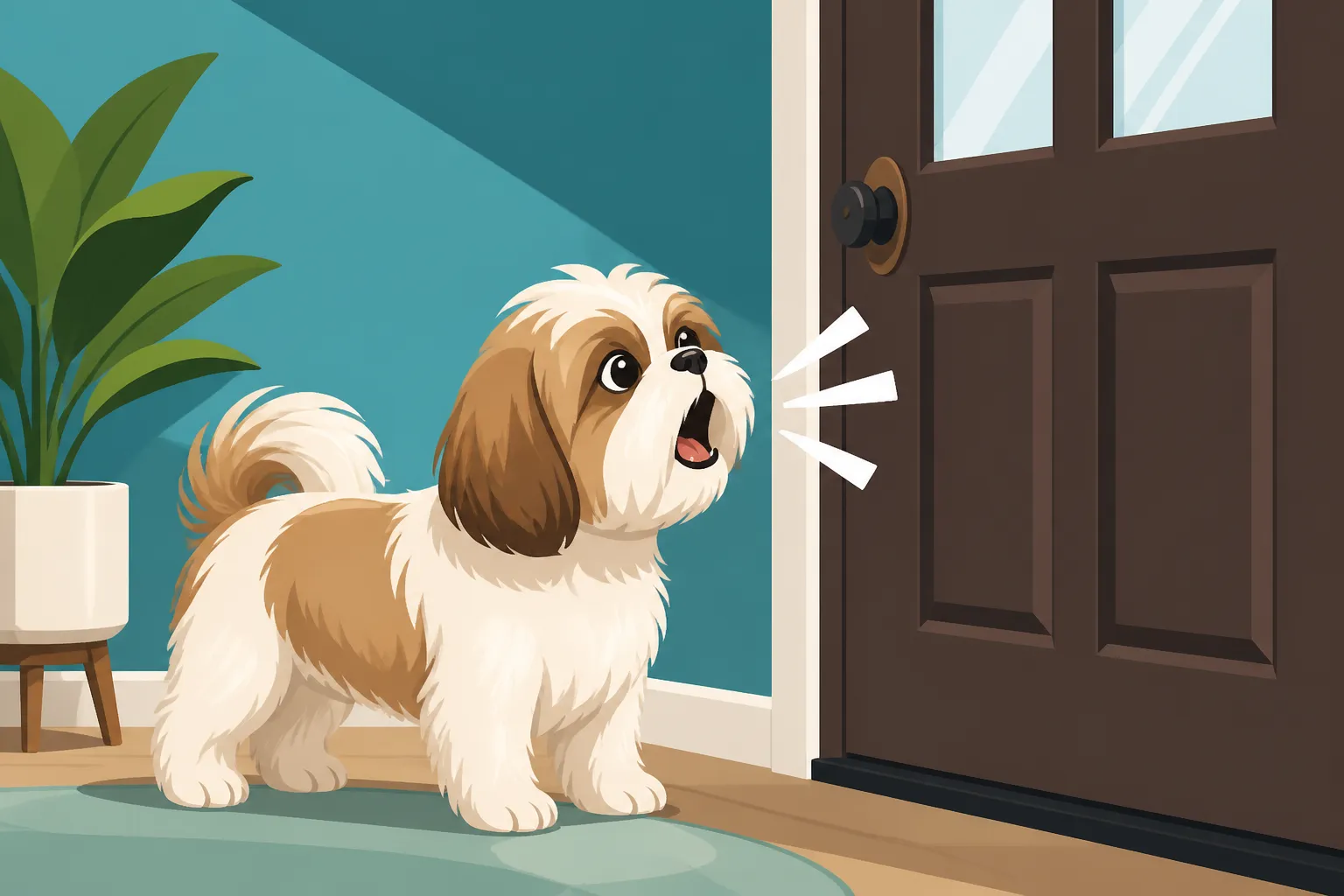
Shih Tzu Barking at the Door
Oh, the door bark! If you own a Shih Tzu, you know this scenario all too well: the doorbell rings, there’s a knock, or even just the mail carrier’s distant footsteps, and suddenly your sweet, fluffy companion transforms into a miniature guard dog, erupting in a flurry of barks that could rival a much larger breed. It’s frustrating, it’s embarrassing when guests arrive, and it can feel like an impossible habit to break. But don't despair! This guide is here to help you understand why your Shih Tzu barks so passionately at the door and, more importantly, to equip you with realistic, empathetic strategies to manage and reduce this often-overwhelming behavior.
Why Shih Tzus Bark So Passionately at the Door
It’s easy to get annoyed by the barking, but understanding the root cause is the first step toward finding a solution. Shih Tzus, despite their small size, were originally bred as companion dogs in palaces, and they often see themselves as protectors of their domain and their beloved people. This isn’t just mischief; it’s often deeply ingrained behavior.
The Instinct to Alert
Think about it: for centuries, dogs have been valued for their ability to alert humans to approaching strangers or perceived threats. While your Shih Tzu isn’t guarding ancient Tibetan temples anymore, that ancestral instinct to sound the alarm is still very much alive. When someone approaches your front door, your Shih Tzu’s primal brain might interpret this as an intrusion, and barking is their way of saying, "Hey! Someone's here! And I'm on duty!" They might genuinely believe they are protecting you, their home, and everything they hold dear. It’s a job they take seriously, even if it’s just the pizza delivery person.
Moreover, the sharp hearing of a dog means they often pick up on cues long before you do. They hear the car pull up, the footsteps on the porch, or even the faint murmur of voices down the street. Each of these subtle sounds becomes a pre-alert signal, building anticipation and readiness to "warn" you. This isn't just a spontaneous reaction; it's a build-up of sensory information that culminates in that door bark.
Excitement and Greeting Rituals
Beyond guarding, a significant portion of door barking, especially in a friendly breed like the Shih Tzu, comes from sheer excitement. They love people, they love attention, and a new arrival often means a potential new source of pets, praise, or even a dropped treat. For many Shih Tzus, the sound of the doorbell or a knock isn't a threat; it's a prelude to a party! This isn’t always about aggression; it's often about an overwhelming surge of joy and anticipation.
Imagine being cooped up all day, perhaps even building up some Shih Tzu Alone Time and Learning to Tolerate It, and then suddenly, the world comes to your door. Your Shih Tzu might jump, spin, and bark, not out of malice, but out of an explosion of pent-up energy and happiness. They want to be part of the action, to greet the newcomer, and to be the center of attention. This type of barking is often accompanied by wagging tails, wiggling bodies, and a desperate desire to get to the door.
Learned Attention-Seeking
Sometimes, the barking starts innocently, perhaps as an alert, but it quickly gets reinforced. How? Think about what you do when your Shih Tzu barks at the door. Do you rush over to see who it is? Do you pick them up to soothe them? Do you even just tell them "no" or "quiet" in a stern voice? All of these reactions, from a dog's perspective, can be interpreted as attention. They bark, and suddenly, they have your full, undivided focus.
Over time, your Shih Tzu learns that barking is a highly effective way to get your attention, especially when a high-value event (like a visitor) is happening. They might bark, you look at them, you walk to the door, you even give them a pat – success! They've managed to control your actions and direct the situation. This can become a deeply ingrained habit, making it much harder to break if not addressed early. It’s a classic example of operant conditioning, where a behavior that yields a desired outcome gets repeated.
Understanding and Identifying the Triggers
To effectively manage door barking, you need to become a detective and identify exactly what sets your Shih Tzu off. It’s rarely just "the door"; it's a specific combination of sights, sounds, and even smells.
Visual Cues: People and Animals Passing By
Many Shih Tzus are visual barkers. If your dog has a clear line of sight to the street or hallway, they might react to anything that moves past the window or door. This could be:
- People walking by: A jogger, a parent pushing a stroller, a neighbor walking their dog.
- Other animals: Squirrels scampering up a tree, a cat strolling across the lawn, or another dog being walked on the sidewalk.
- Vehicles: The mail truck, a delivery van, or even just a car parking across the street.
For these dogs, the visual stimulus is paramount. They see something, and their brain immediately signals "alert!" This can be particularly frustrating if you live in an apartment building with a busy hallway or a house on a well-trafficked street. They might start barking long before anyone even reaches your specific door, creating a constant cacophony. If you've observed your Shih Tzu spending a lot of time perched on the back of the sofa, gazing intently out the window, chances are visual cues are a major factor in their door-related barking. You might find some interesting insights into their personality by observing What Sets a Shih Tzu Off at the Window.
Auditory Cues: Doorbells, Knocking, and Approaching Footsteps
Other Shih Tzus are more sensitive to sound. They might not need to see anything to react. Instead, their excellent hearing picks up on subtle auditory triggers, such as:
- The doorbell: This is often the biggest culprit. It's a clear, unmistakable signal that someone is at the door.
- Knocking: Similar to the doorbell, but often with a different cadence that can sometimes be even more jarring.
- Footsteps: The distinct sound of someone walking up the porch steps, or even just approaching your apartment door.
- Voices: Distant conversations, or even the sound of someone clearing their throat in the hallway.
- Car doors: The slam of a car door, signaling someone has just arrived.
For these sound-sensitive dogs, desensitization can be a powerful tool. They learn to associate these sounds with calm instead of alarm. The challenge with auditory triggers is that they can be harder to control than visual ones; you can't just close the blinds to block a sound. You need a more deliberate approach to change their emotional response to these specific noises. It's a bit like the common A Shih Tzu Barking at the Doorbell scenario, where the chime itself becomes the trigger.
Predictable Patterns: Mail Delivery and Regular Visitors
Dogs are creatures of habit, and they often pick up on predictable patterns. If your mail carrier or package delivery person comes at the same time every day, your Shih Tzu will learn this schedule. The mere time of day or the specific sound of the delivery truck can become a trigger, even before the person is directly at your door.
This also applies to regular visitors, like family members, friends, or even dog walkers. Your Shih Tzu might associate their car pulling up or their familiar footsteps with their arrival, leading to anticipatory barking. They learn the sequence: sound of car -> person comes to door -> they get excited. Breaking these learned patterns requires consistent intervention at each stage of the sequence, not just at the final bark. Think about how many times your Shih Tzu has "practiced" this routine; it will take just as many, if not more, repetitions to teach them a new, calmer one.
Training Strategies to Manage Door Barking
Once you understand why your Shih Tzu barks and what triggers it, you can start to implement targeted training strategies. Remember, this isn't about punishing your dog for barking, but about teaching them a more appropriate, calmer response.
Desensitization and Counter-Conditioning
This is a powerful one-two punch for managing door barking.
- Desensitization means gradually exposing your Shih Tzu to the trigger at a low intensity, so they become less reactive to it.
- Counter-conditioning means changing their emotional response to that trigger, from negative (alarm, excitement) to positive (calm, happy anticipation of a treat).
Here’s how you can apply it:
- Start small: Record your doorbell or a knocking sound on your phone. Play it at a very low volume, so low that your Shih Tzu barely notices it, or notices it but doesn't react with barking.
- Reward calmness: The moment you play the sound, give your Shih Tzu a high-value treat (something really special, like a tiny piece of cheese or boiled chicken). The goal is for them to associate the sound with something wonderful, not scary or exciting.
- Gradually increase intensity: Over many sessions, slowly increase the volume. If your Shih Tzu barks, it means you've gone too fast. Lower the volume back down to where they can remain calm, and then slowly build up again.
- Practice with real triggers: Once they are calm with recorded sounds, move on to real-life scenarios. Have a family member or friend ring the doorbell or knock while you are ready with treats. Again, start with low intensity (a soft knock) and build up.
- Focus on the approach: If footsteps are a trigger, practice having someone walk up to the door and then walk away without knocking or ringing, rewarding your Shih Tzu for staying quiet. This breaks the pattern that every approach means an immediate interaction.
This method takes time and consistency, but it fundamentally reshapes your dog's emotional response. Many owners find success using a similar approach for other common issues like A Shih Tzu That Cannot Relax in the Evening.
Teaching a "Quiet" Command
While desensitization works on prevention, a "quiet" command gives you a tool for active intervention when barking does occur.
- Induce barking: The easiest way to teach "quiet" is to get your Shih Tzu to bark first. You can do this by having a helper knock on the door, or even by making a sudden noise outside.
- Let them bark, then interrupt: Allow them to bark a few times. As soon as there's a pause in their barking (even a tiny one), say "Quiet!" in a calm but firm voice, and immediately reward them with a high-value treat. The timing here is crucial – you're rewarding the silence, not the barking.
- Gradually increase silence duration: As they start to understand, wait for a slightly longer pause before saying "Quiet!" and rewarding.
- Practice consistently: Repeat this in various situations. The goal is for them to associate the command "Quiet!" with stopping the barking and receiving a reward.
- Address the trigger afterward: Once they're quiet, then address the reason for the barking (e.g., go open the door, check outside). This shows them that being quiet leads to the next step, rather than barking being the only way to resolve the situation.
This method can be combined with teaching The Handful of Cues a Shih Tzu Really Needs for a well-rounded approach to communication.
Creating a "Place" or "Mat" Protocol
This strategy teaches your Shih Tzu to go to a designated "place" (like a dog bed or mat) and stay there calmly when someone is at the door. This redirects their energy and gives them a specific job to do that is incompatible with barking at the door.
- Teach "Place": Start by teaching your Shih Tzu to go to their bed or mat on command. Lure them onto the mat with a treat, say "Place!" (or "Mat!"), and reward them once they're on it. Gradually increase the duration they stay there, and then the distance you are from them.
- Introduce distractions: Once they're solid on "Place," start introducing distractions. Have a family member walk by the mat, then walk toward the door, then touch the door, all while rewarding your Shih Tzu for staying on their mat.
- Practice with door triggers: When they are reliably staying on their mat with minor distractions, start practicing with the doorbell or a knock. Have a helper ring the bell, immediately send your Shih Tzu to "Place!", and reward heavily for staying calm and quiet.
- Release once calm: Only release them from "Place!" once the visitor has been greeted and your Shih Tzu has remained calm. This teaches them that waiting calmly on their mat leads to positive interactions.
- Consistency is vital: Everyone in the household must use this protocol. If one person lets your Shih Tzu rush the door, it undermines all your hard work. For more on this, check out Teaching a Shih Tzu to Settle on a Mat.
Tools and Aids to Help Manage Barking
Training is paramount, but sometimes, a little extra help from specific tools and environmental adjustments can make a big difference, especially in the early stages or when you can't actively train.
Management Tools: Crates and Baby Gates
These are invaluable for managing door barking, particularly when you have guests coming over or when you know a trigger (like the mail carrier) is imminent.
- Crates: A well-crate-trained Shih Tzu can be comfortably placed in their crate (in a quiet, perhaps slightly out-of-sight location) when you anticipate visitors. This gives them a safe, den-like space where they feel secure and can't rush the door. It prevents them from practicing the barking behavior and gives you a chance to manage the greeting without their interference. Just ensure their crate is a positive place, not a punishment zone. You can learn more about this in Crate Training a Shih Tzu Properly. Always provide a chew toy or a puzzle feeder to keep them happily occupied.
- Baby Gates: Strategically placed baby gates can block access to the front door area without completely isolating your Shih Tzu. This allows them to still be part of the household but keeps them away from the immediate trigger zone. For example, a gate across a hallway leading to the front door can create a buffer, giving you time to answer the door calmly before your Shih Tzu has a chance to escalate their barking. This works great for dogs that are visual barkers and need a physical barrier. You can find a variety of durable pet gates on platforms like Amazon.
Environmental Adjustments: Window Film and White Noise
Sometimes, managing the environment itself can significantly reduce triggers.
- Window Film or Blinds: If your Shih Tzu is a visual barker, blocking their view can work wonders. Opaque window film can be applied to lower sections of windows to obscure their view of the street while still allowing light in. Alternatively, simply keeping blinds or curtains closed during peak triggering times (like mail delivery) can be effective. This removes the visual stimulus that sparks the initial alarm, making it easier for them to remain calm.
- White Noise Machines or Music: For auditory barkers, creating a sound buffer can be very helpful. A white noise machine, a fan, or even playing classical music or a talk radio station can help mask external sounds like footsteps, distant conversations, or other neighborhood noises that might trigger your Shih Tzu. By reducing the clarity of these sounds, you reduce their impact as a trigger. You can find various white noise machines on Amazon that offer different soundscapes.
Online Training Resources
If you're feeling overwhelmed or just want structured guidance, online training programs can be a fantastic resource. Many platforms offer detailed courses on specific behavioral issues like door barking, complete with video demonstrations and step-by-step instructions.
- Structured Programs: Online academies often provide comprehensive curriculums, starting with basic obedience and moving into more complex behavioral challenges. They can guide you through desensitization protocols, teaching "quiet" and "place" commands, and addressing general excitement.
- Expert Guidance: Reputable online training programs are often developed by certified professional dog trainers and behaviorists. They can provide insights into canine behavior that you might not have considered and offer troubleshooting tips for common problems. A great example of a brand offering such comprehensive support is BAXTER & Bella, which provides an online puppy school that covers a wide range of training topics, including polite greetings and managing excitement at the door. Their resources can be invaluable for owners looking for a flexible, at-home training solution.
- Community Support: Many online programs also include access to communities or forums where you can interact with other dog owners facing similar challenges. Sharing experiences and getting advice from peers can be incredibly motivating and helpful.
Consistency and Patience Are Key to Success
When tackling a deeply ingrained behavior like door barking, there’s no quick fix. Success hinges entirely on your unwavering consistency and boundless patience. This isn't just a training "phase" you go through for a few weeks; it's a commitment to reshaping your Shih Tzu's habits and your own.
The Importance of Every Interaction
Every single time your Shih Tzu barks at the door and gets an unintended reward (even just your exasperated "No!"), you're inadvertently reinforcing the behavior. This means that every interaction, or lack thereof, matters. If you're diligently working on desensitization and the "place" command, but a family member occasionally lets your Shih Tzu dash to the door, it can set your progress back significantly.
Think of it like building a tower with blocks. Each successful, calm interaction is a solid block placed, reinforcing the desired behavior. But every time your Shih Tzu barks unchecked and gets to rush the door, it’s like someone kicking out a block from the bottom of your tower. It becomes unstable, and you have to rebuild. This is why involving everyone in the household is so crucial – from the kids to your spouse to visiting relatives. Everyone needs to be on the same page, consistently applying the rules and training methods.
Setting Realistic Expectations
You won't eliminate all barking overnight, and honestly, you might never eliminate all barking entirely. A Shih Tzu is a dog, and dogs bark! The goal isn't to silence them completely, but to teach them to bark appropriately (e.g., a couple of alert barks, then quiet down) and to prevent excessive, frantic, or prolonged barking.
Expect plateaus in your training, and even occasional setbacks. There will be days when your Shih Tzu seems to "forget" everything you've taught them, or a particularly exciting delivery person sends them into a frenzy. Don’t get discouraged! These are normal parts of the learning process. Celebrate small victories, like a shorter barking session, a quicker response to "quiet," or staying on their mat for a few extra seconds. Each tiny step forward is progress. Remember that a Shih Tzu's Shih Tzu Temperament and the Companion It Was Bred to Be is inherently social and sometimes excitable, which means patience is your best friend.
Involving the Whole Household
As mentioned, consistent application of rules and training is impossible if only one person is doing it. Every member of the family needs to understand the training plan and commit to following it.
- Discuss the plan: Hold a family meeting to explain the problem, the goals, and the specific steps everyone needs to take. This includes using the "quiet" command correctly, sending the dog to "place," and never inadvertently rewarding barking.
- Practice together: Have family members practice the "place" command, or work on desensitization drills. The more people who can confidently execute the training, the more consistent the message your Shih Tzu receives.
- Educate guests: If you have regular visitors, politely explain your training efforts and ask for their cooperation. For instance, you might ask them to wait a moment at the door while you get your Shih Tzu settled, or to ignore the barking until your dog is quiet. This can make a huge difference in maintaining progress, especially when your Shih Tzu is still learning appropriate Shih Tzu Behavior With Small Children or A Shih Tzu Meeting the Cat for the First Time.
When to Seek Professional Help
Despite your best efforts, sometimes door barking can escalate or feel utterly unmanageable. There’s no shame in seeking professional help; in fact, it’s often the most responsible and effective path forward.
Recognizing Escalating Behavior
How do you know when it’s time to call in the experts? Look for these signs:
- Increased frequency or intensity: Your Shih Tzu is barking more often, for longer periods, or with a heightened level of franticness.
- Aggression: The barking is accompanied by growling, snapping, or lunging at the door or visitors. This is a serious sign that needs immediate professional intervention.
- Self-harm or stress: Your Shih Tzu is so distressed by the door triggers that they are panting excessively, pacing, drooling, or even licking or chewing themselves raw.
- Impact on quality of life: The barking is severely impacting your household's peace, your relationship with your neighbors, or your ability to have guests over.
- Lack of progress: Despite consistent, dedicated training using positive reinforcement methods, you are seeing little to no improvement over several weeks or months.
If you’re observing any of these, especially aggression or severe stress, don’t hesitate. Early intervention can prevent the problem from becoming even more entrenched. The cost of professional help now could save you much more stress and expense down the line, including potential vet visits for stress-related physical symptoms.
Consulting a Certified Professional Dog Trainer
For most cases of excessive door barking, a certified professional dog trainer is your first point of contact. Look for trainers who:
- Are certified: Seek out trainers with certifications from reputable organizations like the Certification Council for Professional Dog Trainers (CCPDT) or the Karen Pryor Academy (KPA). These certifications indicate a commitment to ethical, science-based training methods.
- Use positive reinforcement: Avoid trainers who advocate for punitive methods, shock collars, or harsh corrections. These can suppress barking out of fear but often create more underlying anxiety and can damage your bond with your Shih Tzu. Positive reinforcement focuses on rewarding desired behaviors.
- Offer in-home consultations: An in-home visit allows the trainer to observe your Shih Tzu in their natural environment, identify specific triggers, and tailor a training plan that works for your unique household and lifestyle.
- Specialize in toy breeds or problem behaviors: Some trainers have more experience with the nuances of smaller breeds or specific behavioral issues like barking. Don't be afraid to ask about their experience. You might even want to find one who understands Finding a Trainer Who Understands Toy Breeds.
A good trainer will teach you how to effectively communicate with and train your Shih Tzu, empowering you to become the best possible guide for your dog. They can help you refine your techniques for desensitization, counter-conditioning, and teaching alternative behaviors, and offer personalized strategies for Givng a Shih Tzu Something to Do Instead of Bark.
Considering a Veterinary Behaviorist
In more severe or complex cases, particularly where anxiety, fear, or aggression are significant components of the door barking, a veterinary behaviorist might be necessary.
- What they are: A veterinary behaviorist is a licensed veterinarian who has gone on to complete extensive specialized training in animal behavior and is board-certified in veterinary behavioral medicine. They are unique in that they can both diagnose medical conditions that might contribute to behavior problems (like pain, thyroid issues, or neurological problems) and prescribe medication if appropriate, in addition to developing comprehensive behavior modification plans.
- When to see one: If your Shih Tzu's barking is severely driven by anxiety (e.g., separation anxiety that manifests at the door, or generalized anxiety), if there's any aggression involved, or if previous training attempts with a regular trainer have failed, a veterinary behaviorist can provide a more holistic approach. They can rule out underlying medical causes and determine if medication (such as anti-anxiety medication) could be a helpful adjunct to behavior modification.
- Integrated approach: Often, a veterinary behaviorist will work in conjunction with a certified professional dog trainer. The behaviorist addresses the medical and emotional aspects, while the trainer helps you implement the practical, day-to-day behavior modification techniques. This integrated approach can be incredibly effective for deeply rooted or complicated behavioral issues.
No matter how frustrating door barking can be, remember that your Shih Tzu isn’t doing it to spite you. They're communicating, reacting, or seeking attention based on their instincts and learned experiences. With understanding, consistent training, and the right support, you can help your fluffy friend learn to be a calmer, quieter presence at the door.
| Strategy / Tool | Description | Best For | Requires | Benefits |
|---|---|---|---|---|
| Desensitization & Counter-Conditioning | Gradually exposing to triggers while creating positive associations with treats. | All types of barkers, especially those reacting to specific sounds/sights. | High consistency, patience, high-value treats. | Fundamentally changes emotional response to triggers; long-lasting. |
| "Quiet" Command | Teaching your Shih Tzu to stop barking on cue for a reward. | Intervening in active barking, giving a tool for real-time management. | Good timing, consistent practice, high-value treats. | Provides direct control, teaches an alternative behavior. |
| "Place" / "Mat" Protocol | Training your Shih Tzu to go to a designated spot and stay calm during door events. | Overly excited barkers, those who rush the door, managing greetings. | Prior "Place" training, household consistency, high-value rewards. | Redirects energy, prevents rushing, establishes a predictable routine. |
| Crates / Baby Gates | Physically preventing access to the door or confining during trigger times. | Managing high-excitement or anxious barkers when you can't actively train. | Prior positive crate/gate association, appropriate sizing. | Prevents rehearsal of unwanted behavior, provides safe space. |
| Window Film / Blinds | Blocking visual access to outdoor triggers. | Visual barkers reactive to people, animals, or vehicles passing by. | Easy installation, commitment to keeping them closed. | Removes primary visual stimulus, reduces immediate triggers. |
| White Noise / Music | Masking external auditory triggers with background sound. | Auditory barkers sensitive to footsteps, distant sounds, etc. | White noise machine, fan, consistent use. | Reduces clarity and impact of subtle external sounds. |
| Online Training Programs (e.g., BAXTER & Bella) | Structured courses, video guides, and expert advice for various behaviors. | Owners seeking detailed guidance, flexible at-home learning, broad support. | Dedication to follow program, internet access. | Comprehensive, professional guidance; often includes community support. |
| Professional Dog Trainer | In-person coaching, tailored plans, and behavior modification techniques. | Persistent barking, owners needing hands-on guidance, specific challenges. | Financial investment, commitment to homework. | Expert assessment, personalized solutions, accountability. |
| Veterinary Behaviorist | Medical and behavioral diagnosis, medication if needed, comprehensive plans. | Severe anxiety, aggression, complex cases, or when other methods fail. | Significant financial and time investment. | Holistic approach, addresses underlying medical/emotional causes. |
Disclaimer
This article is for general informational purposes only and does not constitute professional advice. Laws, prices and regulations vary by location and change over time. Consult a qualified professional for guidance on your specific situation.