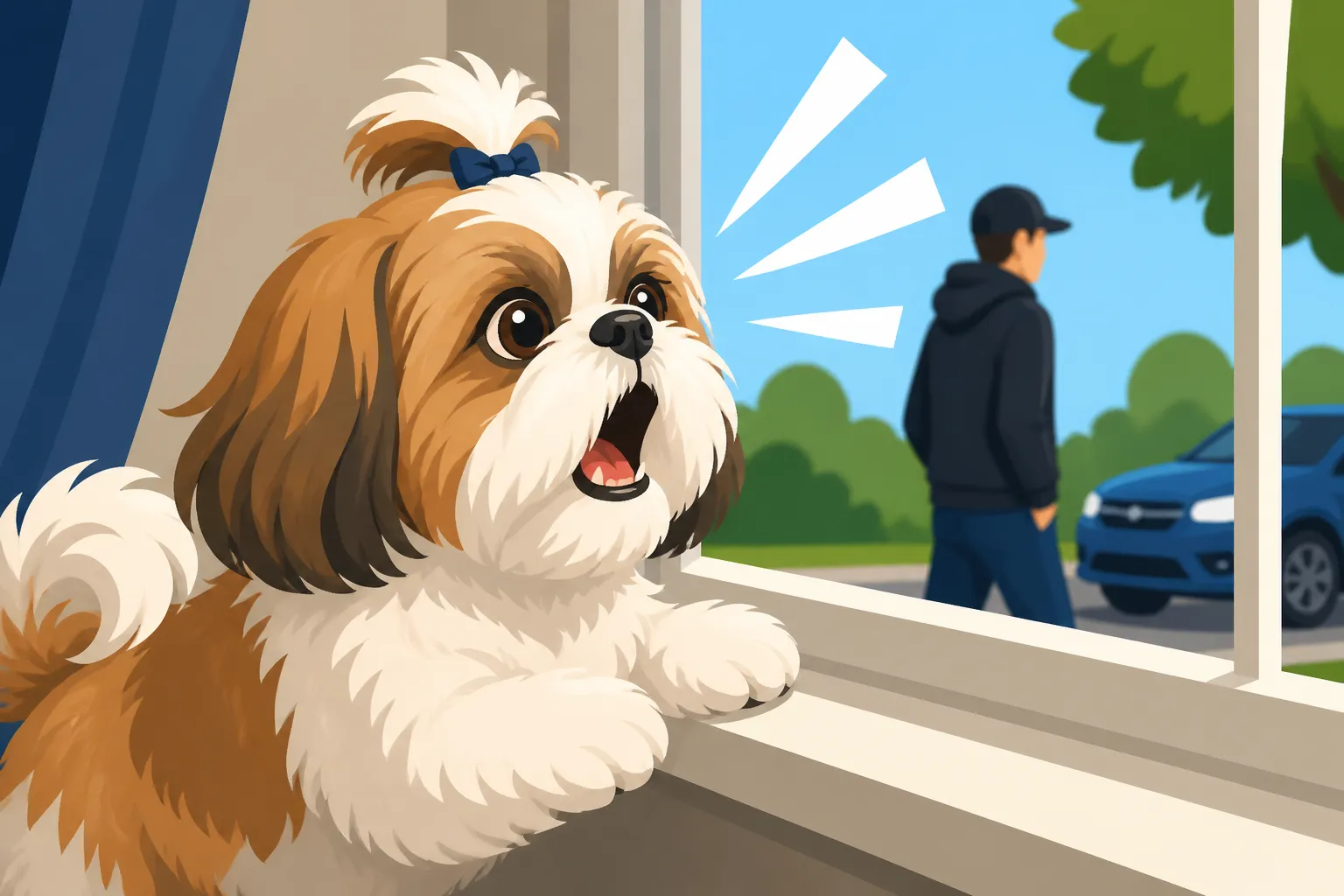
What Sets a Shih Tzu Off at the Window
It's incredibly frustrating when your sweet little Shih Tzu transforms into a miniature guard dog, launching into a barking frenzy every time a leaf blows past the window or a neighbor walks their dog down the street. That persistent "Woof! Woof! Woof!" can feel relentless, and it leaves many of us wondering what exactly sets our beloved companions off and, more importantly, how we can get some peace and quiet. This comprehensive guide will delve into the root causes of Shih Tzu window reactivity and provide actionable strategies to help manage and reduce this common, yet exasperating, behavior.
Understanding the "Why" Behind Window Reactivity
Before we can tackle the barking, it’s important to understand why your Shih Tzu is doing it in the first place. It's rarely out of malice or disobedience; more often, it stems from deeply ingrained instincts, learned behaviors, or even unmet needs. Our little lion dogs, despite their pampered appearances, still carry the traits of dogs bred for vigilance.
Instinctual Alarms: Tiny Guardians with Big Voices
Even though Shih Tzus were bred as companion dogs, revered in ancient palaces and known for their affectionate nature, they still possess a strong sense of territory and an instinct to alert their human family to anything they perceive as unusual or threatening. To your Shih Tzu, that passing delivery truck or the postal carrier isn't just an everyday occurrence; it's a potential intruder. Their small size doesn't diminish their protective instincts; in fact, it might even amplify them. They can't physically confront a perceived threat, so their primary defense mechanism, and their only way to communicate an "alarm," is barking. This isn't about being mean or yappy; it's about doing what they instinctively feel is their job: guarding their space and their people.
Think about it from their perspective: they see a stranger approach their "den" (your home), and they bark. The stranger (postal carrier) eventually leaves. From your Shih Tzu's point of view, their barking worked! They successfully scared off the perceived threat. This reinforces the behavior, making them more likely to bark the next time. They don't understand that the person was going to leave anyway; they only understand the sequence of events. It’s a classic example of an unintended positive reinforcement loop.
Boredom and Under-Stimulation: When the Window Becomes Entertainment
Sometimes, window barking isn't about protection at all, but simply about a lack of mental or physical stimulation. Shih Tzus might be small, and they might enjoy their cuddle time, but they still need engagement. If your Shih Tzu is spending hours alone or without varied activities, the window can quickly become the most exciting "television" channel they have. Every rustle of leaves, every squirrel scampering by, every person walking their dog—these become events worth commenting on.
When a dog is bored, they look for ways to entertain themselves, and barking at external stimuli offers a certain level of self-gratification. It provides a burst of excitement, a release of energy, and often, a reaction from you, even if that reaction is just telling them to stop. For a dog craving attention or activity, any reaction is better than none. This is particularly true if your Shih Tzu doesn't have a regular routine of walks, playtime, or interactive toys. The window becomes their world, and they feel compelled to interact with everything they see through it.
Lack of Socialization: The Unknown is Frightening
A significant factor in many reactive behaviors, including window barking, is insufficient or incomplete socialization during a Shih Tzu's crucial developmental periods. A puppy needs to be exposed to a wide variety of sights, sounds, people, and other animals in a positive, controlled manner. If a Shih Tzu puppy isn't properly socialized, especially to things happening outside the home, they can grow up to view anything unfamiliar as a potential threat rather than just part of the normal world. The Shih Tzu Socialization Deadline is critical for shaping a confident adult dog.
Imagine a world where everything new is perceived with suspicion. A dog that hasn't learned that children on bicycles, people walking with umbrellas, or even the sound of the trash truck are normal parts of life will naturally react with alarm. This fear-based barking is often louder, more frantic, and harder to interrupt. It's not just about guarding territory; it's about expressing anxiety and unease towards the unfamiliar. A dog that has had positive experiences with various stimuli is less likely to see every passerby as a monster at the gate.
Common Triggers for Window Barking
Identifying the specific triggers for your Shih Tzu's window barking is the first step toward managing it. It’s not always a blanket reaction to "everything"; sometimes, it's very specific, and recognizing those patterns can help you anticipate and intervene more effectively.
Movement Outside: People, Dogs, and Squirrels
This is perhaps the most common and obvious trigger. Anything that moves within your Shih Tzu's line of sight outside the window can set them off.
-
People: A jogger, a parent pushing a stroller, a child riding a scooter, or simply someone walking their own dog – these are all perceived as intrusions. For your Shih Tzu, it might be the sudden appearance, the gait, or even the general human form that triggers the alarm. They don't differentiate between friendly neighbors and unknown threats; they just see movement in their space. This can be especially frustrating if you live on a busy street or in an apartment complex where people are constantly passing by. Your little companion is simply doing what they think is right, acting as the tiny sentinel of your home.
-
Other Dogs: Many Shih Tzus are particularly sensitive to other dogs passing by. This could be due to territoriality, excitement, or even fear. If your Shih Tzu has had negative experiences with other dogs in the past, or if they just have a strong prey drive, the sight of another canine can quickly escalate into a barking fit. They might feel the need to "warn" the other dog away, or they might be expressing frustration at not being able to greet them. This reaction can be quite intense, often accompanied by tail wagging or stiff body language, depending on whether the underlying emotion is excitement or anxiety.
-
Small Animals and Wildlife: Squirrels, birds, rabbits, and even outdoor cats are incredibly tempting targets for a Shih Tzu's natural prey drive. The quick, darting movements of these creatures can be irresistible. A Shih Tzu might bark, whine, and even paw at the window, desperate to chase the perceived prey. This isn't usually territorial; it's pure, unadulterated instinct to hunt, even if they've never caught anything in their lives. The window acts as a frustrating barrier, amplifying their vocalizations as they express their desire to pursue.
Sounds: Doorbell, Passing Cars, and Neighborhood Chatter
It's not just what they see; what your Shih Tzu hears can be just as potent a trigger, sometimes even more so because they can't always pinpoint the source immediately.
-
Doorbell and Knocks: This is a classic. The sound of the doorbell or a knock on the door is universally recognized by dogs as an indicator that someone is at the door, often followed by the opening of the door and a person entering. This creates a strong associative link. For many Shih Tzus, the sound itself is enough to trigger a barking cascade, even if they don't see anyone. They're anticipating the arrival, and their excitement or protective instinct kicks in immediately. This can be particularly problematic if your doorbell rings frequently with deliveries or visitors.
-
Passing Cars and Vehicles: The rumble of a garbage truck, the distinctive sound of the mail carrier's vehicle, or even just the everyday hum of cars driving by can be triggers. Some Shih Tzus develop specific sensitivities to certain vehicles, especially those that frequently stop near your home. The loud, often unfamiliar noises can be startling or perceived as a direct threat. They might also associate these sounds with the appearance of a person, reinforcing their alert behavior. Living near a busy road often means a lot of sound-triggered barking.
-
Neighborhood Chatter and Distant Voices: Even indistinct voices, children playing, or distant conversations can set off a sensitive Shih Tzu. Their hearing is far more acute than ours, and what sounds like background noise to us can be distinct sounds to them. If they perceive these sounds as coming from "their" territory, they might feel compelled to respond. This type of barking can be harder to manage because the sound sources are often inconsistent and hard to pinpoint, making it difficult for you to intervene preemptively.
Territorial Impulses: Protecting Their Space
At its core, much of window barking boils down to a dog's natural territoriality. Your home is their den, and they feel a deep-seated need to protect it and everyone in it.
-
Perceived Threats to the Home: As mentioned earlier, anything that seems out of place or approaches too closely can be seen as a threat. Whether it’s a delivery person, a stranger walking past, or even another animal, your Shih Tzu’s instinct kicks in. They're not just observing; they're actively guarding what they consider to be theirs. This instinct is a strong motivator and can be incredibly difficult to override entirely because it’s so fundamental to dog behavior. They're telling the world, "This is our space, and I'm on duty!"
-
Protecting Family Members: Shih Tzus are deeply devoted to their families. If they see someone approaching the house while you are home, they might bark to "protect" you. This is especially true if they are particularly bonded with one family member. They might see themselves as your tiny protector, alerting you to any potential danger. This often comes from a place of love and loyalty, even if the execution is a little noisy. Their aim is to make sure you're aware of what's happening and to deter any perceived threat from getting closer to their beloved humans.
-
Establishing Dominance (or Fear): Sometimes, territorial barking can be a display of bravado, even if it's rooted in insecurity. A dog might bark to assert their presence and "warn off" others. Conversely, a fearful dog might bark excessively to create distance and make the perceived threat go away, hoping that their vocalizations will make the scary thing retreat. It's often a combination of both – a desire to control their immediate environment mixed with underlying anxiety about the unknown. Understanding if your Shih Tzu's barking is driven more by confidence or fear is crucial for choosing the right training approach.
| Trigger Type | Common Examples | Typical Shih Tzu Reaction | Underlying Emotion/Reason |
|---|---|---|---|
| Movement | People walking, other dogs, squirrels, cyclists | Sharp, repetitive barks; tail stiff or wagging; lunging at window | Territoriality, prey drive, excitement |
| Sounds | Doorbell, knocking, passing trucks, distant voices | Alarm barks, often sustained; head cocked; searching for source | Alertness, anxiety, learned association |
| Territorial | Mail carrier, delivery trucks, strangers near door | Deep, sustained barking; stiff body; hackles raised (sometimes) | Protection, guarding, insecurity |
| Boredom/Frustration | Anything new after long quiet periods | Whining interspersed with barks; pawing at glass; seeking attention | Under-stimulation, desire for interaction |
| Fear/Anxiety | Unfamiliar objects (umbrellas), loud sudden noises | High-pitched, frantic barking; cowering; retreating after initial bark | Insecurity, lack of socialization |
The Impact of Constant Window Barking
While a little bit of barking is normal for any dog, incessant window barking can take a significant toll on both your Shih Tzu and your household. It's not just an annoyance; it can signal deeper issues and lead to further problems.
Stress and Anxiety for Your Shih Tzu
Imagine being on high alert all day, every day. That’s essentially what constant window barking does to your Shih Tzu. Their cortisol levels can remain elevated, leading to chronic stress and anxiety. This isn't a healthy state for any living being. A Shih Tzu constantly scanning the horizon, barking at every perceived threat, is a dog that is never truly relaxed. This constant state of arousal can manifest in other ways, such as increased nervousness, destructive behaviors, or even aggression in different contexts.
This stress can also impact their sleep and overall well-being. A dog that is perpetually wound up by external stimuli might struggle to settle down, even indoors. You might notice them pacing, panting more than usual, or being hyper-vigilant even when nothing is happening. It creates a cycle where the barking fuels the anxiety, and the anxiety makes them more prone to barking. This is why addressing window reactivity isn't just about your sanity; it's about your Shih Tzu's mental and emotional health. An anxious dog isn't a happy dog, and their quality of life can diminish significantly.
Neighbor Complaints and Household Disruption
Let’s be honest, constant barking isn't just stressful for your dog; it's incredibly disruptive for everyone in the household. It can interrupt phone calls, disturb sleep, make it hard to concentrate, and generally create a tense atmosphere. Living with a dog that constantly barks at the window can chip away at your patience and enjoyment of your home life. It’s hard to relax when you’re always anticipating the next outburst.
Beyond your immediate household, neighbor complaints are a very real concern. Depending on where you live – whether it's an apartment building, a townhouse with shared walls, or a quiet residential street – excessive barking can quickly become a nuisance to those around you. This can lead to strained relationships with neighbors, official complaints to landlords or homeowner associations, and even legal repercussions in extreme cases. It puts pressure on you as the owner to control the behavior, adding another layer of stress to an already challenging situation. You want your Shih Tzu to be a beloved member of the community, not a source of constant friction.
Escalation to Other Problem Behaviors
Unmanaged window barking often doesn't stay confined to just the window. The underlying anxiety, territoriality, or lack of stimulation can spill over into other areas of your Shih Tzu's behavior. A dog that is highly reactive at the window might become reactive on walks, barking at other dogs or people they encounter. They might start guarding other resources or become more prone to fear-based aggression if their stress levels are consistently high.
For example, a Shih Tzu that barks relentlessly at the mail carrier through the window might start to nip or growl when the mail carrier is actually at the door, even if they've never done so before. The constant rehearsal of the barking behavior, coupled with the underlying emotional state, can deepen and generalize the reactivity. It can also make other training efforts more difficult, as a dog in a heightened state of arousal is less likely to respond to cues or learn new commands. Addressing window reactivity early can prevent it from spiraling into a wider range of behavioral challenges.
Proactive Strategies for Prevention
Prevention is often easier than correction, especially when it comes to window reactivity. By setting up your Shih Tzu for success and managing their environment, you can significantly reduce the triggers that lead to barking.
Early Socialization and Exposure to the World
One of the most impactful things you can do for your Shih Tzu, especially when they are a puppy, is to provide comprehensive and positive socialization. This isn't just about meeting other dogs; it's about exposing them to a huge variety of sights, sounds, smells, people, and environments in a way that builds confidence and positive associations. Enroll your puppy in a well-run puppy class that focuses on positive reinforcement and safe interactions. A program like BAXTER & Bella's online puppy school can provide structured guidance for this crucial period, helping you expose your Shih Tzu to various stimuli in a controlled and positive manner.
Beyond formal classes, take your Shih Tzu puppy to different dog-friendly places. Sit on a park bench and let them observe people, children, and other dogs from a safe distance. Expose them to different surfaces, sounds of traffic, construction noises, and various household items. Always keep these experiences positive with treats and praise. The goal is to teach them that the world is a fascinating, safe place, not a series of threats to bark at. A well-socialized Shih Tzu is much less likely to be fearful or overly territorial about common external stimuli. Shih Tzu Puppy Training Month by Month is a great resource for structuring this.
Managing the Environment: Curtains and Window Film
The simplest and often most effective way to prevent window barking is to eliminate the trigger. If your Shih Tzu can't see it, they can't bark at it! This might sound overly simplistic, but environmental management is a cornerstone of behavior modification.
-
Block the View: This is your primary strategy. Keep blinds, curtains, or drapes closed during times when your Shih Tzu is most likely to bark, or when you are not able to actively supervise and redirect them. If you work from home, consider closing the blinds in your office area. If you're out, make sure the windows are covered. This immediately removes the visual trigger. While it might feel like you're depriving them of entertainment, you're actually reducing their stress and preventing them from rehearsing an unwanted behavior.
-
Window Film or Privacy Screens: For windows you don't want to keep permanently covered, consider applying opaque or frosted window film to the lower portion of the glass. This allows natural light to enter but obstructs your Shih Tzu's view of the street. You can find various styles on Amazon, from decorative frosted films to simple static cling options that are easy to apply and remove. Another option is a decorative screen or piece of furniture placed in front of the window, creating a visual barrier without completely blocking light or airflow. This is particularly useful for ground-level windows where most of the triggers appear.
-
Restrict Access: If certain windows are particularly problematic, consider using baby gates or an exercise pen to restrict your Shih Tzu's access to those areas of the house when you cannot supervise them. This physically prevents them from getting to their "sentry post." It's not a punishment; it's a management technique to prevent the unwanted behavior from occurring in the first place, giving you control over the situation.
Mental and Physical Enrichment: Draining that Energy
A tired dog is often a well-behaved dog, and a mentally stimulated dog is less likely to seek "entertainment" by barking at the window. Shih Tzus, despite their small size, need both physical exercise and mental challenges to keep them happy and balanced.
-
Regular Exercise: While Shih Tzus aren't marathon runners, they still need daily walks and playtime. Make sure your Shih Tzu gets at least two short walks a day, especially before peak "trigger" times (like the mail delivery or school pick-up). Walks provide not just physical activity but also valuable sniff time, which is incredibly enriching for dogs. Let them explore new smells; it's like reading the daily newspaper for them. The Short Walks a Shih Tzu Is Built For is a good guideline.
-
Mental Stimulation: This is often overlooked but crucial. Engage your Shih Tzu's brain with puzzle toys, snuffle mats, and training sessions. Puzzle Feeders a Shih Tzu Can Work can turn mealtime into a fun challenge, making them work for their food rather than just gobbling it down. Regular, short training sessions, even just five minutes a few times a day, can be incredibly enriching. Teach them new tricks, practice obedience cues like "sit," "stay," and "down." This uses mental energy and builds a stronger bond between you.
-
Interactive Play: Dedicate time each day for active play with your Shih Tzu. Tug, fetch (even indoors), or hide-and-seek with treats can be great ways to burn off energy and satisfy their natural instincts in a constructive way. These activities also provide positive attention from you, which can reduce their need to seek attention through barking. Ensure they have a variety of toys, rotating them to keep things interesting.
Training Techniques to Manage Window Reactivity
Once you've implemented environmental management, it's time to work on training your Shih Tzu to respond differently to triggers they do encounter. This is where positive reinforcement comes in.
"Look at That" and Counter-Conditioning
This technique, often called "Look at That" (LAT), is about changing your Shih Tzu's emotional response to a trigger from negative (alarm, fear) to positive (anticipation of a treat).
- Identify the Trigger: First, identify what sets your Shih Tzu off. Let's say it's people walking by. Position yourself with your Shih Tzu at a window (initially, maybe one with a partial view or from a distance) where you know people will pass, but far enough away that your Shih Tzu notices them without immediately barking.
- Mark and Reward: The moment your Shih Tzu notices a trigger (their head might perk up, ears twitch, or they glance at it), but before they bark, say a marker word like "Yes!" or "Good!" or use a clicker. Immediately follow with a high-value treat. Repeat this every single time they notice a trigger without reacting negatively. The goal is to associate the sight of the trigger with something wonderful (treats!).
- Practice and Progress: Start with low-intensity triggers or at a greater distance from the window. Gradually, as your Shih Tzu starts to look at the trigger and then immediately look back at you for a treat, you can decrease the distance or increase the intensity of the trigger. You're essentially teaching them: "Oh, look, a person! That means I get a treat from my human!" Positive Reinforcement With a Shih Tzu is the foundation for this.
- Consistency is Key: This takes time and many repetitions. Don't rush it. If your Shih Tzu barks, you've gone too fast or are too close to the trigger. Simply move further away or block the view, and try again later. The aim is to interrupt the ingrained "see-bark" pattern and replace it with "see-look at human-get treat."
Positive Interruption and Redirection
When your Shih Tzu does start barking, your goal is to interrupt the behavior positively and redirect their attention to something more appropriate. Avoid yelling or punishment, as this can increase anxiety or make them fear you.
- Calm Interruption: The moment your Shih Tzu starts to bark, make a calm, non-threatening sound to interrupt them. A soft "Ah-ah," a gentle tap on their shoulder, or even just saying their name can work. The key is to get their attention without startling them further.
- Call Away and Reward: Once you have their attention, immediately call them away from the window with a cheerful tone. "Fido, come!" or "Let's go!" As soon as they move away from the window, even a single step, lavish them with praise and a high-value treat. You want to reward the act of leaving the window and engaging with you.
- Redirection to an Alternative: Once they've moved away, redirect them to an alternative activity. This could be a favorite toy, a short training session, or a puzzle feeder. The idea is to give them something else constructive to do instead of barking. "Let's play!" or "Find the treat!" can shift their focus. If you've incorporated the "Look at That" game, you can integrate it here: interrupt the barking, call them away, and then, if appropriate, try a brief LAT session from a safer distance.
- Prevent Re-engagement: Don't let them immediately return to the window to start barking again. Keep them engaged with you or the alternative activity for a few minutes. If they try to go back, gently interrupt and redirect again. This consistent redirection teaches them that barking at the window doesn't get them what they want (to scare off the "threat" or entertain themselves), but engaging with you does.
Teaching a "Settle" or "Go to Mat" Cue
Teaching your Shih Tzu a specific cue to go to a designated "safe spot" like a mat or bed, and to calmly "settle" there, can be incredibly useful for managing window reactivity. This gives them a clear alternative behavior and teaches them to relax on command.
- Introduce the Mat: Start by making the mat or bed a super positive place. Toss treats onto it, play calm games on it, and praise them whenever they lie down on it. Teaching a Shih Tzu to Settle on a Mat describes this process in detail.
- Add the Cue: Once they are comfortable on the mat, start adding your verbal cue, "Mat" or "Settle." Say the cue, lure them onto the mat with a treat, and reward them when they lie down. Practice this in quiet environments first.
- Practice "Stays": Gradually increase the duration they stay on the mat. Start with a few seconds, then move to a minute, then longer. Reward heavily for staying put. This teaches impulse control.
- Apply to Window Situations: When you anticipate a trigger (e.g., mail delivery time), preemptively send your Shih Tzu to their mat with the "Settle" cue. Reward them for staying calm there. If a trigger appears and they start to react, calmly guide them to their mat, asking for the "Settle" cue, and reward them for compliance. This gives them a structured way to handle their arousal, by going to a place where they are expected to relax, rather than escalating at the window.
- Consistency is Crucial: Just like any training, consistency is vital. Everyone in the household needs to use the same cues and follow the same procedures. Reward calmness and redirect inappropriate behaviors consistently.
Tools and Aids for Managing Window Behavior
Sometimes, training alone isn't enough, or you need extra support while your Shih Tzu is learning. Several tools and aids can complement your training efforts and help manage window reactivity.
Privacy Film and Gates
As mentioned in the prevention section, these physical barriers are often the first line of defense and highly effective. They directly remove the visual trigger, which is fundamental.
- Opaque or Frosted Window Film: This is a fantastic, semi-permanent solution for windows that receive a lot of traffic. You can purchase rolls of static cling film from retailers like Amazon. It's relatively inexpensive, easy to apply with water and a squeegee, and can be removed without residue. This allows natural light into the room while completely blocking your Shih Tzu's view of passing people, dogs, and squirrels. Choose a film that obstructs the view at your Shih Tzu's eye level, usually the bottom half or two-thirds of the window. This saves you from constantly closing blinds and still lets you enjoy some natural light.
- Baby Gates or Exercise Pens: For particularly problematic windows or rooms, physical barriers are indispensable. A sturdy baby gate can block access to a specific window or an entire room that has windows. An exercise pen (often called an x-pen) can create a safe, controlled space for your Shih Tzu in another part of the house, away from the tempting window. This is especially useful when you need to leave them unsupervised for short periods. Ensure the gates are tall enough and secure enough that your Shih Tzu cannot jump over or push them open. They are not meant as punishment but as management tools to prevent the rehearsal of unwanted barking.
White Noise Machines and Calming Pheromones
To address sound-triggered barking and general anxiety, these aids can create a more peaceful environment for your Shih Tzu.
- White Noise Machines: For Shih Tzus sensitive to sounds like distant voices, traffic, or the mail truck, a white noise machine can be a game-changer. These devices produce a consistent sound (white noise, brown noise, or even nature sounds) that can mask external noises, making them less distinct and less likely to trigger a barking response. Place the machine near the problematic window or in the room where your Shih Tzu spends most of their time. You can find many affordable options on Amazon, and some pet-specific sound machines even offer calming music designed for dogs. This can help create a more serene atmosphere, reducing the overall stress level for your sensitive companion.
- Calming Pheromones: Dog appeasing pheromones (DAP), available as diffusers, sprays, or collars, mimic the natural pheromones a mother dog releases to comfort her puppies. While not a magic bullet, these can help create a sense of calm and reduce anxiety in some dogs. A diffuser can be plugged into an outlet in the room where your Shih Tzu is most reactive. While they won't stop barking immediately, they can lower your Shih Tzu's general anxiety levels, making them more receptive to training and less likely to react intensely to triggers. Discuss these options with your veterinarian to see if they are a good fit for your dog.
Interactive Toys and Puzzle Feeders
Keeping your Shih Tzu's mind and body engaged is a powerful counter to boredom-induced barking.
- Long-Lasting Chews: Providing appropriate, long-lasting chews can keep your Shih Tzu occupied and redirect their chewing instincts away from inappropriate items, while also providing a calming outlet. Look for natural chews that are safe for your Shih Tzu's size and chewing style. Always supervise your dog with new chews to ensure they are safe and don't pose a choking hazard.
- Puzzle Feeders: These are fantastic for mental stimulation. Instead of putting food in a bowl, use a puzzle feeder that requires your Shih Tzu to work to get their kibble or treats. This can satisfy their natural foraging instincts and keep them mentally engaged for extended periods, reducing boredom. Treats Small Enough for a Shih Tzu Session can be great for these, as they are often low calorie. You can find a wide variety of puzzle toys on Amazon, from simple treat-dispensing balls to more complex interactive games. Rotate these toys regularly to keep them novel and interesting, ensuring your Shih Tzu remains engaged and less likely to seek "entertainment" at the window.
When to Seek Professional Help
Even with the best intentions and consistent effort, some Shih Tzus require more specialized support to overcome persistent window reactivity. Knowing when to call in the cavalry can save you time, frustration, and ensure your dog gets the help they need.
Recognizing When It's Beyond DIY Training
You've tried blocking the view, redirecting, counter-conditioning, and nothing seems to stick. Or perhaps the barking is escalating, becoming more intense, or generalizing to other situations. These are all signs that the problem might be more deeply rooted than simple boredom or learned behavior, and your DIY efforts might not be enough. If the barking is accompanied by other concerning behaviors like aggression, excessive fear, or panic, it’s definitely time for professional intervention.
If you find yourself constantly frustrated, stressed, or if the barking is impacting your quality of life or your relationship with your Shih Tzu, don't feel like a failure. Some behaviors are deeply ingrained or stem from complex anxieties that require a professional eye to untangle. Continuing to struggle alone can inadvertently reinforce the problem or even worsen it due to incorrect training techniques or a lack of understanding of the underlying cause. Trust your gut; if it feels overwhelming, it probably is, and that's okay.
Finding a Qualified Positive Reinforcement Trainer
When seeking professional help, it's crucial to find a trainer who uses humane, positive reinforcement methods. Avoid any trainer who suggests punitive measures, shock collars, harsh corrections, or force, as these can exacerbate fear and anxiety, especially in a sensitive breed like the Shih Tzu, and damage your bond. Finding a Trainer for a Toy Breed is essential, as not all trainers are experienced with the nuances of small dog behavior.
Look for certifications such as CPDT-KA (Certified Professional Dog Trainer – Knowledge Assessed) or similar credentials. Ask for references and inquire about their specific experience with fear-based reactivity or territorial barking in small breeds. Many excellent trainers offer virtual consultations, which can be incredibly convenient. Online resources like BAXTER & Bella can also connect you with professional coaches and provide a wealth of positive training information that aligns with these principles. A good trainer will help you understand the why behind your Shih Tzu's behavior and develop a tailored, step-by-step plan that addresses the root cause, not just the symptom.
Considering Veterinary Consultation for Anxiety
In some cases, chronic window barking, especially if it's accompanied by other signs of anxiety (like pacing, excessive licking, destruction, or house soiling), might have an underlying medical component or require pharmacological support. Your veterinarian can rule out any physical issues that might be contributing to anxiety or discomfort. For example, pain could make a dog more irritable and prone to reactivity.
If no medical issue is found, your vet might discuss anti-anxiety medications or supplements that can help manage your Shih Tzu's stress levels. These are not a cure-all but can work in conjunction with behavior modification training to help your dog feel calmer and more receptive to learning new coping mechanisms. Think of medication as taking the edge off, allowing the training to be more effective. Your vet might also refer you to a veterinary behaviorist, who is a veterinarian with specialized training in animal behavior and can prescribe medication and design comprehensive behavior modification plans for complex cases. They are often the best resource for severe anxiety and reactivity.
Disclaimer
This article is for general informational purposes only and does not constitute professional advice. Laws, prices and regulations vary by location and change over time. Consult a qualified professional for guidance on your specific situation.