Giving a Shih Tzu Something to Do Instead of Bark
It can be incredibly frustrating when your sweet, adorable Shih Tzu seems to have found their voice and decided that the whole neighborhood needs to hear it. Whether it's the doorbell, a squirrel, or just the rustle of leaves outside, persistent barking isn't just annoying; it can be a sign that your little companion is under-stimulated, anxious, or simply doesn't know what else to do. This guide is all about helping you understand why your Shih Tzu barks and, more importantly, providing practical, engaging activities and management strategies to give them something better to do with their boundless energy and clever minds.
Understanding Why Your Shih Tzu Barks
Before we can address the barking, we need to understand the root cause. Shih Tzus are intelligent, sensitive, and were historically bred as companions. This means they often thrive on interaction and can become quite vocal when their needs aren't being met, or when they perceive a threat to their cozy domain. It's rarely out of malice; it's usually communication.
Boredom and Lack of Mental Stimulation
One of the most common reasons for excessive barking in a Shih Tzu is plain old boredom. Think about it: these little dogs might not need miles of running, but their minds are always active. If they're not given appropriate outlets for their intelligence and curiosity, they'll find their own "entertainment," and often, that comes in the form of barking. They might bark at shadows, at a dust bunny, or at nothing at all, simply because it's a way to expend energy and create some action in their day.
A bored Shih Tzu isn't just a noisy Shih Tzu; they might also display other behaviors like destructive chewing, pacing restlessly, or constantly seeking attention. They are companion animals through and through, meaning they thrive on interaction and engagement with their human family. If their days are monotonous and predictable, without varied stimuli or tasks to engage their brains, barking becomes their default setting for signaling, "Hey, I'm still here! And I'm bored!" It's their way of trying to create some excitement in an otherwise dull existence.
Alert Barking and Territoriality
Shih Tzus, despite their small stature, can be surprisingly vigilant guardians of their homes. Their history as palace dogs meant they were often responsible for alerting their royal handlers to any approaching visitors or unusual sounds. This innate "alert" switch is still very much present in modern Shih Tzus. They might bark at every passing pedestrian, every delivery truck, every squirrel in the yard, or even the faint sound of a distant neighbor's dog.
This kind of barking isn't just annoying; it stems from a deeply ingrained instinct to protect their space and their people. From their perspective, every sound or sight is a potential intruder or something that needs to be announced. Because they are so small, they might feel a need to overcompensate with noise, believing that a loud bark will make them seem bigger and more formidable. If your Shih Tzu has a prime window perch or a clear view of the front door, they're essentially on guard duty, and barking is their official communication protocol. Understanding this helps us redirect that natural vigilance. You might also notice this behavior manifests when you're out on walks, with your Shih Tzu barking at passing dogs or people, trying to assert their presence. For more on their nature, check out Shih Tzu Temperament and the Companion It Was Bred to Be.
Attention-Seeking and Learned Behavior
Shih Tzus are smart, and they quickly learn what gets a reaction from you. If your dog barks, and you immediately respond by talking to them, picking them up, or even just looking at them, they've learned that barking is an effective way to get your attention. Even negative attention is attention, and for a dog who craves interaction, it's a valuable reward. This can easily spiral into a habit where barking becomes their primary communication method for everything: "I want food!" "I want to play!" "I need to go outside!" "Pet me!"
This learned behavior is entirely human-driven, albeit unintentionally. Every time you inadvertently reinforce the barking, you're essentially telling your Shih Tzu, "Great job! Keep barking!" It’s a vicious cycle that many owners fall into, simply because the noise is so difficult to ignore. To break this pattern, you need to change your reaction to the barking, ensuring that calm, quiet behavior is what earns them your attention and rewards, not the noise.
Engaging Activities to Redirect Barking Energy
Once you understand why your Shih Tzu is barking, you can start implementing strategies to give them more appropriate outlets for their physical and mental energy. The goal is to replace the barking habit with more constructive and quiet activities.
Mental Stimulation Through Puzzle Toys and Chews
Shih Tzus might be small, but their brains are mighty. Engaging their minds can be far more tiring than a long walk for many dogs, and it has the added benefit of promoting calm focus. Puzzle toys are fantastic for this; they require your Shih Tzu to think, nudge, paw, and solve a problem to get a reward. This keeps them occupied and redirects their focus from external triggers or internal boredom.
Think about investing in a few different types of puzzle feeders, like treat-dispensing toys or snuffle mats. These can turn mealtime into a stimulating game, extending the duration of their meal and engaging their natural foraging instincts. You can find a wide variety of these on platforms like Amazon, offering everything from simple roll-and-dispense toys to more complex multi-step puzzles. Durable, breed-appropriate chews are also excellent for redirecting oral fixation away from barking. Look for chews that are safe for small mouths and can last a while, providing a satisfying, quiet activity. For more ideas, explore Puzzle Feeders a Shih Tzu Can Work.
Training for Focus and New Skills
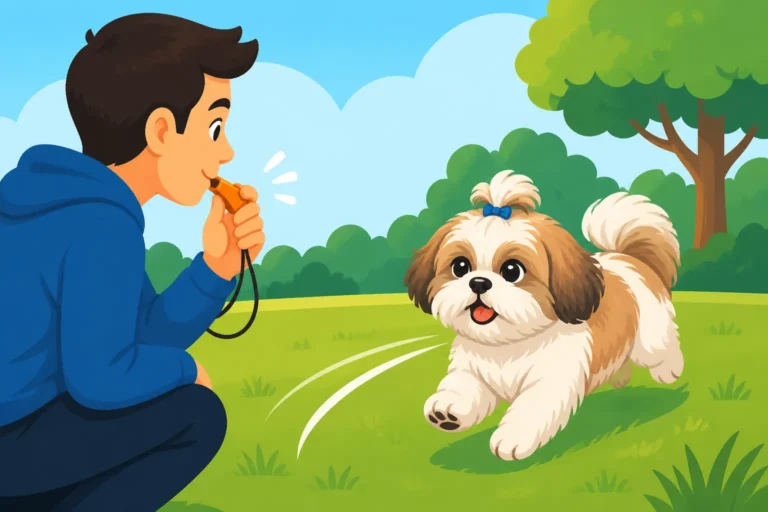
Training isn't just about obedience; it's a powerful tool for mental enrichment and building a stronger bond with your Shih Tzu. Even teaching simple cues like 'sit', 'stay', or 'down' requires focus and mental effort from your dog, which can effectively reduce barking by giving them a constructive task. Keep training sessions short and fun, perhaps five to ten minutes a few times a day, to match their attention span and keep them engaged. Five Minute Sessions With a Shih Tzu can be incredibly effective.
Beyond basic obedience, consider teaching your Shih Tzu some fun tricks! 'Spin', 'shake a paw', or even 'play dead' can be taught with positive reinforcement and high-value treats. These activities build their confidence, give them a "job" to do, and provide a positive way for them to earn your attention. Online platforms, like those offered by BAXTER & Bella, provide structured training programs that can guide you through teaching new skills and addressing specific behaviors. The more you engage their minds with learning, the less they'll feel the need to bark out of boredom or frustration. Even learning The Handful of Cues a Shih Tzu Really Needs can make a big difference.
Structured Play and Exercise
While Shih Tzus aren't typically endurance athletes, they do need regular physical activity to stay healthy and happy. A lack of appropriate exercise can lead to pent-up energy that often manifests as barking. Structured play inside the house can be a great way to burn off some of that energy, especially on days when outdoor walks aren't feasible due to weather or time constraints. Think about short games of fetch with soft toys, gentle tug-of-war, or even hiding treats around the house for them to sniff out.
Outdoor exercise is also crucial, but remember their limitations as a flat-faced breed; avoid extreme temperatures and strenuous activities. Short, frequent walks around the block are often perfect for a Shih Tzu. These walks not only provide physical exercise but also offer valuable mental stimulation through new sights, sounds, and smells. This sensory input helps tire them out in a healthy way. Integrating regular play and exercise into their day gives them a productive outlet for their energy, making them less likely to resort to barking to express themselves. For indoor options, check out Indoor Play for a Shih Tzu.
Environmental Management and Routine Adjustments
Sometimes, the solution isn't just about what your Shih Tzu does, but also about managing their environment and establishing predictable routines. A calm, well-managed environment can significantly reduce the triggers that lead to barking.
Minimizing Triggers and Sensory Overload
If your Shih Tzu is an alert barker, constantly reacting to sights and sounds outside, environmental management is key. Start by identifying what triggers their barking. Is it people walking by the window? The mail carrier? Sounds from the hallway? Once you know the triggers, you can take steps to minimize their impact. Simple solutions like closing blinds or curtains during peak trigger times can make a huge difference. You might also consider applying frosted window film to lower window panes, which allows light in but blocks your dog's view.
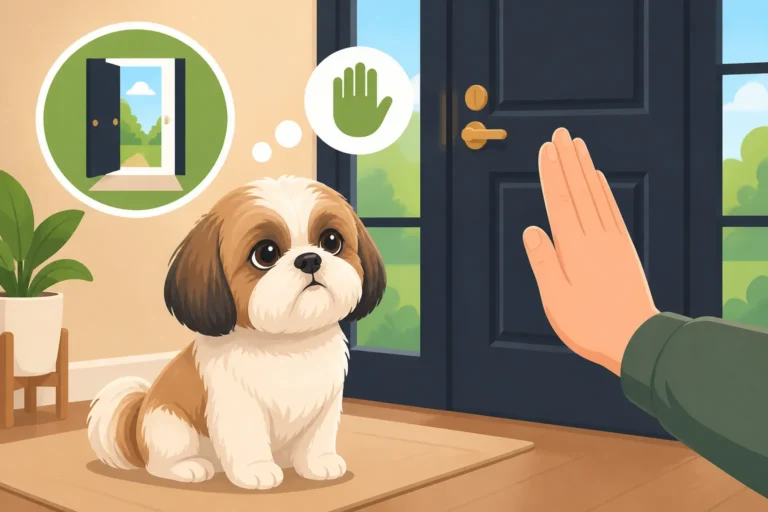
White noise machines, or even just keeping a radio or TV on softly, can help mask external sounds that might otherwise set off your Shih Tzu. Creating a dedicated "calm space" for your dog, perhaps a cozy crate or bed in a quieter part of the house, gives them a retreat from sensory overload. When it comes to the doorbell or visitors, managing greetings can prevent excitement-based barking. Teach your Shih Tzu to go to their mat or bed when the doorbell rings, rewarding them for staying calm. For more on this, see A Shih Tzu Barking at the Doorbell or Teaching a Shih Tzu to Settle on a Mat.
Establishing a Predictable Daily Schedule
Dogs thrive on routine and predictability, and Shih Tzus are no exception. A consistent daily schedule helps them feel secure, reduces anxiety, and often minimizes barking that stems from uncertainty or unmet needs. When your Shih Tzu knows when to expect meals, potty breaks, playtime, and walks, they are less likely to bark out of impatience or frustration. This structure provides a sense of control and allows them to relax, knowing their needs will be met.
Try to establish consistent times for waking up, feeding, potty breaks, walks, playtime, and bedtime. For example, if walks happen every morning at the same time, your dog learns to anticipate it quietly rather than barking to demand it. If meal times are regular, they won't feel the need to bark incessantly at you from the kitchen. A predictable schedule helps your Shih Tzu regulate their own behavior because they understand the rhythm of their day. It provides a foundational calm that can extend to all aspects of their behavior, including how they communicate.
Incorporating Relaxation and Calm Time
It’s just as important to teach your Shih Tzu how to relax as it is to keep them entertained. Many dogs, especially those prone to barking, struggle to settle down on their own. Actively teaching a "place" or "settle" command can be incredibly beneficial. This involves training your dog to go to a designated bed or mat and remain there calmly, even when there's activity around them. Start with short durations and gradually increase the time, always rewarding quiet, settled behavior.
Ensure your Shih Tzu has comfortable, quiet spots around the house where they can retreat and rest undisturbed. Providing enrichment activities that promote calmness, such as a frozen KONG stuffed with peanut butter or a lick mat, can help them de-stress and focus on a quiet, rewarding task. These types of activities encourage them to stay still and engage their licking reflex, which is naturally soothing for dogs. A dog that knows how to relax is generally a less vocal dog, as they have learned to manage their own energy levels.
When to Seek Professional Help
Despite your best efforts, sometimes barking problems can be deeply ingrained or stem from underlying issues that require expert intervention. It's important to recognize when you might need to call in a professional.
Persistent or Escalating Barking
If your Shih Tzu's barking is persistent, seems to be getting worse despite your consistent efforts, or is genuinely disruptive to your household and neighbors, it might be time to seek help. This is especially true if the barking is accompanied by other signs of distress, such as destructive behavior, increased anxiety, aggression, or a sudden change in temperament. These behaviors could indicate deeper issues than simple boredom or attention-seeking.
Maybe you’ve tried all the advice—the puzzle toys, the training, the routine—and your Shih Tzu still barks for hours when you leave the house, or becomes uncontrollably vocal every time a leaf blows past the window. This kind of escalating or deeply entrenched barking pattern suggests that the problem may be beyond what you can address with DIY solutions alone. It’s not a failure on your part, but rather an indication that your dog needs a more tailored approach to overcome their challenges. Sometimes, behaviors like excessive barking can even be symptoms of underlying medical conditions, so a vet check-up is always a good first step.
Consulting a Certified Professional Dog Trainer
When you've hit a wall with your Shih Tzu's barking, a certified professional dog trainer can be an invaluable resource. These experts have a deep understanding of dog behavior and learning theory, and they can help you pinpoint the precise triggers for your dog's barking. More importantly, they can develop a customized training plan that takes into account your dog's individual personality, your lifestyle, and the specific dynamics of your home. They will guide you through implementing effective, force-free, positive reinforcement techniques that work.
A good trainer will observe your Shih Tzu in their natural environment, identify any subtle cues you might be missing, and teach you how to communicate more effectively with your dog. They can help you understand whether the barking stems from anxiety, fear, over-arousal, or a complex combination of factors. They might introduce advanced exercises, specific desensitization protocols, or even suggest management tools you hadn't considered. Investing in professional guidance can ultimately save you a lot of stress and greatly improve your Shih Tzu's quality of life. For advice on choosing an expert, read Finding a Trainer Who Understands Toy Breeds.
Here’s a quick overview of common barking types and potential strategies:
| Barking Type | Common Triggers | Recommended Activities / Strategies |
|---|---|---|
| Boredom/Lack of Stim. | Nothing to do, repetitive routine | Puzzle toys, interactive feeders, scent games, new training tricks, structured play. |
| Alert/Territorial | People/dogs outside, doorbell, sounds | Close blinds, window film, white noise, desensitization to triggers, teach 'place' command for visitors. |
| Attention-Seeking | Human reaction to barking | Ignore barking, reward quiet behavior, structured training for attention, teach 'settle' command. |
| Anxiety/Fear | Separation, loud noises, unfamiliar things | Create safe space, consistent routine, counter-conditioning, consider professional trainer, vet consultation. |
| Frustration | Can't reach something, can't get outside | Provide access if appropriate, redirect with a toy or chew, consistent potty schedule, training for impulse control. |
Disclaimer
This article is for general informational purposes only and does not constitute professional advice. Laws, prices and regulations vary by location and change over time. Consult a qualified professional for guidance on your specific situation.