Crate Training a Shih Tzu Properly
One of the most common hurdles new Shih Tzu parents face is navigating the world of house training and establishing a sense of safety and routine for their tiny fluffball. It can feel overwhelming, especially with such a small dog who might seem extra fragile or particular. This guide will walk you through the process of crate training your Shih Tzu properly, transforming the crate from a confusing cage into a comforting den that aids in everything from potty training to creating a secure space your dog loves.
Why Crate Training a Shih Tzu Makes Sense
Many people hear "crate training" and immediately picture a sad, locked-up dog, and that's a completely understandable reaction, especially when you're looking at your sweet Shih Tzu. However, when done correctly, a crate isn't a punishment or a jail; it's a safe, personal den that can be incredibly beneficial for your dog's well-being, training, and even your peace of mind. Shih Tzus, like all dogs, have a natural den instinct, and tapping into this can make training much smoother.
The Den Instinct and Your Shih Tzu
Think about a dog's wild ancestors, or even puppies with their mother. They seek out small, enclosed spaces that feel secure and offer protection. This inherent desire for a den is deeply rooted in their nature. For your Shih Tzu, a crate can become their modern-day den – a cozy, private retreat where they can feel safe, relax, and get away from the hustle and bustle of a busy household. It's their bedroom, a place where they naturally feel less inclined to soil because they don't want to mess up their sleeping area.
This den instinct is particularly strong in puppies, and it's something we can leverage for positive training. Instead of fighting against it, we work with it. When your Shih Tzu learns to love their crate as a safe haven, it can significantly reduce anxiety and help them settle down during times of stress or overstimulation. It's a place they can retreat to, not a place they're sent to as punishment.
Crates as a House Training Aid
Let's be honest, house training a Shih Tzu can feel like an uphill battle at times. Their tiny bladders, combined with their sometimes stubborn nature, can lead to a lot of frustration and unexpected puddles. This is where the crate truly shines as a house-training tool. Dogs are naturally clean animals, and they are generally reluctant to soil their sleeping area. By creating a properly sized crate – one where your Shih Tzu can stand up, turn around, and lie down comfortably, but not one large enough to establish a "bathroom corner" – you're using this natural instinct to your advantage.
The crate acts as a short-term confinement tool, teaching your Shih Tzu to hold their bladder and bowels until they are let out for a designated potty break. When they are let out, you immediately take them to their designated potty spot outside, and reward them lavishly for going there. This direct correlation helps them understand that outside is for potty, and inside (especially their den) is for staying clean. This method, combined with a consistent schedule, can drastically shorten the house-training period and reduce those frustrating accidents. If you're struggling, remember that Why Shih Tzu House Training Takes Months is a common experience, and the crate can be a real game-changer.
Safety and Security
Beyond training, a crate offers an unparalleled level of safety and security for your Shih Tzu. Puppies, especially, are curious little explorers prone to getting into things they shouldn't – chewing electrical cords, ingesting household cleaners, or tumbling down stairs. When you can't actively supervise your Shih Tzu, the crate provides a contained, safe space where you know they can't harm themselves or destroy your belongings. This is invaluable when you need to step out, do chores, or even just take a shower.
For your Shih Tzu, the crate also offers a personal sanctuary away from potential household dangers or overwhelming situations. If you have young children, other pets, or frequent guests, the crate can be a quiet retreat where your Shih Tzu knows they won't be bothered. It gives them a sense of control over their environment, knowing they have a personal space to relax without constant interruption. This peace of mind, for both you and your dog, is truly priceless.
Choosing the Right Crate for Your Shih Tzu
Before you even begin the training process, selecting the appropriate crate is paramount. A crate that's too big defeats the purpose of house training, and one that's too small can be uncomfortable and inhumane. It’s all about creating a cozy, secure den, not a vast, empty room or a cramped cell.
Sizing the Crate for Comfort and Function
The golden rule for crate size is this: your Shih Tzu should be able to stand up, turn around, and lie down comfortably, but there shouldn't be enough extra space for them to use one end as a bathroom and the other as a bed. For puppies, you'll often need a crate with a divider that you can adjust as they grow. This ensures the crate remains the correct size throughout their development, preventing them from developing bad habits like soiling their bed.
A typical adult Shih Tzu might fit well in a 24-inch crate, but breed standards can vary, and individual dogs might be slightly larger or smaller. Always measure your specific dog and ensure they have just enough room to maneuver. If you're unsure, imagine them at their full adult size – usually between 9 and 16 pounds – and select a crate that accommodates that. You can find excellent detailed advice on selecting the right dimensions in our article Crate and Pen Sizes for a Shih Tzu.
Different Crate Types and Their Uses
There are several types of crates available, each with its own advantages. Your choice will depend on your lifestyle, your Shih Tzu's personality, and your budget.
- Wire Crates: These are the most common and versatile. They offer good ventilation, are easy to clean, and often come with dividers, making them ideal for puppies. Many models fold flat for easy storage or travel. The open visibility can be a pro or con depending on your dog; some dogs love to see what's happening, while others might feel more secure with less exposure. You can find a vast selection of wire crates on platforms like Amazon, offering different gauges of wire and door configurations.
- Plastic (Airline-Style) Crates: These crates resemble pet carriers and are often required for air travel due to their enclosed, secure nature. They provide a "den-like" feel that some Shih Tzus prefer, as they offer less visual stimulation and a greater sense of security. They are also generally quite durable and easy to clean, though they don't fold down.
- Soft-Sided Crates: Made of fabric over a collapsible frame, these are lightweight and excellent for travel, dog shows, or temporary confinement for an already crate-trained dog. However, they are not suitable for puppies or dogs prone to chewing, as they can be easily damaged. They also don't offer the same level of security as wire or plastic crates.
- Furniture-Style Crates: These are often beautiful wooden crates designed to blend seamlessly with your home decor, doubling as end tables or console tables. They offer a luxurious den experience but are typically more expensive and less portable. They are best for adult, fully crate-trained Shih Tzus who are past the chewing phase.
For a new puppy or a dog new to crating, a wire or plastic crate is usually the safest and most practical starting point due to their durability and ease of cleaning.
Making the Crate Inviting
Once you have the right crate, the next step is to make it a place your Shih Tzu wants to be. This means comfort and positive associations.
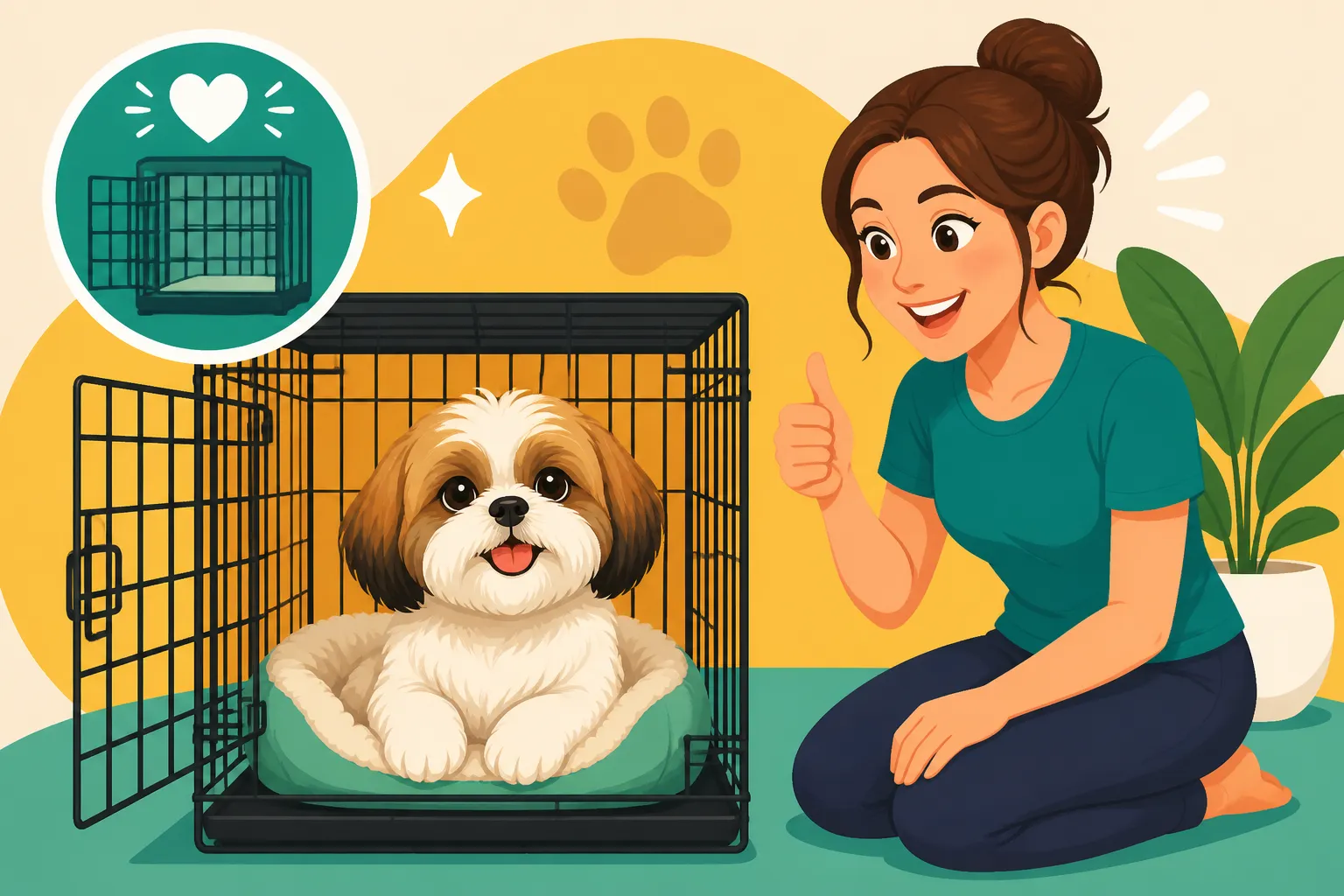
Start by placing a soft, comfortable bed or blanket inside. Look for something machine-washable that fits snugly and won't get bunched up. Avoid anything with loose threads or small parts that could be chewed off and ingested. A favorite toy or two can also be added, especially durable chew toys that can keep them occupied.
Consider covering the crate with a light blanket or a specific crate cover, especially if you have a wire crate. This mimics the feeling of a den, reducing external stimuli and making the space feel more secure and cozy. Just ensure there's still adequate ventilation. The goal is to make the crate an irresistible retreat, a personal bedroom where they can feel safe and content.
Introducing Your Shih Tzu to the Crate Positively
The key to successful crate training is to introduce it slowly and positively, ensuring your Shih Tzu never associates it with punishment or fear. This isn't a race; it's about building trust and comfort.
The First Steps: Building Positive Associations
Never, ever force your Shih Tzu into the crate. This is crucial. The goal is for them to choose to go in. Start by placing the crate in a central, family area where your Shih Tzu won't feel isolated. Leave the door open, propped open if necessary, and let them explore it at their own pace. Scatter high-value treats (think tiny pieces of cooked chicken, cheese, or their absolute favorite kibble) inside the crate and just outside the door. This entices them to sniff around and discover good things happen near and in the crate.
Another great trick is to casually drop treats into the crate when your Shih Tzu isn't looking, so they "discover" them later. You can also toss a favorite toy inside. When they voluntarily enter the crate, even for a second, praise them softly and give them another treat. Don't close the door yet. The initial phase is all about creating a positive connection, a feeling that the crate is a treasure trove of good things. Think of it as inviting them to explore a new, exciting room in their house.
Feeding Meals in the Crate
Once your Shih Tzu is comfortably entering the crate to retrieve treats or toys, you can start feeding them their meals inside. Begin by placing their food bowl just inside the crate door, allowing them to eat while standing mostly outside. Over several days, gradually move the food bowl further back into the crate. If they hesitate, don't push it; simply move the bowl back to where they were comfortable and try again tomorrow.
When they are eating comfortably with the bowl at the very back of the crate, you can start to gently close the door while they are eating. Open it again immediately after they finish. As they become more comfortable with this, increase the time the door remains closed by a few seconds after they finish their meal, slowly working up to a minute or two. Always be nearby, calm, and ready to open the door when they're done. This method reinforces the idea that the crate is a good place, associated with a highly rewarding activity like eating.
Gradual Increase of Crate Time
Once your Shih Tzu is eating meals in the crate with the door closed for a few minutes, you can begin to increase the time they spend inside while you are present. Start with very short periods, perhaps five to ten minutes, when you are still in the room. Give them a special, long-lasting chew toy or a puzzle toy stuffed with treats – something they only get in the crate. This helps distract them and makes crate time feel like a reward. Many brands offer durable chew toys that are perfect for this, designed to engage your Shih Tzu for longer periods.
Sit quietly near the crate, perhaps reading a book. When they are calm, let them out, but don't make a big fuss. You want to avoid associating coming out of the crate with an overly exciting event, which could lead to them whining to be let out. The release should be calm. Gradually, over days or even weeks, increase the duration of these sessions. Once they are comfortable with you in the room for 30 minutes or so, start leaving the room for very short periods (a minute or two) and then returning. Build up slowly. Building Alone Time in Five Minute Steps is a really helpful way to approach this, recognizing that patience is key.
For comprehensive guidance on positive reinforcement and structured training, resources like BAXTER & Bella can offer additional online classes and support that align with these gentle methods. They emphasize making training a fun and bonding experience, which is exactly what you want for crate training your sensitive Shih Tzu.
Crate Training Schedule and Routine
Consistency is the absolute backbone of successful crate training, especially for a Shih Tzu puppy. Dogs thrive on routine, and a predictable schedule will help your Shih Tzu understand when they'll be in their crate and when they'll have opportunities to play and potty.
Establishing a Consistent Crate Schedule
A typical puppy schedule will involve periods of crating interspersed with potty breaks, play, and training sessions. For a young Shih Tzu puppy (say, 8-12 weeks old), they generally need a potty break every 1-2 hours while awake, plus immediately after waking, eating, and playing.
Here's a sample schedule, which you'll need to adjust based on your specific puppy's age and needs:
| Time Slot | Activity | Notes |
|---|---|---|
| 7:00 AM | Wake up, immediately outside for potty. | Leash them, take to designated spot. Reward heavily for success. |
| 7:15 AM – 7:45 AM | Playtime, short training session, cuddle time. | Engage and bond. |
| 7:45 AM | Breakfast in crate, then short potty break immediately after. | Continue feeding in crate. Even a few nibbles warrants a potty trip. |
| 8:00 AM – 12:00 PM | Crate time (max 2-4 hours, depending on age). | Provide a safe chew toy. If older, can hold it longer. This is for when you're out or busy. |
| 12:00 PM | Outside for potty. | Immediate release for potty. Reward. |
| 12:15 PM – 1:00 PM | Play, short walk (if older), training. | |
| 1:00 PM | Lunch in crate (if applicable), then short potty break. | |
| 1:30 PM – 5:00 PM | Crate time. | Again, with a safe chew. Always adjust for age. |
| 5:00 PM | Outside for potty. | |
| 5:15 PM – 6:00 PM | Play, cuddle, training. | Dinner prep. |
| 6:00 PM | Dinner in crate, then immediate potty break. | Final meal of the day. |
| 6:30 PM – 9:00 PM | Supervised family time, gentle play. | Keep a close eye for potty cues. Last potty break before bed. |
| 9:00 PM | Last potty break outside, then into crate for the night. | Make it calm and routine. |
Remember, a young Shih Tzu cannot hold their bladder for very long. A good rule of thumb is their age in months plus one equals the maximum hours they can hold it during the day (e.g., a 3-month-old can hold it for about 4 hours). At night, they might be able to go a bit longer, but don't expect miracles initially. For more details on this, see How Long a Shih Tzu Can Hold It.
Overnight Crating and Potty Breaks
Overnight crating is one of the most effective ways to establish a solid house-training foundation. Place the crate in your bedroom initially, or at least somewhere close enough that you can hear your Shih Tzu if they wake up and need to go out. This proximity also offers comfort and helps them feel less alone during their first nights.
Expect to have to take a young puppy out for one or two potty breaks during the night. They might whine or stir, which is your cue to quietly take them straight outside, often on a leash, to their designated potty spot. Don't make it a play session; keep it dull and business-like. Once they relieve themselves, praise them calmly and immediately return them to the crate. As they get older, they'll gradually be able to sleep through the night without needing a break. If you're encountering issues with nighttime fussing, our guide A Shih Tzu Crying in the Crate at Night offers further insights.
Managing Alone Time in the Crate
Crate training isn't just for house training; it's also invaluable for teaching your Shih Tzu to be comfortable alone. As companion dogs, Shih Tzus can be prone to separation anxiety, and proper crate training can mitigate this. After your Shih Tzu is comfortable with short periods in the crate while you're home, begin to leave them in the crate when you leave the house.
Start with very short absences – literally a few minutes – and gradually increase the time. Don't make a big deal about leaving or returning. A casual "Be a good boy/girl!" and a treat in the crate before you walk out the door is sufficient. When you return, wait until they are calm before letting them out. If they are whining or barking when you return, wait for a moment of quiet before releasing them, otherwise, you're inadvertently rewarding the undesirable behavior. You don't want them to associate your return with a big, exciting reunion. This helps them understand that your departures are normal and you will always come back. Over time, your Shih Tzu will learn to relax and even nap while you're away, knowing their crate is their safe space.
Overcoming Common Crate Training Challenges
Even with the best intentions and a solid plan, crate training can present its fair share of challenges. It's easy to get frustrated, but remember that patience and consistency are your greatest allies when working with a Shih Tzu.
Addressing Crying and Whining
It's natural for a puppy or a newly crated dog to cry or whine. They're in a new environment, or perhaps feeling a bit lonely. Your first instinct might be to comfort them, but often, responding immediately can accidentally teach them that crying gets your attention and gets them out of the crate.
What to do:
- Rule out potty needs: If it's a young puppy or they haven't been out recently, always assume they need to potty first. Quietly take them out, do not play or interact beyond the potty business, and then return them to the crate.
- Ensure comfort: Check that the crate is comfortable, has water (if appropriate for the duration), and a safe, engaging chew toy. Is the room too hot or cold?
- Ignore attention-seeking: If you've ruled out potty and discomfort, and you know they've been fed and exercised, it's likely attention-seeking. This is the hardest part: you must ignore the whining. Do not talk to them, do not look at them, do not go to the crate. Wait for a lull in the crying, even a few seconds of quiet, before letting them out or acknowledging them. This teaches them that being quiet is what gets your attention.
- Gradual increase: Ensure you've followed the gradual increase in crate time. If you jumped too quickly to long periods, scale back.
It can feel heart-wrenching to hear your Shih Tzu cry, but remember you are teaching them a vital life skill: to be safe and secure in their own space. Persistence here will pay off in the long run, leading to a much more settled and confident dog.
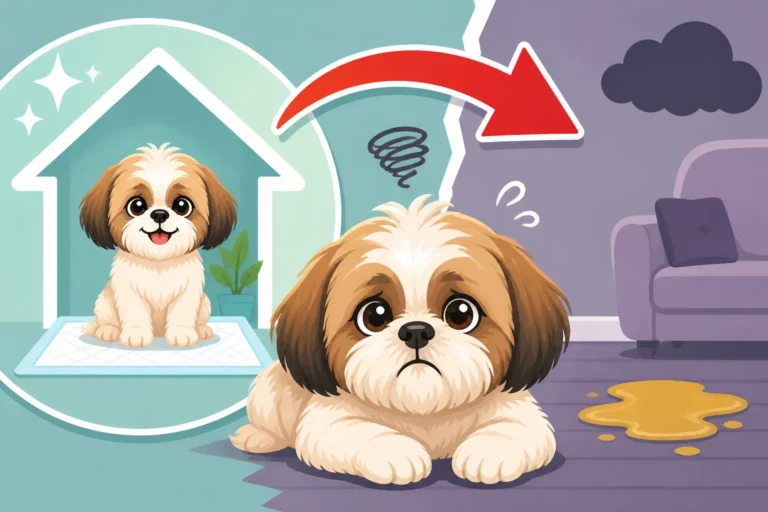
Dealing with Accidents in the Crate
An accident in the crate is, understandably, very frustrating, especially since the whole point of crating for house training is to prevent accidents. If your Shih Tzu has an accident, it usually points to one of a few common issues:
- Crate is too big: As mentioned, if there's enough room for a potty corner, they might use it. Ensure the crate is appropriately sized, using a divider if necessary.
- Too long in the crate: You might be leaving them in the crate for too long without a potty break. Review their schedule and their age-appropriate holding capacity. A young puppy simply cannot hold it for hours on end.
- Not fully empty: Did they actually go when you took them out? Sometimes dogs get distracted. Ensure you're taking them directly to the potty spot, waiting for them to relieve themselves, and rewarding them. Don't immediately bring them back in just because a few minutes have passed.
- Stress or anxiety: Some dogs may have accidents out of stress or fear, rather than a lack of control. If your Shih Tzu is panicking in the crate, this needs a different approach focusing on positive association and comfort first.
What to do:
- Clean thoroughly: Use an enzymatic cleaner specifically designed for pet odors to completely eliminate the scent. If the scent remains, your Shih Tzu will be drawn back to that spot.
- Don't punish: Never scold or punish your Shih Tzu for an accident in the crate. This will only teach them to fear the crate and associate you with punishment, making training much harder.
- Re-evaluate: Adjust the crate size, shorten crate times, increase potty breaks, and reinforce positive associations with the crate.
- Vet check: If accidents persist despite proper sizing and schedule, consult your vet. There could be an underlying medical issue, such as a urinary tract infection.
Avoiding Crate Aversion
Crate aversion happens when a dog develops a strong dislike or fear of the crate. This usually stems from negative experiences, such as being forced into the crate, left in too long, or used for punishment. A Shih Tzu who is crate-averse will resist going in, whine excessively, pant, drool, or even try to break out.
How to avoid it (and what to do if it's already a problem):
- Never use as punishment: The crate should never be used as a place to send your Shih Tzu when they've been "bad." This instantly creates a negative association.
- Go back to basics: If your Shih Tzu is showing signs of aversion, you need to completely restart the positive introduction process. Forget about closing the door for a while. Just make the crate a source of treats, toys, and good things. Leave the door open, scatter treats, feed meals inside without closing the door.
- Make it super appealing: Add extra cozy bedding, special high-value chew toys they only get in the crate, and perhaps a comfortable blanket over it to enhance the den-like feel.
- Short, positive intervals: Only ask for very short durations initially, and always end on a positive note before your Shih Tzu gets distressed.
- Professional help: If crate aversion is severe, consider consulting a professional dog trainer or behaviorist. They can offer tailored strategies and support to help your Shih Tzu overcome their fear. Many online training programs, such as those offered by BAXTER & Bella, also have modules specifically designed to address crate reluctance and build positive associations.
When to Stop Using the Crate
Crate training is a wonderful tool, but it's important to remember it's just that – a tool. For many dogs, the crate transitions from a necessary training aid to a beloved personal den. For others, it might become less central to their routine as they mature and prove themselves trustworthy.
Knowing When Your Shih Tzu Is Ready for Less Crate Time
There's no universal age or specific milestone for when a Shih Tzu is "ready" to spend less time in the crate. It's a gradual process based on their individual maturity, reliability in house training, and overall behavior.
Here are some signs your Shih Tzu might be ready for more freedom:
- Consistent house training: They haven't had an accident in the house for several months.
- No destructive chewing: They reliably chew on their own toys and don't get into forbidden items when unsupervised.
- Calm when left alone: They are relaxed and don't show signs of separation anxiety when you leave them uncrated for short periods.
- Good behavior: They consistently follow household rules and don't engage in problematic behaviors.
Even when they reach this stage, it doesn't mean you ditch the crate entirely. It simply means you can begin to offer them more freedom, perhaps starting with a dog-proofed room or a larger playpen while you're away for short periods.
Transitioning to an Open Crate or Dog Bed
When your Shih Tzu is consistently proving trustworthy, you can begin to transition them away from strict crate confinement. One popular method is to simply leave the crate door open. Many dogs, having learned to associate the crate with safety and comfort, will continue to use it as their personal den, even when they have the option to roam.
Another option is to introduce a comfortable dog bed in the area where the crate used to be, or in a specific corner of a room. This provides them with a designated resting spot that is still their own. You can alternate between the open crate and the dog bed to see what they prefer. Some Shih Tzus will continue to seek out the enclosed feeling of the crate, while others will enjoy the openness of a dog bed. The key is to make the transition gradual and allow your Shih Tzu to dictate their comfort level.
Crate Usage in Adulthood (e.g., Travel, Emergencies)
Even if your adult Shih Tzu rarely spends time in their crate at home, keeping it accessible and occasionally using it for short, positive periods can be incredibly beneficial. The crate remains a valuable tool for:
- Travel: Whether it's a car trip to the vet, a road trip vacation, or even flying (where specific airline-approved crates are mandatory), a Shih Tzu who is comfortable in a crate will be less stressed during travel. This familiarity can be a huge comfort.
- Vet visits or boarding: If your Shih Tzu ever needs to stay overnight at the vet or a boarding facility, being comfortable in a kennel environment will significantly reduce their stress and anxiety. It prevents the added trauma of a strange environment and an unfamiliar confinement.
- Post-surgical recovery: If your Shih Tzu ever undergoes surgery, veterinarians often recommend crate rest to limit movement and aid healing. A dog already comfortable in a crate will have a much smoother recovery than one suddenly forced into confinement.
- Temporary confinement: There might be times when you need to temporarily confine your Shih Tzu for their safety or the safety of guests (e.g., during a chaotic party, when house repairs are happening, or if you have very young, unsupervised children visiting).
By maintaining a positive association with the crate, even an adult Shih Tzu who doesn't use it daily will have this valuable skill for unforeseen circumstances. It's truly one of the most useful and lifelong investments you can make in your Shih Tzu's training and well-being.
Disclaimer
This article is for general informational purposes only and does not constitute professional advice. Laws, prices and regulations vary by location and change over time. Consult a qualified professional for guidance on your specific situation.