Cleaning Shih Tzu Accidents Properly
It's one of those moments that can truly test your patience as a Shih Tzu parent: you turn your back for a second, and there it is – a little puddle or pile right where it shouldn't be. You might feel frustrated, wondering if your furry friend will ever fully grasp house training. But here's the thing: cleaning up isn't just about removing the visible mess; it's about eliminating the invisible signals that tell your Shih Tzu, "Hey, this is a good spot to go again!" This guide will walk you through exactly how to properly clean those accidents, ensuring you break the cycle and keep your home fresh and inviting for both you and your sweet companion.
Why Proper Cleaning is Absolutely Crucial for Shih Tzus
When your adorable Shih Tzu has an accident indoors, it's easy to just grab a paper towel and some standard cleaner, wipe it up, and assume the job is done. But for our little lion dogs, who have an incredible sense of smell far more acute than our own, a quick surface clean just isn't enough. What we might perceive as gone, they still smell as a giant neon sign pointing to their personal bathroom spot. This fundamental difference in perception is why proper cleaning is not just about hygiene, but a critical component of successful house training.
The Invisible Scent Trail: Why Dogs Revisit Spots
Imagine your Shih Tzu, with their nose practically to the ground, sniffing out the world. Their olfactory senses are phenomenal, capable of detecting microscopic scent molecules long after you've visually cleaned an area. When they have an accident, especially urine, they deposit more than just liquid; they leave behind uric acid crystals and pheromones. These aren't just invisible to the human eye, but often imperceptible to our noses once the initial moisture has dried. However, for a Shih Tzu, these remnants are a clear signal, an instinctual invitation to "go here again." It's like leaving a breadcrumb trail that only they can see, leading them right back to the scene of the crime.
This strong instinct means that if you merely wipe away the surface mess, the underlying odor signature remains, embedded deep within carpet fibers, grout lines, or even furniture upholstery. Your Shih Tzu might be trying their best to hold it, but when they walk past that spot and catch a whiff of their own scent, their bladder tells them, "Oh, this is where we do our business!" This is a huge reason why house training can feel like a losing battle, and you might experience A Shih Tzu Backsliding on House Training if these scent markers aren't truly eradicated. Without breaking this scent association, you're fighting an uphill battle against their natural instincts.
Shih Tzu Sensitivity: More Than Just a Smell
Beyond the instinct to re-mark, Shih Tzus can be particularly sensitive little creatures. Their comfort and sense of security in their home environment are paramount, and constant accidents can create stress for them too. A Shih Tzu might pick up on your frustration even if you don't overtly express it, leading to anxiety around potty time. Moreover, their small size means that even a "small" accident can feel like a significant amount of moisture on a carpet, soaking deeper than you'd expect.
Their proximity to the floor also means they are constantly exposed to these lingering smells. A larger dog might not notice the subtle scent nearly as much as a Shih Tzu whose nose is often just inches from the floor where the accident occurred. This constant exposure can reinforce the "bathroom spot" idea even more strongly. Understanding this heightened sensitivity helps us realize that simply masking odors with air fresheners or perfumed cleaners isn't enough; we need to actually destroy the odor-causing molecules to make the spot truly unappealing for future use. A clean, fresh-smelling home is not only better for you, but it contributes significantly to your Shih Tzu's sense of security and successful house training.
The Immediate Steps: What to Do the Moment You Spot an Accident
Discovering a fresh accident can trigger a groan or a sigh, but the moments immediately following the discovery are crucial. Your quick and correct actions can make all the difference in preventing the mess from becoming a permanent stain and, more importantly, from becoming a repeat "potty zone" for your Shih Tzu. Resist the urge to yell or punish your dog; they won't understand why you're upset, and it can actually create fear and more covert accidents in the future. Instead, focus on efficient clean-up.
Blotting, Not Rubbing: Saving Your Surfaces
The very first thing you should do is grab a thick stack of clean paper towels, an old towel, or even a few sheets of newspaper. The goal here is absorption, not scrubbing. Press down firmly on the wet spot, allowing the absorbent material to soak up as much of the liquid as possible. If it's a solid accident, carefully pick up the bulk of it with gloved hands or a paper towel, being careful not to spread it. Then, continue blotting the remaining moisture.
Rubbing, while it might feel like you're cleaning more effectively, actually pushes the liquid deeper into carpet fibers, upholstery foam, or even the subfloor beneath your hard surfaces. This makes it incredibly difficult to remove all the odor-causing bacteria and can lead to recurring smells and stains. Think of it like a sponge: you want to press the liquid into the sponge, not rub it around the surface. Keep blotting until no more moisture transfers to your clean paper towels. For carpets, you might even stand on the paper towels to apply maximum pressure, drawing out as much as possible from deep within the pile.
Containment and Quick Action
Once the initial blotting is done, it's essential to prevent the spread and prepare for deeper cleaning. For solid messes, after removing the bulk, you might gently scrape any residue with a dull knife or spatula before blotting. For liquid accidents, especially larger ones, you'll want to gently flood the area with plain water (for urine) after blotting, then blot again. This helps to dilute the remaining urine and makes it easier to extract. Be careful not to use too much water, especially on carpets, as it can soak the pad and subfloor, leading to mildew.
After this initial water rinse and blot, cover the damp area with a few layers of paper towels, then place a heavier object on top, like a stack of books wrapped in plastic or a heavy pot. This continued pressure will help draw out even more moisture as the area sits. Leave it for at least 30 minutes, or even longer for very wet spots. The quicker you act, the less time the accident has to penetrate materials and set, making it much easier to achieve a truly clean, odor-free result. Remember, your Shih Tzu's keen nose is already processing the incident, so interrupting that scent message fast is key.
Deep Cleaning Techniques for Different Surfaces
Different surfaces in your home require different approaches to truly eliminate pet accident odors and stains. What works wonderfully on carpet might damage hardwood, and vice-versa. Understanding the right tools and techniques for each type of surface is paramount in completely erasing the evidence of a Shih Tzu mishap. This isn't just about making it look clean, but making it smell clean to your sensitive pup.
Carpets and Rugs: Reaching the Pad Below
Carpets are notoriously tricky when it comes to pet accidents because urine can soak through the fibers, into the padding, and sometimes even into the subfloor. A superficial cleaning won't cut it. After blotting thoroughly as described above, you absolutely need an enzymatic cleaner. These aren't just air fresheners; they contain beneficial bacteria that literally "eat" the uric acid crystals and other odor-causing organic matter. You can find highly-rated options on platforms like Amazon, often with glowing reviews from other pet owners who have tackled similar challenges.
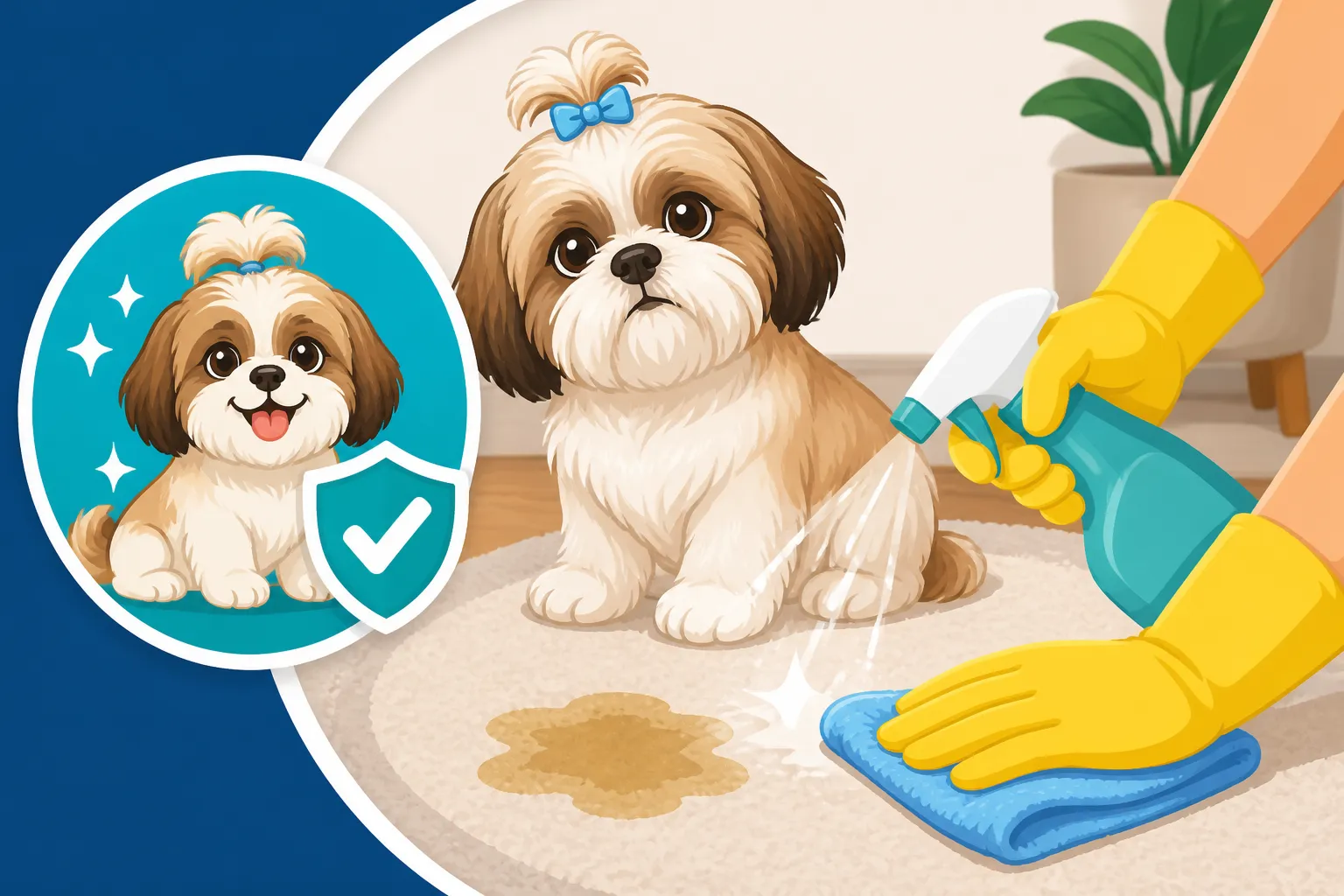
To use an enzymatic cleaner properly, saturate the affected area, extending beyond the visible stain, to ensure it reaches everywhere the urine might have spread, including the carpet pad. Let it sit for the time recommended on the product label – usually 10-15 minutes, sometimes longer. This dwell time is crucial for the enzymes to do their work. Then, blot it up again, repeating the process if necessary. Avoid scrubbing vigorously, as this can damage carpet fibers. Once you've blotted the cleaner away, cover the area with a towel and place a heavy object on it overnight to continue drawing out moisture and residual cleaner. In some stubborn cases, especially with older, set-in stains or recurring spots, a professional carpet cleaner might be necessary, as their equipment can extract deeper moisture and apply stronger enzyme treatments. Cleaning Shih Tzu Accidents Properly truly means getting to the root of the problem, not just the surface.
Hardwood and Tile: Preventing Damage and Residue
Hard floors like hardwood, laminate, tile, and vinyl might seem easier to clean, but they come with their own challenges. While liquids won't soak into the material in the same way they do carpet, they can seep into grout lines on tile, or worse, between planks of hardwood or laminate, causing warping, staining, and lingering odors beneath the surface. For fresh accidents on hard floors, blot up as much as possible immediately.
Once blotted, use a pet-safe, non-acidic cleaner. For tile, you can use a diluted enzymatic cleaner, allowing it to penetrate the grout lines, then wipe clean. For hardwood or laminate, avoid excessive moisture and highly acidic or alkaline cleaners, which can damage the finish. A specialized wood floor cleaner or a very dilute enzymatic cleaner (test in an inconspicuous spot first!) applied with a damp cloth and immediately wiped dry is often best. The key is to ensure no liquid is left to sit in crevices. For urine that has seeped into grout or wood, you might need to apply the enzymatic cleaner and let it dwell longer, gently scrubbing grout with a brush, then thoroughly wiping and drying the area. If you're dealing with a Shih Tzu who likes to lift a leg on furniture or walls, remember to clean those vertical surfaces just as meticulously. A Shih Tzu Lifting a Leg on the Sofa can be a frustrating habit that requires both thorough cleaning and behavior modification.
Upholstery and Fabrics: Tackling Softer Surfaces
Furniture, curtains, and other upholstered items are common targets for Shih Tzu accidents, especially if they spend a lot of time on the sofa. Cleaning these can be particularly challenging because the fabric often has a foam or batting core that can absorb and hold odors deeply. As always, the first step is immediate and thorough blotting of any liquid, or careful removal of solids.
After blotting, you'll want to use an enzymatic cleaner specifically formulated for upholstery. Test it on an inconspicuous area first to ensure it doesn't cause discoloration or damage. Lightly spray the affected area, making sure to penetrate the fabric where the urine has soaked. Don't over-saturate, as too much moisture can lead to mildew in the padding. Let the cleaner dwell for the recommended time, then blot it up with a clean, dry cloth. You might need to repeat this process several times. For very deep stains or odors, a wet/dry vac with an upholstery attachment can be incredibly helpful for extracting the cleaner and moisture. You can find portable versions of these on Amazon that are handy for quick clean-ups. For larger, heavily soiled items, professional upholstery cleaning might be the most effective solution to truly eradicate all traces of the accident.
| Surface Type | Initial Action | Recommended Cleaner | Important Considerations |
|---|---|---|---|
| Carpet & Rugs | Blot immediately | Enzymatic cleaner (pet-specific) | Saturate to reach pad, allow dwell time, blot, heavy object to draw out moisture |
| Hardwood/Laminat | Blot immediately | Pet-safe wood cleaner or dilute enzymatic cleaner | Avoid excessive moisture, wipe dry immediately, check for seepage into seams |
| Tile & Grout | Blot immediately | Dilute enzymatic cleaner (allow to penetrate grout) | Scrub grout gently, ensure no standing liquid, dry thoroughly |
| Upholstery | Blot immediately | Enzymatic cleaner (upholstery-safe formula) | Test in hidden area, don't over-saturate, blot, consider wet/dry vac for extraction |
| Walls/Vertical | Wipe immediately | All-purpose cleaner, then enzymatic spray | Ensure full coverage, wipe clean, consider odor-sealing primer if recurring marking |
Addressing Lingering Odors and Preventing Re-marking
Even after you've cleaned the visible mess, sometimes a faint odor lingers, a subtle whisper that only your Shih Tzu can hear. This lingering scent is the biggest culprit behind re-marking. The ultimate goal isn't just a clean floor, but a clean slate for your Shih Tzu's house training journey. This involves not only thorough cleaning but also proactive steps to break the cycle of revisiting accident spots.
The Power of Enzymatic Cleaners
I cannot stress this enough: enzymatic cleaners are your best friend in the fight against pet odors. Unlike regular cleaners that simply mask smells with perfume, enzymatic cleaners use natural biological agents (enzymes) to break down and completely neutralize the organic molecules that cause odors and stains. These enzymes target the uric acid crystals in urine, which are the main culprits for that persistent "dog pee" smell. If you've ever cleaned a spot repeatedly only for the smell to return on a humid day, those uric acid crystals are likely rehydrating and releasing their stench.
When using an enzymatic cleaner, be generous. Many people don't use enough product, or don't let it sit long enough. The area needs to be thoroughly saturated (especially in carpets, to reach the padding) and allowed to air dry completely for the enzymes to do their work effectively. This might take hours, or even a full day. Resist the urge to scrub the cleaner away; the enzymes need time to break down the odor source. If you're dealing with older, dried stains, you might need to re-wet the area with water first to "wake up" the dormant uric acid crystals before applying the enzyme cleaner. Investing in a good quality enzymatic cleaner is non-negotiable for any Shih Tzu owner, especially if you're trying to resolve Why House Training a Shih Tzu Runs Into Months. You can easily find highly effective options through retailers like Amazon.
Deterrents and Reinforcement for Future Success
Once an area is truly clean and odor-free, you need to make sure your Shih Tzu doesn't develop new habits or revert to old ones. While enzymatic cleaners remove the attraction, sometimes a mild deterrent can help during the transition period. Some people use a light spray of diluted white vinegar or citrus scent on the cleaned spot, as many dogs dislike these smells. However, be cautious and always test on an inconspicuous area, as these can sometimes stain or damage certain materials. Commercial pet deterrent sprays are also available, which contain bitter or unpleasant tastes/smells to discourage marking, but these should only be used after the area is thoroughly cleaned.
The most important "deterrent," however, is consistent positive reinforcement for appropriate potty behavior. Every time your Shih Tzu goes in the right spot – whether it's outside or on an Indoor Grass Trays for a Shih Tzu – celebrate it! Give them enthusiastic praise, a small, high-value treat, and perhaps a quick game of fetch. This helps them understand clearly where their bathroom should be. If you're struggling with house training, consider revisiting foundational training techniques, perhaps with online resources like those offered by BAXTER & Bella, which provide structured guidance. Also, manage your Shih Tzu's environment carefully. If there's a problem area they keep returning to, block access to it for a while, or supervise them closely whenever they are in that room. Consider using Wraps for a Shih Tzu That Marks if you have a male Shih Tzu prone to lifting his leg, as this can catch accidents while you reinforce outdoor habits. Consistency, patience, and truly effective cleaning are the cornerstones of a successfully house-trained Shih Tzu.
Disclaimer
This article is for general informational purposes only and does not constitute professional advice. Laws, prices and regulations vary by location and change over time. Consult a qualified professional for guidance on your specific situation.