The Shih Tzu Topknot and Keeping Hair Out of the Eyes
If you're a Shih Tzu owner, you know the struggle is real: that gorgeous, flowing hair, especially around their sweet little faces, often has a mind of its own. It's not just about aesthetics; hair constantly falling into their eyes can lead to serious irritation, infections, and discomfort for your beloved companion. This guide will walk you through everything you need to know about mastering the Shih Tzu topknot and other essential practices to keep your pup's eyes healthy and happy.
The Crucial Purpose of the Shih Tzu Topknot: More Than Just Pretty Hair
Let's be honest, those adorable topknots on Shih Tzus are often seen as a cute fashion statement, a hallmark of the breed's regal appearance. But for seasoned Shih Tzu parents, we know it's so much more than that. It's a fundamental part of their care, directly impacting their health and comfort. Ignoring the hair around their eyes isn't just about messy looks; it can genuinely put their delicate vision at risk.
The Shih Tzu's Unique Coat and Eye Structure
Shih Tzus are renowned for their luxurious double coat, a cascade of hair that grows long and continuously. This beautiful feature, coupled with their brachycephalic (flat-faced) structure and prominent eyes, creates a perfect storm for potential eye problems if not managed diligently. Their eyes, already a bit more exposed due to their facial structure, are highly susceptible to irritation from stray hairs. Think about it: imagine constantly having a hair poking you in the eye all day long! It's a constant annoyance that can escalate quickly.
The fine, silky texture of a Shih Tzu's facial hair means it easily drifts and falls forward. Unlike some breeds where facial hair grows away from the eyes or is coarse enough to stay put, a Shih Tzu's "fringe" requires consistent attention. This isn't a problem unique to show dogs with elaborate updos; even a pet Shih Tzu with a shorter cut needs careful hair management around their eyes. Understanding this unique combination of coat and facial anatomy is the first step to truly appreciating why the topknot, or some form of hair restraint, is non-negotiable for their well-being.
Health Implications of Untamed Facial Hair
When facial hair is left to grow wild, it can cause a myriad of health issues for your Shih Tzu. The most immediate concern is constant irritation. Hairs rubbing against the cornea can cause abrasions, leading to painful Shih Tzu Corneal Ulcers From a Shallow Socket. These aren't just minor scratches; ulcers can be deep, prone to infection, and, if severe enough, can even threaten your dog's eyesight. It's a vet visit nobody wants, often requiring extensive treatment, special drops, and sometimes even surgery.
Beyond physical irritation, damp hair trapped against the skin around the eyes can create a breeding ground for bacteria and yeast. This can exacerbate tear staining, making the area perpetually wet and smelly. More seriously, constant rubbing can lead to chronic inflammation, and in some cases, contribute to conditions like Pigmentary Keratitis in a Shih Tzu, where dark pigment spreads across the cornea, gradually obscuring vision. In extreme situations, persistent irritation and trauma to the eye area, especially from rough handling of an unkempt head, could even contribute to a terrifying emergency like Why a Shih Tzu Eye Can Leave the Socket. Taking preventative measures is always easier and less stressful than dealing with a full-blown medical crisis.
Building Your Topknot Arsenal: Essential Tools for Success
Before you even think about grabbing a hair tie, you need to make sure you have the right tools for the job. Just like a painter needs a good brush, a Shih Tzu parent needs the proper grooming instruments to create a comfortable and lasting topknot. Skimping on quality here can lead to frustration for both you and your pup, potentially making the process unpleasant. Investing in a few key items will save you time, tears, and money in the long run.
Brushes, Combs, and Scissors for Delicate Work
First up, a good quality pin brush and a metal comb are your best friends. The pin brush, with its widely spaced, smooth pins, is excellent for gently working through the longer hair on the head without pulling. After brushing, a fine-toothed metal comb is crucial for accurately sectioning the hair and ensuring there are no tangles before you attempt to secure it. Tangles will make the topknot uncomfortable and more likely to fall out. For stray hairs that simply won't cooperate or for precise trims around the eyes and nose, a pair of blunt-nosed grooming scissors is indispensable. Always choose blunt-nosed scissors to minimize the risk of accidental pokes or cuts, especially around such a sensitive area. You can find a wide array of these tools from reputable online retailers like Chewy or Amazon, often in sets designed for small breeds.
When it comes to brushing, remember it's not just about the surface. Your Shih Tzu has a double coat, so you need to ensure you're getting through both layers. This is especially true for the hair that will make up the topknot. If you only brush the top layer, mats will form closer to the skin, making the topknot painful to put in and take out. Gently part the hair and brush from the roots outwards, making sure every strand is smooth and free of knots. This thorough preparation is key to a comfortable topknot that lasts.
Choosing the Right Hair Bands and Clips
This is where many owners go wrong, leading to broken bands, hair breakage, or a topknot that simply doesn't stay put. Avoid human hair ties, especially those with metal closures, as they can snag and damage delicate Shih Tzu hair. Instead, opt for small, soft, coated elastic bands specifically designed for pet grooming. Latex bands, often found in pet supply stores or on Amazon, are a popular choice because they provide good grip without being too harsh on the hair. Look for bands that are proportionate to your dog's hair volume – too large, and they'll slip; too small, and they'll snap or pull too tightly.
You might also consider small hair clips or barrettes, particularly if you're just starting out or if your Shih Tzu has less hair. These can be easier to put in quickly, though they might not hold as securely as an elastic band for a full day of play. When selecting bands, consider color as well; while not essential for function, clear or coat-matching bands can be less conspicuous if you prefer a more natural look. It's always a good idea to have a small stash of bands on hand, because they do tend to disappear or break after a few uses.
Supportive Grooming Products
To make the topknot process even smoother, a few additional products can be incredibly helpful. A good detangling spray can work wonders on stubborn knots and reduce static, making the hair easier to comb and band. Spritz a little on the section of hair you're working with before brushing. Some owners also like to use a tiny bit of pet-safe hair gel or mousse to help hold stray wisps in place, especially if their Shih Tzu has very fine, flyaway hair. Be mindful to use products specifically formulated for dogs, as human products can contain ingredients that are irritating or even harmful to their skin and eyes.
Finally, don't forget the treats! Positive reinforcement is paramount, especially when introducing something new like a topknot. Have a few high-value, tiny treats ready to reward your Shih Tzu for patience and cooperation during the grooming session. This helps create a positive association with the process, making future topknot applications much easier for everyone involved.
Mastering the Basic Shih Tzu Topknot: A Step-by-Step Tutorial
Now that you have your toolkit ready, it's time to put it to use! Tying a topknot might seem intimidating at first, but with a little practice and patience, you'll become a pro. Remember, consistency is key, and every session is a step towards making your Shih Tzu more comfortable with the process. The goal is a secure, comfortable topknot that effectively keeps hair out of their eyes.
Preparing the Coat for the Topknot
Before you even think about sectioning, your Shih Tzu's hair must be clean, dry, and completely tangle-free. This isn't just a suggestion; it's a non-negotiable step. Trying to band dirty or matted hair will pull, cause pain, and result in a topknot that either falls out immediately or causes discomfort and breakage. Start with a freshly bathed and thoroughly dried Shih Tzu. If it's not bath day, a quick spritz of detangler and a thorough brush-through will suffice. You might even consider doing a Bathing a Full Coat Shih Tzu on Schedule as part of your overall grooming routine to ensure the hair is always manageable.
Using your pin brush, gently brush all the hair on their head and face upwards and away from their eyes. Pay special attention to the corners of the eyes and the bridge of the nose, where hair tends to be most troublesome. Then, follow with your metal comb to catch any lingering tangles and to ensure the hair is smooth and ready for sectioning. This preparation step sets the foundation for a successful and comfortable topknot. If you encounter any mats, gently work them out with your fingers and detangler spray rather than pulling.
Sectioning and Securing the Hair
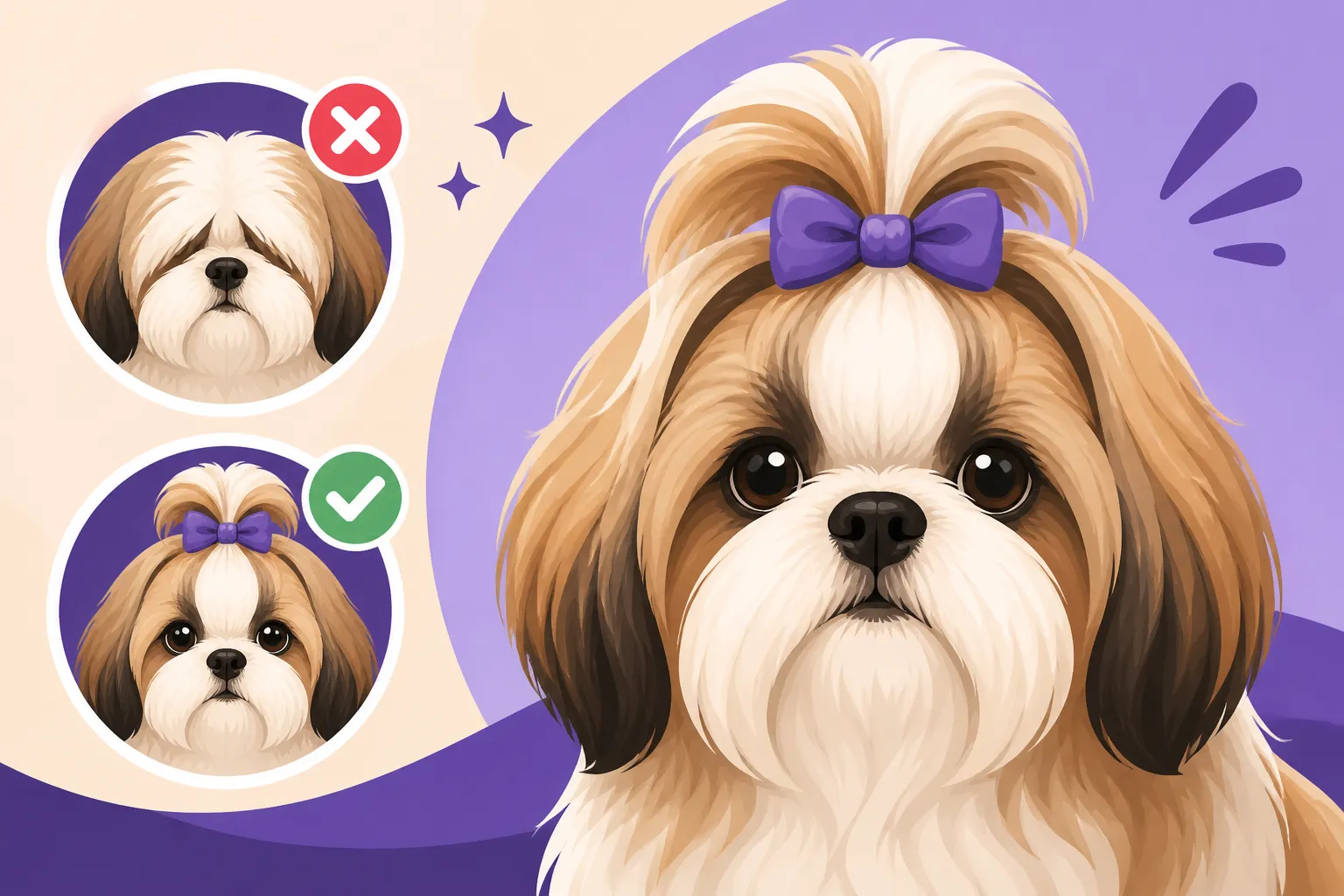
This is the most critical part. You want to gather all the hair that falls into or near their eyes. Imagine a line going from the outer corner of one eye, up over the top of their head, to the outer corner of the other eye. You'll be gathering all the hair from the bridge of the nose, between the eyes, and above this imaginary line. Use your fine-toothed metal comb to create a clean, crisp part across the top of their head, just behind their eyes. This section of hair should include their "fringe" and any hair that would naturally fall into their face.
Once you have your section, hold it firmly but gently upwards. Use a small, coated elastic band. Wrap the band around the gathered hair two or three times, depending on the thickness of their coat, ensuring it's snug but not too tight. You should be able to comfortably slip a pinky finger under the band. The band should sit on top of their head, not pulling at the skin or ears. Sometimes, a second, decorative bow can be added over the elastic band for extra flair, but the primary elastic is for function. The aim is to create a neat little ponytail on top of their head that lifts all the interfering hair out of the way.
Tips for a Neat and Comfortable Topknot
For a truly neat topknot, consider the angle at which you gather the hair. If you pull it too far back, it might not fully clear the eyes at the front. Too far forward, and it can look a bit odd. Aim for the topknot to sit directly on the crown of their head. After securing the band, gently smooth down any stray hairs around the edges of the section with your comb or a damp finger. A tiny touch of pet-safe styling gel can help these flyaways stay put.
Comfort is paramount. Regularly check the topknot throughout the day. If your Shih Tzu is rubbing their head excessively or pawing at it, the band might be too tight, or you might have caught some skin. Remove it and try again, ensuring you gather only hair, not skin. Also, be mindful of how long the topknot stays in. It's generally a good idea to remove it before bedtime to give their hair and scalp a break, preventing breakage and allowing the skin to breathe. Then, repeat the process in the morning. Consistency and comfort will help your Shih Tzu associate the topknot with feeling better, not with pain. Tying a Shih Tzu Topknot Step by Step might seem daunting, but it quickly becomes second nature.
Beyond the Traditional Topknot: Other Hair Management Options
While the topknot is a classic and effective solution, it's not the only way to keep your Shih Tzu's eyes clear. Some owners find the daily upkeep of a topknot too time-consuming, or perhaps their particular Shih Tzu simply refuses to tolerate it. Luckily, there are excellent alternatives that prioritize your dog's comfort and health while still maintaining their adorable appearance. The key is finding what works best for your lifestyle and your dog's personality.
The Practical Puppy Cut for Facial Hair
One of the most popular alternatives, especially for pet Shih Tzus, is the "puppy cut" or a shorter trim around the face. This involves carefully trimming the hair around the eyes, nose, and mouth to a shorter, more manageable length. The beauty of the puppy cut is that it drastically reduces the need for daily banding and brushing of the face, making maintenance much simpler. Instead of tying the hair up, you're effectively cutting it short enough so it can't fall into the eyes. The Shih Tzu Puppy Cut and Its Upkeep is a fantastic option for many.
When opting for a puppy cut, it's crucial to find a groomer experienced with Shih Tzus and their delicate facial structure. They know exactly how short to go without exposing too much of the eye or making the dog look disproportionate. For those who want to try at home, always use blunt-nosed scissors and trim only a tiny bit at a time, moving slowly and carefully. Aim to create a neat, rounded look that frames the face but keeps the hair well away from the eyes. Regular trims, usually every 4-6 weeks, will be necessary to maintain this style, but it's a lot less effort than a daily topknot.
Trimming the Fringe for Quick Relief
If you're not ready for a full puppy cut, or if you still prefer a longer body coat, a simple fringe trim can offer significant relief from eye irritation. This method focuses specifically on the hair directly above and between the eyes. Instead of gathering and banding, you use those blunt-nosed scissors to snip away the offending hairs. The goal is to create a clean line across the brow, ensuring no hair can fall forward into the eyes.
This is a great interim solution between professional grooming appointments or for Shih Tzus with lighter hair density. To perform a fringe trim, hold your Shih Tzu's head steady, gently lift the hair on the brow, and carefully trim a small amount horizontally, creating a "bangs" effect. Always point the scissors downwards, away from the eyes, and never cut straight across the eye line. For detailed guidance, you might want to look into Trimming Face Hair Away From Shih Tzu Eyes. Remember, even with trimming, regular checks are necessary, as hair grows constantly, and those pesky strands will eventually make their way back towards the eyes.
Professional Grooming Considerations
No matter which method you choose, professional grooming plays a vital role in maintaining your Shih Tzu's coat and eye health. Even if you're diligent with daily topknots or home trims, a professional groomer has the tools, expertise, and experience to give your Shih Tzu a thorough and safe trim. They can tackle those tricky areas around the eyes, clean out ear canals, and ensure the entire coat is free of mats. Many owners bring their Shih Tzus to a groomer every 4-8 weeks, depending on coat length and growth rate.
When booking with a groomer, be very clear about your preferences for facial hair. If you want to maintain a longer topknot, tell them. If you prefer a short, neat face trim, explain that too. Good communication ensures your Shih Tzu comes home looking great and, more importantly, feeling comfortable and healthy. Don't be afraid to ask for advice on home grooming tools or techniques; a good groomer will be happy to share their knowledge to help you maintain your dog's coat between visits.
| Hair Management Style | Pros | Cons | Maintenance Frequency | Best For |
|---|---|---|---|---|
| Traditional Topknot | Keeps all hair out of eyes; classic look | Daily application; requires dog cooperation | Daily | Show dogs, owners who enjoy daily grooming |
| Puppy Cut (Face) | Low daily maintenance; very practical | Requires regular professional trims; changes look | Every 4-8 weeks (trim) | Busy owners, dogs who dislike hair bands |
| Fringe Trim | Quick relief; maintains body coat length | Hair grows back quickly; still requires vigilance | Every 2-3 weeks (trim) | Interim solution, less dense facial hair |
| Professional Groom | Thorough, precise, full-body care | Cost involved; requires scheduling | Every 4-8 weeks | All Shih Tzus as primary or supplementary care |
Addressing Common Topknot Troubles: Keeping It In Place and Comfortable
It's rare for a Shih Tzu owner to tie a perfect topknot on their first try, or even their tenth! And even when you think you've mastered it, challenges can arise. Hair bands break, topknots slip, and some Shih Tzus simply develop an aversion to having their hair handled. These frustrations are completely normal, but with a little troubleshooting, most issues can be resolved, ensuring your pup remains comfortable and their eyes stay clear.
When the Topknot Won't Stay: Slipping and Breaking Bands
One of the most common complaints is a topknot that just won't stay put. If the elastic band is constantly slipping down or the hair is falling out, first check the type and size of your bands. As discussed earlier, opt for small, coated latex bands specifically for pet grooming. Human hair ties are generally too large and slick. If the bands are breaking too easily, they might be old, of poor quality, or you might be trying to gather too much hair into one small band.
Another reason for slipping is a coat that's too soft, too fine, or has a lot of static. A light spritz of a pet-safe texture spray or even a tiny amount of hair gel designed for dogs can give the hair a bit more grip. Ensure the hair is completely dry when you band it, as damp hair is more prone to slipping and developing mats. Finally, ensure you're gathering enough hair. If the section is too small, there isn't enough hair to provide a secure anchor for the band, causing it to loosen and fall out with every shake of the head.
Preventing Pulling and Irritation
A topknot should never be painful or cause irritation. If your Shih Tzu is constantly pawing at their head, shaking it, or seems generally uncomfortable after the topknot is in, it's a clear sign something is wrong. The most likely culprit is a band that's too tight or that has caught skin along with the hair. Always double-check that you can easily slip a finger under the elastic band; if you can't, it's too tight and needs to be redone.
Another source of irritation can be tangles that weren't fully combed out before banding. Even a tiny knot caught in the elastic can pull painfully throughout the day. This reinforces the importance of thorough brushing and combing before attempting to put the topknot in. Also, be gentle when you're gathering the hair. Avoid yanking or pulling too hard. A smooth, deliberate motion is always best. If your Shih Tzu has sensitive skin, ensure any products you're using (like detanglers or gels) are mild and non-irritating.
My Shih Tzu Hates the Topknot: Behavior Challenges
Some Shih Tzus are just not fans of the topknot, no matter how carefully you do it. This can be due to a negative past experience, or simply a personality trait. The key here is patience and positive reinforcement. Never force the topknot on your dog, as this will only solidify their negative association. Instead, break the process down into tiny, manageable steps. Start by simply touching their head and rewarding them. Then, gently comb the hair, reward. Gradually work up to gathering the hair, then holding it, and finally, putting in the band.
Use high-value treats and praise generously for every small bit of cooperation. Keep sessions short and positive. If your Shih Tzu gets agitated, stop and try again later. It might take days or even weeks to build up their tolerance. If you're struggling significantly, consider a short facial trim as a compromise, or talk to a professional groomer or a positive reinforcement trainer. Sometimes a fresh start with a professional can help reset a negative association. Remember, a happy, comfortable Shih Tzu is always the priority, even if it means foregoing the traditional topknot. You can also review articles like A Shih Tzu That Bites During Eye Wiping for broader tips on making face grooming more acceptable.
Comprehensive Eye Care for Your Shih Tzu: Beyond Just Hair Management
While managing the hair around your Shih Tzu's eyes is paramount, true eye health extends far beyond just tying a topknot or getting a trim. Their distinctive facial features make them prone to several eye conditions, making diligent daily care and regular veterinary check-ups absolutely essential. Think of the topknot as the first line of defense; these other practices form the complete protective shield for their precious peepers.
Daily Face Wiping and Tear Stain Management
Shih Tzus are notorious for tear staining, those reddish-brown streaks that appear below their eyes. While often just an aesthetic concern, persistent moisture from tears can lead to skin irritation, bacterial growth, and even yeast infections in the folds around their eyes. Daily face wiping is a simple yet incredibly effective way to combat this. Use soft, lint-free cloths or specialized pet eye wipes to gently clean the area around their eyes at least once, and ideally twice, a day. Wiping a Shih Tzu Face Twice a Day should become as routine as their meal times.
Be gentle and never scrub vigorously. The goal is to remove accumulated tears, dirt, and any food residue that might cling to their facial hair. For stubborn tear stains, there are various pet-safe products available that can help reduce their appearance, many of which can be found on Chewy or Amazon. Always ensure any product you use is specifically designed for canine use and is safe to use around the eyes. A clean, dry face not only looks better but significantly reduces the risk of skin infections and discomfort.
Understanding Common Shih Tzu Eye Issues
Due to their prominent, shallow-set eyes and brachycephalic conformation, Shih Tzus are predisposed to several eye conditions. Beyond corneal ulcers from hair irritation, they can suffer from Dry Eye in a Shih Tzu and Lifelong Drops, a condition where their eyes don't produce enough natural tears, leading to dryness, irritation, and potential damage. This often requires lifelong medication to manage. Another common problem is distichiasis or ectopic cilia, where Shih Tzu Eyelashes Growing Into the Eye rub directly on the cornea, causing pain and requiring veterinary intervention.
You might also encounter Cataracts Behind a Shih Tzu's Bulging Eye, which can develop with age, or even more serious genetic conditions. It's vital for owners to be vigilant. Look for signs like excessive tearing, squinting, redness, cloudiness, or any discharge from the eyes. If you notice any of these symptoms, don't wait; consult your veterinarian immediately. Early detection and treatment are crucial for preserving your Shih Tzu's vision and comfort. A good breeder will also have conducted Shih Tzu Eye Certification Before Breeding to reduce the incidence of inherited eye problems.
Regular Veterinary Eye Check-ups
Even if your Shih Tzu's eyes look perfectly healthy, regular veterinary check-ups are non-negotiable. During their annual wellness exam, your vet will perform a basic eye examination, checking for any abnormalities, irritation, or early signs of disease. They can also perform specific tests, like a Schirmer Tear Test for dry eye, if they suspect an issue. These routine checks are vital because many eye conditions start subtly and can progress rapidly without noticeable symptoms to the untrained eye.
If your Shih Tzu has a history of eye problems, or if your vet notes anything concerning, they might recommend a referral to a veterinary ophthalmologist – a specialist in animal eye care. These specialists have advanced diagnostic tools and treatments for complex eye conditions. Don't hesitate if a referral is suggested; their expertise can make a huge difference in managing chronic conditions or saving your Shih Tzu's sight. Being proactive with veterinary care is the best way to ensure your beloved companion enjoys clear, comfortable vision throughout their life.
Cultivating a Positive Grooming Experience: Training for a Happy Shih Tzu
Let's face it, nobody enjoys a wrestling match every time it's time to groom. And for a Shih Tzu, whose eyes and long coat require such delicate care, a stressful grooming routine can quickly lead to injury or, at the very least, a very unhappy pup. The good news is that grooming, including the topknot, can be a calm and even bonding experience if approached with the right mindset and training techniques. It's all about making it positive, predictable, and rewarding.
Starting Early with Gentle Handling
The absolute best time to start training for grooming acceptance is when your Shih Tzu is a puppy. Their minds are like sponges, and they're more open to new experiences. From the moment you bring your puppy home, start gently handling their face, ears, and paws. Touch their head, part their hair, briefly hold the section for a topknot, and immediately reward them with a tiny, high-value treat and soft praise. The goal is to create positive associations with being handled in these sensitive areas.
Keep these early sessions very short, just a few seconds at a time. Consistency is more important than duration. Do this several times a day, always making it a pleasant experience. Don't wait until they need a topknot or a trim to start this handling. By the time they're a few months old, they should be comfortable with you touching their face, which makes the actual grooming steps much less intimidating for them. Practicing Face Trims on a Shih Tzu Puppy from a young age can prevent a lifetime of grooming struggles.
Desensitization and Positive Reinforcement Techniques
For older Shih Tzus who might already have a negative association with grooming, or for puppies who are just a bit more resistant, desensitization and positive reinforcement are your most powerful tools. Desensitization means gradually exposing your dog to the grooming process in small, non-threatening steps. For example, if they hate the brush, start by just showing them the brush, then rewarding them. Next, touch the brush to their back, reward. Slowly work up to brushing their head, rewarding calm behavior at each stage.
Positive reinforcement means rewarding the behaviors you want to see. When they stand still, even for a second, during face combing, reward them. When they allow you to part their hair, reward them. Use high-value treats that they only get during grooming sessions to make it extra special. Keep your tone of voice calm and reassuring. If they get stressed, take a break and try again later. The aim is to build their confidence and trust in you during grooming, showing them that good things happen when they cooperate.
Making Grooming a Routine, Not a Battle
The ultimate goal is to integrate grooming, including the topknot, into your Shih Tzu's regular routine so it becomes just another normal part of their day. Regularity helps immensely. If you only attempt a topknot once a week, it will always feel like a novel, potentially scary, event. But if you do a quick brush and topknot application every morning, it becomes predictable and less alarming.
Set aside a consistent time each day or every other day. Choose a quiet, comfortable space where your Shih Tzu feels safe. Some owners find using a grooming table helpful, as it elevates the dog and can signal "grooming time," while others prefer holding their dog gently on their lap. Whatever method you choose, approach it with a calm, confident demeanor. Your energy influences your dog's. If you're stressed, they'll pick up on it. With patience, persistence, and plenty of positive reinforcement, your Shih Tzu will learn to tolerate, and perhaps even enjoy, their grooming sessions, ensuring their beautiful eyes stay clear and healthy.
Disclaimer
This article is for general informational purposes only and does not constitute professional advice. Laws, prices and regulations vary by location and change over time. Consult a qualified professional for guidance on your specific situation.