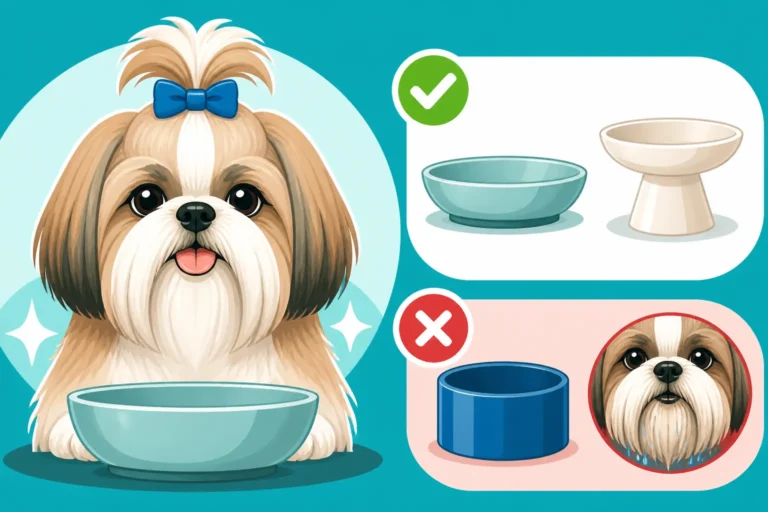
Two Minutes of Shih Tzu Tooth Brushing
It’s a struggle many Shih Tzu owners know all too well: the daily battle against bad breath and yellowing teeth. You know you should brush your beloved companion’s teeth, but fitting it into an already packed schedule, and then actually getting your wiggling fluffball to cooperate, can feel like an impossible task. This guide is here to walk you through how to make those vital two minutes of daily Shih Tzu tooth brushing effective, stress-free, and even enjoyable for both of you, setting your sweet pup up for a lifetime of better oral health.
Why Even Two Minutes of Brushing Makes a Huge Difference for Your Shih Tzu
You might think two minutes isn't much time, but when it comes to preventing dental problems in a Shih Tzu, those two minutes are gold. Their unique anatomy means they’re predisposed to oral health issues that can quickly spiral into serious problems. Daily, even brief, attention is crucial to keeping those tiny teeth clean and healthy.
The Unique Dental Challenges of a Shih Tzus Crowded Mouth
Take a look inside your Shih Tzu's mouth, and you'll immediately see the problem. These little dogs have a genetic predisposition to having a full set of 42 adult teeth crammed into a very small jaw. This crowding, combined with their characteristic undershot bite, means that food particles and bacteria have plenty of nooks and crannies to hide in. It's not like a larger dog with spacious gaps between teeth where food can easily dislodge. For a Shih Tzu, every tooth is practically jostling for space, creating ideal conditions for plaque and tartar to build up rapidly.
Because their mouths are so compact, certain teeth, like the small incisors and premolars, often sit at awkward angles or are rotated, making them even harder to clean with natural chewing or even some dental treats. This makes them particularly susceptible to dental disease, often starting much earlier in life than you'd expect. Many owners are shocked to learn their young Shih Tzu already has significant tartar. This issue is why daily home care, even a quick two-minute session, is exponentially more important for our Shih Tzus than for many other breeds.
The Rapid Buildup of Tartar and Plaque
It's a disheartening cycle for Shih Tzu owners: you might have just had their teeth professionally cleaned, only to see that tell-tale yellow-brown film start to creep back within weeks. Plaque, a sticky film of bacteria, food particles, and saliva, forms on teeth almost immediately after eating. If this plaque isn't removed regularly—and we're talking daily, sometimes even twice daily for some dogs—it quickly mineralizes into hard tartar. This tartar acts like a magnet for more plaque, creating a rough surface that further encourages bacterial growth.
For a Shih Tzu, with their crowded teeth and often moist facial folds, this process is accelerated. The warmth and moisture create a perfect breeding ground for bacteria. Once tartar forms, you can't brush it off with a toothbrush; it requires professional scaling under anesthesia. This is why prevention is paramount. Those two minutes of daily brushing are your best defense against plaque hardening into tartar, buying your Shih Tzu more time between professional cleanings and drastically reducing their risk of serious dental problems. You might find it useful to read about Tartar on Shih Tzu Teeth Before Age Three to understand this process better.
The Consequences of Neglected Dental Hygiene
Ignoring your Shih Tzu's dental health isn't just about bad breath; it can lead to a cascade of serious health issues. The plaque and tartar that build up don't just stay on the surface of the teeth; they creep under the gum line, leading to gingivitis (inflamed gums). If left untreated, gingivitis progresses to periodontal disease, a painful infection that erodes the bone supporting the teeth. Teeth can become loose, infected, and eventually fall out or require extraction. Imagine the constant pain your little companion would be in!
Beyond oral pain, the bacteria from severe dental disease can enter the bloodstream and travel to vital organs, impacting the heart, kidneys, and liver. This means that a seemingly isolated issue like poor dental health can contribute to systemic illnesses that shorten your Shih Tzu's lifespan. We frequently hear about Shih Tzu Dental Disease at 13 Percent of the Breed as a major concern. Plus, the cost of treating advanced dental disease, including multiple extractions, can be substantial, often running into hundreds or even thousands of dollars for complex cases. Daily brushing is a small investment of time that saves your Shih Tzu from significant pain and you from potentially massive vet bills.
Setting Your Shih Tzu Up for Brushing Success
Approaching tooth brushing as a battle will only lead to frustration for both you and your Shih Tzu. Instead, think of it as a gentle, positive routine. Preparation is key, and it involves choosing the right tools and getting your pup comfortable with the process long before you even introduce the toothbrush.
Choosing the Right Toothbrush and Toothpaste
Selecting the right tools is half the battle won, especially for a small breed like a Shih Tzu. Forget human toothbrushes; they're far too big and have bristles that are too stiff. You need a brush specifically designed for dogs, with soft bristles and a head small enough to navigate those tiny, crowded spaces. Finger brushes, which fit over your fingertip, can be a great starting point for puppies or nervous dogs, as they allow you to feel the teeth directly. However, for a truly effective clean, a small, multi-angled pet toothbrush or a pediatric human toothbrush with extra-soft bristles often works best. You can find a good selection on platforms like Chewy or Amazon.
When it comes to toothpaste, never use human toothpaste. It contains fluoride and other ingredients that are toxic to dogs if swallowed. Dog toothpaste comes in pet-friendly flavors like poultry, beef, or peanut butter, which can make the experience much more pleasant for your Shih Tzu. The enzymatic action in some dog toothpastes helps break down plaque even with minimal brushing. Look for brands specifically formulated for canine dental health. You'll find a wide variety of options available online, often with detailed descriptions about how they help combat plaque and tartar, which is helpful when you're Finding a Brush That Fits a Shih Tzu Mouth.
Getting Your Shih Tzu Accustomed to Mouth Handling
This is perhaps the most critical step, especially if your Shih Tzu isn't already used to having its face and mouth handled. Start slowly, long before you introduce the brush or paste. Begin by simply touching their muzzle gently. As they tolerate this, gradually move to lifting their lips, then gently touching their gums and teeth with your finger. Do this for just a few seconds at a time, always pairing it with lavish praise and a tiny, high-value treat.
Increase the duration and intensity gradually over several days or even weeks. The goal is for your Shih Tzu to associate mouth handling with positive experiences. If they show any signs of discomfort or resistance, back off and go slower. Never force it, as this will only build a negative association. Once they're comfortable with your finger in their mouth, you can introduce a tiny bit of dog toothpaste on your finger for them to lick. This gets them used to the taste and texture before the brush even appears. Patience here will pay dividends, particularly if you have an older dog who hasn't had much mouth handling.
Setting Up Your Brushing Station
Creating a consistent, calm environment for brushing helps establish a routine and reduces anxiety for your Shih Tzu. Choose a quiet time of day when you won't be rushed and your dog is relaxed—perhaps after a short walk or a cuddle session, but not right after an exciting play. You might find it easiest to brush while your Shih Tzu is sitting on your lap, a low table, or even on the bathroom counter (if they are secure and comfortable there). Some owners find success placing their Shih Tzu on a towel on the floor, gently cradling them between their legs.
Gather all your supplies beforehand: the dog toothbrush, dog toothpaste, and plenty of high-value treats. Make sure the area is well-lit so you can clearly see what you're doing. A non-slip surface is also helpful to ensure your pup feels secure. Consistency in location and timing signals to your Shih Tzu what's coming, helping them mentally prepare and reduce resistance. Think of it like a mini grooming session; the more routine it becomes, the less fuss there will be.
The Two-Minute Daily Brushing Routine for Your Shih Tzu
Now that you're prepared, it's time to put those two minutes to work. The key is efficiency and focus, targeting the areas most prone to plaque and tartar buildup.
The Gentle Approach: Targeting Key Areas
With your Shih Tzu in a comfortable position, apply a pea-sized amount of dog toothpaste to the brush. Gently lift your Shih Tzu's upper lip and start brushing the outside surfaces of their upper teeth. Use small, circular motions, angling the bristles toward the gum line. The outside surfaces are usually the most critical, as these are where plaque and tartar accumulate fastest. Don't worry too much about the inside surfaces—your dog's tongue usually does a fair job of keeping those relatively clean.
Concentrate on the canines (the long pointy teeth) and the molars and premolars at the back of the mouth. These are the workhorses of the mouth and often collect the most debris. Spend about 30 seconds on each side of the mouth (upper and lower), front and back. Remember, this isn't about scrubbing vigorously; it's about gently disrupting the plaque. If your Shih Tzu is particularly sensitive, focus on just a few teeth at a time, gradually increasing the area you cover as they become more accustomed to it. Consistency, even on a small scale, is more important than attempting a perfect, comprehensive scrub every single day. Daily Toothbrushing in a Crowded Shih Tzu Jaw takes commitment, but it truly helps.
Timing and Consistency
The "two minutes" isn't a hard and fast rule, but rather a goal for effective brushing. What truly matters is consistency. Aim to brush your Shih Tzu's teeth every single day. Just like our own teeth, plaque starts forming quickly, and skipping days allows it to mineralize into tartar. If two minutes feels overwhelming at first, start with 30 seconds, or even just 15 seconds, focusing on those most critical outer surfaces. Gradually build up to longer sessions as your Shih Tzu becomes more accepting.
The best time for brushing is often after their last meal of the day, before bed, or at a time when they are naturally relaxed. Making it a predictable part of their daily routine will help them accept it more readily. Dogs thrive on routine, so fitting it into a specific slot each day helps them anticipate and mentally prepare. Even on days when you’re busy, a quick 60-second swipe is better than nothing at all. Regularity is the secret weapon against dental disease.
Post-Brushing Rewards
Every successful brushing session, no matter how short or imperfect, deserves a reward! This reinforces the positive association and makes your Shih Tzu more willing to cooperate next time. Have their favorite high-value treat ready immediately after you finish. It could be a small piece of cheese, a bit of cooked chicken, or a specialized dental treat. The key is that it's something they absolutely love and only get after brushing.
Beyond treats, lavish praise and cuddles are also fantastic rewards. Tell them what a good dog they are, stroke their head, and let them know they did something wonderful. The goal is to make brushing a positive experience from start to finish. If your Shih Tzu begins to associate the end of the brushing session with something truly great, they'll be far more likely to tolerate it, or even look forward to it, in the future. This positive reinforcement creates a feedback loop that makes daily oral hygiene much easier for both of you.
Making Brushing a Positive Experience for a Stubborn Shih Tzu
Some Shih Tzus are just naturally more resistant to having their mouths touched. It’s not stubbornness so much as it is fear or discomfort, and pushing through it will only make things worse. With patience, persistence, and a gentle touch, even the most reluctant pup can learn to tolerate, and perhaps even enjoy, their daily dental routine.
Patience and Positive Reinforcement
If your Shih Tzu is giving you the side-eye or actively trying to squirm away, it’s a sign to slow down. Forcing the issue will only create a negative association and make future attempts even harder. Instead, break the process down into even smaller steps. Perhaps one day you only touch their muzzle and offer a treat. The next day, you lift a lip for a second. The day after, you introduce the toothpaste on your finger. Each tiny step that they tolerate willingly should be followed by immediate praise and a high-value reward.
The power of positive reinforcement cannot be overstated with a Shih Tzu. They respond incredibly well to encouragement and rewards, much more so than to force or scolding. If you approach it with an attitude of calm patience and consistent positive reinforcement, you'll be amazed at the progress you can make. Remember that building trust and comfort takes time, so don't get discouraged if it feels like a slow journey. Every small victory is a step towards better long-term health. Consider this a crucial part of Training a Shih Tzu Bred Purely as a Companion.
Troubleshooting Common Issues
You're bound to encounter some resistance, but many common issues have simple solutions.
- Biting or Mouthing: If your Shih Tzu tries to mouth or nip the brush, it could be a sign of discomfort or a playful protest. Ensure you're using a soft brush and gentle pressure. You might try a finger brush initially to maintain better control and give them something soft to mouth while you guide your finger. For very resistant dogs, sometimes wrapping your free hand gently but firmly around their muzzle can help them understand it's not playtime, but this needs to be done with extreme care not to hurt them or make them fearful.
- Squirming or Running Away: This often means the session is too long, or they haven't been adequately desensitized to mouth handling. Shorten the sessions dramatically, focusing on just a few teeth, and increase your desensitization exercises. Make sure the environment is calm and free of distractions. A comfortable non-slip surface can also prevent them from feeling like they need to escape.
- Refusing the Toothpaste: If they don't like the taste, try another flavor! Dog toothpastes come in many varieties. You can also try just plain water on the brush initially, or let them lick a tiny bit of peanut butter off the brush head before you put it in their mouth. (Ensure peanut butter is xylitol-free!). Platforms like Amazon and Chewy offer many different brands and flavors, so don't be afraid to experiment to find one your Shih Tzu loves.
When to Seek Professional Help (Beyond Brushing)
Even with diligent daily brushing, professional dental cleanings under anesthesia are an essential part of your Shih Tzu's oral health plan. For many Shih Tzus, due to their genetic predisposition to dental issues, these cleanings are often recommended annually, or even more frequently for those prone to rapid tartar buildup. How Often a Shih Tzu Needs a Dental is a conversation you should have with your vet regularly.
Your veterinarian can assess the overall health of their teeth and gums, scale away tartar that brushing can't remove, and identify any underlying problems like Gum Recession in a Shih Tzu, fractured teeth, or infections beneath the gum line. If your Shih Tzu's breath remains foul despite daily brushing, they show signs of pain (like reluctance to eat or chew, pawing at their mouth), or you notice significant redness or bleeding gums, it's definitely time for a vet visit. These could be signs of advanced periodontal disease that require immediate professional intervention. Home brushing is crucial, but it's a partnership with your vet, not a replacement for their expertise.
| Aspect | Goal for Shih Tzu Tooth Brushing | Why It Matters for Shih Tzus |
|---|---|---|
| Duration | 2 minutes daily (or as tolerated) | Prevents rapid plaque-to-tartar conversion in crowded mouths. |
| Frequency | Every day | Plaque forms within hours; consistency is key to removal. |
| Tools | Small, soft-bristled dog toothbrush & enzymatic dog toothpaste | Human tools are harmful; specialized tools fit small, sensitive mouths. |
| Technique | Gentle, circular motions; focus on outer surfaces | Prevents gum irritation; targets areas most prone to buildup. |
| Focus Areas | Canines, molars, premolars (outer) | These teeth accumulate the most plaque due to crowding and chewing. |
| Desensitization | Gradual, positive handling from puppyhood | Builds trust, reduces stress, and increases cooperation over time. |
| Rewards | High-value treats & praise immediately after | Creates positive association, reinforces desired behavior. |
| Professional Care | Regular vet check-ups & professional cleanings | Addresses unbrushable tartar and underlying issues, complements home care. |
Disclaimer
This article is for general informational purposes only and does not constitute professional advice. Laws, prices and regulations vary by location and change over time. Consult a qualified professional for guidance on your specific situation.