Kibble Size a Shih Tzu Mouth Can Manage
It’s a common frustration for Shih Tzu parents: you bring home a new bag of what promises to be "the best" dog food, only to find your precious pup struggling to eat it. Their adorable, squished faces and unique jawlines, while part of their charm, can make mealtime a surprisingly tricky affair. This guide will walk you through understanding why kibble size is such a crucial consideration for your Shih Tzu and how to choose the perfect fit to ensure they're nourished and happy.
The Unique Shih Tzu Mouth: Why Kibble Size Matters So Much
Anyone who lives with a Shih Tzu knows their face is utterly distinct. That sweet, flat face and short snout, while undeniably cute, mean their oral anatomy is quite different from many other breeds. Understanding these anatomical quirks is the first step to choosing the right kibble.
Understanding the Brachycephalic Jaw and Underbite
Shih Tzus are a brachycephalic breed, which means "short-headed." This characteristic comes with a relatively short upper jaw compared to their lower jaw, leading to what's often called an "undershot bite." When you look at their profile, you'll often see their lower jaw protruding slightly, with their lower teeth resting in front of their upper teeth. This isn't just an aesthetic feature; it profoundly impacts how they pick up and chew food.
Imagine trying to pick up a tiny pea with chopsticks, then trying to pick up a large gumball. Their unique jaw alignment means they can't always meet their incisors (front teeth) to effectively grasp small, flat pieces of kibble, and equally, overly large pieces can be too much for their relatively small mouths to fit around. The ideal kibble needs to be just right to allow them to scoop it up with their tongues or manipulate it with their side teeth, which are often crowded. If you’ve ever noticed your Shih Tzu pushing food around their bowl with their nose before eventually getting a piece, this is why! It's a testament to their perseverance, but it's also a clear sign they're working harder than they should to eat.
The Challenge of Crowded Teeth
Beyond the undershot bite, Shih Tzus are notorious for having crowded mouths. Despite their small size, they have the same number of teeth as larger dogs – a full set of 42 permanent teeth that simply don't have enough room to grow in properly. This crowding often leads to teeth overlapping, rotating, or even remaining impacted. This dental congestion creates nooks and crannies where food particles can easily get trapped, contributing to a higher risk of Shih Tzu Dental Disease at 13 Percent of the Breed.
When kibble is too big, it can be difficult for them to position it correctly in their mouths to chew without it pressing uncomfortably against crowded teeth or even missing the chewing surface entirely. If kibble fragments get lodged in those tight spaces, it can cause discomfort, lead to plaque buildup, and even contribute to gum recession. Conversely, kibble that's too small might be swallowed whole too quickly, missing the gentle abrasive action that helps clean teeth and potentially leading to indigestion. Finding that sweet spot in kibble size isn't just about ease of eating; it's a critical part of supporting their oral health. You can read more about this in Shih Tzu Tooth Crowding in a Tiny Jaw.
Too Big, Too Small: The Goldilocks Zone for Shih Tzu Kibble
It's easy to assume all small breed kibble is created equal, but even within the "small breed" category, there's a wide spectrum of sizes and shapes. For your Shih Tzu, finding that "just right" kibble is essential for comfortable eating and proper digestion.
Why Small Kibble Can Still Be Problematic
You might think smaller kibble is always better for a small dog, but this isn't necessarily true for a Shih Tzu. Kibble that is too small can sometimes be just as challenging as kibble that is too large. Imagine trying to eat a bowl of rice with only your tongue and the sides of your mouth – it's doable, but inefficient and messy.
Tiny, flat disc-shaped kibble, for example, can be incredibly difficult for a Shih Tzu to pick up with their unique jaw. Their undershot bite means they often rely on their tongues to scoop up food rather than clamping down with their front teeth. If the kibble is too small and flat, they might push it around the bowl, flick it out, or struggle to get a good purchase on it. This can lead to frustration, prolonged meal times, or them giving up on eating altogether, especially if they're particularly finicky. I've heard countless stories of Shih Tzus who simply refuse to engage with a food that feels too much like hard work. Plus, very small pieces might not encourage enough chewing, potentially leading to them being swallowed too quickly and causing stomach upset.
The Ideal Size: What to Look For
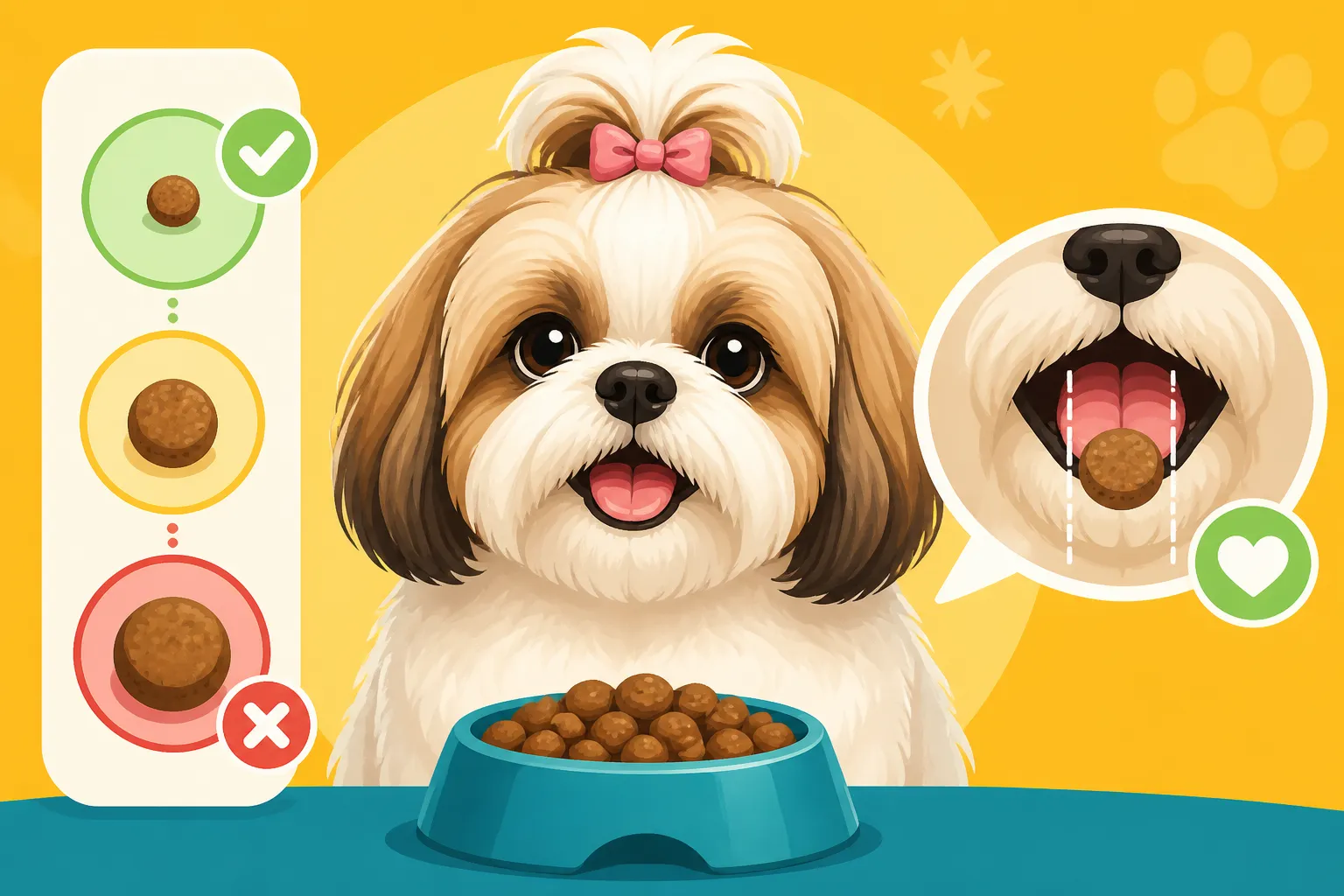
The "Goldilocks zone" for Shih Tzu kibble is generally a piece that is small enough to fit comfortably in their mouth without being cumbersome, but large enough for them to pick up and manipulate with their tongue and side teeth. Think of a shape that offers a bit of dimension – not perfectly flat.
Many owners find success with kibble that is round or slightly oval, perhaps a "button" or "donut" shape, roughly 5-9 millimeters in diameter (about the size of a small pea or a lentil). These shapes provide enough surface area for the Shih Tzu's tongue to scoop them up and enough bulk for their crowded molars to engage in some chewing. The goal is to encourage chewing, which helps mechanically clean their teeth and aids in digestion, without presenting a piece so large it causes gagging or discomfort. Some brands specifically design kibble for brachycephalic breeds, keeping these unique oral structures in mind. Checking the kibble size descriptions on sites like Chewy or Amazon can give you a good visual, and many brands offer a "kibble comparison" chart.
The Role of Texture
Beyond size and shape, the texture of the kibble plays an important role. While hard kibble is generally good for dental health, acting as a mild abrasive, it shouldn't be so hard that your Shih Tzu struggles to break it down. Their jaws aren't designed for powerful crunching like a Mastiff's. Kibble that is too hard can be uncomfortable for crowded teeth and potentially lead to dental pain, especially if they already have underlying dental issues or Periodontal Disease in a Five Year Old Shih Tzu.
Look for a kibble with a moderate hardness – firm enough to provide some resistance but not rock-solid. Some kibbles are designed to be slightly porous or have a lighter crunch. You can often test the texture yourself by feeling a piece between your fingers or trying to break it. If it's incredibly difficult for you, it might be even harder for your Shih Tzu. For older Shih Tzus or those with significant dental problems, a slightly softer kibble or even mixing in some rehydrated or wet food might be necessary to ensure they get enough nutrition without pain. Feeding an Old Shih Tzu With Missing Teeth delves deeper into these considerations.
Evaluating Kibble Shapes and Textures for Your Shih Tzu
Just as people prefer different food textures, so do our canine companions. For a Shih Tzu, the specific shape and texture of their kibble can make a world of difference in their eating experience.
Common Kibble Shapes and How They Interact with a Shih Tzu Mouth
The market is filled with various kibble shapes, each with its own characteristics. Let's break down how some common ones might fare with your Shih Tzu:
- Round/Disk-shaped: Often found in small breed formulas, these are generally a good starting point. If they're not too small and flat, the Shih Tzu can usually scoop them up with their tongue. Too flat, however, and they become difficult to grasp.
- Star/Cross-shaped: Some brands design kibble with intricate shapes like stars or crosses, claiming they help clean teeth. For a Shih Tzu, these can be hit or miss. The nooks and crannies might be good for dental abrasion, but if the overall piece is too large or has sharp edges, it could be uncomfortable or difficult to pick up with their undershot jaw.
- Cylinder/Rod-shaped: Longer, cylindrical pieces might be challenging as they can be hard to orient in a small mouth for chewing. Your Shih Tzu might try to swallow them whole, which isn't ideal.
- Irregular/Chunky: While natural-looking, overly irregular or chunky pieces can be unpredictable. Some pieces might be perfectly fine, while others are just too big or awkwardly shaped for consistent eating.
The key is to observe your dog. Does the kibble seem to disappear quickly and easily? Or are they pushing it around, dropping pieces, or taking an unusually long time to eat? Their behavior will tell you a lot about how well the shape works for them.
Hardness vs. Crumbly: Finding the Right Crunch
The texture of the kibble refers to its hardness and how it breaks down. For a Shih Tzu, the "right crunch" is a delicate balance.
- Hard Kibble: While often recommended for dental health, excessively hard kibble can be a problem. A Shih Tzu's small, often crowded teeth are not built for breaking down extremely dense nuggets. If the kibble is too hard, they might avoid chewing it properly, or worse, struggle and experience pain. This is particularly relevant for breeds prone to Shih Tzu Dental Disease at 13 Percent of the Breed and potential jaw issues.
- Slightly Softer/More Porous Kibble: Many small breed formulas aim for a texture that offers a satisfying crunch but isn't overly hard. This allows for mechanical cleaning of the teeth without putting undue stress on their delicate jaws or crowded dentition. Some kibbles are designed to be a bit more porous, making them easier to break apart.
- Semi-Moist Kibble: Occasionally, you'll find semi-moist kibble options. These can be easier to chew for Shih Tzus with sensitive teeth or those who are aging. However, they may offer less dental benefit in terms of scraping plaque.
- Hydrated Kibble: If your Shih Tzu consistently struggles with dry kibble, consider adding a little warm water to soften it. This is a great way to make their existing food more palatable and easier to eat, especially for puppies with Retained Puppy Teeth in a Shih Tzu or seniors.
Remember, the goal is for your Shih Tzu to eat comfortably and efficiently. If they're struggling, it's worth exploring different textures.
Dealing with Picky Eaters and Kibble Preferences
Shih Tzus, with their regal heritage, can sometimes be quite particular about their food. If your dog is turning their nose up at their bowl, it might not just be stubbornness – the kibble itself could be part of the problem.
When Pickiness is About More Than Just Taste
It's tempting to think a picky Shih Tzu is just being "difficult," but often, there's a practical reason behind their reluctance. If they consistently struggle to pick up or chew their kibble, mealtime can become a chore rather than a pleasure. Imagine if every bite you took was an effort, or caused a slight discomfort. You'd probably lose your appetite too!
Sometimes, what seems like pickiness is actually frustration with the physical act of eating. They might try a few pieces, then walk away, only to return later and try again. They might nudge the food around with their nose, or even drop pieces out of the bowl in an attempt to get a better angle. This isn't them being spoiled; it's them trying to figure out how to manage their meal. Before you switch to a more "appealing" (and often less nutritionally balanced) food, consider if the kibble's physical attributes are the real culprit. This is particularly important for breeds who sometimes gain weight easily, as discussed in Shih Tzu Obesity on a Sixteen Pound Frame.
Techniques for Encouraging Eating with Appropriate Kibble
Once you've found a kibble that seems to be the right size and texture, you can use several strategies to encourage a positive eating experience:
- Elevated Bowls: For some Shih Tzus, especially those with neck or back issues, an elevated bowl can make a huge difference. It allows them to eat without stooping as much, which can be more comfortable for their short snout and long back. You can find simple, inexpensive elevated feeders on platforms like Chewy or Amazon.
- Food Puzzles and Slow Feeders: If your Shih Tzu tends to gulp down even perfectly sized kibble, a slow feeder bowl or a puzzle feeder can encourage them to eat more deliberately. This isn't just about slowing them down; it also makes them engage with their food in a more thoughtful way, which can build confidence if they've had previous struggles.
- Adding Palatability Boosters: Sometimes, a little extra encouragement goes a long way. You can try mixing in a small amount of low-sodium broth, a spoonful of plain pumpkin, or even a tiny bit of Whether Wet Food Suits a Shih Tzu to their dry kibble. This can make it more appealing and easier to pick up. Just be mindful of calories, as Shih Tzus can easily become overweight.
- Consistency and Routine: Dogs thrive on routine. Feeding your Shih Tzu at the same times each day in a quiet, undisturbed location can help establish a positive mealtime experience. Offer the food for 15-20 minutes, then pick it up, even if they haven't finished. This teaches them that food is available at specific times and encourages them to eat when it's offered.
By addressing both the physical challenges and behavioral aspects of eating, you can help your Shih Tzu develop a healthy and enjoyable relationship with their food.
When to Re-evaluate Your Shih Tzu's Kibble
A Shih Tzu's needs aren't static; they change throughout their life. The kibble that was perfect for a puppy might not be suitable for an adult, and certainly not for a senior. Regular evaluation of their food, including kibble size, is a sign of a truly attentive pet parent.
Life Stages and Changing Needs
Your Shih Tzu will go through several distinct life stages, and each one brings different nutritional and physical requirements:
- Puppyhood: Shih Tzu puppies grow rapidly but have tiny mouths. They need nutrient-dense food, and the kibble should be small enough for them to manage without frustration, but also robust enough to encourage chewing as their adult teeth emerge. Puppy formulas often have smaller kibble designed for their delicate jaws and developing Shih Tzu Puppy Training Month by Month.
- Adulthood: As your Shih Tzu reaches maturity (around 10-12 months), their growth plate closes, and their nutritional needs shift. They require a balanced adult formula, and their kibble size should cater to their fully formed, though still brachycephalic and crowded, adult mouth. If they struggled with puppy kibble, now is the time to optimize for adult size and shape.
- Senior Years: Past the age of ten, your Shih Tzu enters their senior years, and this is where dental health can become a significant concern. Many older Shih Tzus experience tooth loss, gum disease, or increased tooth sensitivity. Senior Shih Tzu Care Past the Age of Ten is crucial reading for this stage. At this point, you might need to transition to a senior-specific formula, which often has softer or smaller kibble, or even incorporate more wet food to ensure they can eat comfortably. Regularly check their teeth for signs of pain or difficulty chewing.
A sudden change in eating habits, such as dropping food, reluctance to eat, or a preference for softer foods, can be a major indicator that their kibble is no longer working for them, or that a trip to the vet for a dental check-up is in order.
Medical Conditions Affecting Eating
Beyond normal aging, certain medical conditions can significantly impact your Shih Tzu's ability to eat their kibble, making a re-evaluation of its size and texture absolutely essential:
- Dental Disease: This is perhaps the most common culprit. As plaque and tartar build up, it leads to gum inflammation (gingivitis) and eventually periodontal disease, which can cause painful tooth abscesses, loose teeth, or even jaw bone loss. A Shih Tzu with dental pain will naturally avoid chewing hard kibble. Routine dental check-ups and cleanings are vital for a breed prone to Shih Tzu Dental Disease at 13 Percent of the Breed.
- Brachycephalic Airway Syndrome (BAS): While primarily affecting breathing, severe BAS, including conditions like an Elongated Soft Palate in a Shih Tzu or Shih Tzu Stenotic Nares and Noisy Breathing, can make eating a struggle. Dogs may gulp air while eating, leading to discomfort, or find it hard to breathe and chew simultaneously. Softening kibble or switching to wet food can sometimes alleviate some of this difficulty, but the underlying issue needs veterinary attention.
- Back and Neck Pain: Shih Tzus are prone to Shih Tzu Back Problems and Disc Disease. If your dog has a slipped disc or other spinal issues, bending down to a bowl can be excruciating. In these cases, even if the kibble size is fine, the act of reaching it can be too painful. Elevated bowls, as mentioned earlier, become critical, and softer foods may require less forceful chewing.
- Eye Issues: Their prominent eyes make them susceptible to problems like Shih Tzu Corneal Ulcers and Dry Eye. While not directly impacting chewing, discomfort from an eye condition can certainly reduce their overall appetite and willingness to eat.
Always consult your veterinarian if you notice a persistent change in your Shih Tzu's eating habits. They can rule out underlying medical conditions and provide tailored advice on diet adjustments, including kibble selection.
Shopping for the Right Kibble: What to Look For
Navigating the pet food aisle, whether online or in a physical store, can feel overwhelming with the sheer number of options available. Knowing what key attributes to prioritize for your Shih Tzu will make the process much smoother.
Key Label Details and Ingredients
When you're comparing different kibble brands, don't just stop at the "small breed" label. Dive into the details:
- "Small Breed" vs. "Toy Breed" Formulas: While often used interchangeably, "toy breed" formulas sometimes specifically target the unique needs of the very smallest dogs, which might include an even smaller kibble size than a general "small breed" formula. Read the descriptions carefully.
- Ingredient List: Always look for a high-quality protein source (like chicken, lamb, or fish) as the first ingredient. Avoid foods with excessive fillers, artificial colors, or vague "meat by-products." Whole grains and vegetables are good, but for a Shih Tzu with potential sensitivities, a limited ingredient diet might be worth considering. Sites like Chewy and Amazon allow you to filter by these criteria, making your search much easier.
- Nutritional Adequacy Statement: This statement, usually found on the back of the bag, confirms that the food meets the nutritional levels established by the AAFCO (Association of American Feed Control Officials) for a specific life stage (e.g., "for growth," "for maintenance," or "for all life stages").
- Specific Claims for Oral Health: Some kibbles are marketed with dental health benefits. While they can be helpful, remember they are not a substitute for regular Daily Toothbrushing in a Crowded Shih Tzu Jaw and professional vet care. However, if the kibble shape and texture genuinely aid in cleaning, it's a bonus.
Don't be afraid to reach out to the pet food company directly if you have specific questions about their kibble's dimensions or texture. Many have customer service lines happy to help.
Trying Different Brands and Formulations
Finding the perfect kibble is often a process of trial and error. What works wonderfully for one Shih Tzu might be completely rejected by another.
Start by purchasing small bags of different brands that meet your initial criteria (appropriate protein, no major allergens, suitable for small breeds). Introduce new foods gradually over 7-10 days, mixing increasing amounts of the new food with decreasing amounts of the old. This helps prevent digestive upset and allows you to observe your Shih Tzu's response to the new kibble's size, shape, and taste.
Pay close attention to how they eat it:
- Are they able to pick it up easily?
- Are they chewing it or swallowing it whole?
- Do they seem to enjoy it, or are they hesitant?
- Is there any coughing, gagging, or discomfort?
- How are their stools? (Consistency and frequency can indicate digestive comfort.)
If after a gradual introduction they still struggle with the kibble, or if you notice any digestive issues, it's time to try another option. Don't get discouraged! There are many fantastic brands out there. You might even explore fresh food options like Ollie, which can be tailored for small breeds and are often very palatable due to their soft texture.
Here's a quick comparison of common kibble characteristics and their suitability for Shih Tzus:
| Kibble Characteristic | Potential Benefit for Shih Tzu | Potential Drawback for Shih Tzu | Ideal for Shih Tzu? |
|---|---|---|---|
| Size: Very Small (<5mm) | Easy to fit in mouth, less choking risk | Hard to pick up with undershot jaw, swallowed whole, less dental benefit | Often too small |
| Size: Moderate (5-9mm) | Manageable to pick up and chew, good dental engagement | If too flat, still hard to grasp | Generally Ideal |
| Size: Large (>9mm) | Encourages chewing (if they can get it in) | Difficult to pick up, potential choking hazard, uncomfortable for crowded teeth | Often too large |
| Shape: Round/Oval | Easy to scoop with tongue, rolls easily for chewing | Can be hard to grasp if very flat | Good |
| Shape: Irregular/Star | May offer some dental scrubbing action | Can have sharp edges, awkward to grasp/chew if too complex | Depends on specific shape |
| Texture: Hard/Dense | Good for dental abrasion, satisfying crunch | Can be painful for crowded/sensitive teeth, difficult to break down | Moderate hardness is best |
| Texture: Softer/Porous | Easier to chew for sensitive teeth, less strain on jaw | Less dental abrasion, may become mushy if wet | Good for seniors or dental issues |
Ultimately, choosing the right kibble size is a blend of science and careful observation of your individual Shih Tzu. Their unique oral anatomy demands a thoughtful approach, but with a little patience and attention, you'll find the perfect food that makes mealtime a joyous occasion for your fluffy companion.
Disclaimer
This article is for general informational purposes only and does not constitute professional advice. Laws, prices and regulations vary by location and change over time. Consult a qualified professional for guidance on your specific situation.