Exercise for a Shih Tzu With a Bad Disc
When your sweet Shih Tzu suddenly yelps, refuses to jump on the sofa, or drags a hind leg, the fear that grips you is immense. Learning they have a bad disc, or Intervertebral Disc Disease (IVDD), can turn the idea of "exercise" into a terrifying word. This guide is here to walk you through understanding how disc issues impact your Shih Tzu's mobility, and more importantly, how to safely navigate recovery and long-term care, ensuring they get the right kind of movement without risking further injury.
Understanding Disc Disease and Why Exercise Changes for a Shih Tzu
It’s truly heartbreaking to see your lively little companion suddenly become hesitant to move, or worse, struggle with their back legs. For Shih Tzus, disc disease isn't just a concern; it's a common reality that many owners unfortunately encounter. Their unique body structure, while adorable, predisposes them to these painful spinal conditions.
What Happens When a Disc Goes Bad
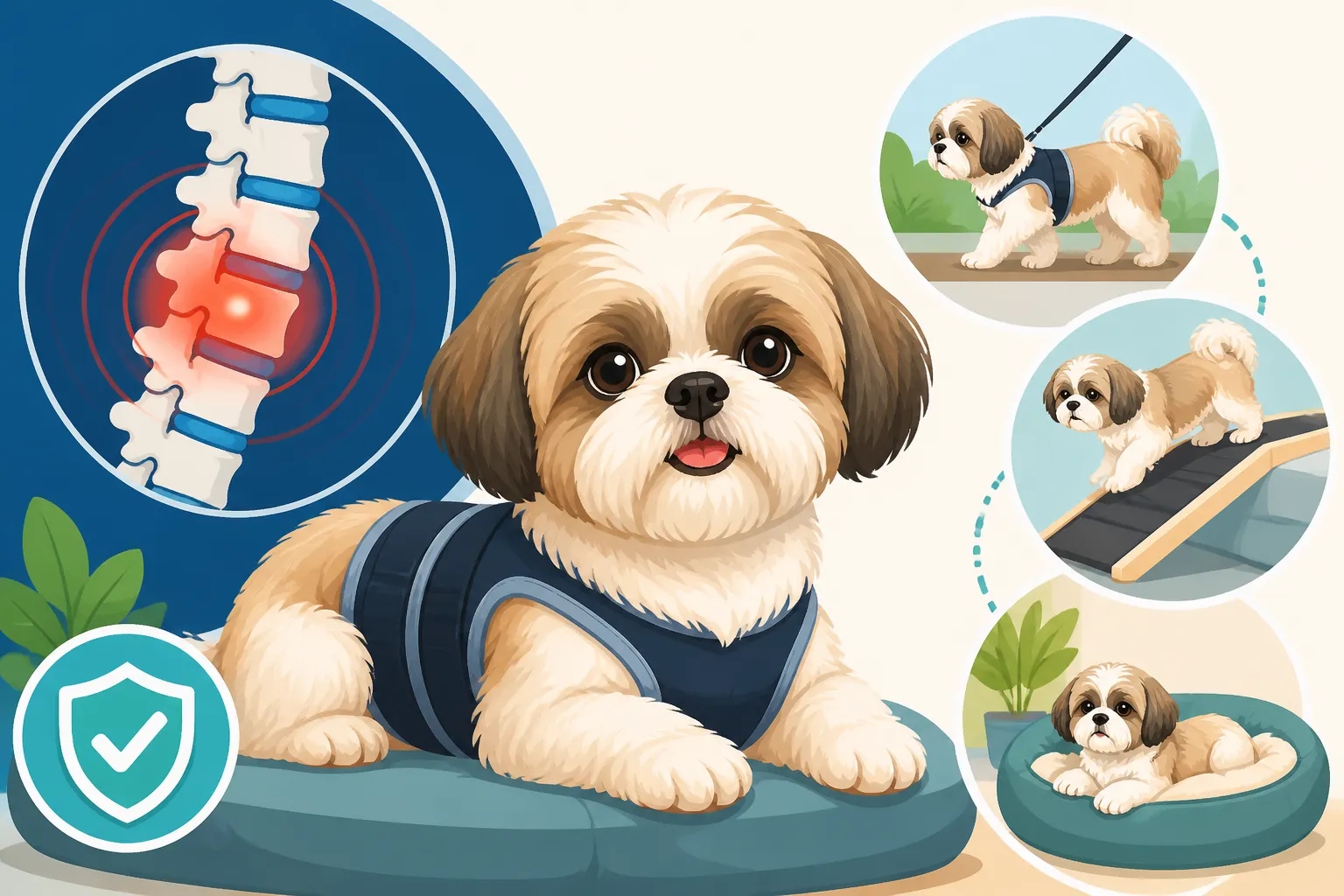
Intervertebral Disc Disease (IVDD) in Shih Tzus often starts with what's called Hansen Type I IVDD. This means that the soft, jelly-like center of the discs (which act as shock absorbers between the vertebrae) can degenerate and harden over time. Eventually, this hardened material can rupture or "herniate" into the spinal canal, pressing on the delicate spinal cord. Imagine a tiny cushion between bones, suddenly bulging out and pinching a major nerve pathway – that's essentially what happens.
The pressure on the spinal cord is what causes all the trouble: intense pain, weakness, wobbliness, or even complete paralysis in the hind legs. It can happen with a sudden jump, a misstep, or sometimes for no apparent reason at all. One minute your Shih Tzu is trotting along, and the next they might yelp and refuse to move, leaving you scrambling to understand what just happened. It's a truly frightening experience, and it's something that is directly related to their long backs and short legs, a genetic predisposition Shih Tzu Back Problems and Disc Disease.
The Importance of Rest Versus Controlled Movement
When a disc injury occurs, the first and most critical step is often strict rest. Your veterinarian will likely explain that this rest period is non-negotiable, allowing inflammation to subside and the spinal cord to heal without further trauma. It can feel counterintuitive, especially if your dog seems to be in pain and you want to "fix" it, but rest is paramount.
However, complete inactivity isn't a sustainable long-term solution for any dog, even one recovering from a back injury. Prolonged rest can lead to muscle atrophy, joint stiffness, and a decrease in overall fitness, which can actually hinder a full recovery and make future injuries more likely. This is where the crucial distinction between "exercise" and "controlled movement" comes in. While vigorous, uncontrolled exercise is a definite no-go, gentle, guided movement under veterinary supervision becomes a vital part of rehabilitation. The goal is to rebuild strength and flexibility without putting undue stress on the compromised spine.
Safe and Therapeutic Movement Strategies for Recovery
Navigating your Shih Tzu's recovery after a disc injury requires immense patience and a very careful approach to their activity. The road back to comfortable movement is often a slow and steady one, but with the right strategies, you can help them heal and regain confidence.
Starting with Strict Crate Rest and Gentle Handling
Immediately following a disc injury diagnosis, your vet will almost certainly prescribe strict crate rest. This isn't just "take it easy" rest; it means your Shih Tzu must be confined to a small crate or pen where they cannot jump, run, or climb. For many Shih Tzus, who are used to being underfoot or sleeping in bed with you, this can be a huge adjustment and a frustrating time for everyone involved. The only times they should leave their crate are for very short, leashed potty breaks, and even then, they should be carried to and from their spot. No stairs, no zoomies in the yard, no jumping for treats. Think of it like a broken bone that needs to fuse – any movement will disrupt the healing process.
During this period, proper handling is crucial. When you need to lift your Shih Tzu, always support their entire body, especially their back. Slide one hand under their chest and the other under their hindquarters, keeping their spine level and straight, like you're carrying a small, fragile log. Avoid letting their back sag or twist. This careful handling prevents accidental jolts or movements that could re-injure the delicate spinal cord. A comfortable, supportive bed within their crate is also essential to encourage stillness and proper spinal alignment. You might want to check out orthopedic beds on sites like Chewy or Amazon that offer firm support for delicate spines, as these can make the crate rest period much more tolerable for your pup Beds That Suit a Shih Tzu Back.
Introducing Passive Range of Motion and Massage
Once your vet gives the green light to gradually introduce some movement, passive range of motion (PROM) exercises can be incredibly beneficial. PROM involves you gently moving your Shih Tzu's joints through their natural range of motion, without them actively using their muscles. This helps maintain joint flexibility, improves circulation, and prevents stiffness and muscle contractures that can develop during prolonged rest.
To perform PROM, your vet or a canine physical therapist will likely show you how to gently extend and flex each leg, being extremely mindful of any signs of pain. These movements should be slow, controlled, and never forced. A good example is gently stretching each leg forward and backward, and then bending it, all while your Shih Tzu is lying comfortably on their side. Alongside PROM, gentle massage can also be introduced. Focusing on the large muscle groups in their shoulders, hips, and legs (while carefully avoiding direct pressure on the injured spinal area) can help relax muscles, reduce tension, and improve blood flow. Again, always get specific instructions from your veterinarian or a certified professional before attempting these techniques yourself, as doing them incorrectly could cause more harm than good.
Controlled Leash Walks and Assisted Movement
As your Shih Tzu progresses through recovery, very short, controlled leash walks on a flat, non-slip surface will typically be the next step. These aren't walks for sniffing every bush or meeting other dogs; they are purely therapeutic, designed to encourage natural weight-bearing and muscle use without impact. Always use a well-fitting harness rather than a collar, as any pressure on the neck can transfer down the spine and be detrimental. Many owners find front-clip harnesses helpful for gentle guidance, or even specifically designed orthopedic harnesses.
For Shih Tzus with hind limb weakness, a support sling or a towel rolled under their belly can provide crucial assistance, taking some of the weight off their back and helping them feel more stable. This allows them to "walk" while you support their rear, preventing stumbling and giving them confidence. You can find excellent slings on sites like Amazon that are specifically designed for toy breeds, making it easier for you to support them without straining your own back Slings and Harnesses for an Old Shih Tzu. Start with walks of just a few minutes, perhaps two or three times a day, gradually increasing duration only with your vet's approval and provided your Shih Tzu shows no signs of increased pain or discomfort Crate Rest for a Shih Tzu With a Slipped Disc. Remember, slow and steady wins the race when it comes to spinal recovery.
Long-Term Management and Adapting the Shih Tzu's Environment
The journey with a Shih Tzu who has experienced disc disease doesn't end when the initial crisis passes. Long-term management is about proactive prevention and creating an environment that supports their spinal health. This means making conscious choices about their living space and daily activities.
Modifying the Home for Spinal Health
One of the most impactful things you can do for a Shih Tzu with a bad back is to make their home environment spine-friendly. The number one culprit for re-injury is often jumping – on and off furniture, into and out of bed, or up and down stairs. These seemingly innocuous actions create significant impact and twisting forces on their delicate spines. Invest in ramps for sofas, chairs, and beds to eliminate jumping altogether. Many pet owners find that portable ramps, easily found on sites like Chewy, become invaluable tools in preventing these movements.
Another key area is flooring. Hardwood, tile, or laminate floors can be slippery death traps for a dog with a compromised back, as they can easily slip, splay, and injure themselves. Cover these surfaces with non-slip rugs or runners, especially in high-traffic areas where your Shih Tzu walks. For stairs, the safest bet is often to block access completely, or commit to carrying your Shih Tzu up and down every single time. Even if they seem capable, the repeated impact and twisting motion of climbing and descending stairs can be highly detrimental over time Why Stairs Are Hard on a Shih Tzu Spine. Implementing these changes requires vigilance, but it’s a loving commitment to protecting your furry friend Ramps for a Shih Tzu With a Long Spine.
Appropriate Play and Activity Choices
The days of vigorous games of tug-of-war or frantic fetch sessions that involve sharp turns and jumps are likely over, or at least significantly modified. High-impact activities are simply too risky for a Shih Tzu with a history of disc disease. Instead, shift towards low-impact, brain-stimulating play. Gentle indoor games that focus on mental engagement rather than physical exertion are perfect. Think puzzle toys that dispense treats, or hiding kibble around the house for them to sniff out. These types of activities keep their minds sharp and engaged without putting strain on their back Games That Keep a Shih Tzu Busy Indoors.
You can also engage in very gentle, supervised play with soft toys that don't encourage twisting or quick movements. If you have other pets or small children, supervision becomes even more critical to prevent accidental roughhousing that could lead to another injury. Consider the breed's natural tendencies: Shih Tzus were bred as companion dogs, content with lounging and gentle interaction. Lean into that natural inclination, providing comfort and quiet companionship, and offering mental challenges rather than physical ones. Many interactive toys can be found on Amazon, offering different levels of difficulty to keep your Shih Tzu engaged.
Maintaining a Healthy Weight and Muscle Tone
One of the most fundamental aspects of long-term spinal health for a Shih Tzu is maintaining a lean, healthy weight. Every extra pound puts additional, unnecessary strain on their spine, making them more susceptible to further disc issues or delaying recovery from existing ones Shih Tzu Obesity and the Load on Its Back. It can be surprisingly easy for these small dogs to pack on a few extra pounds, especially if treats are freely given or activity is restricted due to a back injury.
Work closely with your vet to determine the ideal weight for your individual Shih Tzu and stick to a strict portion-controlled diet. High-quality dog food, like that offered by brands such as Ollie, can provide excellent nutrition while helping manage caloric intake. Weighing food portions rather than scooping is far more accurate. Alongside diet, a continuous, vet-approved program of gentle physical therapy or specific exercises focused on core strength can help build and maintain the muscles that support their spine. Think low-impact exercises that strengthen their abdominal and hindquarter muscles without jarring the back. Your vet might also recommend joint supplements containing ingredients like glucosamine and chondroitin, which can support overall joint and disc health, but always discuss these with your vet before introducing them Joint Support for a Shih Tzu Back and Knees.
When to Seek Professional Help and Ongoing Care
Dealing with a Shih Tzu's disc disease is rarely a one-time event. It requires a dedicated, ongoing approach, often involving professional guidance to ensure the best possible quality of life and to prevent future issues. Knowing when and where to seek help is paramount.
The Role of Veterinary Physical Therapy
For many Shih Tzus recovering from disc injuries, veterinary physical therapy (also known as rehabilitation) is an absolute game-changer. These specialized programs go far beyond basic rest and gentle walks. A certified canine rehabilitation therapist can design a tailored program that addresses your dog's specific deficits, whether it's muscle weakness, balance issues, or limited range of motion.
Modalities might include hydrotherapy (underwater treadmill or swimming, which allows for muscle strengthening without weight-bearing impact), therapeutic exercises (specific movements designed to target weak muscle groups), laser therapy for pain and inflammation, and even acupuncture. These professionals have a deep understanding of canine biomechanics and can safely guide your Shih Tzu through recovery, helping to rebuild strength and improve mobility in a controlled environment. The investment in professional physical therapy can significantly improve recovery outcomes and long-term spinal stability.
Recognizing Warning Signs and Preventing Relapses
Even with the best care, Shih Tzus with a history of disc disease are always at some risk of recurrence. It's crucial for you, as their dedicated owner, to become an expert in recognizing the subtle warning signs that might indicate a relapse or worsening condition. These signs can be as subtle as a slight hesitation before jumping (even if they use a ramp), a reduced wag of the tail, a change in gait, or an increase in panting or restlessness. More obvious signs include yelping when touched, a hunched posture, hind leg weakness, dragging paws, or difficulty getting up Early Shih Tzu Back Pain Signs.
If you ever suspect a disc issue is flaring up, contact your veterinarian immediately. Early intervention is key to preventing the condition from escalating. Your vet may recommend another period of strict rest, anti-inflammatory medications, or further diagnostics. Long-term prevention also involves consistent adherence to your home modifications, weight management, and any prescribed medications or supplements. Regular vet check-ups are also important to monitor their spinal health and overall well-being. This ongoing vigilance is part of the commitment of caring for a dog with such a sensitive back.
Surgical Considerations and Recovery
In severe cases of disc herniation, particularly if there is significant neurological deficit (like paralysis) or intractable pain that doesn't respond to conservative treatment, surgery might be recommended. This is a major decision and a significant financial undertaking What a Shih Tzu Costs After a Disc Injury, but for some dogs, it offers the best chance at regaining function and quality of life. The goal of surgery is to remove the material that is compressing the spinal cord, relieving pressure and allowing the nerves to heal.
Post-surgical recovery is an intensive process that mirrors, and often exceeds, the strictness of initial conservative management. It involves an even more rigorous period of crate rest, often followed by dedicated, professional physical therapy. The commitment to this recovery plan is critical for the success of the surgery and the dog's ability to walk again Whether a Shih Tzu Walks Again After Disc Surgery. It requires immense patience, dedication, and a close partnership with your veterinary team, including surgeons and rehabilitation specialists, to meticulously follow every step of the rehabilitation protocol.
| Activity Type | Description | Suitability for Shih Tzu with Bad Disc | Important Considerations |
|---|---|---|---|
| Strict Crate Rest | Confined to a small space, minimal movement, carried for potty breaks | Essential initial phase (days to weeks) | Only for potty breaks, carried outside. Monitor pain carefully. |
| Passive Range of Motion | Gentle manipulation of joints by owner/vet, without active muscle use | Excellent for maintaining flexibility, preventing stiffness | Must be pain-free. Vet or therapist instruction is key for correct technique. |
| Short, Leashed Walks | Brief, controlled walks on flat, non-slip surfaces | Gradual introduction during recovery and maintenance | Use a harness, consider a sling for hindquarter support. Short duration, frequent. |
| Hydrotherapy | Exercises performed in water (e.g., underwater treadmill), reduces weight bearing | Highly beneficial for muscle strengthening, low impact | Performed by trained professionals in a controlled, warm water environment. |
| Indoor Puzzle Games | Mental stimulation with treats hidden in toys or puzzles | Safe and engaging, no physical strain on back | Choose appropriate difficulty, supervise to prevent frustration. |
| Jumping & Stairs | High-impact activities like leaping onto furniture or climbing stairs | Absolutely avoid | Install ramps, block access to stairs, consistently carry your Shih Tzu. |
| Rough Play / Tug-of-War | Play that involves twisting, sudden movements, or tugging on toys | Absolutely avoid | Can easily trigger re-injury or worsen existing disc issues. Supervise all interactions. |
Disclaimer
This article is for general informational purposes only and does not constitute professional advice. Laws, prices and regulations vary by location and change over time. Consult a qualified professional for guidance on your specific situation.