Tying a Shih Tzu Topknot That Holds
There are few things more frustrating for a Shih Tzu owner than spending precious time carefully tying a perfect topknot, only for it to fall out five minutes later, leaving your sweet pup with hair flopping into their eyes again. You're not alone in this struggle; those beautiful, silky Shih Tzu locks can be deceptively tricky to manage! This guide will walk you through the art of tying a Shih Tzu topknot that not only looks great but actually holds, keeping your furry friend comfortable and looking their best.
Understanding the Shih Tzu Coat and Why Topknots Are Essential
Let's face it, the Shih Tzu coat is glorious, a flowing cascade of silk that harkens back to their imperial lineage. But for all its beauty, it comes with specific challenges that make the topknot less of a fashion statement and more of a practical necessity. Understanding the unique qualities of their hair is the first step to mastering that lasting topknot.
The Double Coat Dilemma: Fine Hair, Fast Matting
Your Shih Tzu's coat isn't just one layer; it's a magnificent double coat, featuring a longer, silky outer coat and a soft, often dense undercoat. While this combination gives them that luxurious look, it also means their hair is incredibly fine and prone to tangling and matting at an alarming rate. Even a day without thorough brushing can lead to frustrating knots, especially around the ears, legs, and under the chin. This fine texture means that ordinary hair ties often slip right out, taking some precious strands with them. Furthermore, the hair on their head, particularly the "fall" that cascades down their face, is just as delicate. When this fine hair gets wet from drinking, food, or even just humidity, it clumps and falls into their eyes, creating a perfect storm for discomfort and potential problems. This constant matting around the face and ears is why daily attention, including the topknot, is non-negotiable for many owners. It's a testament to the breed's unique needs that what seems like a simple hairstyle is actually a crucial part of their overall grooming regimen.
Protecting Those Precious Shih Tzu Eyes
The Shih Tzu's endearing, soulful eyes are one of their most beloved features, but they are also incredibly vulnerable. Due to their brachycephalic (flat-faced) structure and shallow eye sockets, their eyes are more exposed and susceptible to irritation and injury. Hair constantly falling into their eyes acts like tiny, irritating needles, rubbing against the delicate cornea and leading to discomfort, excessive tearing, and even more serious issues. Think about how annoying it is when you get a single hair in your own eye; now imagine that multiplied by a whole fringe of hair, all day, every day. This constant irritation isn't just an aesthetic problem; it can lead to conditions like corneal ulcers or pigmentary keratitis, where dark pigment starts to grow over the eye, impairing vision. A well-tied topknot acts as a protective barrier, sweeping that irritating hair up and away, dramatically reducing the risk of eye problems. It allows your Shih Tzu to see clearly, play comfortably, and avoid unnecessary trips to the vet for eye issues. Regularly cleaning around their eyes and ensuring hair is kept away is a fundamental part of Shih Tzu Eye Proptosis, the Emergency Owners Miss prevention and overall health.
Beyond Aesthetics: Comfort and Hygiene
While a topknot certainly adds to the regal appearance of a Shih Tzu, its primary purpose goes far beyond looking cute. It's a critical component of their overall comfort and hygiene. Imagine having long hair constantly tickling your nose, getting wet and cold around your face, and dipping into every meal and water bowl. That's the reality for a Shih Tzu without a proper topknot. Food debris and moisture can accumulate in the hair around their mouth and eyes, creating a breeding ground for bacteria and yeast, which can lead to skin irritation, infections, and unsightly tear staining. The topknot lifts this hair, allowing their face to stay cleaner and drier, which is especially important after meals. This isn't just about preventing bad smells; it's about preventing actual health issues like skin dermatitis in the facial folds or recurrent eye infections. A secure topknot also means less time spent untangling matted hair from around their face, making daily grooming sessions more pleasant for both you and your dog. It's an investment in their daily well-being, ensuring they live a life free from constant facial irritation.
Essential Tools for a Successful Shih Tzu Topknot
Before you even think about gathering that beautiful hair into a topknot, you need the right arsenal of tools. Trying to make do with subpar equipment is a recipe for frustration, slipping bands, and possibly even damaging your Shih Tzu's delicate coat. Investing in quality tools designed for long-haired breeds will make the process much smoother and more effective.
Choosing the Right Bands and Bows
The type of band you use is arguably the most critical element for a topknot that holds. Forget about human elastic bands; they're too harsh and will break your Shih Tzu's fine hair. You need bands specifically designed for dog grooming.
- Small Latex Grooming Bands: These are often the go-to for professionals and seasoned owners. They are tiny, strong, and have excellent grip. Because they are latex, they can be a little sticky, which helps them hold the hair without slipping. However, they must be removed carefully, ideally by snipping them with a seam ripper or small cuticle scissors to avoid pulling hair. They're usually disposable, and you can often find large quantities of them on Amazon or Chewy, which is great because you'll go through quite a few! For a really secure hold, you might even use two bands, one over the other, for extra reinforcement.
- Small Fabric-Covered Elastic Bands: These are softer and gentler on the hair, reducing breakage. They're fantastic for puppies or dogs with particularly sensitive skin, but they might not provide the same iron grip as latex bands, especially if your dog has super silky hair. They come in various colors and styles, often adorned with little bows, which can be a fun way to personalize your Shih Tzu's look. If your dog's hair is very fine or thin, a fabric band might slip out more easily, so you might need to combine it with a tiny latex band underneath for extra security.
- "Topknot" Bows with Alligator Clips: While decorative bows can be adorable, be wary of those with simple metal clips that just slide into the hair. They often don't provide a secure enough hold to keep the hair out of the eyes consistently. Look for bows that are attached to a small latex or fabric elastic band, or ones with a strong, small alligator clip that has a non-slip grip lining. These are usually for decoration over an already established topknot, rather than being the sole method of securing the hair. Remember, the goal is functionality first, then fashion!
Brushes, Combs, and Detangling Sprays
A topknot needs clean, detangled hair to start with. Trying to gather hair that's full of knots will be painful for your dog and lead to a messy, insecure topknot.
- Pin Brush: A good quality pin brush, often found on Chewy's extensive grooming section, is essential for daily brushing. It helps to separate the long outer coat hairs without pulling. Look for one with smooth, rounded pins to avoid scratching your Shih Tzu's delicate skin. Use this to gently brush through the entire coat, including the head hair, before you begin. For deep brushing, you might need a Brushing a Shih Tzu Double Coat Every Day for tips.
- Metal Comb: A fine-toothed metal comb with both wide and narrow teeth is indispensable. The wide teeth are great for initial detangling, while the fine teeth are perfect for meticulously parting and sectioning the hair for the topknot. Always comb gently, starting from the ends and working your way up to the roots, especially around the face where hair can be particularly delicate.
- Detangling Spray: A good detangling spray is your best friend when dealing with fine Shih Tzu hair. Spritzing a little onto the hair before brushing and combing helps to loosen any minor tangles and reduces static, making the hair smoother and easier to work with. It also adds a protective layer, minimizing breakage. There are many excellent dog-specific detangling sprays available, often with conditioning properties that leave the coat soft and shiny. If your Shih Tzu is particularly prone to mats, this spray can make all the difference in achieving a smooth foundation for the topknot.
Grooming Table or Lap: Creating the Right Setup
Where you groom your Shih Tzu can significantly impact the success and ease of tying a topknot. Stability and comfort for your dog, and good posture for you, are key.
- Grooming Table: If you're serious about regular grooming, a small grooming table can be a game-changer. It raises your Shih Tzu to a comfortable working height, saving your back, and provides a non-slip surface that encourages them to stand still. Most come with a grooming arm and loop, which can be safely used to gently keep your dog in place (never leave them unattended on a grooming table, even for a second). This setup allows you to have both hands free and provides a consistent environment for your Shih Tzu, helping them associate the table with calm grooming.
- Your Lap or a Stable Surface: For those without a grooming table, your lap can work, but ensure you have a non-slip mat or towel for your dog to sit on. A sturdy, non-wobbly table with a non-slip mat can also work, as long as your dog is comfortable and secure. The key is to have your Shih Tzu at a height where you can comfortably see their face and manipulate their hair without hunching over. Make sure the lighting is good, so you can clearly see what you're doing, especially when parting small sections of hair. Consistency in location also helps your Shih Tzu understand that it's "grooming time" and to settle.
| Tool Category | Specific Item | Purpose | Key Considerations |
|---|---|---|---|
| Bands & Accessories | Small Latex Grooming Bands | Securely hold hair in place; strong grip | Disposable, snip to remove, can be sticky, available in bulk. |
| Small Fabric Elastics | Gentler on hair, less breakage; decorative | May slip more easily on very silky hair, good for sensitive dogs. | |
| Bows with Alligator Clips | Decorative accent | Use over an existing topknot; ensure strong, non-slip clip. | |
| Brushes & Combs | Pin Brush | Gentle daily detangling, separating coat | Rounded pins, avoid scratching skin. |
| Metal Comb | Parting hair, removing tangles, fine-tooth precision | Wide and narrow teeth, start from ends, work up. | |
| Sprays | Detangling Spray | Loosen tangles, reduce static, protect hair | Dog-specific, conditioning properties, spray lightly. |
| Setup | Grooming Table (optional) | Elevate dog, stable surface, hands-free work | Non-slip surface, grooming arm/loop, never leave unattended. |
| Non-slip Mat/Towel | Prevent slipping on laps or tables | Essential for dog's safety and comfort. |
Step-by-Step Guide to Tying a Topknot That Stays
Now that you're armed with the right tools and an understanding of your Shih Tzu's coat, let's get down to the actual process. Tying a topknot that holds isn't just about wrapping a band; it's about technique, precision, and ensuring your dog's comfort throughout.
Preparing the Hair for the Topknot
Think of this as your canvas preparation. A well-prepped coat is crucial for a lasting topknot. If you skip these steps, you'll be fighting tangles and static, and the topknot will likely slide out much faster.
First, ensure your Shih Tzu's coat is clean and completely dry. Damp hair is much more prone to breakage and will not hold a topknot securely. If they've just had a bath, make sure you've thoroughly dried them right down to the roots. Use your pin brush to gently brush through all the hair on their head and face, making sure there are no knots or tangles whatsoever. Pay close attention to the hair around their ears and under their chin, as these are common trouble spots. Don't pull at any tangles; instead, spritz a little detangling spray, work it in with your fingers, and then gently comb through with the wide teeth of your metal comb. The goal is a smooth, flowing curtain of hair that's free of any resistance. This not only makes the topknot easier to tie but also prevents discomfort for your Shih Tzu during the process. Getting your dog used to this routine from a young age is also crucial; early grooming a Shih Tzu puppy for daily brushing will make them more cooperative.
The Art of Sectioning and Gathering
This is where precision comes in. The way you section and gather the hair determines the shape, stability, and longevity of your topknot. You're aiming for a clean, tight base.
Start by gently holding your Shih Tzu's muzzle with one hand or having someone else hold it if they're squirmy. Using your metal comb, create a clean part across the top of their head. This part should run from the outer corner of one eye, across the top of the head, to the outer corner of the other eye. Imagine a line directly above their eyebrows. This is the main section of hair you will gather for the topknot. Make sure the part is even and straight; any stray hairs not included in this section will likely fall into their eyes later. Once you have this clear section, use your comb to gently sweep all the hair within this section upwards and forwards, towards the center of their forehead. You want to gather it tightly, but without pulling the skin too taut or causing discomfort. Ensure you get all the loose hairs from the sides and front of the face into this bundle. The tighter and cleaner this initial bundle, the more secure your topknot will be. Many owners find it helpful to slightly lift their dog's chin during this step to get a better angle on the hair. This attention to detail is essential for a topknot that won't immediately slip down.
Securing the Topknot for Durability
Now for the grand finale – actually tying the topknot. This requires a bit of finesse, especially if you're using those tiny latex bands.
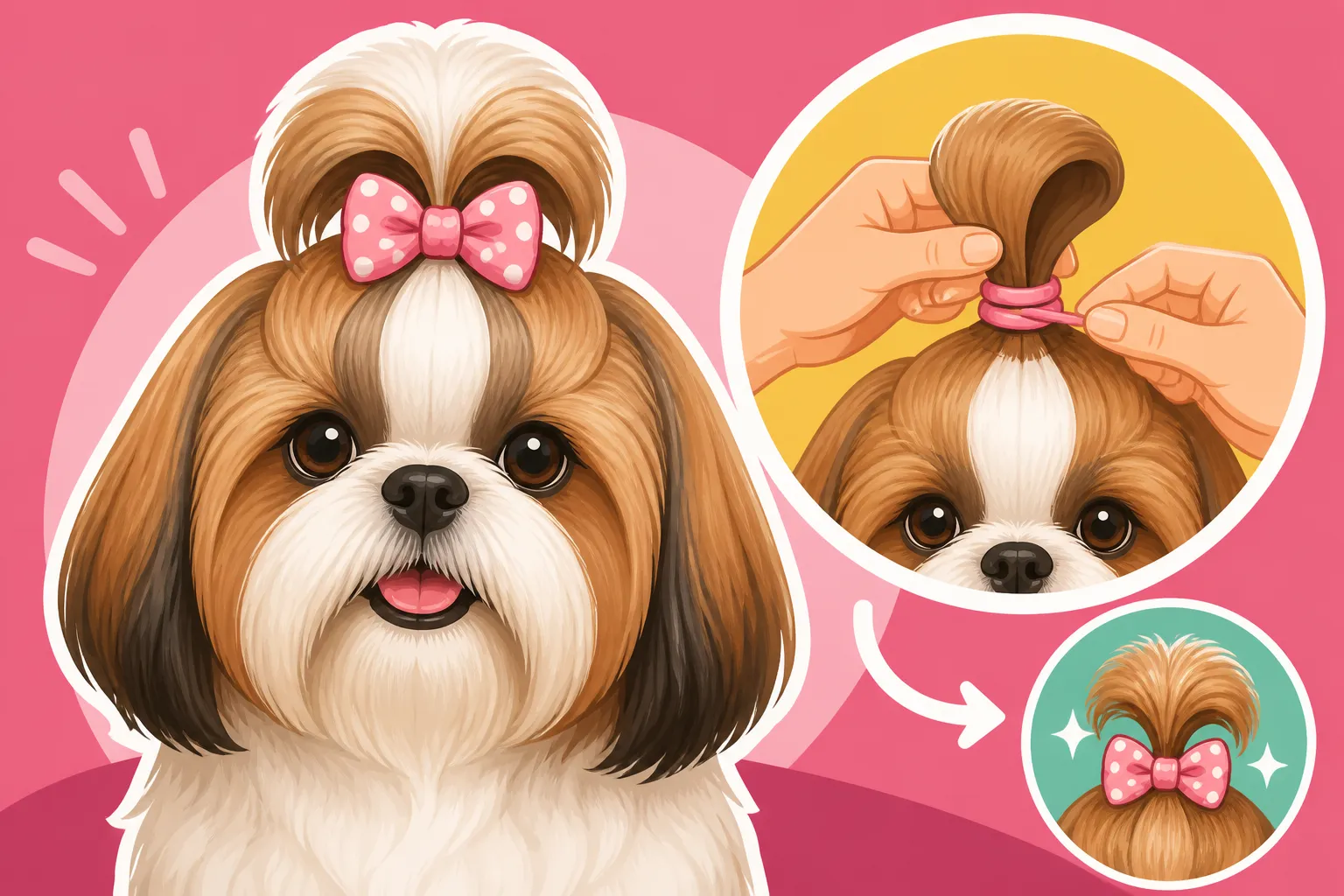
With the gathered hair held firmly in one hand, take one of your small latex grooming bands. Loop it around the base of the gathered hair, close to the skull, as many times as possible until it feels very snug. You want it tight enough to hold, but not so tight that it pinches the skin or causes visible tension on your dog's face. Usually, three to four wraps are sufficient. The trick here is to ensure the band is as close to the skin as possible without digging in, creating a strong anchor point. If you find the band slipping, it’s likely not tight enough or the hair wasn't gathered cleanly at the base. For extra security, especially if your Shih Tzu is very active or has particularly fine hair, you can use a second latex band directly over the first one. Once the band is secure, gently fluff the hair above it to create that classic Shih Tzu puff. If you're adding a decorative bow, now is the time to clip it carefully into the hair just above the secured band. Remember, the goal is not just to tie a topknot, but to tie one that is firm, comfortable, and positioned to keep all that beautiful hair out of their eyes.
Common Topknot Challenges and How to Troubleshoot Them
Even with the perfect tools and technique, you might encounter some common challenges when tying and maintaining your Shih Tzu's topknot. It's a learning process, and every dog is different! Don't get discouraged; these troubleshooting tips can help.
The Slipping Topknot: Causes and Cures
It's the ultimate frustration: you've just tied a beautiful topknot, and within minutes, it's sliding down your Shih Tzu's forehead. There are a few key reasons why this happens, and thankfully, several ways to combat it.
One of the most common reasons for a slipping topknot is simply not gathering the hair tightly enough at the base. If the bundle of hair at the scalp is loose or has stray strands, the band won't have a secure anchor. Make sure your initial parting across the eyes is clean and that all the hair within that section is swept up firmly, close to the skin. Another culprit is using the wrong type of band. Regular rubber bands are too harsh and will break hair, but fabric elastics can sometimes be too slick for a Shih Tzu's fine, silky coat. Small latex grooming bands are generally the most effective because their slightly sticky texture provides superior grip. If you're already using latex bands and they're still slipping, try wrapping the band one or two more times, or even doubling up with a second latex band directly over the first for extra reinforcement.
Humidity and oil buildup can also contribute to slippage. If your Shih Tzu has been playing outside in damp weather or if their hair has become a bit oily, the bands won't grip as well. Ensure the hair is completely clean and dry before tying the topknot. A light spritz of a non-oily hair spray (dog-specific, of course!) can sometimes add a tiny bit of texture and hold to the hair itself, giving the band something more to grab onto. Lastly, consider the placement. If the topknot is tied too far forward on the forehead, the natural movement of their head can cause it to slide down. Aim for the topknot to sit slightly back, just where the crown of their head begins to round. Consistency in your technique and diligent practice will go a long way in creating a topknot that truly holds.
Preventing Hair Breakage and Skin Irritation
While a secure topknot is important, it should never come at the cost of your Shih Tzu's comfort or hair health. Hair breakage and skin irritation are unfortunate side effects of improper topknot care.
The primary cause of hair breakage is bands that are too tight or are left in for too long. Over-tight bands can pull on the hair follicles, leading to thinning, breakage, and even bald spots over time. Always ensure the band is snug, but not painfully taut against the skin. You should be able to slide a thin fingernail underneath the band without too much effort. Another major factor is how you remove the band. Never, ever pull a band off a Shih Tzu's head. Those latex bands, in particular, will grip the hair and tear it out. Instead, use a seam ripper or small, blunt-ended cuticle scissors to carefully snip the band. Make sure to snip the band itself, not the hair! Regularly alternating the exact spot where you tie the topknot can also prevent stress on the same section of hair, allowing follicles to recover.
Skin irritation, on the other hand, can stem from several issues. Bands left in for too long can rub and chafe the skin, especially if your Shih Tzu is constantly scratching at it. Change the topknot daily to check the skin underneath and allow it to breathe. Moisture trapped under a band, from drinking water or sweat, can also lead to skin irritation or even a mild infection. Ensure the hair and skin are thoroughly dry before tying the topknot. If you notice any redness, bumps, or excessive scratching, remove the topknot immediately and let the area heal. Consider using softer, fabric-covered bands during this healing period. Some dogs are also sensitive to certain materials, so experimenting with different band types can help. Remember, your Shih Tzu should be comfortable, not constantly bothered, by their topknot. This is part of ensuring their overall well-being, just like avoiding Rough Play That Puts a Shih Tzu Eye at Risk.
When Your Shih Tzu Hates the Topknot
Some Shih Tzus tolerate topknots with graceful indifference, while others act like you're asking them to wear a crown of thorns. If your Shih Tzu vehemently resists the topknot, don't despair – there are strategies to help.
First, consider why they hate it. Is it discomfort? If the band is too tight, pulling, or catching on tangles, it's understandably unpleasant. Revisit your technique: ensure the hair is thoroughly brushed and detangled, the part is clean, and the band is snug but not painful. Use a soft, fabric-covered band initially if latex seems to bother them. It could also be a matter of routine and association. If topknot tying is a frantic, rushed affair, your dog will naturally develop an aversion. Introduce the process gradually and positively. Start with short sessions, just brushing the head hair and offering high-value treats. Slowly work up to gathering the hair, securing it, and immediately rewarding them lavishly. Keep the first few topknot wearing sessions very short – just a few minutes, then remove it gently and give more praise and treats. This positive reinforcement, as discussed in Positive Reinforcement With a Shih Tzu, is key to changing their perception.
Another factor could be their general handling tolerance. Some Shih Tzus aren't used to having their faces or heads handled extensively. If this is the case, you'll need to work on desensitization outside of actual topknot tying. Gently touch their face, stroke their head, and give treats. Gradually increase the duration and intensity of the handling. For puppies, starting Practicing Face Trims on a Shih Tzu Puppy early is vital. If they still resist, try a very short, practical trim of their bangs instead of a full topknot to keep hair out of their eyes, then slowly reintroduce the topknot later once they're more comfortable with facial grooming. Sometimes, a professional groomer can also help with the initial training, as dogs often behave differently for a professional. Always prioritize your dog's comfort and well-being; forcing the issue can damage your bond and make future grooming even harder.
Maintaining the Topknot and Your Shih Tzu's Eye Health
Tying a topknot is only half the battle; maintaining it and ensuring it effectively protects your Shih Tzu's eyes is an ongoing commitment. Daily vigilance and a consistent routine are what will make all the difference for their comfort and health.
Daily Checks and Re-tying Routine
A topknot is not a "set it and forget it" kind of accessory. For the sake of your Shih Tzu's hair health and overall comfort, you should be checking and re-tying their topknot daily.
Think of it this way: your Shih Tzu sleeps, plays, and probably rubs their face on carpets or furniture throughout the day. All of these activities will inevitably loosen the topknot and cause hair to slip out. Leaving an old, loose topknot in place can lead to several problems. Firstly, as hair slips out, it falls back into their eyes, defeating the whole purpose of the topknot. Secondly, a loose band will rub against the hair, causing friction and leading to matting at the base of the topknot. This matting can be painful and difficult to remove without cutting the hair. Thirdly, an old band, especially a latex one, can start to break down and become brittle, potentially snagging and breaking hair when it's finally removed. Therefore, make it a part of your daily routine to gently remove the old band (remembering to snip, not pull!), brush through the hair on their head, check for any skin irritation or tangles, and then re-tie a fresh topknot. This practice ensures maximum effectiveness and minimizes discomfort or damage to their delicate coat. This daily check is also a good opportunity to evaluate the length of their fringe; if it's getting too long, you might consider Trimming a Shih Tzu Fringe Instead of Tying It or booking a grooming appointment.
Combining Topknot Care with Face and Eye Wiping
The topknot is a crucial part of eye health, but it works best when combined with other daily facial hygiene practices. These routines go hand-in-hand to keep your Shih Tzu's face clean, dry, and free from irritation.
After you've secured a fresh topknot, take a moment to address the rest of their face. Shih Tzus are notorious for tear staining, which is caused by excess tearing and pigments in their tears. While a topknot helps keep hair out of the eyes, it doesn't stop the tears themselves. Use a soft, damp cloth or a dedicated dog-safe eye wipe to gently clean around their eyes and in the creases of their nose fold. Many Shih Tzu owners also find that Wiping a Shih Tzu Face Twice a Day helps to prevent significant staining and keep the skin healthy. Pay close attention to the area just below their eyes, where tear stains tend to accumulate. After cleaning, ensure the area is completely dry, as moisture can lead to yeast infections and further staining. Similarly, after every meal, it's a good habit to wipe your Shih Tzu's beard and muzzle. Food particles and moisture can cling to their long facial hair, leading to mats, odors, and skin irritation. A quick wipe with a damp cloth will keep their beard clean and fresh. These small, consistent efforts complement the topknot beautifully, ensuring your Shih Tzu's entire face is healthy and happy.
When to Seek Professional Groomer Advice
While home grooming is essential for a Shih Tzu, sometimes a professional's expertise is invaluable, especially when you're struggling with topknots or other aspects of their coat care. Don't hesitate to reach out for help.
If you consistently find your topknots slipping, if your Shih Tzu is constantly scratching at their head despite your best efforts, or if you're seeing signs of skin irritation or hair breakage, a professional groomer can offer personalized advice and demonstrations. They can assess your Shih Tzu's specific hair texture and facial structure, recommend alternative tying techniques, or suggest different products that might work better. They can also teach you how to properly hold your dog, manipulate their hair, and use tools effectively without causing discomfort. Many groomers are happy to give "mini-lessons" on specific tasks like topknot tying during a regular grooming appointment. Sometimes, a professional groomer can even suggest a slight trim around the eyes that makes tying a topknot easier or even less necessary for a short period, as discussed in Choosing a Puppy Cut Length for a Shih Tzu. If you're overwhelmed by constant matting around the head or face, a groomer might recommend a specific "puppy cut" style that keeps the facial hair shorter and more manageable, reducing the need for an everyday topknot. Don't view seeking professional help as a failure; view it as an intelligent way to ensure your Shih Tzu receives the best possible care, leading to a happier, healthier, and better-groomed companion.
Disclaimer
This article is for general informational purposes only and does not constitute professional advice. Laws, prices and regulations vary by location and change over time. Consult a qualified professional for guidance on your specific situation.