Crate Rest for a Shih Tzu With a Slipped Disc
When your beloved Shih Tzu suddenly exhibits signs of agonizing back pain – perhaps yelping when picked up, refusing to jump on the sofa, or dragging their hind legs – it's a terrifying moment that can turn your world upside down. One of the most critical, yet often misunderstood, components of recovery for a slipped disc is strict crate rest. This guide will walk you through exactly what crate rest entails, why it’s so vital for your Shih Tzu's spinal health, and how to make this challenging period as comfortable and effective as possible for both of you.
Understanding Why Slipped Discs Hit Shih Tzus So Hard
Shih Tzus, with their adorable long backs and short legs, are unfortunately predisposed to certain spinal conditions, most notably Intervertebral Disc Disease (IVDD). This condition occurs when the cushions between the vertebrae in their spine either bulge or rupture, pressing on the spinal cord and causing immense pain, nerve damage, and potentially paralysis. It's a shocking diagnosis that no owner wants to hear, but understanding its roots is the first step toward effective management.
The Anatomy of a Vulnerable Spine
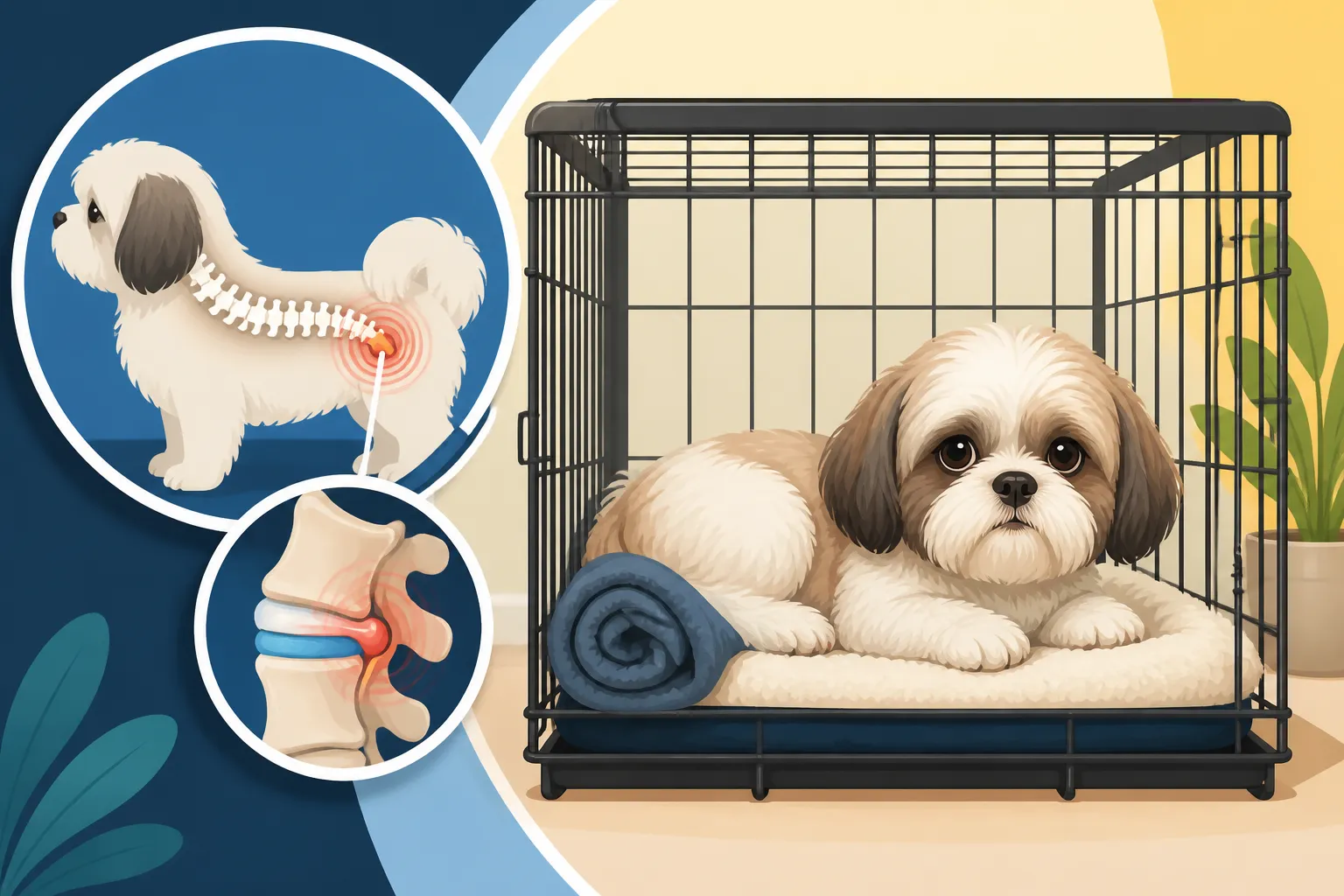
Imagine your Shih Tzu's spine as a series of bony blocks (vertebrae) with jelly-filled donuts (intervertebral discs) nestled in between, acting as shock absorbers. In breeds like the Shih Tzu, these discs can degenerate prematurely, a condition known as chondrodystrophy. Instead of remaining pliable, they harden and can either protrude outwards or rupture completely. This means that a seemingly innocuous jump off a bed or a sudden twist during play can trigger a painful episode. Understanding Why a Shih Tzu Spine Is Built to Slip helps us appreciate just how careful we need to be with their daily movements. Their unique conformation, while charming, sadly places them at a higher risk compared to other breeds.
When a disc problem occurs, the pressure on the spinal cord can range from mild discomfort to severe neurological deficits. The spinal cord is like the highway for messages between the brain and the rest of the body. When that highway is compressed, signals can't get through, leading to weakness, loss of coordination, or even inability to move their back legs. This is why quick action and appropriate treatment, including strict rest, are paramount.
Recognizing the Signs of Trouble
Spotting a slipped disc in a Shih Tzu isn't always obvious at first, as they are masters at masking pain. However, there are several tell-tale signs that should send you rushing to the vet. You might notice them hunching their back, shivering uncontrollably, or becoming reluctant to engage in activities they once loved, like chasing a toy. One of the clearest indicators is Shih Tzu Disc Disease and Sudden Back Pain, which can manifest as a sudden yelp when you touch their back or try to pick them up.
Other symptoms might include an altered gait, walking as if they are drunk, or dragging their paws. Sometimes, you might observe Early Shih Tzu Back Pain Signs such as a loss of appetite, changes in potty habits, or even aggression if you attempt to touch a painful area. In more severe cases, they might lose bladder or bowel control. If you see any of these signs, don't wait. Early veterinary intervention is crucial to prevent further damage and improve the chances of a full recovery. Your vet will conduct a thorough physical and neurological exam, and may recommend diagnostics like X-rays, MRI, or CT scans to pinpoint the exact location and severity of the disc herniation.
The Non-Negotiable Necessity of Crate Rest
Once a slipped disc is diagnosed, whether mild or severe, the first line of defense is almost always strict crate rest. This isn't just a suggestion; it's a critical, non-negotiable part of the healing process. Many owners struggle with the idea of confining their active, social Shih Tzu, feeling like they're punishing them. However, it’s quite the opposite – you’re providing the best possible environment for their fragile spine to heal.
What "Strict" Crate Rest Truly Means
"Strict crate rest" means exactly that: absolutely minimal movement for an extended period, typically between four to eight weeks, depending on the severity of the injury and your vet's recommendations. This isn't just about putting your Shih Tzu in a crate; it's about restricting all activity that could jostle or strain their spine. This includes:
- No jumping: Absolutely no jumping on or off furniture, beds, or people. This is one of the most common ways a Shih Tzu aggravates a disc injury.
- No stairs: Even a single step can cause a jarring motion that can undo days of healing.
- No running or rough play: Playtime with other pets or children is strictly off-limits.
- Limited walking: Walks should be confined to short, leashed potty breaks, immediately returning to the crate afterward.
- Careful handling: When you do need to move your Shih Tzu, lift them gently, supporting both their front and hindquarters to keep their spine level and minimize twisting.
This level of restriction can be incredibly tough on both you and your dog. You’ll feel guilty, and your Shih Tzu might whine or protest. But remember, every moment of rest contributes to their healing. Failing to adhere to strict crate rest often leads to setbacks, prolonged recovery, or even the need for costly surgery. Many owners find peace of mind knowing that pet insurance, such as a policy from Healthy Paws, can help manage the often substantial diagnostic and treatment costs associated with a slipped disc, allowing them to focus solely on their dog's recovery without added financial stress.
How Crate Rest Facilitates Healing
The logic behind crate rest is simple: movement aggravates a damaged disc. Just like a sprained ankle needs rest to recover, a compressed or bulging spinal disc needs immobility to reduce inflammation, allow the disc to resettle, and give the surrounding tissues a chance to heal. When your Shih Tzu moves, jumps, or twists, it puts pressure on the injured disc, potentially pushing it further out or preventing it from retracting.
During crate rest, the inflammation around the spinal cord has a chance to subside, reducing pain and pressure. This allows the body’s natural healing processes to begin repairing the damaged disc material. Your vet will likely also prescribe anti-inflammatory medications and pain relievers to manage discomfort during this period, but these medications work best when coupled with strict immobility. Without the dedicated downtime provided by crate rest, medications alone often aren't enough to prevent further injury or ensure a lasting recovery. It’s a holistic approach where rest, medication, and your diligent care work hand-in-hand to give your Shih Tzu the best chance at a pain-free life.
Crafting the Perfect Recovery Zone
A crate isn't just a cage; it's your Shih Tzu's recovery suite. Making it a comfortable, safe, and easily accessible space is crucial for successful crate rest. The goal is to create an environment where they feel secure and can truly relax, minimizing any urge to move unnecessarily.
Choosing the Right Crate and Bedding
Selecting the appropriate crate size is key. It should be just large enough for your Shih Tzu to stand up, turn around comfortably, and lie down fully stretched out, but not so large that they can pace, run, or jump. Too much space might tempt them to move more than they should, hindering recovery. A wire crate with a divider can be excellent, allowing you to adjust the size as needed, or a soft-sided crate might be preferred for a more den-like feel, as long as it’s sturdy enough to prevent escapes. You can learn more about Crate and Pen Sizes for a Shih Tzu to ensure you get the perfect fit.
For bedding, think supportive and comfortable. Avoid anything too soft or fluffy that might encourage nesting or digging, which can involve twisting. A firm, orthopedic dog bed designed to support joints and spines is ideal. Look for beds with memory foam or dense foam that won’t sag. Layering a soft, washable blanket on top can add extra comfort and makes cleaning easier. Ensure the bedding is clean and dry at all times to prevent skin issues or infections, especially if your Shih Tzu has any urinary incontinence due to nerve damage.
Essential Modifications for Spinal Support
Beyond the crate itself, a few modifications can make a significant difference in your Shih Tzu's comfort and recovery. Raising food and water bowls can prevent your dog from having to bend their neck and back excessively to eat or drink. Elevated bowls are widely available and can be a game-changer for a dog with a sensitive spine. Place them just inside the crate door, or hand-feed and water during scheduled breaks.
Consider placing the crate in a quiet, low-traffic area of your home, but still where your Shih Tzu can feel connected to the family. They thrive on companionship, and isolation can increase their anxiety. Being able to see and hear you will make the confinement much more tolerable. As recovery progresses and your vet clears them for more movement, investing in Ramps for a Shih Tzu With a Long Spine will be crucial. These ramps can help prevent future injuries by eliminating the need for jumping on and off furniture. Additionally, for senior Shih Tzus or those with chronic back issues, providing Joint Support for a Shih Tzu Back and Knees through supplements or specialized diets can aid in long-term spinal health.
Navigating Daily Life During Confinement
Crate rest is a commitment, and it fundamentally changes your daily routine. It's not just about physical confinement; it's also about managing their mental well-being, bathroom needs, and medication schedule. Patience, consistency, and a little creativity will be your best tools.
Potty Breaks and Gentle Handling
Potty breaks are the only times your Shih Tzu should leave the crate. These should be brief and controlled. Always use a harness (not a collar, which can strain the neck and back) and a short leash. Guide them directly outside to their potty spot, stand still while they do their business, and then gently lead them straight back to the crate. Avoid any sniffing around, running, or playing. The goal is business only. Using a comfortable, well-fitting harness will also prevent matting of their delicate coat, which can happen with ill-fitting accessories. You can find excellent advice on Harnesses That Do Not Mat a Shih Tzu Coat to keep your dog comfortable.
When lifting your Shih Tzu, always use two hands to support their entire body, keeping their spine as straight and level as possible. One hand should be under their chest, and the other under their hindquarters. Never pick them up by their armpits or allow their hind legs to dangle. This careful handling is paramount to avoid further injury to the healing disc. If your Shih Tzu is experiencing Shih Tzu Hind Leg Weakness, this gentle support is even more critical.
Keeping Spirits Up Without Physical Strain
One of the biggest challenges of crate rest is managing your Shih Tzu's mental and emotional state. They are intelligent, social creatures, and being confined can lead to frustration or depression. The key is to provide mental stimulation without encouraging physical movement.
- Chew toys: Offer safe, durable chew toys that they can enjoy while lying down. Avoid toys that require vigorous shaking or jumping.
- Puzzle feeders: These can turn mealtime into a mental game, engaging their brain without involving their body. Just make sure the puzzle is manageable within the crate.
- Quiet companionship: Spend time sitting by the crate, gently petting them, and talking to them in a calm, soothing voice. Read a book, watch TV, or work on your laptop next to their crate. Your presence alone can be incredibly comforting.
- Gentle grooming: While full brushing might be too much, gentle face wipes or soft brushing (if they tolerate it while lying down) can be a bonding experience and keep them feeling clean.
Remember, this period of intense rest is temporary. With your dedication and adherence to your vet's instructions, your Shih Tzu has the best chance for a successful recovery. The thought of potentially needing surgery can be daunting, but with proactive care and comprehensive pet insurance from a provider like Healthy Paws, you can ensure your furry friend receives all necessary medical attention without additional financial stress during their healing journey.
Important Considerations During Crate Rest
| Aspect of Care | Typical Shih Tzu Activity | Crate Rest Protocol |
|---|---|---|
| Movement | Running, jumping, playing, climbing stairs | Strict confinement, minimal movement, no jumping/running |
| Potty Breaks | Free access to yard, leisurely walks | Short, leashed trips directly to potty spot, immediately back to crate |
| Lifting/Handling | May be picked up casually | Two-handed support of front and hindquarters, spine kept level |
| Mental Stimulation | Active play, training sessions, car rides | Puzzle feeders, safe chew toys, quiet companionship, gentle petting |
| Feeding/Water | Bowls on floor | Elevated bowls or hand-fed, ensure easy access without bending |
| Socialization | Interacting with family, other pets, guests | Limited to quiet family presence near crate, no interaction with other pets/children |
| Monitoring | General observation | Constant vigilance for signs of pain (shivering, yelping), appetite changes, bathroom habits |
Beyond the Crate: A Gradual Return to Normalcy
The end of the crate rest period is a huge milestone, but it's not a free pass to immediately resume all normal activities. The spine is still vulnerable, and a gradual, carefully managed reintroduction to activity is crucial to prevent re-injury. Your vet will provide specific guidelines, but generally, this phased return takes several weeks.
Slowly Reintroducing Activity
Once your vet gives the green light to reduce crate time, you'll start with very short, controlled periods of activity outside the crate. This might mean five minutes of walking on a leash in the house a few times a day, slowly increasing the duration over several weeks. Avoid any high-impact activities, jumping, or rough play for an extended period, possibly indefinitely depending on the severity of the initial injury. Instead, focus on gentle exercises that strengthen core muscles without straining the spine.
This might include very slow, short walks on soft surfaces, gentle massage, or even canine physical therapy exercises recommended by your vet. Remember those ramps? Now is the time to really integrate them into your home to ensure your Shih Tzu doesn't jump onto sofas or beds, protecting their vulnerable back from future strain. While it’s wonderful to see your Shih Tzu regaining their mobility, it’s also important to acknowledge that sometimes, despite the most diligent crate rest, some severe cases of disc disease might still lead to the question of Whether a Shih Tzu Walks Again After Disc Surgery, underscoring the seriousness of these conditions. Having a robust pet insurance plan, like one offered by Healthy Paws, can be a lifesaver, covering a significant portion of the costs for physical therapy, hydrotherapy, or even advanced mobility aids that might be needed post-surgery.
Long-Term Management and Prevention
Even after recovery, your Shih Tzu will always have a predisposition to disc issues. Therefore, lifelong preventive measures are essential. Maintaining a healthy weight is paramount, as obesity puts extra strain on their spine. Regular, gentle exercise that strengthens core muscles without jarring the back is ideal, such as short, controlled walks or swimming (if your Shih Tzu enjoys it and can do so safely with a life vest).
Continue to use ramps or pet stairs to prevent jumping. Be mindful of how you pick up and handle your Shih Tzu, always supporting their back. Consider supplements recommended by your vet for joint and spinal health. Regularly check for Shih Tzu Obesity and the Load on Its Back and adjust their diet and exercise as needed. Being proactive and consistent with these habits can significantly reduce the risk of future slipped discs, ensuring your beloved companion enjoys a long, comfortable, and happy life.
Disclaimer
This article provides general information and guidance regarding crate rest for Shih Tzus with slipped discs. It is not a substitute for professional veterinary advice, diagnosis, or treatment. Always consult with your veterinarian or a qualified animal health provider for any questions regarding your pet's medical condition or before making any decisions about their care.