Trimming Face Hair Away From Shih Tzu Eyes
It's a familiar sight for any Shih Tzu owner: that adorable, flowing mane of hair, so luxurious and soft, yet so prone to finding its way right into those precious, often prominent eyes. You try to push it back, use a little clip, but before you know it, a rogue strand has managed to poke an eye, leading to squinting, irritation, and the all-too-common tear stains that follow. It's not just about aesthetics; untamed facial hair can be a real health hazard for your beloved companion. This guide will walk you through everything you need to know about safely and effectively trimming the hair around your Shih Tzu's eyes, ensuring their comfort, clear vision, and overall well-being.
Why Keeping Shih Tzu Face Hair Trimmed is Crucial
Ignoring the hair around your Shih Tzu's eyes isn't just a minor oversight; it can lead to a host of uncomfortable and even painful problems for your furry friend. Their unique facial structure, with those lovely big eyes and often a slightly prominent globe, makes them particularly susceptible to issues caused by errant strands.
Preventing Eye Irritation and Injury
Think about having a piece of hair constantly poking you in the eye – it's annoying, right? For a Shih Tzu, it’s even worse. Their long, silky hair, especially around the face, grows quickly and can easily brush against or even poke directly into the delicate surface of the eye. This constant friction can cause minor irritation, leading to excessive tearing and redness. Over time, this chronic irritation can escalate into more serious conditions.
For instance, persistent poking can scratch the cornea, leading to a painful condition known as a corneal ulcer. These are essentially open sores on the eye's surface and can become infected if not treated promptly. In severe cases, deep ulcers can even lead to vision loss. Another common issue is pigmentary keratitis, where dark pigment spreads across the cornea in response to chronic irritation, often from hair. This pigment can eventually obstruct vision. We've all heard the stories, and sadly, sometimes a neglected eye issue can even lead to something as drastic as Shih Tzu Eye Proptosis, the Emergency Owners Miss – where the eye pops out of its socket due to trauma, which hair irritation could exacerbate if the dog rubs its face excessively. Keeping the hair neatly trimmed is a proactive step in preventing such distressing situations.
Maintaining Clear Vision for Your Shih Tzu
Imagine navigating your home with a curtain constantly obscuring your view. That's essentially what a Shih Tzu experiences when their facial hair grows too long and falls into their eyes. While they rely heavily on their sense of smell, clear vision is still incredibly important for their quality of life. Long hair can make it difficult for them to see toys, locate treats, or even recognize family members clearly.
This visual obstruction can make them hesitant to move around, especially in new environments, and might even lead to them bumping into furniture or struggling to go up and down stairs. It's not just about seeing obstacles; it affects their ability to read social cues from other dogs or people, potentially leading to anxiety or misunderstanding. A Shih Tzu who can see clearly is a more confident, happier, and safer dog, able to interact with their world fully.
Reducing Tear Staining and Keeping the Face Clean
Tear staining is another familiar challenge for many Shih Tzu owners, and while genetics and diet play a role, excess facial hair significantly contributes to the problem. The hair around the eyes acts like a wick, drawing tears and moisture down from the eye. This damp environment, combined with natural oils and dirt, creates a breeding ground for yeast and bacteria, leading to the reddish-brown discoloration we know as tear stains.
Beyond the cosmetic aspect, this constant dampness and bacterial growth can cause skin irritation or even infections in the delicate skin folds around the eyes and nose. This can be itchy and uncomfortable, leading your Shih Tzu to rub or scratch their face, further exacerbating the problem and potentially causing new injuries. Regularly trimming the hair in this area minimizes the surface for moisture to cling to, promoting better airflow and helping to keep the skin dry and healthy. It also makes it much easier to wipe away any moisture that does accumulate, which is key to preventing those stubborn stains. For more on this, consider exploring Shih Tzu Corneal Ulcers and Dry Eye and Why Hair in the Eye Damages a Shih Tzu Cornea.
Essential Tools and Preparation for Face Trimming
Before you even think about picking up a pair of scissors, it's vital to gather the right equipment and ensure your Shih Tzu is ready for the grooming session. Proper preparation makes the experience safer, less stressful, and more effective for both of you.
Gathering the Right Grooming Supplies
You wouldn't use kitchen shears for a precise haircut on yourself, and the same goes for your Shih Tzu. Investing in good quality, appropriate tools is crucial for their safety and comfort.
- Blunt-Nosed Scissors: These are non-negotiable. Their rounded tips drastically reduce the risk of accidentally poking your dog's eye if they suddenly move. Look for a small pair specifically designed for pet grooming. Brands like Andis or Wahl offer reliable options.
- Fine-Toothed Comb: A small metal comb with closely spaced teeth is essential for carefully separating the hair and checking for tangles before you cut. This allows you to isolate the strands you need to trim and ensure you're not cutting into mats.
- Eye Wipes or Soft Damp Cloth: Before you start, you'll want to gently clean any crust or debris from around the eyes. Pet-specific eye wipes or a soft cloth dampened with warm water are perfect for this. Avoid harsh chemicals or anything with alcohol.
- Small Trimmer (Optional): For some dogs, especially those prone to heavy tear staining, a small, quiet trimmer (like a Wahl Peanut or an Oster mini-trimmer) can be used very carefully between the eyes on the bridge of the nose. However, this requires a very steady hand and a calm dog, so it's not a starting point for beginners.
- High-Value Treats: Positive reinforcement is your best friend during grooming. Have plenty of your Shih Tzu's favorite small treats on hand to reward good behavior.
- Good Lighting: Ensure you're working in a well-lit area so you can clearly see what you're doing and minimize shadows.
Having these tools readily available ensures you won't have to stop mid-trim to search for something, which can unsettle your dog.
Getting Your Shih Tzu Comfortable with Grooming
Nobody likes a surprise haircut, especially not a small dog who doesn't understand what's happening. The key to successful face trimming is to start early and make it a positive experience. This is part of a broader training effort, as outlined in guides like Getting a Shih Tzu Used to Face Trims.
Begin by simply handling your Shih Tzu's face and head frequently, especially when they are a puppy. Touch their ears, stroke their forehead, and gently hold their chin. Offer praise and treats for calm acceptance. Once they're comfortable with being handled, introduce the tools, but don't use them immediately. Let them sniff the scissors, hear the sound of the comb, and associate these objects with positive things like treats. You might gently tap the blunt scissors around their face (closed, of course!) while giving treats, just to get them used to the sensation.
Keep these sessions very short, perhaps just a minute or two, gradually increasing the duration as your dog becomes more relaxed. The goal is to build trust and teach them that grooming time isn't scary, but rather a time for gentle handling and tasty rewards. A calm demeanor from you will go a long way in reassuring your Shih Tzu.
Setting Up a Safe Trimming Area
Your grooming environment significantly impacts the success and safety of the trimming process. A chaotic or unstable setting can lead to accidents.
First, choose a stable, elevated surface. A sturdy grooming table with a non-slip mat is ideal, but a kitchen counter or a strong, non-wobbly table covered with a bath mat or towel can also work. The elevation prevents you from having to bend over uncomfortably and gives you better control over your dog. Crucially, it also means your dog is less likely to jump down and injure themselves.
Next, ensure the area is free from distractions. Turn off the TV, ask family members to be quiet, and secure other pets in a different room. You need your Shih Tzu's full attention (or as much as you can get!) and you don't want anything to startle them unexpectedly while you have scissors near their eyes. Good lighting, as mentioned before, is also paramount. A brightly lit room, perhaps with an additional task light, will illuminate those fine hairs clearly. Some owners prefer to work near a window during the day for natural light. Never attempt to trim your Shih Tzu's face in dim lighting, as this significantly increases the risk of error.
A Step-by-Step Guide to Trimming Shih Tzu Face Hair
Now that you're prepared, let's get down to the actual trimming. Remember, patience and a gentle touch are your best assets here. Take your time, and don't be afraid to take breaks if your Shih Tzu becomes agitated.
Preparing the Face and Eyes
Before you make any cuts, it's essential to ensure the area is clean and tangle-free. This not only makes the job easier but also prevents you from accidentally pulling hair or cutting into hidden mats.
Start by gently cleaning around your Shih Tzu's eyes with a pet-specific eye wipe or a soft, damp cloth. Remove any sleep, crust, or debris that might be clinging to the hair or skin. This clears your working area and reduces the risk of introducing bacteria if you accidentally nick the skin.
Next, take your fine-toothed comb and carefully comb out all the hair around their face. Begin by gently combing upwards and outwards from the eye area, then downwards. This helps you identify any tangles or mats. If you encounter a mat, do not pull it. Instead, try to gently tease it apart with your fingers or the very tips of your comb. For stubborn mats, a little detangling spray can help, but always avoid spraying directly into the eyes. If a mat is too tight and close to the skin, it might be safer to carefully snip it out away from the eye, or consider a professional groomer. The goal is a smooth, flowing coat so you can clearly see the hair you intend to trim.
The Topknot Method for Longer Hair
For Shih Tzus with longer facial hair, the topknot is a classic and practical solution that keeps hair out of their eyes without requiring frequent trimming of the fringe. This method is often preferred for show dogs or those with a full, flowing coat.
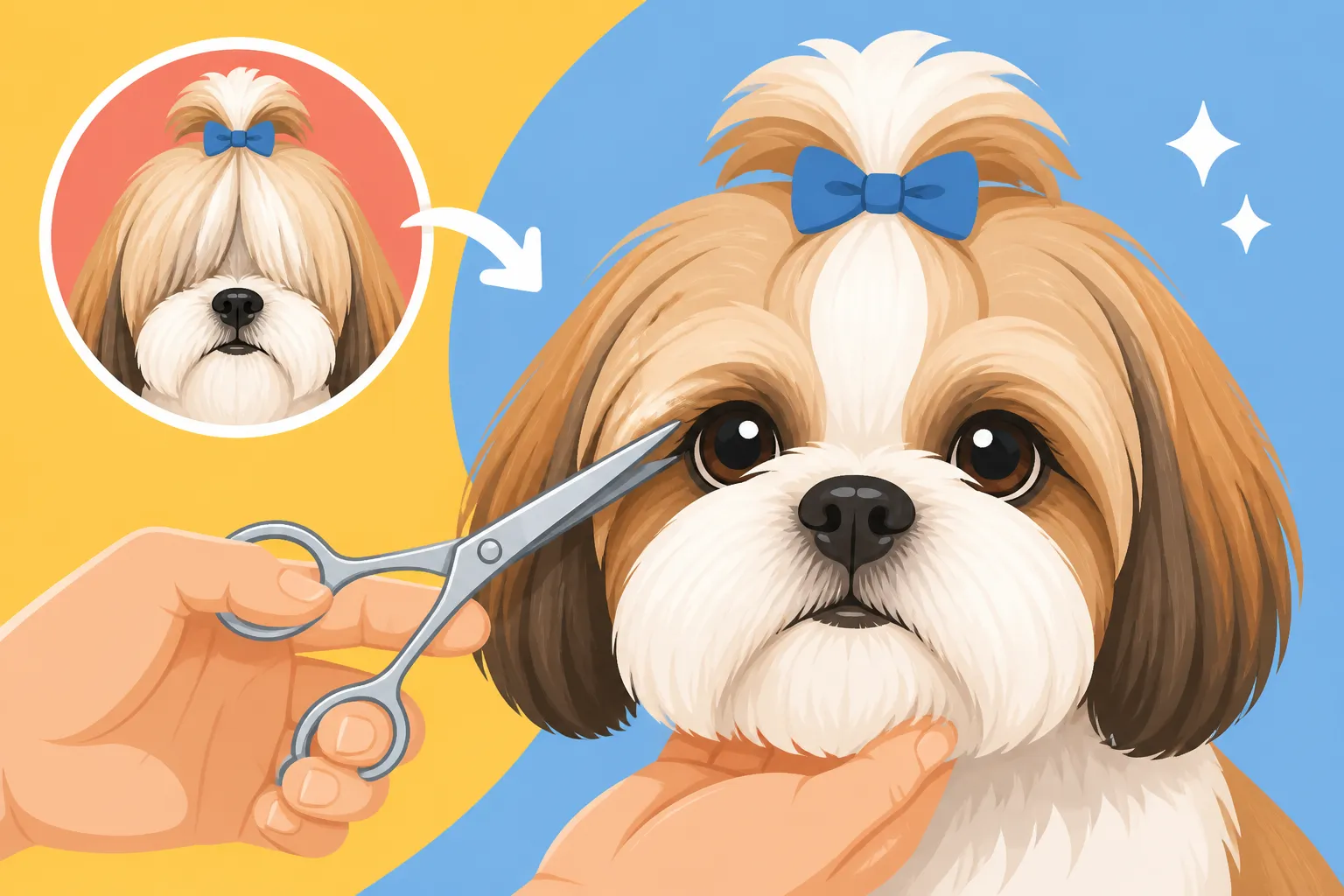
To create a topknot, gather all the hair from the bridge of the nose upwards to the top of the head, ensuring you collect all the strands that could fall into the eyes. Use your fine-toothed comb to smooth the hair upwards, creating a neat section. Once you have a clean, even section, secure it with a small, soft elastic band. Make sure the band isn't too tight, which can be uncomfortable or even pull out hair. Pet-specific bands, often made of latex, are designed to be gentle on delicate hair. A guide like Tying a Shih Tzu Topknot That Holds can offer more detailed instructions.
The topknot should sit comfortably on top of their head, pulling the hair away from their eyes without causing any tension on the skin. You can leave it as a simple pony or adorn it with a small bow for that iconic Shih Tzu look. Regularly checking the topknot for tightness and cleanliness is important, and you'll typically need to redo it daily or every other day to keep it neat and prevent matting at the base.
Trimming the Fringe and Around the Eyes
If a topknot isn't your preference, or if your Shih Tzu's hair is kept shorter, careful trimming of the fringe and around the eyes is essential. This is where those blunt-nosed scissors become your hero.
First, hold your Shih Tzu's head gently but firmly. You can cup their chin with one hand, or have a helper do it. Speak in a calm, reassuring voice. Using your non-dominant hand, carefully part the hair directly over their eye, pulling the long strands upwards and outwards, away from the eyeball. With your blunt-nosed scissors in the dominant hand, trim only the very tips of the hair that would fall into the eye. Always point the blunt tips of the scissors away from the eye, never towards it.
Many owners find it easiest to aim for a slight "V" shape above the nose, trimming from the outer corner of the eye down towards the center of the nose, and then repeating on the other side. This creates a clear path for vision. Alternatively, you can opt for a more rounded "teddy bear" look, carefully trimming the hair to follow the natural curve of the eye socket.
For the hair directly above the eyes, use your comb to lift the hair straight up. Then, holding the comb parallel to the forehead, carefully snip the hair that extends beyond the comb's teeth. This creates a neat brow line. Remember, it's better to trim too little than too much. You can always take more off, but you can't put it back on! For owners who choose this method, Trimming a Shih Tzu Fringe Instead of Tying It provides valuable insights.
Addressing the Bridge of the Nose and Beard Area
Beyond the immediate eye area, the hair on the bridge of the nose and the beard also requires attention to maintain hygiene and prevent issues.
The hair on the bridge of the nose, particularly between the eyes, can grow quite long and contribute to tear staining by wicking moisture down onto the nose fold. To trim this, use your fine-toothed comb to part the hair gently and brush it away from the eyes towards the center of the nose. With your blunt-nosed scissors, carefully snip just the very tips of these hairs to shorten them, again pointing the scissors away from the eyes. This opens up the area, allowing for better air circulation and making it easier to clean the nose fold.
The Shih Tzu's characteristic beard can also become a trap for food and moisture, leading to staining, odors, and potential skin irritation. After meals, bits of kibble or wet food can cling to the beard hair, creating a sticky mess. Regularly washing your Shih Tzu's face after every meal is crucial, but trimming the beard can also help. You can carefully trim the length of the beard hair, especially around the mouth, to make it more manageable and less likely to collect debris. Again, use blunt-nosed scissors and exercise extreme caution around the lips and tongue. A comb can help you gather the hair before you cut. This attention to detail contributes to overall hygiene, complementing daily practices like Daily Toothbrushing in a Crowded Shih Tzu Jaw.
Finishing Touches and Positive Reinforcement
Once you've completed the trimming, take a moment for the final checks and, most importantly, positive reinforcement.
First, gently comb through the trimmed areas again to ensure there are no stray hairs that might fall into the eyes or irritate the skin. Use a clean, soft cloth or eye wipe to gently clean around the eyes one last time, removing any tiny clipped hairs that might have settled on the face. These tiny hairs can be irritating if left behind.
Then, shower your Shih Tzu with praise! Tell them how good they were, give them plenty of petting, and most importantly, offer them a high-value treat. End the session on a positive note, making it clear that they've done a wonderful job. This reinforces the idea that grooming is a good thing and helps build a positive association for future sessions. Consistency in praise and rewards is key to ensuring they remain cooperative and comfortable with this necessary routine.
Common Mistakes to Avoid and Troubleshooting Tips
Even with the best intentions, grooming can present challenges. Knowing what to avoid and how to troubleshoot common issues will help you navigate the process more smoothly and safely.
Rushing the Process and Causing Injury
The biggest mistake a well-meaning owner can make is trying to rush through the trimming process. Shih Tzus are small, and their faces are delicate. A sudden head movement combined with quick, imprecise scissor work is a recipe for disaster. This is often how eye pokes or nicks occur.
Troubleshooting:
- Take it Slow: If your Shih Tzu is new to grooming, perform very short sessions – literally 30 seconds to a minute at first. Focus on one small area, give a treat, and then stop. Gradually increase the time as they become more comfortable.
- Breaks are Your Friend: If your dog starts to get antsy, squirmy, or shows signs of stress (lip-licking, yawning, turning head away), take a break. Put the tools down, give them a cuddle, walk away for a few minutes, then try again if they've calmed down. Never force them.
- Enlist Help: Having a second person gently hold and reassure your Shih Tzu can make a huge difference, freeing you to focus on the trimming with both hands.
Remember, a little extra time spent now could prevent a costly and painful vet visit for an eye injury later, a concern that organizations like Healthy Paws pet insurance often see.
Using Incorrect Tools
Using the wrong tools is incredibly risky. Regular household scissors are often too large, too sharp-pointed, and not designed for the delicate task of trimming around a pet's eyes. Likewise, electric clippers can be intimidating and are very easy to misuse in such a sensitive area if you're not experienced.
Troubleshooting:
- Blunt-Nosed Scissors ONLY: Reiterate the importance of these. They are designed for safety first.
- Proper Comb: A fine-toothed comb helps separate hair and prevent accidental cutting of healthy hair or skin. Avoid using brushes for this precise work, as they don't offer the same control.
- Sharp Blades: Ensure your blunt-nosed scissors are sharp. Dull scissors can pull hair, causing discomfort and making your dog dislike the process. If your scissors are pulling, it's time to sharpen or replace them.
Dealing with a Wiggly Shih Tzu
Some Shih Tzus are just naturally more wiggly or nervous during grooming, making the task feel impossible. It's frustrating when they just won't stay still!
Troubleshooting:
- Choose the Right Time: Attempt grooming when your Shih Tzu is calm and relaxed, perhaps after a walk or playtime when they're a bit tired. Avoid grooming when they're full of energy or overly stimulated.
- Secure Yet Gentle Hold: If you have a helper, they can gently hold your dog's head and body. If you're alone, use your non-dominant hand to cup their chin and forehead, providing stability without being forceful.
- Practice Handling: As mentioned, consistent, positive handling of their face and head outside of grooming sessions builds tolerance. The more accustomed they are to being touched in that area, the less they'll struggle. This is a core component of A Shih Tzu That Bites During Eye Wiping prevention.
- Muzzle Training (if necessary): For extremely nervous or reactive dogs, muzzle training can be a safety measure, ensuring you can complete the trim without fear of being bitten. However, this should always be introduced positively and calmly, never as punishment.
What to Do If an Accident Happens
Even with the utmost care, accidents can sometimes occur. If you nick the skin or, worst case, poke an eye, it's important to act quickly and calmly.
Troubleshooting:
- Small Nick/Cut:
- Apply gentle pressure with a clean cloth or sterile gauze to stop any bleeding.
- Clean the area with a pet-safe antiseptic solution or plain warm water.
- Keep a close eye on the cut for any signs of infection (redness, swelling, discharge).
- If the bleeding is persistent or the cut seems deep, contact your vet immediately.
- Eye Injury:
- If you suspect an eye injury (e.g., your dog is suddenly squinting, pawing at their eye, the eye appears red, cloudy, or there's excessive discharge), do not try to treat it yourself.
- Immediately contact your veterinarian or an emergency vet clinic. Eye injuries can escalate quickly and threaten vision. Prompt veterinary attention is critical. Many owners rely on pet insurance like Healthy Paws to help cover the unexpected costs of such emergencies.
- While waiting for vet advice, try to prevent your dog from rubbing or scratching the eye further. An Elizabethan collar (e-collar) might be necessary.
Long-Term Face Hair Management and Professional Grooming
Trimming your Shih Tzu's face hair isn't a one-and-done task; it's an ongoing commitment that ensures their long-term health and comfort. Developing a routine and knowing when to call in the professionals are key to success.
Establishing a Regular Trimming Schedule
Consistency is absolutely vital when it comes to managing your Shih Tzu's facial hair. Their hair grows continuously, and what was neatly trimmed a few weeks ago can quickly become an irritating curtain over their eyes again.
Most Shih Tzus benefit from face trimming or topknot maintenance every 2-3 weeks. Some might even need a quick touch-up weekly, especially if their hair grows very fast or if they are particularly prone to tear staining. Keeping a calendar reminder can be incredibly helpful in staying on schedule.
Making grooming a regular part of your routine also helps your Shih Tzu become more accustomed to it. They learn what to expect, and over time, the process becomes less stressful for both of you. Regular small trims are far easier to manage than trying to tackle a severely overgrown and matted face. This proactive approach helps prevent minor irritations from escalating into more serious conditions like Pigmentary Keratitis in a Shih Tzu.
When to Seek Professional Help
While home grooming is empowering, there are definitely times when enlisting the help of a professional groomer is the best course of action. Don't feel guilty about it; they are experts for a reason!
Consider a professional if:
- Your Shih Tzu is too wiggly or reactive: If you consistently struggle to keep your dog still, and you fear causing injury, a professional groomer has the experience and specialized equipment (like grooming loops and tables) to safely manage a difficult dog.
- You lack confidence: If you're nervous about using scissors around your dog's eyes, that anxiety can transfer to your dog, making the process even harder. A groomer can provide peace of mind.
- Severe matting: If the hair around your Shih Tzu's eyes is severely matted, it's often best left to a professional who can carefully and safely remove it without causing pain or injury.
- You prefer specific styles: If you want a particular haircut, like a perfectly symmetrical "teddy bear" face or a beautifully styled show topknot, a professional groomer has the skills to achieve it.
- Lack of time: Life gets busy! If you simply don't have the consistent time to dedicate to regular face trims, a professional can step in to maintain your Shih Tzu's comfort and hygiene.
Many owners opt for a professional groom every 4-6 weeks for a full bath, brush, and trim, then do quick face touch-ups at home in between. This offers the best of both worlds. When choosing a groomer, make sure they have experience with Shih Tzus and understand the unique needs of brachycephalic breeds and delicate eye care.
The Benefits of a Puppy Cut for Easier Maintenance
For many Shih Tzu owners, especially those who aren't keen on daily brushing or intricate topknots, the "puppy cut" is a fantastic solution for low-maintenance facial hair and overall coat care.
A puppy cut involves keeping the entire coat, including the facial hair, at a relatively short, uniform length – usually between half an inch to two inches. This drastically reduces the likelihood of hair falling into the eyes and makes daily grooming much simpler. With a puppy cut, the hair around the eyes can be neatly trimmed short and round, preventing any strands from poking the cornea.
The advantages of a puppy cut include:
- Reduced eye irritation: Less hair means less chance of foreign objects or hair irritating the eyes.
- Less tear staining: Shorter hair means less surface for moisture and bacteria to cling to, making face cleaning easier.
- Simplified brushing: A shorter coat is less prone to matting, making daily brushing a quicker, easier task.
- Cooler in summer: A shorter coat can help your Shih Tzu stay cooler in warmer weather, although caution is still needed for flat-faced breeds.
While a puppy cut means you won't have the long, flowing coat of a show Shih Tzu, it provides an excellent balance of aesthetics, comfort, and practicality for the average pet owner. You can learn more about this popular style in The Shih Tzu Puppy Cut and Its Upkeep. Just remember that even with a short cut, you'll still need regular trims (every 4-8 weeks, depending on growth) to maintain the length and keep the face neat.
Disclaimer
This guide is intended for informational purposes only and is not a substitute for professional veterinary advice. Always consult with your veterinarian for any health concerns or before making any significant changes to your Shih Tzu's care routine, especially in cases of injury or suspected eye problems.