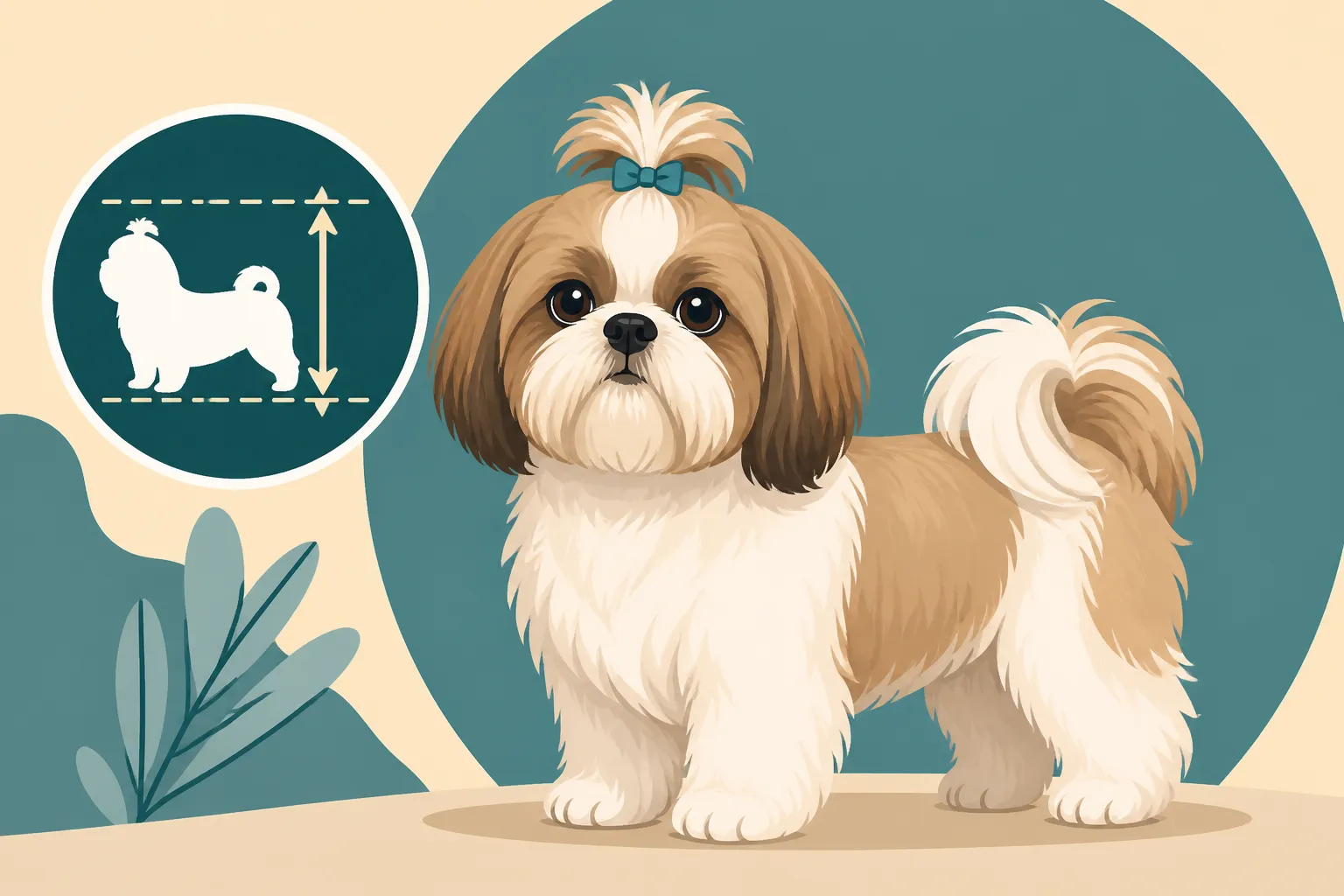
Nine to Ten and a Half Inches at the Shoulder
You’ve brought home this adorable fluffball, or maybe you’re considering it, and you keep hearing about "breed standards" and specific measurements like "nine to ten and a half inches at the shoulder." It can be confusing and even a little intimidating to decipher what all these numbers mean for your precious companion. This guide will cut through the jargon, explaining why the Shih Tzu's standard height is important, how it impacts their everyday life, and what it truly means for you as an owner.
The Foundation of the Shih Tzu Standard
The concept of a breed standard often sounds like something only relevant to the show ring, a strict set of rules for competitive exhibition. But for companion breeds like the Shih Tzu, these standards are far more than just aesthetic guidelines; they are historical blueprints that describe the ideal characteristics of the breed, including temperament, coat, and, yes, physical dimensions like height and weight. Understanding these standards helps us appreciate the unique qualities that make a Shih Tzu, well, a Shih Tzu.
What Is a Breed Standard, Anyway?
Think of a breed standard as the official description of what a particular dog breed should be, developed by parent clubs and recognized by kennel clubs like the AKC. It's a comprehensive document that outlines everything from the shape of their eyes to the set of their tail, the texture of their coat, and, crucially, their size. For a Shih Tzu, the standard is meticulously crafted to reflect the breed's rich history as a pampered companion from ancient China. It paints a picture of the ideal Shih Tzu, a sturdy, luxurious dog that embodies both elegance and a charming, outgoing personality. When you look at The Shih Tzu Standard and What Judges Look For, you'll see how every detail contributes to this overall picture.
Breed standards are developed with several goals in mind. Firstly, they preserve the unique characteristics of a breed, ensuring that future generations maintain the traits that define it. Secondly, they serve as a guide for breeders, helping them make informed decisions to produce healthy, typical specimens. And finally, for owners, understanding the standard offers insight into what to expect from their dog in terms of appearance, health predispositions, and personality. It's not about being perfect, but about understanding the heritage and intentional design of your beloved pet.
Historical Context of Shih Tzu Size
The Shih Tzu's journey from the imperial palaces of China to our modern homes is fascinating, and their size played a significant role in their original purpose. These dogs were bred primarily as companions, cherished "lion dogs" meant to grace the laps of royalty and nobles. This meant they needed to be small enough to be easily carried, to fit comfortably on a cushion or a bed, and to thrive in an indoor environment. Their size was, in essence, part of their job description.
The early Shih Tzus were carefully managed within the imperial court, with specific breeding programs designed to maintain their desired traits. When the breed eventually made its way to the West, particularly in the early 20th century, these historical preferences for a compact, sturdy build were codified into the modern breed standard. The particular range of nine to ten and a half inches at the shoulder reflects this long history of careful selection for a dog that is small but not fragile, substantial enough to be a robust companion yet petite enough to be regal. It’s part of their story, rooted deeply in their role as cherished house pets rather than working dogs. For more on their storied past, you might be interested in The Shih Tzu From Tibetan Temples to American Homes.
Deciphering the Nine to Ten and a Half Inch Standard
When the breed standard states a specific height range, it's not just an arbitrary number. This range for the Shih Tzu, "nine to ten and a half inches at the shoulder," is precise and loaded with meaning. It's about maintaining the breed's iconic silhouette, ensuring their physical structure supports their health, and defining what makes a true Shih Tzu.
Where Do You Measure "At the Shoulder"?
This is a common question, and it's simpler than you might think! "At the shoulder" refers to the dog's height at the highest point of its shoulder blades, directly above the front legs. This anatomical point is called the "withers." To measure accurately, your Shih Tzu should be standing squarely on a flat, level surface, not slouching or stretching. You'd typically use a measuring tape or a specialized dog measuring stick (a wicket) and run it straight down from the top of the withers to the ground.
It's important to differentiate this from head height or back length. A Shih Tzu's luxurious coat can often obscure its true physical outline, making it seem larger or taller than it actually is. That's why measurements are taken from a specific, consistent anatomical point – the withers – to ensure accuracy and fairness, especially in a show setting. This measurement is crucial for defining The Rectangular Outline the Standard Wants, which is another key aspect of the breed's conformation.
Why This Specific Range?
The nine to ten and a half inch range isn't pulled out of thin air; it's a carefully considered range that breeders strive for to maintain the breed's integrity and health. This height ensures the Shih Tzu is small enough to be a lapdog, as intended, without being so tiny that they become overly delicate or prone to injuries. A dog much smaller might struggle with structural soundness, while a much larger one could lose the characteristic compact appearance.
This specific range also relates to the Shih Tzu's overall proportions and balance. The standard also specifies a weight range, typically nine to sixteen pounds. When you combine the height and weight, it creates a dog that is sturdy and solid for its small size, possessing "good substance." This "good substance" means they are not spindly or fine-boned but have a robust little body. Breeders work diligently to produce dogs that fit comfortably within both the height and weight parameters, understanding that deviations can impact both appearance and health.
The Practical Impact of Height on Your Shih Tzu
Beyond the aesthetics of the show ring, a Shih Tzu's height, as defined by the breed standard, has practical implications for their health, mobility, and overall quality of life. Owners often overlook these aspects, but they are crucial for providing the best care for your furry friend.
Mobility and Joint Health
A Shih Tzu falling within the standard height range is generally more likely to possess a balanced and sturdy structure, which is important for long-term mobility and joint health. Dogs that are significantly undersized may have weaker bones or more fragile joints, making them more susceptible to common toy breed issues like patellar luxation (slipping kneecaps) or even fractures from minor falls. Conversely, an oversized Shih Tzu might carry more weight on a frame not ideally suited for it, potentially stressing joints and discs over time.
For a breed already prone to Shih Tzu Joint Problems in a Toy Frame and Shih Tzu Back Problems and Disc Disease, maintaining a sound, standard-conforming structure is a proactive step in preventing these issues. A balanced build means their legs, spine, and joints are better equipped to handle the stresses of daily life, whether it's navigating stairs (which they shouldn't do much of, ideally) or simply jumping on and off the sofa. Ensuring your Shih Tzu is structurally sound within the breed standard helps promote a comfortable and active life.
Grooming and Handling Considerations
The standard height also influences the practicality of grooming and daily care. A Shih Tzu of standard size is typically easier to handle for tasks like bathing, brushing, and nail trims. If a dog is significantly larger, lifting them into a tub or onto a grooming table can become more physically demanding for the owner. If they are much smaller and more delicate, the owner might feel anxious about handling them for fear of injury.
Furthermore, the iconic Shih Tzu coat, whether kept long or in a The Shih Tzu Puppy Cut and Its Upkeep, requires regular maintenance. A dog that is too small or overly delicate might be more stressed by grooming sessions, making it harder for both the dog and the owner. The standard size contributes to a dog that is robust enough to comfortably tolerate routine grooming, which is a necessity for keeping their double coat free of mats and tangles. Chewy offers a great selection of brushes and combs specifically designed for the Shih Tzu's coat type, making home grooming a bit easier.
Variations in Shih Tzu Size
While the breed standard sets an ideal, it's a reality that not every Shih Tzu will perfectly fit into the nine to ten and a half inch height bracket. There are variations, some natural, some deliberately bred, and it's important for owners to understand what these differences mean.
"Imperial" and "Teacup" Shih Tzus
You might have heard terms like "Imperial Shih Tzu" or "Teacup Shih Tzu" circulating, often associated with dogs that are marketed as being much smaller than the standard. It’s crucial to understand that these terms are not recognized by any major kennel club, including the AKC. They are primarily marketing terms used by some breeders to command higher prices for smaller dogs.
Often, these "Imperial" or "Teacup" dogs are simply runts of a litter or puppies that are significantly undersized. While they might be undeniably cute, their small stature can come with serious health risks. These dogs can be prone to a host of issues, including fragile bones, difficulty regulating body temperature, hypoglycemia (low blood sugar), organ fragility, and a higher risk during anesthesia. When considering a Shih Tzu, focusing on the health and welfare of the puppy, rather than an arbitrary size label, is always paramount. For a deeper dive into this topic, check out Whether the Word Imperial Means Anything and Teacup Shih Tzus and Why Breeders Sell Them.
Oversized Shih Tzus
On the other end of the spectrum, some Shih Tzus grow to be larger than the standard ten and a half inches, sometimes reaching twelve or even thirteen inches at the shoulder. These dogs are generally robust and healthy, often simply being at the higher end of genetic variation. They might not be eligible for conformation shows, but they can still be wonderful, loving companions.
An oversized Shih Tzu might simply have inherited genes for a slightly larger build from their ancestry. While they might defy the strict letter of the breed standard, their size typically doesn't pose the same inherent health risks as an extremely undersized dog. The key is to ensure they are proportional and well-built, rather than simply large and gangly. As long as they maintain a healthy weight and have a good temperament, an oversized Shih Tzu can thrive in a family home just as well as a standard-sized one.
Measuring Your Shih Tzu Accurately
Knowing your Shih Tzu's true measurements can be useful for several reasons, from tracking growth to ensuring you're buying appropriately sized gear. It's not just about competition; it's about practical ownership.
Step-by-Step Guide to Measuring Height
Measuring your Shih Tzu at home is fairly straightforward, though a second pair of hands can be helpful to keep your dog still!
- Gather Your Tools: You'll need a measuring tape or a yardstick, and possibly a level or a flat ruler to ensure accuracy.
- Choose a Flat Surface: Have your Shih Tzu stand on a flat, non-slip surface like a hard floor, not a soft bed or carpet.
- Position Your Dog: Encourage your Shih Tzu to stand squarely, with all four paws directly under them and their head held naturally, not stretched up or bowed down. This is the "stack" position often seen in dog shows.
- Locate the Withers: Identify the highest point on your dog's back, between their shoulder blades. This is their withers.
- Measure: Place your measuring tape or yardstick vertically from the floor up to the withers. If using a yardstick, you can place a flat ruler or level across your dog's back, resting it on the withers, and then read the measurement where it intersects the yardstick.
- Repeat for Accuracy: Take the measurement a few times to ensure consistency.
Here's a quick comparison of Shih Tzu height and weight:
| Characteristic | Breed Standard Range | Common Variations | Notes for Owners |
|---|---|---|---|
| Height (at shoulder) | 9 – 10.5 inches | Under 9 inches ("Teacup") | May indicate health fragility; consult vet. |
| Over 10.5 inches | Often healthy; may not meet show standards. | ||
| Weight | 9 – 16 pounds | Under 9 pounds | Risks include hypoglycemia, fragile bones. |
| Over 16 pounds | Risk of obesity, joint strain; monitor diet. |
Remember, this isn't about judging your dog, but about having accurate information. If your dog falls significantly outside these ranges, it’s worth a conversation with your veterinarian to discuss any potential health implications.
Why Knowing Your Dog's Measurements Matters
Beyond simply curiosity, knowing your Shih Tzu's precise height and weight can be genuinely helpful for their care. For instance, when ordering specific products like a harness, a coat, or even a dog bed, accurate measurements ensure a proper fit. A harness that's too loose can allow for escapes, while one that's too tight can rub and cause discomfort. The right size harness, especially one that doesn't put pressure on their delicate neck and airway, is paramount for a brachycephalic breed. You can find many suitable options on Chewy.
Moreover, if your Shih Tzu ever experiences a medical issue, providing your vet with accurate measurements, especially their normal weight, can assist in diagnosis and treatment. Deviations from their norm, whether in weight or even subtle changes in how they carry themselves (which can be affected by their structure), are important clues for veterinary professionals. It helps them establish baselines for your dog's health.
The Breeder's Role in Upholding the Standard
For anyone looking to bring a Shih Tzu into their home, the breeder plays a pivotal role in ensuring that puppies are not only healthy but also conform as closely as possible to the breed standard. A reputable breeder isn't just selling puppies; they're upholding the legacy and health of the breed.
Ethical Breeding Practices and Conformation
Ethical breeders prioritize health, temperament, and adherence to the breed standard. They understand that a Shih Tzu's height and weight aren't just cosmetic details but indicators of proper conformation and overall health. They will carefully select breeding pairs that meet the standard, aiming to produce puppies that are robust, sound, and representative of the breed. This often involves extensive health testing for conditions common in Shih Tzus, such as eye issues, kidney disease, and patellar luxation. These tests go beyond simply looking at a dog; they are concrete steps to ensure the puppies they produce have the best possible start. Health Testing a Shih Tzu Breeder Should Do delves into what these tests entail.
A responsible breeder will also be transparent about their dogs' lineage and health clearances. They won't promise "teacup" or "imperial" sizes, but rather focus on providing a healthy puppy that fits within the recognized standard. They’ll be able to tell you about the typical size of their adult dogs and the parents of the litter. This commitment to the breed standard is a hallmark of good breeding practices and ultimately benefits the future health and happiness of the puppies they produce. This is also Why a Health-Tested Shih Tzu Litter Costs More.
What to Ask Your Breeder About Size
When you're speaking with a prospective breeder, don't be shy about asking questions regarding the size of their dogs. Here are a few key questions to consider:
- "What are the heights and weights of the sire and dam (the parent dogs)?" This gives you a good indication of what to expect from the puppies.
- "Do you breed specifically for dogs within the AKC/recognized breed standard for height and weight?" A good breeder will affirm this.
- "What is the average adult size of the puppies from your previous litters?" This can help you anticipate your puppy's adult size.
- "Can I see the parents' pedigrees and health clearances?" These documents provide vital information about their genetic health and conformation.
A responsible breeder will welcome these questions and be eager to provide detailed answers, often sharing stories and photos of their past puppies and their adult sizes. They should also be able to explain the importance of the standard measurements. If a breeder avoids these questions or makes grand, unverified claims about "rare" or "exclusive" sizes, it's often a red flag. Remember, you're not just buying a puppy; you're investing in a long-term companion, and a responsible breeder is your best ally in ensuring that companion is healthy and well-adjusted. The contract you sign with them should also reflect this commitment to health and standards; read more at What a Shih Tzu Puppy Contract Should Say.
Disclaimer
This article is for general informational purposes only and does not constitute professional advice. Laws, prices and regulations vary by location and change over time. Consult a qualified professional for guidance on your specific situation.