Shih Tzu Crosses on the Designer Market
Navigating the world of dog ownership can be incredibly exciting, but also overwhelming, especially when you're trying to decide on the perfect furry family member. Many people are drawn to the adorable traits of a Shih Tzu but might also be curious about what happens when you blend that charm with another popular breed. This guide is here to shed light on Shih Tzu crosses, helping you understand the allure, the realities, and what to realistically expect from these often-marketed "designer dogs."
Understanding the "Designer" Dog Trend with Shih Tzus
It’s easy to get swept up in the adorable pictures of puppies online, especially when they come with a catchy, blended name like "Shihpoo" or "Malti-Zu." The term "designer dog" has certainly gained traction over the past couple of decades, often implying a carefully crafted canine with the best traits of two different purebreds. For many, the idea of a Shih Tzu mixed with another breed presents an appealing blend of characteristics – perhaps a Shih Tzu's loving nature with a coat type that's easier to manage, or its compact size combined with a different energy level.
The term itself, "designer dog," largely emerged from the intentional crossbreeding of two distinct purebred lines, aiming to create a dog with specific, desirable traits from both parents. Unlike accidental mixed breeds, these crosses are typically marketed with purpose, often with promises of "hybrid vigor" – the idea that a mixed-breed dog is inherently healthier than its purebred parents. While hybrid vigor can exist, it's not a guaranteed outcome, and it’s a concept often misunderstood when applied to these specific crosses.
What Drives the Desire for a Shih Tzu Cross?
The appeal of a Shih Tzu cross is multifaceted, drawing in owners for various reasons. For starters, there's the novelty. Owning a Shihpoo or a Malti-Zu feels a bit unique, a little less common than the purebred versions, and many people enjoy that sense of individuality. Beyond that, the promise of a dog that combines the best of both worlds is a powerful draw. For example, someone might adore the affectionate, lap-loving nature of a Shih Tzu but be concerned about its potential Brachycephalic Breathing in a Shih Tzu or its intensive grooming needs if kept in a full coat. Mixing it with a breed like a Poodle, known for its intelligence and often lower-shedding coat, seems like a brilliant solution.
Many hopeful owners are looking for a specific aesthetic or temperament that they believe a crossbreed will deliver. They might envision a dog that has the fluffy, charming look of a Shih Tzu but with the trainability of a Poodle, or the playful energy of a Bichon Frise. It’s also often believed that these crosses will inherit fewer of the health issues commonly associated with purebreds. While this hope is understandable, it's crucial to understand that a mixed breed can inherit any of the health issues from either parent breed, making careful breeder selection and health testing just as important, if not more so.
The Rise of the "Doodle" and Beyond
The concept of designer dogs isn't new, but its widespread popularity surged with the rise of the "doodle" breeds – Poodle mixes like the Labradoodle and Goldendoodle. These mixes were initially bred with specific purposes, such as creating hypoallergenic guide dogs, but quickly caught on with the general public for their appealing looks and often "low-shedding" coats. This success paved the way for countless other combinations, including those involving the beloved Shih Tzu.
The Shih Tzu, being a charming, adaptable, and relatively small companion breed, was a natural candidate for crossing. Its friendly demeanor and manageable size make it an excellent choice for blending with other toy or small breeds. The idea is to maintain those desirable Shih Tzu traits while introducing new characteristics, whether it's a different coat texture, a slightly larger or smaller size, or a perceived boost in trainability or athleticism. However, it's vital to remember that genetics are a roll of the dice; there's no guarantee which parent's traits will manifest in any given puppy. This unpredictability is part of both the allure and the challenge of Shih Tzu crosses.
Popular Shih Tzu Crosses and What to Expect
When people decide they want a Shih Tzu cross, they often have a specific mix in mind. Each combination brings its own set of potential traits, but it's important to remember that these are just possibilities, not guarantees. A puppy from a "designer" litter might favor one parent breed heavily in appearance, temperament, and even health, while a sibling could lean more towards the other. This variability is one of the biggest factors to consider.
The Shihpoo: Poodle Smart with Shih Tzu Charm
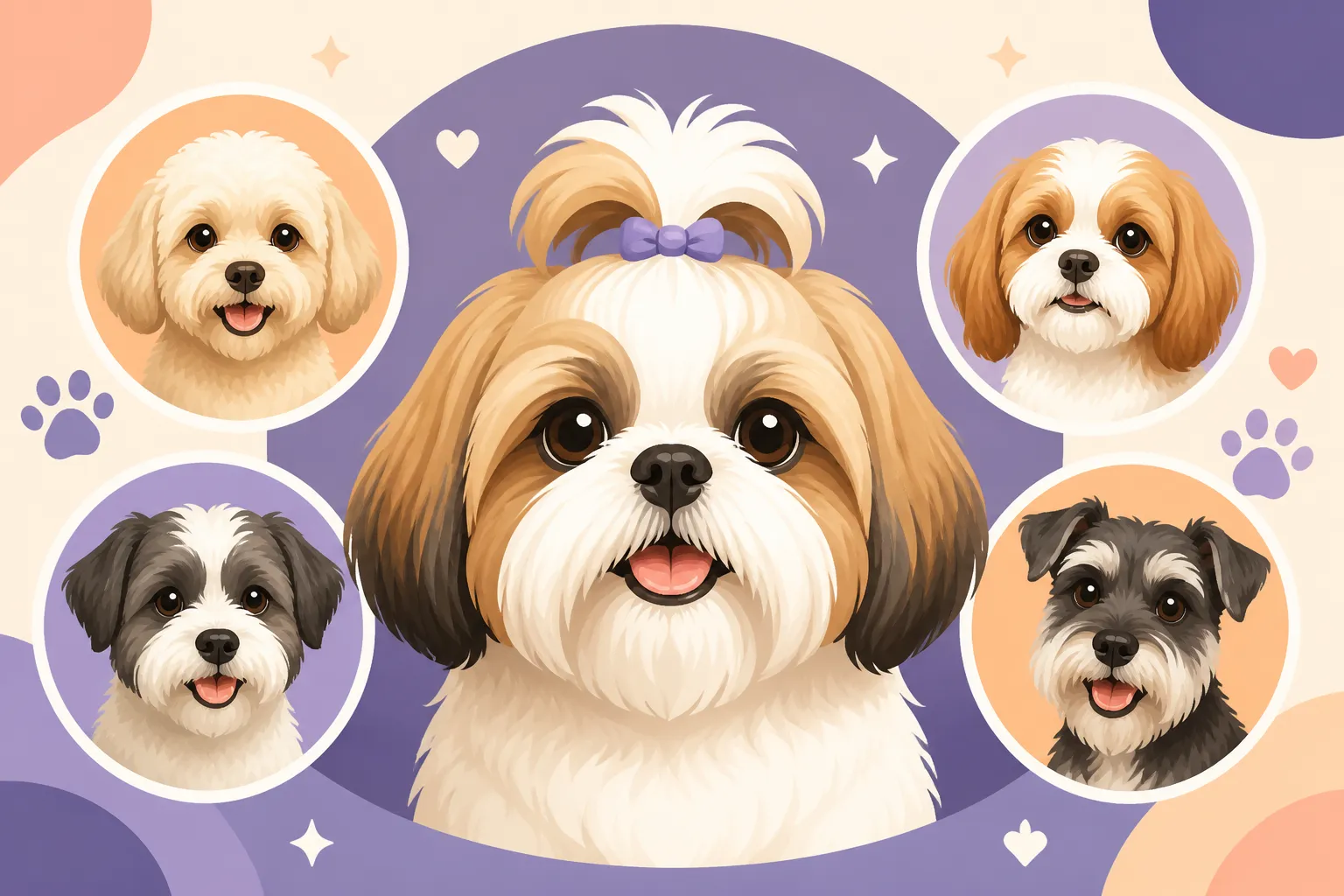
Perhaps one of the most well-known Shih Tzu crosses is the Shihpoo, a delightful blend of Shih Tzu and Poodle. Owners often hope for the Poodle's intelligence and non-shedding, hypoallergenic coat combined with the Shih Tzu's sweet, outgoing nature. In terms of size, Shihpoos typically fall in line with their parent breeds, often weighing between 7 to 20 pounds, depending on whether a Miniature or Toy Poodle was used. Their activity level tends to be moderate, enjoying playtime but also content to cuddle on the sofa. Shih Tzu Exercise for a Low-Energy Toy can give you an idea of one side of this equation.
When it comes to grooming, the Shihpoo's coat is a common selling point. While Poodles are known for their curly, low-shedding coats, and Shih Tzus have a long, flowing double coat, the Shihpoo can inherit any combination. This means a coat could be wavy, curly, or even straight, and its shedding characteristics are unpredictable. Many Shihpoos will still require regular brushing to prevent matting, much like a purebred Shih Tzu. You might find yourself needing a good slicker brush and comb from a retailer like Chewy to keep their coat in top condition. Temperament-wise, they are generally affectionate and playful, often making great family pets, but like all dogs, early socialization and training are key.
The Malti-Zu: Two Toys in One
Another popular blend is the Malti-Zu, bringing together the gentle, fluffy Maltese with the robust, charming Shih Tzu. This cross typically results in a small, affectionate companion dog that thrives on human companionship. Malti-Zus are usually quite small, often in the 6 to 12 pound range, making them ideal lap dogs and suitable for apartment living. They are known for being very friendly and loving, often less prone to the "brattiness" that some toy breeds can develop without proper guidance.
Their coats are usually soft and flowing, much like both parent breeds, and tend to be on the longer side if not regularly trimmed. While both Maltese and Shih Tzus are considered low-shedding, a Malti-Zu will still require consistent grooming to prevent tangles and mats. Regular brushing, at least every other day, is often necessary. Products like detangling sprays and specific shampoos, readily available from places like Chewy, can be a godsend for maintaining their lovely locks. Health considerations will involve screening for issues common to both breeds, such as Shih Tzu Dental Disease at 13 Percent of the Breed or patellar luxation, which can be found in both Maltese and Shih Tzus.
Other Common Shih Tzu Blends
While Shihpoos and Malti-Zus might be the most frequently seen, many other delightful Shih Tzu mixes exist, each with its own potential characteristics.
- Shorkie (Shih Tzu/Yorkshire Terrier): This cross often results in a bold, spirited, yet affectionate little dog. They can range from 4 to 12 pounds and typically have a long, silky coat that requires regular grooming. Owners love their spunky personalities, but they can be prone to the "small dog syndrome" if not properly socialized and trained.
- Care-Tzu (Shih Tzu/Cairn Terrier): Combining the sturdy, independent Cairn Terrier with the affectionate Shih Tzu can create a loyal and playful companion. Care-Tzus might have a wiry outer coat from the Cairn, which can be less demanding than a full Shih Tzu coat but still needs regular care. Their size can be a bit more varied, often between 10 to 18 pounds.
- Pek-A-Tzu (Shih Tzu/Pekingese): Given their shared historical roots, this cross often results in a dog very similar to a purebred Shih Tzu, though perhaps with a slightly flatter face from the Pekingese side. They are usually calm and loyal, requiring significant grooming for their long coats and careful monitoring for brachycephalic issues.
No matter the mix, understanding both parent breeds is crucial. Research their typical sizes, temperaments, and common health concerns. This knowledge will give you the best possible idea of what your mixed-breed puppy might grow up to be, though always with a healthy dose of genetic unpredictability.
Here's a quick comparison of some popular Shih Tzu crosses:
| Crossbreed Name | Parent Breeds | Typical Size (lbs) | Coat Type | Common Traits (Potential) | Grooming Needs (Potential) |
|---|---|---|---|---|---|
| Shihpoo | Shih Tzu / Poodle | 7-20 | Wavy to curly, low-shed | Intelligent, playful, affectionate | Moderate to High, regular brushing |
| Malti-Zu | Shih Tzu / Maltese | 6-12 | Long, silky, low-shed | Gentle, loving, good lap dog | High, daily brushing |
| Shorkie | Shih Tzu / Yorkie | 4-12 | Long, silky | Spunky, bold, loyal | High, regular brushing |
| Care-Tzu | Shih Tzu / Cairn Terrier | 10-18 | Wirey to fluffy | Independent, playful, sturdy | Moderate, weekly brushing |
| Pek-A-Tzu | Shih Tzu / Pekingese | 8-16 | Long, dense | Calm, dignified, affectionate | High, daily brushing |
Navigating the Reality of a Shih Tzu Cross
While the idea of a "designer dog" might sound enticing, it's important to approach these crosses with a realistic mindset. The term itself can sometimes lead to inflated expectations or, worse, unethical breeding practices. Just because two different purebreds are intentionally bred together doesn't automatically mean the resulting puppies are superior or healthier. In reality, owning a Shih Tzu cross involves understanding genetics, diligent research into breeders, and being prepared for a unique companion.
Predictability Versus the Genetic Lottery
One of the biggest misconceptions about designer dogs is that you can precisely predict the outcome. People often assume that if a Shih Tzu is bred with a Poodle, the puppy will get the "best" of both worlds – the Poodle's intelligence and non-shedding coat, and the Shih Tzu's laid-back personality and cute face. Unfortunately, genetics don't work like a buffet where you pick and choose traits. Instead, it's more like a genetic lottery.
A Shih Tzu cross can inherit any combination of traits from either parent. This means a Shihpoo might end up with a coat that sheds just as much as a Shih Tzu's, or a Malti-Zu might be more aloof than expected. You could have a dog with the Poodle's high energy and the Shih Tzu's grooming needs, or vice versa. The genetic unpredictability extends to health as well. While some proponents argue for "hybrid vigor" – the increased health and vitality seen in first-generation crosses – this isn't a guarantee. A mixed breed can inherit any of the genetic health conditions prevalent in either parent breed. For example, a Shihpoo could still be prone to Shih Tzu Eye Proptosis, the Emergency Owners Miss or the patellar luxation common in Poodles. This makes health testing of the parent dogs absolutely critical.
Finding a Reputable Breeder for a Crossbreed
Just like with purebred Shih Tzus, finding an ethical and responsible breeder for a Shih Tzu cross is paramount, yet it can be even more challenging in the mixed-breed world. The rise in popularity of designer dogs has unfortunately led to an increase in unscrupulous breeders, often referred to as "backyard breeders" or "puppy mills," who are solely focused on profit. These operations often neglect proper health testing, adequate socialization, or even basic care for their breeding dogs and puppies. Finding a Shih Tzu Breeder Worth the Wait applies just as much, if not more, to finding a crossbreed.
A reputable crossbreed breeder will be transparent about the parent dogs, offering health clearances for both breeds that are relevant to their known genetic conditions. This might include certifications for hips, elbows, eyes, and any breed-specific DNA tests. They should be able to show you where the puppies are raised, allow you to meet the mother, and ideally, share information about the father. They will also ask you many questions to ensure their puppies are going to good homes. Be wary of breeders who offer multiple "designer" breeds, sell puppies too young, or can't provide verifiable health documentation. A good breeder prioritizes the health and welfare of their dogs above all else. They might even use online resources like Chewy for some of their puppy supplies, but their focus will always be on quality.
Costs, Care, and Commitment for a Mixed Breed
Don't fall into the trap of thinking that a Shih Tzu cross will automatically be cheaper or easier to care for than a purebred. In fact, due to demand, some designer puppies can command prices similar to, or even higher than, some purebred Shih Tzus. Shih Tzu Puppy Prices and Where the Money Goes highlights that a lower price often means corners have been cut on health or care. The initial cost of the puppy is just the tip of the iceberg. Ongoing care for any dog, mixed or purebred, involves a significant financial and time commitment.
Grooming, for instance, can be just as demanding, if not more so, for a Shih Tzu cross depending on the coat type inherited. A wavy, often coarse, coat can mat faster than a silky one. Regular trips to the groomer or diligent home grooming are essential. Food, veterinary care, vaccinations, parasite prevention (which can be easily found and ordered from Chewy for convenience), training classes, and toys all add up. Furthermore, the health concerns of both parent breeds are possibilities, meaning potential veterinary costs for things like allergies, joint problems, or eye conditions can still arise. The commitment to a Shih Tzu cross is a long-term one, often for Shih Tzu Lifespan and the Thirteen Year Average or even longer, requiring dedication to their physical and emotional well-being throughout their lives. Understanding these realities upfront will help you provide the best possible home for your unique companion.
Disclaimer
This article is for general informational purposes only and does not constitute professional advice. Laws, prices and regulations vary by location and change over time. Consult a qualified professional for guidance on your specific situation.