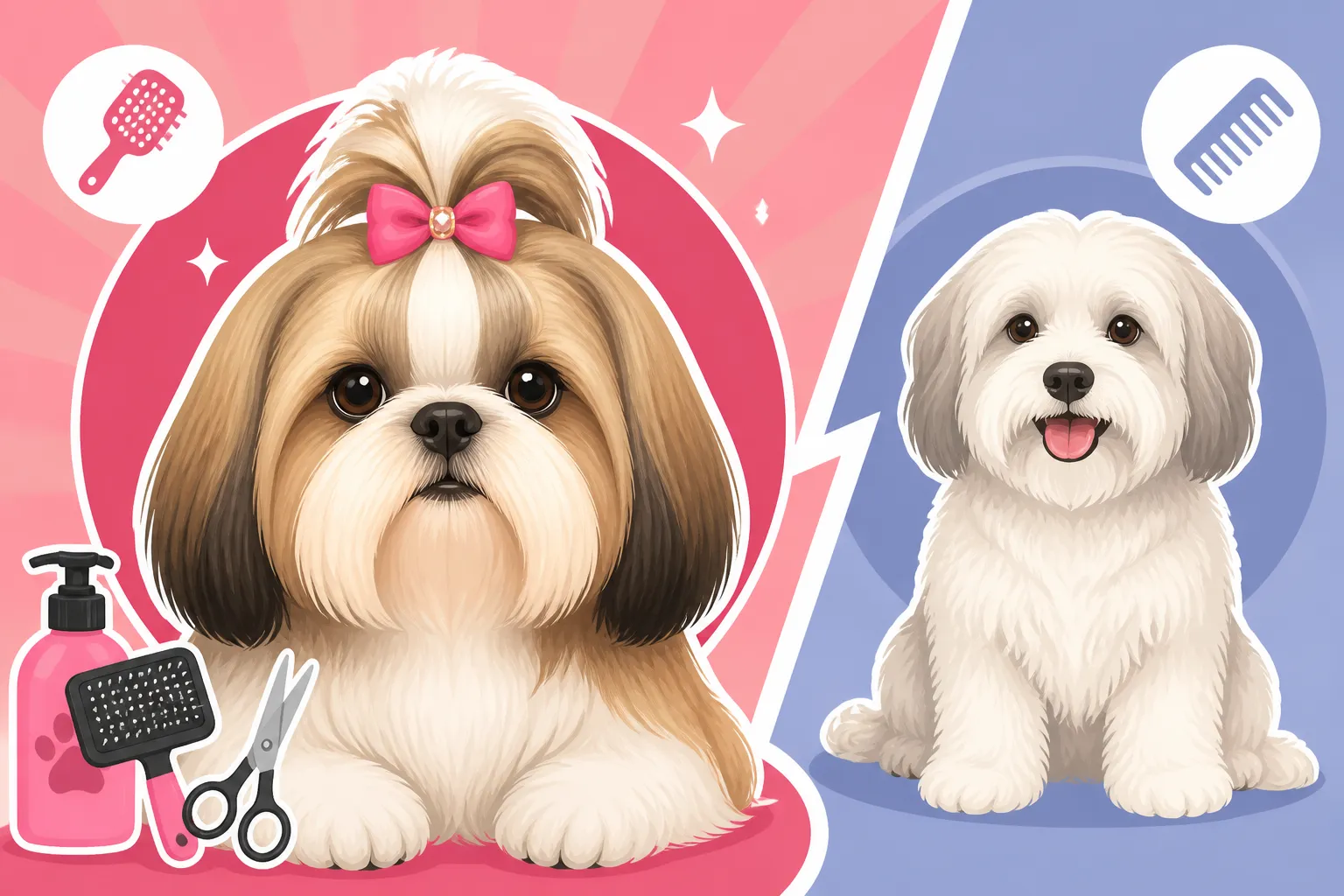
Shih Tzu or Havanese on Grooming Alone
Deciding between a Shih Tzu and a Havanese for your next furry family member is such an exciting time, but it often comes with a lot of questions, especially when you start thinking about daily life. One of the biggest factors that can sway a potential owner is grooming – and let's be honest, it can feel like a daunting commitment. This guide will walk you through the distinct grooming needs of both the delightful Shih Tzu and the charming Havanese, helping you understand exactly what you're signing up for with each breed, so you can make an informed choice that fits your lifestyle.
The Iconic Shih Tzu Coat: A Commitment to Daily Care
If you've ever admired a Shih Tzu, you've undoubtedly been captivated by their luxurious, flowing coat. It's truly a sight to behold, but that beauty doesn't come without significant dedication. Many new owners are surprised by just how much work goes into maintaining that signature look, often underestimating the daily routine required to keep their Shih Tzu comfortable and mat-free. It's not just about aesthetics; proper grooming is absolutely critical for their health and well-being.
Understanding the Shih Tzu Double Coat
The Shih Tzu boasts what's known as a double coat. This means they have two distinct layers of hair: a soft, woolly undercoat and a long, silky, flowing topcoat. This combination is what gives them their incredible volume and plush feel. Historically, this dense coat was an adaptation to the colder climates of Tibet and China, where the breed originated. However, in a modern home, this double layer means a lot of trapped hair and a propensity for matting if not meticulously cared for. The topcoat is typically straight or slightly wavy, growing continuously, which is why they are often considered a good breed for people with allergies, as they shed less dander than many other breeds. But less shedding doesn't mean less grooming; it simply means the hair that does shed gets caught in their undercoat, creating knots and mats if not brushed out regularly.
Daily Brushing and Detangling Rituals
Let me be blunt: if you own a Shih Tzu with any length of coat, daily brushing is non-negotiable. Seriously, daily. Skipping even a day or two can lead to tangles, and a week can result in solid mats that are incredibly painful for your dog and a nightmare to remove. You'll need a good quality slicker brush and a metal comb with both wide and narrow teeth. The key is to brush in sections, working your way through the coat, making sure to reach all the way down to the skin. Many owners make the mistake of just skimming the top layer, leaving the undercoat to become a felted mess. Common problem areas where mats love to form include behind the ears, in the armpits, on the belly, and where a harness or collar rubs. Brushing a Shih Tzu Double Coat Every Day isn't just a suggestion; it's a lifeline for your Shih Tzu's comfort. If you hit a snag, don't just pull! Use a detangling spray generously and gently work the knot out with your fingers or the wide-toothed comb. Knowing The Mats That Form Behind Shih Tzu Ears and other common spots can help you be proactive.
Face, Eyes, and Topknot Maintenance
Beyond the body, a Shih Tzu's face requires special attention. Their long facial hair, combined with their prominent eyes and brachycephalic (flat) face, means tear stains can be a constant battle. Daily wiping of their eyes and the folds around their nose is essential to prevent staining and irritation. For many Shih Tzus, the hair on their head grows long enough to fall into their eyes, which can not only obstruct their vision but also cause irritation and potential corneal ulcers. This is why the iconic Shih Tzu topknot or a regularly trimmed fringe is so important. Tying a topknot involves gathering the hair between their eyes and securing it with a small elastic band, keeping it out of their face. It's not just for looks; it's a functional necessity. Learning The Shih Tzu Topknot and Keeping Hair Out of the Eyes and practicing Wiping a Shih Tzu Face Twice a Day will prevent discomfort and potential veterinary visits.
The Havanese Coat: Single Layer Charm with its Own Needs
The Havanese, often called the "Havana Silk Dog," also boasts a beautiful, soft coat, but it's fundamentally different from the Shih Tzu's. While both breeds have long, flowing hair that grows continuously, the Havanese typically has a single coat, meaning no dense undercoat. This difference significantly impacts their grooming routine, but it doesn't mean they're maintenance-free by any stretch of the imagination!
Characteristics of the Havanese Single Coat
Unlike the Shih Tzu, the Havanese typically has a single, silky, often wavy or curly coat. This means they don't have that woolly undercoat that traps shedding hair, which is why they are also celebrated as a low-shedding, hypoallergenic-friendly breed. The texture is usually quite soft and fine, giving them a lighter, bouncier appearance than the heavier-coated Shih Tzu. While the lack of an undercoat generally means fewer issues with dense, felt-like matting, their fine hair is still very prone to tangling and knotting, especially if left unbrushed or if it gets wet and isn't thoroughly dried. This continuous growth means their coat can reach impressive lengths, often trailing on the ground if allowed to grow out fully, requiring regular trimming.
Brushing and Knot Prevention for Havanese
While a Havanese might not mat as deeply as a Shih Tzu, daily or every-other-day brushing is still highly recommended to prevent tangles and maintain their coat's health and luster. You'll want a similar array of tools: a good quality slicker brush and a metal comb are paramount. When brushing, misting the coat lightly with a conditioning spray can help prevent breakage and make the brush glide more smoothly. Focus on brushing gently through the entire coat, paying close attention to areas where friction occurs – behind the ears, under the legs, and where clothing or harnesses sit. Because their hair is so fine, it can tangle seemingly out of nowhere, especially after play or a nap. Regular, gentle brushing helps distribute natural oils, keeping the coat healthy and preventing those frustrating knots from tightening into painful mats.
Facial Hair and Ear Care in Havanese
Like their Shih Tzu cousins, Havanese have long facial hair that can interfere with their eyes. While their eye structure might be slightly different, leading to potentially less pronounced tear staining for some, it's still a common concern. Regular cleaning around the eyes with a soft, damp cloth or specialized eye wipes is important to prevent staining and keep the area hygienic. The hair around their eyes will also need to be trimmed or tied back to prevent irritation. Havanese also have lovely dropped ears, which means limited air circulation. Hair grows inside their ear canals, and opinions vary on whether this hair should be plucked. Some argue it helps prevent moisture and debris from getting trapped, leading to infections, while others believe plucking can cause irritation. Discuss this with your vet or groomer to determine the best approach for your individual Havanese. Regardless, regular cleaning of the outer ear flap and visual inspection for redness or odor are a must.
Grooming Routines: Time, Tools, and Professional Help
When you bring a long-haired breed into your home, you're not just getting a pet; you're also committing to a grooming schedule. This isn't just about keeping them pretty; it's about keeping them healthy and comfortable. Understanding the time investment and the need for the right tools, as well as when to call in the professionals, is key to a happy dog and a sane owner.
Comparing Daily and Weekly Grooming Time
Let's talk about the clock. For a Shih Tzu kept in a full, long coat, you're realistically looking at 15-30 minutes of dedicated brushing every single day. Yes, every day. If you skip, you pay the price in longer, more arduous detangling sessions later, which can be stressful for both of you. This doesn't include the time for cleaning their face and eyes. Over a week, that adds up to several hours. For a Havanese in a long coat, the daily commitment might be slightly less intense – perhaps 10-20 minutes every day or every other day, depending on the coat texture and activity level. Their single coat might be a bit more forgiving for a day or two, but neglect will still lead to tangles. If you opt for a shorter "puppy cut" for either breed, the daily brushing might reduce to a few minutes, or every other day, but professional grooming will need to be more frequent. This is a crucial factor: do you have this daily time to spare, or will you need to rely on shorter clips?
Essential Grooming Tools for Each Breed
Having the right arsenal of tools makes all the difference. For both breeds, you'll want a high-quality pin brush (great for longer coats), a slicker brush (essential for dematting and working through the layers), and a sturdy metal comb (for checking your work and getting through deeper sections). A good pair of blunt-nosed scissors for trimming around the eyes and paws is also a must, as are nail clippers or a grinder. Detangling spray is your best friend, especially for the Shih Tzu's dense coat, and specialized eye wipes can help with tear stains. Don't forget shampoo and conditioner specifically formulated for dogs – never use human products! You can find a fantastic selection of these at places like Chewy, which makes stocking up easy. Having Home Grooming Tools a Shih Tzu Needs readily available encourages consistent care.
Professional Grooming Frequency and Considerations
Even if you're a dedicated home groomer, most Shih Tzus and Havanese benefit greatly from regular professional grooming appointments. These typically include a thorough bath, blow-dry, haircut, nail trim, and ear cleaning. For a Shih Tzu, if you're keeping them in a full coat, professional grooms might be needed every 4-6 weeks to trim the ends, tidy up, and ensure deep cleaning. If you choose a shorter "puppy cut" style, the frequency might be similar to maintain the shape. A Havanese, similarly, will need professional attention every 4-8 weeks, depending on coat length and how well you manage it at home. These sessions are important for keeping the coat healthy, the nails trimmed to a healthy length, and for catching any potential skin or ear issues early. Expect to budget for these services, as Shih Tzu Grooming at $50 to $90 a Session is a reasonable estimate, and the commitment means Grooming a Shih Tzu Every Four to Six Weeks is standard. Finding a groomer who understands the unique needs of brachycephalic breeds and toy dogs is invaluable.
The "Puppy Cut" Debate: Practicality vs. Aesthetics
When it comes to long-haired breeds, the "puppy cut" is often the first thing new owners consider. It's a pragmatic solution to a very real grooming challenge, offering a compromise between the breed's natural long coat and a manageable daily routine. But what does it truly mean for a Shih Tzu or a Havanese, and what are the trade-offs?
The Shih Tzu Puppy Cut: A Popular Choice
For many Shih Tzu owners, the puppy cut becomes a practical necessity. This style involves clipping the dog's coat relatively short all over the body, often leaving the face slightly longer to create that adorable "teddy bear" look. The benefits are undeniable: significantly reduced matting, easier daily brushing (or sometimes even every-other-day brushing), less hair trailing on the ground to pick up debris, and a cooler dog in warm weather. It can truly make life with a Shih Tzu much simpler, and it's fantastic for highly active dogs or those living in climates where a long coat would be uncomfortable. Many owners swear by it for their pet's comfort and their own sanity. The Puppy Cut and What It Saves in terms of time and frustration is immense. However, some find that a puppy cut changes the texture of the Shih Tzu's luxurious double coat, making it softer and sometimes even more prone to static. Additionally, a shorter coat might offer less protection from the sun in summer or cold in winter, requiring owners to be more mindful of temperature extremes. Discussing Choosing a Puppy Cut Length for a Shih Tzu with your groomer can help find the perfect balance.
Havanese Shorter Styles: Less Common, Still Functional
While less common than with Shih Tzus, Havanese owners also have the option of shorter cuts. The Havanese breed standard often emphasizes their long, flowing "silky" coat, so a short clip is less traditional for show dogs. However, for a beloved family pet, a shorter cut offers many of the same practical advantages as for a Shih Tzu: easier maintenance, less tangling, and a generally cleaner dog. A Havanese puppy cut might be slightly longer than a Shih Tzu's, aiming for a soft, fluffy look rather than a very closely shaved one, to preserve some of their characteristic charm. It can be particularly beneficial for Havanese who enjoy playing outdoors or swimming, as it simplifies drying and prevents a muddy mess. While it might alter the "classic" Havanese look, the comfort and practicality it offers can be well worth it for many families.
Long Coat Maintenance: The Ultimate Grooming Challenge
For those dedicated to keeping either a Shih Tzu or a Havanese in their full, glorious long coat, be prepared for a significant daily commitment. This is where the real work happens. Every strand of hair needs to be meticulously brushed, free of tangles, and kept clean. This often means bathing every 1-3 weeks with professional-grade shampoos and conditioners, followed by thorough blow-drying (never air drying a long coat, as it will mat instantly!). For show dogs, the coat is often "wrapped" in tissue paper or special wraps to protect it from breakage, dirt, and daily wear and tear. This level of maintenance is akin to tending a garden – constant, attentive work. It's beautiful, yes, but it’s a lifestyle choice. If you're considering Growing a Shih Tzu Coat Back Out after a puppy cut, understand that the "awkward phase" will require extra diligence.
Health Implications of Grooming Choices
Grooming isn't just about appearance; it's a vital part of your Shih Tzu or Havanese's health regimen. Neglecting proper care can lead to painful, serious health issues that often require veterinary intervention. A good grooming routine acts as a preventative measure, protecting them from discomfort and expensive treatments down the line.
Skin and Coat Health for Shih Tzus
The Shih Tzu's dense double coat, while beautiful, is a prime candidate for skin problems if not properly maintained. Mats, especially those close to the skin, can pull tightly and cause extreme discomfort, irritation, and even open sores. These matted areas trap moisture, dirt, and bacteria, creating a perfect breeding ground for skin infections and hot spots. Owners often don't even realize how severe the matting is until a professional groomer points it out because the outer layer of hair can hide a dense, painful felt underneath. Untreated mats can even cut off circulation to areas of the skin. Regular brushing allows you to inspect your dog's skin for any abnormalities like redness, rashes, parasites, or dry patches. Neglecting to thoroughly dry the undercoat after a bath can also lead to skin issues, as Damp Shih Tzu Hair and How Fast It Knots and leads to irritation. Without proper drying, you're looking at potential problems like Shih Tzu Skin Allergies and Hot Spots.
Eye Health and Grooming in Both Breeds
Both Shih Tzus and Havanese are prone to eye issues, and grooming plays a direct role in prevention. For Shih Tzus, their prominent eyes and long facial hair mean that hair frequently rubs against the cornea, leading to irritation, ulcers, or even infections. Proper trimming or tying up a topknot is not just cosmetic; it's essential for protecting their delicate eyes. Tear staining, while not directly a health threat, indicates excessive tearing or trapped moisture, which can lead to bacterial growth and skin irritation in the folds around their eyes. For Havanese, while their eyes might be set slightly differently, their long facial hair still poses a risk for corneal irritation if not kept trimmed or tied back. Regardless of the breed, paying close attention to the eyes during daily grooming allows you to spot issues like redness, discharge, or squinting early, which could indicate a more serious problem. Understanding Why Hair in the Eye Damages a Shih Tzu Cornea highlights the importance of this care.
Dental and Ear Care Across Breeds
While not strictly coat grooming, dental and ear care are often incorporated into the overall grooming routine, and both breeds have specific needs. Shih Tzus, with their brachycephalic structure, often have crowded mouths, making them highly susceptible to dental disease. Regular dental care, including brushing at home, is crucial. Their facial hair can also trap food particles, contributing to dental issues and bad breath. Daily Toothbrushing in a Crowded Shih Tzu Jaw is a cornerstone of good Shih Tzu care. Havanese, too, benefit from regular tooth brushing. Both breeds have dropped ears, which can restrict airflow and create a warm, moist environment ripe for ear infections. Keeping the ears clean and dry, and managing hair inside the ear canal (whether by plucking or trimming, as per vet advice), is vital. The Weekly Shih Tzu Ear Routine should be part of every owner's plan. Grooming appointments often include ear cleaning and inspection, which is a great way to stay on top of these potential problems.
Breed Grooming Comparison
| Feature | Shih Tzu | Havanese |
|---|---|---|
| Coat Type | Double coat (dense undercoat, silky topcoat) | Single coat (silky, often wavy or curly) |
| Shedding | Low (hair caught in undercoat) | Low (hair caught in itself) |
| Matting Tendency | Very High, especially deep, dense mats | High, fine hair prone to tangles and knots |
| Daily Brushing | 15-30 minutes, absolutely essential to prevent severe matting | 10-20 minutes, highly recommended to prevent tangles |
| Face/Eye Care | Critical due to prominent eyes and long facial hair; prone to tear staining, need topknot/trim | Important; long facial hair needs trimming/tying, can have tear staining |
| Professional Grooming Frequency (Full Coat) | Every 4-6 weeks for trims, baths, maintenance | Every 4-8 weeks for trims, baths, maintenance |
| "Puppy Cut" Impact | Significantly reduces home grooming, can alter coat texture | Reduces home grooming, less traditional but functional |
| Skin Health Risk | High risk of skin infections/hot spots from matted coat and trapped moisture | Moderate risk of skin irritation if tangles neglected |
Both the Shih Tzu and the Havanese are utterly charming companions, but their beautiful coats come with a commitment that prospective owners must fully understand. Whether you choose the regal Shih Tzu with its dense double coat or the lively Havanese with its silky single layer, daily grooming is not just a suggestion; it's a fundamental part of their care. It's about more than just keeping them looking good; it's about their comfort, health, and preventing painful issues. So, before you decide, take a realistic look at your schedule and your willingness to commit to the brush and comb – because either way, you're signing up for a wonderfully furry, beautifully maintained friend.
Disclaimer
This article is for general informational purposes only and does not constitute professional advice. Laws, prices and regulations vary by location and change over time. Consult a qualified professional for guidance on your specific situation.