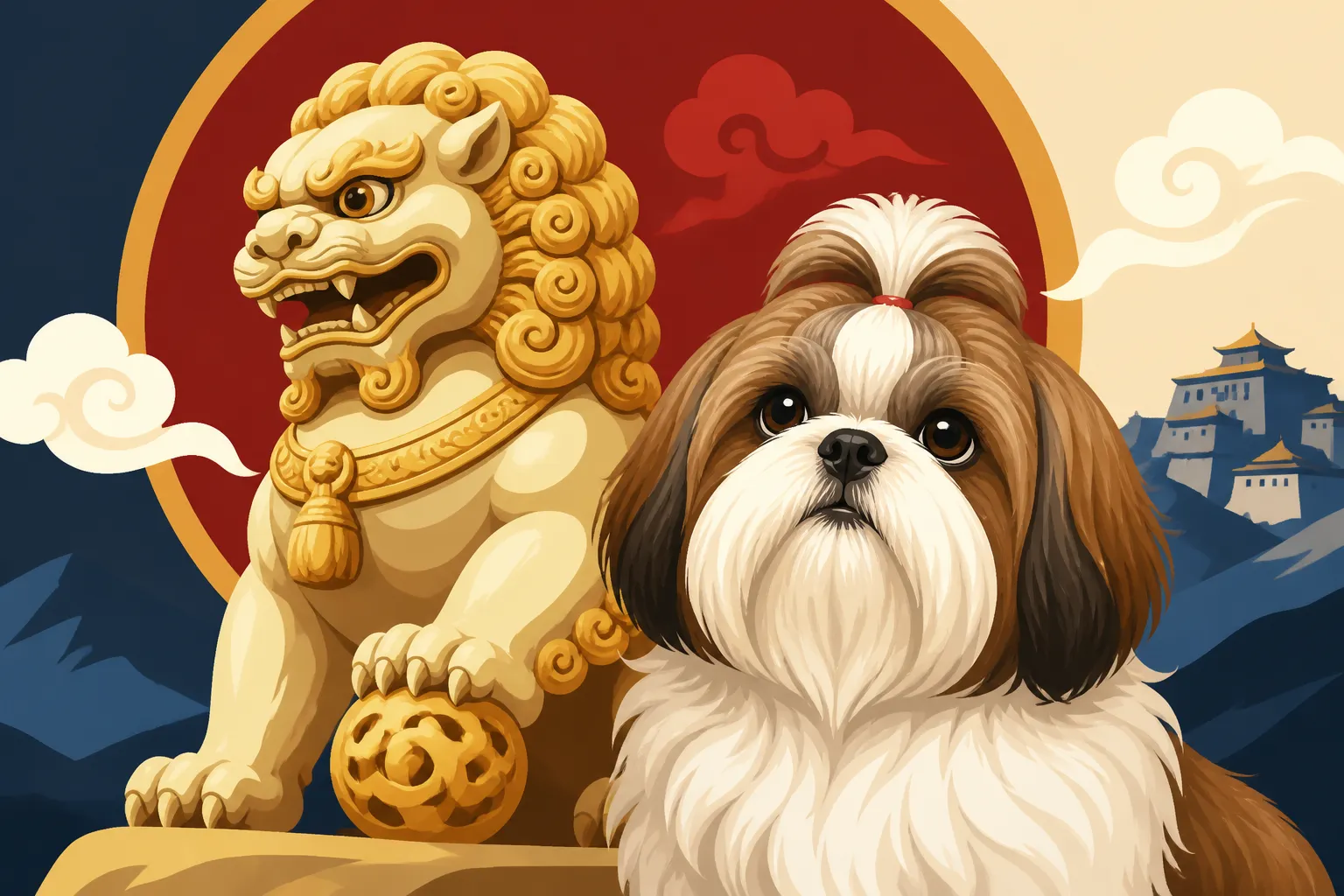
The Tibetan Lion Dog Behind the Breed
Many Shih Tzu owners adore their fluffy companions but might not realize the incredible, ancient history tucked beneath all that hair. It's easy to see them as just cute lapdogs, but their lineage stretches back centuries to a mystical origin in the Himalayas. This guide dives deep into the fascinating story of the Tibetan Lion Dog, exploring how this revered ancestor shaped the charming Shih Tzu we cherish today, far beyond just being a pretty face.
Tracing the Ancient Roots of the Shih Tzu
When you look into the soulful, dark eyes of your Shih Tzu, you’re gazing back into a history that spans over a thousand years, deeply intertwined with the spiritual heartland of Tibet. These aren't just any old dogs; their story begins with a profound spiritual significance, earning them the revered title of "Tibetan Lion Dog." It’s a heritage that sets them apart and gives them that unique, often regal, demeanor.
The Mystique of the Tibetan Lion Dog
In ancient Tibet, dogs were not merely pets; they were seen as sacred creatures, often associated with Buddhist mythology. The "lion dog" concept wasn't just about their appearance – though their lush coats and proud stances certainly evoked the mighty lion – but more about their perceived spiritual qualities. These dogs were believed to be small, earthly manifestations of the snow lion, a mythical protector of the Buddhist dharma. Imagine living in a world where your furry friend was considered a living symbol of spiritual power and good fortune!
This deep reverence meant these dogs were treated with immense respect and care, a tradition that undoubtedly laid the groundwork for the Shih Tzu's pampered existence today. They weren't hunting dogs or working dogs in the conventional sense; their "work" was spiritual and symbolic. This selective valuing of companionship and spiritual presence over utility is a cornerstone of the Shih Tzu temperament we know and love. It’s why your Shih Tzu seems to instinctively know how to make you feel cherished and important – it’s in their ancient DNA.
Life in the Monasteries and Temples
The earliest ancestors of the Shih Tzu spent their lives in the isolated, serene environments of Tibetan monasteries and temples. Picture these little "lion dogs" trotting through ancient courtyards, their long coats flowing, acting as living good luck charms and companions to the monks. Why Tibetan Monasteries Kept Small Dogs reveals just how integral these tiny canines were to daily life and spiritual practice. They were carefully bred and cherished within these sacred walls, their lineage kept pure and honored.
Because these monasteries were often cut off from the outside world, the genetic pool of these dogs remained relatively contained. This isolation was crucial for developing and solidifying the distinct traits that would eventually define the Shih Tzu. The monks, through generations of careful observation and selective breeding, ensured that the dogs embodied the desired spiritual qualities and a gentle, companionable nature. This close relationship with humans forged a bond that continues to be a hallmark of the breed. Indeed, some believed that The Belief That a Shih Tzu Carried a Monk's Soul after their passing, further elevating their sacred status and ensuring their meticulous care.
The Journey from Tibet to the Chinese Imperial Court
The history of the Shih Tzu isn't confined to the high altitudes of Tibet. It took a significant turn when these cherished "lion dogs" began their arduous journey across treacherous mountain passes, descending into the opulent and complex world of the Chinese Imperial Court. This transition marked a new chapter in their development, blending their spiritual heritage with the extravagant tastes of emperors and empresses.
Gifts of Diplomacy and Esteem
These precious Tibetan dogs didn't just wander into China; they arrived as highly esteemed gifts, often presented by Tibetan lamas to Chinese emperors as tokens of respect and goodwill. Imagine the diplomatic weight these small creatures carried! Such exchanges were not simple transactions but powerful gestures affirming political and cultural ties. The journey itself was incredibly difficult, often taking months of travel over vast distances and challenging terrain, as described in The Ten Month Journey From Tibet to Peking.
Once in China, these "lion dogs" quickly captivated the imperial family. They weren't just exotic curiosities; they symbolized a connection to the sacred and mystical lands of Tibet, adding to their allure. Shih Tzus Given as Tribute to Chinese Emperors were more than pets; they were living treasures, a tangible link between powerful rulers and distant, spiritual realms. This elevation within the imperial hierarchy ensured their continued preservation and specialized breeding, albeit under a new set of cultural influences focused on aesthetics and courtly charm.
Evolution Within the Forbidden City
Within the lavish confines of the Forbidden City, the Tibetan Lion Dogs truly began their transformation into the Shih Tzu we recognize today. Here, they were not merely maintained but actively refined through generations of selective breeding. The Chinese imperial kennels were world-renowned for their dedication to developing exquisite companion breeds, and the newly arrived Tibetan dogs provided a fresh canvas. This period saw potential cross-breeding with other favored palace dogs, such as the Pekingese, further shaping their appearance.
The imperial breeders focused on enhancing specific aesthetic traits: the flowing double coat, the distinctive "chrysanthemum" face, and the plumed tail carried proudly over the back. These dogs were bred not for spiritual symbolism alone, but to be the ultimate lap warmers and companions for royalty, embodying beauty and grace. Historical documents, like Court Records of Shih Tzus in the Yuan Dynasty and mentions in Shih Tzus in Ming Dynasty Paintings, offer tantalizing glimpses into their esteemed presence in these ancient courts. The meticulous care, specialized diets, and elaborate grooming practices they received during this era underscore their supreme status within the palace.
Distinguishing Ancestry: Shih Tzu vs. Lhasa Apso
It’s a common mix-up, and honestly, who can blame anyone? The Shih Tzu and the Lhasa Apso look quite a bit alike at first glance, both sporting glorious long hair and a confident stride. But while they share a very deep, ancient root, their paths diverged quite significantly over time, leading to two distinct, though equally wonderful, breeds. Understanding these differences helps us appreciate the unique journey of each.
Shared Heritage, Divergent Paths
Both the Shih Tzu and the Lhasa Apso originated in the same mystical region of Tibet, carrying the esteemed title of "lion dog." For generations, they shared a common ancestral pool within those isolated monasteries. However, their stories diverged dramatically once the "lion dogs" were introduced to the Chinese Imperial Court. While some were gifted to the emperors, others remained in Tibet, continuing their life as sacred guardians within the monasteries of Lhasa. This geographical and cultural separation was key to their evolution.
The dogs that remained in Tibet, becoming the Lhasa Apso, continued to be bred for their role as watchful protectors and spiritual companions within a monastic setting. Their breeding emphasized hardiness, a keen sense of hearing, and a more independent, wary temperament, suited to sounding an alarm. Meanwhile, the dogs in the Chinese court, destined to become the Shih Tzu, were bred for a softer, more outgoing personality, ideal for the lavish, indoor life of royalty. Their differences are subtle but profound, making The Shih Tzu Against a Lhasa Apso an excellent dive into their individual traits.
Genetic Insights into Ancient Lineages
Modern scientific advancements, particularly in canine genetics, have allowed us to confirm what historical records hinted at: the Shih Tzu is indeed one of the most ancient dog breeds. DNA Studies on Shih Tzu Ancestry have provided fascinating insights, placing them firmly among the oldest lineages on the planet, underscoring their incredible journey through history. This isn't just a fun fact; it speaks to the deep roots and natural selection that shaped these dogs long before modern breeding practices were even conceived.
These genetic studies reinforce the connection to their Tibetan "lion dog" ancestors, highlighting the long, unbroken line of companionship they've shared with humans. It’s comforting to know that the charming, affectionate dog curled up on your lap carries a genetic blueprint almost unchanged for millennia. The fact that The Shih Tzu Among the Oldest Dog Breeds further emphasizes their historical importance, reminding us that we are not just owning a pet, but guardians of a living piece of history. For those looking for suitable products for these ancient companions, whether it's specialized food or grooming tools for their historic coat, resources like Chewy offer a comprehensive range catering to toy breeds.
The Legacy of the Imperial Lion Dogs
The story of the Shih Tzu isn't complete without acknowledging its most ardent patron in modern history, whose passion helped shape the breed, and the incredible journey it took from near extinction to global adoration. It's a testament to their enduring charm and the dedication of those who loved them.
The Role of the Dowager Empress Cixi
The golden age of the Shih Tzu in China reached its pinnacle during the reign of Dowager Empress Cixi, who ruled from the mid-19th century until 1908. She was utterly infatuated with these "lion dogs," maintaining a massive kennel of them within the Forbidden City. Her dedication wasn't just about ownership; she was a hands-on breeder, meticulously overseeing the development of the breed. Imagine the royal decrees issued purely for dog breeding! This period saw the standardization of many of the Shih Tzu's iconic features, including their luxurious coats and distinctive faces.
Empress Cixi had a profound impact on the Shih Tzu, treating them as cherished members of her court. She would spend hours with them, and detailed records suggest she even wrote standards for their appearance and behavior. She received a significant gift from the Dalai Lama, which further enriched her breeding program and lineage, as explored in The Dalai Lama's Gift to the Empress. The depth of her involvement is truly remarkable, showcasing how How Cixi Ran Her Palace Breeding Program was a blend of passion, politics, and power. Her death in 1908, however, plunged the breed into a period of severe uncertainty, as the imperial kennels were disbanded and many dogs were lost or scattered.
From Palace to Modern Homes
Following the fall of the Qing Dynasty and the subsequent political turmoil in China, the Shih Tzu faced a precarious future. The breed, once protected and cherished within imperial walls, was dispersed, and many dogs simply vanished. It's a sad chapter, but thankfully, a handful of these precious "lion dogs" were saved, many finding their way to Europe through various means, including being smuggled out of the country. This small group formed The Small Founding Group Behind Every Shih Tzu outside of China, becoming the genetic bedrock for all modern Shih Tzus worldwide.
These courageous little survivors, often gifted to diplomats or brought back by travelers, began a new life in the West. Shih Tzus Smuggled Out of China marked the true beginning of their global journey. From these few individuals, dedicated European and later American breeders carefully worked to re-establish and standardize the breed, ensuring its continuation. Today, the Shih Tzu is one of the most beloved companion dogs globally, a testament to their inherent charm and the enduring appeal of their ancient, noble lineage. They’ve come a long way from Tibetan monasteries and imperial palaces to become the loving, loyal friends gracing our homes today. If you're looking to provide the best for your historically rich companion, you'll find everything from their favorite treats to specialized grooming supplies available at retailers like Chewy.
| Historical Period / Location | Key Characteristics of Dogs | Role and Significance | Key Influences and Events |
|---|---|---|---|
| Ancient Tibet (Monasteries) | "Lion dogs," robust, spiritual significance, revered | Sacred companions to monks, living symbols of Buddhism | Isolation, natural selection, spiritual practices |
| Chinese Imperial Court | Refined, elegant, luxurious coats, "chrysanthemum" faces | Lap companions for royalty, status symbols | Selective breeding for aesthetics, cross-breeding with Pekingese, imperial patronage |
| Early 20th Century China | Near extinction, scattered | Survival of a few key individuals for breed continuity | Dowager Empress Cixi's death, political upheaval |
| Modern Western Development | Standardized, diverse colors, adapted for companion life | Beloved family pets, show dogs, therapy animals | Dedicated breeders in Europe and America, breed club formations, popularization through media |
Disclaimer
This article is for general informational purposes only and does not constitute professional advice. Laws, prices and regulations vary by location and change over time. Consult a qualified professional for guidance on your specific situation.