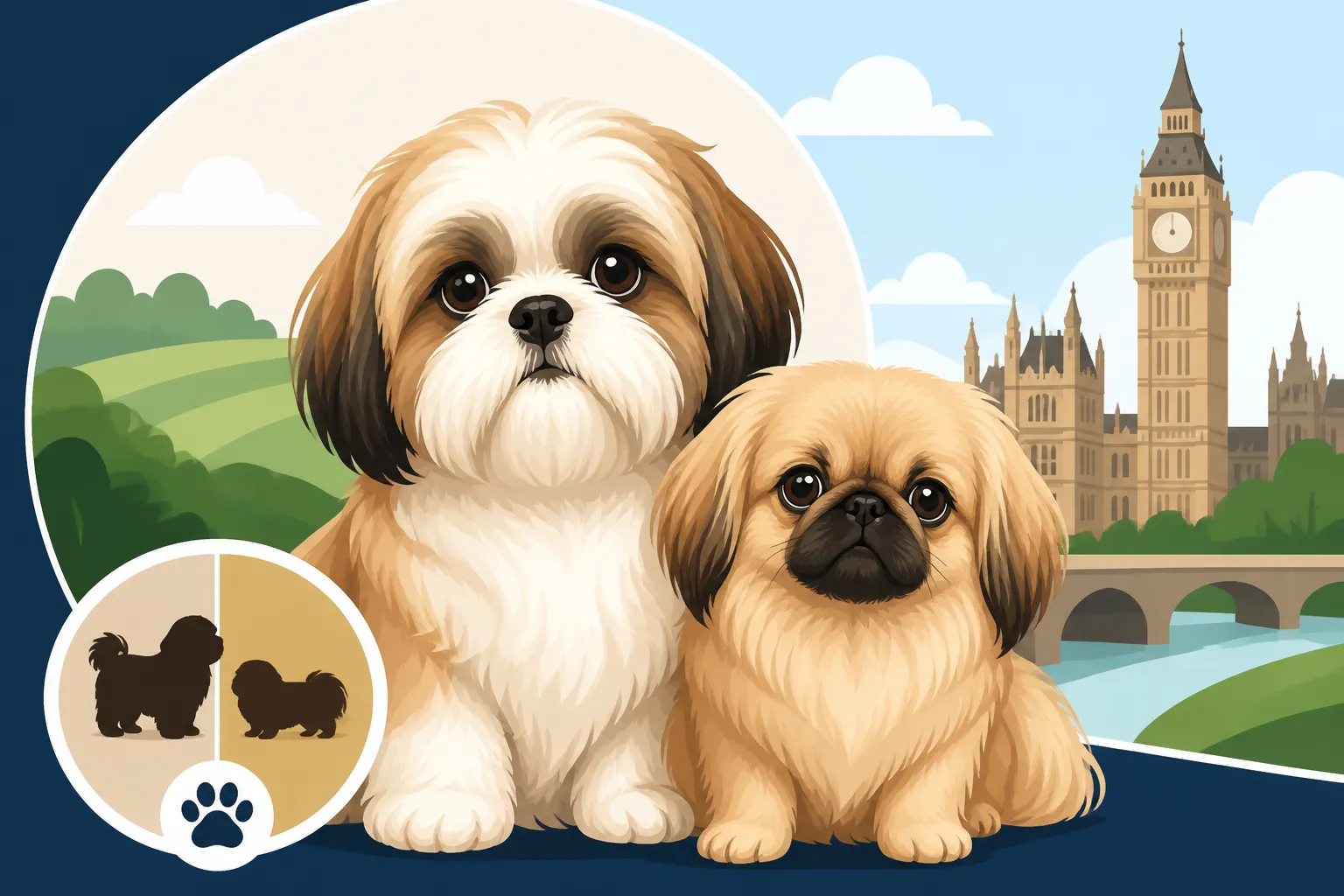
The Shih Tzu Crossed With a Pekingese in England
It's incredibly fascinating to dive into the history of our beloved Shih Tzus, especially when we look back at how the breed developed as it made its way from ancient China to the Western world. When Shih Tzus first arrived in England, their development wasn't a straightforward path; there were some very deliberate crosses made with Pekingese, and understanding why and how this happened sheds light on the gorgeous, fluffy companions we know today.
The Arrival of Shih Tzus in England and Early Breeding Efforts
Imagine a time when the Shih Tzu wasn't the widely recognized breed we cherish now. In the early 20th century, particularly after the fall of the Chinese Imperial Court, these exquisite "lion dogs" began to make their way to Europe. They were rare, exotic treasures, and establishing a stable breeding population in England was quite a challenge due. There weren't many individuals, and often, their exact lineage or even their precise breed identification could be a bit fuzzy, given the historical context of how dogs were kept and exchanged in China.
When these first dogs arrived, they often came with names like "Apsos" or "Tibetan Poodle" or "Chrysanthemum Dog," reflecting a general confusion about their distinct lineage. The term "Shih Tzu" itself wasn't universally adopted in the West until later. The limited genetic pool and the desire to quickly establish a viable population sometimes led early breeders to look for dogs that shared similar characteristics, even if they weren't purebred Shih Tzus as we define them today. This is where the Pekingese often entered the picture, a breed already established and somewhat more common in England at the time.
Why Cross a Shih Tzu with a Pekingese?
The decision to cross a Shih Tzu with a Pekingese wasn't random; it was often driven by a combination of factors related to the scarcity of true Shih Tzus and the perceived similarities between the two breeds. Both are brachycephalic, long-coated, toy breeds with distinct personalities, making them seem like natural cousins to early Western breeders.
One primary motivation was to broaden the gene pool. With very few true Shih Tzus available, breeders faced the risk of excessive inbreeding, which can lead to significant health problems and a lack of genetic diversity. Introducing a closely related breed like the Pekingese was seen as a way to inject new blood and strengthen the fledgling Shih Tzu population in England. Another reason was to solidify certain desirable traits. While both breeds are toy dogs, there were subtle differences in their appearance, especially in head structure, coat texture, and size. Early Shih Tzus in England didn't always conform to a consistent type, and breeders might have used Pekingese to "fix" or enhance traits they considered important for the emerging Shih Tzu standard, such as a flatter face, a more profuse coat, or a specific body conformation. It's a bit like trying to paint a clear picture when you only have a few blurry photographs to start with – you might bring in elements from a similar, clearer picture to help fill in the gaps.
Distinguishing the Two Breeds and the Impact of the Cross
Before we talk about the results of these crosses, it’s important to understand the key characteristics of each breed, as they are quite distinct despite their superficial similarities. Both are charming, small companion dogs, but they have evolved with different nuances that were certainly observed by those early English breeders.
Key Differences Between Shih Tzus and Pekingese
While both breeds originated in Asia and share a "lion dog" ancestry, their physical and temperamental traits have diverged significantly over centuries of selective breeding.
| Feature | Shih Tzu | Pekingese |
|---|---|---|
| Origin | Tibet (via Chinese Imperial Court) | China (Imperial Court) |
| Head Shape | Broader, rounder head; "chrysanthemum" face | Broader, flatter face; sometimes "squished" appearance |
| Eyes | Large, dark, round, set wide apart, not bulging too much | Large, dark, prominent, sometimes giving a "bug-eyed" look |
| Muzzle | Short, unwrinkled, slightly undershot bite | Very short, broad, wrinkled nose-rope |
| Coat | Long, flowing double coat, often softer and silkier | Long, coarse double coat, lion's mane around head/shoulders |
| Tail | Set high, heavily plumed, carried over the back | Set high, carried well over the back, double curled |
| Gait | Arrogant, smooth, flowing | Rolling, majestic, slow, distinctive |
| Temperament | Outgoing, affectionate, playful, friendly | Dignified, independent, loyal to one person, aloof with strangers |
| Weight | Usually 9-16 pounds (4-7.2 kg) | Usually up to 14 pounds (6.4 kg) |
These differences, especially in temperament and coat texture, were often the markers early breeders were looking at. A Shih Tzu, for instance, is known for its outgoing, friendly nature, perfectly suited to being a lap warmer and constant companion. A Pekingese, on the other hand, is often described as more regal, independent, and even a bit aloof, though fiercely devoted to its chosen human. These differences would naturally influence the characteristics of any offspring.
You can learn more about specific breed characteristics in The Shih Tzu Standard and What Judges Look For or The Shih Tzu From Tibetan Temples to American Homes.
The Characteristics of the Crosses
So, what did these Shih Tzu-Pekingese crosses actually look like? It really varied, as genetics can be a fascinating roll of the dice! You might see a dog with the silkier coat of a Shih Tzu but the more pronounced "nose rope" of a Pekingese, or perhaps a more active, outgoing personality from the Shih Tzu side with the slightly heavier build of a Peke.
Typically, the offspring would inherit a blend of traits. For instance, some might have a flatter face than a purebred Shih Tzu, leaning more towards the Pekingese's unique facial structure. Their coats might be a mix of the two textures – perhaps not as fine as a show-quality Shih Tzu, nor as coarse as a true Pekingese. The tail carriage might also reflect this blend, perhaps not quite as high-set and dramatically plumed as a typical Shih Tzu. They would often be sturdy little dogs, well-suited to companion life. These dogs were essentially instrumental in helping form the genetic foundation for the Shih Tzu breed in the UK.
It's a testament to the early breeders' dedication that they carefully selected and bred, even with limited stock, to eventually arrive at the breed we recognize today. This process wasn't without its challenges, and understanding Health Testing a Shih Tzu Breeder Should Do became crucial to ensure the long-term vitality of the emerging breed.
The Evolution of the Shih Tzu Breed Standard
The practice of crossing Shih Tzus with Pekingese, while crucial in the breed's formative years in the West, eventually ceased as breed clubs formed and definitive breed standards were established. This shift marked a critical moment in the consolidation of the Shih Tzu as a distinct and recognized breed.
Establishing the Shih Tzu as a Separate Breed
In the UK, the first Shih Tzu Club was founded in 1933, and this was a pivotal moment. With a dedicated group of enthusiasts, the focus began to shift from simply propagating "oriental toy dogs" to defining and refining the Shih Tzu as its own distinct entity. This meant careful selection of breeding pairs, with an emphasis on dogs that exhibited the desired Shih Tzu characteristics, moving away from intentionally blending with other breeds. The efforts were about solidifying the unique look and temperament.
It wasn't always easy, and there were debates and discussions about what exactly constituted a "true" Shih Tzu. The influence of those early Pekingese crosses lingered in the gene pool for a while, but as more purebred Shih Tzus were imported and carefully bred, the breed standard began to crystalize. This process was all about honing in on the specific traits that differentiate a Shih Tzu, ensuring that future generations would consistently display the breed's iconic "chrysanthemum" face and joyful disposition. You can read more about how this standard was built in How Long the AKC Took to Recognize the Shih Tzu.
Impact on Modern Shih Tzu Lineages
While deliberate cross-breeding with Pekingese is no longer practiced by reputable Shih Tzu breeders today, the legacy of those early efforts in England means that a tiny thread of Pekingese ancestry likely runs through many Shih Tzu lineages. This historical detail doesn't diminish the purity of modern Shih Tzus; rather, it highlights the often complex journey of breed development, especially for breeds brought from distant lands with limited initial stock.
Modern Shih Tzus are the result of decades of careful, selective breeding aimed at upholding a very specific breed standard. This includes focusing on health, temperament, and adherence to the physical traits outlined by breed clubs. When you look at a Shih Tzu today, you're seeing a dog whose ancestry might include these early crosses, but whose identity as a Shih Tzu is now firmly established and celebrated. Responsible breeders today prioritize specific health clearances and genetic testing to ensure the integrity and health of their lines. Understanding The DNA and OFA Tests for a Shih Tzu Litter is vital for new owners and aspiring breeders alike.
Caring for a Shih Tzu with a Nod to its Brachycephalic Heritage
Regardless of whether there's a whisper of Pekingese in your Shih Tzu's past, all Shih Tzus are brachycephalic, meaning they have those adorable flat faces. This trait, while charming, comes with specific care requirements that every owner needs to understand and accommodate. It's not just about looks; it's about their health and well-being.
Brachycephalic Challenges and Care
The short snout and compacted skull of a brachycephalic dog like a Shih Tzu can lead to several common health issues, particularly related to breathing and overheating. Their elongated soft palates and stenotic nares (narrow nostrils) can make breathing difficult, leading to noisy breathing, snoring, and a reduced ability to cool themselves down effectively. This is a shared concern with Pekingese, which tend to have an even more exaggerated flat face.
Because of this, keeping your Shih Tzu cool is paramount, especially in warmer climates or during periods of activity. Why a Shih Tzu Cannot Cool Itself Well is a must-read for any owner. Short walks during the coolest parts of the day, access to shade and fresh water, and avoiding strenuous exercise are all critical. Consider a cooling mat or a light vest on warm days. You'll also want to pay close attention to their breathing. If you notice excessive panting, struggling for breath, or any blue tinge to their gums, it's an emergency requiring immediate veterinary attention.
Grooming and Eye Care Considerations
Both Shih Tzus and Pekingese are known for their luxurious, long coats, which were historically quite high-maintenance. While a Shih Tzu's coat is often silkier than a Pekingese's more coarse fur, both require dedicated grooming. The full, flowing coat around their face can often lead to issues with hair irritating their large, somewhat protruding eyes.
Daily brushing is non-negotiable for a Shih Tzu, whether they're kept in a full show coat or a practical "puppy cut." Without it, mats will form quickly, which can be painful and lead to skin infections. Using a good detangler spray and a slicker brush from a reputable brand like Chewy can make a huge difference in keeping their coat free of tangles. Pay special attention to areas behind the ears, under the legs, and where a harness sits, as these are mat magnets. You can explore options for grooming supplies on Chewy's website.
Eye care is another crucial aspect. The Shih Tzu's prominent eyes, a characteristic that was certainly influenced by early breeding, are vulnerable. Hair falling into the eyes, dust, or even accidental bumps can lead to irritation or more serious conditions like corneal ulcers. Regularly wiping their faces, trimming the hair around their eyes, and tying up a The Shih Tzu Topknot and Keeping Hair Out of the Eyes can help prevent these issues. Some Shih Tzus also suffer from Dry Eye in a Shih Tzu and Lifelong Drops, requiring daily medication. Keeping their eyes clean and clear is a daily ritual that simply can’t be skipped.
It’s worth remembering that the journey of the Shih Tzu from the imperial courts to our living rooms has been a fascinating one, shaped by dedicated breeders and unique historical circumstances, including those early crosses in England. Understanding this history only deepens our appreciation for these charming, resilient little dogs.
Disclaimer
This article is for general informational purposes only and does not constitute professional advice. Laws, prices and regulations vary by location and change over time. Consult a qualified professional for guidance on your specific situation.