Whether the Shih Tzu Is Related to the Pekingese
It's quite common for new Shih Tzu parents, and even seasoned dog lovers, to wonder about the origins of this delightful breed and how it relates to other ancient, flat-faced dogs. The Shih Tzu and the Pekingese often get lumped together in people's minds, especially given their similar looks and historical backgrounds. This guide will delve deep into the fascinating lineage of both breeds, exploring their undeniable shared history while highlighting the unique traits that ultimately define each as distinct.
The Shared Imperial History of Shih Tzus and Pekingese
When you look at a Shih Tzu and a Pekingese, it's easy to see why people might think they're very closely related, perhaps even just different names for the same dog. Both are small, brachycephalic (flat-faced) breeds with luxurious long coats and a distinct air of dignity. This isn't a coincidence; their stories are deeply intertwined, stemming from the same ancient world.
Ancient Roots in Tibetan and Chinese Courts
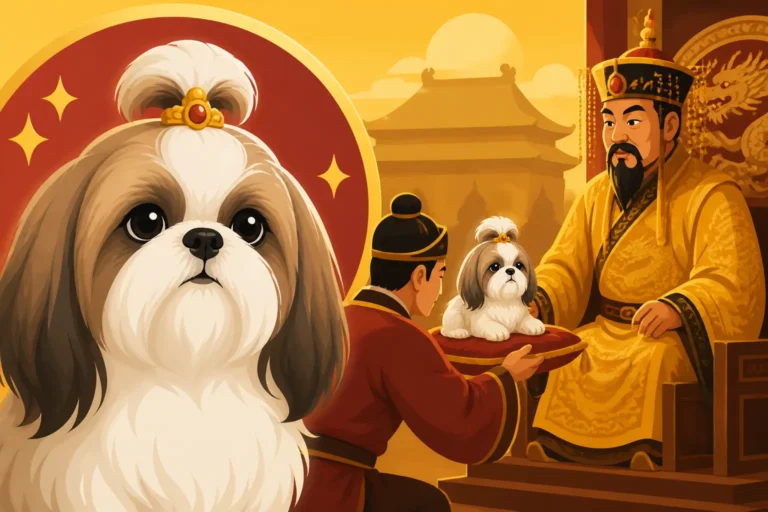
Long, long ago, in the misty mountains of Tibet and the opulent palaces of Imperial China, small, long-haired "lion dogs" were treasured companions. These dogs weren't just pets; they were symbols of status, revered as sacred creatures, and often given as diplomatic gifts between rulers. Imagine tiny, fluffy sentinels padding silently through vast halls, their presence a testament to imperial favor. Both the ancestors of the Shih Tzu and the Pekingese were part of this noble lineage. The Shih Tzu, often called the "lion dog" or "chrysanthemum dog" due to its flowing mane and facial hair, is said to have originated in Tibet, then gifted to Chinese emperors. The Pekingese also has a long history in China, closely tied to the imperial family, with legends even saying they were miniature lions. You can read more about this rich heritage in The Shih Tzu From Tibetan Temples to American Homes. This shared ancient beginning in such exclusive environments meant their development was often parallel, and sometimes, even overlapping.
The Influence of the Dowager Empress Cixi
Fast forward to the late 19th and early 20th centuries, and one figure stands out in the history of both breeds: China's Dowager Empress Cixi. She was absolutely obsessed with her dogs, particularly her "Pekingese" and "Shih Tzu" types, and ran an extensive, highly organized breeding program within the Forbidden City. Her kennels were legendary, overseen by eunuchs who catered to every canine whim, from special diets to silk bedding. It was during this period that the lines between the various "lion dog" types were still somewhat fluid. Cixi herself certainly bred different styles of flat-faced dogs, aiming to perfect certain traits. It's plausible, and widely believed, that there was a degree of interbreeding or selective crossing between the various "palace dogs" under her meticulous eye to enhance desirable features, whether it was a flatter face, a more profuse coat, or a specific temperament. The aim was to produce the most exquisite imperial companions, and strict records were kept. This intense focus on breeding within a confined, royal environment naturally led to a strengthening of certain shared physical characteristics among her prized dogs. Dowager Empress Cixi and Her Shih Tzu Kennel offers a deeper dive into her fascinating influence.
Early European Encounters and Classification
When these captivating little dogs eventually made their way out of China and into the Western world in the early 20th century, there was considerable confusion. Imagine trying to classify a group of similar-looking, long-haired, flat-faced dogs from an unfamiliar culture, with little clear historical documentation available to outsiders. Early European enthusiasts and breeders often struggled to distinguish between the various "oriental toy dogs." Some were called "Lhasa Apsos," others "Pekingese," and the Shih Tzu itself was sometimes referred to as a "Tibetan Poodle" or even "Chrysanthemum Dog." It took time, dedicated effort, and the establishment of formal breed clubs and standards to sort out the individual identities. This initial lack of clear distinction among early imports further contributed to the perception of a very close relationship, as many of these dogs were simply categorized under broad, sometimes overlapping, labels before distinct breed standards were truly codified.
Distinctive Features: What Sets Them Apart Physically
While their shared history paints a picture of intertwined origins, once you know what to look for, the Shih Tzu and the Pekingese reveal themselves as wonderfully distinct breeds. These differences aren't just subtle nuances; they impact everything from their appearance to their daily care.
Head and Facial Structure Differences
This is often the first place to look for distinguishing features. A Shih Tzu typically has a rounder head with a relatively shorter muzzle, often referred to as a "chrysanthemum face" because the hair around it grows outwards in all directions, much like the petals of the flower. Their eyes are large, round, and set fairly wide apart, often giving them a sweet, almost pleading expression. The Shih Tzu almost always has an undershot bite, where the lower jaw extends slightly beyond the upper, which is part of their breed standard.
In contrast, the Pekingese possesses a broader, flatter head. Their muzzle is extremely short, often leading to a very pronounced "stop" (the indentation between the eyes). The Pekingese's eyes, while also large, tend to be set wider apart and often have a somewhat more serious or challenging expression, almost as if they're looking down their nose at you. They are also known for their characteristic "roll" of skin over the nose. While both are brachycephalic, the Pekingese's facial flatness is often more extreme.
Body Build and Proportions
Move beyond the face, and more differences become apparent. The Shih Tzu is generally slightly longer than it is tall, giving it a somewhat rectangular silhouette. They have a sturdy, compact body and move with a proud, almost aristocratic gait, carrying their plumed tail jauntily over their back. They are active and nimble for their size.
The Pekingese, on the other hand, is built lower to the ground, with a distinctive "roll" in their walk, often described as a rolling gait due to their heavy front and somewhat bowed legs. They have a compact, heavy-boned body that makes them feel surprisingly substantial for their size. Their overall appearance is often likened to a small lion, with a more substantial, almost barrel-chested build compared to the Shih Tzu. Think of a Shih Tzu as a lively, flowing ribbon of silk, and a Pekingese as a sturdy, regal cushion.
Coat Type and Maintenance Demands
Both breeds boast magnificent double coats, but even here, there are distinctions in texture and maintenance. The Shih Tzu's coat is famously long, flowing, and soft, with a silky texture. It comes in a myriad of colors and patterns. This double coat requires diligent daily care to prevent matting, especially behind the ears, under the legs, and where a harness might sit. Regular brushing, often daily, is non-negotiable if you want to keep that stunning full coat. You can find excellent brushes and combs on Chewy that are designed to penetrate the dense double coat without pulling. You can learn more about this in Brushing a Shih Tzu Double Coat Every Day.
The Pekingese also has a double coat, but it's often described as even more profuse, with a thicker, coarser outer coat and a dense, woolly undercoat. They have a characteristic "mane" around their neck and shoulders, adding to their lion-like appearance, and heavy feathering on their legs and tail. While both coats demand serious dedication, the Pekingese's often feels heavier and more voluminous. Both require similar tools and techniques for grooming, and stores like Chewy offer specialized grooming tables and high-velocity dryers that can make the process easier for either breed. Keeping a close eye on their coat health and understanding the specifics are crucial for both. The Shih Tzu Coat the Standard Describes delves into the intricacies of the Shih Tzu's coat.
Let's summarize some of these physical differences in a quick table:
| Feature | Shih Tzu | Pekingese |
|---|---|---|
| Head Shape | Rounder, "chrysanthemum" face | Broader, flatter face, prominent stop |
| Muzzle Length | Relatively short | Extremely short, often with a nasal fold |
| Eyes | Large, round, wide-set, sweet expression | Large, wide-set, more serious expression |
| Bite | Undershot | Undershot, but jaw conformation differs |
| Body Shape | Slightly longer than tall, compact | Lower to ground, heavy-boned, "lion-like" |
| Gait | Proud, flowing, aristocratic | Rolling, somewhat bowed-leg walk |
| Coat Texture | Long, flowing, silky double coat | Profuse, thicker, coarser double coat |
Temperament and Personality: More Than Just Looks
Beyond their physical differences, the temperaments of the Shih Tzu and Pekingese also diverge in interesting ways, largely shaped by their historical roles and selective breeding over centuries. Understanding these personality traits is key to truly appreciating each breed.
The Shih Tzu's Outgoing and Affectionate Nature
The Shih Tzu was, above all, bred to be a companion. They are famously outgoing, friendly, and affectionate, often eager to be involved in whatever their human family is doing. They thrive on companionship and are happiest when cuddled on a lap or following their favorite person from room to room. Their temperament is generally described as lively, playful, and charming. They tend to be quite adaptable, fitting well into various household dynamics, and are often good with respectful children and other pets, though proper introductions are always important. This doesn't mean they don't have their moments of "Shih Tzu sass," but their core nature is one of loving devotion. You can explore more about their innate personality in Shih Tzu Temperament and the Companion It Was Bred to Be. When it comes to training, a Shih Tzu is often motivated by praise and tasty treats, making positive reinforcement a very effective method. Small, soft treats, readily available from places like Chewy, work wonders during training sessions.
The Pekingese's Regal and Independent Demeanor
The Pekingese, while also a companion, carries a distinct air of imperial dignity and independence. They were historically the sacred "lion dogs" of the Chinese palace, accustomed to being revered and pampered. This has imbued them with a self-possessed, sometimes aloof, nature. A Pekingese's loyalty is usually fierce but reserved for their chosen few. They might tolerate strangers but aren't typically as effusive in their greetings as a Shih Tzu. They can be quite courageous and protective despite their small size, acting as alert little watchdogs. They have a strong sense of self-importance and aren't afraid to let you know their preferences. While affectionate with their family, they often appreciate their own space and aren't always looking for constant interaction. Their historical role as guardians of the imperial court shines through in their dignified, sometimes stubborn, personality.
Training Approaches for Each Breed
Both breeds benefit immensely from positive reinforcement and early socialization. However, their differing inherent personalities often dictate slightly different training approaches.
A Shih Tzu, being generally more eager to please, often responds well to consistent, fun, and short training sessions. They love to learn new tricks and respond enthusiastically to rewards. Consistency is still paramount, especially for things like Why Shih Tzu House Training Runs Long, but their inherent desire for connection often makes them quite biddable. They enjoy praise and positive attention as much as a high-value treat.
The Pekingese, with its more independent streak, can present a greater challenge. They are intelligent but can be quite strong-willed and stubborn, making them less inclined to perform simply to please their owner. Training a Pekingese often requires a great deal of patience, creativity, and a deep understanding of what truly motivates them. They might respond better to training when they feel it's their idea or when there's a highly desirable reward involved. What some might call Shih Tzu Stubbornness and What It Really Is can be amplified in a Pekingese, requiring a resilient trainer. Early socialization is crucial for both to ensure they grow into well-adjusted adults, comfortable with various sights, sounds, and people.
The Genetic Perspective and Modern Understanding
So, with all this shared history and some clear differences, where do modern genetics and breed standards place the Shih Tzu and the Pekingese in relation to each other? The answer is both complex and clear.
DNA Studies and Ancestral Links
Modern scientific advancements, particularly DNA studies, have shed more light on the deep historical relationships between dog breeds. These studies confirm what historical records and observations suggested: the Shih Tzu, Pekingese, and several other ancient Asian toy breeds (like the Lhasa Apso) share a common ancestral lineage. They are all part of a very old group of "oriental" or "Asian" dogs, indicating they branched off from common ancestors thousands of years ago. This doesn't mean one is a direct descendant of the other in recent history; rather, it means they developed along parallel, related paths from a shared ancient genetic pool. Over centuries, through geographical separation and selective breeding by different cultures and rulers, these populations evolved into distinct breeds, each with its own unique set of traits that were consistently reproduced. So, while they are not directly related as in parent-child, they are certainly distant cousins. You can even consider The DNA and OFA Tests for a Shih Tzu Litter for insights into modern genetic health.
Official Breed Recognition and Standards
Despite their shared ancient heritage, modern kennel clubs worldwide recognize the Shih Tzu and the Pekingese as entirely separate and distinct breeds. This distinction is based on carefully developed breed standards, which are detailed descriptions of the ideal physical characteristics, temperament, and movement for each breed. These standards were established to preserve the unique qualities that make a Shih Tzu a Shih Tzu and a Pekingese a Pekingese.
For example, the American Kennel Club (AKC) officially recognized the Shih Tzu in 1969. Their standard clearly defines the Shih Tzu's chrysanthemum face, its distinctive gait, and its joyous, outgoing temperament. Similarly, the Pekingese has its own distinct standard, emphasizing its lion-like appearance, rolling gait, and dignified nature. These standards act as blueprints for breeders, ensuring that future generations maintain the characteristics unique to their breed. Therefore, while they might share deep historical roots, from a modern purebred perspective, they are unequivocally separate. This process of recognition and standardization helps maintain the integrity of each breed. Learn more about how the Shih Tzu gained formal recognition in AKC Recognition of the Shih Tzu in 1969.
Understanding Crosses Versus Purebreds
Given the similarities, it's not uncommon to encounter "designer dogs" that are crosses between a Shih Tzu and a Pekingese, sometimes referred to as "Peke-a-Tzus" or other blended names. It's important to understand that while these mixed-breed dogs can be wonderful companions, they are not considered purebred Shih Tzus or Pekingese. They will inherit a mix of traits from both parent breeds, and their appearance and temperament can vary greatly, sometimes leaning more towards one parent, sometimes a true blend.
When you're looking for a purebred Shih Tzu or Pekingese, it's crucial to seek out reputable breeders who adhere to the established breed standards and conduct appropriate health screenings. A responsible breeder will provide health clearances for their breeding stock, ensuring they are free from common genetic conditions that can affect either breed. These clearances are essential for the health and well-being of the puppies. Health Testing a Shih Tzu Breeder Should Do is a valuable resource for understanding what to look for in a breeder. Whether you choose a purebred or a wonderfully unique cross, understanding the distinct characteristics of the Shih Tzu and the Pekingese will help you appreciate the rich history and individual charm of these captivating "lion dogs."
Disclaimer
This article is for general informational purposes only and does not constitute professional advice. Laws, prices and regulations vary by location and change over time. Consult a qualified professional for guidance on your specific situation.