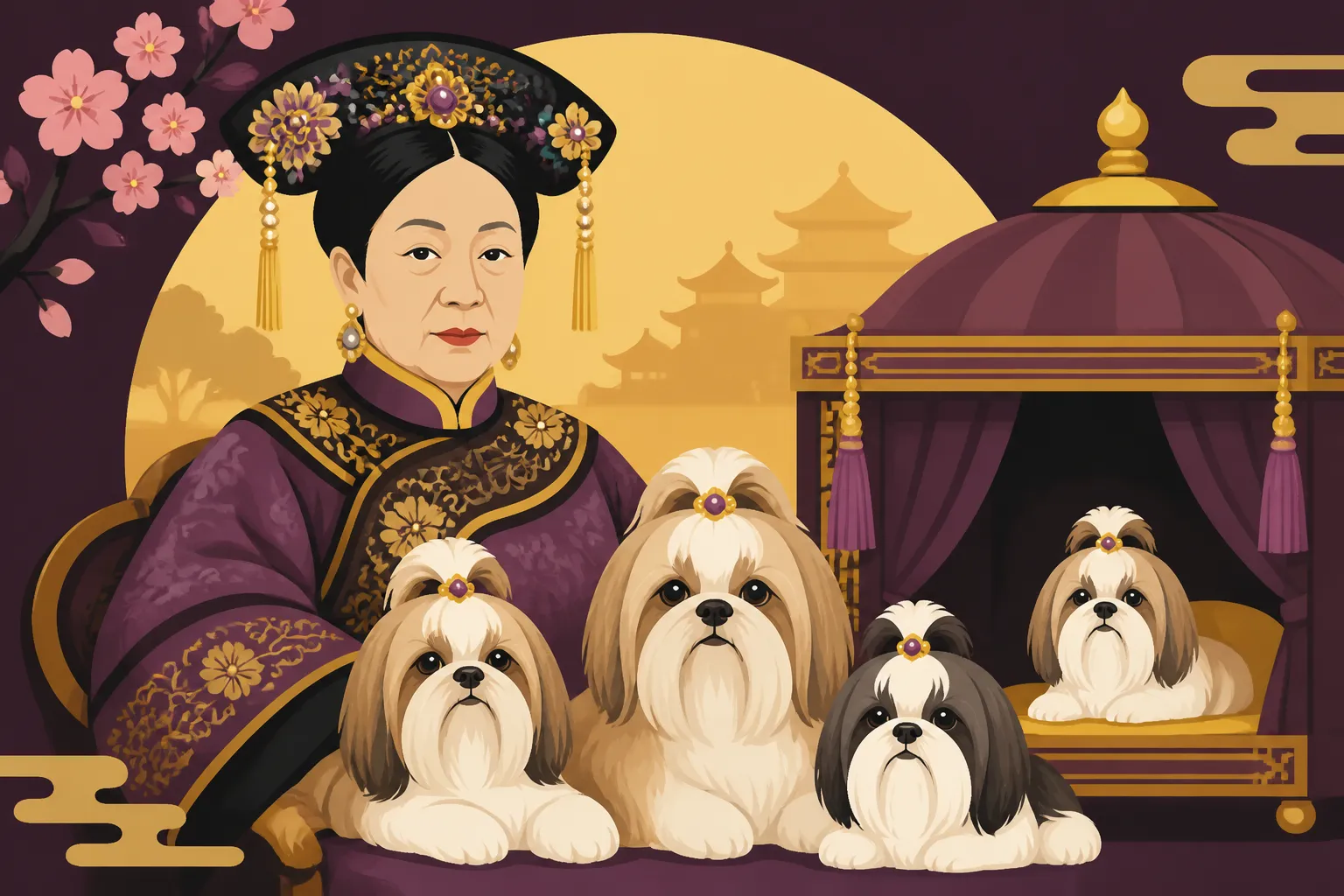
Dowager Empress Cixi and Her Shih Tzu Kennel
We often imagine the Shih Tzu as a relatively modern companion, perhaps curled up on a plush cushion or trotting proudly on a leash. But the truth is, the breed has a rich, fascinating, and quite dramatic history rooted deep in imperial China, particularly under the formidable Dowager Empress Cixi. This guide will take you behind the silk curtains and into the opulent, yet often rigid, world of her royal kennels, exploring how her passion shaped the Shih Tzu we know and love today.
The Imperial Court's Deep Fascination with Dogs
The idea of keeping dogs purely for companionship isn't new; it dates back centuries in many cultures, but perhaps nowhere was it elevated to such an art form as in the Chinese imperial courts. These weren't just pets; they were living treasures, symbols of status, and often, believed to be spiritual guardians. The Shih Tzu, with its distinctive "lion dog" appearance, was at the very heart of this ancient tradition, carrying a weight of history and symbolism that's hard for us to fully grasp in our modern homes.
Historical Roots of Palace Dogs
Long before Cixi, small, pampered dogs graced the laps and gardens of Chinese emperors and nobility. Records of "under-the-table" dogs, so-called because they were small enough to fit beneath banquet tables, go back to the Han Dynasty. These weren't working dogs in the traditional sense; they weren't herding sheep or hunting game. Their sole purpose was to bring joy, companionship, and a touch of living art to their powerful owners. The palace environment provided an ideal, sheltered setting for selective breeding, where traits like luxuriant coats, charming dispositions, and small size were highly prized and cultivated over generations. Imagine a world where the beauty and rarity of your canine companion spoke volumes about your wealth and influence.
These dogs lived lives of incredible luxury, far removed from the struggles of common animals. They had dedicated caretakers, special diets, and often wore elaborate collars and adornments. Their presence in the court wasn't accidental; it was a deliberate choice to cultivate beauty and loyalty within the palace walls. The sheer devotion to these animals, particularly breeds like the Shih Tzu, was a testament to their perceived value, not just as companions but as integral parts of court life. It really underscores how deeply ingrained the idea of the pampered pet is in their history.
The Symbolism of the Lion Dog
The Shih Tzu's very name, translating to "lion dog," speaks volumes about its symbolic importance. In Buddhist tradition, lions are sacred animals, associated with power, protection, and royalty. However, actual lions were not native to China. Thus, small, long-haired dogs that resembled miniature lions, particularly those with flowing manes and proud stances, became highly revered. These "lion dogs" were seen as embodiments of the mythical lion, guarding the spiritual and physical well-being of the imperial family. The Tibetan Lion Dog Behind the Breed tells a more complete story of this lineage.
The symbolism went beyond mere appearance; these dogs were often depicted in art and poetry, embodying courage, dignity, and auspiciousness. They were thought to ward off evil spirits and bring good fortune to their owners. This spiritual significance meant they were treated with the utmost respect and veneration, far beyond what we might consider a typical pet. Their existence was intertwined with the spiritual fabric of the imperial court, making them much more than just furry companions; they were living talismans, guardians of an ancient legacy.
Dowager Empress Cixi's Ascendancy and Her Canine Passion
To understand the Shih Tzu's journey, we must look at the empress who, perhaps more than anyone else, shaped its destiny. Dowager Empress Cixi, a complex and controversial figure, held immense power in China during the late 19th and early 20th centuries. She was a woman of strong will, exquisite taste, and an undeniable passion for her "lion dogs." Her personal devotion wasn't just a casual hobby; it was a driving force behind the formalization and meticulous breeding of the Shih Tzu breed within her imperial kennels.
From Concubine to Powerhouse
Cixi's rise to power is a tale of ambition and political acumen. Starting as a low-ranking concubine to Emperor Xianfeng, she quickly captured his attention and bore him his only surviving son, Tongzhi. After the Emperor's death, she strategically maneuvered herself into a position of regency, effectively ruling China for nearly five decades. Her reign was marked by significant political upheaval and cultural change, but amidst all the political turmoil, her personal passions remained a constant. She was known for her love of art, theater, and particularly, her beloved palace dogs. This powerful woman, who navigated complex court intrigues, found solace and joy in the company of her furry companions.
Her influence on the court was absolute, and this extended to every aspect of palace life, including the breeding and care of the imperial dogs. She meticulously oversaw her kennels, ensuring that her standards of beauty, temperament, and health were strictly adhered to. Her personal tastes became the blueprint for the breed, defining what an "ideal" Shih Tzu should be. It’s hard to imagine such direct, hands-on involvement from a head of state in anything but the most personal of pursuits.
Her Personal Devotion to Shih Tzus
Cixi's affection for her Shih Tzus was legendary. She reportedly had several hundred dogs at her peak, with certain favorites enjoying almost unimaginable privileges. These dogs were more than pets; they were her confidantes, her stress-relievers, and a source of pure, unadulterated joy in a life filled with heavy responsibilities and constant scrutiny. She would personally spend hours with them, overseeing their feeding, grooming, and even giving them names and titles. There are tales of her holding court with her favorite Shih Tzus at her feet, sometimes even allowing them to eat from her own silver utensils.
This deep personal connection translated into an unwavering commitment to their welfare and the advancement of the breed. She wasn't just collecting dogs; she was actively nurturing and refining the lineage. This level of personal involvement from such a powerful figure highlights just how central these dogs were to her emotional life. It also explains why her influence was so profound and lasting on the breed itself.
Life Inside the Imperial Dog Kennels
The imperial kennels under Dowager Empress Cixi were not just glorified stables; they were highly organized, meticulously run establishments, almost like miniature palaces designed exclusively for dogs. Every detail, from the dogs' diets to their daily routines, was carefully managed by a dedicated staff, ensuring that these precious animals lived lives of unparalleled luxury and received the best care the empire could offer.
The Eunuchs as Canine Caretakers
The primary caretakers of Cixi's dogs were palace eunuchs, a unique class of male servants who played vital roles within the Forbidden City. These men were entrusted with everything from managing imperial finances to overseeing various domestic departments, and the imperial kennels were certainly among their important duties. Their lives were dedicated to serving the imperial family, and for those assigned to the dog kennels, that meant providing round-the-clock care for the empress's beloved Shih Tzus. They were, in essence, the royal dog handlers, groomers, and veterinarians all rolled into one. What Eunuchs Did in the Imperial Dog Kennels offers an even deeper look into their crucial role.
Imagine the daily routine: waking before dawn to prepare fresh meals, meticulously brushing out long double coats to prevent mats, supervising exercise, and attending to any minor ailments. These eunuchs would have been intimately familiar with each dog's personality, quirks, and health needs. They understood the nuances of Shih Tzu care, from keeping their eyes clean to managing their brachycephalic breathing. Their skill and dedication were paramount, as any lapse in care could incur the empress's wrath. It truly was a high-stakes job, demanding precision and unwavering loyalty to both the empress and her canine charges.
Daily Life and Rituals for the Dogs
Life for an imperial Shih Tzu was governed by strict routines and rituals, reflecting their elevated status. They were not simply allowed to roam; their days were structured, often involving specific feeding times, designated exercise periods in private gardens, and elaborate grooming sessions. Their food was prepared with great care, often consisting of fine meats, rice, and vegetables, sometimes even served in silver bowls. It was a far cry from the basic kibble we might pick up from Chewy today; every meal was a bespoke affair.
Grooming was an especially critical daily ritual. The Shih Tzu's long, flowing double coat required constant attention to prevent matting and maintain its pristine appearance. Eunuchs would spend hours brushing, combing, and conditioning the coats, often tying topknots to keep the hair out of the dogs' eyes. Brushing a Shih Tzu Double Coat Every Day was a fundamental part of maintaining their imperial aesthetic. They were often bathed with perfumed waters and dried with soft silks. These dogs also received "education," learning proper etiquette for interacting with the empress and her guests, ensuring they were well-behaved companions during official and private audiences. The level of pampering was truly extraordinary, creating a life of unparalleled comfort and attention for these canine royals.
Breeding Practices Under Cixi's Gaze
Under Cixi's direct supervision, the imperial kennels became a highly controlled breeding program. Her goal was not just to maintain the Shih Tzu line but to refine it, emphasizing specific physical traits and temperaments that she found most desirable. This meant careful selection of breeding pairs, with detailed records likely kept to track lineages and desirable characteristics. The empress herself would often inspect litters, choosing the puppies that best met her exacting standards. This selective breeding was crucial in establishing the distinct look and personality that became synonymous with the Shih Tzu breed.
The focus was on producing dogs with the characteristic "chrysanthemum face," large round eyes, a well-plumed tail carried over the back, and a luxurious coat in specific colors and markings. Health and temperament were also important, as these dogs needed to be robust enough to thrive in the palace environment and possess the gentle, outgoing nature expected of companions to royalty. This careful, almost scientific approach to breeding, guided by Cixi's personal vision, ensured that the Shih Tzu evolved into a recognizable and consistent breed, setting the foundation for the dogs that would eventually find their way to the Western world.
The Influence of Cixi's Breeding Program on the Shih Tzu
Dowager Empress Cixi’s meticulous attention to her Shih Tzus wasn’t just about her personal enjoyment; it had a profound and lasting impact on the breed itself. Her preferences, enforced through her imperial kennels, effectively set the "standard" for what a Shih Tzu should look like and how it should behave. This legacy can still be seen in the breed today, centuries later.
Defining the Breed Standard
While formal breed standards, as recognized by modern kennel clubs, came much later, Cixi's influence essentially created an imperial standard for the Shih Tzu. Her desires dictated the physical characteristics that were selectively bred for: a specific size, the carriage of the head and tail, the texture and length of the coat, and even certain color patterns. Any dog not meeting these unwritten, but strictly observed, criteria would likely not be chosen for breeding or presented to the empress, thus shaping the gene pool towards her ideal. This meant that certain traits became dominant, leading to a more uniform appearance within the imperial Shih Tzu population.
Consider the detailed descriptions that emerged from the imperial court: the "broad, round head, wide between the eyes, with good stop," the "large, dark, round, prominent but not bulging eyes," and the "plumed tail carried jauntily over the back." These precise observations, made by those striving to please the empress, were the precursors to modern breed standards. They underscore how her personal vision was concretely translated into the breed's development, defining its very essence. The Shih Tzu Standard and What Judges Look For today still echoes many of these ancient descriptions.
The "Chrysanthemum Face" and Other Traits
One of the most iconic features of the Shih Tzu, the "chrysanthemum face," is a direct result of imperial breeding. This term describes the way the hair grows outwards from the center of the face, resembling the petals of a chrysanthemum flower. Cixi clearly adored this look, and her breeders worked to enhance it. This, along with the distinct undershot bite, the broad muzzle, and the large, dark eyes, became hallmark traits of the breed. The Shih Tzu Head and Chrysanthemum Face is a perfect example of a desired trait becoming central to the breed's identity.
Beyond physical appearance, temperament was also a significant breeding consideration. Cixi's Shih Tzus were bred to be amiable, outgoing, and affectionate companions, capable of thriving in a busy court environment while remaining devoted to their owners. They needed to be gentle enough for royal laps but also possess a lively, engaging personality. The goal was a dog that was both beautiful to behold and delightful to be around – a true companion. This focus on both aesthetics and disposition ensured that the Shih Tzu developed into the charming, friendly breed known worldwide today.
Early Records and Pedigrees
While not in the modern format of kennel club registration, the imperial kennels undoubtedly kept some form of detailed records. Given the high value placed on these dogs and Cixi's intense involvement, it’s highly probable that eunuchs maintained genealogies, documenting successful pairings and the desirable traits of offspring. These informal "pedigrees" would have been crucial for informing future breeding decisions and ensuring the purity of the imperial line. Such careful record-keeping was not just for historical purposes but served a very practical function in maintaining the empress's specific breeding goals.
These records, even if rudimentary by today's standards, represented a form of quality control and lineage tracking. They allowed the eunuchs to avoid inbreeding too closely or to deliberately pair dogs to enhance certain traits. This foresight, combined with the continuous oversight of the empress, resulted in a consistent and distinct type of dog that was clearly recognizable as an imperial Shih Tzu. The meticulousness of this ancient breeding program is a testament to the dedication invested in these royal companions.
The Legacy and Decline of the Imperial Kennels
The grandeur of the imperial Shih Tzu kennels, so meticulously maintained under Dowager Empress Cixi, could not last forever. Like many aspects of imperial China, the system eventually succumbed to the forces of history. However, the legacy of her breeding program profoundly shaped the future of the breed, ensuring its survival and eventual global spread, even as the walls of the Forbidden City crumbled.
The End of an Era: 1908
The year 1908 marked a pivotal moment for both China and its imperial Shih Tzus. Dowager Empress Cixi passed away in November of that year, just a day after the young Emperor Guangxu, whom she had effectively imprisoned for years. With her death, the central figure who had passionately championed and protected the Shih Tzu breeding program was gone. The intricate system of eunuch caretakers, the meticulous breeding, and the extraordinary pampering largely collapsed without her direct oversight and unwavering dedication. The dogs, once treasures of the palace, faced an uncertain future as the Qing Dynasty itself teetered on the brink of collapse.
The decline was swift. Without imperial patronage, many of the dogs were dispersed. Some were likely sold, given away, or simply left to fend for themselves as the palace staff disbanded and the political landscape became increasingly unstable. The opulence and structured care that defined their lives vanished almost overnight. This period represented a dramatic shift from unimaginable luxury to potential obscurity for the imperial Shih Tzus, a stark reminder of how deeply their fate was tied to the fate of their royal owner. The Shih Tzu in the Qing Imperial Court goes into more detail about this specific period.
The Spread of the Breed Post-Cixi
Despite the initial dispersal, Cixi's breeding efforts were not in vain. The distinct and beautiful dogs she had cultivated were too remarkable to simply disappear. Many found their way into the hands of Chinese nobility and wealthy families who continued to appreciate their charm and unique heritage. Crucially, a small number of these imperial Shih Tzus were eventually acquired by Western travelers, diplomats, and military personnel in the early 20th century, particularly after the fall of the Qing Dynasty in 1912. This marked the beginning of their journey to the outside world, a journey that would eventually lead to their global recognition.
The initial dogs brought to Europe and America formed the foundation stock for the modern Shih Tzu breed outside of China. These few individuals, carrying the genetic legacy of Cixi's meticulous breeding program, were instrumental in establishing the breed in the West. How the Shih Tzu Reached the West details this fascinating spread. Without the empress's dedication to developing a consistent type of dog, it's highly probable that the Shih Tzu might have remained an obscure local variation rather than becoming the beloved global sensation it is today. Her lasting influence is undeniable, shaping a breed that has brought joy to countless homes.
Modern Echoes of Imperial Breeding
Today, when you see a Shih Tzu, whether it’s winning Best in Show or snuggled on a sofa, you’re looking at a living echo of Dowager Empress Cixi’s passion. The breed standards adopted by kennel clubs around the world, like the American Kennel Club, reflect many of the very characteristics she prized: the luxurious double coat, the distinctive chrysanthemum face, the sturdy body, and the confident, amiable temperament. While modern breeding practices incorporate health testing and genetic diversity, the core aesthetic and behavioral blueprint remains remarkably similar to what Cixi cultivated.
The careful grooming that a Shih Tzu requires today, whether it's a routine visit to an independent groomer or ordering specialty brushes from Chewy, also harks back to the exhaustive efforts of the imperial eunuchs. Owners still contend with How Many Days Before a Shih Tzu Mats, a challenge the ancient caretakers knew well. The very need for Shih Tzu Eye Proptosis, the Emergency Owners Miss or Brachycephalic Breathing in a Shih Tzu—challenges that arise from their unique facial structure—are also, in a way, legacies of selective breeding for a specific look. Cixi’s vision continues to influence not just the appearance, but the daily care and health considerations for these charming dogs. It’s a powerful connection to a bygone era, proving that sometimes, a single person's unwavering devotion can shape history in the most unexpected and adorable ways.
| Aspect of Care | Imperial Kennels (Under Cixi) | Modern Shih Tzu Ownership |
|---|---|---|
| Caretakers | Dedicated eunuchs, round-the-clock service | Owners, professional groomers, veterinarians |
| Diet | Freshly prepared meats, grains, vegetables; often served in silver | High-quality kibble, wet food, fresh food; often from retailers like Chewy |
| Grooming | Daily, extensive brushing, elaborate topknots, perfumed baths | Regular professional grooming (every 4-6 weeks), daily home brushing, specialty products |
| Housing | Dedicated palace kennels, private gardens | Homes, apartments, secure yards |
| Health Care | Palace physicians, traditional Chinese remedies, eunuch observation | Regular vet check-ups, vaccinations, modern veterinary medicine, pet insurance |
| Purpose | Royal companionship, status symbol, spiritual guardian | Family companion, emotional support, show dog |
| Breeding Focus | Empress's aesthetic preferences (e.g., chrysanthemum face), temperament | Breed standard, health testing (e.g., The DNA and OFA Tests for a Shih Tzu Litter), temperament, longevity |
Disclaimer
This article is for general informational purposes only and does not constitute professional advice. Laws, prices and regulations vary by location and change over time. Consult a qualified professional for guidance on your specific situation.