The Shih Tzu Undershot Bite in the Standard
It's completely normal to feel a bit confused, maybe even a little worried, when you first notice your Shih Tzu's distinctive jaw. Their adorable flat faces come with a unique dental arrangement that can look a little "off" if you're not expecting it. Many new owners wonder if something is wrong when they see their beloved companion's lower teeth protruding slightly. This guide is here to demystify the Shih Tzu's undershot bite, explaining why it's a hallmark of the breed, what it means for daily care, and when it might actually signal a concern.
Understanding the Shih Tzu Undershot Bite
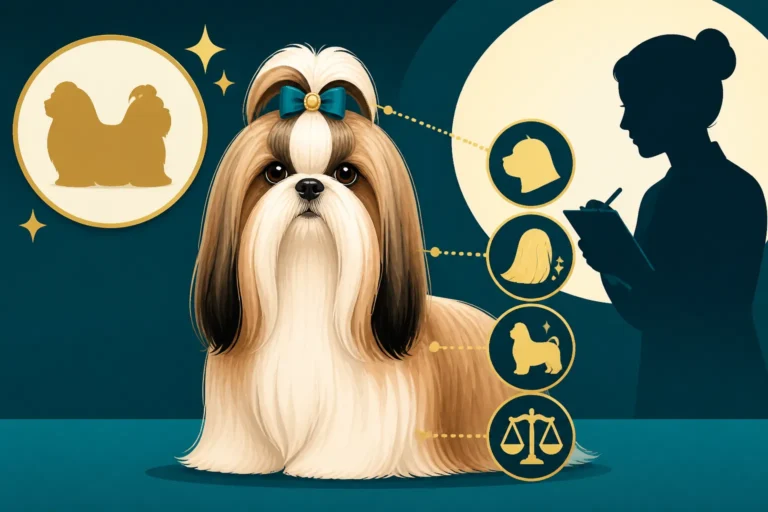
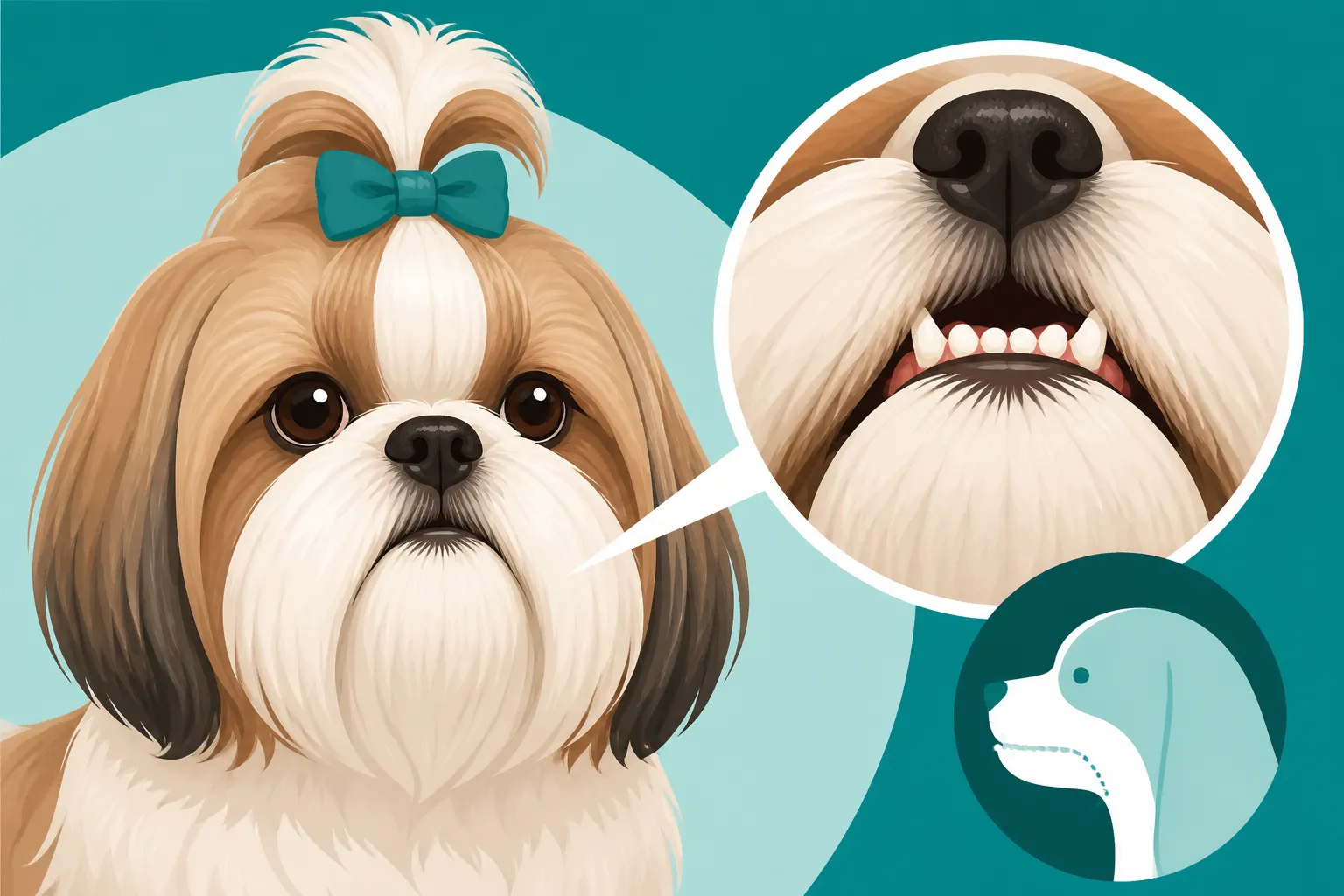
The Shih Tzu is known for its distinctive "chrysanthemum" face, a charming feature that sets it apart. Integral to this look is its unique dental alignment, specifically an undershot bite. This isn't a flaw; it's a defining characteristic enshrined in the breed standard.
What "Undershot" Actually Means for a Shih Tzu
When we talk about an "undershot bite" in a Shih Tzu, we're referring to a very specific dental arrangement. In simple terms, it means that the lower jaw extends slightly beyond the upper jaw. Because of this, when your Shih Tzu closes its mouth, the incisors (the small front teeth) of the lower jaw sit in front of the incisors of the upper jaw. It’s a bit like a gentle "underbite" you might see in humans, but for a Shih Tzu, it’s not just acceptable, it’s expected.
This is quite different from what's considered ideal in many other breeds, where a "scissor bite" is preferred—that's when the upper incisors just slightly overlap the lower ones, like a pair of scissors. You might also hear of a "level bite," where the incisors meet edge to edge, or an "overshot bite," where the upper jaw extends too far over the lower. For a Shih Tzu, a true scissor or level bite would actually be considered incorrect by breed standards. The undershot bite is key to their brachycephalic (flat-faced) structure and contributes to their sweet, slightly upturned expression. It's a hallmark of the breed's historical development and its unique facial anatomy.
Why the Standard Calls for an Undershot Bite
The breed standard isn't just a list of arbitrary preferences; it's a blueprint that describes the ideal characteristics of a breed, often rooted in its history, function, and desired appearance. For the Shih Tzu, the undershot bite is intrinsically linked to its origins and the "chrysanthemum face" it was bred to possess. This ancient breed, developed in Tibet and China, was cherished for its lion-like appearance and companionable nature. The short muzzle and slightly protruding lower jaw were part of creating that distinctive, endearing look.
Without this specific bite, the entire facial structure would shift, altering the broad, round head, the placement of those large, dark eyes, and the overall sweet expression. It’s not merely about aesthetics; it's about maintaining the structural integrity that defines a Shih Tzu. Judges at dog shows pay close attention to this detail because it signifies adherence to the breed's heritage and type. It’s one of the primary ways to distinguish a well-bred Shih Tzu from other similar toy breeds. While some people might initially worry it's a dental problem, understanding its place within the breed standard helps to appreciate this unique trait as part of what makes a Shih Tzu, well, a Shih Tzu. You can learn more about all the physical traits in The Shih Tzu Standard and What Judges Look For.
Living with an Undershot Bite: Practical Considerations
Embracing the Shih Tzu's unique undershot bite means understanding a few practical aspects of their daily care. While it's a charming breed trait, it does come with certain considerations for their health and comfort.
Potential Health and Care Implications
The undershot bite, combined with the Shih Tzu's naturally crowded mouth due to their short muzzle, can predispose them to certain dental challenges. Unlike dogs with longer snouts and scissor bites, where teeth have more space and align neatly, a Shih Tzu's teeth are often packed tightly together. This crowding creates nooks and crannies where food particles and plaque can accumulate more easily. This isn't just a cosmetic issue; it can lead to accelerated tartar buildup, gum inflammation (gingivitis), and eventually, more severe periodontal disease. We've talked extensively about these issues in Shih Tzu Dental Disease at 13 Percent of the Breed.
Another common observation for Shih Tzu owners is that their dogs might sometimes have a harder time picking up smaller kibble pieces. The alignment of their jaws means their front teeth might not meet perfectly to scoop up tiny morsels, leading to them using their tongues or the sides of their mouths in a somewhat less efficient manner. This is usually more amusing than problematic, but it's something to be aware of when choosing their food. Additionally, their lovely long facial hair, often part of their "beard," can sometimes get food stuck in it, requiring diligent cleaning after meals to prevent matting and bacterial growth around the mouth. This can be a real struggle for new owners who don't anticipate the extra grooming.
Choosing Food and Toys for an Undershot Mouth
Given these potential implications, making smart choices about your Shih Tzu's food and toys is paramount. When it comes to kibble, look for options that are appropriately sized and shaped for their unique jaw. Smaller, flatter kibble pieces are often easier for an undershot mouth to pick up and chew effectively. Some brands even formulate kibble specifically for brachycephalic breeds, taking into account their unique bite and breathing challenges. Don't be afraid to experiment a little to see what your Shih Tzu manages best. Many owners find that a slightly larger kibble, paradoxically, can be easier for their Shih Tzu to grasp with their back teeth.
Alternatively, wet food can be a fantastic option, as it eliminates the chewing difficulty and provides hydration. If you feed wet food, just remember to keep that beard clean! For treats, look for softer options or break larger ones into smaller, manageable pieces to prevent choking and make them easier to consume. Retailers like Chewy offer a vast array of kibble, wet food, and treats specifically designed for small breeds, making it easier to find suitable options.
When it comes to toys, choose items that are durable but not too hard, as their crowded teeth can be more prone to fractures if they chew aggressively on very rigid objects. Soft rubber toys, dental chews designed for small mouths, or plush toys are often excellent choices. Always supervise your Shih Tzu with new toys to ensure they can play safely without damaging their teeth or getting parts stuck. You want something they can enjoy without putting undue stress on their unique jaw structure. For more specific guidance on food, check out Kibble Small Enough for a Shih Tzu Underbite.
When an Undershot Bite Becomes a Problem
While a mild undershot bite is characteristic and healthy for a Shih Tzu, there are instances where the bite can become extreme, leading to genuine health concerns. It’s important for owners to know the difference.
Distinguishing a Standard Undershot from a Severe Malocclusion
A standard undershot bite is one where the lower jaw protrudes slightly, and while the incisors don't meet in a scissor fashion, they generally don't cause any discomfort or physical damage. The teeth still have a reasonable alignment that allows for proper chewing and doesn't interfere with the soft tissues of the mouth. You'll notice the lower front teeth are visible, and the chin might have a slight prominence, but your dog can eat, drink, and play without issue. This is the desired appearance in the show ring and the healthy reality for most Shih Tzus.
However, a severe malocclusion—an abnormal alignment of the teeth—can sometimes occur. This is when the lower jaw protrudes excessively, causing significant problems. In these cases, the lower canine teeth might poke into the roof of the mouth or severely impact the upper gums. This can be incredibly painful, leading to chronic inflammation, ulceration, and even infection of the soft tissues. Imagine constantly having a tooth digging into your cheek or palate; it's uncomfortable at best, debilitating at worst. A severely misaligned bite can also make it difficult for your Shih Tzu to close its mouth properly, affecting its ability to eat, drink, and even breathe comfortably. If you notice your dog struggling to pick up food, drooling excessively, rubbing its face, or showing signs of pain around the mouth, it’s time to consult your vet.
Veterinary Care and Corrective Options
For a Shih Tzu with a normal, standard undershot bite, routine veterinary care focuses heavily on preventative dental hygiene. This means regular professional dental cleanings under anesthesia, often annually, to address the rapid tartar buildup that their crowded teeth and bite predispose them to. Daily toothbrushing at home, using a toothbrush and toothpaste specifically designed for dogs, is also crucial to slow down plaque accumulation. This might feel like a chore, but it's a vital part of keeping their mouths healthy and preventing more serious issues down the line. We cover this in Daily Toothbrushing in a Crowded Shih Tzu Jaw.
If your Shih Tzu has a severe malocclusion, the approach will be more involved. Your veterinarian will assess the severity of the bite and its impact on your dog's quality of life. In some cases, minor adjustments or extractions of problematic teeth (e.g., lower canines digging into the palate) might be recommended to alleviate pain and prevent further damage. For more complex cases, your vet might refer you to a veterinary dental specialist. These specialists have advanced training and equipment to perform intricate dental procedures, including orthodontics (though less common for malocclusions of this type in Shih Tzus) or more involved surgical extractions to create a comfortable and functional bite. The goal is always to ensure your Shih Tzu can live a pain-free life, eating and playing without oral discomfort, regardless of how "standard" their bite ultimately appears. Preventative care and early intervention are key to managing these issues.
Here's a quick comparison of the two:
| Feature | Standard Undershot Bite | Severe Malocclusion (Problematic) |
|---|---|---|
| Lower Jaw Position | Slightly extends beyond upper jaw | Excessively extends beyond upper jaw |
| Tooth Alignment | Lower incisors in front of upper incisors, generally functional | Teeth severely misaligned, often poking into gums/palate |
| Impact on Comfort | No pain or discomfort | Significant pain, inflammation, ulcers |
| Eating Ability | May require specific kibble shapes, but generally fine | Difficulty picking up food, chewing, or closing mouth |
| Grooming Implications | Food can get stuck in beard, requires regular cleaning | Increased drooling, potential for food trapping, infection |
| Veterinary Action | Regular dental cleanings, daily brushing | Extractions, oral surgery, referral to dental specialist |
Embracing the Unique Shih Tzu Smile
The Shih Tzu undershot bite is truly a defining feature, a badge of their ancient heritage and unique charm. Far from being a flaw, it's a characteristic celebrated in the breed standard, contributing to that endearing "chrysanthemum" face we all adore. As owners, understanding this aspect of their anatomy empowers us to provide the best possible care, ensuring their comfort and health.
From selecting the right kibble to diligently brushing those crowded teeth, managing the nuances of an undershot bite is an integral part of Shih Tzu ownership. It's about being proactive with dental hygiene, choosing appropriate toys, and knowing when a 'normal' undershot might tip into a 'problematic' malocclusion that needs veterinary attention. Remember, your vet is your best partner in navigating these issues, and regular check-ups are invaluable. With a little care and understanding, your Shih Tzu can continue to flash their distinctive, charming smile for many happy years to come.
Disclaimer
This article is for general informational purposes only and does not constitute professional advice. Laws, prices and regulations vary by location and change over time. Consult a qualified professional for guidance on your specific situation.