Shih Tzu Stubbornness and What It Really Is
It can be incredibly frustrating when your sweet little Shih Tzu decides they're simply not going to do what you ask. One minute they're showering you with kisses, the next they're digging their heels in, refusing a walk, or giving you the cold shoulder during a training session. It often feels like pure stubbornness, a deliberate defiance that leaves you feeling powerless and exasperated. This comprehensive guide is here to unravel the mystery behind what we perceive as Shih Tzu stubbornness, helping you understand their unique perspective and offering compassionate, effective strategies to build a more harmonious relationship with your beloved companion.
What "Stubbornness" Really Means for a Shih Tzu
When we label our Shih Tzu as "stubborn," we're often projecting human motivations onto their behavior. It’s easy to assume they know exactly what we want and are simply choosing to be difficult. However, for a dog, especially a breed like the Shih Tzu with its distinct history and physical traits, "stubbornness" is almost always a misunderstanding, a lack of motivation, discomfort, or an unmet need rather than deliberate defiance. They aren't trying to annoy you; they're simply communicating in the only way they know how.
It's Often a Communication Gap
Imagine trying to understand someone who speaks a completely different language, using gestures that are confusing or inconsistent. That's often what it's like for our dogs. When your Shih Tzu doesn't respond to a command, it might not be that they're refusing, but rather that they don't truly understand what you're asking. Maybe the cue isn't clear, or it's been taught inconsistently across different family members or situations. Perhaps they associate the command with something unpleasant, like being forced into a situation they dislike. We, as humans, often forget how many steps go into teaching a dog a simple command and how many repetitions it takes to generalize that understanding to all environments.
Another common communication breakdown comes from our expectations. We might expect a Shih Tzu to perform complex tasks or obey instantly in distracting environments, forgetting their original purpose. They are companions, not working dogs, and their attention span and inherent drive differ from, say, a Border Collie. Their "stubbornness" might just be their way of saying, "I don't get it," or "What's in it for me?" when the motivation isn't compelling enough from their perspective.
Lack of Motivation, Not Defiance
Let's be honest: would you show up for work every day if you weren't paid? Dogs are no different. They operate on a system of consequences. If a behavior leads to a positive outcome (like a tasty treat, a favorite toy, or joyful praise), they are more likely to repeat it. If it leads to nothing, or worse, something unpleasant, they're less likely to engage. What we call "stubbornness" is frequently a simple lack of sufficient motivation. If your Shih Tzu ignores your "come" command in the park, it's not because they're being rude; it's because the squirrel, the interesting smell, or the person walking by is currently more rewarding than whatever you're offering.
This is especially true for Shih Tzus, who are often highly food-motivated but also prone to becoming uninterested if the reward isn't high-value enough. A dry biscuit might not cut it when competing with the thrill of exploring. Understanding what truly motivates your individual Shih Tzu – whether it's specific treats, a squeaky toy, or a gentle cuddle – is key to unlocking their cooperation. Without that strong incentive, their natural inclination will be to follow their own nose or comfort, which looks a lot like stubbornness to us.
The Historical Roots of Shih Tzu Behavior
To truly understand your Shih Tzu's "stubbornness," it helps to look at where they come from. These aren't dogs bred to herd sheep, retrieve game, or guard property. Their ancestry is steeped in luxury and companionship, and this historical role has profoundly shaped their temperament and what drives them today.
Bred for Companionship, Not Commands
The Shih Tzu's lineage traces back to Tibetan monasteries, where they were revered as sacred "little lion dogs." They were then gifted to Chinese royalty and bred exclusively within the Forbidden City, serving as pampered lap companions. Their job was quite literally to sit on laps, look adorable, and offer comfort. No one was asking them to fetch a newspaper or guard the palace gates. They were bred for their charm, their beautiful coats, and their loving nature. This history means they often have a strong sense of self-importance (in the cutest way possible, of course!) and are not inherently driven to obey complex commands for the sake of obeying.
This isn't to say they can't be trained – far from it! But their primary motivation isn't to work alongside humans in a traditional sense. Their deepest desire is often comfort, affection, and being near their people. If a command or request conflicts with their comfort or perceived well-being, their default response might be to opt out. They expect to be cherished, and sometimes, that translates into an expectation that you will cater to their desires, rather than the other way around.
Independence in a Tiny Package
Despite their affectionate nature, Shih Tzus can also possess a surprising streak of independence. While they love being with their people, they aren't necessarily Velcro dogs who feel lost without constant direction. This independence, often interpreted as stubbornness, can manifest in refusing to walk in the rain, deciding a particular spot on the sofa is their domain, or simply choosing to observe rather than participate in an activity. This isn't them being rude; it's a reflection of their history as cherished companions who were allowed a certain degree of freedom and self-determination within the royal household.
They learned quickly that their charm could get them what they wanted. This means they are often adept at subtle manipulation – a soulful gaze, a little whine, or simply plopping down and refusing to move. They've perfected the art of getting their way without resorting to aggression, simply through charming inaction. Recognizing this inherent independence allows us to work with it rather than constantly fighting against it, understanding that they have their own preferences and opinions, just like any good companion.
Communication Breakdown: Why Your Shih Tzu Isn't Listening
It's easy to blame the dog, but often, what we see as a Shih Tzu's stubborn refusal to listen stems directly from how we communicate with them. Our methods, consistency, and even our emotional state play a huge role in how well our little lions respond.
Inconsistent Cues and Expectations
One of the biggest culprits behind perceived stubbornness is inconsistent training. Think about it: does everyone in the household use the exact same word for "sit"? Does "come" always mean the same thing, or sometimes does it mean "come here for a bath" and other times "come here for a treat"? Dogs thrive on predictability and clear associations. If the cue varies, or the reward is inconsistent, your Shih Tzu learns that sometimes "sit" means nothing, or that "come" isn't always worth the effort. They aren't being stubborn; they're being logical based on the information they've received.
Furthermore, we often expect a behavior learned in a quiet living room to translate perfectly to a busy park. This is called generalization, and it takes deliberate practice. A dog isn't "stubborn" for not sitting at the vet if they've only ever practiced sitting at home. They simply haven't learned that the command applies in that new, distracting environment. By simplifying our cues, ensuring everyone uses the same commands, and practicing in a variety of low-distraction settings before moving to more complex ones, we can bridge this communication gap. Many online training programs, like those offered by BAXTER & Bella, emphasize building this kind of consistency and clear communication from the ground up, which can be invaluable for new puppy owners.
Overwhelmed by Environment or Emotion
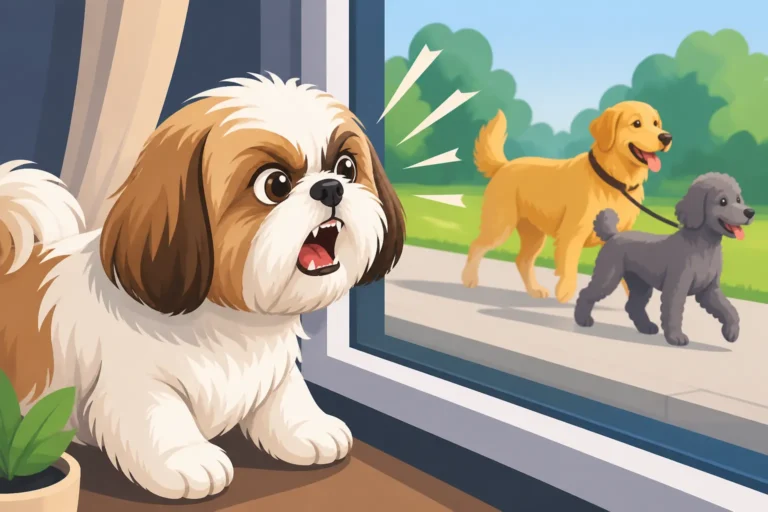
Imagine trying to focus on a complex task while a fire alarm is blaring and someone is shouting at you. It's nearly impossible. Your Shih Tzu faces similar challenges. Their world is rich with scents, sounds, and sights that can be incredibly distracting. A sudden loud noise, a new person entering the room, or the smell of a nearby dog can completely overwhelm their senses, making it impossible for them to process your commands. In these moments, they're not ignoring you; they simply can't focus. Their "stubbornness" is a coping mechanism, a way to shut down in the face of sensory overload.
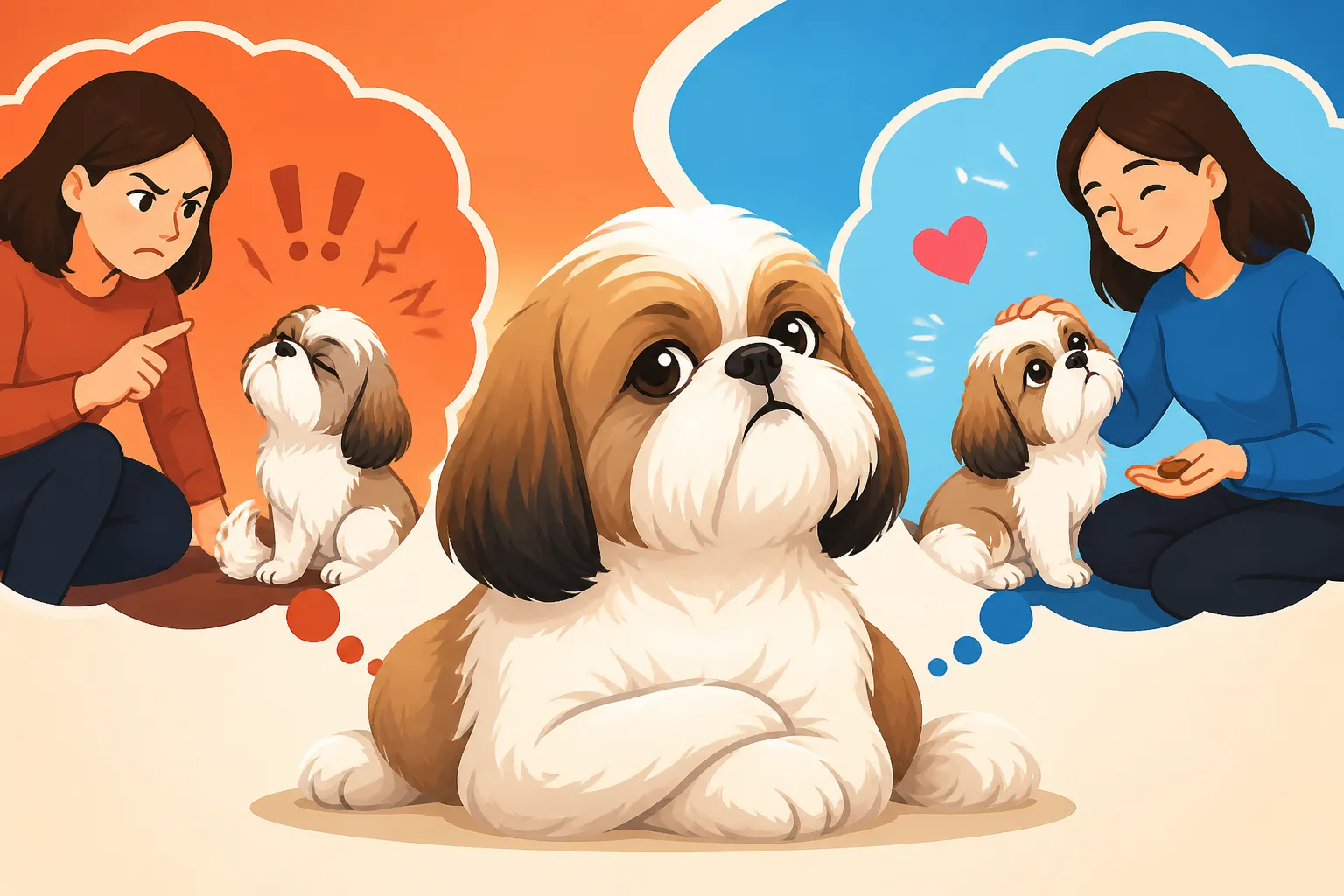
Similarly, our own emotions can inadvertently shut down communication. If we're frustrated, angry, or impatient, our body language, tone of voice, and even our scent can convey that to our sensitive Shih Tzu. They might then become anxious or fearful, choosing to disengage rather than risk a negative interaction. They might even try to appease us by freezing or turning away, which looks like stubbornness but is actually a stress response. Recognizing these signs and adjusting our approach with calm, clear, and positive reinforcement is crucial. A Shih Tzu wants to please, but not at the cost of their emotional well-being.
Common "Stubborn" Scenarios and How to Rethink Them
Let's dive into some classic scenarios where Shih Tzus get unfairly labeled as "stubborn" and explore what might really be going on and how you can approach it differently.
The "I Don't Want to Walk" Standstill
You're out for a lovely stroll, and suddenly, your Shih Tzu becomes a furry statue, refusing to budge. You pull gently on the leash, call their name, but they plant their tiny feet, giving you the look. This is a prime example of perceived stubbornness. But let's break it down. Is it raining or too cold for their delicate constitution? Shih Tzus, with their flowing coats, don't always appreciate wet weather, and their small bodies can get cold quickly. Or perhaps it's too hot, and their brachycephalic (flat) face makes breathing difficult, leading to Shih Tzu Exercise Intolerance in Summer.
It could also be something in the environment that's frightening them—a loud truck, a large dog, or an unfamiliar object. Small dogs can feel very vulnerable in the big, wide world. Or perhaps they've encountered something painful, like hot pavement on their paw pads or a prickle. Instead of viewing it as stubbornness, consider it a clear communication: "Something is wrong, uncomfortable, or scary, and I need to stop." Try picking them up, carrying them a short distance, checking their paws, or simply changing direction. Offer a high-value treat to entice them forward, making the walk a positive, low-stress experience. A comfortable harness, rather than a collar, can also make walks more pleasant for them, avoiding pressure on their delicate necks and airways. Why a Shih Tzu Should Wear a Harness Not a Collar delves into this further.
Refusing to Be Groomed or Handled
Ah, grooming! The daily battle of the brush, the nail trim, the face wipe. Many Shih Tzu owners lament their dog's "stubbornness" when it comes to grooming. They squirm, nip, or simply throw themselves down, making the process a nightmare. Again, this isn't defiance; it's often a combination of fear, discomfort, or a lack of positive association. Imagine someone trying to brush your hair if it was matted and painful, or trim your nails if you'd had a bad experience before. It's a sensory assault that needs careful management.
Their long coats are prone to matting, and brushing out tangles can be genuinely painful. If previous grooming sessions involved pulling or discomfort, your Shih Tzu will naturally resist. The sound of clippers, the feeling of scissors near their eyes, or the sensation of water can all be frightening. The key here is desensitization and positive reinforcement, starting from puppyhood. Introduce tools slowly, pair them with high-value treats, and keep sessions short and positive. If mats are severe, it's often more humane to have them professionally shaved by a groomer who understands the breed's sensitivity. Consider having a separate set of grooming tools for home that you use regularly, making it a routine rather than an ordeal. Brands available on Amazon can help you find quiet clippers or gentle brushes to make the experience less stressful for your pup. For deeper insights, check out Grooming a Shih Tzu at Home Instead.
Ignoring Recalls or Commands Indoors
You call your Shih Tzu, and they glance at you, then slowly turn their head back to whatever fascinating thing they were sniffing. Or you ask for a "sit," and they just stand there, tail wagging, but no sit happens. This often feels like a direct challenge to your authority, but it's rarely so. Indoors, their "stubbornness" with commands can stem from several factors:
- Low Value Rewards: Are you offering something truly exciting? If they get the same kibble for every trick, its value diminishes quickly.
- Distractions: Even indoors, there are distractions – crumbs on the floor, a specific sunbeam, the sound of someone in another room.
- Learned Irrelevance: If you repeat a command multiple times without them responding, and then eventually you go to them or give up, they learn that they don't have to respond immediately.
- Physical Discomfort: Could they be in pain? A dog with Early Shih Tzu Back Pain Signs might avoid sitting or jumping.
To combat this, elevate your reward game. Use tiny, high-value treats they adore. Practice in a quiet environment first, then gradually add distractions. Always aim to get a response on the first or second command, even if it means gently guiding them into position. If they don't respond, don't repeat the command endlessly; instead, go back to basics, make it easier, and build up the value. Make coming to you the most amazing thing that could possibly happen!
Building a Positive Relationship to Overcome Perceived Stubbornness
True cooperation from a Shih Tzu comes from a foundation of trust, clear communication, and positive reinforcement. It's about building a partnership where they feel safe, understood, and motivated to engage with you.
Positive Reinforcement and High-Value Rewards
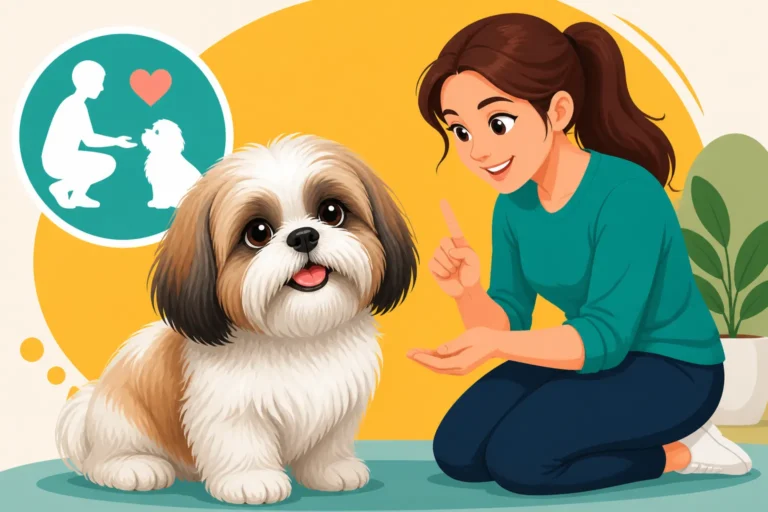
This is the cornerstone of successful training for any dog, but especially for sensitive, companion breeds like the Shih Tzu. Punishment-based methods or harsh corrections can quickly shut down a Shih Tzu, making them fearful and truly "stubborn" (in the sense of refusing to engage out of anxiety). Instead, focus on rewarding the behaviors you want to see. When your Shih Tzu does something right, even if it's just a tiny step in the right direction, mark it with enthusiastic praise ("Yes!") and immediately follow with a fantastic reward.
What constitutes a "high-value" reward will vary for each dog, but for many Shih Tzus, it's small pieces of cooked chicken, cheese, or specialized soft training treats. Experiment to find out what truly makes your dog's eyes light up. Keep these top-tier treats exclusively for training, so they maintain their special appeal. Remember, a reward isn't just a treat; it can be a favorite toy, a brief game of tug, or a heartfelt scratch behind the ears. The key is that your dog perceives it as rewarding. Consistent, positive experiences teach your Shih Tzu that listening to you leads to good things, making them eager to cooperate rather than resist. For instance, tiny, soft treats found on Amazon can be perfect for quick rewards that don't fill them up.
Consistency and Clear Expectations
Dogs don't generalize well. This means that if "sit" is taught in the kitchen but not in the living room, your dog might genuinely not understand that the command applies universally. The same goes for household members. If one person uses "stay" and another uses "wait," or if some allow jumping on the sofa while others don't, your Shih Tzu will be confused. Inconsistency teaches them that rules are fluid and not always applicable, which, again, looks like stubbornness.
Establish clear rules and expectations for your Shih Tzu, and ensure everyone in the household adheres to them. This includes:
- Using the exact same verbal cues for commands.
- Following the same protocols for rewarding desired behaviors.
- Maintaining consistent boundaries (e.g., no jumping on any furniture unless invited).
- Practicing commands in various locations and with different distractions once the basic behavior is solid.
A unified front makes it much easier for your Shih Tzu to understand what's expected of them, removing ambiguity and building confidence. It removes the guesswork and makes them much more likely to comply. What a Companion Breed Wants From Training offers more perspectives on building this understanding.
When "Stubbornness" Might Be Something More
Sometimes, what appears to be behavioral stubbornness is actually a symptom of an underlying physical or emotional issue. It's crucial to rule out these possibilities, as addressing the root cause is the only way to resolve the "stubborn" behavior.
Underlying Health Issues
Pain, discomfort, or illness can drastically change a dog's behavior. A Shih Tzu who suddenly refuses to jump on the sofa, becomes withdrawn during walks, or resists handling might not be stubborn; they might be hurting. Common issues in Shih Tzus that could manifest as behavioral changes include:
- Back pain/Disc Disease: Their long backs are prone to injury. Shih Tzu Disc Disease and Sudden Back Pain can make sitting, jumping, or even walking painful.
- Joint problems: Patellar luxation (slipping kneecaps) or Shih Tzu Hip Dysplasia at Toy Size can cause limping or reluctance to move.
- Dental disease: A significant percentage of Shih Tzus suffer from Shih Tzu Dental Disease at 13 Percent of the Breed, and painful teeth can make them refuse food or growl when their mouth is touched.
- Eye problems: Shih Tzu Corneal Ulcers and Dry Eye can cause discomfort, leading them to avoid bright lights or resist face grooming.
- Ear infections: Chronic Shih Tzu Ear Infections Under Heavy Ear Leather can make them head shy or irritable.
- Cognitive Decline: Senior Shih Tzus might appear "stubborn" if they're disoriented, forgetting commands, or experiencing sensory loss.
Any sudden change in behavior, especially a refusal to do something they once enjoyed, warrants a visit to your veterinarian. Describe the specific "stubborn" behaviors, how long they've been happening, and any other symptoms you've noticed. A thorough physical exam can often uncover the true reason behind their change in demeanor.
Anxiety or Fear Responses
A dog who is anxious or fearful might freeze, hide, or try to escape, all of which can be mistaken for stubbornness. For a Shih Tzu, whose world is much larger than they are, many things can be frightening:
- Loud noises: Thunder, fireworks, or even a dropped pan can be terrifying.
- Strangers or unfamiliar dogs: They might cower or try to avoid interaction.
- Being left alone: Shih Tzu Alone Time and Learning to Tolerate It is a critical skill, and if not managed well, can lead to anxiety.
- New environments: A novel place can be overwhelming.
When a Shih Tzu is in a state of fear, their brain is in "fight, flight, or freeze" mode. They cannot learn, cannot focus, and certainly cannot comply with commands. Their "stubbornness" is a self-preservation mechanism. If you suspect anxiety or fear, the approach needs to shift from training commands to addressing their emotional state. This might involve counter-conditioning (pairing the scary thing with something good), desensitization (gradually exposing them to the fear trigger), or in some cases, consulting with a veterinary behaviorist who might recommend medication in conjunction with behavior modification. For puppies, early, positive The Shih Tzu Socialization Deadline is essential to prevent fear from developing.
Training Strategies for the "Stubborn" Shih Tzu
Once you've ruled out health issues and understand the underlying motivations (or lack thereof), it's time to refine your training approach. These strategies are particularly effective for the "stubborn" Shih Tzu.
Keep Sessions Short and Fun
Shih Tzus, like many toy breeds, have shorter attention spans for formal training. They aren't built for long, rigorous drills. Trying to force them into a 20-minute session will likely result in them "tuning you out" or becoming genuinely stubborn. Instead, aim for multiple, very short training sessions throughout the day – think 3 to 5 minutes at a time, perhaps 3-5 times a day.
These mini-sessions should be highly engaging and end on a positive note. Mix up the commands, incorporate some fun tricks, and always finish before your Shih Tzu gets bored or frustrated. This keeps them eager for the next session, viewing training as a fun game rather than a chore. Use a happy, upbeat tone of voice and lots of praise. Remember, you're not trying to create a military-precision obedience dog; you're nurturing a happy, well-mannered companion. For more on this, consider Five Minute Sessions With a Shih Tzu.
Practice in Real-Life Scenarios
It’s one thing for your Shih Tzu to "sit" perfectly in the quiet of your living room. It's quite another for them to do it when the doorbell rings, or when you're at the park. This is where "proof the behavior" comes in. Gradually introduce distractions and new environments into your training. Start with minimal distractions (e.g., in a different room of the house), then gradually increase the challenge (e.g., with the TV on low, then with a family member walking by, then outside in the yard, and finally in public spaces).
The key is to set them up for success. Don't throw them into a highly distracting environment and expect perfection right away. If they struggle, go back to an easier step. For example, if your Shih Tzu won't "come" at the park, practice in your yard first. Make yourself incredibly exciting, use your highest-value treats, and ensure every successful recall is a huge celebration. The goal is to teach them that your commands are universal, no matter what exciting things are happening around them. This deliberate practice helps them generalize their understanding, making them less "stubborn" and more reliable in various situations.
Table: Rethinking Shih Tzu "Stubbornness"
| Perceived "Stubborn" Behavior | Common Interpretation | Underlying Reason (More Likely) | Effective Approach |
|---|---|---|---|
| Refusing to Walk | Being disobedient | Fear, discomfort (weather, pain), too hot/cold, sensory overload, unmotivated | Identify trigger, change environment, check paws, carry short distance, high-value treats, comfortable harness |
| Resisting Grooming | Being difficult, aggressive | Pain from mats, past negative experience, fear of tools, sensory overload | Desensitization, positive reinforcement, short sessions, gentle tools, professional help for severe mats |
| Ignoring Commands | Deliberately defiant | Lack of understanding, insufficient motivation, distractions, inconsistent cues, physical discomfort | High-value rewards, clear and consistent cues, practice in varied environments, rule out pain |
| Not Coming When Called | Choosing to ignore | Something more rewarding present, hasn't generalized "come," perceived as punishment (e.g., bath) | Make recall highly rewarding, practice in low-distraction areas, never use "come" for unpleasant tasks |
| Potty Accidents Indoors | Being spiteful, stubborn | Incomplete house training, medical issue, anxiety, lack of consistent schedule, scent marking | Consult vet, consistent schedule, high-value rewards for outdoor potty, clean accidents thoroughly, wraps for marking |
Embracing the Shih Tzu Spirit
Ultimately, part of living harmoniously with a Shih Tzu means embracing their unique spirit, which includes their charming quirks and independent streak. They aren't robots, and they're not always going to comply instantly like a drill sergeant's companion.
Understanding Their Unique Motivation
Instead of trying to force your Shih Tzu into a mold, learn to understand what truly motivates them. For many, it's deep affection, comfortable laps, tasty treats, and gentle play. They are companion animals at their core, meaning their world revolves around their human family. Use this to your advantage! Frame training and daily interactions as opportunities for bonding and mutual enjoyment.
If your Shih Tzu is "stubborn" about learning a new trick, perhaps it's not the right trick for them right now. Focus on foundational manners that ensure their safety and your peace of mind, such as a reliable recall, a solid "leave it," and polite leash walking. Beyond that, celebrate their individual personality. If they love snuggling on the sofa more than playing fetch, that's perfectly fine. Appreciate them for the loving, charming companions they are, rather than always trying to change them. This shift in perspective can greatly reduce your own frustration and deepen your bond.
Patience and a Sense of Humor
Living with a Shih Tzu, especially one labeled "stubborn," absolutely requires patience and a healthy dose of humor. There will be days when they simply refuse to cooperate, when they give you that characteristic Shih Tzu stare that says, "Nope, not doing it." On those days, take a deep breath. Laugh it off. Sometimes, a short break, a change of scenery, or simply trying again later with a different approach is all that's needed.
Remember, your Shih Tzu isn't trying to make your life difficult; they're navigating their world with the tools and understanding they have. Your patience, empathy, and consistent positive guidance are their best teachers. By understanding their history, their potential underlying motivations, and their communication style, you can transform what feels like stubbornness into a unique, loving partnership. Embracing the little lion's heart means accepting their strengths and working kindly through their challenges, making every day a little brighter for both of you.
Disclaimer
This article is for general informational purposes only and does not constitute professional advice. Laws, prices and regulations vary by location and change over time. Consult a qualified professional for guidance on your specific situation.