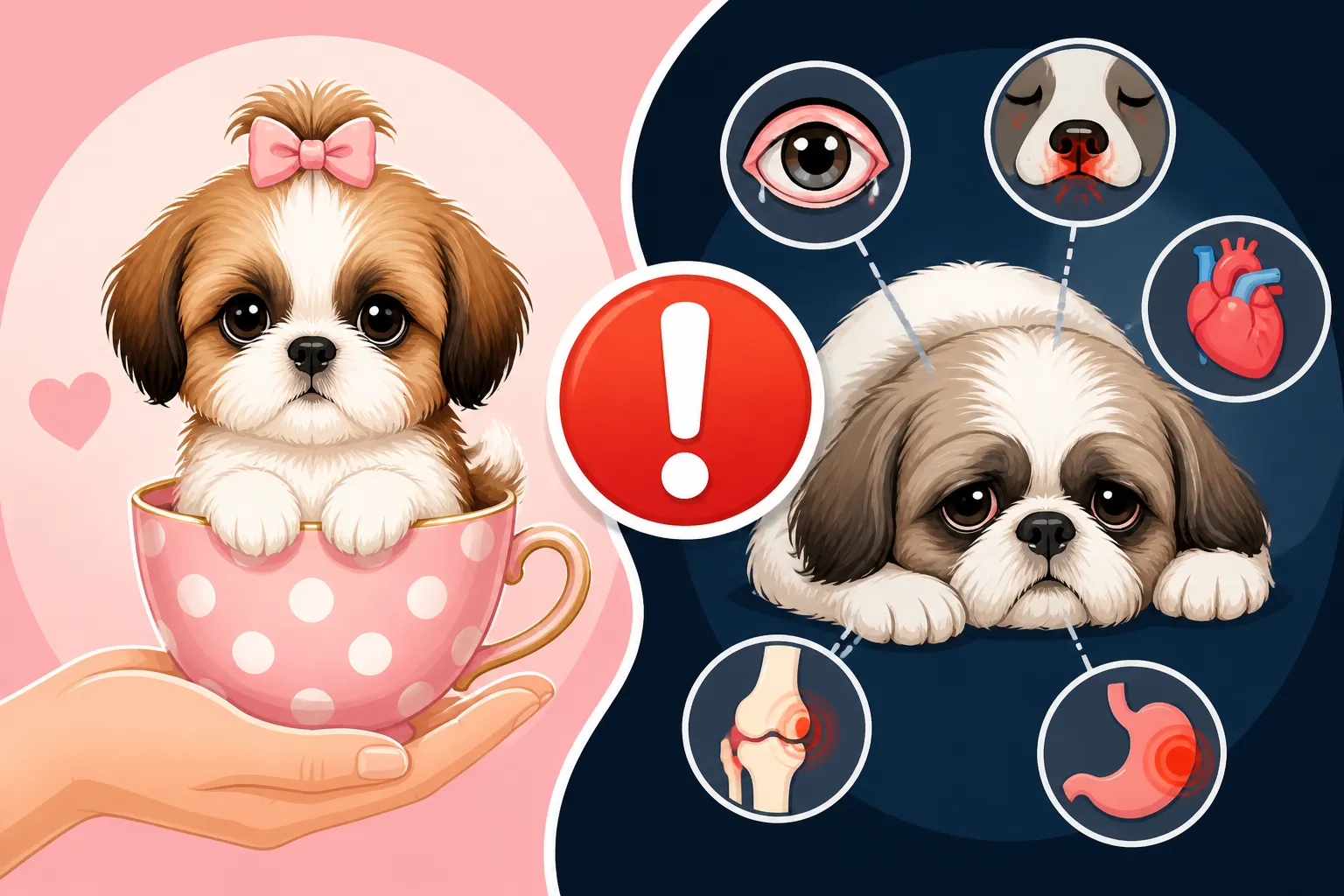
Teacup Shih Tzus and the Health Risk Behind Them
It’s a heartbreaking scenario we’ve seen too many times: someone falls in love with the idea of an impossibly tiny Shih Tzu, often labeled a "teacup," only to find themselves facing a lifetime of costly health battles and profound heartache. This guide is here to shed light on why these adorable-sounding labels are often a warning sign and what true health considerations lie behind the allure of an undersized Shih Tzu.
Understanding the "Teacup" Label
When you hear the term "teacup Shih Tzu," it conjures images of a dog so small it can fit into a teacup – a vision often fueled by social media and marketing. But here's the uncomfortable truth: "teacup" is not a recognized breed, nor is it a size classification supported by reputable kennel clubs or breed standards. It's a marketing term, plain and simple, used to command higher prices for unusually small dogs, often without regard for their well-being.
Think of it this way: a true Shih Tzu breed standard, as set by organizations like the American Kennel Club, specifies a weight range that typically falls between 9 and 16 pounds for an adult dog, with a height of around 9 to 10.5 inches at the shoulder. These are already small dogs! When a breeder markets a "teacup" Shih Tzu, they are promising a dog significantly smaller than even the lowest end of that range, sometimes as little as 3-5 pounds. This extreme reduction in size doesn't happen naturally in a healthy way.
Why "Teacup" is Not a Breed Term
Reputable breeders focus on breeding dogs to meet established breed standards, which include not just appearance but also temperament and health. These standards exist to preserve the integrity of the breed and, crucially, to promote the health and welfare of the animals. There is no official "teacup" standard because it prioritizes an unnaturally small size over genetic health and structural soundness. This is where the red flags start waving.
When you see a dog advertised with a "teacup" label, it's a clear indication that the breeder is operating outside of ethical practices. They are using a buzzword to attract buyers who are drawn to novelty, rather than educating them about what constitutes a healthy, well-bred Shih Tzu. It's similar to how some might use terms like "Imperial Shih Tzu," which also has no official standing. These terms are designed to make you feel like you're getting something rare and special, but often, what you're getting is a dog predisposed to a host of health problems. The focus shifts from robust health to extreme miniaturization, a dangerous game to play with a living creature.
How Undersized Dogs Happen
So, if "teacup" isn't a natural size, how do these tiny dogs come about? There are a few ways, and none of them are ideal from a health perspective. One common method involves breeding the runts of litters together, or repeatedly breeding the smallest dogs from each generation. While a runt can sometimes be a perfectly healthy dog, continually breeding runts amplifies any genetic predispositions to small size, which often comes hand-in-hand with genetic weaknesses and health issues. These aren't just "cute quirks"; they're potential ticking time bombs.
Another concerning practice is premature weaning or underfeeding puppies to stunt their growth. This is a cruel and unethical way to achieve a smaller size and can lead to severe developmental problems, nutritional deficiencies, and a compromised immune system. Imagine intentionally depriving a baby of crucial nutrients just to keep it small; it's exactly the same concept and equally damaging. Sometimes, a "teacup" puppy is simply a regular Shih Tzu puppy marketed as smaller than it will actually grow to be, leading to disappointment and an owner unprepared for a larger dog. In other cases, they might be crossing a Shih Tzu with an even smaller breed, or even an unhealthy, undersized parent of a different breed, and still marketing it as a "teacup Shih Tzu." These practices highlight a profit-driven motive over the welfare of the dogs involved.
The Health Risks Associated with Undersized Shih Tzus
The health risks for undersized Shih Tzus are not just minor inconveniences; they can be severe, chronic, and life-threatening, leading to astronomical vet bills and immense emotional distress for their families. Their tiny frames are simply not designed to support miniaturization beyond the natural breed standard.
Fragile Bones and Joints
One of the most immediate concerns with "teacup" dogs is their extreme fragility. Their bones are incredibly delicate and prone to fractures from even minor falls or bumps. A simple jump off a sofa that a standard Shih Tzu would manage with ease can result in a broken leg or worse for a "teacup" variant. Their joint structures can also be compromised, leading to conditions like Patellar Luxation in a Shih Tzu at a much higher rate or with greater severity. Imagine living in constant fear that a playful tumble could lead to an emergency vet visit; that's the reality for many owners of these tiny dogs.
Their small stature also means that their internal organs are packed into an even smaller cavity, which can affect their development and function. They may also be more susceptible to spinal issues, similar to Shih Tzu Disc Disease and Sudden Back Pain, but potentially exacerbated by their unnaturally small and delicate frame. It’s a constant tightrope walk to keep them safe from everyday hazards that wouldn't even register as a threat to a normally sized dog.
Hypoglycemia and Blood Sugar Problems
Undersized Shih Tzus, especially puppies, are highly susceptible to hypoglycemia, which is dangerously low blood sugar. Because their tiny bodies have very little fat reserves and their liver isn't fully developed to store and release glucose efficiently, they can rapidly deplete their energy stores. Stress, missed meals, or even vigorous play can trigger a hypoglycemic episode, leading to symptoms like lethargy, disorientation, trembling, and even seizures or coma. These episodes are emergencies and require immediate intervention, often involving rubbing Karo syrup on their gums and rushing to the vet.
Managing hypoglycemia means constant vigilance, small frequent meals, and a keen awareness of their energy levels. It's not a condition that typically affects a healthy, standard-sized Shih Tzu puppy to the same degree, highlighting how extreme miniaturization can disrupt fundamental bodily functions. Owners of these tiny pups often have to wake them through the night to ensure they eat, a commitment that can be exhausting and anxiety-inducing.
Organ Failure and Congenital Defects
The genetic lottery is often not kind to undersized dogs. They are far more likely to suffer from congenital defects affecting major organs. This can include heart conditions like Shih Tzu Heart Murmurs and Valve Disease developing earlier or being more severe, liver shunts (portosystemic shunts) where blood bypasses the liver, preventing proper detoxification, or severe kidney problems like Renal Dysplasia and the Shih Tzu Kidney. These conditions can be lifelong, requiring expensive ongoing care, special diets, and often, complex surgeries or medications.
The costs associated with managing these chronic conditions can be staggering, easily running into thousands over a dog's lifetime. While Shih Tzu Puppy Prices and Where the Money Goes might seem high for a standard puppy, the initial price of a "teacup" often pales in comparison to the vet bills that follow. It’s a cruel irony that the very thing that makes them "cute" – their unnatural size – is also the source of so much suffering.
Dental and Respiratory Issues
Shih Tzus already have unique challenges due to their brachycephalic (flat-faced) nature and crowded mouths. These issues are often intensified in "teacup" versions. Their already tiny jaws are even more disproportionate to the number of teeth they need to hold, leading to severe dental crowding, early onset of Shih Tzu Dental Disease at 13 Percent of the Breed, and retained puppy teeth. This requires frequent, expensive dental cleanings, often with extractions, under anesthesia – a procedure already risky for brachycephalic dogs.
Similarly, their brachycephalic breathing issues, like The Elongated Soft Palate in a Shih Tzu or stenotic nares, can be far more pronounced and severe in an undersized dog because their respiratory passages are even smaller and more compromised. They might struggle to breathe during even mild exercise, in warm weather, or when stressed, leading to urgent veterinary attention. They overheat much more easily and are at higher risk for heatstroke. Their physical structure is simply not robust enough for a healthy life.
Why Breeders Market "Teacup" Shih Tzus
Understanding why "teacup" Shih Tzus are marketed helps us understand the ethical landscape of dog breeding. It’s rarely about the health or welfare of the animal and almost always about demand and profit.
Capitalizing on Demand for Novelty
There's a strong human fascination with things that are tiny, rare, or unique. This novelty factor drives demand, and unscrupulous breeders are quick to capitalize on it. They know that a "teacup" label, combined with adorable photos, can instantly capture the hearts of potential buyers who are looking for something extraordinary. The perception that something smaller is "cuter" or "more special" allows these breeders to charge exorbitant prices, far exceeding what a well-bred, standard-sized Shih Tzu would cost.
This demand often bypasses critical thinking about health and longevity. Buyers, captivated by the idea of a miniature companion, may not research the health implications or the unethical breeding practices involved. They see the tiny size as a desirable trait, not a potential health hazard. This is why education is so crucial: to help potential owners understand that what might seem "special" is often born of suffering and predisposed to a difficult life.
Higher Prices for Smaller Dogs
The bottom line for many "teacup" breeders is profit. Because these dogs are perceived as rare and desirable, they can command significantly higher prices. While a reputable breeder invests heavily in health testing, proper nutrition, and extensive care for their breeding dogs and puppies – costs that factor into Why a Health-Tested Shih Tzu Litter Costs More – "teacup" breeders often cut corners on these very same things. They may not perform appropriate health clearances like The DNA and OFA Tests for a Shih Tzu Litter, or provide adequate veterinary care, leading to higher profit margins despite the inherent risks to the puppies.
A "teacup" puppy can be marketed at a price point that is several times higher than a standard Shih Tzu puppy. This inflated price is not an indicator of quality or health; it's simply a reflection of perceived rarity and desirability. It's a calculated financial decision on the breeder's part, often at the expense of the puppies' long-term well-being. This economic incentive unfortunately perpetuates the breeding of these vulnerable animals.
Lack of Regulation and Ethical Oversight
The pet industry, particularly when it comes to online sales and backyard breeders, often operates with a significant lack of regulation and ethical oversight. Since "teacup" isn't a recognized breed or size, there are no official standards or organizations to enforce ethical breeding practices for these specific dogs. This allows individuals to breed and market them without accountability for the health consequences.
Reputable breeders are typically members of breed clubs, adhere to strict codes of ethics, and are transparent about their health testing and breeding practices. They care deeply about the future of the breed and the health of their puppies. "Teacup" breeders, by contrast, often operate in the shadows, avoiding scrutiny and often refusing to provide proper health guarantees or paperwork. This makes it incredibly difficult for buyers to know what they're truly getting, and often, by the time health problems emerge, the breeder has moved on. It’s crucial for potential owners to do their homework and seek out breeders who prioritize Health Testing a Shih Tzu Breeder Should Do.
Making an Informed Choice
Choosing to bring a Shih Tzu into your home is a huge decision, and it should be driven by a desire for a healthy, happy companion, not a fleeting trend. Making an informed choice means prioritizing health and ethical breeding practices above all else.
Research Reputable Shih Tzu Breeders
The single most important step you can take is to find a reputable, ethical Shih Tzu breeder. These breeders will never use terms like "teacup" or "imperial." They breed for health, temperament, and adherence to the official breed standard. They will be transparent about their dogs' pedigrees, health testing, and the care they provide. Expect to be asked as many questions as you ask them – a good breeder wants to ensure their puppies go to good homes.
A reputable breeder will gladly share proof of health clearances for the parents of their litters, including certifications for eyes, knees, and hearts. They will discuss potential health issues common in the breed, such as those related to their eyes or airway, and explain how they work to minimize these risks. They will also provide a detailed contract, including health guarantees, and be a resource for you throughout your dog's life. Don't be afraid to ask for Health Papers a Shih Tzu Breeder Should Show and to understand what The Eye and Kidney Papers a Shih Tzu Comes With actually mean.
| Feature | Reputable Breeder | "Teacup" Breeder (Red Flags) |
|---|---|---|
| Terminology | Uses standard breed terms, focuses on health & temperament | Uses marketing terms like "teacup," "micro," "imperial" |
| Health Testing | Provides proof of health clearances (OFA, CERF, DNA) for parents | Often no proof or vague claims; focuses on small size |
| Transparency | Welcomes visits, provides references, offers support | Hesitant to allow visits, avoids detailed questions, disappears after sale |
| Price Rationale | Explains costs based on health testing, quality care, lineage | Price based solely on perceived "rarity" or extreme small size |
| Size & Standard | Breeds to meet established breed standards (9-16 lbs) | Actively breeds for unnaturally small size (e.g., 3-5 lbs) |
| Contract | Provides detailed health guarantee and clear contract | Vague or no contract, "as-is" sales |
Prioritizing Health Over Size
When you're looking for a Shih Tzu, shift your focus from seeking the smallest dog to seeking the healthiest dog. A healthy Shih Tzu, within the normal breed standard, will bring you far more joy and fewer veterinary worries over its Shih Tzu Lifespan and the Thirteen Year Average. While a truly tiny puppy might be adorable in the moment, the potential for lifelong health problems and chronic pain for the dog, along with financial strain for you, is simply not worth the risk.
Remember, a Shih Tzu is meant to be a sturdy, lively companion. Their small size is already part of their charm, but taking that to an extreme can lead to a fragile existence. By choosing a breeder who prioritizes robust health and ethical practices, you are making a compassionate decision that supports the well-being of the breed and ensures you bring home a companion set up for a long, happy life. You can often find supplies for healthy, standard Shih Tzus at places like Chewy, making it easier to provide for their needs when you prioritize health.
Consider Adoption or Rescue
If you're wary of the breeding world, or simply prefer to give a dog a second chance, considering adoption from a breed-specific Shih Tzu rescue is an excellent option. Rescues often take in dogs from a variety of backgrounds, including those who may have come from less-than-ideal breeding situations. They will assess the dog's health and temperament, provide necessary veterinary care, and be transparent about any known issues. You might even find an adult Shih Tzu who has outgrown the initial health vulnerabilities sometimes associated with "teacup" breeding, or simply a healthy, loving dog looking for a forever home.
Adopting a Shih Tzu means you're not inadvertently supporting unethical breeding practices. Rescues are dedicated to finding loving homes for dogs in need, and they can provide valuable insights into a dog's personality and potential long-term needs. This path can lead to a deeply rewarding experience, knowing you've made a difference in a dog's life. Websites like Chewy also often support rescue organizations, providing supplies that help these groups care for the dogs before they find their forever families.
Disclaimer
This article is for general informational purposes only and does not constitute professional advice. Laws, prices and regulations vary by location and change over time. Consult a qualified professional for guidance on your specific situation.