Patellar Luxation in a Shih Tzu
It’s truly disheartening to watch your beloved Shih Tzu take a few steps, then suddenly lift a back leg, skip for a moment, and put it back down as if nothing happened. That little hop, often dismissed as quirky puppy behavior or just a minor stumble, can actually be a sign of a common and sometimes painful condition in our small, long-backed friends: patellar luxation. This guide is here to shed light on what exactly patellar luxation is, why Shih Tzus are so predisposed to it, how to recognize the symptoms, and the various ways you and your vet can manage it.
Understanding Patellar Luxation in Shih Tzus
When you see your Shih Tzu doing that little skip, it's usually because something isn't quite right with their kneecap. Patellar luxation, at its core, is a fancy term for a kneecap that slips out of place. It’s a mechanical issue that can cause discomfort, pain, and, if left unaddressed, more serious orthopedic problems down the line.
What Exactly is a Luxating Patella?
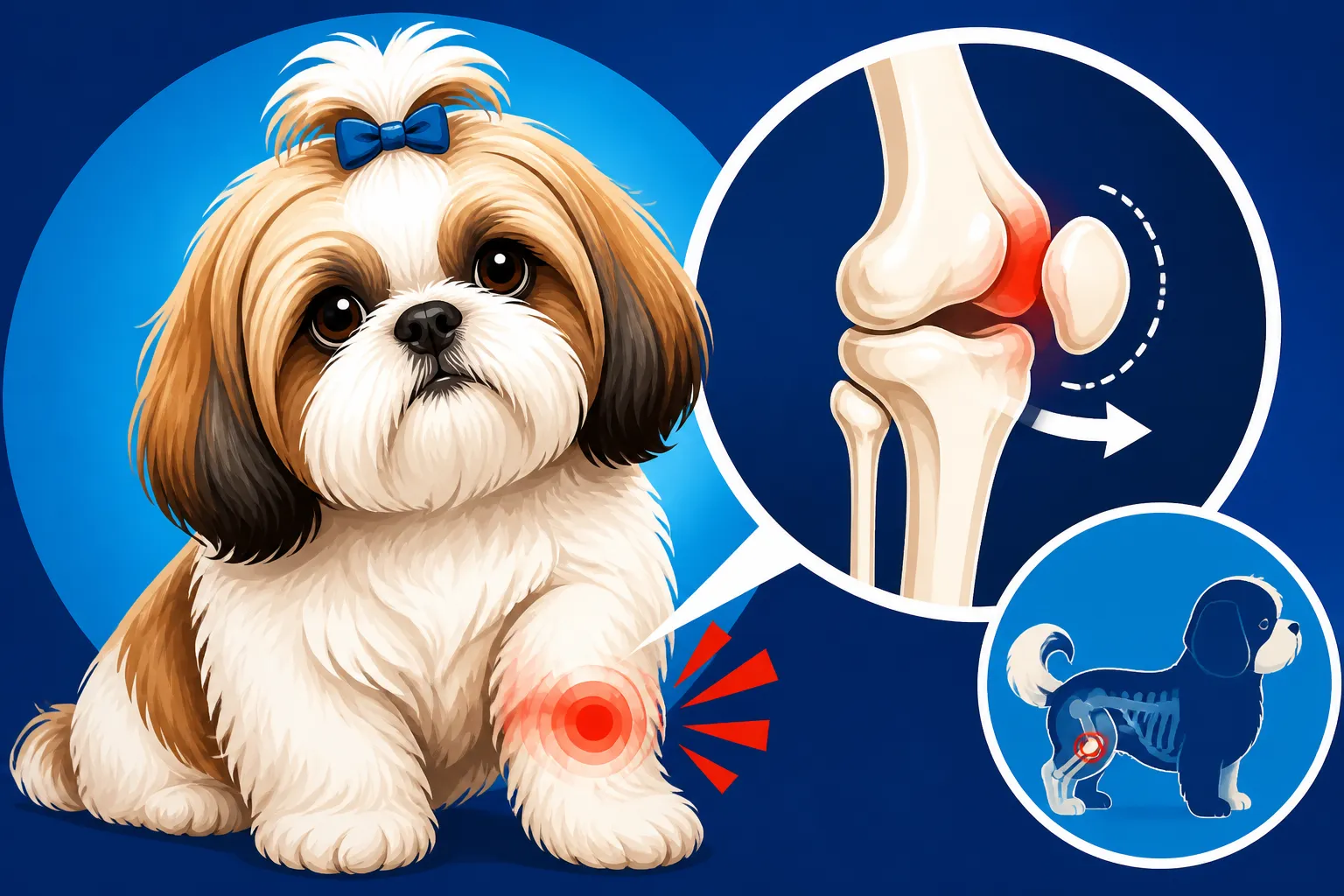
Imagine your own knee. You have a kneecap (patella) that sits in a groove at the end of your thigh bone (femur). It's held in place by ligaments and tendons, and its job is to act like a pulley, helping your leg straighten smoothly. In a dog, it’s much the same. The patella should glide smoothly up and down within this trochlear groove.
However, in a Shih Tzu with patellar luxation, this kneecap doesn’t stay put. "Luxation" simply means dislocation. It slips either to the inside of the leg (medial luxation, which is far more common in toy breeds) or, less frequently, to the outside (lateral luxation). When it slips, it can interfere with the normal movement of the leg, causing that characteristic skip or limp. The reason you often see the leg extended for a moment is the dog trying to "pop" the kneecap back into its groove. It's a quick, sometimes almost imperceptible movement, but it's the dog's way of resetting their knee.
The frustration for owners often comes from the intermittent nature of the problem. One minute, your furry companion is zooming around the living room, the next they're holding up a leg. This inconsistency can make it hard to explain to others or even convince yourself that it's a persistent issue. But rest assured, if you're seeing it, it's real, and it needs attention.
The Different Grades of Luxation
Patellar luxation isn't a one-size-fits-all condition; it exists on a spectrum of severity. Vets typically use a grading system from 1 to 4 to classify the condition, which helps determine the best course of action. This grading isn't just a technical detail; it profoundly impacts your Shih Tzu's comfort and long-term prognosis.
- Grade 1: This is the mildest form. The kneecap can be manually luxated (pushed out of place) by a vet, but it spontaneously returns to its normal position. Your Shih Tzu might show very few, if any, clinical signs. You might occasionally notice a slight skip, but it’s often so brief you might wonder if you imagined it. The main concern here is monitoring and potentially preventative measures, as it can progress.
- Grade 2: At this stage, the kneecap luxates more easily, either manually or spontaneously during normal movement. It doesn't always go back into place on its own, sometimes requiring your dog to extend their leg to "pop" it back. This is where you'll start seeing that tell-tale skipping gait more frequently. Your Shih Tzu might experience pain, especially after exercise, and you may notice some stiffness or reluctance to jump. This grade is often a critical point where owners need to consider intervention.
- Grade 3: Here, the kneecap is luxated most of the time. It can be manually reduced (put back in place) by a vet, but it immediately luxates again once pressure is removed. Dogs with Grade 3 luxation often walk with a consistent crouch, with their affected leg bent and internally rotated. The skipping is more pronounced, and chronic pain is a significant concern. The continuous stress on the joint can lead to other issues, like arthritis.
- Grade 4: This is the most severe form. The kneecap is permanently luxated and cannot be manually reduced. The trochlear groove is often completely flattened, and the thigh bone might be visibly bowed. Dogs with Grade 4 luxation are severely lame and often cannot bear weight on the affected leg at all. They might try to walk with their knees bent in a permanent crouch, or even use their legs to "crab walk." This is a debilitating condition requiring significant intervention.
Understanding these grades is crucial because it directly influences the treatment plan. A Grade 1 might be managed with watchful waiting and lifestyle adjustments, while a Grade 3 or 4 almost always requires surgical correction. Early diagnosis, even at a lower grade, allows for proactive management to slow progression and improve your Shih Tzu's quality of life.
Common Misconceptions About the Condition
When faced with a diagnosis of patellar luxation, it's easy to get caught up in common myths or misunderstandings. One prevalent misconception is that it's solely caused by injury. While trauma can certainly exacerbate or trigger luxation, especially in a predisposed dog, the underlying structural issue in Shih Tzus is usually genetic. A perfectly healthy puppy can develop symptoms without ever having a major fall or accident simply because their bone structure is set up for it.
Another common myth is that if your Shih Tzu isn't yelping in pain, they must not be hurting. This isn't necessarily true. Dogs are incredibly stoic creatures, and Shih Tzus, with their cheerful dispositions, can often mask discomfort. The "skipping" itself might not be painful every time it happens, but the constant slipping and grinding can lead to inflammation and chronic pain over time, even if they don't cry out. Imagine your own knee constantly slipping out of place – it would be incredibly irritating and eventually quite sore, even if you weren't screaming in agony with every slip.
Lastly, some owners believe that if a dog "grows out of it," they're fine. Unfortunately, patellar luxation is a structural issue that generally doesn't resolve itself. While symptoms might seem to lessen for a period, the underlying anatomical problem remains and can worsen with age, weight gain, or activity. Ignoring the issue often leads to more severe problems, including the development of arthritis and other joint issues like Shih Tzu Joint Problems in a Toy Frame.
Why Shih Tzus Are Particularly Susceptible
It's unfair, isn't it? These adorable, fluffy companions, bred to be lap warmers and royal confidantes, often come with an inherent structural flaw that can cause them significant discomfort. The truth is, the very characteristics that make Shih Tzus so endearing also contribute to their predisposition to patellar luxation.
Breed Predisposition and Genetic Factors
Shih Tzus, like many other toy breeds such as Chihuahuas, Pomeranians, and Yorkshire Terriers, have a strong genetic predisposition to patellar luxation. It’s not just bad luck; it’s a consequence of selective breeding that, over generations, has inadvertently favored certain anatomical traits that contribute to the condition. This means if a Shih Tzu's parents or grandparents had patellar luxation, there's a higher chance their offspring will too. This is why responsible breeders go to great lengths to screen their breeding stock, often utilizing health clearances from organizations like the Orthopedic Foundation for Animals (OFA) to try and reduce the incidence of this problem.
The issue is primarily with the formation of the hind leg bones. Instead of having perfectly straight bones and a deep, well-formed trochlear groove, many Shih Tzus have slightly bowed legs (either inwards or outwards) or a very shallow groove where the kneecap is supposed to sit. This combination makes it much easier for the patella to pop out of its natural alignment, especially when the leg muscles contract. It’s a bit like trying to keep a marble in a very flat saucer – it just doesn’t have enough of a groove to stay put. This is a crucial factor when discussing why a Shih Tzu hip dysplasia at toy size can also be a related concern for toy breeds, highlighting a broader susceptibility to orthopedic issues.
Anatomical Peculiarities of the Shih Tzu Knee
Let's dive a little deeper into the specific mechanics. The trochlear groove, which is essentially the track the kneecap runs on, can be too shallow in Shih Tzus. If this groove isn't deep enough, there's nothing to really hold the patella in place. Think of it like a train running on tracks that aren't deep enough; it's going to derail easily.
Beyond the groove itself, the alignment of the leg bones plays a huge role. Many Shih Tzus exhibit what's called a varus deformity (bow-legged appearance) or a valgus deformity (knock-kneed appearance) in their hind limbs. This abnormal alignment means the quadriceps muscle, which connects to the kneecap, pulls at an angle. Instead of pulling the kneecap straight up and down in its groove, it pulls it sideways. This constant sideways tension forces the kneecap out of the shallow groove, leading to luxation. Over time, this constant slipping can even cause the groove to become completely flattened, making the problem even worse.
This anatomical quirk is why, even with careful handling and controlled exercise, a Shih Tzu can still develop patellar luxation. It's often a built-in vulnerability rather than something they "catch."
Contributing Factors Beyond Genetics
While genetics are undeniably a major player, other factors can influence the onset and severity of patellar luxation. One of the most significant is obesity. Even a few extra pounds on a small Shih Tzu frame can put immense additional stress on their joints, especially their knees. Imagine carrying a backpack filled with bricks all day – that's what those extra pounds feel like to your dog's tiny joints. For a breed already prone to orthopedic issues, maintaining a lean body weight is absolutely paramount. It’s critical to understand What Two Extra Pounds Do to a Shih Tzu when managing their health.
Another factor is trauma or injury. While not the primary cause of patellar luxation in genetically predisposed dogs, a fall, a hard landing from a jump, or a sudden twist can certainly cause the kneecap to luxate or worsen an existing mild luxation. This is why being mindful of their play environment, limiting high jumps, and providing Ramps That Keep a Shih Tzu Off the Jump to furniture can be beneficial, especially if your dog already has a low-grade luxation. Excessive or inappropriate exercise can also contribute; while Shih Tzus need regular activity, intense, high-impact activities that involve sharp turns or sudden stops can stress their delicate knees. Regular, moderate activity is usually best, keeping in mind Shih Tzu Exercise for a Low-Energy Toy needs.
Spotting the Signs: What to Look For in Your Shih Tzu
Recognizing patellar luxation early can make a significant difference in managing the condition and preserving your Shih Tzu's comfort and mobility. As a dedicated owner, you are often the first to notice subtle changes in your dog's gait or behavior. It's not about being hyper-vigilant, but about being attuned to their normal movements.
The Classic "Skipping" or "Hopping" Gait
This is often the most common and recognizable sign, and it's what usually prompts owners to seek veterinary advice. Your Shih Tzu will be walking or running normally, and then suddenly, for a few steps, they'll pick up one of their back legs and hop on the other three. After a few steps, they might shake the affected leg or extend it backward before putting it down and resuming normal movement. It looks like they're "skipping" or "hopping" to quickly reset their knee.
The tricky part, and what often frustrates owners, is the inconsistency. It might happen once a week, then several times a day, then not at all for a month. This intermittent nature can make you second-guess yourself, thinking maybe it was just a temporary cramp or a funny way they landed. But if you’re seeing it, even occasionally, it's a strong indicator that something is amiss with their kneecap. The dog is essentially dislocating their patella, and then, with that little shake or extension, they are trying to manipulate it back into its groove. It's a self-correction mechanism, but it means the mechanism isn't working as it should.
Intermittent Lameness and Pain Signals
Beyond the obvious skipping, you might notice periods of intermittent lameness. This could manifest as a reluctance to bear weight on one of their hind legs, an altered gait that doesn't quite look like a full skip but is still "off," or an unwillingness to perform activities they once enjoyed. For instance, your playful Shih Tzu might suddenly hesitate before jumping onto the sofa (or even struggle with it), or avoid stairs they used to navigate easily. These subtle shifts in behavior are important clues.
While Shih Tzus are known for being tough and stoic, they can still show signs of pain, even if it's not a dramatic yelp. Look for:
- Licking or chewing at the knee area: A persistent focus on a joint can indicate discomfort.
- Reluctance to be touched: If your Shih Tzu suddenly becomes sensitive when you try to pet or handle their back legs, it could be a sign of pain. This is related to the more general observation of A Shih Tzu Yelping When You Lift It, which might indicate back or joint pain.
- Stiffness, especially after rest: They might seem stiff when they first wake up or after a nap, gradually loosening up as they move.
- Crying or whimpering: In more severe cases or during acute pain episodes, your dog might vocalize their discomfort.
Paying attention to these less obvious cues is just as important as noticing the skipping. They provide deeper insight into your Shih Tzu's comfort level.
Behavioral Changes and Reduced Activity
Sometimes, the signs of patellar luxation manifest not as a distinct limp, but as a general shift in your Shih Tzu's overall demeanor and activity levels. If your normally energetic companion starts to slow down, become less enthusiastic about walks, or opts to just lie around more often, it could be a silent signal of chronic discomfort.
Consider these behavioral changes:
- Decreased enthusiasm for play: If they used to love chasing toys but now seem indifferent or stop mid-play, their joints might be bothering them.
- Hesitation before jumping: Your Shih Tzu might stare longingly at the couch but refuse to jump up, or require a boost when they never did before.
- Avoiding stairs or ramps: If they suddenly become wary of navigating steps, it's often a clear indicator of joint pain.
- Changes in posture: They might sit differently, avoiding fully extending a leg, or hold one leg slightly out to the side when resting.
- Increased irritability: Chronic pain can make even the sweetest dog grumpy. If your Shih Tzu seems more irritable or snaps when handled, especially around their hindquarters, it's a serious red flag.
These changes are your Shih Tzu's way of telling you that something isn't right. They're trying to communicate their discomfort, and it's our job as responsible owners to listen and seek professional help. Early intervention can prevent the condition from worsening and maintain their happy, active lifestyle for as long as possible.
Diagnosing and Grading Patellar Luxation
The moment you suspect something is wrong with your Shih Tzu's knee, a visit to your veterinarian is essential. While the skipping gait might seem obvious to you, a proper veterinary examination is crucial to accurately diagnose patellar luxation, rule out other conditions, and determine the severity of the problem.
The Vet Examination: Palpation and Manipulation
When you bring your Shih Tzu in for concerns about their gait, your vet will start with a thorough physical examination. This is often the most critical part of diagnosing patellar luxation. The vet will observe your dog walking, trotting, and sometimes even running, to assess their natural gait and look for any lameness or skipping. Don't be surprised if your dog decides to act perfectly normal in the clinic – it's a common phenomenon!
After observing movement, your vet will perform a hands-on examination of your Shih Tzu's knees. This involves gentle palpation (feeling) and manipulation of the patella. By carefully extending, flexing, and rotating the leg, the vet can often feel if the kneecap slips out of its groove. They'll assess how easily it luxates, which direction it goes (medial or lateral), and whether it returns to its normal position spontaneously or requires manual repositioning. This manual assessment is key to assigning a grade to the luxation, from Grade 1 (mildest) to Grade 4 (most severe). Your vet will also check for any signs of pain, swelling, or instability in the joint. It's a skillful process that relies on the vet's experience to correctly evaluate the knee joint and surrounding structures.
Imaging Techniques: X-rays and Beyond
While the physical exam is excellent for diagnosing the luxation itself and assessing its grade, imaging techniques are often used to provide a more complete picture of the bone structure and rule out other issues.
- X-rays (Radiographs): These are standard diagnostic tools. While X-rays don't show the kneecap actually slipping (unless taken at the exact moment of luxation), they are invaluable for revealing the overall alignment of the leg bones (femur, tibia, fibula). They can show if the trochlear groove is shallow or flattened, if the bones are bowed, and whether there are signs of arthritis (degenerative joint disease) that might have developed as a result of chronic luxation. X-rays also help confirm that there aren't other bone problems contributing to the lameness, such as fractures or developmental abnormalities. Sometimes, your vet might take X-rays of both hind legs, even if only one seems affected, for comparison.
- Advanced Imaging (MRI or CT Scans): These are usually reserved for more complex cases or when surgical planning requires extremely detailed anatomical information. MRI (Magnetic Resonance Imaging) can provide exquisite detail of soft tissues like ligaments, tendons, and cartilage, while CT (Computed Tomography) scans offer a highly detailed 3D view of bone structures. These are not typically needed for a routine patellar luxation diagnosis but might be considered if other issues are suspected or if the initial assessment is unclear.
The combination of a thorough physical examination and appropriate imaging allows your vet to create a precise diagnosis and develop the most effective treatment plan for your Shih Tzu.
Understanding the Grading System
As mentioned earlier, the grading system (1-4) is crucial because it directly influences treatment recommendations. It's not just a number; it's a blueprint for your Shih Tzu's care.
- Grade 1: Often managed conservatively with weight management, controlled exercise, and sometimes joint supplements. Regular monitoring is key, as the condition could progress.
- Grade 2: This is where things become more of a discussion. Depending on the frequency of luxation, the level of pain, and the impact on your Shih Tzu's quality of life, surgical correction might be recommended. Conservative management may be tried first, but surgery is a strong consideration to prevent arthritis and improve function.
- Grade 3: Surgery is almost always recommended for Grade 3 luxation. The constant instability and associated pain significantly impair the dog's mobility and quality of life. Without surgery, chronic arthritis and severe lameness are nearly inevitable.
- Grade 4: Surgical correction is essential for Grade 4. This is a severe, debilitating condition that will not improve on its own. The surgical procedures for Grade 4 are often more complex due to significant bone deformities.
Your vet will explain the implications of your Shih Tzu's specific grade, discussing the pros and cons of different approaches and helping you make an informed decision that prioritizes your furry friend's health and happiness.
Navigating Treatment Options for Your Shih Tzu
Once patellar luxation is diagnosed and graded, the next step is to explore treatment options. This can feel overwhelming, but remember, you have a veterinary team to guide you. The choice of treatment will depend on the severity of the luxation, your Shih Tzu's age, overall health, and your family's circumstances.
Conservative Management Strategies
For Shih Tzus with Grade 1 or mild Grade 2 luxation, or for those where surgery isn't an immediate option due to age or other health concerns, conservative management is often the first approach. The goal here isn't to fix the anatomical problem, but to minimize pain, inflammation, and the progression of arthritis, while maximizing comfort and mobility.
Key components of conservative management include:
- Weight Management: This is perhaps the single most important factor. Even a small amount of excess weight puts tremendous strain on already compromised knee joints. Working with your vet to achieve and maintain an ideal body condition is crucial. This might involve a specific diet plan, precise portion control, and careful monitoring of calorie intake. You can learn more about how much food your dog needs in "Feeding a Shih Tzu at Nine to Sixteen Pounds" to ensure they maintain a healthy weight.
- Controlled Exercise: High-impact activities, jumping, and sudden stops or twists should be avoided. Instead, focus on low-impact, consistent exercise like short, leashed walks on even surfaces. Swimming can also be excellent as it strengthens muscles without putting stress on the joints. The aim is to build and maintain strong muscles around the knee to provide natural support without over-stressing the joint.
- Joint Supplements: Many vets recommend supplements containing ingredients like glucosamine, chondroitin sulfate, and MSM. These compounds are believed to support cartilage health, reduce inflammation, and improve joint lubrication. Omega-3 fatty acids (fish oil) can also be beneficial for their anti-inflammatory properties. While not a cure, these supplements can help manage discomfort and potentially slow the progression of arthritis. "Joint Support for a Shih Tzu Back and Knees" offers more in-depth information on beneficial supplements.
- Anti-inflammatory Medications: Non-steroidal anti-inflammatory drugs (NSAIDs) may be prescribed by your vet during periods of pain or flare-ups. These medications help reduce inflammation and pain, making your dog more comfortable. Long-term use requires careful monitoring for side effects, especially kidney and liver function.
- Physical Therapy: A veterinary physiotherapist can develop a tailored exercise program to strengthen specific muscle groups, improve range of motion, and enhance balance and proprioception (awareness of body position). This can be a game-changer for dogs on conservative management.
It's vital to remember that conservative management requires commitment. It's an ongoing process of monitoring, adjusting, and collaborating with your vet to keep your Shih Tzu as comfortable and mobile as possible.
Surgical Interventions: When and Why
For Shih Tzus with Grade 2 luxation that causes significant lameness or pain, and almost always for Grades 3 and 4, surgical correction is the recommended course of action. The goal of surgery is to anatomically correct the issue, allowing the kneecap to stay in its proper groove and restore normal limb function.
There are several surgical techniques, often used in combination, depending on the specific anatomical issues:
- Trochlear Groove Deepening (Trochleoplasty): If the groove is too shallow, the surgeon will deepen it so the patella has a proper track to run in. This can involve removing a wedge or block of bone and then replacing it deeper into the femur.
- Tibial Crest Transposition: If the quadriceps muscle pulls the kneecap to the side because the tibial crest (the bony prominence where the patellar ligament attaches) is misaligned, the surgeon will cut this crest, move it to a more appropriate position, and then reattach it with pins. This changes the angle of pull, making it straight.
- Lateral Imbrication/Medial Release: This involves tightening the joint capsule on the side opposite to the luxation (e.g., tightening the outside for a medial luxation) and sometimes releasing the tissue on the side of the luxation (e.g., cutting the inside tissue for a medial luxation). This helps balance the tension around the kneecap and encourages it to stay in the groove.
- Corrective Osteotomies: In severe cases (especially Grade 4), where the femur or tibia is significantly bowed or twisted, the surgeon might need to cut and realign the bone itself (osteotomy). This is a more complex procedure.
The specific combination of techniques will be tailored to your Shih Tzu’s unique anatomy. The aim is not just to put the kneecap back but to ensure it stays there, restoring stability and reducing the risk of arthritis and future pain. Understanding what these surgeries entail and their potential costs, such as "Shih Tzu Patella Surgery and What It Runs", is crucial for planning.
Post-Surgery Care and Rehabilitation
Surgery is just the first step in the recovery process. The success of patellar luxation surgery relies heavily on diligent post-operative care and rehabilitation. This phase can be challenging, but your commitment is vital for your Shih Tzu’s long-term outcome.
- Strict Rest: Immediately after surgery, your Shih Tzu will require strict cage rest for several weeks. This means no jumping, running, or strenuous activity. They should only be allowed out on a leash for potty breaks. This prevents stress on the healing tissues and allows the bones to mend properly.
- Pain Management: Your vet will prescribe pain medications and anti-inflammatories to keep your Shih Tzu comfortable during recovery. Adhering strictly to the medication schedule is important.
- Wound Care: You’ll need to monitor the incision site for signs of infection, swelling, or excessive licking. An Elizabethan collar (cone) will likely be necessary to prevent your Shih Tzu from chewing at the stitches.
- Gradual Rehabilitation: After the initial period of strict rest, your vet will guide you through a gradual increase in controlled activity. This might start with very short, slow leash walks and progress to longer walks and specific therapeutic exercises.
- Physical Therapy: Veterinary physical rehabilitation is often recommended and can significantly improve recovery. This might include passive range of motion exercises, therapeutic exercises to strengthen muscles, hydrotherapy (underwater treadmill), and laser therapy to reduce pain and inflammation. A certified canine rehabilitation therapist can develop a personalized plan for your Shih Tzu.
- Monitoring: Regular follow-up appointments with your vet are essential to monitor healing, assess the stability of the kneecap, and adjust the rehabilitation plan as needed.
The recovery period can last several weeks to a few months. It requires patience, consistency, and a close working relationship with your veterinary team. While it’s a big undertaking, successful surgery and rehabilitation can dramatically improve your Shih Tzu's mobility and quality of life.
Life with a Shih Tzu and Patellar Luxation
Receiving a diagnosis of patellar luxation for your Shih Tzu can be daunting, but it’s certainly not the end of the world. Many Shih Tzus with this condition live full, happy lives with proper management. The key is understanding that it’s a marathon, not a sprint, and ongoing care will be essential.
Long-Term Management and Preventative Measures
Whether your Shih Tzu undergoes surgery or is managed conservatively, long-term care is vital to prevent complications and maintain their comfort.
- Continued Weight Management: We can't stress this enough. Keeping your Shih Tzu at a lean, healthy weight is the single best thing you can do for their joints. Even after surgery, excess weight puts strain on the repaired joint and can contribute to the development of arthritis in other joints. Regular monitoring of their body condition score is essential, not just their weight on the scale.
- Modified Exercise Routine: Even after successful surgery, high-impact activities should generally be avoided. Continue with controlled, low-impact exercise like leash walks and swimming. Avoid activities that involve excessive jumping, twisting, or sudden stops that could put undue stress on the knee. Creating a safe environment, such as providing Ramps for a Shih Tzu With a Long Spine for access to furniture, can help protect all their joints.
- Joint Supplements: Continued use of high-quality joint supplements (glucosamine, chondroitin, MSM, Omega-3s) can help support cartilage health and reduce inflammation, even years after surgery. Discuss with your vet which supplements are best for your specific dog's needs.
- Regular Physical Therapy/Home Exercises: If recommended by your vet or a rehabilitation specialist, continuing with home exercises can help maintain muscle strength and joint flexibility. These might be simple routines you can do with your dog daily.
- Comfort Enhancements: Consider orthopedic beds for joint support. Ensure your home has good traction, especially if you have slippery floors. Rugs or paw grips can help prevent slips and falls that could re-injure the knee.
Long-term management is about creating a lifestyle that supports your Shih Tzu's joint health, proactively preventing issues rather than just reacting to them.
The Importance of Regular Vet Check-ups
Even if your Shih Tzu seems to be doing wonderfully after treatment, regular veterinary check-ups are non-negotiable. These appointments are crucial for several reasons:
- Monitoring Joint Health: Your vet will palpate the knees again, checking for any recurrence of luxation, signs of arthritis, or other developing orthopedic issues. They’ll assess muscle tone and range of motion. Early detection of any new problems means earlier intervention.
- Arthritis Management: Patellar luxation, especially in higher grades or if it has been present for a long time, significantly increases the risk of developing osteoarthritis later in life. During check-ups, your vet can assess for signs of arthritis and recommend proactive management strategies, such as specific medications, supplements, or dietary changes. This is particularly relevant as your Shih Tzu enters their senior years, as covered in "Senior Shih Tzu Care Past the Age of Ten".
- Weight Monitoring and Nutritional Advice: These visits are perfect opportunities to discuss your dog's weight, diet, and exercise routine with your vet. They can help you make adjustments as your Shih Tzu ages or if their activity level changes.
- Overall Health Assessment: Beyond the knees, regular check-ups ensure your Shih Tzu's general health is optimal. This includes vaccinations, parasite prevention, and routine bloodwork, which can flag other age-related concerns such as those assessed in "The Senior Panel a Shih Tzu Needs at Ten".
These routine visits are your best defense against potential complications and ensure your Shih Tzu continues to thrive for years to come.
Financial Considerations and Pet Insurance
It’s no secret that veterinary care, especially orthopedic surgery and long-term management, can be expensive. Patellar luxation treatment can range from a few hundred dollars for diagnostics and conservative management to several thousand dollars for surgical correction, particularly if both knees are affected or if rehabilitation is extensive. This can be a significant financial burden for many families, adding stress to an already emotional situation.
This is where pet insurance can be a lifesaver. Enrolling your Shih Tzu in a good pet insurance policy, ideally when they are young and before any symptoms appear, can dramatically reduce your out-of-pocket costs for unexpected conditions like patellar luxation. Most policies, however, will consider patellar luxation a pre-existing condition if symptoms were noticed or a diagnosis was made before you enrolled or during a waiting period. This means any claims related to that specific issue might be denied.
When researching pet insurance, pay close attention to:
- Coverage for hereditary/congenital conditions: Ensure the policy explicitly covers conditions like patellar luxation, which is common in Shih Tzus.
- Waiting periods: Understand how long you have to wait after enrollment before coverage for orthopedic conditions begins.
- Deductibles and reimbursement rates: How much do you pay upfront, and what percentage does the insurance company pay back?
- Annual limits: Is there a cap on how much they'll pay out each year?
Brands like Healthy Paws are well-regarded for their comprehensive coverage, often including accidents, illnesses, and hereditary conditions. However, always review the fine print to understand what is covered and what isn’t, especially concerning pre-existing conditions. For example, if your Shih Tzu already has a documented luxating patella, Healthy Paws, like most insurers, may not cover it. But for future unforeseen accidents or other medical issues, a good policy provides invaluable peace of mind. Investing in pet insurance is an act of responsible pet ownership, helping you make healthcare decisions based on what's best for your Shih Tzu, not just your wallet.
Disclaimer
This article is for general informational purposes only and does not constitute professional advice. Laws, prices and regulations vary by location and change over time. Consult a qualified professional for guidance on your specific situation.