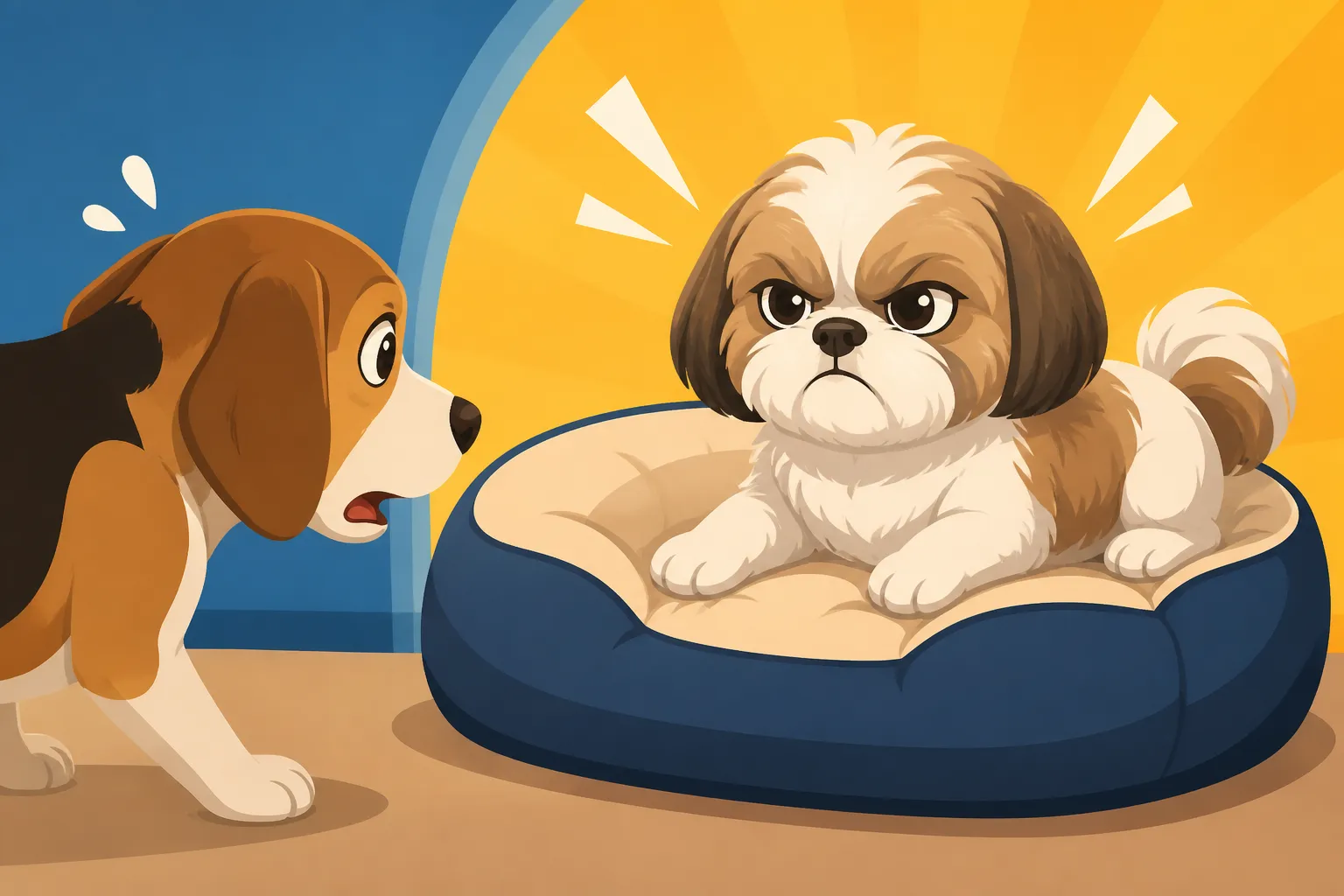
A Shih Tzu Guarding a Bed From Another Dog
It's incredibly frustrating when you have two beloved canine companions, and one starts acting possessive, especially over something as seemingly simple as a bed. You want harmony in your home, but suddenly, that cozy spot becomes a battleground, leading to tension and even fear. This guide will help you understand why your Shih Tzu might be guarding a bed from another dog, how to spot the early warning signs, and provide actionable strategies to manage and ultimately modify this challenging behavior, helping you restore peace to your multi-dog household.
Understanding Why Your Shih Tzu Guards Resources
Resource guarding, or possessive aggression, is one of those behaviors that can really throw a wrench into the loving picture you have of your dogs. It's not about one dog being "mean" or "dominant" in the way some old-school trainers used to think; it's a deeply ingrained instinct. Your adorable Shih Tzu, despite its small size, is still a dog with all the same primal wiring as a much larger breed, and that includes the drive to protect valuable resources.
The Instinct Behind Resource Guarding
Think about dogs in the wild, or even just feral dog populations. Survival often hinges on securing access to essential items like food, safe sleeping spots, and even mates. A dog that successfully guards its resources has a better chance of thriving. While your Shih Tzu isn't out there fending for itself in a harsh wilderness, that underlying instinct is still very much alive within them. When they perceive something as high-value and feel a threat to its possession – even from a housemate – that guarding instinct can kick in. It's not a moral failing; it's a dog being a dog, responding to an internal drive that tells them, "This is mine, and I need to keep it."
For many Shih Tzus, their comfortable bed might be one of the most cherished possessions, a soft, safe haven they retreat to. When another dog approaches it, especially if the guarding Shih Tzu feels vulnerable or insecure, those protective instincts can surface. Understanding that this isn't personal, but rather a behavioral manifestation, is the first step toward effective management. You might have seen this behavior around food or toys, but it's very common for it to extend to resting places too.
What Your Shih Tzu Considers a "High-Value" Resource
It’s easy to assume that "resources" only refer to things like a meaty bone or a favorite squeaky toy. However, a dog's definition of a high-value resource can be much broader and often quite surprising to us humans. For a Shih Tzu, especially one that enjoys comfort and close companionship, a cozy bed can absolutely be at the top of that list. It represents a safe space, a place of comfort, and potentially, a spot where they feel most secure.
Beyond beds, other items that can trigger guarding in a Shih Tzu include specific toys (especially new ones or ones that smell strongly of a favorite human), food bowls (even after the food is gone), chew treats, and sometimes even people – your lap, for instance, can be a highly guarded resource. A Shih Tzu Guarding the Lap It Sits On is a very common issue! The key is that the "value" is entirely subjective to the dog. What one Shih Tzu might not care about, another will fiercely protect. In a multi-dog home, where attention, food, and prime resting spots are all shared, the potential for guarding any of these resources increases. Your little Shih Tzu, with its sensitive nature, might feel a need to assert its claim, particularly if it feels it needs to compete for these comforts.
Identifying the Signs of Bed Guarding in a Shih Tzu
Recognizing resource guarding isn't always as obvious as a full-blown fight. Dogs, and Shih Tzus in particular, often give a whole spectrum of signals before they resort to overt aggression. Learning to read these signals is crucial for intervention and preventing escalation, keeping all your furry family members safe.
Subtle Warnings You Might Be Missing
Many owners miss the early, subtle signs of resource guarding, thinking their dog is just "being quiet" or "resting." However, these low-level cues are your Shih Tzu's way of saying, "Back off, this is mine," before things get more intense. If you observe closely, you might notice your Shih Tzu:
- Freezing or Stiffening: Their body might become rigid, and their tail might stop wagging.
- Hard Stare: They'll fix their gaze on the approaching dog, often with wide, unblinking eyes. This is not a friendly look.
- Subtle Growl: Shih Tzus can have very soft growls that are easy to miss, sounding almost like a grumble. Listen for this low rumble from deep in their chest.
- Lip Curling or Snarl: Even a slight curl of the lip, showing a hint of teeth, is a clear warning.
- Body Blocking: They might subtly shift their body to position themselves between the bed and the other dog.
- Head Lowering over the Resource: Almost like they're trying to hide or cover the bed.
- Increased Rate of Eating/Chewing (if guarding food/chew on the bed): A desperate attempt to consume the resource before it can be taken.
These subtle signals are critical communication. They are not random; they are intentional warnings. When these warnings are ignored by the other dog (or by us), the guarding Shih Tzu learns that it needs to escalate its behavior to be understood. This is why addressing the behavior at this early stage is so important. Ignoring these signs or punishing your Shih Tzu for them can actually make the situation worse, forcing them to jump straight to more aggressive behaviors without warning.
Escalated Behaviors and When to Intervene
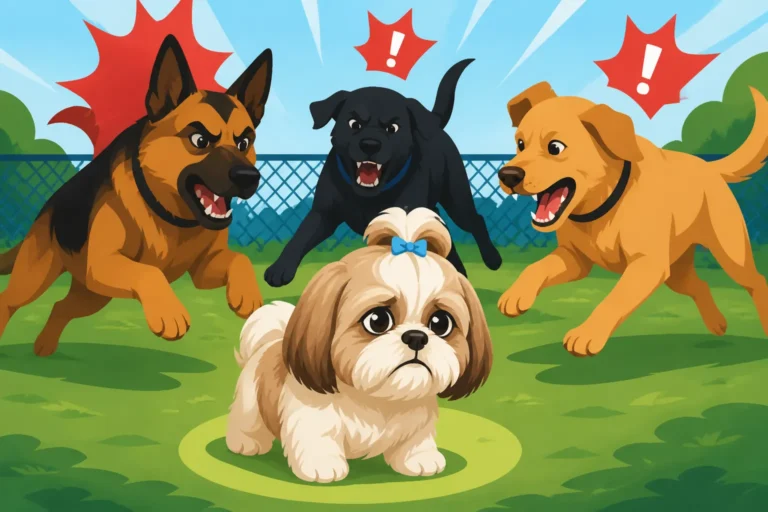
If the subtle warnings are missed or ignored, your Shih Tzu will likely escalate its guarding behaviors because its earlier signals weren't effective. This is when things can become truly concerning and dangerous in a multi-dog home. Escalated behaviors include:
- Loud, Snarling Growls: No longer subtle, these are unmistakable warnings.
- Snapping: A quick lunge and air bite, often without making contact, designed to frighten the other dog away.
- Lunging: A full body lunge toward the other dog, sometimes accompanied by a snap or growl.
- Biting: This is the most serious escalation, where your Shih Tzu makes physical contact with the other dog, resulting in punctures or wounds. This indicates that all previous warnings have failed, and your Shih Tzu feels it has no other option to protect its resource.
It's imperative to intervene long before biting occurs. If you're witnessing any of these escalated behaviors, especially snapping or actual bites, the situation is beyond simple management and immediate professional help is needed. At this point, the safety of both dogs is at risk, and you could be facing serious injuries. Preventing these situations from happening requires consistent management and training, focusing on changing your Shih Tzu's emotional response to the presence of other dogs near its perceived resources. Remember, a Shih Tzu spine is built to slip, and a scuffle or sharp movement could lead to Shih Tzu Disc Disease and Sudden Back Pain. Preventing conflicts is paramount for their physical health as well as behavioral.
Strategies for Managing and Modifying Bed Guarding Behavior
Dealing with resource guarding requires a multi-faceted approach. You'll need to manage the environment to prevent incidents, and then work on modifying your Shih Tzu's underlying feelings about sharing. Patience, consistency, and a positive reinforcement approach are your best tools.
Environmental Management: Preventing Conflicts
The absolute first step in addressing bed guarding is to manage the environment to prevent any further incidents. Every time your Shih Tzu successfully guards the bed and scares off the other dog, the behavior is reinforced, making it more likely to happen again.
- Separate Sleeping Areas: This is non-negotiable in the initial stages. Provide each dog with their own designated, comfortable sleeping spot that the other dog cannot access. This might mean separate rooms, crates, or even sturdy pet gates. Many owners find crates indispensable for this. You can find a wide range of suitable crates on Amazon.
- Multiple, High-Value Resting Spots: Don't just give your guarding Shih Tzu a bed and nothing for the other dog. Ensure all dogs have multiple, equally appealing resting places. If one dog loves a plush bolster bed, make sure the other has one too, and ideally, in different areas of the house.
- Elevated Beds or Individual Crates: For Shih Tzus, who often love to survey their domain, elevated beds can be a hit. Consider sturdy pet cots that allow them their own space. Crates, when properly introduced and made comfortable, become a sanctuary. Setting Up a Crate a Shih Tzu Will Enter is a great strategy for creating a safe, personal space.
- Rotating Access: If you only have one truly premium bed, consider rotating which dog gets access to it at different times of the day, or only allowing the guarding dog access when the other is otherwise occupied or crated.
- "No-Access" Zones: For highly contested spots, you might need to make them temporarily off-limits to all dogs, or implement a rule where only one dog is allowed on a particular piece of furniture at a time. This prevents the opportunity for guarding to occur.
The goal here isn't to punish your Shih Tzu but to remove the opportunity for them to practice the undesirable behavior, thereby reducing their stress and the stress of the other dog. This gives you a clean slate to begin training.
Desensitization and Counter-Conditioning
Once you've managed the environment to prevent immediate conflicts, you can begin the important work of changing your Shih Tzu's emotional response to another dog approaching its bed. This is done through desensitization and counter-conditioning, which means gradually exposing your Shih Tzu to the trigger (the other dog near the bed) while simultaneously creating a positive association (tasty treats!).
Here’s a step-by-step approach:
- Start from Afar: Begin with your guarding Shih Tzu on its bed and the other dog at a distance where your Shih Tzu shows no signs of guarding (no stiffening, staring, growling). This might be across the room or even in another room with the door slightly ajar.
- Introduce High-Value Treats: As the other dog briefly appears in sight or takes a tiny step closer, immediately toss an extra special treat (like cooked chicken or cheese) to your guarding Shih Tzu. The timing is crucial: treat as soon as the other dog is perceived, then the other dog moves away.
- Short Sessions, Positive Endings: Keep these sessions very short (a minute or two) and always end on a positive note, before your Shih Tzu shows any stress. The idea is for your Shih Tzu to associate the other dog's presence near the bed with good things happening to them.
- Gradual Reduction of Distance: Over many, many sessions and days (or even weeks), slowly reduce the distance between the two dogs. Only move closer if your Shih Tzu remains completely relaxed and continues to take treats happily. If you see any signs of guarding, you've moved too quickly and need to go back a step.
- Vary the Scenarios: Once comfortable with the other dog approaching, you can start varying the approach. Maybe the other dog just walks past, or pauses for a moment. Always remember to mark the desirable behavior (the other dog being near the bed without a reaction from your Shih Tzu) with a treat for the guarding Shih Tzu.
- "Trade" Games: For items that are portable, like specific toys, you can teach a "trade." Approach your Shih Tzu while they have the toy, offer an even higher-value treat, and when they drop the toy to take the treat, quickly pick up the original toy. Return the original toy or offer another. This teaches them that giving up a resource often leads to something better.
This process takes time and immense patience. Never force an interaction or punish your Shih Tzu for growling. A growl is information; it tells you they are uncomfortable. Punishing a growl can suppress the warning, making your dog more likely to bite without warning in the future.
Teaching an "Off" or "Leave It" Cue
Beyond managing the environment, teaching your Shih Tzu some crucial commands can give you more control and prevent situations from escalating. Two of the most helpful are "Off" (or "Move") and "Leave It."
-
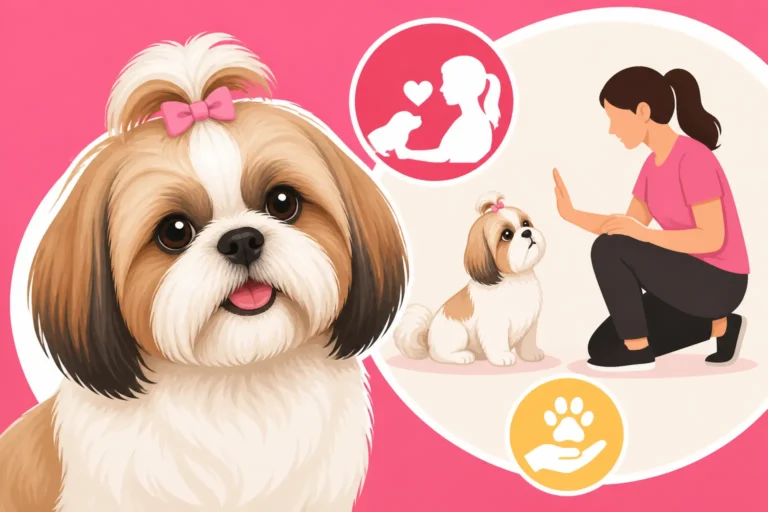
Teaching "Off" or "Move": This cue is about getting your Shih Tzu to willingly vacate a specific spot, like a bed. Start by luring your Shih Tzu off the bed with a high-value treat in your hand. As their paws touch the floor, say "Off" or "Move" and immediately reward them. Practice this many, many times in a low-stakes environment, not when they are actively guarding. You want them to associate leaving the bed with a positive reward. Once they understand, you can start asking them to "Off" before the other dog even gets close, preventing a potential conflict.
-
Teaching "Leave It": The "Leave It" command is invaluable for getting your Shih Tzu to disengage from something tempting. Start with a treat in your closed fist. Say "Leave It" and present your fist. When your Shih Tzu disengages (even for a split second, looking away from your hand), immediately open your other hand and give them an even higher-value treat. The goal is for them to learn that ignoring one item (the item in your closed fist) leads to a better reward. Gradually, you can introduce this cue with lower-value items on the floor, working your way up to more tempting things, and eventually, to the bed itself when another dog approaches (from a safe distance).
Resources like BAXTER & Bella often have excellent online programs and resources that walk you through these foundational commands step-by-step, using positive reinforcement. Their approach aligns well with building confidence and positive associations for your Shih Tzu. Consistent practice in calm, non-confrontational settings will make these cues reliable when you truly need them. The key is to build a positive association with these commands so that your Shih Tzu wants to comply because good things happen when they do.
Ensuring Adequate Resources for All Dogs
Sometimes, resource guarding stems from a perceived scarcity of resources. If dogs feel they have to compete for everything, guarding behaviors are more likely to arise. Therefore, a crucial part of your strategy should be to ensure an abundance of resources for all dogs in your home.
- More Beds Than Dogs: This is a simple but powerful rule. If you have two dogs, aim for at least three or four comfortable beds spread throughout the house. This reduces the pressure to guard a single prime spot.
- Multiple Water Bowls: Don't just have one. Place water bowls in different rooms, always clean and full.
- Separate Toy Bins: While some dogs might share toys readily, if toy guarding is also an issue, consider having individual toy bins for each dog or rotating toys to keep their value fresh.
- Feed Separately: Always feed dogs in separate rooms or crates to prevent food guarding. This also prevents one dog from rushing and eating another's portion. Even if you're feeding a Monthly Food Cost for a Twelve Pound Shih Tzu on a budget, separate feeding is a must.
- Supervised Play and Interaction: Always supervise interactions, especially around items that have been guarded in the past. Interrupt any stiffening or staring before it escalates. When introducing new items, like a special chew or a new bed from Amazon, give each dog one of their own simultaneously and in separate spaces.
- Attention Abundance: Ensure both dogs receive plenty of individual attention, cuddle time, and training. Sometimes, guarding can be linked to seeking attention or feeling overlooked.
By creating an environment of abundance, you reduce the perceived need for your Shih Tzu to guard. When resources are plentiful and easily accessible, the underlying anxiety that fuels guarding behavior can diminish, leading to a more harmonious household.
When to Seek Professional Help
While environmental management and positive reinforcement training can go a long way, there are definite signs that indicate you need to bring in a professional. Ignoring these signals can lead to a dangerous situation for all involved.
Recognizing When You're Out of Your Depth
It's completely normal to feel overwhelmed and unsure about how to handle persistent or escalating resource guarding. If you find yourself in any of these situations, it's a clear indication that it's time to seek expert help:
- Escalating Aggression: If the guarding has moved past subtle warnings to snapping, lunging, or especially biting, you need professional intervention immediately. This is not a situation to try and manage on your own, as the risk of serious injury to either dog (or even yourself) is too high.
- Fear or Injury: If you or your other dog are feeling fearful or anxious in your own home because of the guarding behavior, or if there have been any actual injuries to either dog, do not delay.
- Lack of Progress: If you've been consistently applying management and training techniques for several weeks and see no improvement, or the behavior seems to be getting worse, a professional can offer fresh eyes and tailored strategies.
- Multiple Resources Being Guarded: If your Shih Tzu is guarding not just the bed, but also food, toys, specific spots on the sofa, or even people, this indicates a more pervasive issue that requires a comprehensive behavioral plan. A Shih Tzu That Guards a Toy and A Shih Tzu Growling Over Food are related issues that often require similar intervention.
- Your Own Safety Concerns: If you are worried about getting bitten yourself when trying to intervene or manage the situation, a professional will prioritize safety and guide you on safe handling.
Remember, asking for help isn't a failure; it's a responsible choice that prioritizes the safety and well-being of all your pets and family members. Sometimes, what looks like a simple behavioral problem can have underlying medical components, so a vet check is always a good starting point before extensive behavioral work. Early Shih Tzu Back Pain Signs or other health issues could make a dog more irritable and prone to guarding.
Finding a Qualified Professional
When seeking help for resource guarding, it's crucial to find the right kind of professional. Not all dog trainers are created equal, and some methods can actually worsen aggressive behaviors.
- Look for Certified Professionals: Seek out a Certified Professional Dog Trainer (CPDT-KA) or, for more severe cases, a Veterinary Behaviorist (Dip ACVB). These individuals have undergone rigorous education, examination, and adhere to ethical, science-based training principles.
- Positive Reinforcement, Force-Free Methods: Ensure the professional uses positive reinforcement and force-free methods exclusively. Avoid anyone who suggests using punishment, "alpha rolls," "dominance theory" or any aversive tools (like choke chains, prong collars, or e-collars) for resource guarding. These methods can suppress symptoms but do not address the underlying emotional state, often leading to increased fear, anxiety, and a higher risk of aggression without warning. A good trainer will help you understand your Shih Tzu's body language and how to effectively communicate with them.
- Experience with Multi-Dog Households and Toy Breeds: Ideally, find someone with specific experience in managing resource guarding in multi-dog homes, and who understands the unique nuances of toy breeds like Shih Tzus. Their small size doesn't make their aggression any less serious.
- Vet Referral: Your veterinarian can be an excellent resource for referrals to qualified behavior professionals in your area. They might also rule out any underlying medical conditions that could be contributing to the behavior.
A qualified professional will conduct a thorough assessment of your Shih Tzu, your home environment, and the interactions between your dogs. They will then develop a personalized behavior modification plan, teach you the necessary skills, and provide ongoing support as you work through the process. It's an investment in the long-term peace and safety of your home.
| Do's | Don'ts |
|---|---|
| Do provide multiple beds for all dogs. | Don't allow dogs to fight over a single bed. |
| Do feed dogs in separate, safe locations. | Don't leave high-value items unsupervised. |
| Do use management (crates, gates) to prevent conflicts. | Don't punish your Shih Tzu for growling (it's a warning!). |
| Do use high-value treats for training. | Don't rush desensitization; go at your dog's pace. |
| Do seek professional help for escalation or injury. | Don't use force or intimidation; it makes guarding worse. |
| Do ensure all dogs receive individual attention. | Don't ignore subtle warning signs; intervene early. |
Disclaimer
This article is for general informational purposes only and does not constitute professional advice. Laws, prices and regulations vary by location and change over time. Consult a qualified professional for guidance on your specific situation.