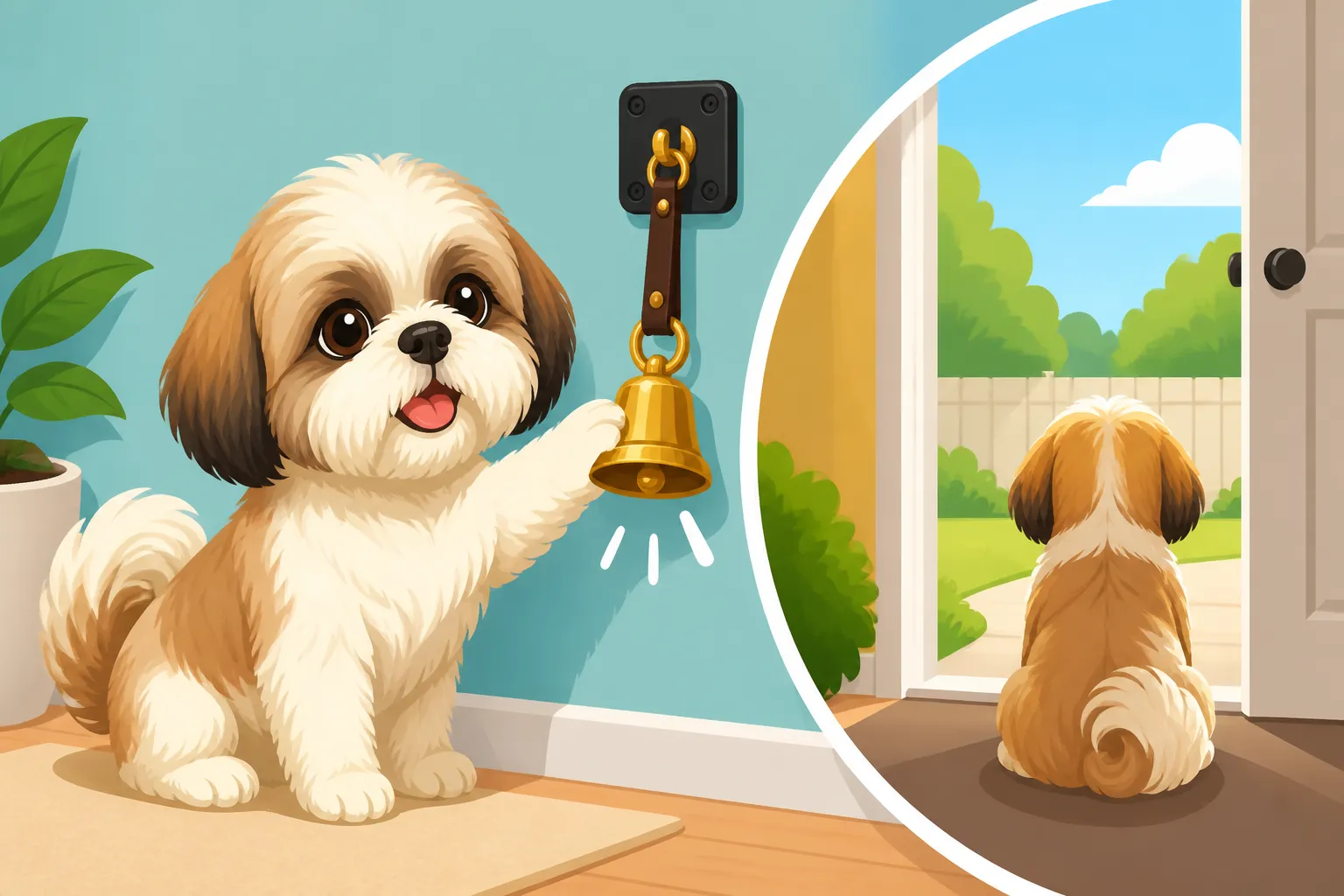
Teaching a Shih Tzu to Ring a Bell to Go Out
One of the trickiest parts of living with a Shih Tzu is trying to figure out what they're trying to tell you, especially when nature calls. Many of us have experienced the frustration of cleaning up an accident, only to realize our furry friend was trying to tell us something, but their subtle signals just got lost in translation. This guide will walk you through the simple, effective process of teaching your Shih Tzu to ring a bell to go outside, turning those confusing nudges and silent stares into a clear, chime-filled request.
Why Bell Training Works Wonders for Your Shih Tzu (and Your Floors!)
Let's be real, our Shih Tzus are masters of charming us, but sometimes their communication skills could use a little boost, especially around potty breaks. You've probably been there: rushing around, getting dinner ready, and suddenly you step in a puddle. You look at your sweet, innocent Shih Tzu, and you know, deep down, they meant to tell you, but you just didn't catch it. That's where bell training swoops in to save the day, and your carpets!
The Communication Gap: Why Your Shih Tzu Might Not Be Telling You
It's not that your Shih Tzu is trying to be sneaky or spiteful when they have an accident indoors. Far from it! They're likely giving you signals, but those signals are often subtle and easily missed in our busy human lives. Maybe they're sniffing intently at the door, doing a little shuffle, or even giving you that intense, unblinking stare that could mean anything from "I'm hungry" to "Please pet me" to "My bladder is about to burst!" For a small dog like a Shih Tzu, whose head might barely reach the doorknob, these signals can be particularly hard to spot.
Think about it: in the wild, dogs wouldn't need a bell. They'd just wander off and do their business. But in our homes, we've set up a specific expectation – go outside to potty. If they haven't been taught a clear, unmistakable way to ask to go outside, how can we blame them for an honest mistake? It's a common frustration for owners, feeling like their dog should know by now, but without a clear language, it's a constant guessing game. This is why a simple, tangible tool like a bell can be a game-changer, especially for a companion breed like the Shih Tzu. As we discuss in Why a Companion Breed Still Needs Training, even the most cuddly dogs benefit from clear communication and structure.
How a Bell Creates a Clear, Consistent Signal
A bell isn't just a noisemaker; it's a powerful communication tool. It takes the guesswork out of potty time by giving your Shih Tzu an active, audible way to tell you they need to relieve themselves. Instead of you trying to interpret a tail twitch or a subtle lean towards the door, you'll hear a distinct ring. This sound cuts through background noise, making it almost impossible to miss.
This clear signal empowers your Shih Tzu. They're no longer passively waiting for you to notice their need; they are actively initiating the request. This can boost their confidence and reduce anxiety around potty training. For a little dog, simply nudging a bell with their nose or paw is an easy action to learn, and the immediate, consistent response from you (opening the door!) quickly forms a strong association. It's about giving them a voice, literally, in a way that benefits everyone in the household.
Getting Started: Choosing Your Bell and Setting Up for Success
Before you even think about teaching your adorable Shih Tzu to ring for a potty break, you need to get the right equipment and set up your training area. This isn't just about grabbing any old bell; it's about choosing one that works best for your petite pup and placing it strategically for optimal success.
Types of Potty Bells and What Suits a Shih Tzu
When it comes to potty bells, you'll generally find two main types: hanging bells and freestanding or desktop bells. Each has its own set of pros and cons, especially for a small, long-haired breed like a Shih Tzu.
- Hanging Bells: These typically come on a strap or ribbon that hangs from your doorknob. Your Shih Tzu can nose or paw them to make them ring.
- Pros for Shih Tzus: They're usually quite loud, making the signal clear. They're a fixed object, so your dog knows exactly where to find them.
- Cons for Shih Tzus: The long strings or ribbons can sometimes get tangled in a Shih Tzu's flowing coat, especially if you have a full-coated dog. A very small Shih Tzu might also need to jump slightly to reach them, which isn't ideal for their delicate back and joints. If you choose this type, opt for shorter straps or larger, more durable bells that are less likely to snag.
- Floor Bells (Desktop Bells): These are often shaped like service bells you'd see at a hotel front desk. Your Shih Tzu presses a button or pad with their paw to make them ring.
- Pros for Shih Tzus: They're perfectly suited for smaller dogs as they don't require any jumping. There's no risk of coat entanglement. They're stable and easy to use with a simple paw tap.
- Cons for Shih Tzus: They can sometimes be pushed around or accidentally rung if your Shih Tzu is playing near them. You might need to secure them if your dog is prone to moving objects.
For many Shih Tzu owners, a floor bell proves to be a fantastic choice due to its accessibility and reduced risk of coat issues. However, a well-placed hanging bell with shorter straps can also work well. You can find a wide variety of both types on platforms like Amazon, so take your time to read reviews and consider what will be most comfortable and effective for your individual dog. When thinking about other indoor potty solutions, you might also consider what we discuss in Indoor Potty Setup Costs for a Shih Tzu.
Here's a quick comparison to help you decide:
| Bell Type | Pros for Shih Tzu | Cons for Shih Tzu | Best Use Case |
|---|---|---|---|
| Hanging Bells (Door Knob) | Clear, distinct sound; always in a fixed location. | Can tangle in long coats; may encourage jumping; possibly too high for very small Shih Tzus. | Best for Shih Tzus with shorter "puppy cuts" or those who can easily reach without jumping. |
| Floor Bells (Desktop Bell) | Easy paw activation, no jumping required; minimal coat entanglement. | Can be accidentally nudged; may be moved if not secured; quieter sound. | Ideal for puppies, senior Shih Tzus, or those with full, flowing coats. |
Strategic Placement and Initial Introductions
Once you've chosen your bell, strategic placement is key. The bell needs to be right by the door that your Shih Tzu primarily uses to go outside for potty breaks. If you have multiple doors they use, consider having a bell at each, or gradually introduce one at a time.
Ensure the bell is at an appropriate height for your Shih Tzu. If it's a hanging bell, make sure it's low enough for them to comfortably nudge with their nose or paw without having to stretch or jump excessively. For a floor bell, place it directly on the floor right next to the door. You want it to be impossible for them to miss as they approach the exit.
For the initial introduction, simply place or hang the bell. Let your Shih Tzu sniff it, look at it, and investigate it without any pressure. You can gently tap the bell yourself a few times to let them hear the sound, offering calm praise. The goal here is just to make it a neutral, non-threatening object in their environment. No expectations, just curiosity!
The Step-by-Step Guide to Teaching Bell Ringing
Now for the fun part: actually teaching your Shih Tzu to use the bell! This process relies heavily on consistency, positive reinforcement, and a little bit of patience. Remember, you're teaching a whole new language, and that takes time and repetition.
Associating the Bell with Going Outside
This is the foundational step, and it's absolutely crucial. Every single time you take your Shih Tzu outside to potty, you need to ring the bell yourself first.
Here's the sequence:
- Approach the door with your Shih Tzu.
- Ring the bell yourself (use your hand or foot).
- Immediately say your potty cue (like "outside?" or "potty time!").
- Open the door and go straight outside for a potty break.
Do this every time. No exceptions. Even if they just went out five minutes ago, if you're taking them out again, ring the bell. The goal is to create an undeniable link in their mind: "Bell rings = Door opens = I go outside." At this stage, you're not asking them to do anything with the bell, just to observe and learn the association. This consistency is vital, much like the methods discussed in Setting Up a Crate a Shih Tzu Will Enter for other house training aspects.
Encouraging Your Shih Tzu to Interact with the Bell
Once your Shih Tzu seems to understand that the bell ringing precedes going outside, you can start encouraging them to interact with it themselves. This is where tiny, high-value treats come in handy.
- Luring: Hold a small, irresistible treat (like a tiny piece of cooked chicken or cheese) near the bell. When your Shih Tzu investigates, they'll likely sniff or even gently nudge the bell with their nose or paw to get to the treat. The moment the bell makes any sound, say "Yes!" or use a clicker if you're clicker training (a fantastic tool for Shih Tzus, as explored in Positive Reinforcement With a Shih Tzu).
- Reward and Release: Immediately give them the treat, and then, here's the critical part, immediately open the door and take them outside. Even if they don't potty, the act of going outside is the ultimate reward for ringing the bell.
- Repeat, Repeat, Repeat: Do this many times throughout the day, especially before their usual potty times. Keep these sessions short and sweet, maybe 5-minute bursts, which works perfectly for a Shih Tzu's attention span, as detailed in Five Minute Sessions With a Shih Tzu.
The trick here is to make the bell interaction incredibly rewarding. Don't just give the treat; the act of going outside is the big payoff. If your Shih Tzu is hesitant, you can try gently touching their paw to the bell (if it's a floor bell) or guiding their nose to it while holding the treat. Many online resources, including comprehensive programs like BAXTER & Bella, offer fantastic step-by-step video guides for this luring phase. They truly break down the subtle cues and timing needed to make it click for your dog. Remember, What Motivates a Shih Tzu to Work is often a combination of food and positive attention.
Reinforcing the Behavior and What Comes Next
As your Shih Tzu starts intentionally touching the bell to make it ring, you'll shift from luring to reinforcing their independent action.
- Immediate Response: The very second you hear that bell, respond! Say "Good ring!" or "Yes!" and take them straight outside. Don't delay. The faster you respond, the clearer the connection becomes in their mind.
- Potty or No Potty, Still Go Out: If your Shih Tzu rings the bell, take them out on a leash for 3-5 minutes. If they potty, lavish them with praise and perhaps another small treat. If they don't potty, that's okay! Just bring them back inside with no fuss. This teaches them the bell means "I go outside to potty," not "I go outside to play."
- Gradual Independence: Over time, you'll notice your Shih Tzu ringing the bell without you prompting or luring. This is the moment you've been working for! Continue to reinforce this behavior consistently. Everyone in the household needs to be on the same page and follow this protocol. If one person ignores the bell, it can confuse your Shih Tzu and undermine your training efforts. Teaching a Shih Tzu to Come to a Whistle also relies on this kind of consistent, positive reinforcement.
It's common for Shih Tzus to have a few setbacks during house training. Remember, Why House Training a Shih Tzu Runs Into Months is often due to their small bladders and our own inconsistencies. Be patient and understand that it’s a journey, not a race.
Troubleshooting Common Bell Training Challenges
Even with the best intentions and consistent effort, you might run into a few bumps along the road. Don't get discouraged! Many Shih Tzu owners face similar hurdles, and with a few adjustments, you can get back on track.
The "Fake Out" Rings and What They Mean
Ah, the clever Shih Tzu! Once they figure out that ringing the bell gets them outside, some will quickly learn that it can also get them attention, or just a fun trip to the yard for no particular reason. You might find your Shih Tzu ringing the bell every five minutes, looking at you expectantly. This is what we affectionately call the "fake out" ring.
What does it mean? It means your Shih Tzu is smart! They've learned the power of the bell. The key here is to differentiate between a true potty signal and a "let's just go outside" or "pay attention to me" signal.
Here's how to handle it:
- Go out, but no fun: If your Shih Tzu rings, take them out immediately, but on a leash, and treat it strictly as a potty break. No play, no sniffing around for extended periods. Stand still in the designated potty area. Give them 3-5 minutes.
- No potty, back inside: If they don't potty within that time, bring them straight back inside without fuss or reward. Don't scold them, but don't make it fun either.
- Repeat the process: If they ring again five minutes later, repeat. They will quickly learn that the bell is for potty and not just a free pass to the backyard party. Over time, they'll reserve the bell for when they truly need to go. If your Shih Tzu is also showing other attention-seeking behaviors, like the ones discussed in A Shih Tzu Whining at Your Feet All Evening, consider if they're getting enough mental and physical stimulation throughout the day.
When Your Shih Tzu Just Isn't Getting It (or Is Afraid of the Bell)
Sometimes, despite your best efforts, your Shih Tzu might seem completely uninterested in the bell, or worse, even afraid of it. This can be frustrating, but it's usually solvable.
- Revisit the basics: Are you being absolutely consistent with ringing the bell every single time before going out? Is everyone in the household following the protocol? Inconsistency is the number one killer of training success.
- Is the bell intimidating? For some sensitive Shih Tzus, the sound of the bell might be too loud or startling. Try a different type of bell with a softer chime. Perhaps a floor bell is less intimidating than a hanging one that swings.
- Break it down: If your Shih Tzu isn't even sniffing the bell for a treat, go back a step. Just getting them comfortable with the bell's presence might be step one. Leave treats near it without asking for interaction. Gradually move to luring.
- Check for underlying issues: If your Shih Tzu was getting it and then suddenly stops, or is having an unusual number of accidents despite your efforts, it's always wise to rule out a medical issue. Increased urination or changes in potty habits can sometimes be a sign of urinary tract infections, bladder stones, or even kidney issues. Shih Tzu Urinary Accidents That Are Medical explores these possibilities in detail, and a vet visit is always recommended if you suspect a health problem.
Patience is your best friend here. Don't rush the process. Small, consistent steps will eventually lead to success.
Maintaining Consistency for Long-Term Success
Once your Shih Tzu is reliably ringing the bell to go out, the biggest challenge becomes maintaining that consistency. It's easy to get complacent once the accidents stop, but ongoing consistency is vital to ensure this learned behavior sticks.
- Household commitment: Make sure everyone who interacts with your Shih Tzu—family members, pet sitters, house guests—understands and follows the bell protocol. Even one person letting your dog out without ringing the bell can weaken the association.
- Respond promptly: Continue to respond immediately every time the bell rings. The speed of your response reinforces the behavior. Your Shih Tzu learns that their signal is heard and acted upon.
- Accidents happen: Even well-trained dogs can have an occasional accident. If it happens, clean it up without scolding. Re-evaluate your routine: have you been less consistent lately? Has their schedule changed? This isn't a failure, just a reminder to reinforce the training.
- The long haul: Bell training isn't just for puppies; it's a lifelong tool. As your Shih Tzu ages, their signals might become even less obvious, or their bladder control might decrease. Having a clear, established communication method like the potty bell will serve both of you well for many years to come. Remember, house training a Shih Tzu can indeed be a lengthy process, as explored in Why Shih Tzu House Training Takes Months, but a bell provides a clear path to success.
Teaching your Shih Tzu to ring a bell is a small investment of time that pays off immensely in clear communication, fewer accidents, and a happier, more confident pup.
Disclaimer
This article is for general informational purposes only and does not constitute professional advice. Laws, prices and regulations vary by location and change over time. Consult a qualified professional for guidance on your specific situation.