Why a Full Coat Hides Shih Tzu Weight Gain
It's incredibly common for Shih Tzu owners to discover their beloved furball has packed on a few extra pounds, often to their surprise! The truth is, that gorgeous, flowing double coat, a hallmark of the breed, is exceptionally good at camouflaging gradual weight gain, making it a real challenge to spot until it becomes a more significant issue. This guide will walk you through why this happens and, more importantly, how you can stay ahead of the curve to ensure your Shih Tzu maintains a healthy weight under all that beautiful hair.
The Deceptive Nature of the Shih Tzu Double Coat
Anyone who loves a Shih Tzu knows their coat is a thing of beauty – thick, luxurious, and often long. But what makes it so stunning also makes it a master of disguise, especially when it comes to weight fluctuations. We adore their fluffy appearance, but that fluff can easily mask the changes happening underneath.
How the Coat Adds Visual Bulk
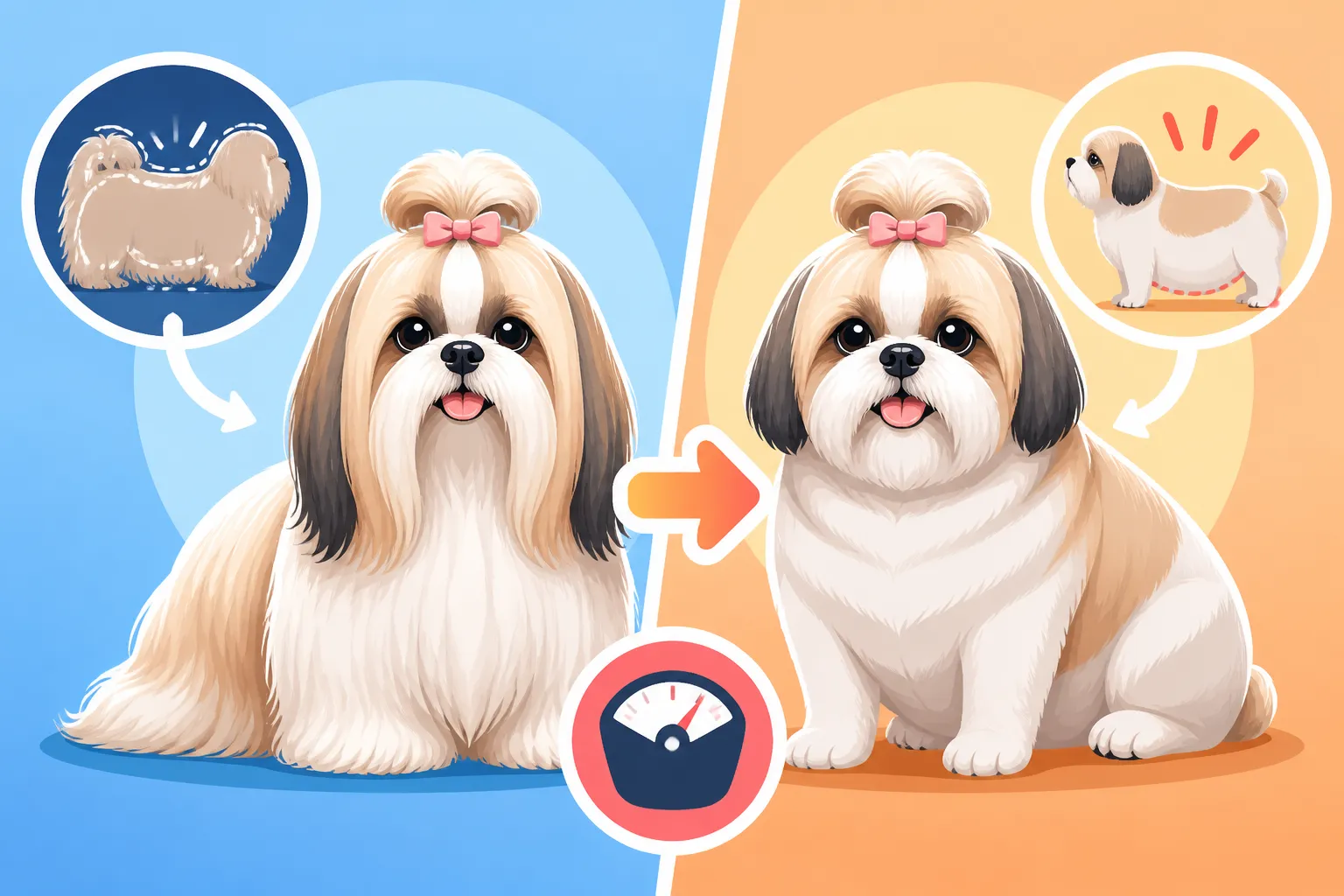
A Shih Tzu's coat isn't just a single layer of hair; it's a double coat, meaning they have a soft, dense undercoat beneath a longer, coarser outer coat. This combination creates an incredible amount of volume and loft. When you look at your Shih Tzu, a significant portion of what you're seeing is hair, not their actual body shape. Imagine trying to gauge someone's weight when they're wearing a huge, puffy winter coat – it's tough, right? It's the same principle for our little lion dogs.
This visual bulk can make a Shih Tzu appear consistently "full" or "round," regardless of what's happening with their waistline. A few extra ounces, or even a couple of pounds, can easily disappear within the layers of their fur. Owners, understandably, often rely on visual cues, and when those cues are misleading, it’s easy to miss the subtle signs of impending weight gain. What might look like a healthy, robust dog could, in reality, be a dog carrying more weight than its tiny frame is designed to support.
Why Weight Creeps Up Unnoticed
Weight gain in dogs, much like in humans, rarely happens overnight. It's usually a slow, steady accumulation, a little extra kibble here, an indulgent treat there. Because the Shih Tzu's coat is so good at hiding these small changes, owners might not notice their dog is getting heavier until the weight gain is substantial. By then, it’s often become a more entrenched problem.
Think about it: you see your dog every single day. The changes are so incremental that your eyes simply adapt. It’s not like they suddenly wake up one morning visibly plump. Instead, over weeks and months, that fluffy outline just gets a little bit fluffier, and the full coat continues its excellent work of concealment. Trying to feel for ribs or a defined waist through several inches of dense hair can also be incredibly difficult, even if you know what you’re looking for. This makes those vital early detection steps much harder to perform, leaving many owners scratching their heads when the vet gently suggests their furry friend needs to slim down. What Two Extra Pounds Do to a Shih Tzu might not seem like much, but it's a huge burden on their small bodies.
Recognizing Subtle Signs of Shih Tzu Weight Gain
Since their glorious coats can be such masterful deceivers, we need to employ other strategies to truly know if our Shih Tzus are gaining weight. It’s about going beyond what your eyes see and tuning into other important indicators.
The Importance of Hands-On Assessment
This is where you become your Shih Tzu's most diligent health detective! Visual inspection simply isn't enough; you need to get your hands on them, often. Regularly performing a hands-on assessment is crucial for any breed with a thick coat.
Here’s how you can do a quick check:
- The Rib Test: Gently run your fingers along your Shih Tzu's side, behind their front legs. You should be able to feel their ribs with light pressure, almost like feeling the knuckles on your hand when it's flat. You shouldn't be able to see the ribs, but you should definitely be able to feel them without having to press hard. If you have to dig your fingers in, or if you feel a thick layer of padding over them, it’s a strong sign they’re carrying too much weight.
- The Spine Check: Run your fingers along their spine. You should feel the bumps of the vertebrae, again, not prominently, but definitely discernibly under the skin and fur. If it feels like a smooth, cushioned surface, that's another red flag.
- The Waistline Scan: While standing over your Shih Tzu, look down. Even with a full coat, you should ideally be able to discern a slight tuck-in or narrowing behind their ribs, before their hips. If they look like a continuous, straight sausage from their shoulders to their tail, without any discernible waist, that indicates excess weight. If you've just given them a bath, this is a prime opportunity to see their actual body shape before the coat fluffs up again.
Make these checks a regular part of your routine, perhaps during a cuddle session or when you're Brushing a Full Coat Shih Tzu Every Single Day. The more familiar you become with how their ideal body feels, the quicker you'll notice any subtle changes.
Behavioral Clues That Indicate Weight Issues
Beyond the physical examination, your Shih Tzu's behavior can also provide strong hints that they're getting heavier. Our furry friends are masters of communicating their well-being, even if they can't use words.
Keep an eye out for these behavioral shifts:
- Decreased Energy Levels: Is your once-eager-to-play Shih Tzu now spending more time napping? Are they less enthusiastic about walks or games of fetch? Extra weight puts a strain on their tiny joints and heart, making even normal activity feel like a chore.
- Reluctance to Move: Notice if they're hesitant to jump onto the sofa or bed, or if they struggle with stairs. This can be a sign of joint discomfort exacerbated by excess weight. Why Stairs Are Hard on a Shih Tzu Spine is a real concern, and extra weight compounds that problem. If they're moving more slowly or seem stiffer, especially after resting, it’s worth investigating.
- Increased Panting or Snoring: Shih Tzus are a brachycephalic breed, meaning they have flattened faces and often compromise airways. Extra weight can severely worsen their breathing, leading to more frequent or heavier panting, even with minimal exertion. You might also notice an increase in snoring, or that their usual adorable Shih Tzu Snoring That Keeps the House Awake becomes even louder and more labored. This is a serious concern as it indicates increased strain on their respiratory system.
- Changes in Grooming Habits: An overweight Shih Tzu might struggle to groom themselves, especially to reach their hindquarters. You might notice matting in areas they can no longer reach comfortably, or a generally less tidy appearance.
- Appetite Changes (sometimes): While some overweight dogs seem constantly hungry, others might become more lethargic, leading to a slight decrease in appetite. However, often the opposite is true – they just want more food or treats!
If you observe any of these changes, combined with difficulty feeling their ribs, it's time to take action.
Practical Strategies for Monitoring Your Shih Tzu's Weight
Regular monitoring is key to preventing unnoticed weight gain. It requires a bit more intentionality than just a casual glance, but it’s absolutely worth it for your Shih Tzu's long-term health and comfort.
Regular Weigh-Ins and Body Condition Scoring
Making regular weigh-ins a part of your routine is perhaps the most objective way to track your Shih Tzu’s weight.
- At Home: You can easily weigh your Shih Tzu at home. If they're small enough, simply step on a bathroom scale yourself, note your weight, then pick up your Shih Tzu and step on the scale again. Subtract your weight from the combined weight to get your dog's weight. Do this once a month, ideally at the same time of day (e.g., before breakfast) for consistency. Keep a little logbook – you'd be surprised how quickly patterns emerge that you might otherwise miss.
- At the Vet: Most veterinary clinics have scales in the waiting area that you can use any time, even if you don't have an appointment. This is a fantastic resource, especially for larger Shih Tzus that might be awkward to weigh at home. Plus, the vet tech can help you interpret the numbers and offer immediate feedback. Vet Visit Frequency for a Shih Tzu Past Ten usually increases, offering more opportunities for weigh-ins.
Beyond just the number on the scale, understanding Body Condition Score (BCS) is invaluable. BCS is a standardized way to assess a dog's fat reserves, giving you a more holistic view than just weight alone, especially for a fluffy breed. Vets typically use a 5-point or 9-point scale. Here’s a simplified version for a 5-point scale:
| Score | Description | Shih Tzu Feel (Through Coat) |
|---|---|---|
| 1 | Emaciated: Ribs, spine, and pelvic bones easily visible, severe muscle loss. | You'd easily feel sharp bones with no fat padding; the dog would look thin even under a coat. |
| 2 | Underweight: Ribs, spine, and pelvic bones easily palpable and visible. Minimal fat. | Ribs easily felt with minimal padding; a noticeable waist tuck. The coat might look sparse from lack of body fat. |
| 3 | Ideal: Ribs easily palpable without excess fat covering. Waist easily noted. | Ribs felt with light pressure, like knuckles on a flat hand. Clear waist tuck felt behind ribs. |
| 4 | Overweight: Ribs palpable with slight difficulty; fat covering. Waist barely discernible. | You have to press a bit harder to feel ribs. Waist tuck is minimal or absent when palpated. Overall "fluffier" than ideal. |
| 5 | Obese: Ribs, spine, and pelvic bones difficult to impossible to palpate due to heavy fat. | Ribs are very hard or impossible to feel. No waist tuck, and a generally rounded, heavy feel. This is when the coat is truly hiding significant issues. |
Aim for a BCS of 3 for your Shih Tzu. If they are consistently at a 4 or 5, it's time for some dietary and exercise adjustments.
Grooming's Role in Weight Awareness
Grooming isn't just about keeping your Shih Tzu looking fabulous; it's also a fantastic opportunity for a thorough health check, including weight assessment.
When you're Bathing a Shih Tzu Every Two to Three Weeks, take advantage of their wet, flat coat. This is arguably the best time to truly see and feel their body shape without the deceptive volume of dry fur. You can clearly see their waistline (or lack thereof), easily feel their ribs, and get a true sense of their underlying physique. Pay attention to how they look and feel when wet, and compare it to their appearance when they're dry.
Similarly, if your Shih Tzu regularly gets a "puppy cut" or a shorter trim, those fresh cuts can be incredibly revealing. All that excess fluff is gone, suddenly exposing the body underneath. Many owners have been surprised after a groomer visit to realize their dog looked a lot chunkier than they thought! It's why a lot of owners choose a shorter style like The Puppy Cut and What It Saves – it’s not just for convenience, but for better visibility of their dog's form.
Don't hesitate to chat with your professional groomer as well. They handle many different dogs and can often be the first to notice changes in body condition because they're physically manipulating the dog's coat and body regularly. They might offer valuable insights, especially if they've been grooming your Shih Tzu for a while.
Taking Action When Your Shih Tzu Gains Weight
If your hands-on assessments and weigh-ins indicate your Shih Tzu is carrying too much weight, don't despair! This is a common issue, and with consistent effort, you can help them achieve a healthier weight. The key is gentle, sustained changes.
Adjusting Diet and Food Portions
Dietary adjustments are usually the first and most effective step in managing your Shih Tzu’s weight. It’s easy to inadvertently overfeed, especially when they give you those irresistible "puppy dog eyes."
- Accurate Measurement is Critical: Ditch the guesswork! Invest in a proper measuring cup or, even better, a kitchen scale to accurately portion out your dog's food. Even a small handful extra at each meal can add up to significant excess calories over time. Remember, kibble sizes and densities vary, so volume can be misleading. Weighing Shih Tzu Food Instead of Scooping is always the most accurate method.
- Calorie Reduction: Talk to your veterinarian about the ideal daily caloric intake for your Shih Tzu's target weight. They can help you calculate this based on their age, activity level, and current health. Often, simply reducing their current portion by 10-20% is a good starting point, but always consult your vet first.
- Smart Treat Choices: Treats are often the hidden culprits of weight gain. Those tiny morsels add up! Choose low-calorie options like small pieces of plain cooked chicken or green beans. Break larger treats into even smaller pieces. Limit training treats to only what's necessary, and ensure they are Treats Small Enough for a Shih Tzu Session. Brands like Chewy and Amazon offer a vast selection of healthy, low-calorie dog treats. You might even consider cutting back on treats entirely for a period to see if it helps.
- Avoid Table Scraps: This is a big one! While it's hard to resist sharing, human food is often too rich, fatty, or simply too caloric for a small dog like a Shih Tzu. Many common human foods are also toxic to dogs. Stick to their balanced dog food.
- Consider a Weight Management Formula: Your vet might recommend a specific weight-loss dog food, which is usually lower in calories but still provides all essential nutrients. Some owners also explore fresh food options from services like Ollie, which can offer precise portioning and often higher quality ingredients, though you'd still need to ensure the caloric intake is appropriate for weight loss.
- Split Meals: Instead of one large meal, split their daily allowance into two smaller meals. This can help manage hunger and metabolism throughout the day.
Consistency is paramount. Everyone in the household needs to be on board with the new feeding plan.
Incorporating Appropriate Exercise
While diet is a huge component of weight loss, exercise plays a vital role in burning calories, building muscle, and improving overall well-being. For a Shih Tzu, though, it’s all about appropriate exercise. They aren't built for long-distance running!
- Short, Regular Walks: Aim for two to three short walks a day, perhaps 10-15 minutes each, rather than one long, strenuous outing. These walks are great for mental stimulation and gentle physical activity. The Short Walks a Shih Tzu Is Built For are more than enough. Always use a harness, not a collar, to protect their delicate necks and airways. Why a Shih Tzu Should Wear a Harness Not a Collar is a crucial consideration for their safety.
- Indoor Play: On days with bad weather or extreme temperatures, indoor play is your best friend. Interactive games like fetch in the hallway, hide-and-seek with toys, or even working on basic obedience cues for treats can get their heart rate up and burn calories. Indoor Play for a Shih Tzu can be incredibly effective. Puzzle feeders, readily available on Amazon or Chewy, can also provide mental stimulation and slow down eating, making mealtime a form of exercise.
- Temperature Awareness: Shih Tzus, with their flat faces, are particularly prone to overheating. Avoid exercising them during the hottest parts of the day, especially in summer. Early mornings or late evenings are best. Always carry water for them, and know the signs of heatstroke. Why a Shih Tzu Overheats So Easily is a critical piece of information for any owner.
- Gentle Swimming (with caution): Some Shih Tzus enjoy swimming, but this must be supervised very closely. Their short snouts and heavy coats mean they aren't natural swimmers. A life vest is essential, and ensure they have easy entry and exit from the water.
- Avoid Jumping and Stairs: To protect their delicate spines and joints, try to minimize jumping on and off furniture or excessive use of stairs, especially when they are carrying extra weight. Consider investing in ramps or steps for access to favorite resting spots.
Start slowly and gradually increase the duration or intensity of their exercise as your Shih Tzu’s stamina improves. Always consult your vet before starting any new diet or exercise regimen, especially if your dog has any underlying health conditions. Your vet can provide tailored advice and monitor their progress to ensure they lose weight safely and effectively.
Disclaimer
This article is for general informational purposes only and does not constitute professional advice. Laws, prices and regulations vary by location and change over time. Consult a qualified professional for guidance on your specific situation.