Why Stairs Are Hard on a Shih Tzu Spine
It's a common sight for Shih Tzu owners: your sweet, fluffy companion stares up at a flight of stairs with a mix of trepidation and desire, or worse, attempts to bound up or down them with a clumsy determination that makes your heart skip a beat. Many of us find ourselves scooping up our little lion dogs to spare them the climb, but there's a serious anatomical reason behind this instinct. This guide is here to shed light on why stairs are genuinely hard on a Shih Tzu's delicate spine and, more importantly, what you can do to protect your beloved friend.
The Unique Architecture of the Shih Tzu Spine
When you look at a Shih Tzu, their adorable, sturdy appearance belies a specific skeletal structure that, while charming, comes with certain vulnerabilities. These aren't fragile dogs in the traditional sense, but their unique proportions do place particular stresses on their backs. Understanding this foundational anatomy is key to providing them with the best care and preventing painful injuries.
The Long Body and Short Legs
Think about the classic Shih Tzu silhouette: a compact, sturdy body supported by relatively short legs. This "long-and-low" conformation is what makes them so endearing, but it's also a primary factor in their spinal vulnerability. Unlike dogs with more balanced proportions, a Shih Tzu's spine carries a disproportionate amount of their body weight over a longer span between the supporting front and rear limbs. This creates a leverage effect; any sudden movement, jump, or jolt can put immense shearing forces on the discs within the spinal column.
Imagine carrying a heavy plank of wood. It's much easier to hold it flat against your body than to extend it out in front of you, where the weight feels magnified. Your Shih Tzu's spine, in a way, is constantly experiencing that extended-plank effect. This isn't just theory; it's a fundamental aspect of their breed standard and physiology that every owner needs to appreciate. It's why activities that might seem innocuous for other breeds become risky for them.
Intervertebral Disc Disease Predisposition
The primary concern stemming from this unique body structure is an increased risk of Intervertebral Disc Disease, or IVDD. This condition affects the cushioning discs that sit between the vertebrae in the spine, acting as shock absorbers. Shih Tzus, along with other breeds like Dachshunds and Beagles, are classified as "chondrodystrophic" breeds. This fancy term simply means they have a genetic predisposition for abnormal cartilage development, which includes the discs in their spine.
In chondrodystrophic breeds, these discs can degenerate prematurely, starting even in young adulthood. Instead of remaining soft and jelly-like, the outer fibrous layer can harden, and the inner gel-like nucleus can calcify. This makes the discs brittle and less effective at cushioning. When subjected to pressure, such as from a jump or a misstep on stairs, these compromised discs can bulge, protrude, or even rupture, pressing on the spinal cord. This pressure can range from mild discomfort to excruciating pain, nerve damage, and even paralysis. It's a silent threat that many owners don't realize is simmering beneath the surface until a sudden movement triggers a crisis. Understanding Why a Shih Tzu Spine Is Built to Slip is critical for preventative care.
The Cushioning Role of Discs
To truly grasp the severity of IVDD, it helps to understand what those intervertebral discs are supposed to do. Each disc is like a tiny, perfectly engineered cushion, allowing the spine to flex, extend, and twist smoothly while absorbing the impact of everyday movements. They ensure the delicate spinal cord, which transmits all nerve signals from the brain to the body, remains protected within its bony channel.
When a disc degenerates, it loses its elasticity and ability to absorb shock. Imagine trying to jump on a hard concrete slab versus a trampoline; the impact is vastly different. A degenerated disc offers little to no "trampoline effect" for your Shih Tzu's spine. Instead, every jarring movement, every landing from a small jump, every twist, sends a direct shockwave through the spinal column. This repetitive microtrauma can slowly worsen disc degeneration, setting the stage for a more severe event where the disc material finally gives way and presses onto the spinal cord. The consequences can be devastating, impacting everything from their ability to walk to their control over bodily functions.
How Stairs Exacerbate Spinal Stress
While IVDD might be an inherent predisposition for Shih Tzus, certain activities act as major risk factors, pushing already compromised discs past their breaking point. High on that list are stairs, both ascending and descending, due to the unnatural mechanics they impose on a small, long-backed dog.
Repetitive Impact and Twisting Motions
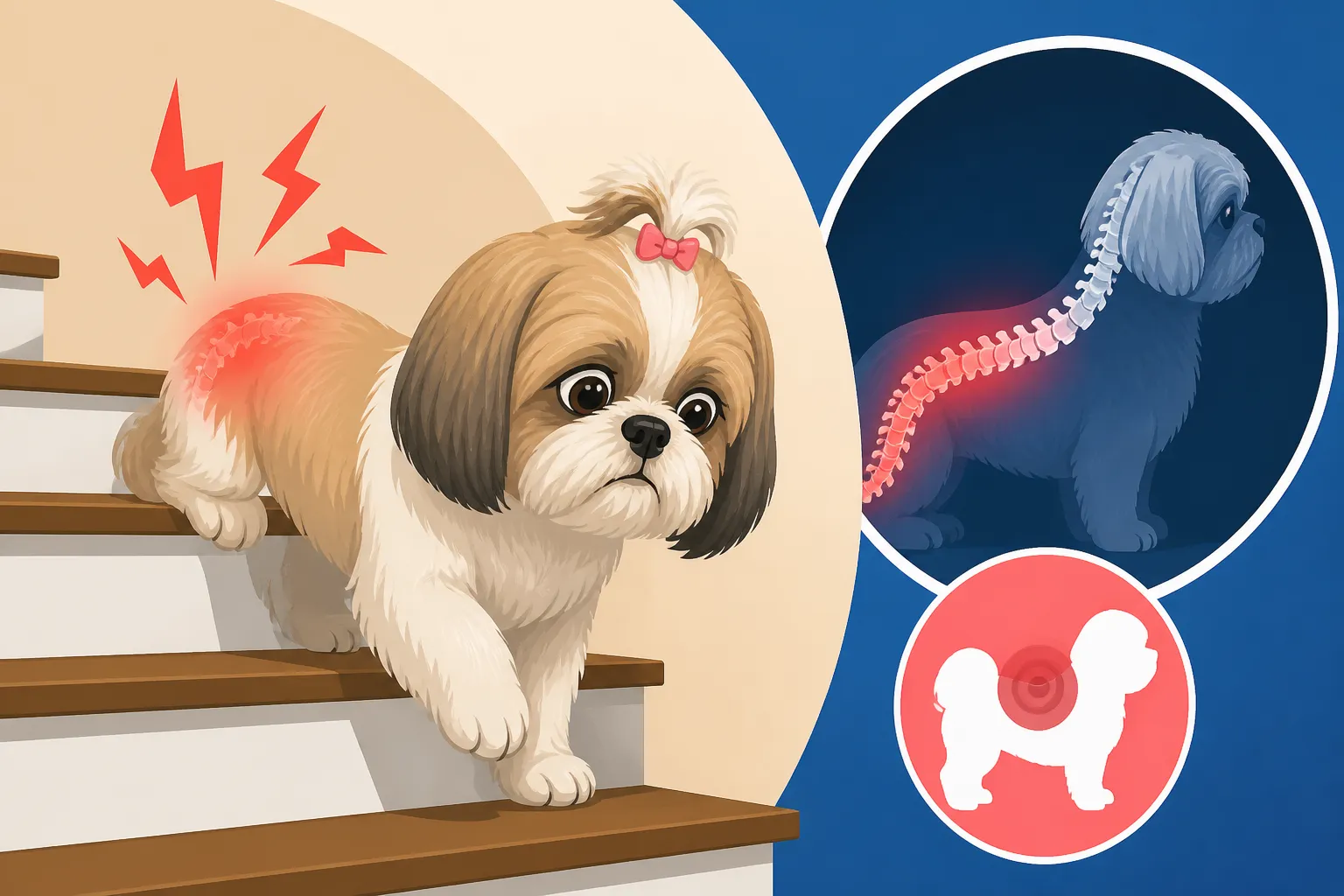
Watching a Shih Tzu navigate stairs can be a mix of adorable and alarming. They often try to bound up or down, using their whole body to propel themselves, rather than gracefully stepping one paw at a time. This involves a lot of hurried, awkward movements. Going down stairs often means an uncontrolled descent, where each step is more of a mini-jump, landing hard on their front paws. This jarring impact sends a shockwave directly up their front legs and into their spine, compressing those already vulnerable discs.
Even worse is the twisting motion. Many Shih Tzus don't go perfectly straight up or down. They might turn their body slightly to compensate for their short legs and the height of the steps, or they might try to skip a step, leading to an unbalanced landing. This twisting, combined with the impact, creates a "shearing" force on the discs, which can cause the disc material to bulge or rupture sideways, pressing on the spinal cord. It's a relentless, repetitive strain that, over time, can contribute significantly to disc degeneration and increase the likelihood of an acute injury, such as a slipped disc. Many owners don't realize Shih Tzu Disc Disease and Sudden Back Pain can manifest so quickly.
Landing Impact on the Descending Spine
Let's focus specifically on descending stairs, as this is often considered the more dangerous maneuver for a Shih Tzu. When a small, short-legged dog goes down stairs, they can't simply stretch their legs to reach the next step. Instead, they often take a small leap or drop from one step to the next, landing heavily on their front paws. The momentum of their body weight, combined with gravity, means that each landing delivers a significant jolt.
This impact isn't just absorbed by their front legs; it travels directly up their skeletal structure to their cervical (neck) and thoracic (mid-back) spine. Imagine dropping a bowling ball onto a soft mattress repeatedly; eventually, the mattress will show wear. Now imagine that mattress is your Shih Tzu's already weakened spinal discs. The repetitive compression from these landings, especially if done quickly or clumsily, puts immense stress on the discs. Over time, this can lead to the outer fibrous layer of the disc weakening and tearing, allowing the inner material to herniate and compress the spinal cord. It’s a silent, cumulative trauma that can easily be avoided.
Ascending Strain and Muscle Fatigue
While descending stairs gets a lot of attention for its impact, ascending stairs is also highly problematic for a Shih Tzu's spine. Going up requires significant effort and muscle engagement, particularly from their hindquarters and core. For a dog with short legs trying to clear relatively tall steps, this involves an exaggerated arching and flexing of the back.
This strenuous effort puts considerable strain on the muscles surrounding the spine, which are working overtime to lift and propel the body upwards. If these muscles become fatigued, they offer less support to the spine, leaving the discs even more vulnerable. Furthermore, the constant pushing motion can put axial compression on the discs, forcing the vertebrae together. This can worsen existing disc bulges or create new ones. A Shih Tzu might struggle, slip, or even miss a step, leading to an awkward contortion that could trigger an acute spinal injury. It's not just about the impact; it's about the relentless, unnatural exertion demanded by climbing.
Practical Strategies for Protecting Your Shih Tzu's Back
Given the inherent risks associated with stairs and a Shih Tzu's unique spinal anatomy, proactive measures are not just recommended, they're essential. Implementing a few simple changes in your home and routine can drastically reduce the chances of a painful and debilitating back injury for your furry friend. The goal is to minimize high-impact activities and provide supportive alternatives.
Ramps and Pet Steps as Essential Tools
The single most impactful change you can make to protect your Shih Tzu's spine is to eliminate their need to jump on and off furniture or navigate full flights of stairs. This is where pet ramps and steps become indispensable. Think of them as preventative care tools, just as crucial as their food bowl or leash. For beds and sofas, portable pet steps or ramps allow your Shih Tzu to safely ascend and descend without any jarring impact or spinal strain. Look for ramps with a gentle incline and a non-slip surface to ensure stability.
For stairs between floors, consider installing a full-length ramp or, if that's not feasible, simply committing to carrying your Shih Tzu every time they need to go up or down. Many companies offer aesthetically pleasing options that can blend into your home decor. By making these accessible alternatives readily available, you're not just being convenient; you're actively safeguarding their long-term spinal health. It’s also wise to check out options for Ramps for a Shih Tzu With a Long Spine to find the best fit for your home.
Carrying Safely
There will be times when carrying your Shih Tzu is unavoidable, whether it's up and down a flight of stairs, into the car, or just from one room to another. How you carry them makes a huge difference in spinal support. Never pick up a Shih Tzu by only their front legs, scruff, or under their armpits alone, as this leaves their long back dangling and unsupported, creating significant strain.
The correct way to carry a Shih Tzu is to support their entire body weight evenly. Scoop them up with one hand under their chest, supporting their front legs, and the other hand under their hindquarters, supporting their back legs and rump. Hold them close to your body, keeping their spine horizontal and well-supported. Imagine cradling a baby, ensuring their head, neck, and back are all aligned and stable. This technique minimizes any twisting or arching of the spine, distributing their weight safely and preventing accidental stress on their delicate discs.
Managing Activity Levels and Environment
Beyond ramps and safe carrying, a holistic approach to managing your Shih Tzu's environment and activity levels is key. Discourage all jumping, whether it's off the sofa, out of the car, or even excitedly jumping up to greet you. Each jump is a high-impact event that can contribute to disc degeneration. Consider using a small step stool for them to get in and out of the car if a ramp isn't practical.
Furthermore, always use a harness instead of a collar for walks. A collar can put pressure on the neck and cervical spine, especially if your dog pulls or suddenly lunges. A well-fitted harness distributes pressure across their chest and shoulders, protecting their delicate neck and back. Maintaining a healthy weight is also paramount; even a couple of extra pounds on a small Shih Tzu can place enormous additional strain on their spine. Regular, gentle exercise like short walks on a leash can help keep their core muscles strong, but always avoid strenuous activities or rough play that involves jumping, twisting, or sudden impacts. If an unexpected spinal issue does arise, having pet insurance like Healthy Paws can be a lifesaver for covering costly diagnostics and treatments.
Recognizing the Warning Signs of Spinal Issues
Despite our best preventative efforts, accidents can happen, or disc degeneration may progress. It's crucial for every Shih Tzu owner to be vigilant and recognize the early warning signs of a spinal problem. Early detection and intervention can significantly improve the prognosis for recovery. Don't ignore subtle changes, as they can quickly escalate into a serious crisis.
Subtle Changes in Gait and Movement
One of the first indicators that something might be amiss with your Shih Tzu's spine is a change in how they move. They might become reluctant to jump onto their favorite spot on the sofa or refuse to use the stairs they once navigated (even if clumsily). You might notice a slight stiffness in their walk, an altered gait, or a preference for holding their head in a specific position. They might start to bunny-hop with their back legs, or drag one paw slightly.
Sometimes, the changes are even more subtle: a hesitancy before performing certain movements, a less enthusiastic tail wag, or a general decrease in their usual playful energy. They might struggle to stand up after lying down, or seem wobbly on their hind legs. If you observe any of these shifts, even if they seem minor, it's worth taking note. These could be Early Shih Tzu Back Pain Signs that warrant prompt veterinary attention.
Pain Indicators
When a Shih Tzu is experiencing spinal pain, they often communicate it through a variety of subtle and not-so-subtle cues. Vocalizations like whimpering, yelping when touched or moved, or even incessant panting without exertion can signal pain. They might adopt a hunched-over posture, especially if their mid or lower back is affected, or they might appear stiff and rigid, unwilling to stretch or relax fully.
You might notice they become unusually sensitive to touch, flinching or even nipping if you try to pet their back or pick them up. Some dogs will tuck their tail or have a worried expression. In more severe cases, they might exhibit lameness in one or more limbs, or even drag their back legs due to nerve compression. Always assume that changes in behavior, appetite, or activity levels in your Shih Tzu could be indicative of pain, and contact your veterinarian immediately for guidance.
When to Seek Veterinary Attention
If you notice any of the warning signs described above, it is absolutely critical to seek veterinary attention without delay. Spinal injuries, particularly IVDD, are often progressive, and prompt diagnosis and treatment can make a world of difference in the outcome. A delay of even a few hours can mean the difference between a full recovery and permanent neurological damage, including paralysis.
Your veterinarian will perform a thorough physical and neurological examination to pinpoint the location and severity of the suspected spinal issue. This might involve palpating the spine, checking reflexes, and assessing their gait. Depending on their findings, they may recommend diagnostic imaging such as X-rays, MRI, or CT scans to get a clear picture of the spinal cord and discs. Treatment options can range from strict crate rest and anti-inflammatory medications for mild cases to emergency surgery for more severe disc herniations. Having pet insurance, like a plan from Healthy Paws, can significantly ease the financial burden of these unexpected and often expensive diagnostics and treatments, allowing you to focus on your Shih Tzu's recovery. Understanding the options for Crate Rest for a Shih Tzu With a Slipped Disc is an important part of recovery.
Comprehensive Strategies for a Spine-Healthy Home
Creating a spine-safe environment for your Shih Tzu involves more than just a few tweaks; it’s about a mindful approach to their daily life. Every interaction and every aspect of their home should be considered through the lens of spinal protection. It’s a commitment, but one that pays off in the long run by preventing pain and preserving their mobility.
Furniture Access and Safe Entry/Exit
Your Shih Tzu loves to be with you, which often means wanting to join you on the couch or bed. Without safe access, they will inevitably try to jump, which, as we’ve discussed, is a major no-no. Invest in high-quality pet steps or ramps for every piece of furniture your Shih Tzu is allowed on. These should be sturdy, non-slip, and appropriate for their size and weight.
It's not enough to simply have the steps; you need to train your Shih Tzu to use them consistently. Encourage them with treats and praise, making it a positive experience. Make sure the steps are always in place and easily accessible, so there's no temptation for them to attempt a jump. For car travel, a portable ramp or booster seat that allows them to see out but prevents jumping down can also be incredibly beneficial. This proactive approach prevents the countless small jumps that accumulate spinal stress over their lifetime.
Optimizing Their Play and Exercise Routine
Shih Tzus are not high-energy dogs, but they do need daily exercise to maintain muscle tone and a healthy weight, both of which are crucial for spinal support. However, the type of exercise is paramount. Avoid games that involve twisting, high-impact jumps, or sudden stops and starts, such as frisbee or rough-and-tumble play with larger dogs.
Instead, opt for short, gentle walks on a harness, several times a day. Indoor games that involve sniffing, puzzle toys, or gentle tug-of-war (kept low to the ground to prevent them from jumping) are excellent choices. Consider incorporating some simple indoor agility exercises, using low obstacles that they can step over rather than jump. The key is controlled, low-impact movement that strengthens their core muscles without stressing their spine. Remember, Joint Support for a Shih Tzu Back and Knees is important throughout their lives, so discuss appropriate supplements with your vet.
Nutrition, Weight Management, and Supplements
Maintaining a healthy weight is one of the most powerful preventative measures against spinal issues. Every extra pound on a small Shih Tzu significantly increases the load on their spine and intervertebral discs. It's easy for weight gain to go unnoticed under their thick double coat, so regular weigh-ins are essential. Talk to your vet about the ideal weight range for your individual Shih Tzu and stick to a carefully measured diet. Avoid feeding table scraps or excessive treats.
Beyond diet, certain supplements can support joint and spinal health. Glucosamine, chondroitin, and omega-3 fatty acids are commonly recommended for their anti-inflammatory properties and ability to support cartilage health. While these won't prevent IVDD, they can help maintain overall joint and disc integrity. Always consult with your veterinarian before introducing any new supplements to ensure they are appropriate and correctly dosed for your Shih Tzu. Even What Two Extra Pounds Do to a Shih Tzu can be detrimental.
Living With a Shih Tzu and Preventing Future Spinal Issues
Once you've implemented the basic preventative measures, maintaining a spine-safe lifestyle for your Shih Tzu becomes second nature. It's about consistency and vigilance, ensuring that every family member understands the importance of protecting their delicate back. This ongoing commitment is the best way to ensure your companion lives a long, comfortable, and pain-free life.
Continuous Monitoring and Regular Vet Check-ups
Even with all the preventative measures in place, continuous monitoring of your Shih Tzu’s movement and behavior is vital. As they age, the risk of disc degeneration naturally increases. Pay close attention to any subtle changes in their gait, their willingness to perform certain movements, or any signs of discomfort. What might seem like "just getting old" could be the early signs of spinal pain.
Regular veterinary check-ups are also indispensable. Your vet can assess their spinal health, discuss appropriate exercise and diet, and catch any potential issues early. For older Shih Tzus, your vet might recommend specific joint supplements or routine blood work to monitor overall health. These proactive check-ups are especially important for a breed predisposed to conditions like IVDD, allowing for early intervention before a problem becomes severe. Keep in mind that older dogs might also be developing issues like Shih Tzu Heart Murmurs and Valve Disease, so a full picture of their health is essential.
Training for Cooperation
Training your Shih Tzu to cooperate with handling and safety measures will make both your lives much easier. Teach them to wait patiently for you to pick them up before approaching stairs or furniture. Reward them generously for using ramps and steps correctly. If your Shih Tzu is particularly wiggly or resistant to being picked up, work on making handling a positive experience through gentle touch and treats.
Practice safe lifting techniques regularly, making it part of your routine. This consistent training ensures that safety protocols become ingrained habits, reducing stress for both you and your dog. A well-trained Shih Tzu who understands and trusts your handling will be far less likely to resist, minimizing the risk of a sudden lurch or struggle that could lead to injury.
Educating Family and Visitors
It's not just you who needs to be aware of your Shih Tzu's spinal vulnerabilities. Every member of your household, especially children, and even regular visitors, should be educated on safe handling practices and the importance of preventing jumps and rough play. Children, in particular, need to understand that a Shih Tzu's back is delicate and they should never pick them up incorrectly or engage in games that encourage jumping.
Clearly communicate your rules about furniture access and stair use. Explain why these rules are in place – that it's to protect your dog from pain. Consider placing signs near stairs or furniture if necessary, especially for guests. By creating a unified front and ensuring everyone understands their role in protecting your Shih Tzu's spine, you significantly reduce the chances of accidental injury.
Disclaimer
This article is intended for informational purposes only and does not constitute veterinary advice. Always consult with a qualified veterinarian for any health concerns or before making any decisions about your Shih Tzu's care, diet, or treatment.