What a Shih Tzu Pedigree Records
It can be incredibly frustrating to bring home a new Shih Tzu puppy or even adopt an adult dog and feel like you know absolutely nothing about their past, their family, or their health history. This guide is here to unravel the mystery of the Shih Tzu pedigree, explaining exactly what this official document records and why understanding it can be so beneficial for every owner, whether you're welcoming a new family member or simply curious about your beloved companion.
Unpacking the Layers of a Shih Tzu Pedigree
When you first hear the word "pedigree," your mind might jump to images of fancy show dogs or complex family trees. And you'd be right, in a way! But for a Shih Tzu owner, a pedigree is more than just a historical document; it's a window into the genetic blueprint and lineage of your furry friend. It provides structured information that, when properly understood, can offer invaluable insights into health, temperament, and even why your Shih Tzu looks and acts the way they do. It’s about empowering you with knowledge, moving beyond just loving your dog to truly understanding their roots.
More Than Just Names: What a Pedigree Actually Shows
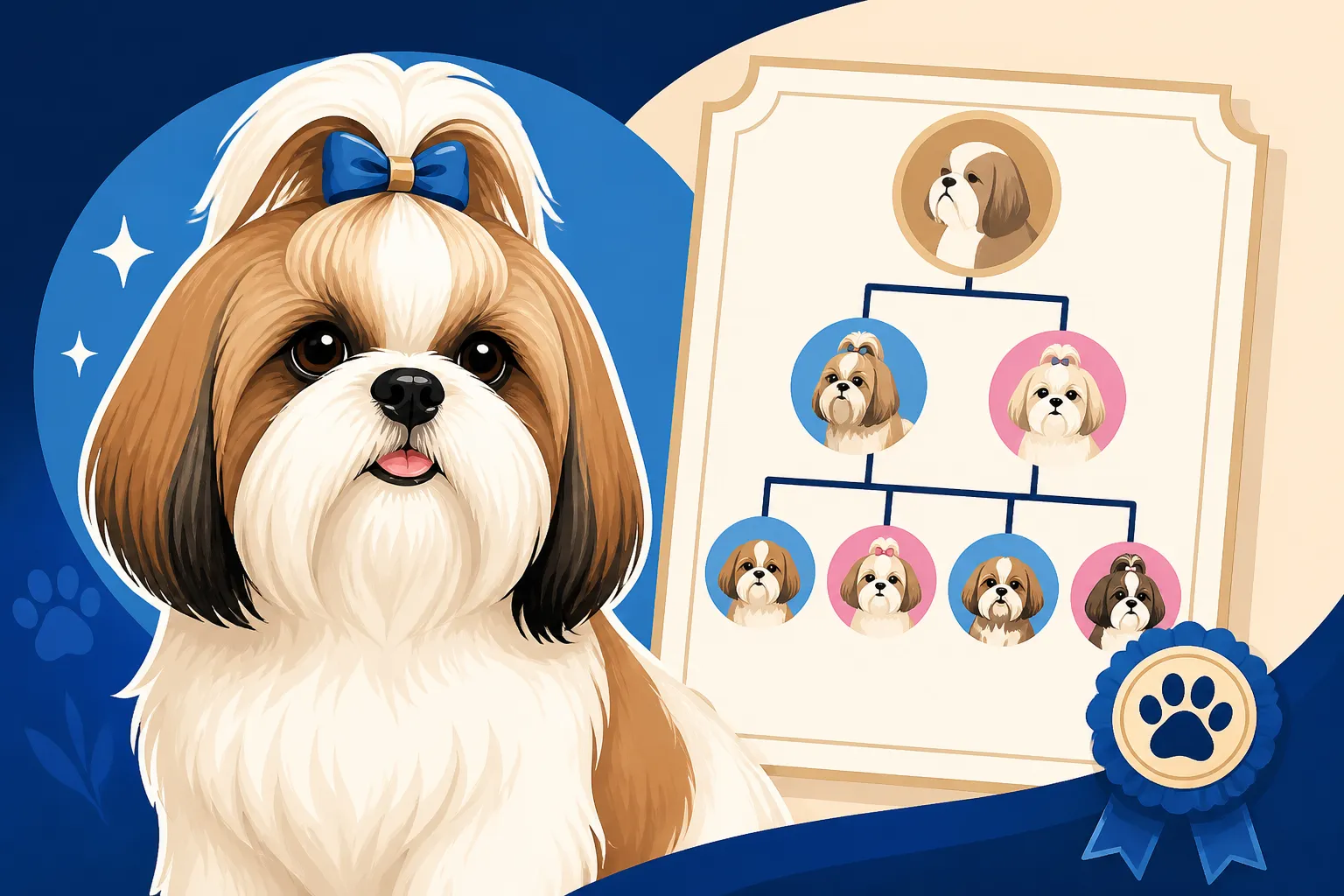
At its heart, a Shih Tzu pedigree is an official record of a dog's ancestry. It typically lists the dog's registered name, its registration number from a recognized kennel club (like the AKC in the United States), its birthdate, and its coat color. But it doesn't stop there. Crucially, it then extends this information to the dog's parents (sire and dam), their parents, and often even further back, usually three to five generations deep. Each ancestor will have their own registered name and number, and sometimes even their specific coat colors will be noted.
For example, you might see "Ch. Golden Blossom's Royal Prince" as the sire's name, followed by his registration number and a note about his gold and white coat. This level of detail allows you to see the exact individuals who contributed to your Shih Tzu's genetic makeup, providing a foundational understanding of their heritage. It’s like looking at your own family tree, but for your beloved four-legged companion, giving you a sense of connection to their past.
Tracing Generations: The Family Tree Unveiled
A standard pedigree chart is laid out like a family tree, branching out from your Shih Tzu (the "proband") to their parents, grandparents, great-grandparents, and sometimes even great-great-grandparents. This multi-generational view is incredibly powerful. For instance, you'll clearly see the mother's side and the father's side, and how different lines might have converged. This can be fascinating if you're trying to understand certain physical traits or even some health predispositions that might run in the family.
By seeing these multiple generations, you can start to identify patterns. Did the same kennel name appear frequently? Are there specific titles that reoccur, indicating a strong line of show champions? This depth allows you to appreciate the care and planning that went into the breeding of your Shih Tzu, especially from a responsible breeder who is tracking these lines for health and conformation. Understanding this lineage helps connect your dog to a broader history of the breed.
Why a Shih Tzu Pedigree Matters to Owners
Many new Shih Tzu owners might initially dismiss a pedigree as something only important for breeders or show enthusiasts. But this couldn't be further from the truth! A pedigree offers concrete benefits for every single owner, providing valuable context that can inform their care decisions, set realistic expectations for behavior, and even prepare them for potential health considerations down the line. It's about being a well-informed and proactive dog parent.
Health Insights: Uncovering Potential Genetic Risks
One of the most critical reasons to understand your Shih Tzu's pedigree is for health insights. Shih Tzus, like all purebreds, can be predisposed to certain genetic conditions. By examining the health information and titles of ancestors on a pedigree, you can often gain clues about potential genetic health concerns that might run in your dog's line. For instance, if you see multiple ancestors with certifications for healthy hips or eyes, it offers a degree of reassurance. Conversely, if specific conditions like Renal Dysplasia and the Shih Tzu Kidney or Shih Tzu Eye Proptosis, the Emergency Owners Miss have been documented in a line, it might prompt you to be more vigilant or discuss specific screenings with your veterinarian.
Responsible breeders often include notations for health clearances like OFA (Orthopedic Foundation for Animals) or CERF (Canine Eye Registry Foundation, now replaced by OFA Eye Certification) on a pedigree. These certifications indicate that specific health tests have been performed and the results are public. Seeing these on a pedigree for your dog's parents and grandparents means the breeder has put effort into trying to produce healthy puppies, minimizing the risk of inherited conditions. This empowers you to make informed decisions about your Shih Tzu's preventative care. You can also delve deeper into Health Testing a Shih Tzu Breeder Should Do to understand what those abbreviations and numbers truly represent.
Temperament and Consistency: Predicting Your Shih Tzu's Personality
While every dog is an individual, genetics and lineage play a significant role in temperament. A well-documented pedigree from a reputable breeder often reflects a consistent line of dogs known for specific temperament traits. If a line consistently produces calm, outgoing, or friendly Shih Tzus, there's a higher likelihood that your puppy will exhibit similar characteristics. This can be especially helpful if you have specific living arrangements, such as children or other pets, and want to ensure a good match.
Breeders who focus on temperament will ensure that only dogs with sound, loving dispositions are part of their breeding program. Seeing a pedigree filled with dogs who have achieved titles in obedience, therapy work, or simply listed as "excellent companions" can give you a better sense of the foundational personality traits of your Shih Tzu. It's not a guarantee, but it provides a strong starting point and helps validate what kind of companion your Shih Tzu is likely to become, fulfilling their purpose as a The Shih Tzu From Tibetan Temples to American Homes.
Validation for Breeding: Ensuring Responsible Practices
For those considering showing or even responsibly breeding Shih Tzus in the future, the pedigree is absolutely indispensable. It's the official documentation that proves your dog's purebred status and lineage, which is required for registration with kennel clubs and participation in dog shows. A strong pedigree, especially one filled with titled ancestors, signifies quality and adherence to breed standards. This is crucial for maintaining the integrity and health of the breed.
A detailed pedigree allows breeders to avoid accidental inbreeding, identify desirable traits to perpetuate, and weed out undesirable ones. It’s a tool for genetic management and ensuring the continued health and characteristic conformation described in What the Shih Tzu Standard Describes. Without a clear pedigree, responsible breeding practices would be impossible, leading to a decline in breed health and predictability. It's also part of the "papers" you should expect from a good breeder, helping you understand Health Papers a Shih Tzu Breeder Should Show.
Decoding the Codes and Titles on a Pedigree
Looking at a Shih Tzu pedigree for the first time can feel a bit like reading a secret code. There are names, numbers, and often a string of abbreviations you might not immediately recognize. But don't worry, once you understand what these symbols mean, the pedigree transforms from a confusing document into a fascinating historical record of your dog's lineage. These codes and titles aren't just for show; they tell a story of achievement, health, and conformation.
Understanding Registration Numbers and Affiliations
Every purebred Shih Tzu registered with a major kennel club will have a unique registration number. In the United States, this is typically an AKC (American Kennel Club) number. This number is your dog's official identifier within the registry. Similarly, all of their ancestors listed on the pedigree will have their own registration numbers, allowing you to trace each individual dog back through the official records. These numbers are a form of authentication, proving that the dog is recognized as a purebred of its given breed.
Beyond just the number, the registration itself signifies affiliation with a specific kennel club. These clubs set the breed standards and maintain detailed records of all registered dogs, their pedigrees, and their owners. Understanding which registry your Shih Tzu is part of, like knowing about The First Shih Tzu Club in America, confirms that your dog comes from a recognized breeding program and adheres to established breed guidelines, rather than being an unregistered or mixed-breed dog.
Beyond the Name: Show Titles and Health Clearances
This is where a pedigree really starts to tell a story. You'll often see abbreviations preceding or following an ancestor's name, such as "CH." or "GCH." These are show titles! "CH." stands for Champion, meaning that dog has successfully competed and earned enough points in conformation dog shows to be recognized as exemplary of the breed standard. "GCH." stands for Grand Champion, an even higher achievement. These titles on a pedigree indicate that your Shih Tzu's ancestors not only met the breed standard but excelled in competition, often reflecting excellent conformation and temperament as described in The Shih Tzu Standard and What Judges Look For.
Equally important, and often less visibly prominent but equally crucial, are notations for health clearances. While not always directly printed as a title on every basic pedigree, responsible breeders will use a pedigree to track these clearances. Examples include OFA (Orthopedic Foundation for Animals) certifications for hips and elbows (though less common for Shih Tzus than larger breeds, patellar luxation is relevant) or eye certifications from organizations like the Canine Eye Registry Foundation (now part of OFA). When a breeder tells you that the parents or grandparents have specific health clearances, it means they’ve been tested for common genetic conditions and found to be free of them. Knowing about The DNA and OFA Tests for a Shih Tzu Litter can help you interpret these important health markers within a pedigree. These health clearances are a testament to a breeder's commitment to improving the breed's health.
Limitations and Misconceptions of a Pedigree
While a Shih Tzu pedigree is an incredibly useful document, it’s important to approach it with a clear understanding of what it is and what it isn't. There are some common misconceptions that can lead to disappointment or misunderstanding if not addressed. A pedigree provides a historical record and genetic probability, but it doesn't offer absolute guarantees for an individual dog.
What a Pedigree Doesn't Guarantee
A common misconception is that a pedigree guarantees perfect health or a specific temperament for your Shih Tzu. Unfortunately, this isn't true. While a pedigree shows the health testing and titles of ancestors, providing a higher probability of good health and temperament, it cannot guarantee that your individual dog will never face health issues or behavioral quirks. Genetics are complex, and environmental factors, diet, and individual variations all play a role. Even with the best genetics, a dog can develop unforeseen conditions or display unexpected behaviors.
Think of it like a human family tree: while you might inherit certain traits or predispositions from your grandparents, your life experiences and unique genetic recombination make you an individual. The same applies to your Shih Tzu. A strong pedigree significantly reduces risks and increases the likelihood of desirable traits, but it's not a crystal ball for your dog's entire life. It’s about making educated predictions, not receiving a warranty.
"Imperial" or "Teacup" Labels: When a Pedigree Tells a Different Story
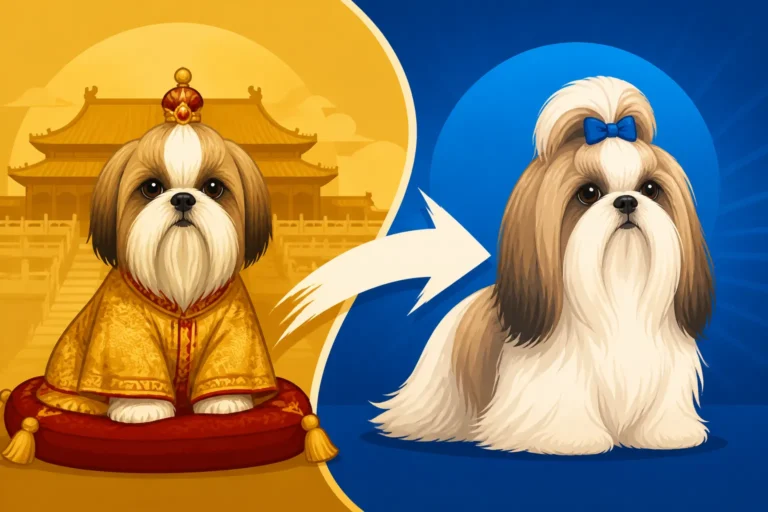
This is a big one, and it's where many new Shih Tzu owners can get confused. You might see advertisements for "Imperial Shih Tzus" or "Teacup Shih Tzus" with claims of a special pedigree. However, no recognized kennel club, such as the AKC, recognizes "Imperial" or "Teacup" as official Shih Tzu varieties or sizes. These are marketing terms often used by breeders to describe undersized Shih Tzus, and they don't reflect any official pedigree designation. A true, legitimate pedigree will simply list your dog as a Shih Tzu.
The official breed standard sets a specific weight and height range for Shih Tzus. Dogs marketed as "Imperial" or "Teacup" typically fall significantly below this standard, often due to questionable breeding practices that prioritize extreme smallness over health. Such tiny dogs can come with a host of serious health problems, including fragile bones, hypoglycemia, and organ issues. If a breeder is emphasizing these unofficial labels, it's a red flag. A legitimate pedigree should confirm standard parentage, not unsupported "Imperial" claims. Learning about Where the Word Imperial Shih Tzu Came From and Teacup Shih Tzus and the Health Risk Behind Them can help you navigate these misleading terms and prioritize the health of your future companion over fashionable, but ultimately risky, labels.
Elements of a Shih Tzu Pedigree
To help you visualize and understand what to look for, here's a table outlining the common elements found on a typical Shih Tzu pedigree and their significance:
| Pedigree Element | Description | Significance for Owners |
|---|---|---|
| Registered Name | The official name of the dog within the kennel club registry (e.g., "Ch. Golden Blossom's Royal Prince"). | Uniquely identifies the dog; often includes kennel prefixes/suffixes. |
| Registration Number | A unique alphanumeric code assigned by the kennel club (e.g., AKC, KC). | Proof of purebred status and official record-keeping. Essential for showing or breeding. |
| Birthdate | The date the dog was born. | Establishes age for health monitoring, training stages, and lifespan expectations. |
| Sex | Male or Female. | Basic identification. |
| Coat Color | The recognized color/markings of the Shih Tzu (e.g., Gold & White, Black, Brindle). | Helps track color inheritance and identify conformity to breed standards. |
| Sire (Father) | Information about the father of the dog, including his registered name, number, and titles. | Insights into paternal health, temperament, and conformation lines. |
| Dam (Mother) | Information about the mother of the dog, including her registered name, number, and titles. | Insights into maternal health, temperament, and conformation lines. |
| Grandparents/Great-Grandparents | Extended lineage showing ancestors for multiple generations. | Reveals deeper genetic history, patterns of health issues, and consistency in breeding lines. |
| Show Titles (e.g., CH, GCH) | Abbreviations indicating achievements in conformation dog shows (Champion, Grand Champion). | Demonstrates adherence to breed standard and often indicates sound temperament. |
| Performance Titles (e.g., CD, RN) | Abbreviations for achievements in obedience, rally, agility, etc. (Companion Dog, Rally Novice). | Shows intelligence, trainability, and versatility of the dog's ancestors. |
| Health Clearances (OFA, CERF) | Notations (sometimes in supplementary documents) indicating health tests performed on ancestors. | Crucial for assessing genetic health risks for specific conditions like eye issues or patellar luxation. |
Ultimately, your Shih Tzu’s pedigree is a rich historical document, offering a profound understanding of their past and informing their future care. It's a testament to the long, storied journey of this wonderful breed, right up to your own cherished companion.
Disclaimer
This article is for general informational purposes only and does not constitute professional advice. Laws, prices and regulations vary by location and change over time. Consult a qualified professional for guidance on your specific situation.