Which Parent a Shih Tzu Cross Takes After
It's incredibly exciting to consider bringing a Shih Tzu cross into your home, isn't it? Many of us dream of getting the "best of both worlds" – the adorable looks of a Shih Tzu mixed with a characteristic from another beloved breed, like less shedding or a slightly longer snout. However, the reality of mixed breeds is often a beautiful, sometimes unpredictable, genetic lottery. This guide will help you understand the fascinating complexities of hybrid genetics and manage your expectations for what your Shih Tzu cross might inherit from each parent.
Understanding Hybrid Vigor and Genetics
When you bring home a purebred Shih Tzu, you generally have a good idea of what to expect in terms of appearance, temperament, and potential health concerns. The breed standard, meticulously developed over generations, provides a reliable blueprint. But with a Shih Tzu cross, you're stepping into a more enigmatic world, one governed by the unpredictable dance of genetics from two distinct lineages. It’s a bit like opening a wonderfully wrapped present without knowing what’s inside – part of the fun, but also a source of natural curiosity and sometimes, a little anxiety.
The Genetic Lottery: Why Predicting Traits is Tricky
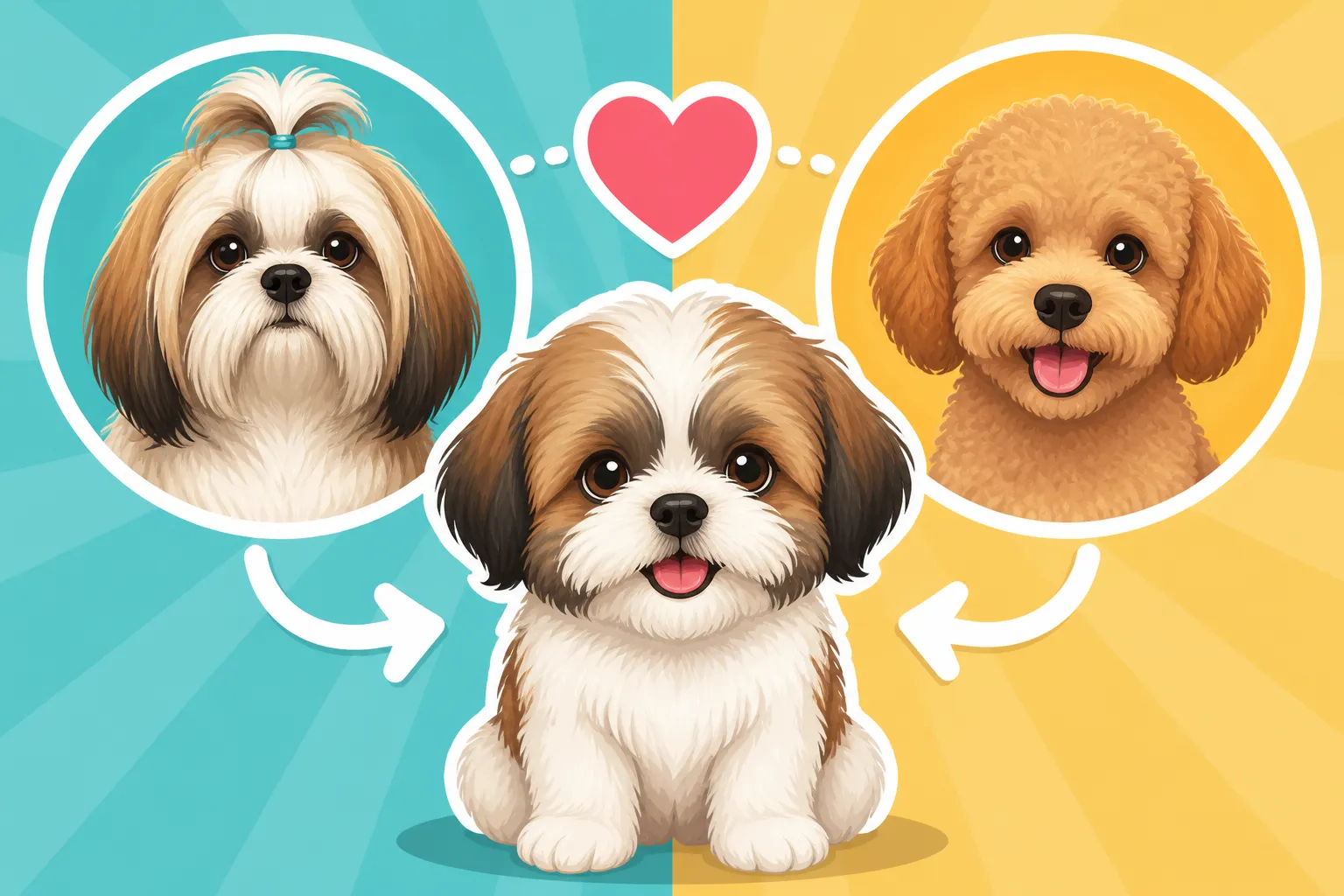
The reason predicting the exact traits of a Shih Tzu cross is so tricky lies in basic genetics. Each parent contributes a set of genes, and which genes become dominant or recessive in the offspring can vary wildly from one puppy to the next, even within the same litter. You might have one puppy that looks almost entirely like a Shih Tzu, another that strongly resembles the other parent breed, and a third that’s a perfect blend of both. This isn't a flaw in breeding; it's simply how genetic inheritance works when you mix two different genetic pools. Owners often come to me, scratching their heads, saying "But his brother looks nothing like him!" and it's all part of the normal variation. There's no guarantee that the desired trait from the non-Shih Tzu parent will be the one that expresses itself in your particular puppy.
For example, if you're hoping for a longer snout to help with Brachycephalic Breathing in a Shih Tzu, there's no guarantee the "Poodle nose" will dominate over the "Shih Tzu nose." It’s entirely possible to get a Shih-Poo with a very short snout. This unpredictability is precisely why mixed breeds are so unique, but it also means letting go of very specific expectations for your future furry family member.
Dominant vs. Recessive Genes in Crosses
Every characteristic, from coat color to ear set, is influenced by genes that can be dominant or recessive. A dominant gene will express itself even if only one copy is present, while a recessive gene needs two copies (one from each parent) to show up. In a crossbreed, where two different breeds with different dominant and recessive traits are combined, the outcome becomes much less predictable than in a purebred where most traits are standardized. Take coat type, for instance. A Shih Tzu has a long, flowing double coat that requires Brushing a Shih Tzu Double Coat Every Day. If crossed with a breed that has a short, single coat, the puppy could end up with anything in between: a shorter double coat, a longer single coat, or even a wiry texture.
Sometimes, a desirable recessive trait from one parent might only appear if the other parent also carries that recessive gene, which isn't always known. This is a common discussion point when people talk about so-called "hypoallergenic" crosses. If one parent is a low-shedding breed, that doesn't mean all offspring will inherit that trait unless the specific genes for low-shedding are dominant or present in both parents. The genetic cocktail in each puppy is truly unique, making them wonderful surprises!
The Myth of the "Hypoallergenic" Cross
This brings us to a common misconception: that crossing a Shih Tzu with a low-shedding breed automatically results in a "hypoallergenic" dog. While a Shih Tzu's long, human-like hair is often less of an allergen trigger than dander-heavy coats, it does still shed, and all dogs produce dander and saliva which are the primary sources of allergens. When you cross a Shih Tzu with a Poodle, for example, many people hope for the Poodle's curly, low-shedding coat. However, due to the genetic lottery we just discussed, a Shih-Poo might end up with a coat that is far more like a Shih Tzu's, complete with regular shedding and matting potential.
There's no such thing as a truly 100% hypoallergenic dog, whether purebred or cross. The severity of allergic reactions varies greatly from person to person, and it’s always tied to dander, saliva, and urine, not just hair. While some crosses might produce less dander or shed less, it's not a guarantee. If allergies are a serious concern, spending time with the specific puppy you're considering, or even its parents if possible, is more reliable than relying on the general reputation of a crossbreed. Even then, the individual puppy's coat and dander production can change as they mature.
Physical Traits: Comparing Shih Tzu and Other Breeds' Appearances
One of the first things prospective owners notice and wonder about is how their Shih Tzu cross will look. Will they have the endearing "chrysanthemum face" of a Shih Tzu, or will the features of the other parent dominate? The answer, as you might guess, is that it's a delightful mystery! You might end up with a pup that strongly favors one side of the family tree, or a truly unique blend that takes elements from both.
Head Shape, Snout Length, and Eye Placement
The Shih Tzu is famously a brachycephalic breed, meaning they have a relatively short, flat face, large, often prominent eyes, and a distinct underbite. These features are a hallmark of the breed and contribute to their undeniable charm. However, they also come with specific health considerations, like Shih Tzu Eye Proptosis, the Emergency Owners Miss and Brachycephalic Breathing in a Shih Tzu. When you cross a Shih Tzu with a longer-snouted breed, like a Poodle or a Cavalier King Charles Spaniel, you might hope for a slightly longer nose. This can happen, and a longer snout can indeed alleviate some of the breathing and eye concerns.
However, it's not a given. You could just as easily get a Shih Tzu cross that retains the very short snout and bulging eyes of the Shih Tzu parent. Some crosses might even combine the worst aspects, such as a slightly longer snout that still doesn't offer full breathing relief, coupled with eyes that are still prone to injury due to their prominence. Similarly, the shape and set of the eyes can vary. Will they be wide-set and round like a Shih Tzu's, or almond-shaped and deeper set like some other breeds? It's a spectrum, and your puppy will land somewhere on it, making their facial expression truly one-of-a-kind.
Body Structure and Size Variations
Purebred Shih Tzus are sturdy, compact dogs, typically weighing between 9 and 16 pounds and standing between 9 and 10.5 inches tall at the shoulder. They have a distinct rectangular outline and a slightly longer back relative to their height. When you introduce another breed into the mix, the potential for variation in size and body structure expands considerably. If the other parent is a smaller toy breed, like a Maltese, the size might remain similar, or even be slightly smaller, leading to discussions around "Teacup Shih Tzus and Why Breeders Sell Them." However, if the other parent is a Miniature Poodle or a larger small dog, the cross could potentially grow larger than a typical Shih Tzu.
You'll need to consider the size range of both parent breeds. For instance, a Shih Tzu x Cocker Spaniel mix could be significantly larger than a purebred Shih Tzu. The body shape can also be a blend; some might inherit the Shih Tzu's slightly elongated back, which has implications for Shih Tzu Back Problems and Disc Disease, while others might get a more compact, square build from the other parent. It's truly a grab bag, and it's best to prepare for a dog that might fall anywhere within the combined size and structure ranges of both breeds.
Tail Carriages and Ear Sets
Another charming set of physical traits that can vary widely in a Shih Tzu cross are the tail carriage and ear set. The Shih Tzu's signature high-set, heavily plumed tail that curls over the back is a beautiful and distinctive feature, described in The Plumed Tail on a Shih Tzu Back. Their long, pendulous ears, often covered in flowing hair, are also characteristic. When bred with another dog, the outcome for these features can be quite diverse.
A cross might inherit the curly tail of a Shih Tzu, or a straighter tail that hangs lower like a Beagle or a Cavalier King Charles Spaniel. Some puppies might even have a tail that curls partially or hangs in a unique "saber" shape. Similarly, ear set can be a toss-up. Will they have long, floppy ears like the Shih Tzu, or stand-up prick ears like a Chihuahua, or even button ears? Long, floppy ears, while adorable, do require diligent care to prevent Shih Tzu Ear Infections Under Heavy Ear Leather. If your cross inherits a more open ear type, this might reduce the risk of trapped moisture and yeast infections. Again, observing the parents can give you clues, but the puppy's final ear and tail style will be their own unique expression.
Coat and Grooming: The Unpredictable Hair of a Mixed Breed
Perhaps one of the most anticipated and discussed aspects of a Shih Tzu cross is their coat. Shih Tzus are renowned for their magnificent double coat, which, while stunning, demands significant grooming. Many prospective owners of crosses hope for a coat that is easier to manage, perhaps less prone to matting or shedding. The reality, however, is that the coat of a mixed breed can be the biggest wildcard of all.
Texture, Shedding, and Matting Potential
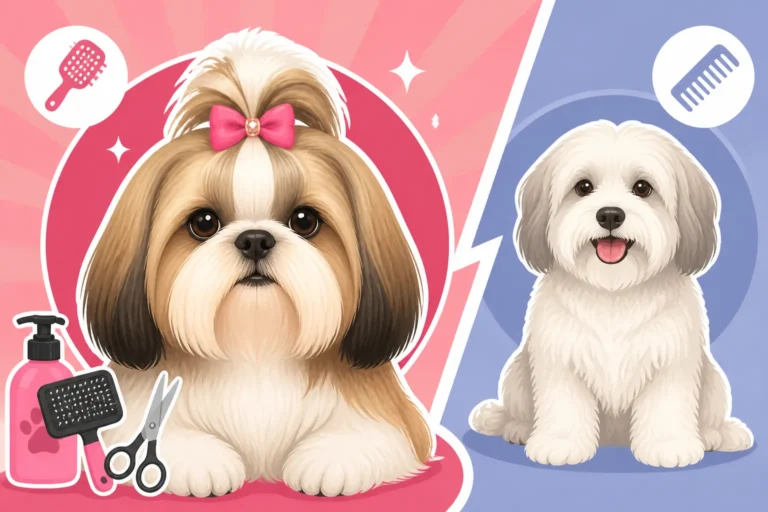
A purebred Shih Tzu boasts a long, flowing double coat that requires daily brushing to prevent mats. It's often described as luxurious, but anyone who owns one knows the commitment it takes! Why a Shih Tzu Double Coat Mats So Fast is a common frustration. When you cross a Shih Tzu with another breed, especially one with a different coat type – say, a Poodle with its curly, single coat, or a short-haired Pug – predicting the offspring's coat texture, shedding level, and matting potential becomes a true guessing game.
You might end up with a coat that's a perfect blend: softer than a Shih Tzu's, with a gentle wave, and less prone to matting. Or, you could get a coat that's just as demanding as a purebred Shih Tzu's, perhaps even more so if it inherits a wiry texture from another breed, making brushing even more challenging. Shedding can also vary wildly. Some crosses might shed minimally, like a Poodle, while others could shed heavily, especially if they take after a double-coated parent like a Pomeranian. Preparing for a range of grooming needs, and stocking up on supplies from places like Chewy, is the wisest approach.
Color and Markings: A Surprise Package
Shih Tzus come in an incredible array of colors and markings, from solids to particolors, gold and white, black and white, brindle, and more. This rich palette provides a wonderful foundation for even more diverse color combinations in a crossbreed. When you mix a Shih Tzu with another breed, the possibilities for coat color and markings truly become a surprise package.
The puppy could inherit the predominant color of one parent, or a unique blend of both. For example, a Shih Tzu with gold and white markings bred with a black Poodle might produce puppies that are solid black, gold, black and white, or even abstractly marked. You might see unique brindle patterns or unexpected patches of color. Often, the white blaze on the forehead or a white tip on the tail, common in Shih Tzus, might appear in the cross. If you have your heart set on a specific color, a crossbreed might not be the right choice, as there's no way to guarantee the outcome. It’s all part of the charm of embracing the individuality of a mixed breed.
Grooming Needs: Double the Possibilities
The grooming needs of a Shih Tzu are significant, regardless of whether you opt for a full show coat or a practical Choosing Between a Full Coat and a Puppy Cut. Daily brushing, regular baths, and professional grooming every 4-6 weeks are typical. With a Shih Tzu cross, you need to be prepared for grooming requirements that could range from minimal to extensive, potentially even more complex than a purebred Shih Tzu if they inherit a tricky combination of textures.
If the cross inherits a Poodle-like coat, it might still require regular professional grooming to prevent matting, but perhaps less daily brushing at home. If it's a mix with a short-haired breed, the grooming might be simpler, focusing on baths and nail trims. However, many crosses end up with "scruffy" or "wiry" coats that combine the shedding of one parent with the matting potential of another, creating a truly unique grooming challenge. Investing in a good slicker brush and comb, and perhaps a dematting spray (which you can find on Chewy), is a good idea. Regardless of the exact coat, starting grooming training a Shih Tzu puppy for daily brushing early is crucial. The key is flexibility and being prepared to adapt your grooming routine to whatever magnificent coat your mixed marvel develops.
Temperament and Behavior: A Blend of Personalities
The Shih Tzu is celebrated for its outgoing, affectionate, and charming temperament. They were bred purely as companions, happy to sit on a lap and bring joy to their human families. This innate desire for companionship is a wonderful trait, but when mixed with another breed, the resulting temperament can be a fascinating blend. It's not always a straightforward average of the two parents; sometimes, certain personality traits can be more dominant or unexpected.
Activity Levels and Exercise Needs
Shih Tzus are generally considered low-energy dogs, content with short walks and plenty of indoor play. Shih Tzu Exercise for a Low-Energy Toy typically involves a couple of short strolls a day and some indoor games. They're not built for strenuous activity, partly due to their brachycephalic structure, which can make it hard for them to cool themselves down. When you cross a Shih Tzu with a more active breed, like a Terrier or a Spaniel, the activity level of the offspring can vary significantly.
You might get a dog that retains the laid-back nature of the Shih Tzu, happy to cuddle on the sofa for hours. Or, you could end up with a high-energy dynamo that needs more substantial walks and mental stimulation to prevent boredom and destructive behaviors. It's crucial to research the activity levels of both parent breeds and be prepared for a dog that might fall anywhere on that spectrum. An owner hoping for a couch potato might be surprised by a Shih Tzu cross that constantly wants to play and explore.
Socialization and Training Receptiveness
Shih Tzus, with their intelligent and sometimes opinionated nature, can be a joy to train, though they are often described as stubborn. They respond best to positive reinforcement and short, fun sessions, as detailed in Training a Shih Tzu Bred Purely as a Companion. Socialization is also vital to ensure they grow into well-adjusted adults, comfortable with new people, places, and other animals. When you introduce the temperament of another breed, the training and socialization journey can take different paths.
If the other parent breed is highly biddable and eager to please, your Shih Tzu cross might be a more enthusiastic student, picking up cues quickly. If the other parent is known for its independence or high prey drive, you might find that your cross needs more consistent and creative training approaches. Early socialization, exposing your puppy to a wide variety of positive experiences, remains paramount for any mixed breed, just as it is for purebreds. Don't assume that a mix will automatically be "easier" or "harder" to train; approach each puppy as an individual.
Vocalization and Watchdog Tendencies
Shih Tzus can be quite vocal. They often bark at the doorbell, passing strangers, or other perceived intruders, making them surprisingly good little watchdogs despite their size. They might also engage in charming "woos" and other vocalizations to communicate with their families. The level of vocalization in a Shih Tzu cross will depend heavily on the other parent breed.
If the Shih Tzu is crossed with another vocal breed (like many terriers or chihuahuas), you might find yourself with a particularly talkative companion. If the other parent is known for being quieter or more reserved, the volume might be turned down a notch. It's important to understand the natural vocal tendencies of both breeds involved. Early training focused on appropriate barking (e.g., alert barks versus nuisance barking) is essential for any Shih Tzu cross, ensuring they're a pleasant member of the household, not a constant noise machine. Your mixed pup might alert you to every squirrel or postal delivery with characteristic Shih Tzu gusto, or they might take on a calmer demeanor.
Health Considerations: A Mixed Bag of Genetics
One of the most compelling arguments for mixed breeds is often the concept of "hybrid vigor" – the idea that combining two different genetic pools can lead to a healthier animal due to increased genetic diversity. While there's certainly truth to the idea that a wider gene pool can reduce the incidence of certain breed-specific genetic diseases, it's not a magical shield against all health problems. A Shih Tzu cross still inherits genes from both parents, meaning they can inherit potential health issues from either side of their family tree.
Inherited Conditions from Each Parent
Shih Tzus, like all purebreds, are predisposed to certain health conditions. These include eye issues such as cataracts, progressive retinal atrophy, and the aforementioned proptosis and corneal ulcers (see Shih Tzu Corneal Ulcers and Dry Eye). They are also prone to Shih Tzu Dental Disease at 13 Percent of the Breed, Shih Tzu Joint Problems in a Toy Frame like patellar luxation, and Renal Dysplasia and the Shih Tzu Kidney. When you cross a Shih Tzu with another breed, your puppy could inherit any of these conditions, or conditions common to the other parent breed.
For example, if a Shih Tzu is crossed with a breed prone to hip dysplasia or heart conditions, the offspring could be at risk for those, in addition to the Shih Tzu's predispositions. It's vital to research the common health issues of both parent breeds. A reputable breeder of crossbreeds (or a rescue that has thorough background information) should be transparent about the health testing done on both parent dogs, including hip, elbow, and eye clearances where applicable, even if they aren't for purebred lines. This gives you the best chance of avoiding foreseeable genetic health problems.
Brachycephalic Risks in Crosses
The brachycephalic (flat-faced) nature of the Shih Tzu comes with a unique set of health challenges, primarily related to their breathing and eyes. These include The Elongated Soft Palate in a Shih Tzu, Shih Tzu Stenotic Nares and Noisy Breathing, and an inability to cool themselves efficiently, making them susceptible to heatstroke (as explored in Why a Shih Tzu Cannot Cool Itself Well). While crossing a Shih Tzu with a longer-snouted breed might slightly alleviate some of these issues, it's not a guaranteed fix.
Many Shih Tzu crosses still exhibit some degree of brachycephaly. They might have a slightly longer nose, but still retain narrow nostrils or an elongated soft palate, meaning they could still struggle with breathing, snoring, and overheating, especially during exercise or in warm weather. Owners still need to be vigilant about managing their dog's activity, especially on hot days, and keeping them cool. Always observe your Shih Tzu cross for signs of respiratory distress, even if their snout appears a little longer than a purebred Shih Tzu's.
The Role of Responsible Breeding in Mixed Breeds
Just because a dog is a crossbreed doesn't automatically mean it's healthier or that its breeding was responsible. Unfortunately, the rise in popularity of "designer dogs" has led to an increase in unscrupulous breeders who prioritize profit over health and welfare. These breeders often cut corners, failing to perform health testing on the parent dogs or provide proper care for the puppies. This can lead to Shih Tzu crosses that are just as, if not more, prone to health problems than poorly bred purebreds.
A responsible breeder, whether of purebreds or thoughtfully planned crosses, will conduct health screenings appropriate for both parent breeds. They will be transparent about their practices, allow you to meet the puppy's parents, and be able to discuss the health history of their lines. Always ask to see proof of health clearances, not just claims. When adopting from a rescue, they may not have full background on the parents, but they will likely have performed a thorough vet check on the rescue dog itself, as highlighted in Adopting a Shih Tzu Whose Past Nobody Knows.
| Trait Category | Purebred Shih Tzu Expectation | Shih Tzu x Poodle Cross (Shih-Poo) Potential | Shih Tzu x Pug Cross (Pug-Zu) Potential |
|---|---|---|---|
| Coat Type | Long, double, non-shedding hair, prone to matting | Wavy to curly, low-shedding (Poodle-like) to double-coated (Shih Tzu-like), moderate matting potential | Short to medium, shedding (Pug-like) to double-coated (Shih Tzu-like), varying texture |
| Grooming Needs | High: Daily brushing, regular professional grooming | Moderate to High: Regular brushing, professional grooming (can vary greatly) | Low to Moderate: Regular brushing, less professional grooming needs |
| Head Shape | Brachycephalic (flat face), short snout, prominent eyes | Slightly longer snout to brachycephalic, varying eye prominence | Brachycephalic (flat face), short snout, prominent eyes, wrinkled face (Pug-like) |
| Body Size | Compact, sturdy, 9-16 lbs, 9-10.5 inches tall | Similar to Miniature Poodle size or smaller, 8-18 lbs, 8-15 inches tall | Similar to Pug size, 10-20 lbs, 10-14 inches tall |
| Temperament | Affectionate, outgoing, playful, sometimes stubborn | Lively, intelligent, playful, can be eager to please or stubborn | Playful, charming, sometimes mischievous, can be sensitive |
| Health Risks | Brachycephalic issues, eye problems, dental disease, patellar luxation, kidney issues | Mix of both breed health risks; may have reduced brachycephalic issues but not eliminated | Mix of both breed health risks; often retains significant brachycephalic issues, Pug breathing issues |
Preparing for the Unknown: Embracing the Best of Both Worlds
Bringing a Shih Tzu cross into your life is an exciting journey filled with delightful surprises. The key to a happy and harmonious relationship lies in preparing yourself for the inherent unpredictability of mixed breeds and learning to embrace the unique qualities your individual dog will possess. This isn't about setting low expectations; it's about setting realistic ones and celebrating the wonderful blend you get.
Researching Both Parent Breeds Thoroughly
Even though your Shih Tzu cross won't be a purebred of either parent, understanding the typical traits of both breeds involved is your best preparation. Learn about the Shih Tzu Temperament and the Companion It Was Bred to Be, their common health issues, and their grooming needs. Then, do the same for the other parent breed. For example, if you're looking at a Shih Tzu x Poodle mix, research Poodle temperaments, energy levels, and health predispositions.
This thorough research will give you a much clearer picture of the range of possibilities for your puppy. You'll understand the potential for high-energy bursts, the likelihood of extensive grooming, or the types of health screenings that are most important. Knowing the full spectrum helps you decide if a particular crossbreed, or a specific puppy, is the right fit for your lifestyle. It allows you to anticipate challenges and proactively prepare, whether that means budgeting for extra grooming appointments or finding specific types of food on Chewy that cater to potential sensitivities.
Finding a Reputable Breeder or Rescue for Crosses
Just like with purebred dogs, the source of your Shih Tzu cross matters immensely. Avoid breeders who claim their "designer breed" is guaranteed to be hypoallergenic, or who won't allow you to meet the parent dogs. A responsible breeder of crossbreeds will be knowledgeable about both parent breeds, conduct appropriate health testing, and prioritize the health and temperament of their puppies above all else. They will be transparent about the potential variations in the litter and not make exaggerated claims.
Alternatively, consider adopting a Shih Tzu cross from a reputable rescue organization. Shih Tzu Rescue and Where the Dogs Come From is a great resource, as many mixes end up in rescues through no fault of their own. Rescues often have a better understanding of an adult dog's actual personality and physical traits, as the puppy phase of unpredictability is over. They can provide valuable insights into the dog's temperament, health status, and what kind of home would be the best fit.
Embracing the Unique Qualities of Your Mixed Shih Tzu
Ultimately, welcoming a Shih Tzu cross into your home means embracing individuality. Your dog won't be a carbon copy of either parent; they will be a truly unique blend, a testament to the fascinating complexity of canine genetics. Instead of focusing on what traits they didn't inherit, celebrate the ones they did. Perhaps they have the Shih Tzu's soulful eyes but with a slightly longer nose, or the Poodle's curly coat combined with the Shih Tzu's playful swagger.
Be prepared for a dog that will require personalized care and attention. Their grooming needs might be different from a purebred Shih Tzu's, their exercise requirements might surprise you, and their personality might be a delightful mix of calm and spirited. This journey with a Shih Tzu cross is about discovery and unconditional love for the dog you get, not the dog you imagined. It's about providing the best possible home for a truly one-of-a-kind companion.
Disclaimer
This article is for general informational purposes only and does not constitute professional advice. Laws, prices and regulations vary by location and change over time. Consult a qualified professional for guidance on your specific situation.