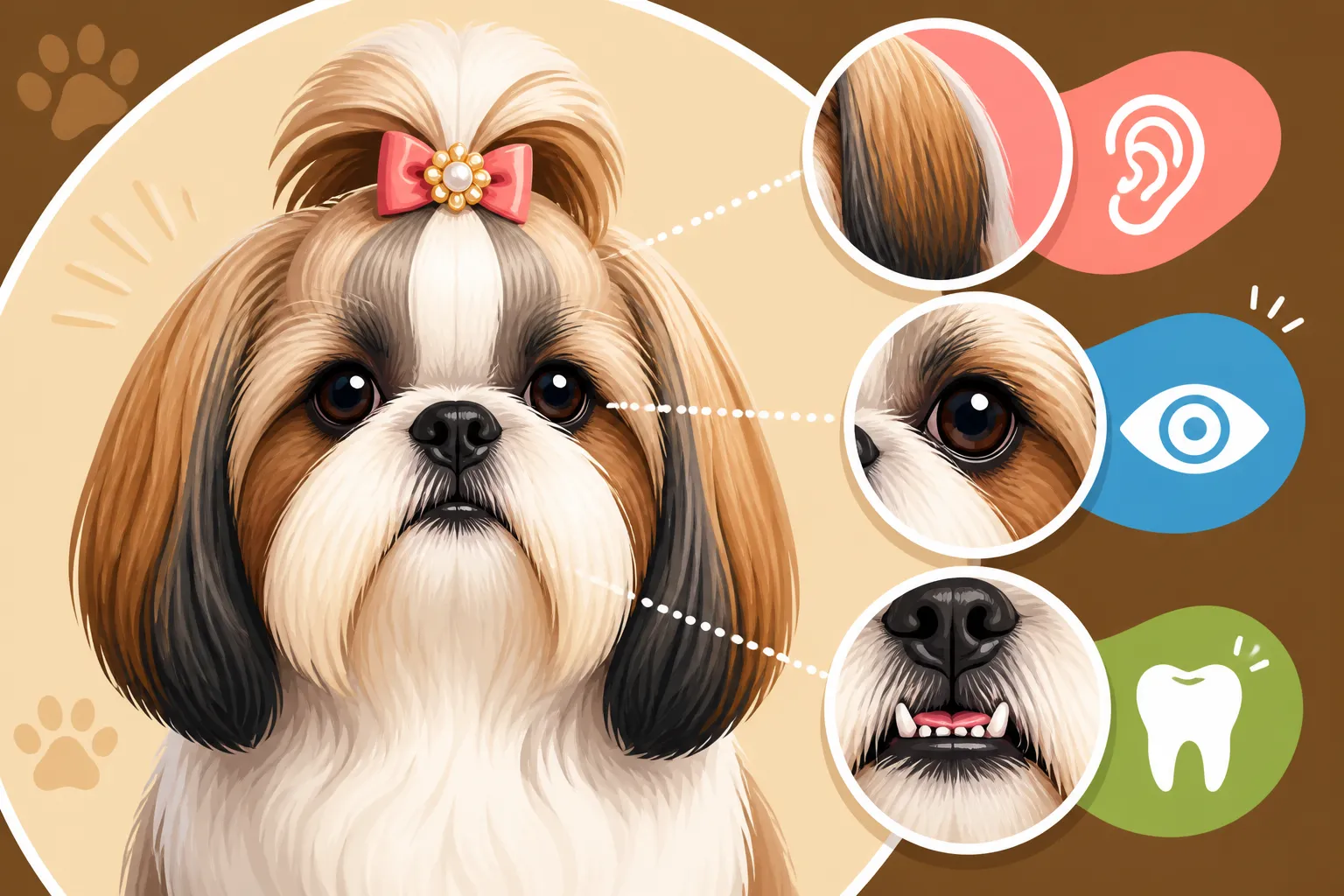
Shih Tzu Ears, Eyes and Bite in the Standard
It can feel overwhelming trying to decipher the technical jargon of a breed standard, especially when you're just trying to understand your adorable Shih Tzu's unique features. You might read terms like "large, round, not bulging," "drop ears," or "undershot bite" and wonder what it all really means for your furry companion. This guide will break down the specific expectations for Shih Tzu ears, eyes, and bite according to the breed standard, offering practical insights into why these characteristics are so important and how they contribute to the breed's iconic look and overall well-being.
The Intricacies of Shih Tzu Eyes in the Standard
The eyes are often the first thing you notice about a Shih Tzu, those dark, soulful orbs that gaze up at you with such devotion. The breed standard places significant emphasis on their appearance, and for good reason—they are integral to the "chrysanthemum face" that is so characteristic of the breed. But it’s not just about aesthetics; these descriptions also hint at potential health considerations that conscientious owners should be aware of.
The Ideal Eye Placement and Expression
According to the standard, a Shih Tzu's eyes should be "large, round, not bulging, and placed well apart." The "not bulging" part is particularly crucial, especially given the brachycephalic (flat-faced) nature of the breed. When eyes bulge too much, it can increase the risk of serious issues like Shih Tzu Eye Proptosis, the Emergency Owners Miss, where the eye can actually dislodge from its socket. The ideal placement ensures that the eyes are neither too close together, which can make the face appear narrow, nor too far apart, which can create a vacant expression. Instead, they should convey an intelligent, warm, and friendly demeanor.
The expression is just as important as the physical shape and placement. A true Shih Tzu should have an alert, sweet, and engaging look. Their eyes should reflect their personality—outgoing, affectionate, and brimming with curiosity. This is often enhanced by the way their long facial hair frames their face, creating a soft, appealing overall appearance. A shy or anxious expression, or eyes that appear dull or lifeless, would be considered less than ideal, as it doesn't align with the breed's joyful and companionable nature.
The deep brown color of the iris is generally preferred, contributing to that endearing "button eye" look that so many Shih Tzu lovers adore. Any visible white around the iris (known as "haw") is typically considered a fault in the show ring, as it can make the eyes appear rounder and less expressive than desired. This meticulous attention to detail in the standard ensures that the Shih Tzu maintains its distinctive and charming facial qualities, a hallmark of its imperial heritage.
Pigment, Size, and Shape Considerations
Beyond placement and expression, the standard delves into the specifics of pigment, size, and shape. The eyes themselves should be dark, lending to that characteristic soft, melting gaze. Pigment around the eyes, including the rims and nose, is generally preferred to be solid black. This rich pigmentation helps frame the eyes and enhance their perceived size and depth. However, on some lighter colored Shih Tzus, especially those with liver or blue coats, the pigment can match their coat color, appearing as a liver or blue shade rather than black. While this is acceptable within the standard for those specific coat colors, an absence of strong pigmentation can sometimes make the face look less defined.
The size and shape are a delicate balance. The eyes should be large enough to be prominent but never to the point of appearing protuberant or delicate. A truly round shape is sought after, which means avoiding almond-shaped or squinty eyes, which can alter the Shih Tzu's gentle and open expression. The eyelids should be tight and fully enclose the eye, without any sagging or excessive tearing. Loose eyelids can not only detract from the desired appearance but also lead to practical problems like Shih Tzu Eyelashes Growing Into the Eye or dry eye.
Breeders committed to the standard meticulously evaluate these features in their puppies. They understand that while a beautiful eye is a lovely trait, it also needs to be a healthy one. Eyes that are too prominent or improperly shaped can be more vulnerable to injury or chronic irritation, turning a cosmetic concern into a genuine health issue that impacts the dog's comfort and quality of life.
Common Eye Concerns the Standard Implicitly Addresses
While the standard focuses on ideals, many of its descriptions subtly address common health issues seen in Shih Tzus. For example, the emphasis on eyes that are "not bulging" directly relates to the breed's susceptibility to proptosis. This condition, where the eyeball pops out of its socket, is a terrifying emergency that flat-faced breeds are more prone to due to their shallow eye sockets. Therefore, a Shih Tzu whose eyes protrude excessively might be considered a fault not just for looks, but for potential fragility.
Similarly, the requirement for good pigmentation around the eye rims implicitly helps prevent issues like Pigmentary Keratitis in a Shih Tzu. This condition involves black pigment spreading across the cornea, which can impair vision. Strong, healthy pigment in the surrounding skin is often linked to overall eye health and can be an indicator of a well-bred Shih Tzu less prone to such problems. The standard also values clear, bright eyes, a trait that signals a dog free from irritation, discharge, or the onset of conditions like Shih Tzu Corneal Ulcers and Dry Eye.
When breeders prioritize the standard's eye descriptions, they are indirectly selecting for dogs with more robust eye health. An owner whose Shih Tzu exhibits perfect eyes according to the standard might find themselves dealing with fewer tear staining issues, less irritation from environmental factors, and a lower risk of serious eye emergencies. This is a testament to how thoughtfully designed breed standards can serve as a blueprint for both beauty and wellness in our beloved companions.
Decoding the Shih Tzu Ear Standard
The Shih Tzu's ears are another defining feature that contributes to its endearing appeal. Nestled beneath abundant hair, they often blend seamlessly into the overall coiffure, giving the dog a soft, fluffy appearance. The standard's description of the ears ensures they complement the chrysanthemum face while also protecting these delicate sensory organs.
Ear Set, Leather, and Feathering
The breed standard describes Shih Tzu ears as "large, long, with heavy leather, and set slightly below the crown of the skull." This "heavy leather" refers to the thickness and substance of the ear flap itself, which should be substantial, not thin or flimsy. This substantial ear leather is important because it contributes to the ear's ability to lie flat and blend into the long coat, giving the head a broader, rounder appearance. The set—"slightly below the crown of the skull"—is critical for achieving the correct head shape, ensuring the ears frame the face beautifully without sitting too high or too low.
The feathering is perhaps the most visually striking aspect of the Shih Tzu ear. The standard specifies that the ears should be "so heavily coated with hair that they appear to blend into the coat of the neck." This abundance of hair, sometimes sweeping to the shoulders, is what creates that luxurious, flowing look. It's not just for show; this heavy feathering acts as a natural protective barrier for the inner ear canal, shielding it from dirt, debris, and excessive moisture. However, it also means these areas require diligent Shih Tzu Ear Cleaning and Hair Removal to prevent issues.
Neglecting this heavy feathering can lead to mats that pull on the ear leather, causing discomfort or even skin irritation. Regular brushing, especially behind and under the ears, is paramount. Many owners opt for a professional groomer or tackle this at home with tools and products from places like Chewy, ensuring the hair remains tangle-free and healthy. The feathering is a beautiful characteristic, but it comes with a responsibility to maintain it properly.
How Ears Frame the Shih Tzu Face
When properly set and feathered, the Shih Tzu's ears play a significant role in framing their unique "chrysanthemum" face. They create an illusion of width around the head and soften the jawline, contributing to the sweet, round-faced look. If the ears are set too high, the head might appear too narrow or pointed; if set too low, it can give the dog a droopy or melancholic expression that doesn't align with the breed's vivacious personality.
The length of the ear leather, combined with its abundant hair, means the ears should hang gracefully, nearly reaching the shoulders when extended. This length and the way the hair flows from them contribute to the overall balanced silhouette of the Shih Tzu's head. Imagine looking at a perfectly groomed Shih Tzu; the ears, when viewed from the front, should almost merge with the surrounding mane, creating a harmonious circle around the face. This framing effect draws attention to those lovely, dark eyes, enhancing their appeal.
For owners, understanding this framing is key to grooming. When trimming the hair around the ears, or deciding on a "puppy cut" versus a full coat, consideration of how the ears contribute to the face's shape is important. A skilled groomer understands how to shape the ear feathering to maintain that characteristic Shih Tzu look, even with shorter cuts, ensuring the face doesn't appear unbalanced or sparse.
Maintaining Ear Health for the Standard Appearance
Maintaining the standard appearance of the Shih Tzu's ears goes hand-in-hand with ensuring their health. Those long, heavily feathered ears, while beautiful, create a warm, moist environment within the ear canal that can be a breeding ground for bacteria and yeast. This is why Shih Tzu Ear Infections Under Heavy Ear Leather are a common complaint among owners. The standard implicitly encourages good ear hygiene by valuing lush, healthy ear furnishings.
Regular inspection is crucial. Gently lift the ear flap daily or every few days to check for redness, discharge, or any unusual odor. A healthy Shih Tzu ear should be clean, pale pink, and free of strong smells. If you notice signs of irritation, like persistent scratching, head shaking, or a sour smell, it's time for a vet visit. Your vet can advise on appropriate cleaning solutions and whether ear hair plucking is necessary for your particular dog, as this practice can sometimes cause more irritation than it prevents.
Proper grooming also plays a vital role. Keeping the hair around the ear canal trimmed, even if you maintain a full coat elsewhere, can significantly improve air circulation. Using a good ear cleaner, perhaps one recommended by your vet or found at Chewy, can help keep the ear canal free from wax buildup and debris. Remember, a healthy ear is a comfortable ear, and a comfortable Shih Tzu is a happy Shih Tzu, ready to show off its lovely, standard-conforming ears.
The Unique Shih Tzu Bite and Jaw Structure
The Shih Tzu's bite is one of its most distinctive physical characteristics, and often a point of fascination or confusion for those unfamiliar with the breed. It's a hallmark feature, integral to the breed's historical development and overall facial structure, and as such, it's meticulously described in the breed standard.
The Undershot Bite: A Breed Hallmark
The breed standard for the Shih Tzu specifically calls for an "undershot bite." For those new to dog terminology, an undershot bite means that the lower jaw extends slightly beyond the upper jaw, causing the lower incisors (front teeth) to sit in front of the upper incisors when the mouth is closed. Crucially, the standard states that the "upper edge of the lower incisors touches the inner surface of the upper incisors." This isn't just a randomly chosen trait; it's a direct result of the Shih Tzu's brachycephalic (short-faced) skull structure.
This specific bite is deeply ingrained in the breed's history, having been deliberately cultivated over centuries in Imperial China. It contributes to the characteristic broad, flat appearance of the Shih Tzu's muzzle, which is part of its "chrysanthemum face" appeal. A correct undershot bite gives the face a slightly "pushed-in" look without being severely recessed or distorted. It's a delicate balance that defines the breed's expression and profile.
Without this distinct undershot bite, a Shih Tzu would lose a fundamental aspect of its breed type. A level bite (where incisors meet edge-to-edge) or an overshot bite (where the upper jaw extends past the lower) would be considered serious faults, as they would fundamentally alter the intended facial structure and expression. The undershot bite is not merely a quirk; it's a carefully preserved genetic trait that speaks to the breed's unique lineage.
Dental Placement and Overall Mouth Health
While the undershot bite is essential, the standard also implicitly expects healthy dental placement within that unique jaw structure. Even with an undershot bite, the teeth should ideally be evenly spaced and not excessively crowded. This is a common challenge for many flat-faced breeds, including the Shih Tzu, due to their shortened muzzles. Their jaws are simply too small to comfortably accommodate all 42 adult teeth that a typical dog has, leading to Shih Tzu Tooth Crowding in a Tiny Jaw.
The emphasis on the teeth meeting cleanly, even in an undershot manner, speaks to the desire for a functional bite. While show dogs might prioritize the aesthetic alignment, everyday owners must focus on the health implications. Crowded teeth create nooks and crannies where food particles and plaque can accumulate, leading to Shih Tzu Dental Disease at 13 Percent of the Breed at an alarming rate. This makes daily dental care, such as regular brushing, absolutely paramount for a Shih Tzu.
Owners should be mindful that while an undershot bite is standard, an extreme undershot bite, or one accompanied by severely misaligned or rotated teeth, can lead to chewing difficulties or irritation to the gums and palate. Therefore, a Shih Tzu with a correct undershot bite should still be able to eat comfortably and have reasonable dental hygiene, assuming proper care is provided. Regular veterinary check-ups, which include a thorough mouth examination, are essential to catch any issues early.
Why This Bite is Crucial to the Breed Standard
The undershot bite is not just a quirky detail; it is a foundational element of the Shih Tzu breed standard, influencing many other aspects of their appearance and even their historical function. This bite shape directly contributes to the broad, square-jawed appearance and the slightly upturned nose that are characteristic of the breed's "chrysanthemum" face. Without it, the entire facial expression would be altered, making a Shih Tzu look more like another breed.
Historically, in ancient China, Shih Tzus were companions often kept in palaces. Their flat faces and gentle undershot bites were part of the aesthetic appeal for which they were bred. Unlike working dogs, a strong, scissor bite wasn't necessary for their role. Instead, their unique facial structure, including the bite, became a symbol of their distinct heritage and pampered status. It's a reminder of their long history as lapdogs, bred purely for companionship and beauty.
Breeders, when selecting for the ideal Shih Tzu, carefully assess the bite because it's a strong indicator of correct skull development. A deviation from the undershot bite could suggest broader conformational issues with the head. Therefore, preserving this specific bite is about maintaining the integrity of the breed as a whole. It ensures that future generations of Shih Tzus retain the same charming, characteristic face that has captivated dog lovers for centuries.
Beyond the Standard: Practical Care for These Features
Understanding the breed standard gives you a benchmark for what ideal Shih Tzu ears, eyes, and bite should look like. But as a loving owner, your job extends beyond aesthetics to proactive, everyday care that ensures these features remain healthy and functional throughout your dog's life. After all, even the most perfectly structured features can suffer without proper attention.
Daily Eye Care for Your Shih Tzu
Given the prominence and unique structure of Shih Tzu eyes, daily care is not just advisable, it's essential. Their relatively large, sometimes shallow-set eyes, combined with their long facial hair, make them prone to irritation and discharge. You'll likely notice tear staining, which is that reddish-brown discoloration under their eyes, especially on lighter-colored Shih Tzus. While genetics play a role in tear production, keeping the area clean can minimize staining and prevent skin irritation.
Your daily routine should include gently wiping around your Shih Tzu's eyes. You can use a soft, damp cloth, a cotton ball moistened with plain water, or specific tear stain wipes designed for dogs, many of which can be found at Chewy. Be sure to wipe away any crust or discharge from the inner corners of the eyes. For those with long topknots, ensuring the hair is tied up or trimmed to prevent it from falling into the eyes is crucial, as hair rubbing against the cornea can cause discomfort and even Shih Tzu Corneal Ulcers From a Shallow Socket.
Regularly check your Shih Tzu's eyes for any signs of redness, cloudiness, excessive tearing, or squinting. These could indicate an underlying issue, such as dry eye, allergies, or even an infection. Catching these problems early can prevent them from becoming more serious and ensure your dog's comfort. Remember, clear, bright eyes are not just part of the standard; they're a window to your Shih Tzu's overall health and happiness.
Regular Ear Maintenance
Just like their eyes, a Shih Tzu's ears, with their heavy leather and abundant hair, require consistent attention to stay healthy. The dense hair that covers and even grows within the ear canal can trap moisture and debris, creating a perfect breeding ground for infections. This means weekly ear checks and regular cleaning are non-negotiable.
During your weekly ear check, gently lift the ear flap and examine the visible parts of the ear canal. Look for redness, swelling, or any unusual discharge (which might be dark and waxy, or yellowish). Pay close attention to any foul odors—a tell-tale sign of an ear infection. If the ears are visibly dirty, use a veterinarian-approved ear cleaner. Apply a few drops into the ear canal, gently massage the base of the ear for about 30 seconds to help break up wax, then allow your Shih Tzu to shake its head. After that, use a cotton ball or soft cloth to wipe out any visible debris from the outer ear. Never use cotton swabs inside the ear canal, as this can push debris further in or damage the delicate structures.
For Shih Tzus with a lot of hair growing inside their ear canals, discuss with your vet or groomer whether plucking this hair is beneficial. Some believe it improves air circulation, while others find it can irritate the sensitive skin, potentially leading to more problems. Your professional will be able to assess your individual dog's needs. Maintaining clean, dry ears is vital to prevent discomfort and the need for more intensive treatments for Yeast Infections in a Shih Tzu Ear.
Addressing Dental Needs Beyond the Show Ring
While the undershot bite is a breed hallmark, it also presents unique challenges for dental health. The crowded nature of a Shih Tzu's mouth means food and plaque can accumulate more easily, making them highly susceptible to periodontal disease from an early age. This is why Daily Toothbrushing in a Crowded Shih Tzu Jaw is arguably the most impactful thing you can do for your Shih Tzu's long-term health.
Aim to brush your Shih Tzu's teeth daily, or at least every other day, using a dog-specific toothbrush and enzymatic toothpaste. Start early when they are puppies to get them accustomed to the routine. Even a few minutes of brushing can make a significant difference in preventing tartar buildup and gum disease. If brushing isn't feasible every day, consider dental chews or water additives designed to help reduce plaque, available at pet supply stores or Chewy.
Beyond home care, regular professional dental cleanings under anesthesia are often necessary for Shih Tzus. Your veterinarian will recommend a schedule based on your dog's individual needs, but many Shih Tzus require their first dental cleaning before age three or four. During these procedures, the vet can thoroughly clean below the gum line, polish the teeth, and address any extractions that might be necessary due to severe crowding or disease. Investing in good dental care can prevent painful infections, tooth loss, and even more serious systemic health issues down the line, ensuring your Shih Tzu's smile, while undershot, remains healthy and bright.
| Feature | Breed Standard Expectation | Practical Owner Care | Common Concerns (and how care helps) |
|---|---|---|---|
| Eyes | Large, round, dark, not bulging, set well apart, intelligent expression, solid pigmentation. | Daily wiping with a damp cloth, keeping facial hair trimmed or tied back from eyes, regular checks for redness/discharge. | Tear staining, eye irritation from hair, Shih Tzu Corneal Ulcers and Dry Eye, proptosis risk. |
| Ears | Large, long, heavy leather, set slightly below crown, heavily feathered, blending into neck coat. | Weekly lifting/checking for cleanliness and odor, appropriate ear cleaning solutions, potentially trimming hair from ear canal. | Shih Tzu Ear Infections Under Heavy Ear Leather, mats behind ears, wax buildup. |
| Bite | Undershot bite (lower incisors in front of upper), upper edge of lower incisors touching inner surface of upper. | Daily toothbrushing with dog-specific paste, dental chews, regular professional dental cleanings. | Shih Tzu Tooth Crowding in a Tiny Jaw, Periodontal Disease in a Five Year Old Shih Tzu, eating difficulties. |
Disclaimer
This article is for general informational purposes only and does not constitute professional advice. Laws, prices and regulations vary by location and change over time. Consult a qualified professional for guidance on your specific situation.