Who to Ring When a Shih Tzu Eats Something Bad
There's nothing quite like that stomach-dropping moment when you realize your precious Shih Tzu has eaten something they absolutely shouldn't have. It happens faster than you can blink sometimes – a dropped pill, a forgotten chocolate bar within reach, or a curious sniff leading to a swallow of something truly dangerous. The panic sets in, your mind races, and you wonder: What do I do? Who do I call? Is my little fluffball going to be okay? This guide is here to walk you through those critical first minutes and hours, helping you understand exactly what steps to take and who your essential lifelines are in a pet poisoning emergency.
The Immediate Aftermath: What to Do First
When your Shih Tzu ingests something harmful, the moments immediately following can feel chaotic. It's crucial to take a few deep breaths and focus on a systematic approach. Your calm demeanor will help your dog, and your clear actions will provide vital information to professionals.
Assess the Situation, Not Just the Item
First and foremost, try to assess what happened. Don't just look at the item itself, but consider your Shih Tzu's current state. Are they drooling excessively? Vomiting? Lethargic or unusually hyper? Are they stumbling or having tremors? Sometimes, symptoms appear quickly, while other toxins can take hours to manifest. However, with certain highly toxic substances, waiting for symptoms is not an option; immediate action is required. Even if your dog seems fine, if you know they've ingested something dangerous, don't wait. Remember, these little dogs have unique physiologies, and what might be a minor upset for a larger breed could be life-threatening for a small Shih Tzu. Their compact size and Shih Tzu Lifespan and the Thirteen Year Average mean every moment counts.
Secure the Area and Collect Evidence
As soon as you realize your Shih Tzu has eaten something bad, your next step is to secure the area. Remove any remaining toxic substances immediately to prevent further ingestion. This might mean sweeping the floor, closing a cabinet, or moving a plant. Crucially, collect any packaging, wrappers, or leftover pieces of the ingested item. If your Shih Tzu has vomited, try to collect a sample of the vomit. This "evidence" is invaluable to your veterinarian or poison control expert. Knowing the exact product name, ingredients, concentration, and even the approximate amount that was available or consumed can make all the difference in diagnosis and treatment. Don't throw anything away, no matter how messy it seems.
Resist the Urge to Induce Vomiting Without Guidance
It's a common, natural instinct to want to make your dog throw up whatever they've consumed. However, this can be incredibly dangerous and cause more harm than good in many situations. Inducing vomiting inappropriately can lead to your Shih Tzu aspirating the vomit into their lungs, causing pneumonia, which is especially risky for a brachycephalic breed like ours with Brachycephalic Breathing in a Shih Tzu. Furthermore, if the ingested item was a caustic substance (like certain cleaning products or batteries), inducing vomiting can cause severe burns to the esophagus on the way back up. Only induce vomiting if specifically instructed to do so by a veterinary professional or pet poison control expert, and only with their guidance on the correct method and dosage for your specific dog.
Who to Call: Your Lifelines in a Poisoning Emergency
Knowing exactly who to contact in a panic is half the battle. You have a few key resources at your fingertips, and understanding when to use each one can save precious time and potentially your Shih Tzu's life.
Your Regular Veterinarian
Your primary veterinarian should often be your first call, especially during normal business hours. They know your Shih Tzu's medical history, including any pre-existing conditions like Renal Dysplasia and the Shih Tzu Kidney or Shih Tzu Heart Murmurs and Valve Disease. This existing knowledge allows them to quickly assess risk factors and tailor their advice. Many clinics have protocols in place for emergencies, and they might instruct you to come in immediately or offer guidance over the phone. Don't hesitate to call them even if you're not sure if it's a true emergency; a quick phone call is always better than waiting. Be prepared to provide as much detail as possible about what was ingested, when, and any symptoms you're observing.
Emergency Veterinary Clinics
For after-hours emergencies, holidays, or if your regular vet is unavailable, an emergency veterinary clinic is your essential resource. These clinics are staffed around the clock with vets and technicians specialized in critical care. Don't waste time calling your regular vet if it's clearly outside their operating hours and your dog needs immediate attention. Have the contact information and directions to your nearest emergency clinic readily available. It’s a good idea to know this information before an emergency strikes. When you call them, clearly state it's a potential poisoning and provide all the details you've gathered. They will likely advise you to bring your Shih Tzu in immediately, as they have the diagnostic tools and treatments – such as activated charcoal, IV fluids, or medications to counteract toxins – that your dog might desperately need. Keep in mind that emergency care can lead to significant Shih Tzu Emergency Vet Costs Owners Should Expect.
Pet Poison Control Hotlines
Dedicated pet poison control hotlines are an invaluable resource, often staffed by veterinary toxicologists. Organizations like the ASPCA Animal Poison Control Center or the Pet Poison Helpline specialize in identifying thousands of toxic substances and providing tailored treatment advice based on the amount ingested, your dog's weight, and breed specifics. While these services typically charge a consultation fee, they can often give you immediate, expert guidance over the phone, sometimes even saving you a costly emergency vet visit if the substance isn't truly dangerous or if at-home care is sufficient. They can also work directly with your veterinarian, providing them with detailed information about specific toxins and treatment protocols. Always call them, even if you are already on your way to the vet, as their specialized knowledge can often streamline and enhance the treatment plan.
What Information Your Vet or Poison Control Will Need
When you're speaking with a veterinarian or a pet poison control expert, they'll need very specific information to provide the best advice and treatment. Having these details ready can save critical time during a stressful situation.
The "What, When, and How Much"
This is the core information they'll be looking for. Be ready to provide:
- What was ingested? The exact name of the product, including brand, type (e.g., milk chocolate, baking chocolate, sugar-free gum with xylitol), and ingredients if possible. This is where those wrappers and packaging come in handy.
- When was it ingested? Give an approximate time. Knowing the time elapsed since ingestion helps determine how much of the substance might have been absorbed into your Shih Tzu's system and what treatment options are still viable.
- How much was ingested? Estimate the quantity as accurately as you can. Was it a small piece, half a package, or an entire bag? Knowing the dose relative to your Shih Tzu's small body weight is paramount. A single grape can be problematic for a Shih Tzu, whereas it might be ignored by a larger dog. Even a small amount of The Everyday Foods That Harm a Shih Tzu can quickly become an overdose for these little guys.
Your Shih Tzu's Health History
Your dog's general health plays a huge role in how they might react to a toxin and what treatments are safe. Be prepared to share:
- Breed and weight: This helps calculate toxic doses. For a Shih Tzu, even small amounts of toxins can be significant due to their modest Shih Tzu Obesity on a Sixteen Pound Frame healthy weight range.
- Age: Puppies and senior dogs (Senior Shih Tzu Care Past the Age of Ten) often have more compromised immune systems or organs, making them more vulnerable to toxins.
- Existing medical conditions: Does your Shih Tzu have kidney disease, heart problems, or a history of seizures? These conditions can dramatically affect how their body processes or reacts to a toxin.
- Current medications or supplements: List anything your Shih Tzu is currently taking, including prescription drugs, over-the-counter remedies, or herbal supplements. These can sometimes interact negatively with certain toxins or treatments.
Signs to Watch For
While a veterinarian or poison control expert will be asking specific questions, it helps to be aware of common poisoning symptoms. For Shih Tzus, these can include:
- Gastrointestinal upset: Vomiting, diarrhea, loss of appetite, excessive drooling.
- Neurological signs: Tremors, seizures, disorientation, uncoordinated movements, weakness, excessive hyperactivity or lethargy.
- Cardiovascular issues: Rapid heart rate, labored breathing, collapse.
- Behavioral changes: Anxiety, restlessness, aggression, or unusual quietness.
- Other: Pale gums, increased thirst or urination, abdominal pain.
Because Shih Tzus are already prone to issues like Shih Tzu Dental Disease at 13 Percent of the Breed, any signs around the mouth or gums could be especially critical to report quickly. Observing and reporting these signs accurately helps professionals understand the severity of the situation and the potential type of toxin involved.
Common Household Hazards for a Curious Shih Tzu
It's truly incredible what a Shih Tzu can get into when you turn your back for a second! Knowing the most common dangers hiding in plain sight can help you prevent a crisis.
Human Foods That Are Toxic
Many foods that are perfectly fine, or even healthy, for humans can be extremely dangerous for dogs. It's not just the obvious ones like chocolate; many common household items pose a serious threat to a small dog like a Shih Tzu. Always remember that even a tiny taste for a small dog can be a significant dose.
| Toxic Food Item | Why It's Dangerous for Shih Tzus |
|---|---|
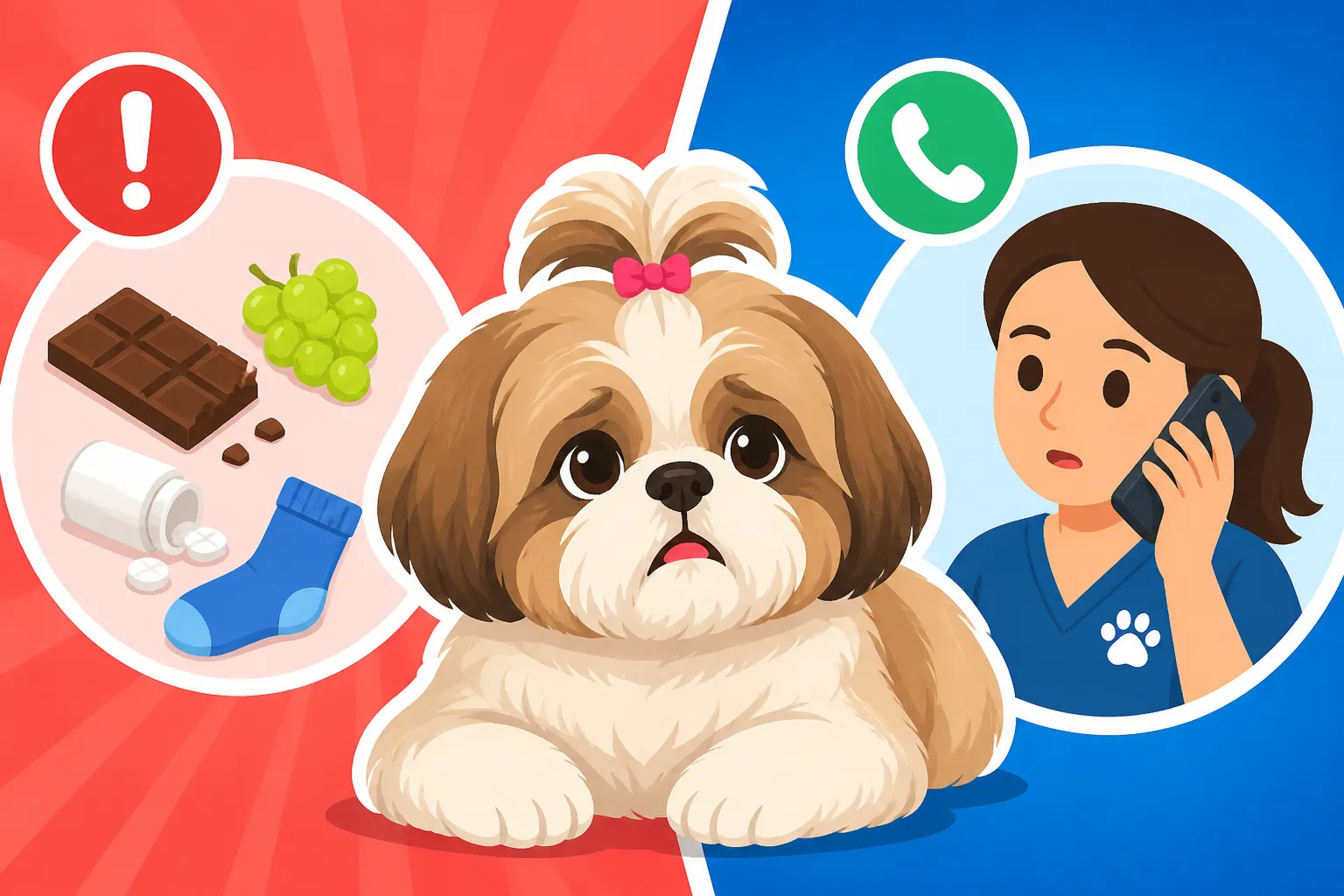
| Chocolate | Contains theobromine, a stimulant toxic to dogs. Darker chocolate and baking chocolate are most dangerous. Can cause vomiting, diarrhea, tremors, seizures, and heart issues. |
| Grapes & Raisins | Can cause acute kidney failure in dogs. The exact toxic substance is unknown, but even small amounts can be lethal. |
| Xylitol | A sugar substitute found in sugar-free gum, candies, some peanut butters, and baked goods. Causes a rapid release of insulin, leading to dangerously low blood sugar (hypoglycemia), and can also cause liver failure. |
| Onions & Garlic | Contains compounds that damage red blood cells, leading to anemia. Found in many savory foods, powders, and spices. |
| Avocado | Contains persin, which can cause vomiting and diarrhea in some dogs. The pit is also a choking hazard. |
| Macadamia Nuts | Can cause weakness, tremors, vomiting, fever, and depression. The exact toxin is unknown. |
| Alcohol | Can cause depression of the central nervous system, respiratory depression, coma, and even death. Found in beverages, raw dough. |
| Caffeine | Stimulant found in coffee, tea, energy drinks. Similar effects to chocolate poisoning, but often more severe. |
Medications and Supplements
One of the most frequent causes of pet poisoning involves human medications. A dropped pill on the floor, a bottle left on a low table, or a curious Shih Tzu exploring a purse can quickly lead to disaster. Even common over-the-counter pain relievers like NSAIDs (ibuprofen, naproxen) can cause severe stomach ulcers, kidney failure, or liver damage in dogs. Antidepressants, heart medications, and even vitamins and supplements formulated for humans can be toxic in canine doses. It's not just human medications; an overdose of your own Shih Tzu's prescribed medication can also be dangerous. Always keep all medications, human or pet, securely stored out of paw's reach, preferably in high, locked cabinets.
Plants, Cleaning Products, and Pest Control
Beyond food and medicine, countless other common household and garden items pose a threat. Many common houseplants and garden flora, such as lilies, sago palms, azaleas, tulips, and oleander, are highly toxic. Even something as seemingly innocuous as compost can be dangerous due to mold toxins. Cleaning products, from toilet bowl cleaner to laundry detergent pods, can cause chemical burns and internal damage. Perhaps most insidiously, pest control products like rodenticides (rat poison), slug bait, and insecticides are often designed to be appealing to animals, making them extremely dangerous if ingested by your Shih Tzu. These require immediate veterinary intervention. Always read labels carefully and use pet-safe alternatives whenever possible.
Prevention Is Key: Securing Your Home for Your Shih Tzu
While knowing who to call in an emergency is crucial, the best approach is always prevention. By "dog-proofing" your home, you can significantly reduce the risk of your Shih Tzu getting into something harmful.
Dog-Proofing Your Living Space
Think like a curious, low-to-the-ground explorer. Get down on your hands and knees and look at your home from your Shih Tzu's perspective. What's within reach?
- Secure Cabinets and Pantries: Install childproof latches on cabinets where food, medications, and cleaning supplies are stored. Even if you think your Shih Tzu can't open a cabinet, they might surprise you.
- Clear Counters and Tables: Don't leave food, drinks, or medications unattended on countertops or coffee tables. A determined Shih Tzu can often jump higher than you'd expect, or simply knock things down.
- Proper Trash Disposal: Invest in trash cans with secure, tight-fitting lids that your dog can't open or tip over. Leftover food, coffee grounds, and even used dental floss can be dangerous.
- Pet-Safe Plants: Research any plants you bring into your home to ensure they are non-toxic to pets. If you have toxic plants, place them in areas completely inaccessible to your Shih Tzu or consider rehoming them. You can find excellent resources on pet-safe plants on sites like Amazon or specialized pet supply stores.
- Store Chemicals Safely: Antifreeze, paints, pesticides, and other garage or garden chemicals must be stored in sealed containers on high shelves or in locked cupboards.
Educating Your Household
It's not enough for just you to be vigilant. Every member of your household, from children to roommates to houseguests, needs to be aware of the dangers. Explain clearly what foods are toxic to your Shih Tzu and why, emphasizing that "just a little bit" can be truly harmful for a small dog. Make sure everyone knows the rules about keeping medications secure and not leaving anything edible unattended. Children, especially, need gentle but firm lessons about not sharing their snacks with the dog, even if your Shih Tzu gives them those irresistible puppy eyes. Consistency across the household is vital for creating a truly safe environment.
Creating a "Go-Bag" for Emergencies
Being prepared means having a "go-bag" or emergency kit ready for those unexpected vet visits, whether for poisoning or another sudden health issue like Shih Tzu Eye Proptosis, the Emergency Owners Miss. This bag should contain:
- Your vet's contact information and the nearest emergency clinic's details.
- A copy of your Shih Tzu's medical records, including vaccination history and any current medications.
- A small amount of their regular food and any prescription foods they might need if they have conditions requiring a specific diet, available from places like Chewy or specialized veterinary diets.
- Basic first aid supplies like bandages, antiseptic wipes, and a pet-safe thermometer.
- A comfort item, like their favorite blanket or toy.
- A list of what your Shih Tzu weighs, as dose calculations are usually weight-based.
- A printout of your pet insurance policy information, if you have one, to streamline the process at the vet. This can significantly help manage the What a Shih Tzu Costs Each Month With Grooming In and other expenses.
Having this kit ready can reduce stress and save crucial minutes when you're rushing out the door. Consider also exploring fresh food delivery services like Ollie, as they often provide portioned meals that can help you avoid table scraps that might contain dangerous ingredients, contributing to overall health and reducing the risk of accidental ingestion of harmful human foods.
Disclaimer
This article is for general informational purposes only and does not constitute professional advice. Laws, prices and regulations vary by location and change over time. Consult a qualified professional for guidance on your specific situation.