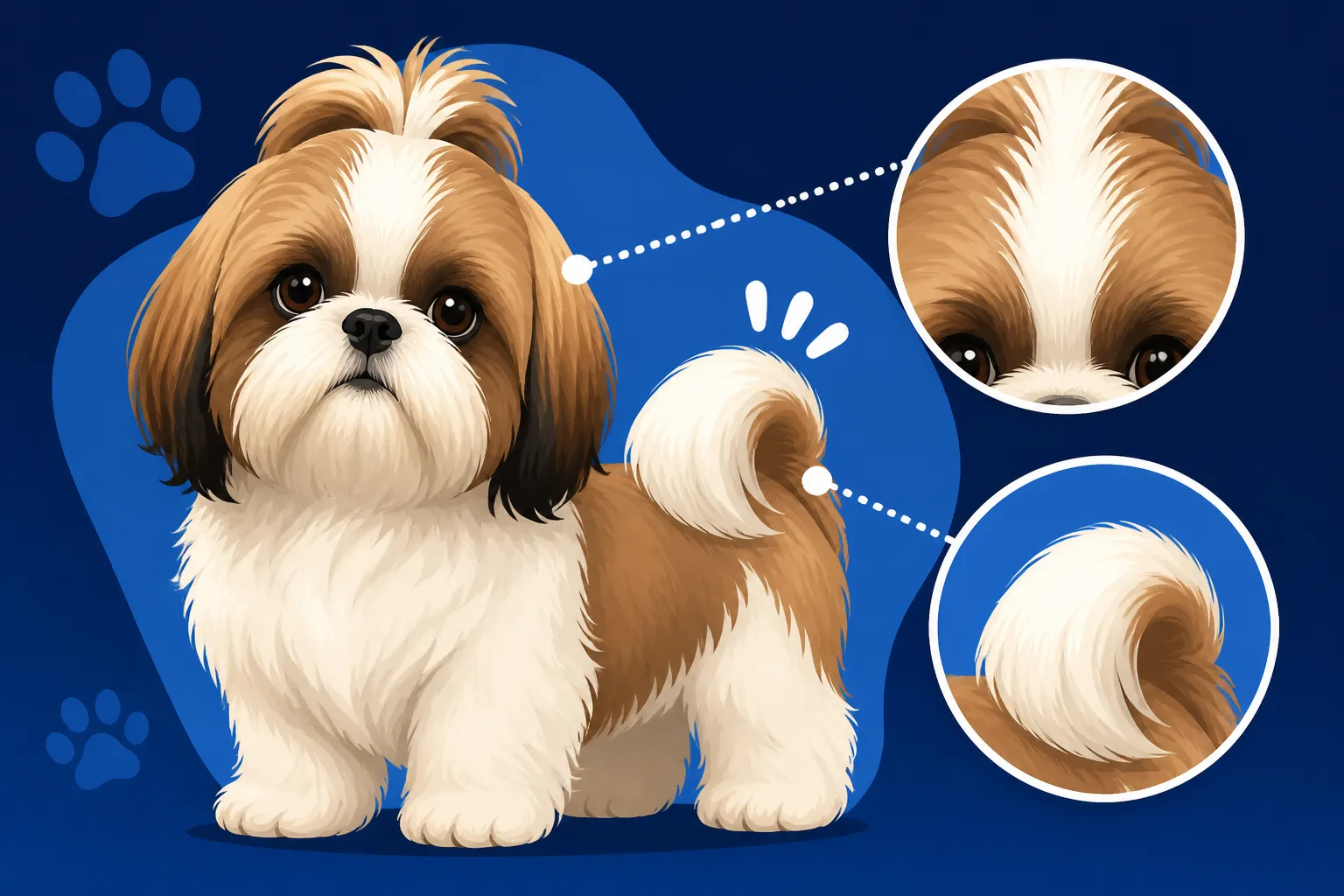
The White Blaze and Tail Tip on a Shih Tzu
You've probably seen a Shih Tzu with that adorable streak of white running up their forehead, or noticed a little puff of white right on the tip of their plumed tail. These aren't just random cute features; they're distinctive markings that often capture our hearts and are surprisingly meaningful within the breed's history and standard. This guide will dive deep into what these white blazes and tail tips mean for your Shih Tzu, from their genetics to their role in the breed's unique appearance.
Understanding the Shih Tzu White Blaze
When you look at a Shih Tzu, one of the most striking features, especially on dogs with darker coats, can be that crisp line or splash of white hair on their forehead. This is what we lovingly refer to as the "white blaze," and it's much more than just a pretty mark. It's often seen as a hallmark of the breed, a subtle nod to its ancient lineage and the mystique surrounding its origins.
The white blaze typically begins somewhere between the eyes and extends upwards, often tapering as it reaches the crown of the head. It can vary significantly in its appearance: sometimes it's a slender, delicate line, almost like a painter's brushstroke, while other times it's a broader, more prominent stripe that dominates the forehead. No two blazes are exactly alike, adding to the individuality of each Shih Tzu. Some might have a perfectly symmetrical blaze, while others might have one that's a bit crooked or has slightly irregular edges, giving them even more character. Many Shih Tzu enthusiasts cherish this marking, often referring to it with terms like the "star of Buddha" or "flower of Buddha," steeped in the rich legends of the breed's Tibetan heritage. It's a charming detail that tells a story, making your furry companion feel even more special and connected to their royal past.
For those of us who adore the Shih Tzu's unique looks, the white blaze is particularly noticeable on dogs with solid, dark coats, like deep black or rich liver. On these backgrounds, the contrast is stark and beautiful, making the white truly pop. However, a blaze can also appear on lighter-colored Shih Tzus, such as those with gold, red, or even silver coats. In these cases, the blaze might be more subtle, blending a little more seamlessly with the surrounding lighter hues, but it's still there, contributing to their overall charm. If you're wondering how these beautiful markings fit into the broader picture of Shih Tzu colors, you might find our guide on Gold, Black, Liver and Every Shih Tzu Shade fascinating. It delves into the entire spectrum of coat possibilities, and how these blazes interact with them. Even if your Shih Tzu doesn't have a blaze, or if it's very faint, their beauty is undeniable, but it's a feature that many breeders and owners admire.
The Distinctive White Tail Tip
Just as the white blaze adds a touch of distinction to a Shih Tzu's face, a white tip on their proudly carried, plumed tail is another endearing and often desired marking. This isn't just a random patch of white; it's a specific feature that, much like the blaze, carries historical and aesthetic weight within the breed. Your Shih Tzu's tail is one of its most expressive features, usually curving gracefully over its back, a magnificent plume of hair. When that plume ends in a flourish of white, it's truly something special to behold.
The white tail tip manifests as a patch or section of white hair specifically at the very end of the tail. It can range from a tiny tuft of a few white hairs, almost like a snowflake resting on the tip, to a more substantial white band that's clearly visible even from a distance. This marking is often seen as a complementary feature to the white blaze on the head, creating a harmonious visual balance from nose to tail. In ancient times, and even today, a white tail tip was sometimes referred to as the "flag of purity" or a sign of good fortune, linking your beloved pet to the same kind of lore that surrounds the white blaze. It’s a wonderful example of the intricate beauty that can be found in the Shih Tzu breed. To learn more about how the tail is supposed to be carried and presented, check out The Plumed Tail on a Shih Tzu Back.
Observing the white tail tip can be especially gratifying during grooming sessions. As you brush out your Shih Tzu's flowing coat, paying attention to its full splendor, that little flash of white can be a delightful highlight. It's often most obvious on dogs with darker, solid body colors where the contrast is strongest, much like the blaze. However, it can certainly appear on Shih Tzus of any color, though it might be less noticeable on lighter-colored dogs where the white blends in more. Not every Shih Tzu will have this marking, and its absence certainly doesn't detract from a dog's overall charm or adherence to the breed standard. But for those who do, it's an extra touch of elegance that makes them stand out. Keeping the tail in good condition with regular brushing and detangling sprays (which you can find a great selection of at places like Chewy) also helps ensure these beautiful markings are always on display.
The Genetics Behind These Unique Markings
Understanding why some Shih Tzus have a striking white blaze or a charming white tail tip, while others don't, really comes down to the fascinating world of canine genetics. It's not magic, though sometimes it feels like it when you see these beautiful patterns; it's all about the genes inherited from their parents. Essentially, these white markings are the result of specific genes that control pigment distribution, rather than the genes that dictate the primary coat color like black, gold, or liver.
Dogs, including our beloved Shih Tzus, have a complex genetic code that determines everything from their size and temperament to their coat color and markings. The white blaze and tail tip are examples of "white spotting" or "piebald" patterns, caused by a gene or set of genes that limit the migration of pigment-producing cells (melanocytes) during embryonic development. When these cells don't fully reach certain areas of the skin and hair follicles, those areas develop white hair because no pigment is deposited there. The extent and location of the white areas depend on how much this gene is expressed and where it affects the melanocyte migration. It's a beautiful dance of genetics that creates these unique patterns. For a deeper dive into the broader genetic health aspects of the breed, you might want to look into The DNA Panel Worth Running on a Shih Tzu to understand what breeders are testing for beyond just coat color.
It’s important to remember that these white markings are purely cosmetic. They carry no known health implications, either positive or negative. A Shih Tzu with a prominent blaze or a distinct tail tip is just as healthy and robust as one without these features. It's simply a matter of genetic inheritance. So, when you see a diverse litter of Shih Tzu puppies, some with blazes and some without, you're witnessing the beautiful variety that comes from genetic recombination. Reputable breeders often pay attention to these markings not for health reasons, but because they are part of the breed's historical aesthetic and are considered desirable features by many enthusiasts and within the show ring. However, they're not a primary focus over health and temperament.
How These Markings Fit the Breed Standard and Common Variations
For anyone interested in the Shih Tzu breed, whether as a loving companion owner or someone who appreciates the finer points of breed conformation, understanding how features like the white blaze and tail tip fit into the official breed standard is enlightening. The Shih Tzu breed standard, as set by kennel clubs like the AKC, outlines the ideal characteristics of the breed. While it details everything from temperament to tail carriage, it also touches upon desired coat characteristics and markings.
The white blaze, for example, is often highly regarded in the show ring. While not an absolute requirement, a well-defined blaze is considered a hallmark of the breed and can contribute positively to a dog's overall appearance. It adds to the distinctive "chrysanthemum face" look that Shih Tzus are famous for, framing their expressive eyes beautifully. Judges often look for a clear, clean blaze, even if it's not perfectly symmetrical. Similarly, a white tip on the tail is seen as a desirable attribute, adding a charming finishing touch to the tail plume that curls over the back. These markings enhance the elegance and traditional look of the Shih Tzu. You can learn more about what judges look for in the overall appearance of the breed in The Shih Tzu Standard and What Judges Look For and What the Standard Says a Shih Tzu Should Be.
However, it's crucial to remember that not every Shih Tzu will possess these markings, and their absence does not make a dog any less of a wonderful Shih Tzu or diminish its status as a beloved pet. There's a wide range of variations you'll see in the real world:
- Blaze Variations: Some Shih Tzus might have a blaze that's barely a speck of white, while others boast a bold, wide stripe. Occasionally, a blaze might be broken, appearing as two distinct white patches rather than one continuous line. Some dogs might not have any blaze at all. These variations are perfectly normal and contribute to the individuality of each dog.
- Tail Tip Variations: The white tail tip can range from a few stray white hairs to a noticeable white segment. Many Shih Tzus simply have a tail that matches their body color, with no white tip at all. Again, this is a normal variation within the breed.
The visibility of these markings can also be influenced by a Shih Tzu's coat length and grooming style. A long, flowing full coat might sometimes obscure a subtle blaze if the surrounding hair falls over it, or make a small white tail tip harder to spot. Owners who prefer a "puppy cut" or a shorter trim might find these markings become more prominent. Regular grooming, including Trimming Face Hair Away From Shih Tzu Eyes to keep the vision clear, can also make a blaze more obvious. Regardless of whether your Shih Tzu sports a prominent blaze and tail tip, or neither, their unique charm and loving personality shine through. Keeping their coat healthy, perhaps with a good quality shampoo and conditioner from your favorite pet supply store like Chewy, will always highlight their natural beauty, whatever their markings may be.
Maintaining the Coat to Showcase Markings
For Shih Tzu owners, the gorgeous coat is often one of the breed's most appealing features, and when that coat includes distinctive white blazes or tail tips, you naturally want to keep them looking their best. The sheer volume and texture of a Shih Tzu's double coat mean that consistent grooming is not just about aesthetics; it's vital for their health and comfort. Without proper care, mats can quickly form, especially behind the ears, under the legs, and where harnesses sit. These mats can pull on the skin, causing pain and even skin infections, and can certainly obscure any beautiful markings your dog might have.
Daily brushing is truly the cornerstone of Shih Tzu coat maintenance. Using the right tools, like a slicker brush to get through both layers of the coat and a metal comb to check for tangles, is essential. When you're brushing the hair on their face, pay extra attention around the eyes and forehead. This is where a white blaze can be hidden by longer hair or tear staining. Gently brushing the hair away from the face can help keep the blaze clear and visible. For those who choose to grow out their Shih Tzu's full coat, learning Tying a Shih Tzu Topknot That Holds is an excellent way to keep hair out of their eyes and showcase any forehead markings. You can find specialized grooming tools for delicate faces, including eye wipes, on Chewy, which can make this daily routine a breeze.
Beyond daily brushing, regular bathing is also key to a healthy coat. Depending on their activity level and coat length, a bath every two to three weeks is generally recommended. Make sure to use a shampoo and conditioner specifically formulated for dogs, as human products can dry out their skin and coat. After bathing, thoroughly drying the coat is critical; damp hair mats even faster than dry hair. When drying, especially if your Shih Tzu has a white tail tip, take the opportunity to fluff out the tail hair to make that white tip stand out beautifully. You want to dry right down to the roots to prevent moisture from causing skin issues or the hair from knotting up as it dries. The texture of a Shih Tzu's coat, which is typically long, dense, and flowing, plays a huge role in how these markings appear. To understand more about this unique coat, consider reading What the Standard Says About Shih Tzu Coat Texture. Ultimately, showcasing your Shih Tzu's unique white markings is a rewarding part of their grooming journey, connecting you further to the beauty and heritage of this wonderful breed.
Disclaimer
This article is for general informational purposes only and does not constitute professional advice. Laws, prices and regulations vary by location and change over time. Consult a qualified professional for guidance on your specific situation.